The Newton Farmer
October 2021
|
|
Dear Farm friends,
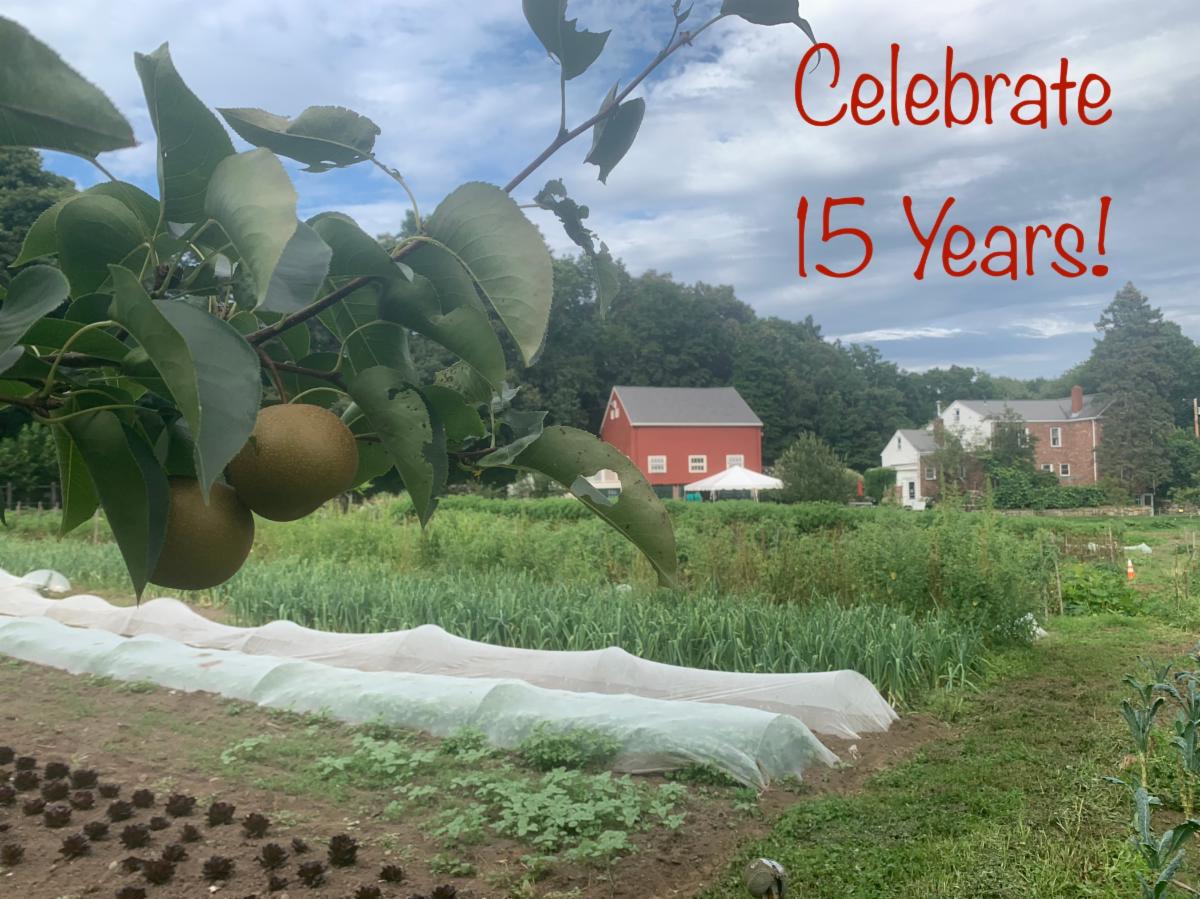
Happy Fall! I hope you are enjoying this beautiful weather, with crisp fall air, amazing sunsets, and an occasional rainbow, like we had on Saturday evening during the Farm party.
Thanks to everyone who attended the 15th anniversary celebration! It was wonderful to visit, especially after this period of time apart. Reminiscing about experiences on the Farm and connecting with people who helped build this Farm over the past 15 years was so meaningful. And we loved welcoming newcomers to the Farm! Seeing people here enjoying the open space and building community made us all so happy and reminded us how much we treasure our relationships with each other. We are grateful for all our volunteers and supporters who helped to make this event possible.
|
|
As our summer CSA and the Newton Farmers' Market draw to a close later this month, we are making plans for the rest of the growing season. Our late fall CSA program has sold out but you will still be able to find our produce at the farm stand. Our education program is ramping up with a series of Wednesday afternoon classes for kids. And registration is open for our upcoming fall kids' party on Friday, October 22, in the afternoon where we'll have pumpkin decorating, tea-making, a scavenger hunt, and more for families. We hope to see you at the Farm!
With gratitude,
Sue Bottino
Executive Director
|
|
Fall Classes for Kids
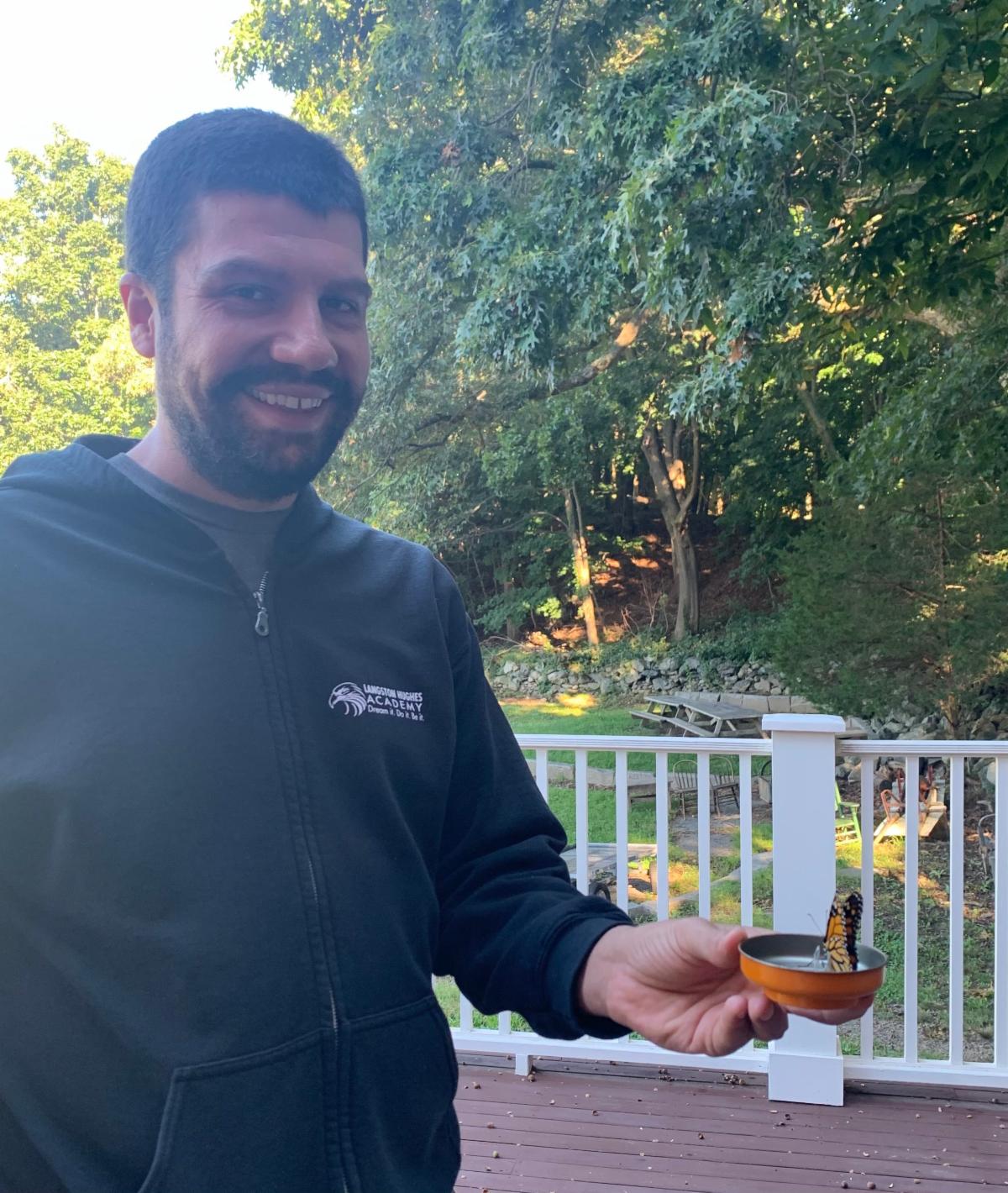
Join us on Wednesday afternoons for fun, informative classes on the Farm with Mr. D (shown here with a newly-emerged adult monarch butterfly). We have two-hour classes for elementary-school-age students once a week from 1:30–3:30 pm for eight weeks from September 22–November 17. It's not too late to sign up! The cost of the entire program is $360 and we have prorated for the rest of the session. Enrollment is capped at 12 students. Kids take care of the Learning Garden as we transition to the fall season, learn about the changing natural world around us and, of course, spend time with the chickens. Registration is required and you can register here. Masks are required for students and the teacher.
|
|
Program and Tour Opportunities
We are always looking for new opportunities to offer environmental education to kids and adults. We can arrange one-time classes, program sessions, or tours for your group, and we offer programs both at the Farm or at your location. Please reach out to Director of Education Matt Durham at matt@newtoncommunityfarm.org to explore options.
|
|
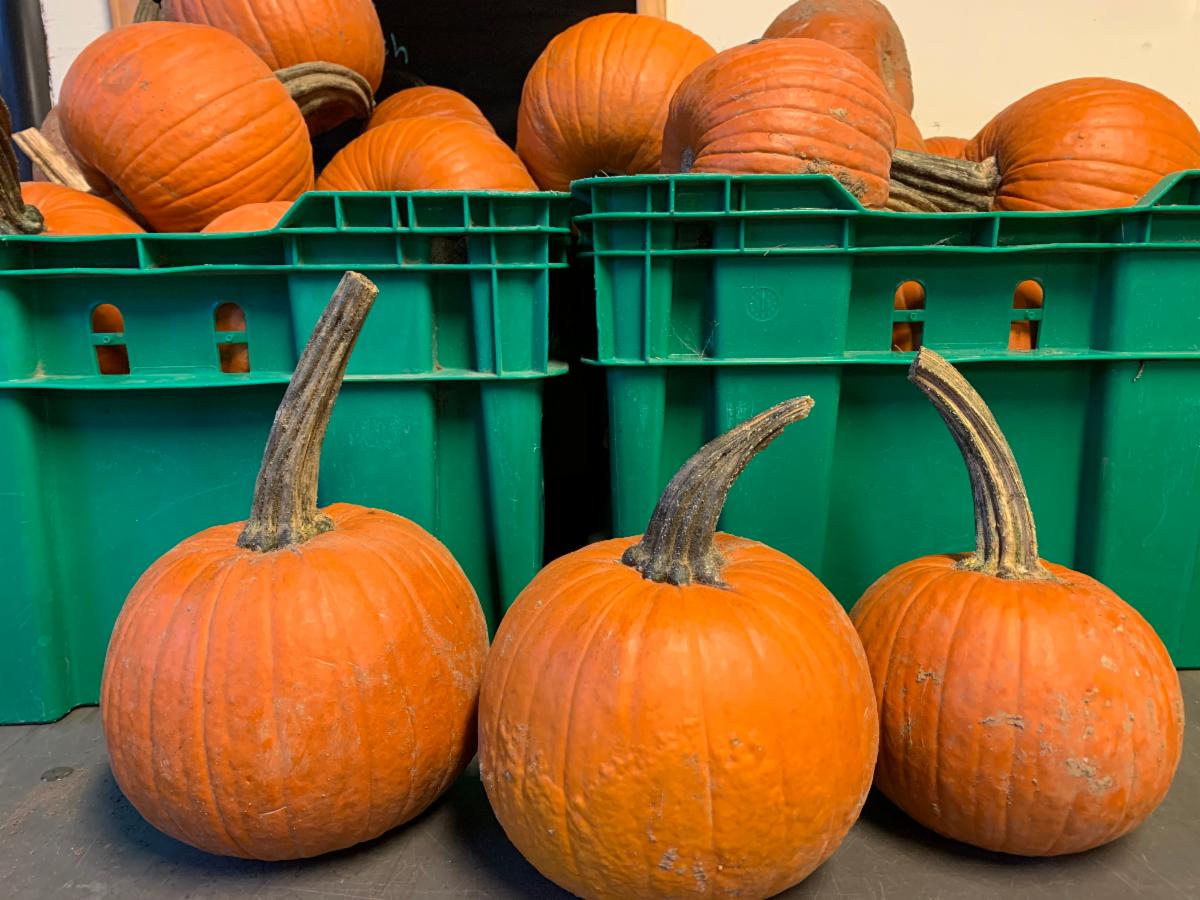
Join us on Friday, October 22, from 3:30–5:00 pm for a fall kids' party! We will have outdoor activities celebrating the transition to the new season. Each child can decorate a pumpkin using found nature items, make custom fall tea to take home, and learn about the chickens. We will also demonstrate how apple cider is made, have local apples for participants to enjoy, and offer a scavenger hunt revealing hidden features of the fall season. We hope to have you with us as we celebrate the bounty of autumn. Masks are required for all. Tickets are $10 per child. (Adults are free of charge and must stay.) In the event of inclement weather, we will have materials available to pick up and take home. Register here.
|
|
Viticulture, the Cultivation of Grapes |
|
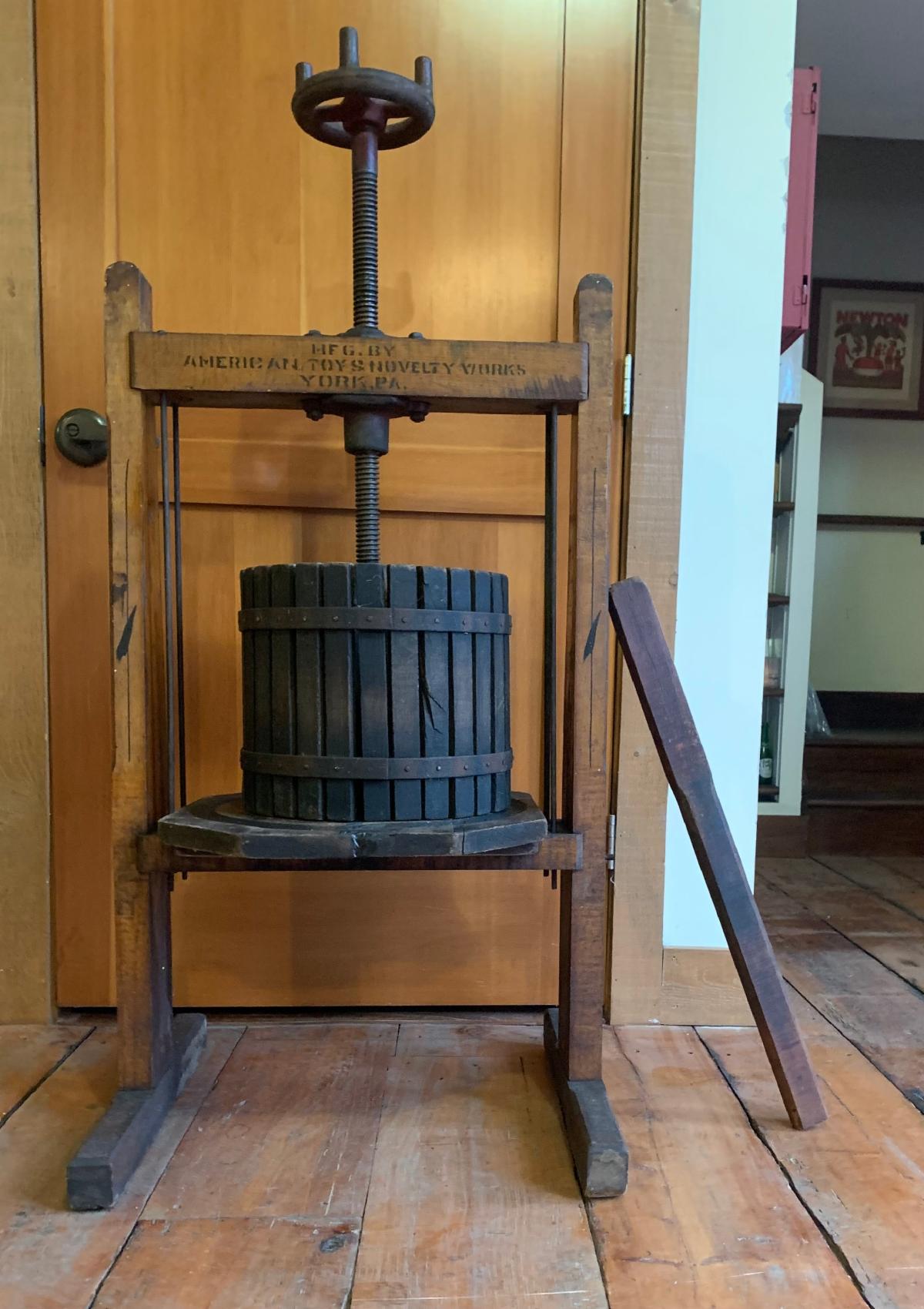
Recently our dear Farm neighbor and friend Josephine generously donated several of her family's antiques including a knife sharpening wheel and the vintage grape press pictured here. Josephine was born and raised on Nahanton Street and spent most of her 95 years at the family homestead, which used to be the site of a Sunday school (and still has sections of the original chalkboard). She remembers going with her parents to buy crates of grapes in Boston in the 1930s and that "you could smell grapes everywhere" while her father made mostly red wine at home.
This press was made by the American Toy and Novelty Works Company based in York, Pennsylvania, between 1910 and 1930. Aside from various-sized fruit presses, they also manufactured sleds, wagons, rocking horses, and other toys.
|
|
Josephine and her family were friends of the Angino family who owned NCF before the city of Newton purchased the property in 2005. In fact, Josephine's parents and the Angino family both emigrated to America from Avellino, Italy, a southern village near Naples. According to online sources, agriculture was a very important component of the town's economy through the 1900s, and viticulture, the cultivation and harvesting of grapes for wine and for juice, remains so today.
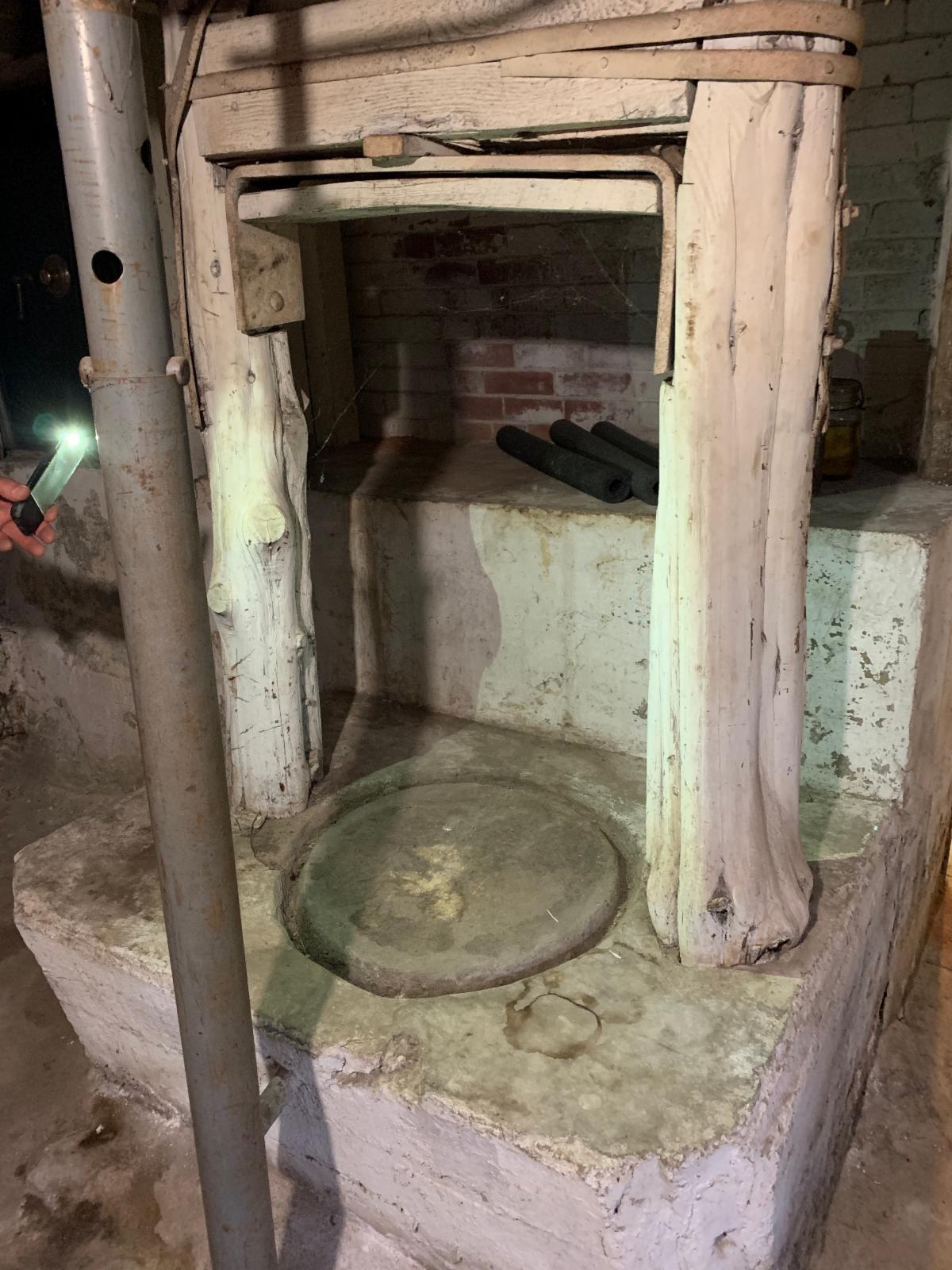
The farmhouse at NCF houses the remains of a wine press built into the basement, shown here. The circular indentation is around where the barrel would go and there is a spout that runs down from there to collect the juice.
|
|
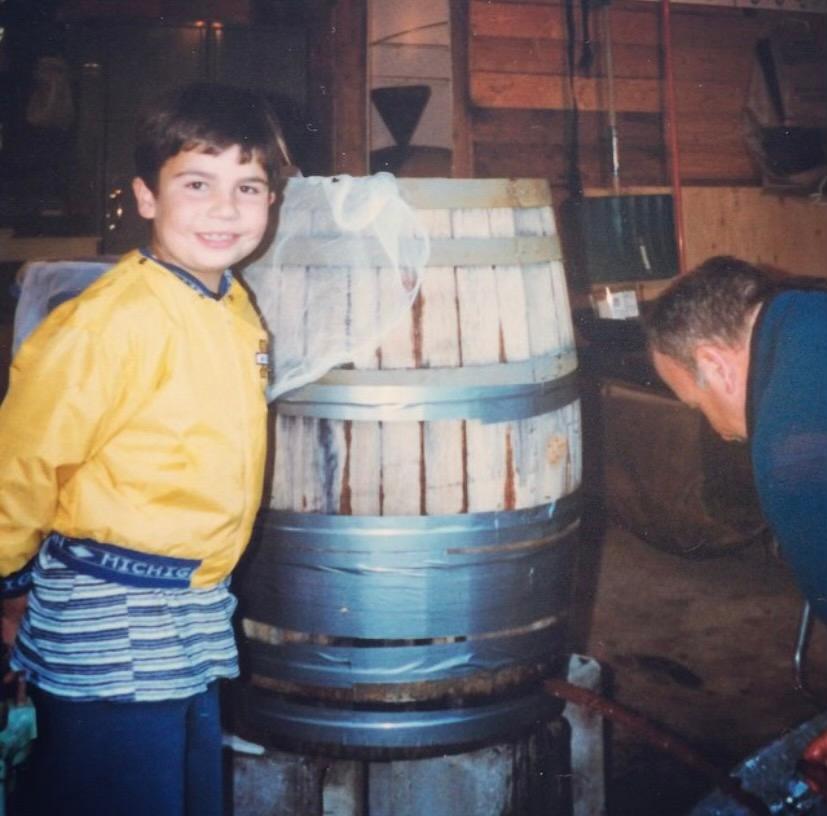
Growing grapes for wine and for juice dates back over 8,000 years, and there are a variety of methods for crushing or pressing grapes for wine, which, in addition to releasing the juice, also enables contact with the outer skin of the grape, releasing tannins for flavor and color. To use a press you first fill the barrel with fruit and then turn the screw down from above the machine onto a wood block that presses the fruit for its juice. The juice collects in the ridge outside of the barrel and is then funneled to a spout for collection. Pictured here is Director of Education Matt Durham as a child, pressing grapes with his father, David.
Check out the press and more at our Fall Kids' Party on October 22 where we'll be using it to demonstrate apple-cider making.
|
|
Community Organization Spotlight:
Daily Table
|
|
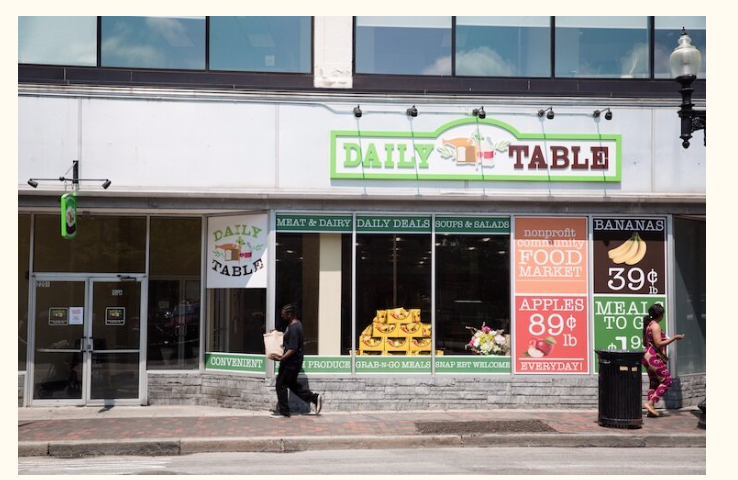
A Boston Globe headline reads “Food Insecurity Doubled During the Pandemic” (August 22, 2021) in a news story that calls attention to the “silent” problem of households lacking enough food to get by. Our newsletter recently focused on two Newton-based food pantries that help families in need. But qualified families often do not access pantries, and the nonprofit Project Bread notes that SNAP (Supplemental Nutrition Assistance Program) is underutilized. Enter Daily Table, the nonprofit community grocer with the mission “to provide fresh, tasty, convenient, and nutritious food to communities most in need at prices everyone can afford.” Founded in 2012 by Doug Rauch, former president of Trader Joe’s, Daily Table offers healthy, nutritious food at reduced prices. Products include grocery staples, fresh produce, and ready-to-eat meals made from scratch.
|
|
How affordable is Daily Table? Products average about 70% of regular retail prices and there are special offerings. As of the end of August a five-pound bag of King Arthur flour sold for $0.99 and Little Leaf Farm lettuce was $1.99. As Doug Rauch explains, Daily Table is able to sell products at reduced prices through a variety of methods to source and secure special deals from suppliers. For example, large grocery chains will not stock items close to their “best by” dates, but Daily Table does. Also, chain stores only offer fresh produce if it is close to perfect, rejecting delicious but slightly blemished produce that Daily Table is able to sell at a reduced price. In addition, Daily Table is able to purchase excess inventory and products that are sold at a discount because the brand is changing their labeling or packaging.
Daily Table currently operates in Codman Square in Dorchester, Nubian Square in Roxbury, and Central Square in Cambridge, with more stores planned in the Boston area. Everyone can shop at Daily Table, and every shopper registers as a “member.” More than 45,000 people are members. In addition, Daily Table prioritizes creating livable-wage jobs and has a strong preference for hiring directly from the store neighborhoods. For more information, visit their website.
|
|
A Book Is Like a Garden... |
|
...carried in the pocket. ~ Chinese proverb |
|
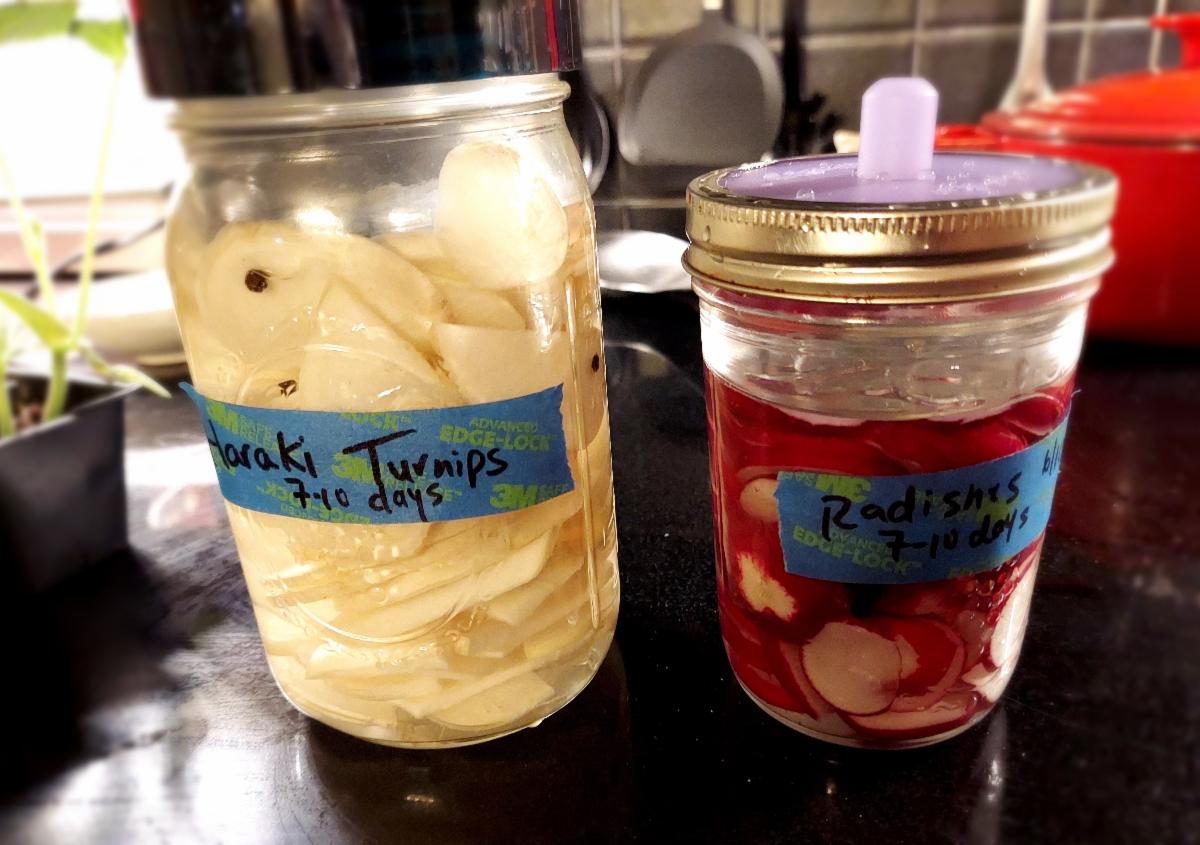
One of the food preparation techniques I have experimented with over the past several years has been lacto-fermentation, or fermenting with salt. There are well-documented benefits to eating food preserved in this way rather than pickling with vinegar. Lactobacillus (the same beneficial bacteria found in yogurt) is the only bacterium that is salt-loving. The brine kills off all the other bacteria, letting the healthful lactobacillus thrive.
Pickling seemed simple: Cover vegetables in a salt-water brine. I found some recipes on the Internet and gave it a go. My first attempts to make cucumber pickles failed miserably. The pickles were overly salty, mushy, and mealy and I didn’t understand why.
|
|
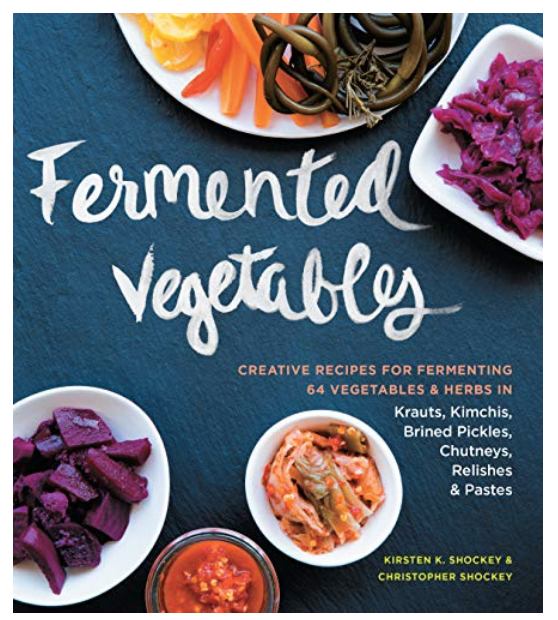
Frustrated by my experience, I started looking for information on lacto-fermenting and discovered the book Fermented Vegetables: Creative Recipes for Fermenting 64 Vegetables & Herbs in Krauts, Kimchis, Brined Pickles, Chutneys, Relishes & Pastes by Christopher Shockey and Kirsten K. Shockey. It quickly became my pickling bible. The book has chapters on the history and science of lacto-fermenting, which is like catnip to my geeky food-science soul, tools and techniques, and the all-important salt—how to choose and measure it. The heart of the text contains specific recipes for pickling 64 different vegetables, presented in useful alphabetical order. With clear and thorough information, processes for problem solving, and recipes illustrated with absolutely gorgeous photographs, Fermented Vegetables by Shockey and Shockey is my favorite and most accessible lacto-fermenting resource. This book will guide you not only in making incredible cucumber pickles (which I now know are some of the most difficult vegetables to pickle well), but in lacto-fermenting all of the garden’s bounty.
LJ Cohen is a novelist, potter, and local food enthusiast. She splits her time between her home in Newton and StarField Farm in Central Massachusetts.
|
|
Let's learn more about each other and discover new reads through book recommendations around our common interests in farming, gardening, the environment, food, and good health. Send your review and a note to describe yourself to sue@newtoncommunityfarm.org. |
|
Where You Can Buy NCF Produce |
|
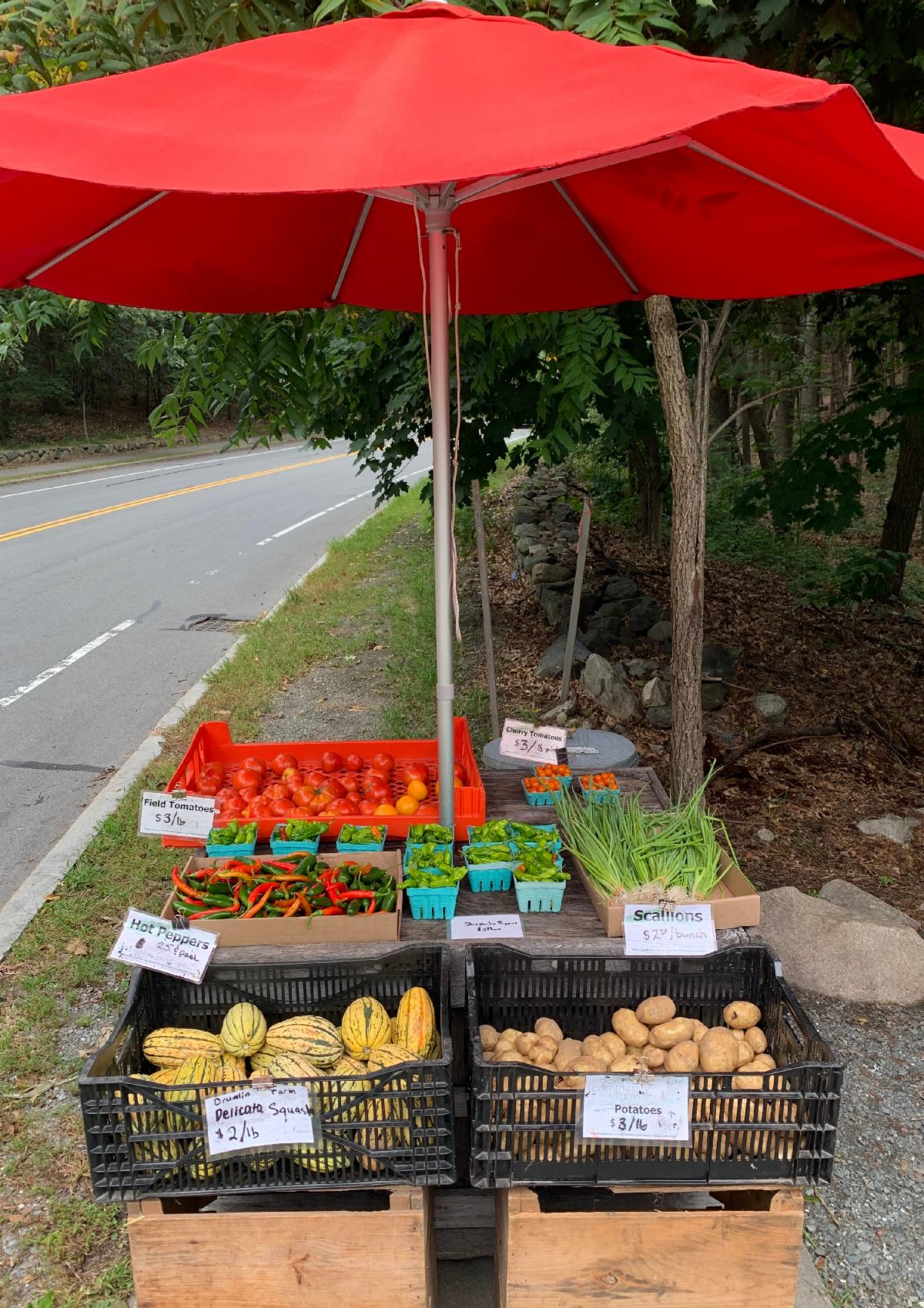
At the NCF On-Site Farm Stand
You'll find us in the little red shed packed with produce on Winchester Street.
Farm-stand hours are:
- Thursdays and Fridays, 1:30–6 pm
-
Saturdays, 9:30 am–1 pm
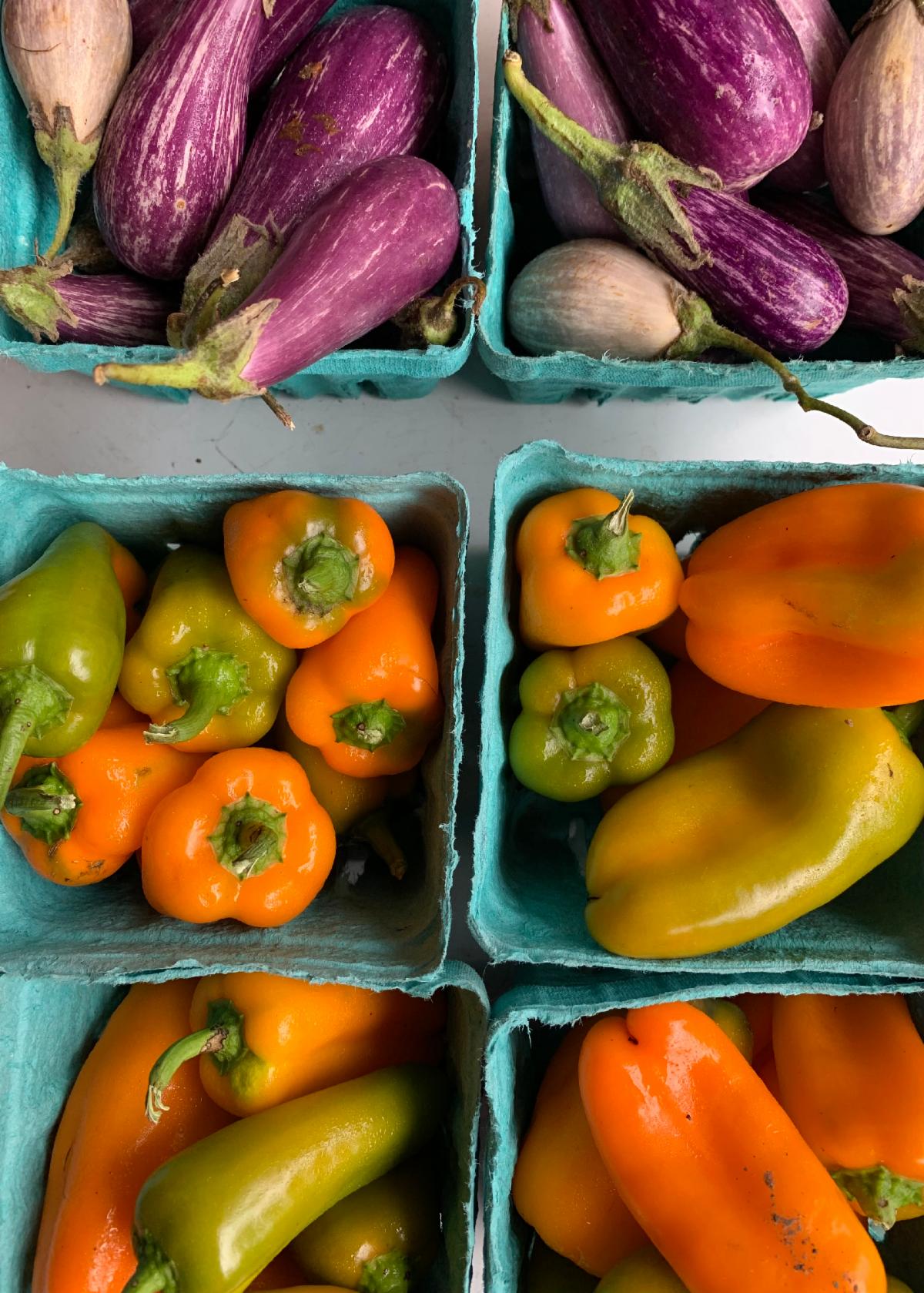
In addition to a selection of produce right from the Farm, we have perennial-blend soil from Vermont Compost Company and perennial herb plants for sale, too. We accept cash, credit cards, Senior Farmers' Market coupons, and WIC. We also accept SNAP on Thursdays and Fridays at the farm stand.
The Saturday Newton Farmers' Market is held at Newton North High School (352 Lowell Avenue) from 9:30 am to 12:30 pm. We accept cash, credit cards, Senior Farmers' Market coupons, WIC, and SNAP.
Don't forget to bring your reusable bags!
|
|
Newton Community Farm is a 501(c)3 nonprofit organization, EIN #20-2482452. If you would prefer to donate by mail, please send a check payable to Newton Community Farm at the address below. Don't forget to ask your employer if matching funds are available. |
|
NEWTON COMMUNITY FARM
303 Nahanton Street
Newton, MA 02459
617-916-9655
|
|
|
|
|
|
|