|
Hello All -
I hope early Fall is treating you well! This time of year always feels great to me, as a bit of rain returns, and temperatures drop. Fall can be a fantastic time to visit the Willamette River.
Thanks for all of you for donating to our recent Advocacy Campaign! We met our goal and that was fantastic! YOU are critical to supporting our work financially, and you really turned out for us, and for that we Thank YOU!
When we talk about advocacy it is a broad term that encompasses a lot of different types of issues and work at Willamette Riverkeeper.
Through advocacy with landowners, cities, public agencies, and in the legislature, we also do this with our members to take action! Advocacy on behalf of the Willamette’s clean water and healthy habitat is essential. It is our energy and action, that makes progress possible.
I want to extend a big thank you to everyone who has taken action on behalf of the river in recent months. By sending comments to fight a bad legislative proposal, or to support improvements to floodplain planning at the local level, it is clear to us that many of your care to make your voices heard!
Thank you so much again for taking the time, and for your passion for the river.
| |
|
Travis Williams
Riverkeeper & Executive Director
| | |
YOU CAN MAKE A DIFFERENCE! | |
|
Why support Willamette Riverkeeper? Because we ADVOCATE, EDUCATE, AND TAKE ACTION to protect OUR Willamette River water quality and habitat! You can make positive change today by supporting our work in a variety of ways:
- Mail a donation to WR at 1210 Center St., Oregon City, OR 97045.
-
Make an online donation at www.willametteriverkeeper.org
- Make an IRA distribution, and direct it to the same address above
- Donate stock to WR. Contract Travis for our account information.
- You can donate property of different types in support of our work.
- You can also place WR in your will as part of our legacy planning program.
-
Please contact us for more information. Thank you for your consideration and continued support!
| |
WR MAKES CASE FOR ROSS ISLAND AS PUBLIC PROPERTY | |
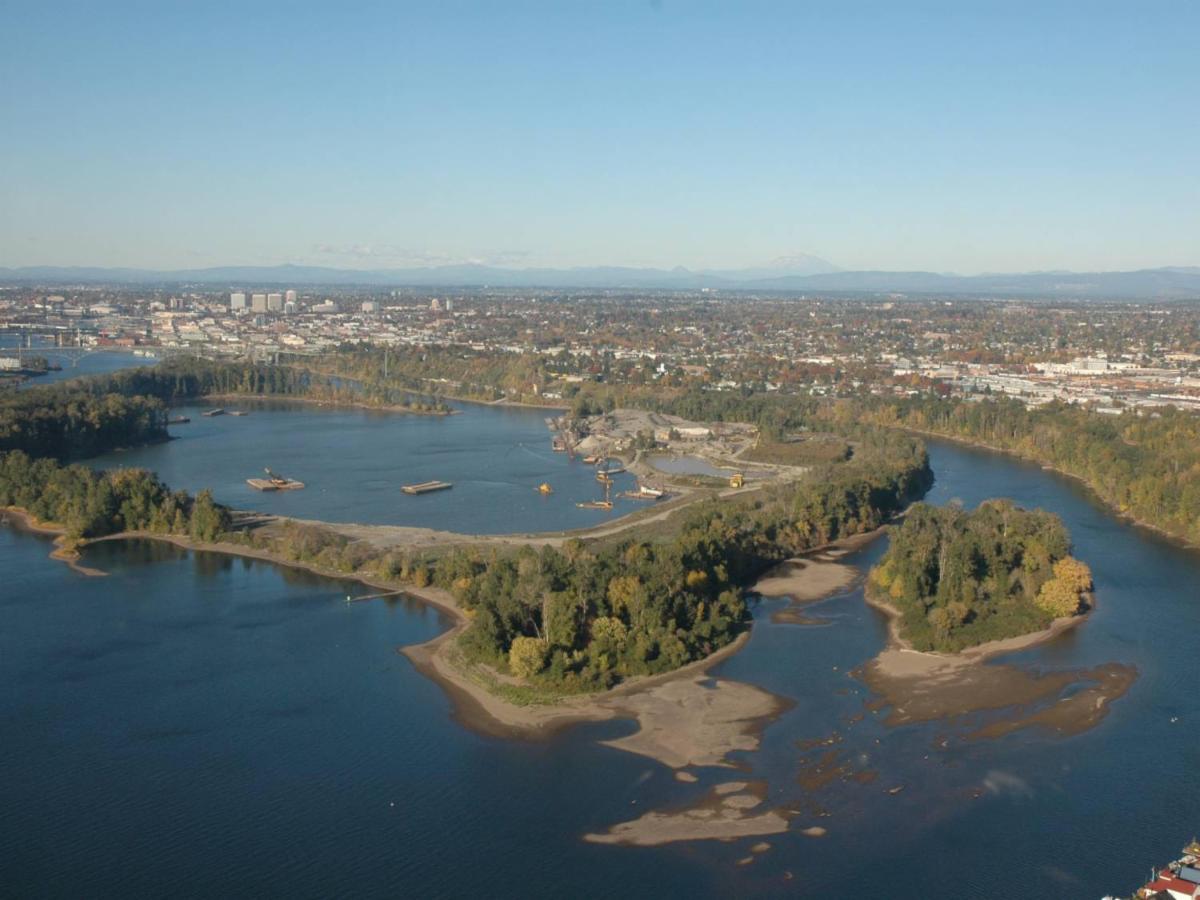
Pictured above; Ross Island, Portland OR. Photo credit: Mike Houck | |
|
For decades, Willamette Riverkeeper has worked on behalf of the health of Ross Island, situated in the Willamette River in the south part of Portland. The island was once two islands, and were joined together on the upstream end back in 1926. At that time intensive gravel mining occurred and continued for decades.
In 2001 the Reclamation Plan for the island was revised, and again earlier this summer by the Department of State Lands. The plan requires Ross Island Sand and Gravel to conduct habitat restoration activity for the benefit of wild species found in the Willamette, such as spring chinook salmon.
Mining ceased at the site a few years back, but the mitigation work continues. With no aggregate left to mine, and processing activities finished, in our view it makes sense for the Pamplin Corporation and its pension fund for Ross Island Sand and Gravel, to sell the island to a public entity. WR has engaged the METRO Regional Government, who has potential funding, as well as the City of Portland Parks Department. If no public entity can take on the task, Willamette Riverkeeper will consider it!
Over the years WR has done signifiant work to remove invasive species on the 44 acres of the island owned by the City of Portland, and have had numerous volunteer events there. Prior to that WR led many canoe and kayak trips around the island and lagoon to discuss the are and the ecological needs of the island complex. We somewhat kiddingly call it the Ross Island Archipelago (including the original Ross Island, Hardtack Island, East Island, and Toe Island).
Back in 2007 Willamette Riverkeeper, the Urban Greenspaces Institute’s Mike Houck, and our own Bob Sallinger, who was then with Audubon, engaged Dr. Bob Pamplin, owner of the Pamplin Corp., in donating the downstream 44 acres of the island to the City of Portland. Travis, Bob, and Mike Houck sat down with Dr. Pamplin and went through a donation contract line by line. At that time the City of Portland had lagged in its effort to work with Pamplin, so we jumped in. After a few hours of work, the donation contract was done, and City Council approved the donation a few weeks later.
Since then, restoration work has occurred, and work to mitigate for a contamination issue has been completed. The upland area where the processing equipment was located would make a great place for people to visit, and the goal would be to protect the island’s habitat as a refuge for a range of wildlife, with limited public access. It should also be managed in concert with the nearby Oaks Bottom Refuge, just across the Holgate Channel.
Having a property like this in public hands makes a lot of sense, and would help to reduce barriers to experiencing nature. A big piece of what Willamette Riverkeeper does is help people get out on the Willamette to connect people to nature. This move for Ross Island’s future just makes sense.
Further, in public ownership, (or that of WR), the issue of toxic blue/green algae can be more easily dealt with, as well as additional restoration opportunities over time. Further, management of the lagoon in regard to craft that currently violate the No Wake Zone would be far easier as well.
Over the next few months WR will be engaging with Metro, the City of Portland and others to move this issue forward. We will continue to provide updates as this effort continues.
For more information feel free to email: travis@willametteriverkeeper.org
| |
LAWSUIT CHALLENGES FEMA'S FLOOD INSURANCE PROGRAM | |
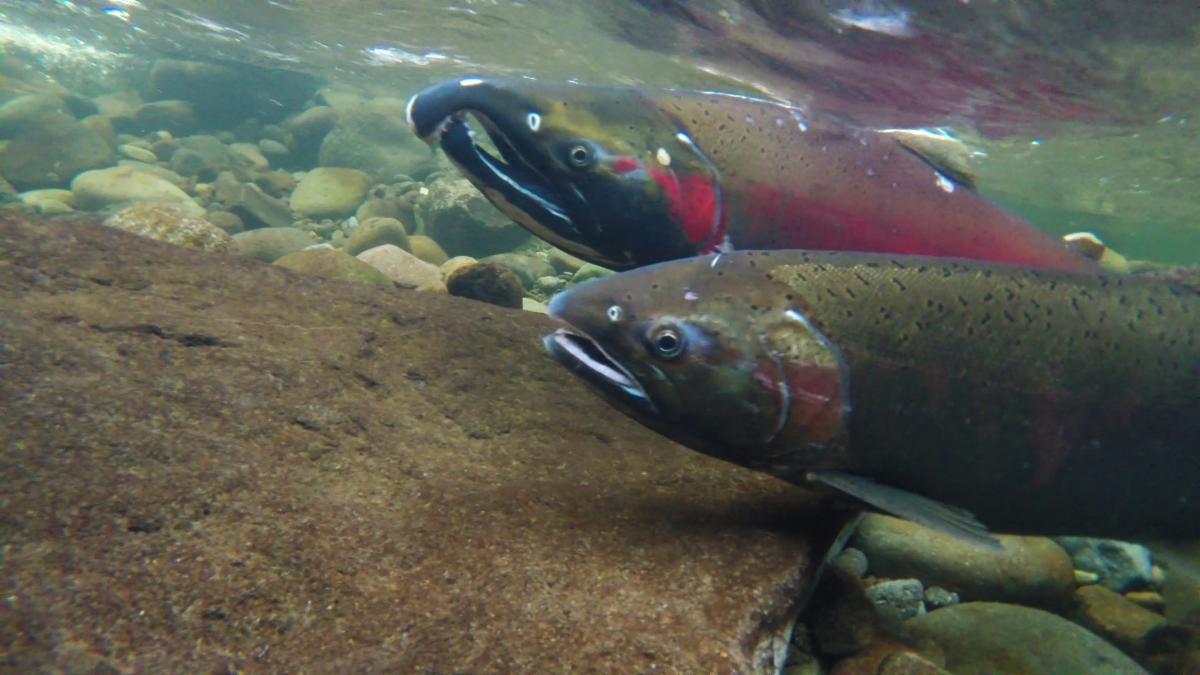 | |
In mid-September, Willamette Riverkeeper, along with three other conservation groups, sued the Federal Emergency Management Agency (FEMA) over its failure to adequately protect floodplain-dependent species, including Upper Willamette River Chinook salmon and steelhead, in its implementation of its National Flood Insurance Program (NFIP).
In 2016, the National Marine Fisheries Service (NMFS) determined that the NFIP jeopardized the survival and recovery of protected species through poor floodplain management and by encouraging development in floodplains. NMFS called on FEMA to update chronically outdated flood maps, develop new criteria to limit floodplain development, better mitigate harm when development does occur, and improve reporting and enforcement.
Despite receiving extensions to deadlines, FEMA has stalled and delayed these reforms and is still years away from compliance, putting both people and federally listed species at unnecessary risk. Our lawsuit says FEMA failed to meet mandatory deadlines for complying with NMFS’ requirements to protect threatened and endangered floodplain dependent species, violating the Endangered Species Act.
Lawsuit Launched to Protect the McKenzie River from Leaburg Hatchery Pollution
A few days after Willamette Riverkeeper officially sued FEMA, we joined together with two other conservation groups to file a formal notice of intent to sue Oregon Department of Fish and Wildlife (ODFW) Director Curt Melcher, in his official capacity, for ongoing violations of the Clean Water Act (CWA). The violations stem from ODFW’s discharges of warm water from the Leaburg Fish Hatchery into the already temperature-impaired McKenzie River, which is critical habitat for the federally listed Upper Willamette River Chinook salmon.
Unfortunately, ODFW has regularly violated this permit condition in recent years, but since the state has not shown an interest in holding ODFW accountable, we are using the CWA citizen suit provision to protect both the river and its threatened fish and other aquatic life.
The conservation groups are represented by
Crag Law Center and Karl Anuta in this matter.
| | |
FIGHTING ENVIRONMENTAL ROLLBACKS | |
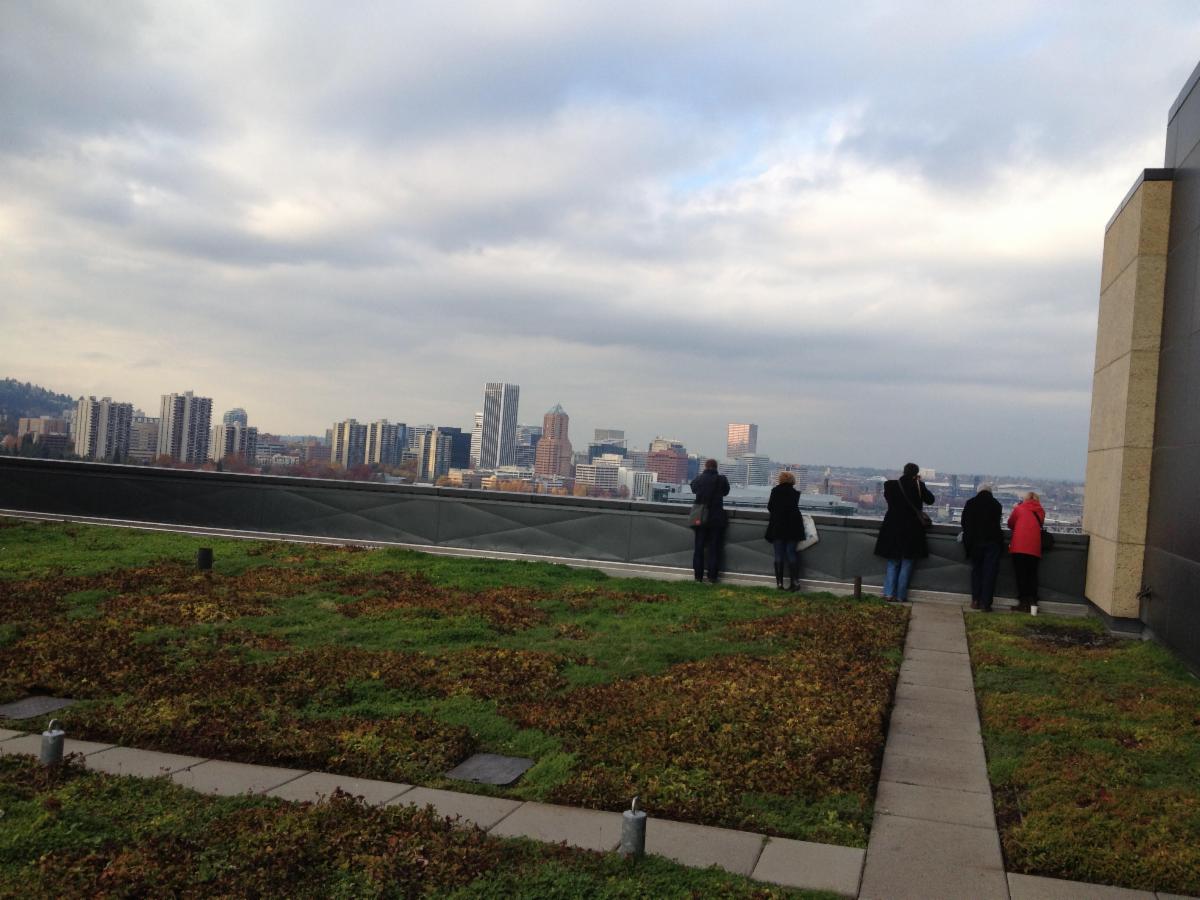
Pictured above; Green Roof at South Waterfront. These roofs protect water quality, increase energy efficiency, clean and cool our air, and can provide habitat as well. The City is proposing to suspend downtown green roof requirements to appease greedy developers. | |
|
We often devote resources to fighting efforts to rollback our existing environmental protections. These moments flare when there is a crisis that can be exploited by developers and industrial interests as a pretext to go after environmental regulations.
We are in one of those moments right now.
Oregon is enmeshed in a deep housing crisis. It is a crisis that has been decades in the making, in part due to failed public policy that put the interests of developers ahead of the interests of the communities in which they worked. Environmental regulations have become the proverbial scapegoats and sacrificial lambs of the current housing crisis.
At the same time, we also have a climate crisis. Heat domes, flooding and other extreme weather events are becoming increasingly common in Oregon and in communities across the United States. We must take on things that are essential to making our communities more resilient by planting more trees, protecting floodplains and wetlands, greening our streets and buildings, expanding our system of natural areas and protecting air and water quality. MORE HERE...
| |
|
GOVERNOR SIGNS NEW LAW
INCREASING BEAVER PROTECTIONS
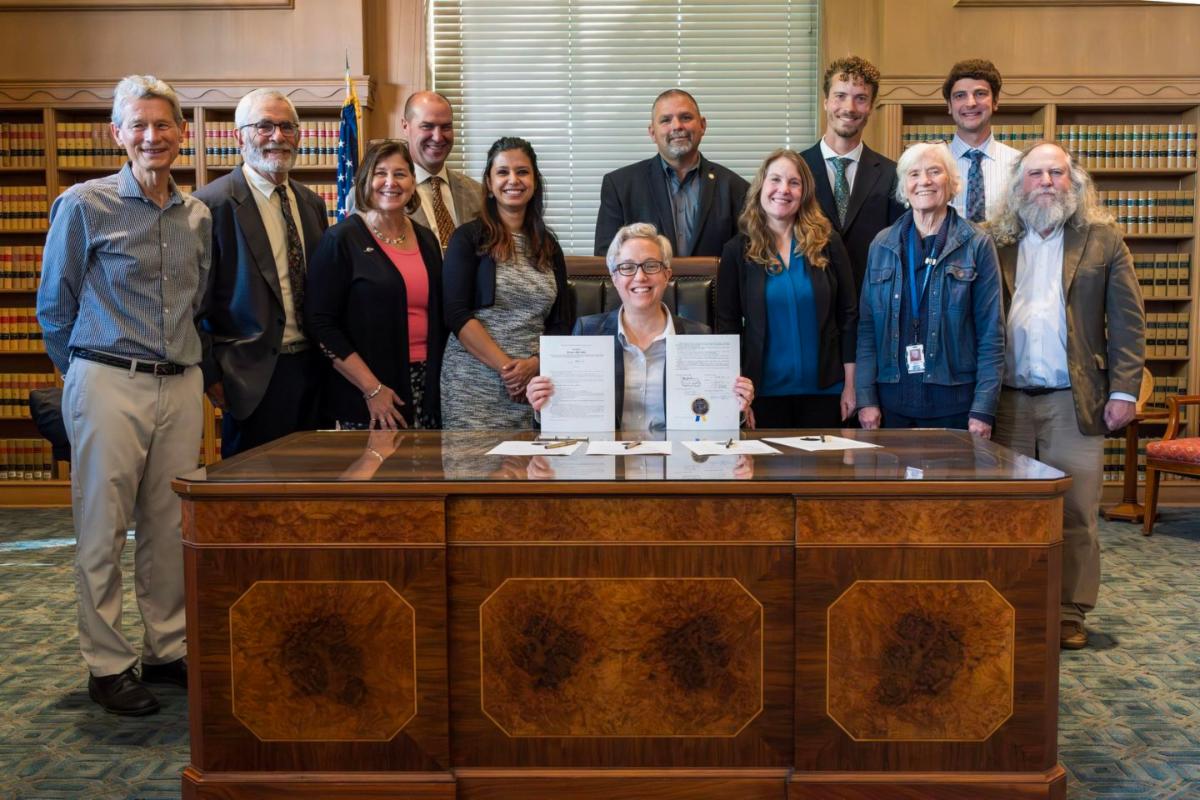
| “The group of lawmakers and conservationists at the Beaver Bill signing. WR’s Bob Sallinger represented WR at this fantastic event." | |
|
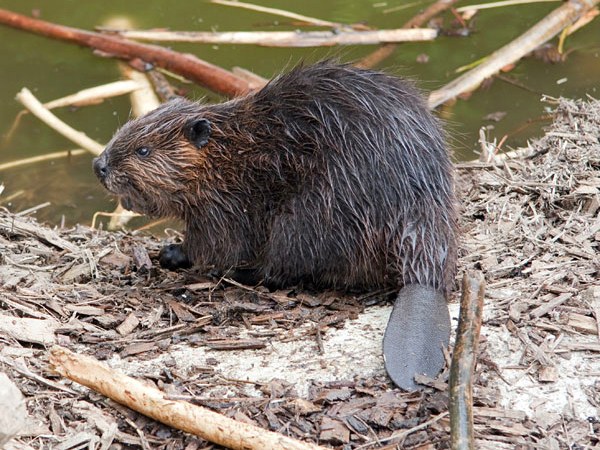
On September 28th Governor Tina Kotek signed HB 3464 into law enacting higher levels of protection for Oregon’s beavers. Beaver (Castor canadensis) are considered a keystone species and have played a huge role in shaping Oregon’s landscape. Called “nature's engineers,” Wetlands created by beaver provide a myriad benefits for dozens of other species; including federal listed salmon, waterfowl, state listed sensitive turtles and other mammals such as mink and otter.
There are few things we could do to improve the ecology of our landscape than protecting and restoring beaver.
Until now, beaver on private lands in Oregon have been managed as a “predator species.” While the term “predator" may seem like a misnomer for the herbivorous beaver, it has significant and problematic legal meaning. Under Oregon’s predator statute, species categorized as predators may be killed on private land without cause, without permits and without any reporting. They are basically treated as pest species.
HB 3464 changes that designation. MORE HERE...
| |
|
On September 27, 2023, SB 85 (the CAFO bill) was signed by Governor Kotek. SB 85 is aimed at reforming and modernizing Oregon’s regulatory rules regarding the way concentrated animal feeding operations (CAFOs) are permitted and operated in the state. Importantly, SB 85 pauses the livestock watering exemption for five years.
The livestock watering exemption allows for factory farms to withdraw unlimited groundwater for watering livestock, even in areas where the communities rely on groundwater as their sole source of water. Willamette Riverkeeper will continue to support the effort to protect Oregon’s family farmers and rural residents from pollution stemming from CAFOs, including our fight against the proposed poultry CAFO that would be built right on the banks of the North Santiam River and threatens federally listed species and both surface and groundwater contamination.
| |
REMINDER! WILLAMETTE RIVERKEEPER
GEAR LIBRARY IN THE WORKS
| |
|
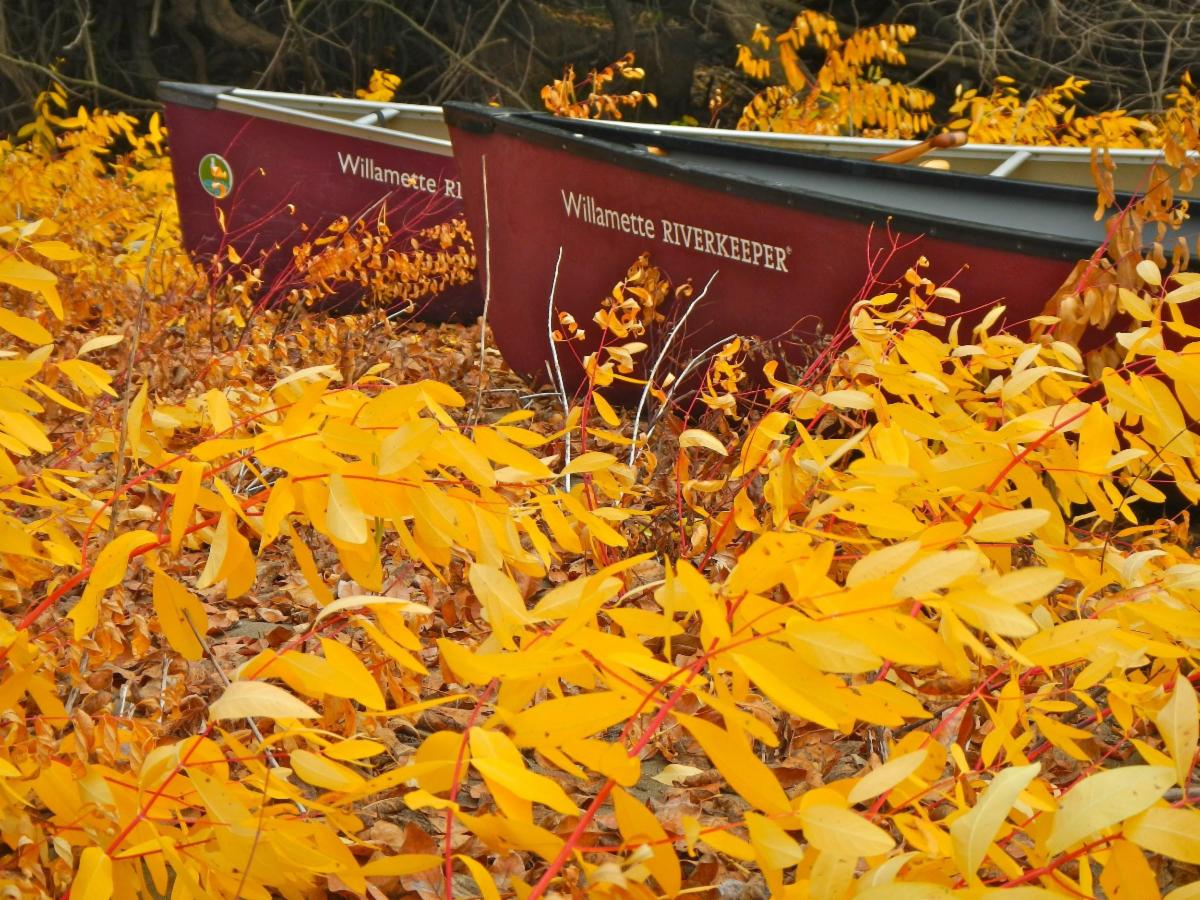
We announced this concept in last months Riverscape and want to keep the momentum going. At present, we are soliciting gear from a range of sources, including you! Consider donating this year!
GEAR WE WILL CONSIDER: canoes, paddles, PFDs, tents, sleeping pads, sleeping bags, lighting, kitchen set ups, dry bags, camp chairs, rain layers, water containers and more.
Gear should be in good or great condition.
We would like to create a low barrier for entry for folks who have a bit of experience, but have not ever spent the night along the Willamette on their own, and may not perhaps, be able to afford the luxury of proper gear. As of now, we are planning to launch this new project next year for a discreet period of months, while working to keep the costs low. If you have something you would like to donate, please contact Travis Williams.
Thanks in advance for your donations!
| |
RESTORATION PROGRESS REPORT | |
|
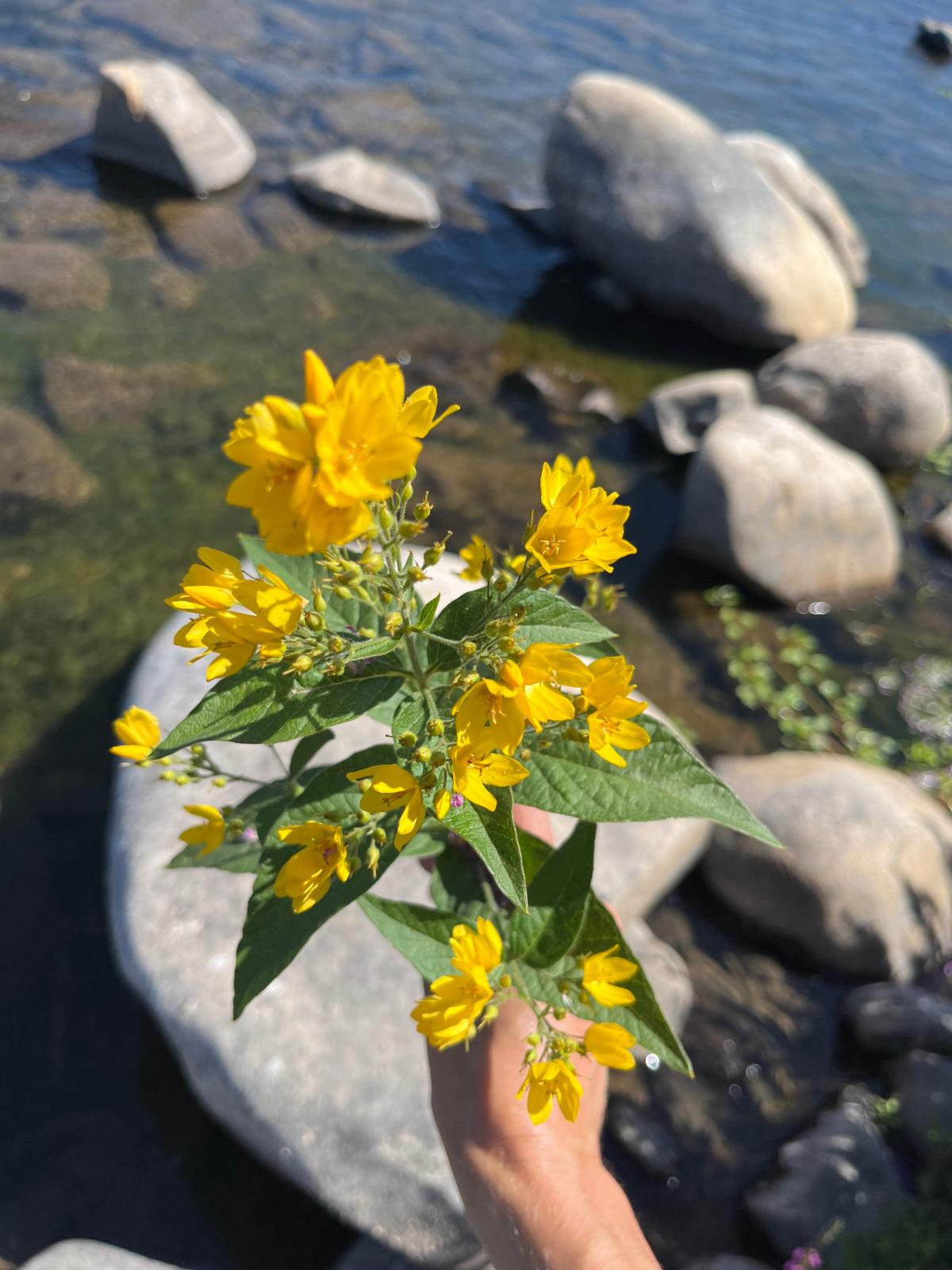
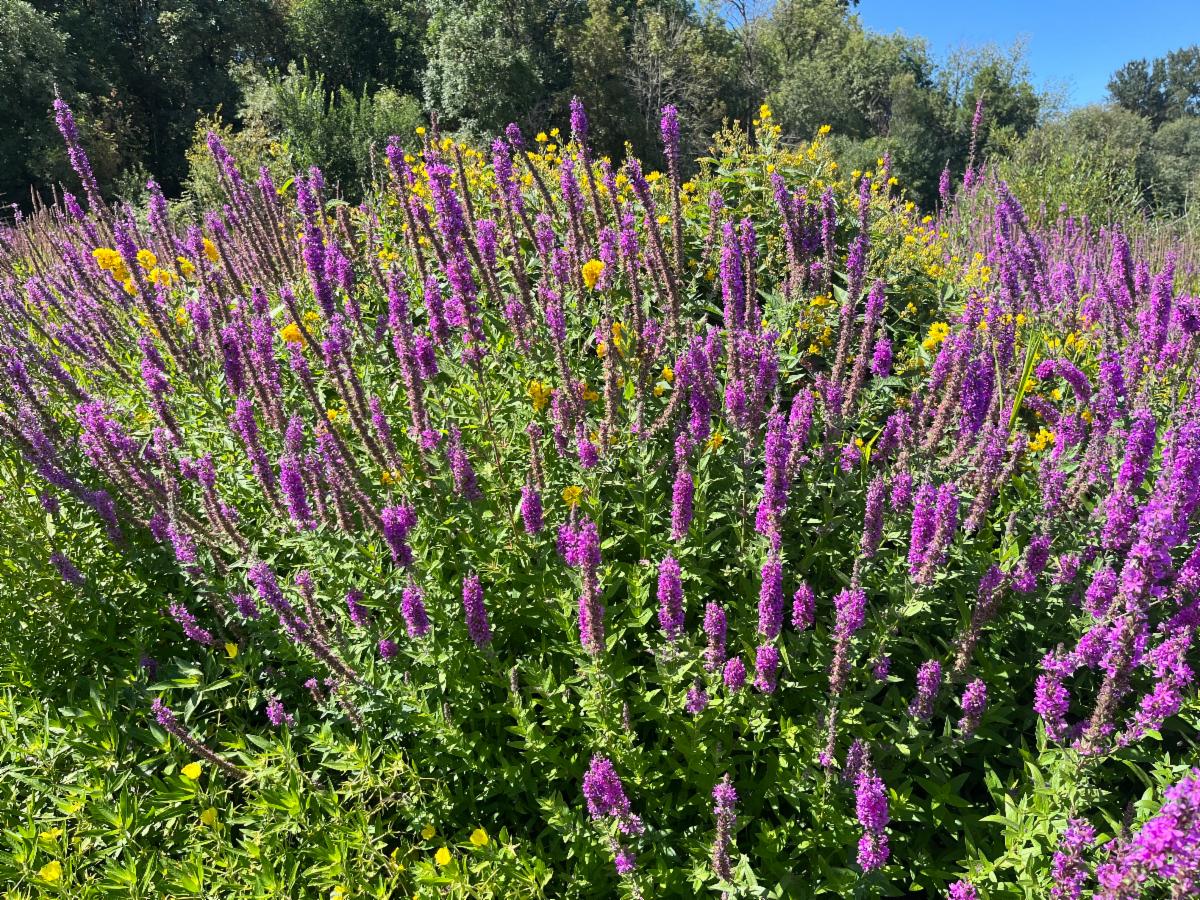
This summer, Restoration Manager, Vanessa Youngblood, has been busy battling yellow flowered species “A” & “B” listed aquatic invasive weeds under the Oregon Department of Agriculture. Unfortunately, these plants continue to impact our river and its critical habitat. WR also teamed up with both Benton Soil & Water Conservation District and Yamhill Soil & Water Conservation District to manage three dovetailing grant projects for the Oregon State Weed Board.
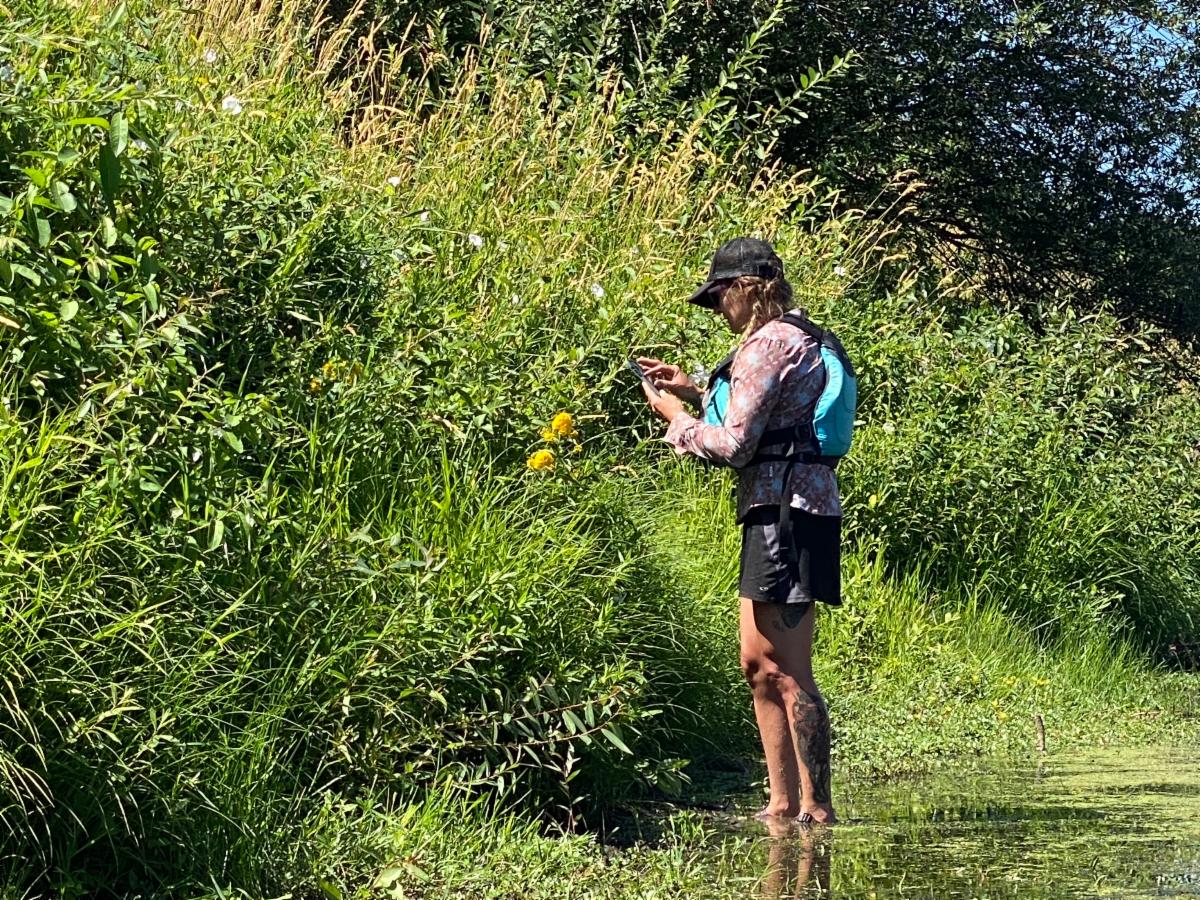
2023 efforts focused on two early detection rapid response (EDRR) “A” listed aquatic invasives; yellow floating heart (Nymphoides peltata), and garden yellow loosestrife (Lysimachia vulgaris). Staff and partners surveyed 125 miles of the river - in addition to back channels, alcoves and sloughs! While we did find some new populations of both species, we also celebrated some successes from our 2022 treatment efforts l where multiple historic locations of yellow floating heart seemed to be eradicated, or largely reduced in size and coverage.
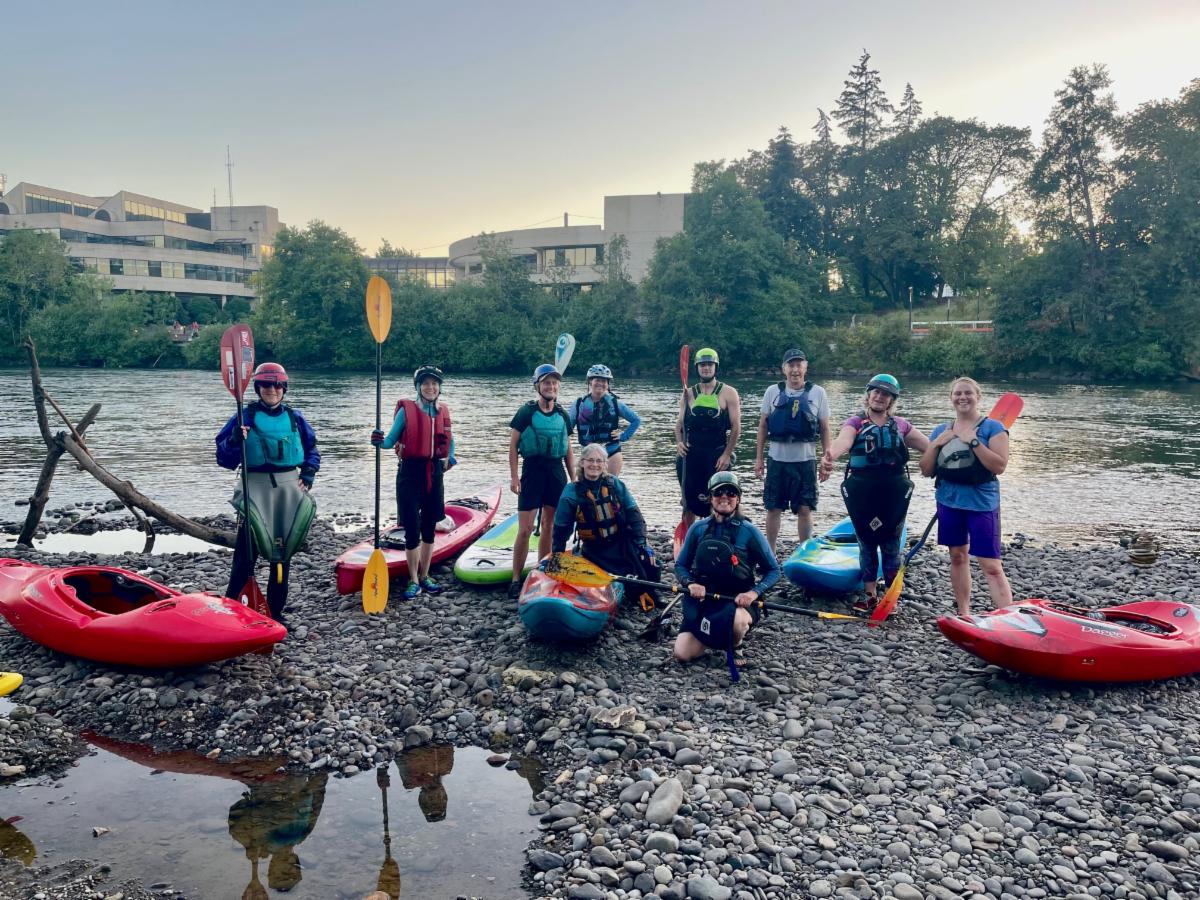
WR also held a “Peer to Peer” day on the river with our colleagues. Partners attended from entities across the entire Willamette Basin and enjoyed sharing identifying tips and tricks, while also getting some new folks out on the river for their first time.
Additionally, we treated close to 85 acres of Ludwigia in Windsor Slough at Willamette Mission State Park, and celebrated our last year of treatment on the Willamette Slough at Minto Brown, in partnership with the City of Salem. We also finallycompleted our maintenance aquatic treatments in the back channel at Gail Achterman Wildlife Area.
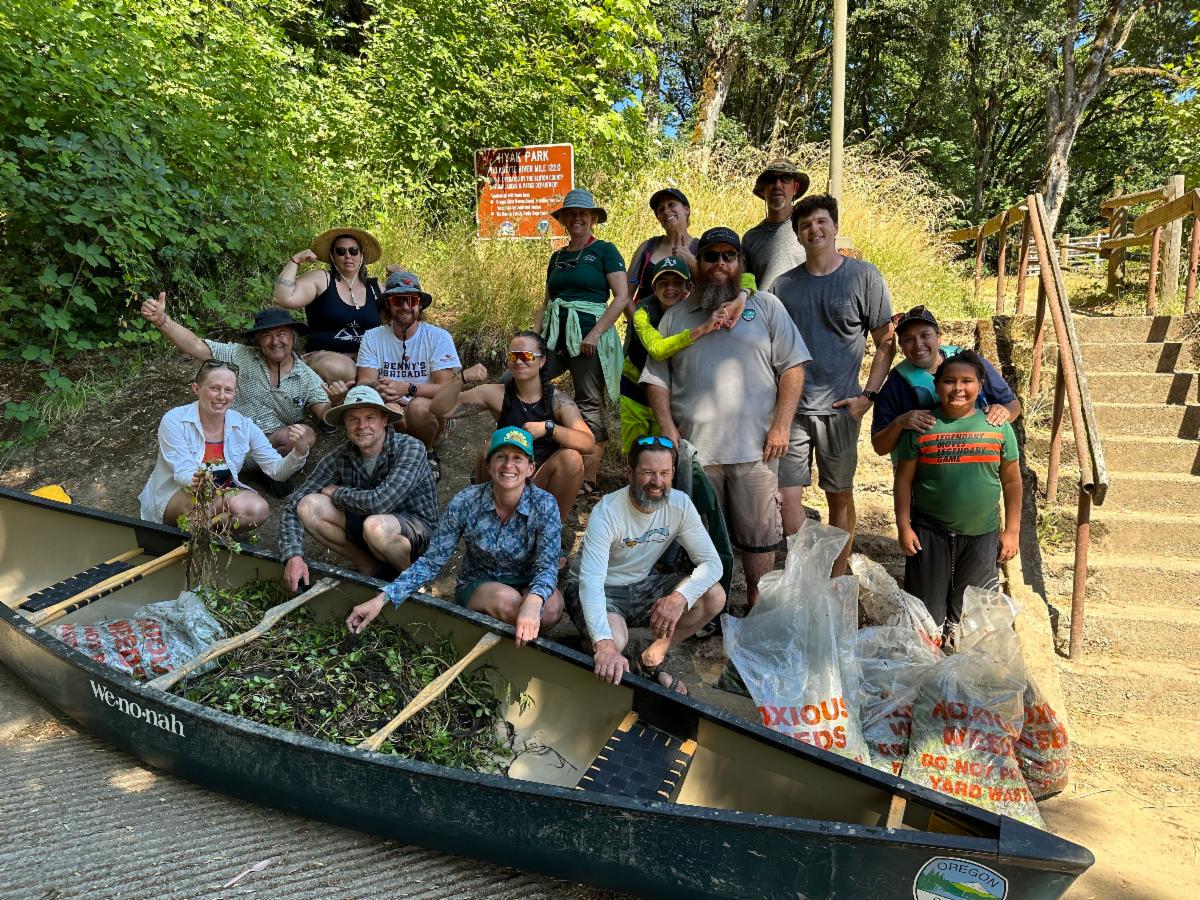
Thanks to our incredible volunteers for pulling over 60 brimming bags of Ludwigia, Parrot’s feather (Myriophyllum aquaticum) and more during our “Paddle & Pulls” in partnership with Benton Soil & Water Conservation District and Oregon Parks and Recreation Department.
We couldn’t do this collaborative work without our volunteers, partners, funders, and contractors, so huge thanks to you all!
| |
VOLUNTEER EVENTS CALENDAR | |
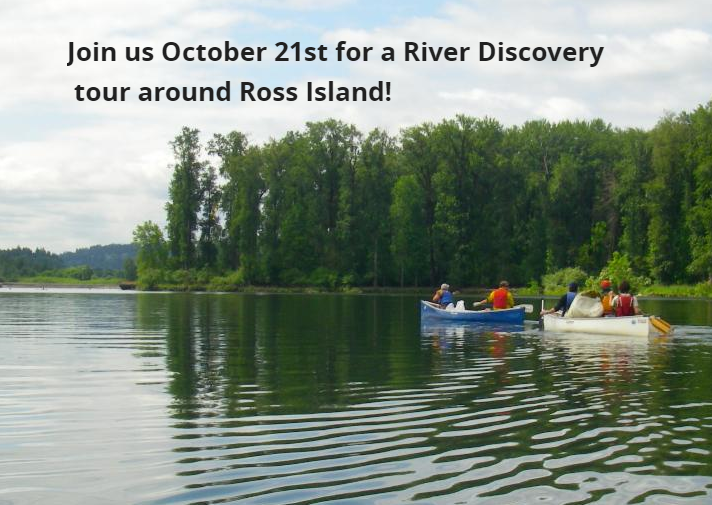
Join Willamette Riverkeeper for one of our many FREE river trips! This month, we will be bringing back our River Discovery Series with a circumnavigation of Ross Island! WR has been working on protections for Ross Island for over 27 years, and is now working to bring the island under public ownership! Learn more and join us for the ROSS ISLAND RIVER DISCOVERY trip by REGISTERING HERE.
We also have many river cleanups scheduled throughout the watershed. WR supplies boats, paddles, and PFDs for those without. We look forward to seeing you on the river!
October 12: Corvallis Trashy Thursday - On-water Cleanup - REGISTER
October 21: Portland River Discovery: Ross Island - REGISTER
October 24: Eugene Trashy Thursday - On-water Cleanup - REGISTER
October 26: Corvallis Trashy Thursday II - On-water Cleanup - REGISTER
November 8: Salem Wildlife Wednesday - On-water Cleanup - REGISTER
November 14: Eugene Trashy Thursday - On-water Cleanup - REGISTER
/
|
|
THANK YOU FOR YOUR SUPPORT! | | | | |