Dear Angelenos:
Despite the challenges presented by COVID-19, City Planning has continued to review and process much-needed housing units to keep our economy afloat and countless Angelenos housed. During the most recent quarter, April 1 through June 30, 2020, there were 3,581 new units proposed―2,877 market rate and 704 affordable (equating to 20 percent of the overall total).
Almost 55 percent of those proposed units were the result of the Transit Oriented Community (TOC) Incentive or Density Bonus Programs, with the former contributing 956 units (680 market-rate and 276 affordable). Particularly noteworthy is the fact that 29 percent of all units proposed through the TOC Incentive Program were affordable, a step in the right direction as we begin to brace for the economic recovery in the months ahead.
Additionally, there were 1,230 new permit submissions for accessory dwelling units (ADUs), another program that this Department helped shape to increase the supply of housing. Since the beginning of 2018, Los Angeles has consistently received 1,200 to 1,400 ADU applications every quarter, with April to June numbers on par with the previous quarter (1,229) and COVID-19 having no short-term impact on the construction of these casitas.
For more information, I encourage you to check out our summer issue of the Planning Quarterly Report as well as visit the Housing Dashboard, both of which highlight housing trends and efforts underway to provide more options and opportunities across the City.
Together, we are Planning4LA.
Sincerely,
|
|
Vince Bertoni,
Director of Planning
|
|
|
|
Online Payments for Planning Applications |
Beginning this month, City Planning is accepting payment for project applications online. Customers can simply request an invoice via email, then pay through a link to our secure payment processor. These measures reflect the Department’s concerted efforts to simplify the process―making it possible to practice physical distancing during COVID-19 while providing increased attention to the customer experience.
Today, administrative clearances and discretionary entitlements alike can be paid for online. This safe and secure service avoids the hassle and inconvenience once associated with having to mail in or drop off payment in person at the Development Services Centers (DSCs).
Additionally, a limited number of application types can be submitted entirely online, including appeal applications, applications for Conditional Use Beverage permits for alcohol sales, Tier Verifications for TOC projects, and preliminary applications for SB330 housing projects. New online application types will be made available on an ongoing basis, so continue to monitor the Department’s Online Application Portal for new updates.
|
|
|
|
Home-Sharing Online Compliance System |
On August 31, City Planning launched a new online system that makes it easier to identify and take down illegal short-term rental listings. The system incorporates technology to enable the Department to automate the collection and verification of short-term rental listings.
The Application Programming Interface (API) implements the agreement, developed by City Planning, that Airbnb entered into with the City. The agreement provides additional recourse for Los Angeles to initiate actions against platforms that allow unregistered or illegal listings to continue to advertise online. A notable feature of the API is its ability to remove unregistered properties across the City that are not owner-occupied but operating as party homes.
Once fully operational, Airbnb listings that are ineligible or without a registration number will be removed on a daily basis. These ineligible listings include rent stabilized and affordable housing units, as well as units that were either subject to recent evictions under the Ellis Act or have been registered on the “Proactive Prohibition” list by the landlord or manager in charge of the property. For additional information, email planning.home-sharing@lacity.org.
|
|
|
|
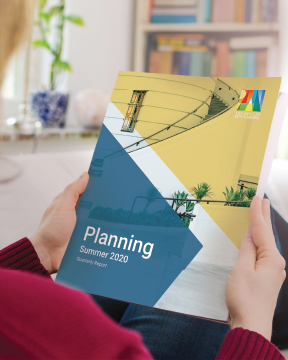
The summer edition of City Planning’s quarterly report is now available. This issue highlights the Department’s ongoing updates to its Community Plans, with a special emphasis on Boyle Heights. Consistent with past issues, the report also includes a profile on housing, looking specifically at development trends that emerged between March to June 2020.
Unique to this quarter’s issue is its profile on the Affordable Housing Linkage Fee, which has become a local source of revenue for the construction of affordable units. In a regular feature of the quarterly report, this issue also showcases some of the historic neighborhoods across Los Angeles and the ongoing planning efforts to retain their character and charm.
The report offers readers an in-depth look at the history and evolution of the Banning Park Historic Preservation Overlay Zone (HPOZ), located near the Port of Los Angeles in the Wilmington neighborhood. For decades, Banning Park has served as a home for a diverse group of workers and their families, including Black families arriving from the South as part of the Great Migration and émigrés from the former Yugoslavia.
|
|
|
|
Hollywood Community Plan Implementation Overlay |
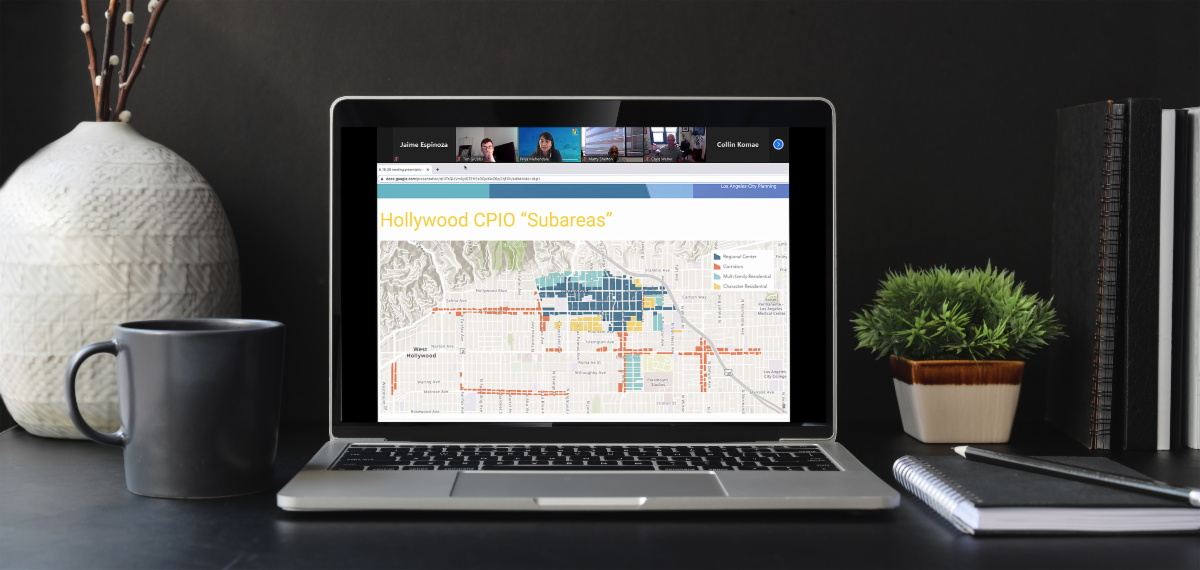
On August 7, City Planning reached an important milestone in the Hollywood Community Plan update process with the release of its revised draft Community Plan Implementation Overlay (CPIO) District. The CPIO addresses three main goals: encouraging the production of mixed-income and 100 percent affordable housing near transit, safeguarding historic resources, and improving urban design. These goals speak to the overarching intent of the policy document for the Draft Community Plan, which is also being updated, along with the zoning across the entire area.
The CPIO District primarily applies to the central Hollywood area surrounding the Hollywood/Highland and Hollywood/Vine B Line (Red Line) Metro stations, as well as bus-served corridors along Santa Monica, Vine, and Western, where the plan envisions most future growth could be accommodated.
Additional outreach, including virtual engagement and events, an open house, and a public hearing, are anticipated to take place later this year, after which the City Planning Commission will review the draft proposals prior to City Council consideration. Public comments on the updated CPIO and Draft Community Plan can be sent to Sophia Kim at sophia.kim@lacity.org.
|
|
|
|
Downtown Community Benefits Program |
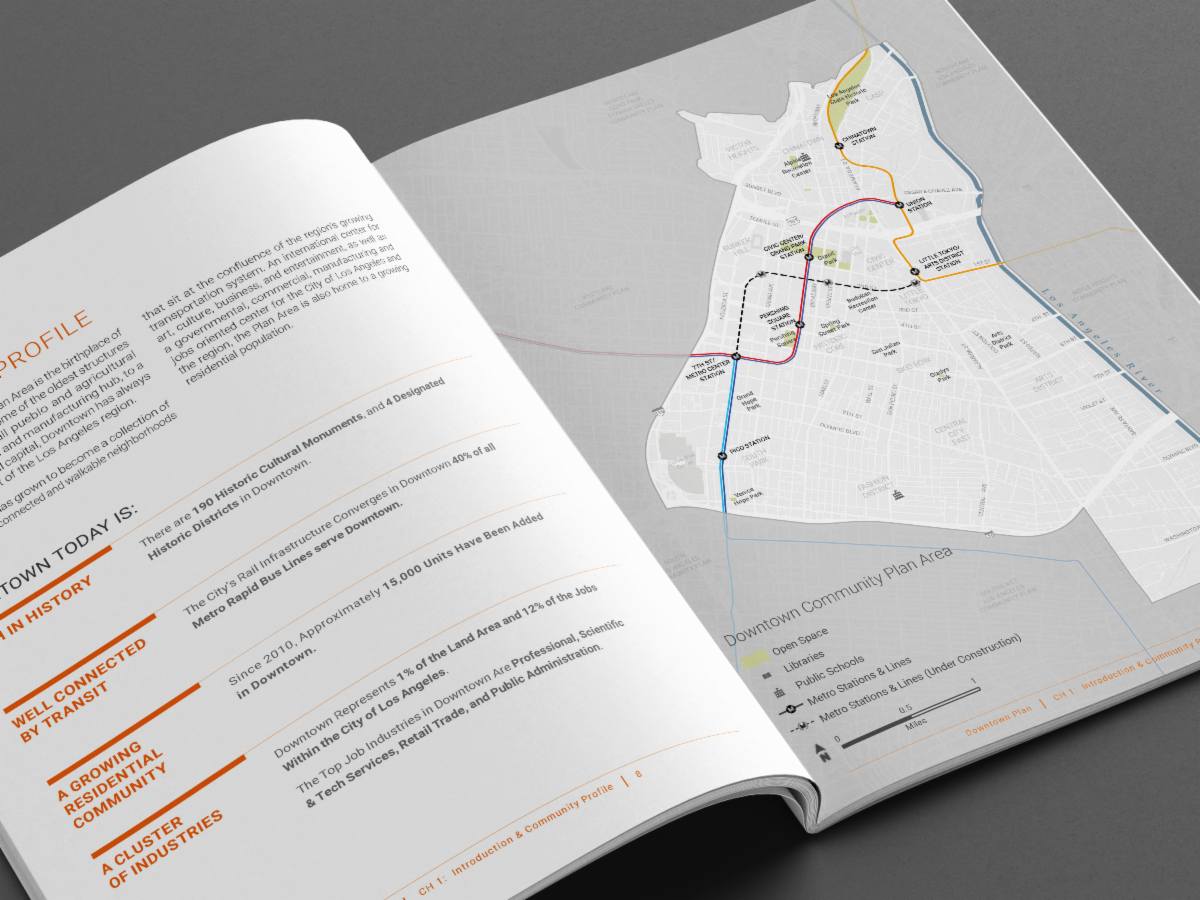
On August 6, City Planning unveiled a revised Community Benefits Program as part of the update to the Downtown Community Plan, which aims to increase affordable housing opportunities across the plan area through a new incentive-based zoning system.
By setting aside a specified number of housing units as affordable, a project would be allowed to exceed the base floor area by 35 percent under the proposed Community Benefits Program. Additional incentives would be available for projects that also provide more affordable housing or neighborhood-serving amenities, such as public open space and child care centers.
Currently, the transfer of development rights (TFAR) is the only tool being utilized in Downtown to link development with community benefits. Unlike the TFAR Program, which covers less than 25 percent of Downtown, the Community Benefits Program would expand housing incentives to 60 percent of the area to better accommodate diverse living situations, lifestyles, and income levels.
Following the public hearing later this winter, the proposed Community Benefits Program, along with the final staff recommendation on the proposed update to the Downtown Community Plan, will advance to the City Planning Commission for its consideration. Public comments on these drafts can be sent to Brittany Arcenaux at brittany.arcenaux@lacity.org.
|
|
|
|
Time is running out to complete the 2020 Census, with the September 30 deadline approaching. City Planning encourages everyone to be counted! The response rate in Los Angeles is currently at about 55 percent, which means almost half of Angelenos are not yet reflected in the count.
The Census determines funding for transportation, health care, housing, economic development and more, as well as California’s representation in Congress. Census data also inform future decisions about where to invest and build.
The census is quick and easy to complete online, by phone, by mail, or with a census taker who travels door-to-door. It’s important to note that one’s immigration status does not matter, and that all information is protected by law under Title 13 and cannot be shared with any other governmental agency. For more information, visit 2020census.gov.
|
|
Hollywood Chamber Presentation |
On August 18, City Planning gave a presentation to the Hollywood Chamber of Commerce on the latest updates to the Draft Hollywood Community Plan. Principal City Planner Craig Weber, Senior City Planner Priya Mehendale, and City Planner Linda Lou spoke to approximately 30 members of the Chamber’s Economic Development Committee, including business stakeholders and residents, who joined to hear from the Department on a proposed zoning tool that will address affordable housing, historic preservation, and pedestrian-friendly design.
Planners highlighted the zoning tool, known as the Community Plan Implementation Overlay (CPIO), which would increase both mixed-income and 100 percent affordable housing near transit through an incentive system. Also under the CPIO, new projects would integrate compatible features found in selected historic districts and ensure that the fronts of commercial buildings are designed for pedestrians, with attention to characteristics such as building location, entrance, and transparency.
City Planning also shared that new resources to help explain the latest plan update efforts are online, including topical flyers in English and Spanish, and a video of the CPIO. Updated goals and policies for accommodating future employment and housing growth while preserving existing stable neighborhoods, hillsides, and open space in Hollywood are discussed in the Draft Community Plan.
|
|
Project Planning 101: Save the Date! |
This October, City Planning will host its annual Planning 101 training series. This year’s curriculum focuses on case intake and review in order to shed light on the development process. The training is intended to provide newly elected neighborhood board members, as well as other community stakeholders, with an overview of the review process for planning projects.
The series will kick off with a special presentation for the Congress of Neighborhoods in September, followed by three public trainings offered in English and Spanish in October. In keeping with Mayor Eric Garcetti’s Safer At Home order, the sessions will be held online to help slow the spread of COVID-19 and maintain social distancing standards.
Launched in 2017, the Planning 101 series is an educational initiative spearheaded by the Department in order to offer the public an overview of basic elements of the City’s planning and development functions. Collectively, these trainings have been attended by over 1,500 community members including students, residents, neighborhood council members, community-based organizations, and planning and public policy professionals.
|
|
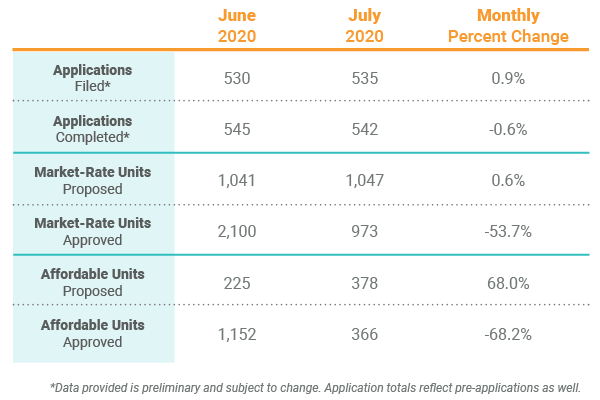
The rates of application filing and completion have begun to stabilize, after witnessing a steep drop in the weeks following the issuance of the stay at home orders. Over the month of July, applications filed increased by 0.9 percent and applications completed decreased 0.6 percent. In contrast, between March and May, application filing and completion dropped 14 percent and 15 percent respectively on average each month. Based on the July numbers, the current rates of filing and completion are now on par with the beginning of Fiscal Year 2018-2019. |
|
|
|
- Preparing to release the updated Community Plan text, zoning regulations, and Community Benefits Program in Summer 2020
-
Released the Draft Plan, along with the proposed changes to the Land Use and Zoning, in October 2017
|
|
|
|
- Preparing Draft Environmental Impact Report (EIR)
- Completed Scoping process in September 2019
-
Released Draft Land Use Concepts in May 2019
|
|
|
|
- Preparing Land Use Map for public release
- Preparing Environmental Impact Report
-
Released online Draft Land Use Concepts in 2018
|
|
|
|
- Concepts Workshops conducted in July 2020
- EIR Scoping Meeting planned for Fall 2020
|
|
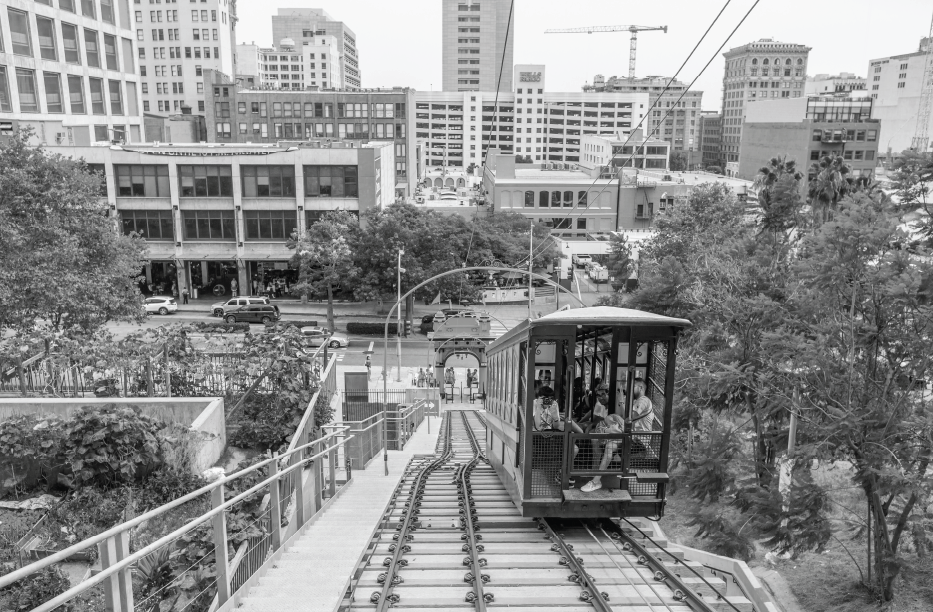
One of Downtown Los Angeles’s most iconic attractions is Angels Flight. In 1901, Angels Flight opened to the public and its cars, Olivet and Sinai, were used to transport the people who lived on top of Bunker Hill to the lowlands of the financial district.
In 1969, Angels Flight was closed when its site was cleared for the redevelopment of Bunker Hill. The railway reopened in 1996 a half-block south of its original location, with extensive restoration work to Sinai and Olivet, and it reopened again in 2017 following additional safety enhancements. The railway has been featured in many films, from 1918’s Good Night, Nurse! to 2016’s La La Land.
Angels Flight is the fourth Historic-Cultural Monument in Los Angeles, and in 2000 it was added to the National Register of Historic Places. For decades, Angelenos have frequented Angels Flight to take a fun-filled ride on the funicular and to savor a part of Los Angeles’s rich history.
|
|
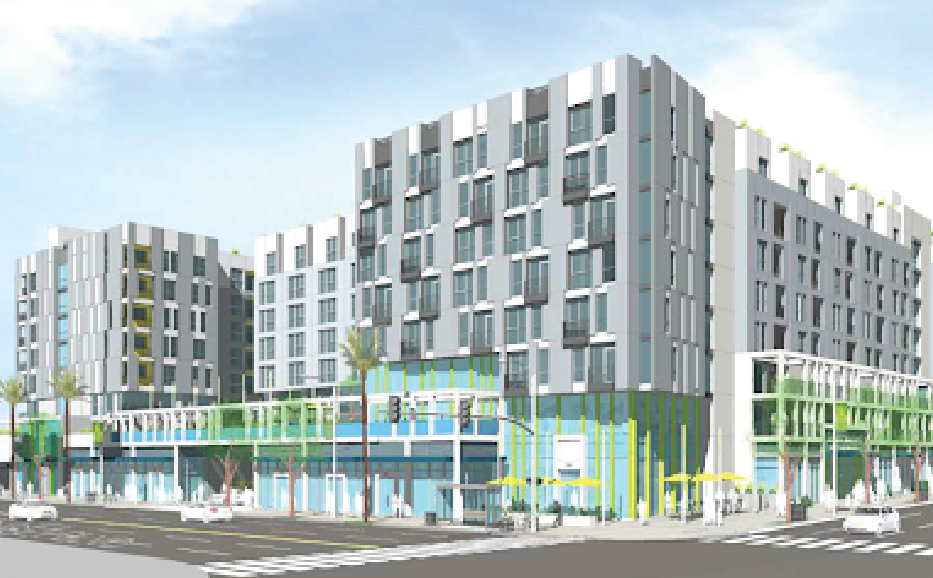
This month, the City Planning Commission approved a new eight-story, mixed-use, mixed-income housing project located at 5509 W. Sunset Blvd. in the Vermont/Western Station Neighborhood Area Plan Transit Oriented District (SNAP) Specific Plan. Of the building’s 412 units, 61 will be set aside for Very Low Income households. The project will also include 33,569 square feet of ground floor commercial uses. By setting aside 25 percent of the base dwelling units for restricted affordable housing, the proposal was able to qualify as a Priority Housing Project.
The project would activate both Sunset and Western Avenues, consistent with the Vermont/Western SNAP Specific Plan’s overarching goals to create a denser and livelier pedestrian environment along major commercial and transit corridors. Once completed, the project will line street frontages with floor-to-ceiling glass storefronts and residential lobbies. These features are consistent with the pedestrian-first design goals of the recently updated Citywide Design Guidelines, which aim to support greater pedestrian access at the street level.
|
|
|
|
Planning 101: Project Planning |
|
|
|
Planning 101: Project Planning |
|
|
|
Planning 101: Project Planning |
|
|
|
Planning 101: Project Planning |
|
LOS ANGELES CITY PLANNING
@PLANNING4LA
|
|
|
|
Sign up to receive citywide
planning updates by email
|
|
|
|
|
|
|