FAIR REPRESENTATION & REDISTRICTING
FOR NEW YORK STATE GRANTMAKERS
|
|
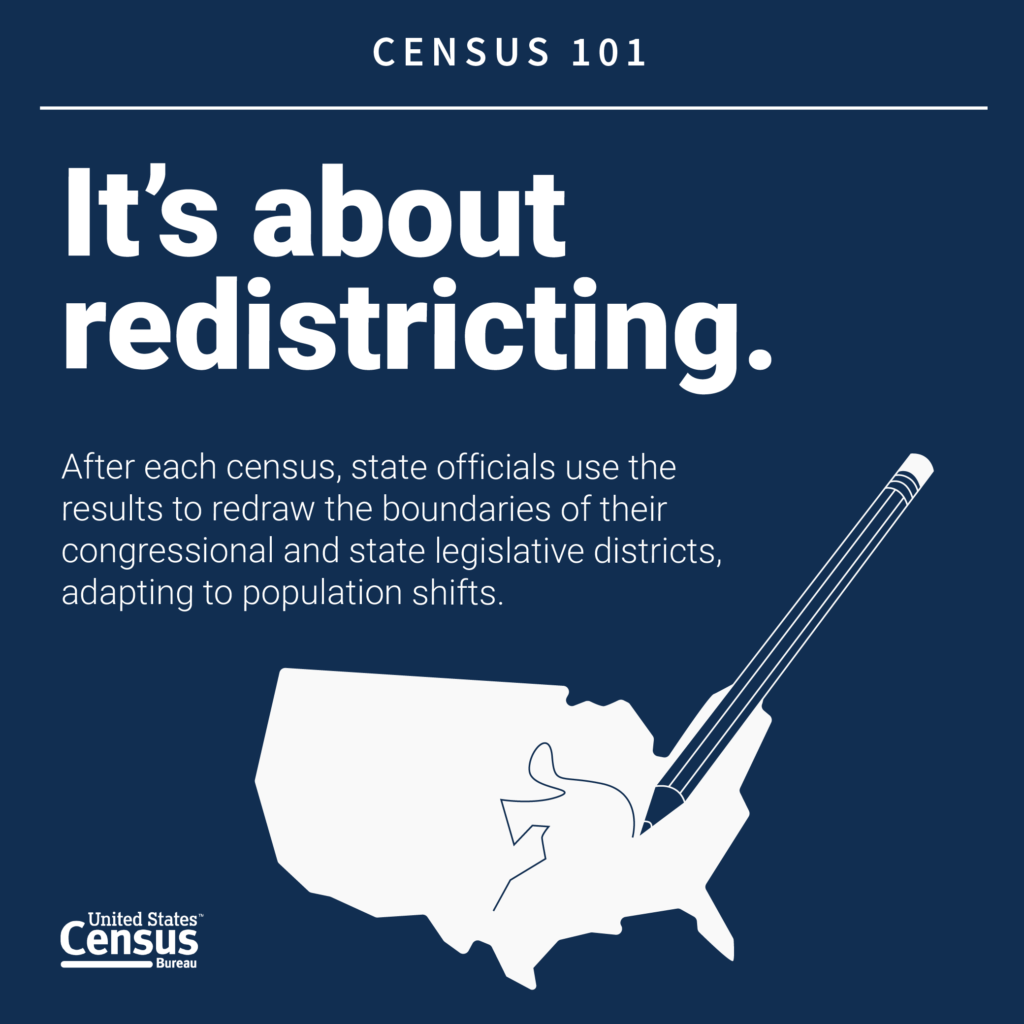
As the country waits for the Census Bureau to release the data collected in 2020, state and local governments around the country are turning their attention to redistricting. New York is doing the same, and just like in census, philanthropy has a role to ensure that fair representation is realized. To ensure this happens, community groups and philanthropy are preparing now to ensure communities across the State are informed and engaged in the upcoming process which is now required by state law.
When the New York State Census Equity Fund announced the creation of a pooled fund to work on a complete count for census 2020, the Fund always included redistricting as part of its work plan. Counting people is important to ensure New York receives its fair share of federal resources to support vital community programs and infrastructure. At the same time, ensuring all New Yorkers have fair representation is equally as important.
Over the next several months, this newsletter will aim to inform you and your colleagues about the resources, tools, and news regarding redistricting with specific attention on New York State.
Just like census, redistricting is part of the democratic process to ensure that communities are fairly represented. If you want to learn more about how your foundation can engage in this work or if you have grantees looking for resources, networks, and connections, please contact us.
|
|
REDISTRICTING IN NEW YORK |
|
In New York State, the following county legislatures are required to draw new districts:
Albany Oneida Allegheny Onondaga Broome Orange Cattaraugus Orleans Cayuga Oswego Chautauqua Otsego Chemung Putnam Clinton Rensselaer Cortland Rockland Dutchess St. Lawrence Erie Schenectady Franklin Schuyler Genesee Steuben Greene Suffolk Herkimer Sullivan Jefferson Tioga Lewis Tompkins Monroe Ulster Nassau Westchester Niagara Yates
Likewise, the following ward systems and towns must also redraw their district lines:
Ellicott - Chautauqua
Hyde Park - Dutchess
Poughkeepsie - Dutchess
Wappinger - Dutchess
Greece - Monroe
Hempstead - Nassau
North Hempstead - Nassau
New Hartford - Oneida
Camillus - Onondaga
Salinas - Onondaga
Wallkill - Orange
Brookhaven - Suffolk
Queensbury -Warren
Blooming Grove – Orange
|
|
Mapping the New Senate, Assembly, and Congressional Districts, Written by Jeff Wice, CityLaw
New York State in 2021 must redraw the State’s senate, assembly and congressional districts. The process will be different from the process used to draw legislative and congressional district lines in the past. Previously, the State legislature redrew the districts for its own members and for the State’s congressional members. After years of efforts to reform a process seen as too self-interested, New York State voters in 2014 approved an amendment to the State constitution that created a new Redistricting Commission that will propose new district lines to the legislature. The legislature still gets the last word, but the commission process opens the redistricting process up, provides an outside entity to act as the initial proposer, and adds guidelines for map design for fairness.
Redistricting in New York after the 2020 census, Ballotpedia
When Will the Independent Redistricting Commission Get its Funding? Written by Susan Arbetter, Spectrum News
The Independent Redistricting Commission (IRC), put into place last year, doesn’t yet have an email address, a phone number, a website, or even an office. But it does have a deadline.
Under current law, the commission has to provide initial redistricting plans to Congress and the state legislature by January 15, 2022. If that first set of plans is rejected by the legislature or vetoed by the governor, they are to make revisions and submit a second set of plans to Congress and the legislature by February 28, 2022.
Work on creating the new maps has been stalled because the commission has yet to be paid – though not for want of trying.
New York Redistricting Amendment
S 8833 is a proposed amendment to the New York constitution that would make changes to the redistricting reforms approved by voters in 2014 by changing deadlines and the thresholds needed to approve maps, as well as certain criteria for drawing maps.
The Brennan Center has a great overview of what is in the amendment and what it means for the redistricting process. The amendment will be on the ballot in November and it is important that voters understand the amendment.
|
|
Making Sense of the Census
Wednesday, March 31, 2021 | 3:00-5:00 PM ET
|
The New York Community Trust Leadership Fellows program is proud to announce a free webinar on census data, presented in partnership with the Census Bureau!
During this webinar, Joli Golden from the Census Bureau will speak on the implications of the results of the US census for nonprofits, and how census data can be used in proposals to foundations. We will be utilizing census data products including American Community Survey data and advanced search on data.census.gov. Additionally, speakers from the Muslim Community Network, the Council of Peoples Organization, and the New York Immigration Coalition will share how they have leveraged census data at their organizations to better serve their communities.
This session will be particularly useful for development staff, but all nonprofit practitioners are welcome and encouraged to attend!
This webinar is open to ANYONE who is interested. We encourage you to share it not only with colleagues in your organizations but your extended network as well.
|
|
Quarterly Redistricting Funder Briefing
Wednesday, April 28, 2021 | 3:00 PM ET
This briefing is for funders and other philanthropic institutions interested in learning about nonpartisan redistricting efforts supported by Fair Representation in Redistricting, a funder collaborative that has a focus on equity issues. The briefing will preview the first phase of new messaging research, explain how funders are working with nonprofits with a spotlight on the South, and provide an overview of resources for funders seeking to get involved.
Hosted by Fair Representation in Redistricting with support from FCCP
|
|
REDISTRICTING TOOLS TO HELP FUNDERS |
|
All about Redistricting
This is a comprehensive resource on redistricting rules, processes, and reform across all fifty states created by Justin Levitt at Loyola Law School that includes Redistricting 101 materials in six languages.
Redistricting Data Hub
The nonpartisan Redistricting Data Hub was founded by experts with backgrounds in pioneering redistricting legal cases, the establishment of independent redistricting commissions, and related ballot initiatives in different states. The goal of the Redistricting Data Hub is to provide individuals, civic organizations, and good government groups the data, tools, and knowledge to participate effectively in redistricting processes by learning how to define their communities, provide meaningful public input, recognize gerrymandering, and advocate for fair and legal maps.
CUNY Releases Redistricting & You Interactive Map
This new tool developed by the Center for Urban Research at the Graduate Center of the City University of NY (CUNY) will help various stakeholders understand the local implications of redrawing legislative district lines across the country.
The map uses the latest census estimates to show population characteristics that will help localities and states redistrict.
Princeton Gerrymandering Project
This nonpartisan tool will help localities understand how to conduct nonpartisan gerrymandering at the State level. The Project bridges "the gap between mathematics and the law to achieve fair representation through redistricting reform." The mapping tool provides information on state-by-state reforms and census-related timeline delay alerts.
|
|
MEETING NOTES AND RESOURCES FROM FCCP |
|
Drawing a Just Democracy Convening Resources
In February, Fair Representation in Redistricting virtually convened funders and stakeholders to learn and plan around how to achieve fair representation through the 2021-2022 redistricting cycle. The stakes for this work — for racial justice, state and local policy reform, community funding, and our democracy–could not be higher. The four-day convening included a mix of plenaries and small group discussions to foster learning and strengthen relationships.
· The conference agenda, recordings, and slides are available on the FCCP website
· The recording of the funder session, Funder Perspectives: Why Redistricting Matters and Ways to Fund, is available here
Co-Hosts: Funders’ Committee for Civic Participation, State Infrastructure Fund, United Philanthropy Forum
|
|
|
|
TOOLS AND NEWS FROM THE CENSUS BUREAU |
|
The Census Bureau Released its Historical Interactive Apportionment Map
The new online mapping tool from the Census Bureau displays 10 decades of appointment and population data. The 2020 Census data will be added to this tool once it is released by the Bureau, which is expected to be on April 30, 2021.
|
|
|
This email was generated by Engage New York in support of the NYS Census Equity Fund; a pooled fund focused on supporting a fair and accurate census count as well as fair representation in the redistricting process.
|
|
|
|
|
|
|