OCTOBER 19, 2026

KEEP THIS NEWSLETTER COMING TO YOUR INBOX

How Many Times Can We Cry Wolf Before Nobody Believes Us?


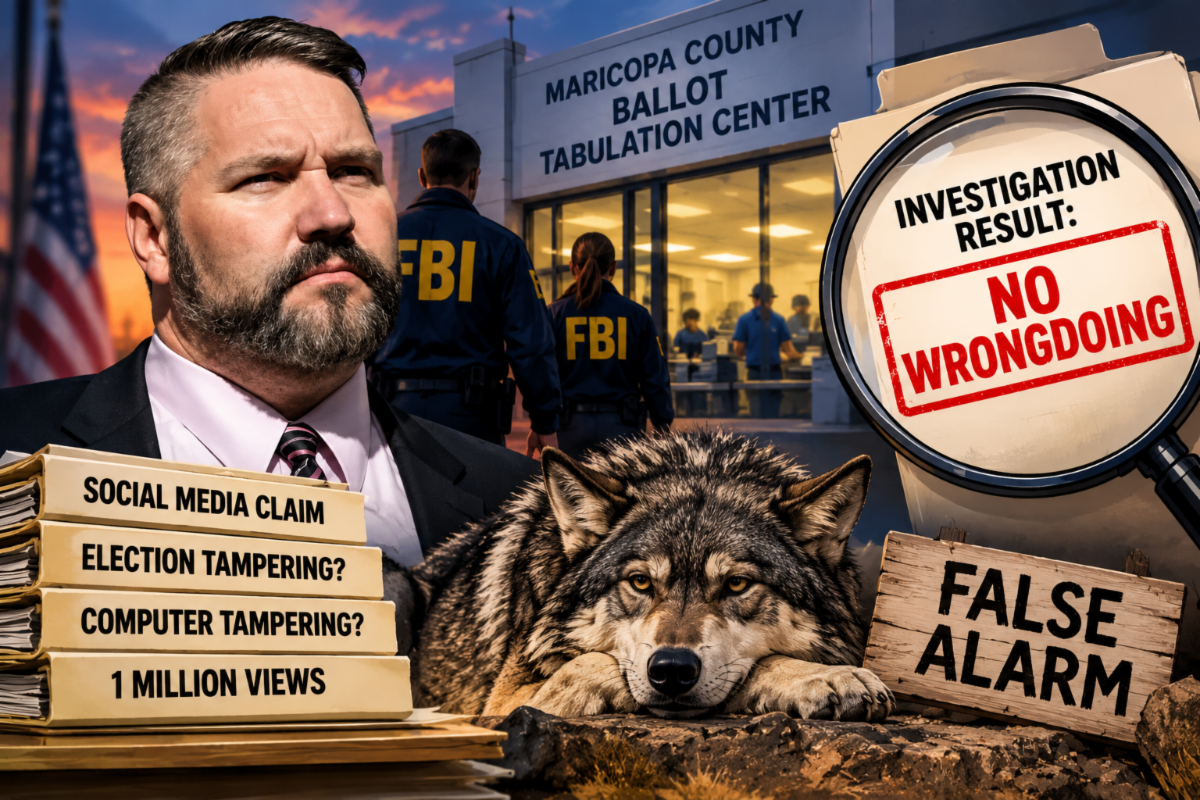
Another election tampering allegation involving Maricopa County Recorder Justin Heap's office falls apart under investigation. At what point do we stop treating every unusual occurrence in Maricopa County elections as evidence of wrongdoing? Less than three weeks before Election Day, another allegation of election tampering has been investigated, and once again, investigators found no wrongdoing.


This time, the accusation was serious enough that senior staff members in Maricopa County Recorder Justin Heap's office contacted the FBI. According to reporting by 12News, the controversy began with an October 9 social media post from We the People USA Alliance, an organization led in part by Shelby Busch. The post showed employees inside Maricopa County's Ballot Tabulation Center at approximately 10:30 p.m., with a young child reportedly accompanying them.


The video came from the county's publicly accessible livestream of the facility.

The post attracted approximately one million views, with additional social media claims suggesting possible computer tampering. Busch and the Republican National Committee reportedly brought their concerns to Heap's office. Senior members of his staff subsequently contacted the FBI.

Among those involved in making the call was Sam Stone, a senior official in Heap's office.

The FBI referred the matter to the Arizona Attorney General's Office for investigation.

And what did investigators discover? Absolutely no evidence of election tampering.

The investigator concluded that both employees were authorized to be in the facility after hours and were performing their official duties.


In other words, county employees doing their jobs became the subjects of a federal law enforcement referral because someone watching a livestream decided their activities looked suspicious.

A Phone Call Could Have Cleared This Up

Maricopa County Board of Supervisors Chair Kate Brophy McGee expressed her frustration, explaining that Heap's office could have resolved the matter with a simple telephone call.

Instead, county employees were subjected to an investigation and public accusations.

Brophy McGee also raised an important concern. Election workers already face threats, harassment, and intimidation. Unfounded accusations only make their jobs more difficult.

Heap's spokeswoman, Judy Keane, defended the decision, arguing that suspicious activity inside secure election facilities should be investigated.


I agree that legitimate concerns deserve investigation. But shouldn't the first step be determining whether the activity was actually unauthorized? There is a difference between investigating a credible allegation and creating a crisis where none exists.

This Is Becoming a Pattern

Unfortunately, this is not the first time Heap's office has raised concerns that turned out to be exaggerated or inaccurate. Just days before early ballots were mailed, Heap warned that the U.S. Postal Service had closed its central Phoenix processing facility and that ballots would be routed through San Diego, potentially delaying delivery. The Postal Service contradicted that claim. The Phoenix facility remained operational.


Then there was Heap's investigation into suspected noncitizen voters. His office referred 207 names to County Attorney Rachel Mitchell. Of the 60 individuals who had voted, Mitchell's investigation identified eight noncitizens who had cast ballots at some point since 2012.

That investigation took months and consumed taxpayer resources. The county attorney concluded that the findings would not have changed any election outcome.


Now we have another investigation, this time involving the FBI, that concluded county employees were simply performing their assigned duties. How much time and taxpayer money are we spending chasing allegations that could have been resolved with basic fact-checking?

Remember the Boy Who Cried Wolf?

Most of us remember the childhood story about the little boy who repeatedly cried wolf when there was no wolf. Eventually, when a real wolf appeared, nobody believed him.

That story carries an important lesson for election integrity.


If we continue crying wolf over every misunderstanding, administrative error, or unusual-looking activity, what happens when there is a genuine problem? Will the public believe election officials? Will legitimate concerns receive the attention they deserve? Or will people simply dismiss another warning as political theater? This is what concerns me most.


Election integrity is important. I want every credible allegation of fraud investigated. I want our election officials held accountable, regardless of political affiliation. But repeatedly making alarming claims that are not supported by evidence does not strengthen confidence in our elections.


It destroys it.

Election Integrity Requires Responsibility

Maricopa County is preparing for another major election, and the relationship between Recorder Heap and the Board of Supervisors remains strained. Under their July agreement, Heap's office is responsible for voter registration and early voting, while the Board oversees Election Day voting and ballot tabulation.


These two offices may have different responsibilities, but they share one obligation: ensuring that Maricopa County voters have safe, secure, and accurately administered elections.

That requires communication, professionalism, and a willingness to verify facts before making accusations.


It should not matter whether the Recorder is a Republican or Democrat. It should not matter whether the Board of Supervisors agrees with him politically. Our election officials should be working together, not treating one another as adversaries.


And those of us who are Republicans should be willing to demand accountability from Republican officeholders just as readily as we demand it from Democrats.

This has to End

I am tired of watching unnecessary controversy undermine public confidence in Maricopa County elections. Our election workers deserve better. Our taxpayers deserve better. Most importantly, our voters deserve better. If there is credible evidence of fraud, investigate it thoroughly and hold those responsible accountable.


But if a simple telephone call can establish that county employees were authorized to be in a building doing their jobs, perhaps we should make that call before involving the FBI.

Because if we keep crying wolf, eventually nobody will listen when there really is a wolf.

And that would be a far greater threat to election integrity than two authorized employees working late at night.

A Simple Change That Could Help Maricopa County Deliver Election Results Faster


Maricopa County voters have a way to help speed up election results this November, and it involves a simple change in how they return their early ballots on Election Day.

For years, one of the biggest frustrations surrounding Arizona elections has been the length of time it takes to count ballots and announce final results. Much of that delay comes from voters dropping off their early ballots on Election Day.


Traditionally, those ballots must go through signature verification and processing before they can be counted. When thousands of ballots arrive at the last minute, election workers face an enormous amount of additional work after the polls close.

But Maricopa County has introduced another option.


Voters who receive an early ballot in the mail can bring their completed ballot, along with the ballot envelope, to a participating voting location on Election Day. By presenting an acceptable form of identification and following the required check-in procedure, voters can have their ballot processed for tabulation without waiting for the traditional signature-verification process used for dropped-off early ballots.


This can make a significant difference.


We saw how quickly Maricopa County was able to report results during the July primary election. While several factors contributed to that turnaround, reducing the number of early ballots requiring processing after Election Day can help election workers deliver results sooner.

I do not expect the November general election to be quite as fast. The general election ballot is longer, printed on both sides, and contains more races and ballot measures. That means more information to process and additional opportunities for voters to make errors that require review.


Nevertheless, there is something voters can do to help.


If you plan to return your early ballot on Election Day, consider using the identification-based check-in option rather than simply dropping your ballot into a collection box. This allows election workers to complete important verification steps while you are there instead of adding your ballot to the pile that must be processed later.


The faster ballots can be verified and processed, the sooner election officials can report results.

Election administration is a tremendous undertaking. Maricopa County must coordinate voting locations, equipment, election workers, ballot security, verification procedures and tabulation for one of the largest voting populations in the country.


We all want accurate elections, secure elections and timely results. Those goals are not mutually exclusive.


Whether you vote early, vote in person or return your ballot on Election Day, understanding the available options can help the process run more efficiently.


A few extra minutes at a voting location could save election workers hours of processing later.

Faster results begin with an informed electorate, and every voter can play a part.

When Did Politics Become So Toxic? Enough Is Enough.


I have been involved in politics for decades but I cannot remember an election season quite as toxic, ugly, and exhausting as this one.


We have always had political disagreements. We have always had candidates who took shots at their opponents. Negative campaigning is certainly nothing new. But what we are witnessing in Arizona during the 2026 election cycle seems to have reached an entirely different level.

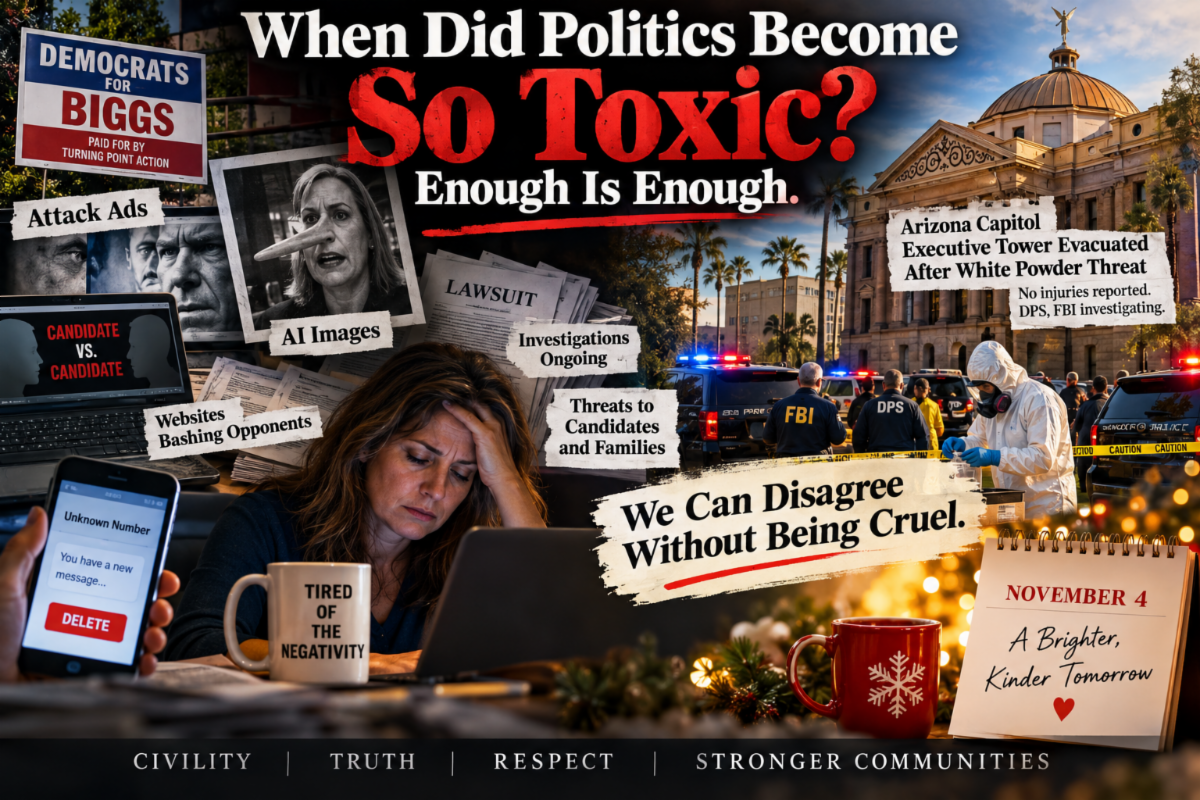
Turning Point Action reportedly paid for signs reading "Democrats for Biggs." Attack ads seem more vicious and personal than ever. Candidates have created websites dedicated to tearing down their opponents rather than promoting their own qualifications. Unflattering and distorted artificial intelligence images are being circulated to ridicule candidates. Lawsuits have been filed, investigations are ongoing, and threats have been made against candidates and their families.

And now we have reached the point where government employees are being evacuated from their offices because of suspicious mail.


On Thursday, October 15, the Executive Tower at the Arizona State Capitol was evacuated after an employee in the Secretary of State's Office opened an envelope containing an unknown white powder. Employees were evacuated, access was restricted, and emergency personnel responded. Fortunately, no injuries were reported. The Arizona Department of Public Safety and the FBI are investigating the incident.


Similar suspicious mailings have reportedly targeted election offices and congressional offices in other states. While investigators have not established who was responsible or what motivated this particular incident, the fact that election workers must worry about potentially dangerous mail is deeply disturbing.


We have to stop this escalation before someone gets seriously hurt.

I am a conservative Republican. I believe strongly in our Constitution, our freedoms, and the principles that have guided this country. I also believe that you can be a strong conservative, stand firmly on your principles, and tell the truth without slandering, humiliating, or threatening someone who disagrees with you.


When did we decide that destroying another person's reputation was an acceptable campaign strategy?


When did political disagreement become a justification for cruelty?

And when did winning an election become more important than basic human decency?

Voters Are Exhausted — And So Am I

I suspect I am speaking for a lot of people when I say I am absolutely exhausted by this election season.


I can barely watch television anymore because of the endless negative political advertisements. My phone is constantly bombarded with political text messages. If a message comes from a number that is not saved in my contacts, I simply delete it without reading it. And I have reached the point where I have had to get off Facebook until after the election. Why? Because someone has been creating distorted AI-generated images of me and spreading defamatory statements about me. And I am only running for a local school board!


Think about that for a moment. I am running because I care about our children, our teachers, our parents, and the future of our community. I want to make a positive difference in our schools.

Yet even a school board race has become an opportunity for people to engage in personal attacks and character assassination. I knew when I decided to run for public office that not everyone would agree with me. That is perfectly fine. I welcome respectful disagreements. I have never expected everyone to like me or support me. But there is a tremendous difference between debating someone's policies and deliberately trying to destroy that person's character.


Whatever Happened to Telling Voters Why They Should Vote for You?

Here is a novel idea: Tell voters what you believe, what you have accomplished, and what you intend to do if elected. Explain your qualifications. Discuss your priorities. Offer solutions to the problems facing our communities. If your opponent has a voting record or policy position you disagree with, explain the disagreement honestly and back it up with facts.


There is nothing wrong with holding candidates accountable. In fact, we should demand accountability from everyone, including members of our own political party. But accountability is not the same as character assassination.


You can be right without being cruel. You can be truthful without being hateful. And you can disagree with someone without treating them as an enemy. I also wonder whether some of these campaign consultants, political organizations, and candidates understand just how tired voters have become. They seem to believe that the nastier the advertisement, the more effective it will be.


I am not convinced.


I believe many voters have simply tuned out. They are tired of the fighting, the accusations, the exaggerations, and the constant outrage. At some point, the negativity stops persuading people and starts driving them away from the political process altogether.

That should concern every one of us.


We Are Neighbors Before We Are Republicans or Democrats

One of the things I have always appreciated about local government is that the issues we deal with often have very little to do with political parties. Our roads do not have a Republican or Democrat designation. Neither do our water systems, police departments, fire stations, or classrooms.


We may disagree about how to solve problems, but most of us want safe neighborhoods, good schools, responsible government, and a better future for our children and grandchildren.

We are going to see one another at the grocery store, at church, at community events, and at our children's schools long after November 3.


An election should not destroy friendships, families, reputations, or communities.

And no candidate, regardless of party affiliation, should ever have to worry about threats against themselves or their family simply because they chose to serve.

Political violence and intimidation are never acceptable. Period.


I Am Counting Down to November 4

I will continue standing up for what I believe. I will continue speaking the truth as I understand it, asking questions, and holding elected officials accountable.


But I refuse to believe that being politically engaged requires us to abandon civility and decency.

We can do better. Republicans can do better. Democrats can do better. Candidates, political organizations, consultants, and voters can all do better. And perhaps we should remember that the people on the other side of a political disagreement are human beings, too.


I am counting down the days until November 4, the day after the election.

I look forward to turning off the political advertisements, putting away the campaign signs, and hopefully seeing social media return to pictures of grandchildren, pets, family gatherings, and holiday decorations.


Thanksgiving and Christmas are right around the corner, and I cannot wait.


I want to enjoy the holidays, spend time with the people I love, and remember all the wonderful things we have to be thankful for. My hope is that, regardless of who wins or loses, we can put the bitterness behind us and rediscover a little kindness, grace, and joy.


Because at the end of the day, our communities, our friendships, and our country are far more important than any single election.


And if we cannot remember that, then perhaps we have already lost something much more valuable than an election.

Bad Legislation Is Worse Than No Legislation


Good intentions do not always make good laws. In fact, sometimes bad legislation creates more problems than it was ever intended to solve.


Have you ever had a boss give you an assignment and immediately thought, How in the world am I supposed to accomplish this while still following all the other policies and procedures I am required to follow?


You know what your boss wants. You may even agree with the goal. But the instructions conflict with existing policies, the resources are not available, or the deadline is completely unrealistic.

You are being asked to accomplish something that may be impossible without violating another rule.


And what is the result? You feel as though you are being set up for failure.


Unfortunately, that is exactly what happens with some of the legislation and propositions we are asked to vote on.


The intentions may be admirable. The language may sound wonderful in a campaign advertisement. Supporters tell us the proposal will solve a serious problem, protect taxpayers, improve education, increase accountability, or make government more efficient.


But there is one very important question that too often gets overlooked: Can this actually be implemented legally, practically, and without creating additional problems?


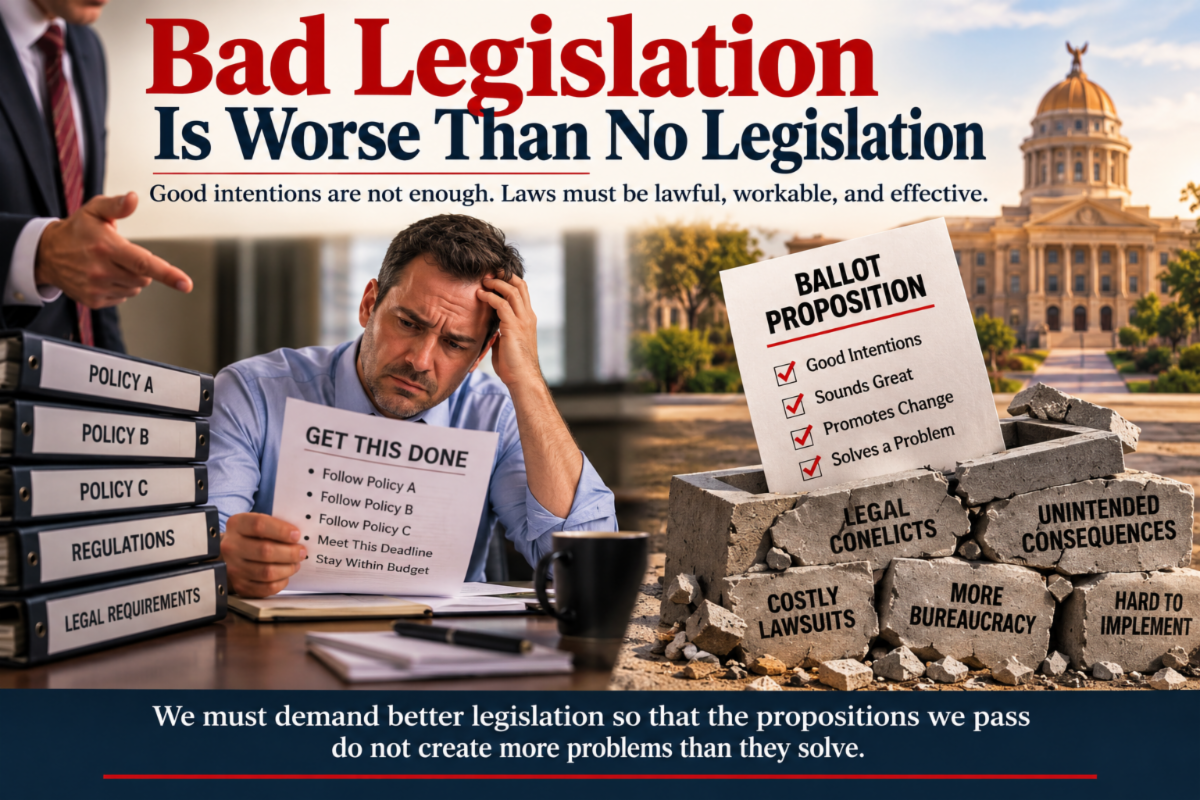
A proposition may require a government agency to accomplish something while simultaneously restricting the very tools, funding, or authority needed to accomplish it. Another may conflict with existing state or federal law. Some establish requirements without considering the unintended consequences for the people responsible for carrying them out.


And sometimes the language is so poorly written that nobody can agree on what it actually requires. When that happens, who pays the price? The taxpayers.


Instead of solving the original problem, we end up with lawsuits, expensive legal battles, additional bureaucracy, conflicting regulations, and government agencies struggling to comply with mandates that may be impossible to implement.


Meanwhile, the problem the legislation was supposed to address remains unresolved.


I believe we have become far too comfortable judging legislation by its title or its stated intentions rather than examining how it will actually work.


We should never confuse supporting the goal of legislation with supporting the legislation itself.

You can believe strongly in improving education while opposing a poorly written education proposition. You can support election integrity while questioning a measure that conflicts with existing election laws. You can demand fiscal responsibility while recognizing that an unfunded mandate may ultimately cost taxpayers more money.


That does not make you opposed to the underlying principle. It means you are thinking beyond the political slogan. And that is exactly what responsible voters should do.


Before lawmakers place legislation before the voters, they should be asking some basic questions. Is it constitutional? Does it conflict with existing laws? Who will be responsible for implementing it? What will it cost? Are the requirements realistic? And perhaps most importantly, what unintended consequences could result?


These questions should be answered before a law is passed, not after taxpayers are forced to pay attorneys to sort out the mess.


Ballot propositions deserve even greater scrutiny because voter-approved measures can be particularly difficult to amend or correct. In Arizona, the Voter Protection Act significantly restricts the Legislature's ability to change voter-approved initiatives and referendums. That means poorly drafted legislation can leave us dealing with unintended consequences for years.


I am a firm believer in limited government, accountability, and common sense. Part of that philosophy means recognizing that government does not need to pass a new law simply because someone has identified a problem.


Sometimes the better answer is to enforce the laws already on the books. Sometimes it is to revise existing policies. And sometimes the responsible decision is to reject a proposal and send its authors back to the drawing board.


Doing something is not always better than doing nothing, especially when doing something makes the situation worse. We should demand more from our elected officials, advocacy organizations, and the groups spending millions of dollars promoting ballot propositions.

Do your homework. Consult the people who will actually have to implement the law. Examine the legal conflicts. Consider the financial consequences. And write legislation that can accomplish its intended purpose without creating five new problems.


As voters, we have a responsibility as well. We need to look beyond the emotional advertisements, the clever titles, and the endorsements from organizations we trust.

Read the language. Ask questions. Consider the consequences.

And remember, voting no on a poorly written proposition does not mean you oppose its objective.


It may simply mean you expect our lawmakers to do a better job.


Good intentions are not enough. Good legislation must also be lawful, workable, and effective.

Because in the end, bad legislation really can be worse than no legislation at all.

Citizenship and Congressional Seat Be at Risk?


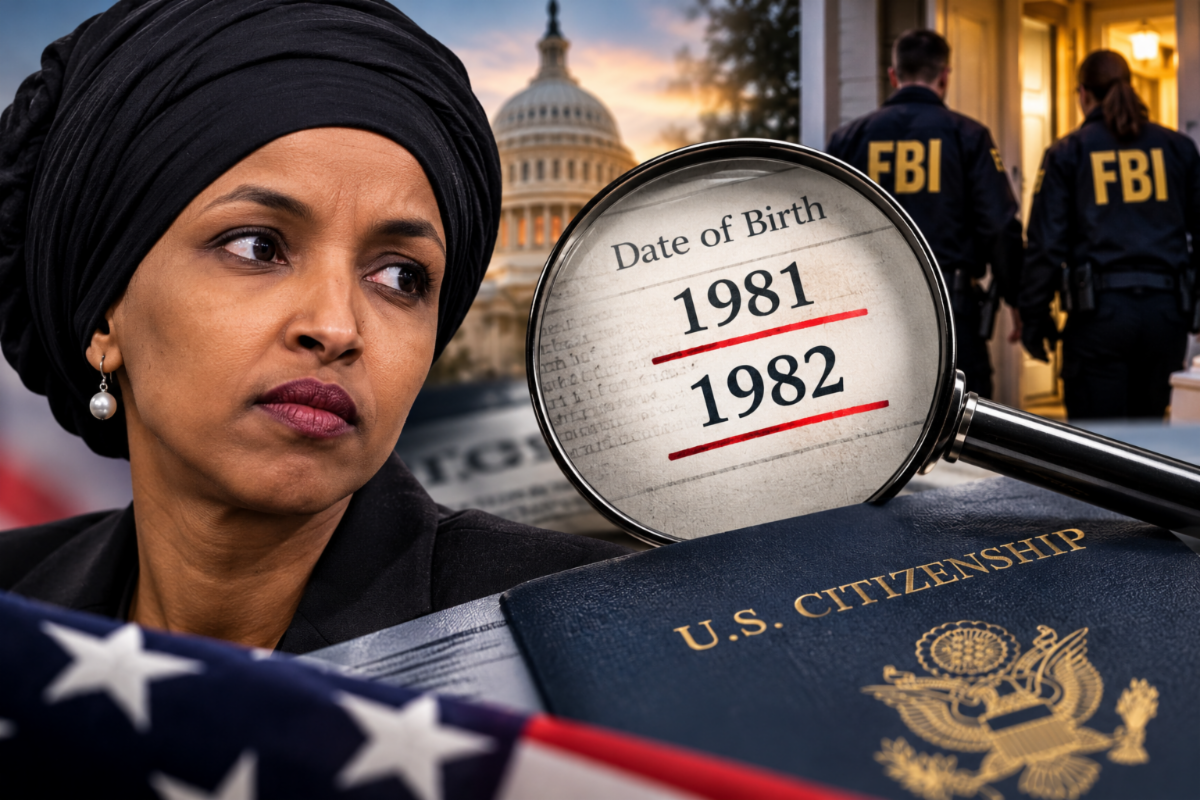
A seemingly small discrepancy involving Congresswoman Ilhan Omar's date of birth has become the focus of a federal investigation that could have extraordinary consequences if investigators uncover evidence of immigration fraud.


The Minnesota Democrat, who was born in Somalia and came to the United States as a refugee, has repeatedly denied wrongdoing. However, newly reported details about changes to her official birth year are raising questions about how she obtained American citizenship.


At the center of the controversy is one year: 1981 versus 1982.

Why One Year Could Make a Difference

According to reporting by The Washington Post and New York Post, Omar's official biography with the Minnesota Legislative Reference Library originally listed her birthdate as October 4, 1981.


In May 2019, several months after she entered Congress, members of Omar's staff contacted the library requesting that her birth year be changed to 1982. The library confirmed the request, explaining that Omar's staff was also working to correct her birth year in other public records.

Omar maintains that the change was simply a correction of inaccurate biographical information.

But the distinction could be legally significant. Omar has stated that she became an American citizen in 2000 through her father's naturalization while she was still a minor.

If she was born on October 4, 1981, she turned 18 in October 1999. If she was born on October 4, 1982, she remained 17 until October 2000.


Under the citizenship laws applicable at that time, a child's age was one of several factors determining whether citizenship could be acquired through a naturalized parent.

However, the exact date of her father's naturalization, the applicable legal requirements, and the underlying immigration documents would all have to be examined before any conclusion could be reached.

The discrepancy is a legitimate question for investigators, but it is not proof of fraud.

Federal Agents Search Omar's Home

On October 12, federal agents executed a court-authorized search warrant at Omar's Washington, D.C., residence. The Justice Department confirmed that the search was connected to an ongoing criminal investigation.

\

According to The Washington Post, investigators are examining whether Omar or her late father, Nur Omar Mohamed, provided inaccurate information on immigration documents that eventually led to her obtaining citizenship.


Investigators are also reportedly reviewing whether her father omitted or misrepresented information about his past military service. Multiple family members have reportedly received grand jury subpoenas. These developments make the investigation considerably more serious than a dispute over a congressional biography. Nevertheless, a search warrant and subpoenas are investigative steps, not findings of guilt. Omar has characterized the investigation as an effort by the Trump administration to intimidate a political opponent. She has maintained that the allegations are baseless.

What Happens if the Allegations Are Proven?

If federal investigators establish that Omar knowingly provided materially false information to obtain citizenship, the potential consequences could be substantial. Loss of citizenship: The Justice Department could seek to revoke her citizenship through a federal court proceeding if the legal grounds for denaturalization are established. A discrepancy alone would not be sufficient.

Loss of her congressional seat: The Constitution requires members of the U.S. House of Representatives to have been American citizens for at least seven years. If Omar were found never to have legally acquired citizenship, her eligibility to serve in Congress could be challenged.


Criminal charges: If investigators uncover evidence of intentional fraud, conspiracy, or false statements, prosecutors could consider criminal charges, subject to the applicable statutes of limitations and other legal requirements.


Possible immigration consequences: If citizenship were lawfully revoked or determined never to have been acquired, immigration authorities could examine her legal status. Deportation would not be automatic and would require additional legal proceedings. These are potential legal consequences, not outcomes that have been established or determined to be likely.

Accountability Must Come Before Politics

I believe the American people have every right to expect honesty from those elected to represent them.


Citizenship is not a minor administrative detail when it comes to eligibility for federal office. If someone deliberately falsified information to obtain citizenship, there must be accountability, regardless of political party.


But there is another principle just as important: Allegations are not convictions, and investigations must be based on evidence rather than political disagreements.


The federal government has an obligation to investigate credible evidence of fraud, but it also has a responsibility to ensure that its considerable investigative powers are not used simply because an elected official is unpopular or politically controversial.

We should be particularly careful when an investigation takes place just weeks before an election. The public deserves the facts, not speculation.

The Bottom Line

The discrepancy in Ilhan Omar's reported birth year has been documented. The federal investigation is real. The possible legal consequences, if intentional immigration fraud is established, could be significant.


But the central questions remain unanswered: What was her actual birthdate? When did her father become a citizen? Did she legally acquire citizenship under the law in effect at that time? And was any information deliberately falsified?


Those answers must come from authentic records and a lawful investigation.

If fraud occurred, hold those responsible accountable. If the allegations are unfounded, make that clear as well.


The rule of law must apply equally to everyone, including members of Congress.

Thank you,

Lisa Everett


www.patriotnheels.com


Follow me on:

X - @patriotnheels

Facebook - @patriotnheels

Instagram - @patriotnheels