Please share our newsletter with friends and colleagues.
|
|
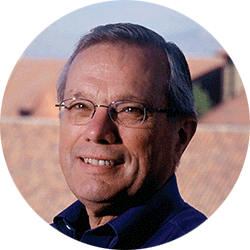
A Message from Vint Cerf
Marconi Society Chair
|
|
New Frontiers in Digital Inclusion
March 20
|
|
Please join me, our Executive Director, Samantha Schartman-Cycyk and a number of Marconi Fellows and Young Scholars, as we bring together the researchers, business leaders and practitioners who are using advanced technology to shape the digital inclusion landscape. We will discuss the latest work in New York and beyond, as well as what we need to do to foster digital inclusion.
For those of you who are not in New York, ISOC-NY has graciously offered to live stream the event at 6:30 pm eastern time
at this link
.
|
|
On behalf of the Board of Directors,
|
|
Young Scholars Nominations
Now Open
|
|
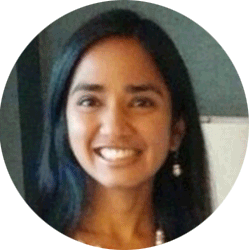
A Message from Samantha
Schartman-Cycyk
Marconi Society Executive Director
|
|
The Community:
The Missing Party In the Digital Inclusion Debate
|
|
While it seems like our always-on, constantly-connected world has been with us forever, it has really only been a few short decades in which seemingly every aspect of our lives has become digitized.
The Internet and the worldwide web, started by a number of our Marconi Fellows including Tim Berners-Lee, Vint Cerf, Bob Kahn, Peter Kirstein and Len Kleinrock, began as a bottoms-up grassroots effort to help researchers connect and share information.
As the “killer apps” around business connectivity and people-to-people communications emerged, companies took over the networks, devices, platforms and applications and created the markets that we have today. The world these companies created is widely acknowledged to be a foundational source of opportunity and upward mobility.
The original voice of the community that built the Internet has gotten lost.
Fortunately, it is being found again through digital inclusion efforts in the US and abroad.
|
|
The Fourth Use Case for 5G: Internet for All
|
|
By the end of 2018, nearly 4 billion people in the world lacked Internet connectivity. Primarily at the bottom of the world’s economic pyramid, almost 75% of this unconnected population is based in
20 countries
.
The barriers to internet penetration in these under-connected areas include low income, illiteracy, lack of relevant skillset in potential users, lack of incentives for service providers and lack of technology infrastructure, including electricity and transportation facilities. In their recent
survey paper
on rural connectivity, which is going to be published in the Proc. of IEEE, Yaacoub and Alouini identify four main challenges to closing the existing digital divide:
- the absence of a viable business case
- increased Capital Expenditures (CAPEX)
- limited or absent electricity supply
- difficulty of maintenance
These factors lead to low average revenue per user, and a long return on investment.
|
|
News About Marconi Fellows
and Young Scholars
|
|
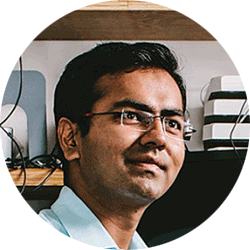
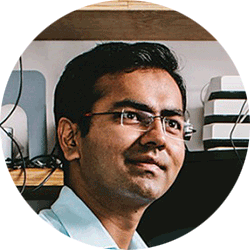
Young Scholar and UCSD Assistant Professor Dinesh Bharadia has created a new chip to bring ultra-low power wifi connectivity to IoT Devices.
|
|
Marconi Fellow Len Kleinrock
is awarded the UCLA Medal, the campus’s highest honor, for his remarkable contributions in providing the intellectual foundation for the modern technical age.
|
|
Marconi Fellow Ron Rivest talks with MIT News – Three Questions on Trusting Electronic Voting Systems. One hint: “
All-electronic voting systems are next-to-impossible to secure.”
|
|
Marconi Fellow Brad Parkinson discusses “GPS and Humanity” in Talks at Google. “
GPS has “stealthily” crept into the fabric of global society and created dependencies that did not exist before.”
|
|
Participants in the Celestini Program India, led by Young Scholar Aakanksha Chowdherry, tell the story of VisionAir, their scalable and privacy-preserving air quality app on the TensorFlow blog.
|
|
|
What The Marconi Fellows, Young Scholars and Board are Working On
|
|
|
|
Joseph Kakande shares the impact that the Young Scholar award has had on his career and his personal life – all it takes is a faculty member, mentor or other advocate to change a young researcher’s career.
|
|
|
|
Marconi Fellow Federico Faggin discusses consciousness and the role of humankind in a world of artificial intelligence, machine learning and robotics.
READ MORE…
|
|
Digital Inclusion:
What We’re Following
|
|
|
|
Who Gets 5G – And Who Gets Left Behind – Has Some Worried About Digital Inequality
|
|
|
|
How Digital Inclusion Made Bangledesh a Standout South Asian Economy
|
|
|
|
Registration is still open for the 2020 NetInclusion conference in Portland, bringing together the digital inclusion community of practitioners, advocates, Internet Service Providers and policy makers
.
|
|
With Gratitude to our Sponsors
|
|
Paul Baran
Stefania Bartoletti
Giovanni Corazza
Vint and Sigrid Cerf
Joan and Assia Cioffi
Hatti Hamlin
|
|
Marty Cooper and
Arlene Harris
Federico and Elvia Faggin
Camilla Fritze
Zvi and Bella Galil
Martin and
Dorothie Hellman
|
|
Paulraj Family
Charitable Trust
Paula Reinman and
Sandy Gross
Ronald L. Rivest
Robert Tkach and
Ann Von Lehmen
|
|
About The Marconi Society
|
|
Established in 1974 by the daughter of Guglielmo Marconi, the Nobel Laureate who invented radio, the Marconi Society promotes awareness of key technology and policy issues in telecommunications and the Internet, and recognizes significant individual achievements through the Marconi Prize and Young Scholar Awards. More information may be found at
www.marconisociety.org
.
The Marconi Society does not take political positions.
|
|
|
|
|
|
|