Faulkner County Agriculture Update
February 6, 2026
| | |
Weather
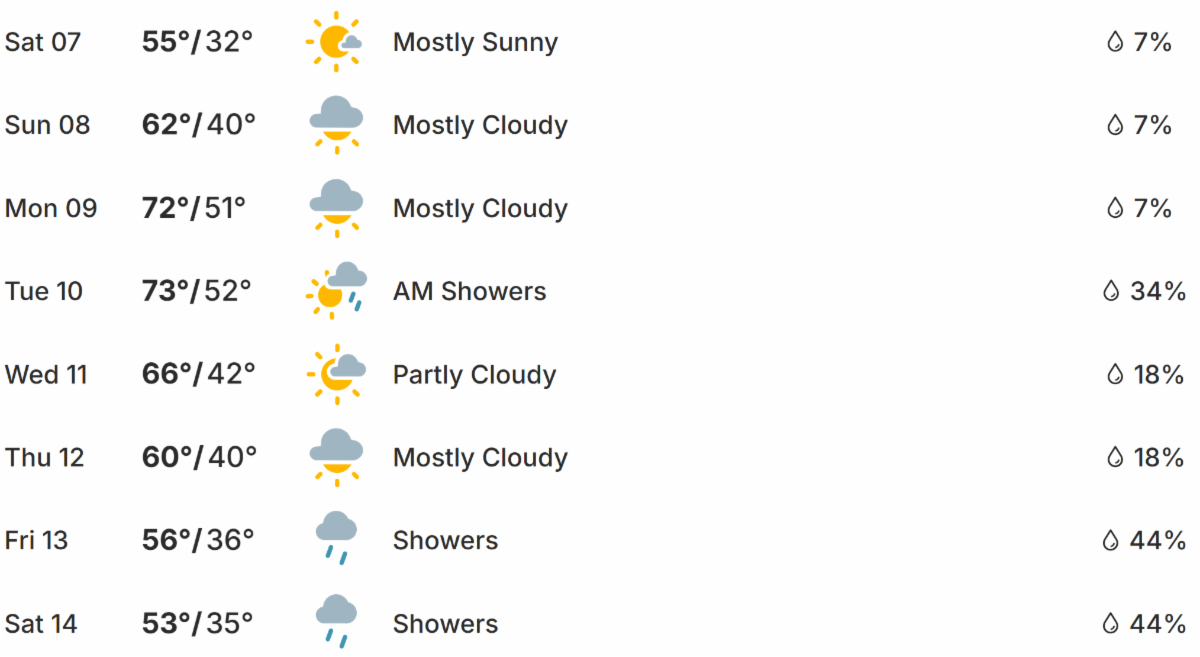
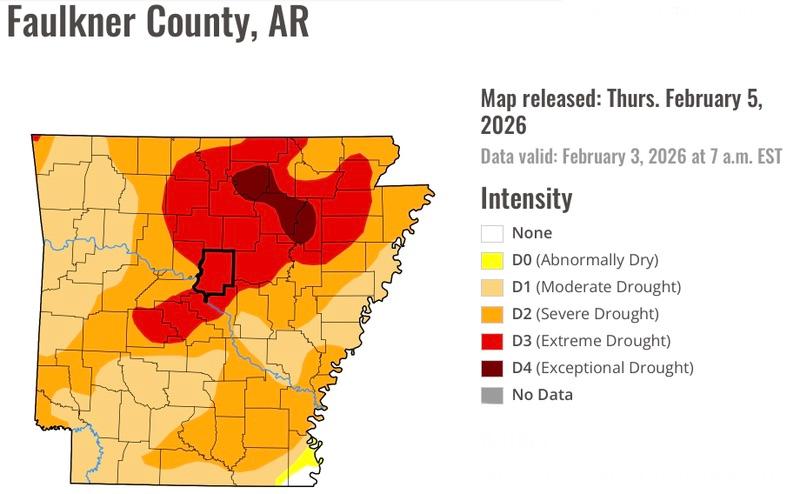
Warm weather this week has allowed for more thawing out from the deep freeze. We missed a rain earlier this week, which is starting to get concerning. This week the whole county went into a D3 drought status. There are good chances of rain starting on Tuesday of next week so hopefully we can get something to turn this drought around.
| | Arkansas and Mississippi River | | |
River Valley Rice Meeting
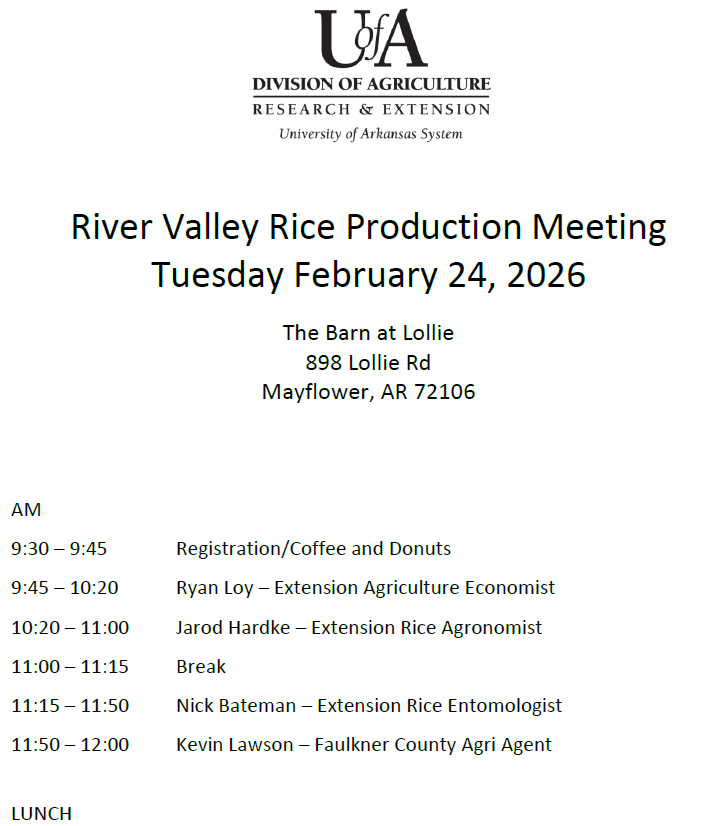
River Valley Rice Production Meeting coming up on February 24, 2026.
|
Updated Annual Soybean Publications Now Available
by Jeremy Ross - Extension Soybean Specialist
The 2025 Arkansas Soybean Update, 2025 Metribuzin Tolerance Testing of Soybeans and the 2026 Soybean Cross Reference Guide are now available. Below are some descriptions of each publication and a link to the publication.
2025 Arkansas Soybean Update
The 2025 Arkansas Soybean Update provides performance results, disease ratings, and agronomic characteristics of of soybean varieties commercially available to growers in Arkansas.
|
2025 Metribuzin Tolerance Testing of Soybean Varieties
This update covers results from a greenhouse screening of soybean varieties, testing their tolerance to metribuzin at a rate of 0.5 lb ai/ac or 10.67 oz/ac of a 75DF metribuzin product. Although most varieties show an acceptable tolerance to metribuzin, it is reccommended to choose a variety with a high level of tolerance.
|
2026 Cross Reference Guide for Common Soybean Varieties
Two varieties that are genetically the same may not perform the same side by side in the field due to differences in environmental conditions and management practices among seed increase production fields. How the seed is handled and processed between the time of harvesting in the seed increase field and planting in a grower’s field also influences overall seed quality, which in turn can affect the performance of two varieties that genetically are the same.
| | |
Wheat
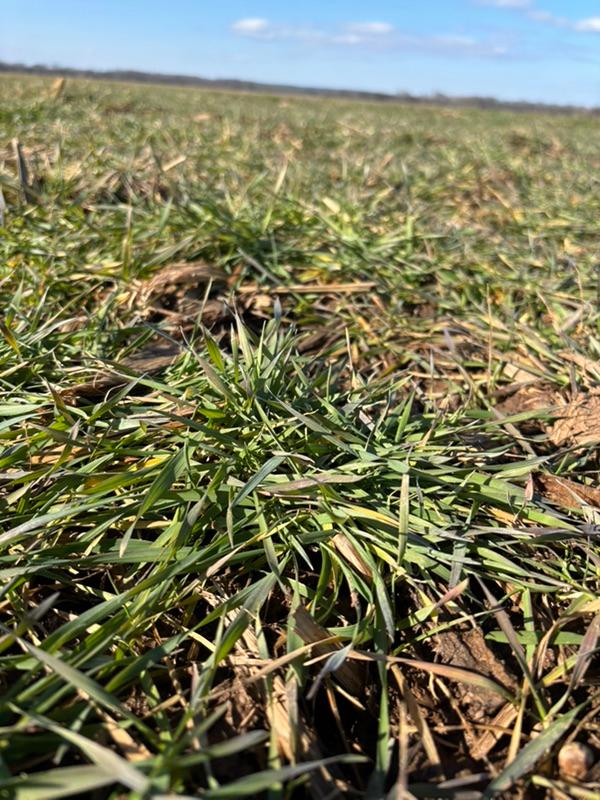
The ice and snow are finally melting off the wheat fields and I am kind of surprised at how things looked. I really thought the wheat would make it through this cold spell a little better than it did. I think everything is okay and we will be fine, but I am ready to get this crop growing.
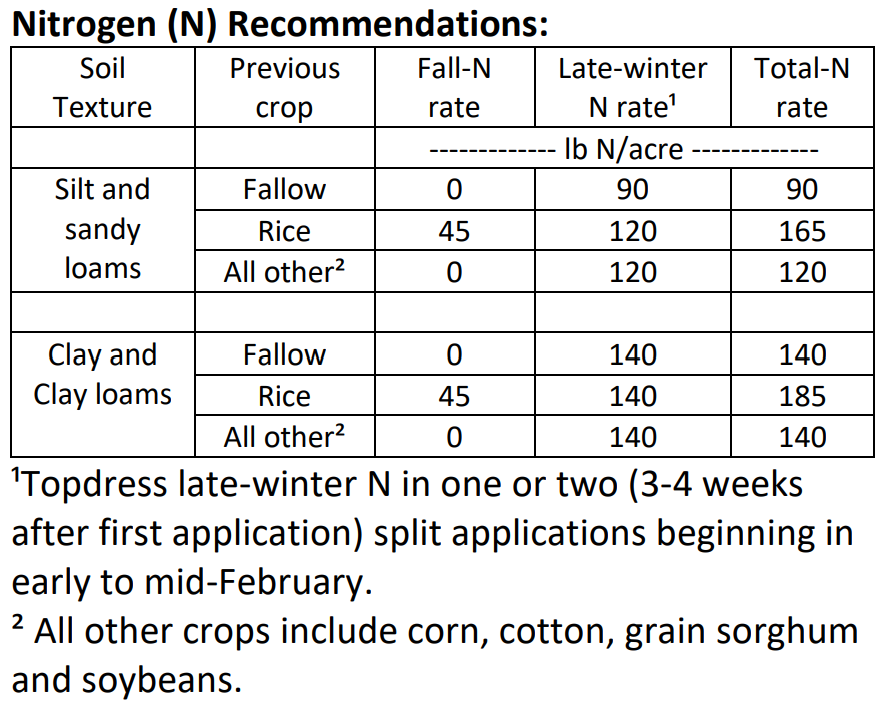
Believe it or not, it is time to think about fertilization. Valentine's Day is usually when I think about the first application of nitrogen on wheat and that is next week. With this rain predicted next week, if we can get some drying on the ground this weekend, it might not be a bad idea to get some fertilize out there. I talked to Jason Kelley and he suggested maybe 100 pounds of sulfate and 50 pounds of urea right now. That would be 44 units of nitrogen. Our target total nitrogen for wheat is 120 units. Usually we split that between two applications, usually getting the bigger application out first and follow up with a smaller application. If we go out with this 44 units right now, we are doing that backwards this year. But with the way the wheat looks, that might be the best thing. We just need to give it a little something right now to get it going and then come back with either a couple of spoon fed applications or one bigger application in about three weeks.
| | |
Crop Enterprise Budgets
Below is a link to the 2026 Crop Enterprise Budgets. If anyone needs assistance with these budgets please let me know.
| | Beef, Small Ruminants, & Forages | | |
Livestock Indemnity Program as Disaster Assistance
James Mitchell, University of Arkansas
This week, many producers are taking inventory of the damages from the January 23-27 winter storm. In Arkansas, for example, these losses include a large number of poultry houses (with and without flocks in them), equipment, farm buildings, livestock, and horticulture. USDA has created programs to assist livestock producers following scenarios such as the one experienced last week. One of those programs is the Livestock Indemnity Program (LIP), which provides disaster assistance to eligible livestock producers and growers for deaths over normal mortality rates.
LIP eligibility depends on the occurrence of an eligible loss condition, proving loss in excess of normal mortality was directly caused by an eligible loss condition, ownership, and livestock type. The occurrence of an eligible cause of loss/death is not sufficient for eligibility. The occurrence of last week’s storm is not enough to be eligible for LIP. The livestock owner must provide evidence that last week’s storm directly caused the excess loss. The livestock producer must have legally owned the livestock on the day the loss/death from eligible cause occurred. Eligible losses caused by an eligible loss condition include injury and death over a normal mortality rate. All this crucially depends on livestock producers maintaining and producing detailed documentation to the Farm Service Agency (FSA).
Note, the above discussion includes injury as an eligible loss. Excess death is not the only damage that resulted from last week’s storm. Cattle might have lasting physical signs of last week’s events, which could cause cattle to receive discounts at marketing. Producers must provide documentation that livestock were sold at a reduced price due to an eligible cause of loss.
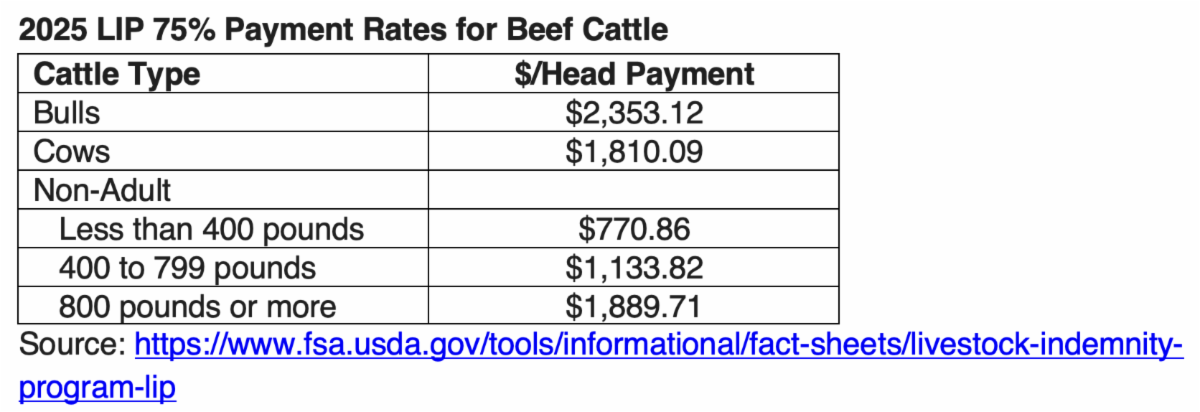
LIP payments are based on a national average fair market value. Given the strength of cattle prices this year, the market value used to calculate payments is relatively higher than in previous years. The LIP payment rate is 75 percent of this average market value (this is by design). For example, the 75% payment rate for a mature beef cow was $919.47 in 2021 and $1,810.09 in 2025.
After adjusting for normal mortality, LIP payments for excess livestock deaths are calculated by multiplying the national LIP payment rate for that livestock category by the number of eligible livestock in that category times the ownership share. For example, suppose a producer owns 40 beef cows at the beginning of last week's storm, and 4 are lost. Assuming 2 percent normal mortality, the number of cattle eligible for payment is 4 minus (40 times 2%) or 3 head (FSA rounds to the nearest whole animal). This producer's indemnity payment is 3 times $1,810.09 or $5,430.27 (see table). These calculations will vary by livestock type, type-specific mortality rate, and whether the loss was a death or injury, among other factors.
Contact your local Farm Service Agency office to apply for LIP. Eligible producers must file a notice of loss and application of payment within a defined time frame. For more details including deadlines and eligibility, see the USDA-FAS website.
| | |
Be Vigilant for Grass Tetany this Spring
Paul Beck, Oklahoma State University Extension Beef Cattle Nutrition Specialist
Even though it came in the form of ice and snow, we finally got the moisture we need to grow our wheat and other cool season annual pastures. This year many of our wheat fields, normally occupied by growing stocker calves, have cows using them. Spring calving coincides with rapid growth of lush wheat pasture which is ideal for meeting the nutritional requirements of a lactating cow. While wheat pasture and other cool season annual forages easily meet the energy and protein needs of cow calf pairs, there are serious concerns about grass tetany, a metabolic disorder that can appear suddenly and be fatal if not prevented.
Grass tetany is associated with inadequate magnesium absorption in the GI tract caused by marginal to low forage magnesium concentration and high potassium concentration that results in mineral imbalances that interfere with magnesium absorption in the cow. Mature cows early in lactation are most susceptible because their magnesium requirement increases at calving through milk production. Older cows are at even greater risk because their ability to mobilize magnesium from bone is reduced.
Early symptoms of grass tetany include nervousness, unusual behavior, muscle twitching, an unsteady gait, and difficulty rising. As the condition progresses, cows may become excitable, develop labored breathing, go down, and die. Because stressed cattle worsen rapidly, care must be taken when handling affected animals.
Well-fertilized wheat pasture poses the greatest risk for grass tetany. For producers wanting to assess risk, forage mineral analysis can be used to calculate a tetany ratio based on the mineral analysis of grazed forages. The tetany ratio examines the quantity of potassium to the quantity of magnesium and calcium, and ratios greater than 2.2 are likely to result in grass tetany. There is generally a one week lag time in getting analysis results, so it may be of limited value or too late to be effective, so magnesium supplementation should not be optional.
Prevention is far more effective than treatment. The most common and reliable approach is to provide supplemental magnesium beginning at least one month prior to turning cows onto wheat pasture and continuing through the high-risk period. “High-mag” mineral supplements containing 10 to 12% magnesium, usually supplied as magnesium oxide, are widely used. At an intake of 3 to 4 ounces per day, these minerals typically provide 40 to 50% of a cow’s daily magnesium requirement. Because magnesium oxide is unpalatable, intake should be monitored closely.
Wheat pasture can be an excellent resource for spring-calving cows, but mineral nutrition should be managed carefully. When it comes to grass tetany, vigilance and prevention are the keys.
| | |
Fertilizing Winter Annuals
It is time to think about fertilizing winter annuals with nitrogen. Just like the wheat that was discussed earlier, I like to start thinking about fertilizing winter annuals like wheat, ryegrass, and oats around Valentine's Day.
The recommended rate of nitrogen on winter annuals is 90-120 total units of nitrogen. That would be 200 to 250 pounds of urea per acre. The best practice for getting this nitrogen on the forage is 100 - 125 pounds of urea now followed by 100 - 125 pounds of urea in three weeks or so.
Now with that being recommended, more typical applications are 100 - 125 pounds of urea now with no follow up application. I understand not coming back with a second application when the forage is growing fast and it is green, but I sometimes wonder how much yield we are leaving in the field with that one application.
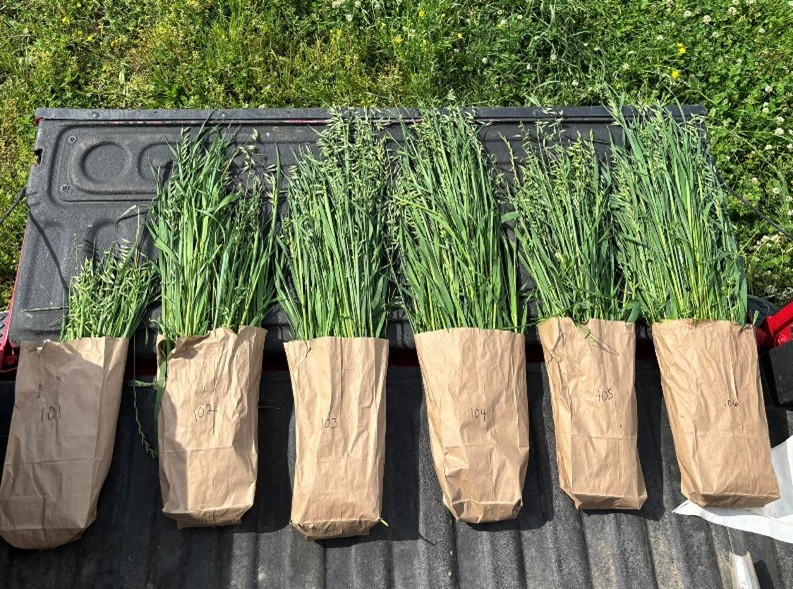
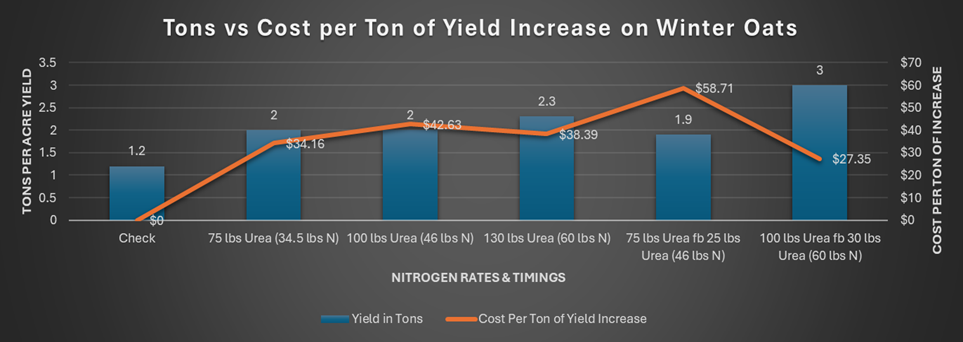
Last year at this time I did a demonstration on some winter oats that were planted on the Jeff Owen farm in Enola. There was a check, three single applications, and two split applications. I put out the first application on March 7 and then follow up applications were on March 24. In this demonstration I applied lower rates of nitrogen of 75 pounds of urea to 130 pounds of urea (34.5 to 60 units of nitrogen) just to see what kind of yield we would get. The field was treated like a hay field so there was only one harvest.
No nitrogen had the lowest yield of 1.2 tons per acre while the 100 pounds of urea followed by 30 pounds of urea had the highest yield of 3 tons per acre. All other applications had a similar yield of around 2 tons per acre, with 130 pounds of urea applied once having a slightly higher yield of 2.3 tons per acre.
I think the take home message here is 1) get out at least one application of nitrogen, 2) higher rates (130 units of urea or more) are better, and 3) splitting the applications can get you even more yield.
Last thing I want to mention is nothing is better than history of your farm. If you have been planting and fertilizing winter annuals over years, and you put out one application of nitrogen and have plenty of forage for your cattle, go with that. But if you are looking for more forage, think about adding more nitrogen in a split application.
| | |
Backyard Poultry Seminar
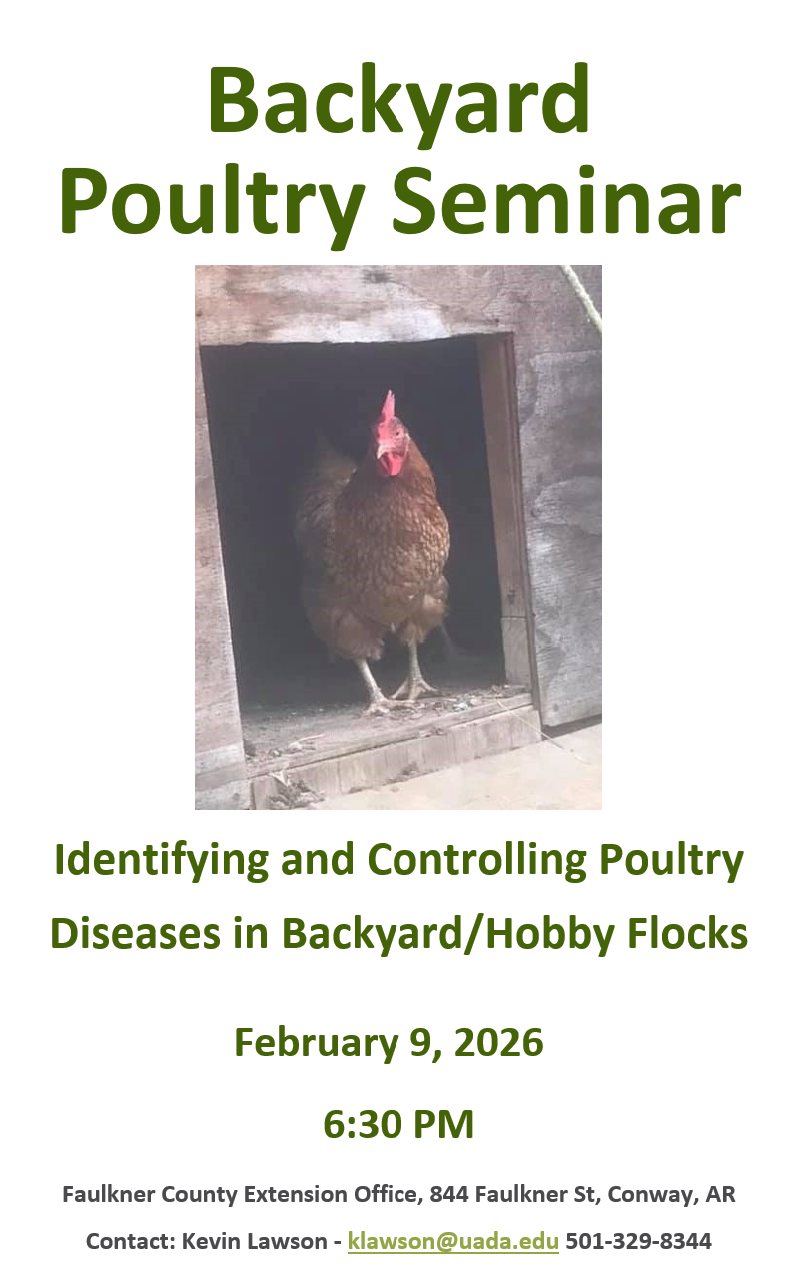
There has been a confirmed case of Avian Influenza in Faulkner County. With this recent outbreak of Avian Influenza, we have decided to have a seminar here at the Extension office. Dr. Dustin Clark will be here to speak on "Identifying and Controlling Poultry Diseases in Backyard/Hobby Flocks".
The meeting will be at the Extension Office at 844 Faulkner Street, Conway on February 9th starting at 6:30 pm.
| | |
Where to Report Sick Birds
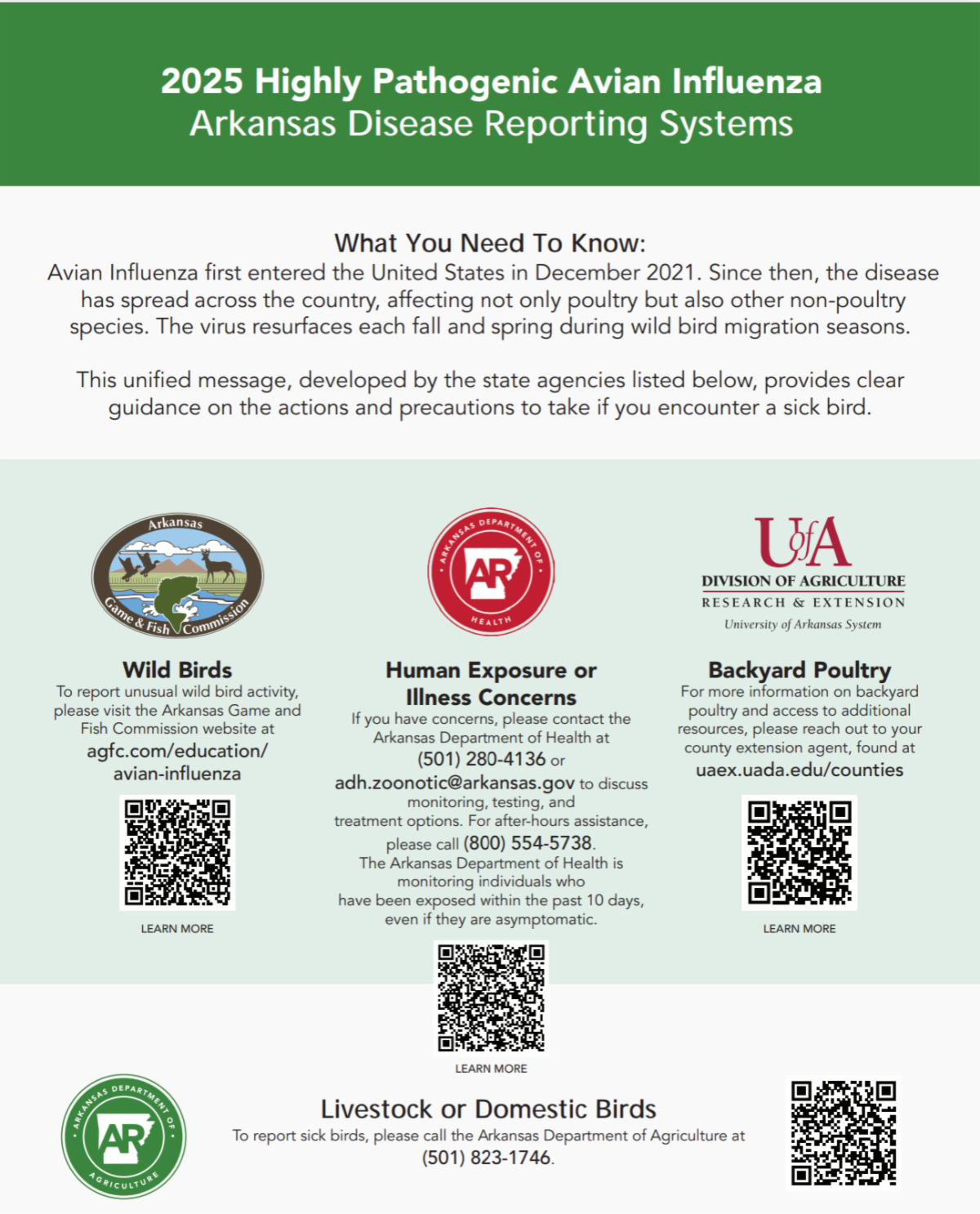
If you happen to see sick birds (wild or domesticated) in the county, depending on where you see them will depend on who to contact. The following flyer gives you a guide on who to contact if you see sick birds.
| | |
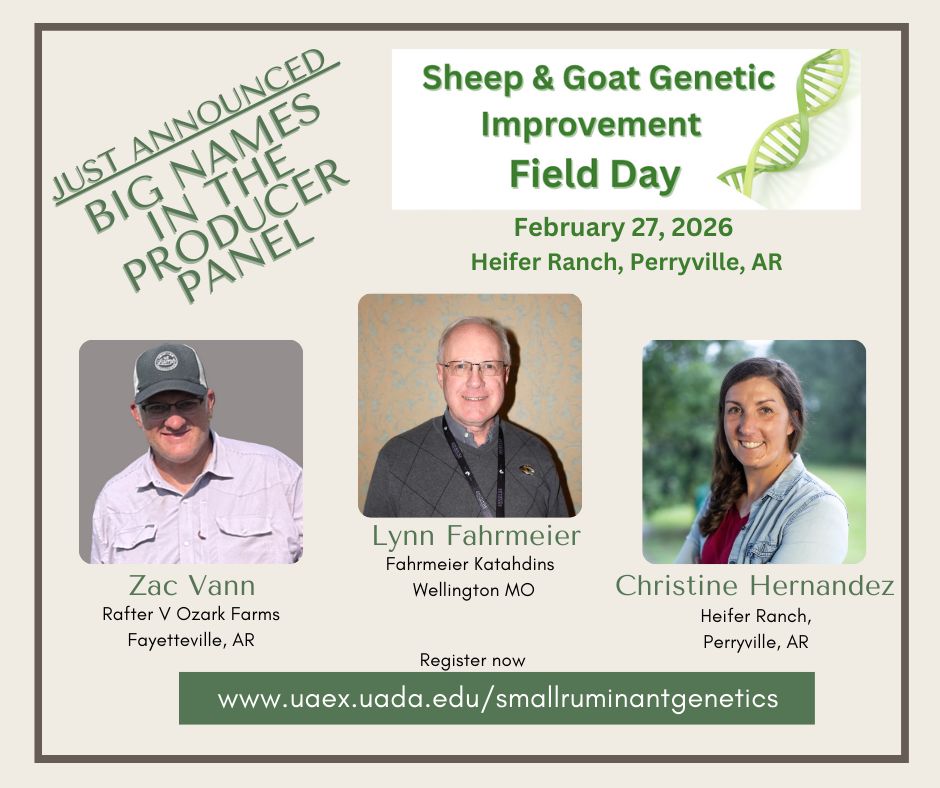
Sheep & Goat Genetic Improvement Field Day
by Dr. Dan Quadros
Registration is now open for the "Sheep & Goat Genetic Improvement Field Day" (www.uaex.uada.edu/smallruminantgenetics), one of the premier events of its kind that has ever taken place in the U.S. Don’t miss the opportunity to learn from top researchers, ask questions, develop networks, and participate in live demonstrations on how to put into practice the available technology to increase productivity and profit. It’s free of charge. It will be on February 27th (Friday) at Heifer Ranch (55 Heifer Rd, Perryville, Central Arkansas), from 9:30 am to 3:30 pm. Check the tentative agenda below. Lambing/kidding season will make things a bit complicated, I know, but it is a reschedule from a previous date, and we have a tight deadline established by the funding agency. So, plan in advance to attend it.
Sheep & Goat Genetic Improvement Field Day
Heifer Ranch, Perryville, Arkansas
9:30 am: Welcome, Christine Hernandez, Heifer Ranch; Blake Erbach and Dr. Dan Quadros, University of Arkansas Division of Agriculture; Dr. Jake Thorne, Texas A&M
9:45 am: Economic benefits of using rams/bucks with EBVs, Dr. Tom Murphy, USDA/ARS
10:30 am: Breakdown sessions I: Collecting and recording data
Parasites: FAMACHA system, Dr. Joan Burke, Sheep Management Solutions, LLC
Parasites: Collecting and submitting fecal samples, fecal egg counting methodology, body condition scoring, Dr. Dan Quadros, UADA
12:00 pm Lunch and learn: Implementing an on-farm genetic improvement program, Dr. James Morgan, Sheep Management Solutions, LLC
1:00 pm: Breakdown sessions II: Collecting and recording data
Growth performance: types of ID and RFID, number of lambs born/weaned, birth weight, weaning weight, postweaning weight and collecting tissue, Heifer Ranch; Texas A&M University; UofA
Buying rams with good genetics: visual assessment vs. EBVs, Dr. Joan Burke, Sheep Management Solutions, LLC
Using ultrasound for pregnancy check and carcass evaluation, Dr. Jake Thorne, Texas A&M AgriLife
2:30 pm: The future development of the NSIP, Dr. Tom Murphy, USDA/ARS and Dr. Jake Thorne, Texas A&M AgriLife
3:00 pm: Producer Panel: Using Estimated Breeding Values (EBVs) to improve economically important traits, TBA
3:30 pm: Adjourn
Optional, 3:30 p.m - 4:30 pm: One-on-one with experts: Learn more about the National Sheep Improvement Program (NSIP)
Dr. Tom Murphy, USDA/ARS
Dr. Joan Burke, Sheep Management Solutions, LLC
Dr. James Morgan, Sheep Management Solutions, LLC
Dr. Jake Thorne, Texas A&M AgriLife
| | |
Fire Ants
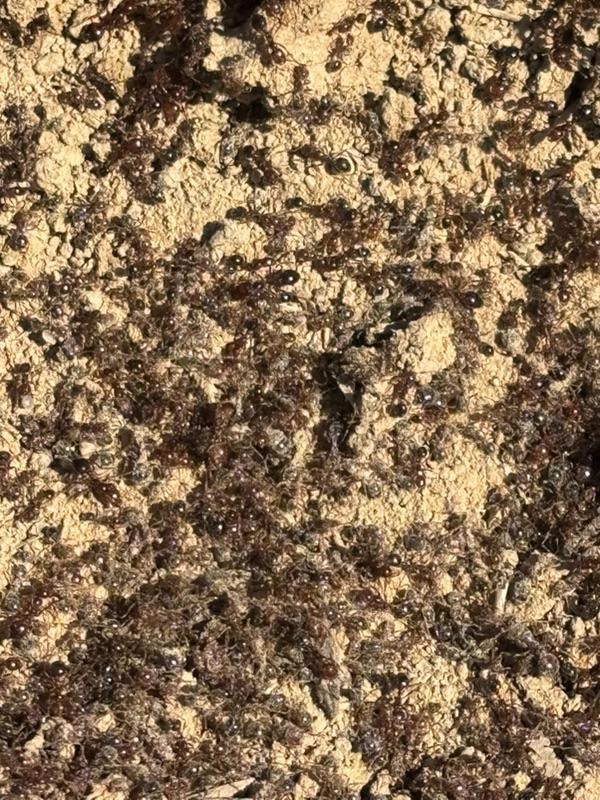
Yesterday I was walking around and believe it or not I noticed an active fire ant mound, and yes I did kick it to make sure it was active. I can't resist kicking a fire ant mound!
With seeing that mound, and already getting questions, I thought I would go over fire ant control. One of the most common questions I get every year is how do I control fire ants in my pastures. Unfortunately the answer is you don't. My advice is just live with them best you can. The problem isn't that we can't control them, the problem is we will never get rid of them. Every time you treat a pasture they are just going to reinfest and treatment would be a full time year round job. There are insecticide baits like Amdro Pro, Extinguish Plus, and Advion that do a good job. They are used at very low rates of 1 - 1.5 pounds per acre, so they have to be spread with special spreaders. But as soon as that treatment kills the mounds that are out there, new fire ants move from your neighbors field, tree line, or road side and reinfest. My advice to producers is treat around facilities where you will be working and don't worry to much about pastures.
Fire ants hate to be bothered, so usually you won't see them as much in hay fields. In hay fields they usually move to fence rows and the edges of fields.
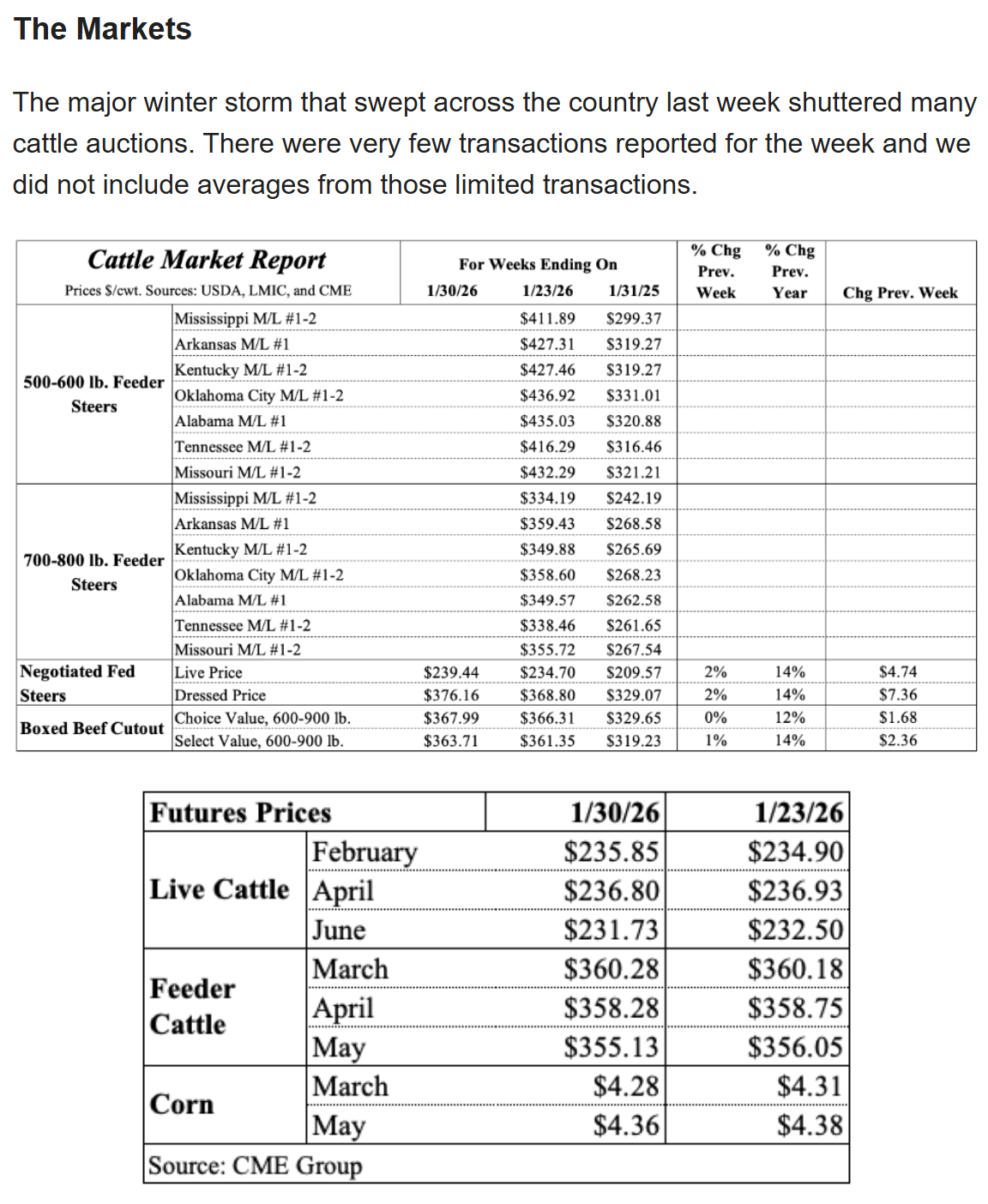
| | This weeks cattle market notes is actually the article about the Livestock Indemnity Program that was discussed earlier in the newsletter, but you can still view it under the Cattle Market Notes Weekly Link. | | |
Pesticide Applicator Trainings
In order to purchase restricted use pesticides (herbicides, insecticides, fungicides, etc) you must have a private applicators license. The license is good for 5 years.
To obtain a license you must first attend a certification training. Certification trainings are done in person by a County Extension Agent or you can go online and be certified. Below is a link to the online training.
In person trainings this year will all be at the Faulkner County Extension Office and will be on:
March 12 - 6:00 PM
April 30 - 2:00 PM
A certification training costs $20 and is due the day of the training.
Once a producer is certified, they will go through the Arkansas Department of Agriculture to obtain the license which is $45.
Please call the Extension office at 501-329-8344 to sign up for one of these dates.
If you have a question about your license, please follow the License Search and Verification link below to find your license.
| | |
Livestock Market Report
The following links are for the weekly livestock market report from the Arkansas Department of Agriculture website and the Livestock Auction Dashboard from USDA. Both sites have marketing data for all livestock sold at Arkansas Sale Barns.
| | |
2025 Faulkner County Agriculture Demonstration Summary
The 2025 Faulkner County Agriculture Demonstration Summary is now available at the link below.
The 2025 Faulkner County Demonstration Summary is a collection of on-site demonstration results conducted in Faulkner County by local County Agents. Demonstrations are the cornerstone of the University of Arkansas System Division of Agriculture Cooperative Extension Service’s mission which is:
“We strengthen agriculture, communities, and families by connecting trusted research to the adoption of best practices.”
On-site demonstrations allow producers and homeowners to see firsthand how Extension recommended varieties and best management practices work in their counties and surrounding area.
| | |
Sign up for Text Alerts
You can now sign up for text alerts from me throughout the year. I have two areas you can sign up for which includes Faulkner Livestock or Faulkner Ag (Row Crop Updates). To sign up you can follow one of these links or use the QR Codes below.
| | Pursuant to 7 CFR § 15.3, the University of Arkansas System Division of Agriculture offers all its Extension and Research programs and services (including employment) without regard to race, color, sex, national origin, religion, age, disability, marital or veteran status, genetic information, sexual preference, pregnancy or any other legally protected status, and is an equal opportunity institution. | | | | |