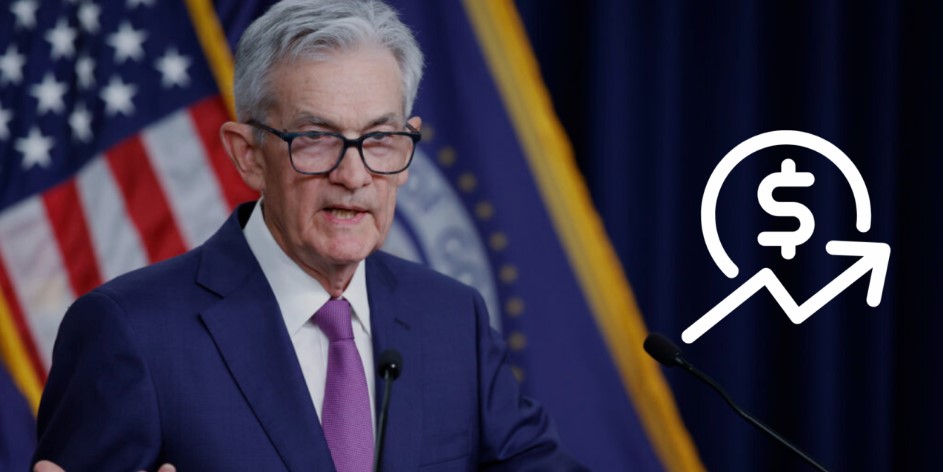
In response to a direct question about housing inflation from Nancy Marshall-Genzer with Marketplace, Powell clarified the Fed’s primary objectives, repeatedly stating that their focus remains on “price stability and maximum employment”—not housing inflation.
Powell also stated that the housing industry was “helped more than any other industry” at the start of the pandemic, due to the lowering of interest rates. He noted that the opposite also holds true—when rates rise, the housing market is impacted negatively.
More enduring issues, Powell stated, are centered around limited housing inventory. He expressed the issue—“there hasn’t been enough housing built”—but not a solution.
The final point in his response to Marshall-Genzer’s question was regarding rental inflation, which does come into play in the Fed’s work of lowering inflation overall. Powell stated that by looking at owner’s equivalent rent and actual rent paid by tenants, PCE calculations show that market rents are flattening, “and that will show up in inflation over time.”
Keep reading for the direct timestamps and transcripts for every time Powell mentioned housing during the press conference.
DIRECT QUESTIONS ON HOUSING INFLATION AND SENATOR WARREN’S LETTER TO THE FED
Let’s begin with the questions most specific to housing and rent inflation, along with a follow-up question about the recent letter sent by Senator Warren and three other U.S. Senators, which urged the Fed to lower interest rates in order to ease housing affordability issues.
QUESTION FROM NANCY MARSHALL-GENZER, MARKETPLACE:
“I want to ask a little bit more about housing. I’m wondering, how closely are you watching rent and housing prices as you evaluate whether and when to cut rates? And it seems like housing prices are not coming down as quickly as you expected?”
Jerome Powell:
“So when we think about—you know, our statutory goals are maximum employment and price stability, and that’s what we’re targeting. We’re not targeting housing price inflation, the cost of housing, or any of those things. Those are very important things for people’s lives, but they’re not, you know—those are not the things we’re targeting.
“We’re also well aware that when we cut rates at the beginning of the pandemic, for example, the housing industry was helped more than any other industry. And when we raise rates, the housing industry can be hurt because it’s a very interest-sensitive sector.
“On top of that, we have longer-run problems with the availability of housing. You know, we have a built-up set of cities and, you know, people are moving further and further out, so there’s—there hasn’t been enough housing built. And these are not things that we have any tools to address.
“But, you know, where it comes into play very specifically in our work is inflation. Which is a combination—it’s really rental inflation. You’re taking owner’s equivalent rent and then actual rent paid by tenants, and you’re running that through the CPI calculation, or the PCE calculation, the one we look at. And what that’s telling you is that market rents are increasing at a much lower rate or even being flat, and that will show up in inflation over time, it has to—as long as that remains the case.”