Discimus ut serviamus: We learn so that we may serve.
| |
QView #133 | August 30, 2022 | |
|
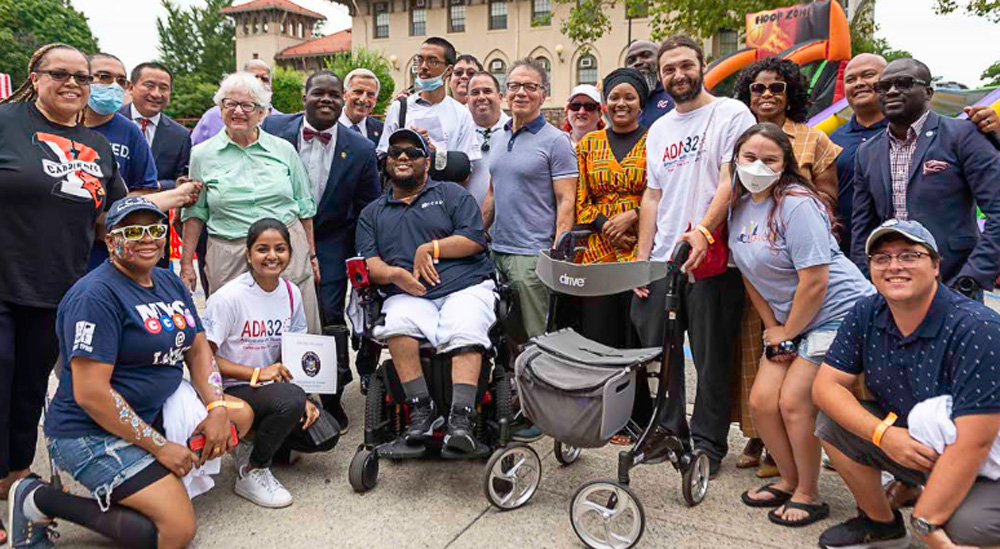
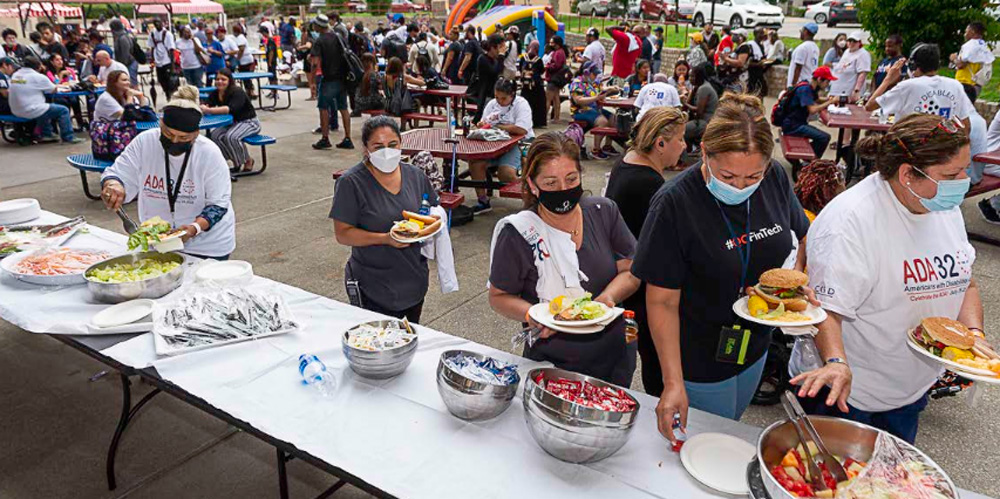
The Committee for Disabled Students (CDS) of Queens College and the CUNY Coalition for Students with Disabilities (CCSD) celebrated the 32nd anniversary of the Americans with Disabilities Act with a barbecue on Tuesday, July 26. Vice President for Communications and Marketing and Senior Advisor to the President Jay Hershenson emceed the event. Speakers included Jessica Dalonzo, CDS chair; President Frank H. Wu; Interim CUNY Vice Chancellor for Student Affairs Denise Maybank; University Student Senate Chairperson Salimatou Doumbouya, and State Senator Toby Ann Stavisky, chair of the Senate Committee on Higher Education, who presented citations to the CDS and CCSD. State Senator John Liu, Assembly Member Khaleel Anderson ’19, Assembly Member Catalina Cruz, Assembly Member Harvey Epstein, Assembly Member David Weprin, and New York City Council Member Linda Lee spoke or were in attendance. City Council Member James Gennaro was represented by his chief of staff, Henry Yam.
| |
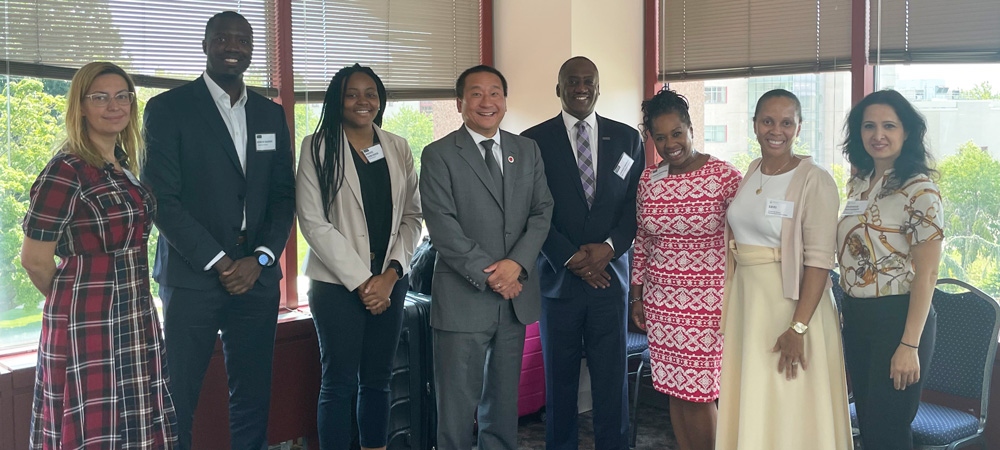
QCF Board Member Charles Swarns ’80 and his colleagues from Truist, a financial firm, visited campus on July 27 to discuss recruitment opportunities for wealth analysts. Fifteen QC students attended the presentation led by Truist Senior Vice President and Director of Development Maria Emanuel, followed by a networking lunch. The event was organized by Zavi Gunn and Eleanor Mavashev (Center for Career Engagement and Internships). | |
From left: Kate Pechenkina, dean of the School of Social Sciences; Kuron Harris ’15 MS, ’22 MS, a Truist investment analyst; Kristi Derouen, a Truist wealth analyst; President Frank H. Wu; Charles Swarns ’80, Truist SVP and regional managing director; Maria Emanuel, Truist SVP and director of development; Zavi Gunn, director of the Center for Career Engagement and Internships; Eleanor Mavashev, business educator and internship specialist, Center for Career Engagement and Internships. | |
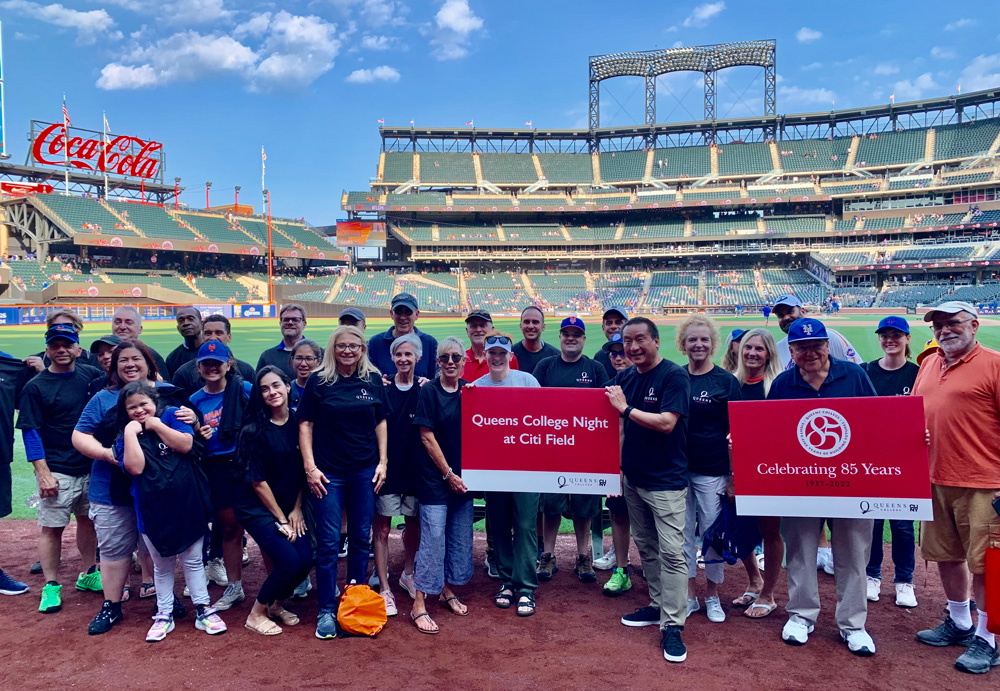
QC Night at Citi Field on August 4 was amazin’! Colleagues and classmates filled seats in Sections 141 and 142 to watch the Mets take on the Braves—and win, 6-4, including several home runs by the home team! | |
|
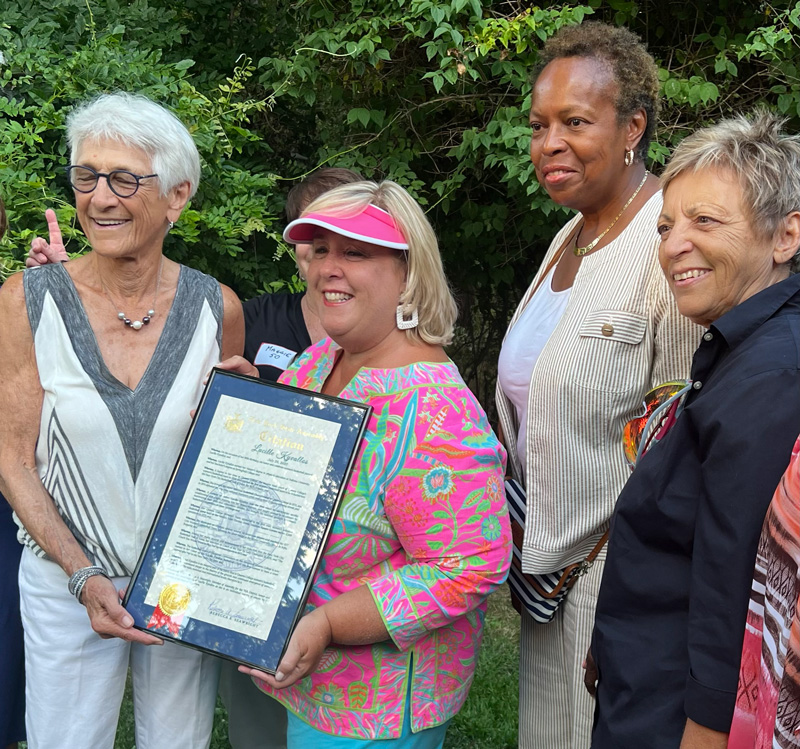
When legendary women’s basketball coach Lucille Kyvallos turned 90, Assemblymember Rebecca Seawright presented her with a proclamation in the presence of athletes she worked with at QC—including Alumni Olympic silver medalist Gail Marquis and Eileen Mentone.
From left: Kyvallos, Seawright, Marquis, Mentone.
| |
Proving that there is such a thing as a free lunch (especially when you brown bag it), the Office of the President invited QC employees to partake of a casual, mid-day meal in the Dining Hall on August 8. Soft and hot drinks were provided. | |
As part of the Festival of New York, the Tech Incubator at Queens College hosted Small Business and Tech Saturday on August 13. Visitors had the chance to talk to QC and TIQC alumni, as well as current TIQC members, about the technology industry and what it holds for the future. | |
|
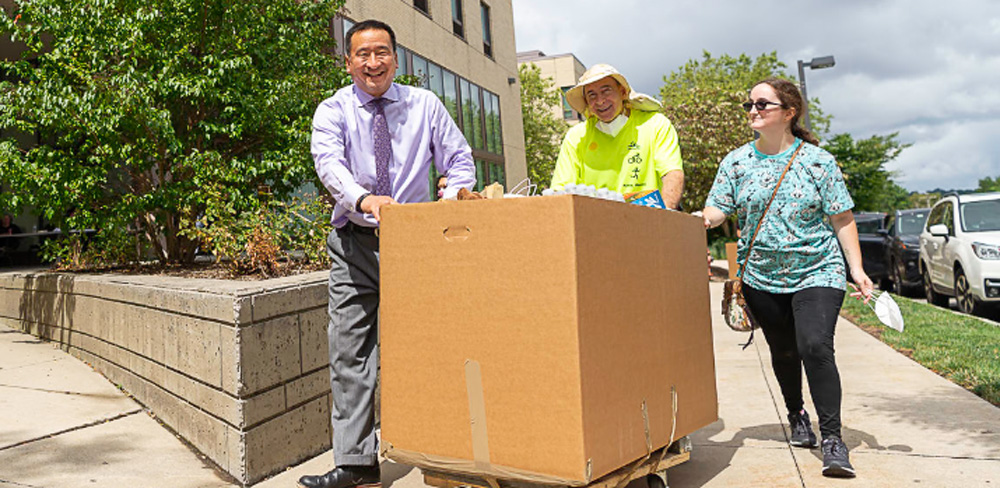
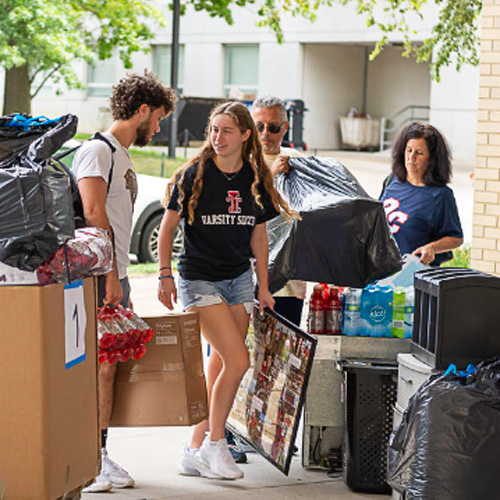
Queens College President Frank H. Wu was on hand on August 22 and 23 to greet students moving into The Summit Apartments. Above, he’s seen doing some thinking outside of the box.
| |
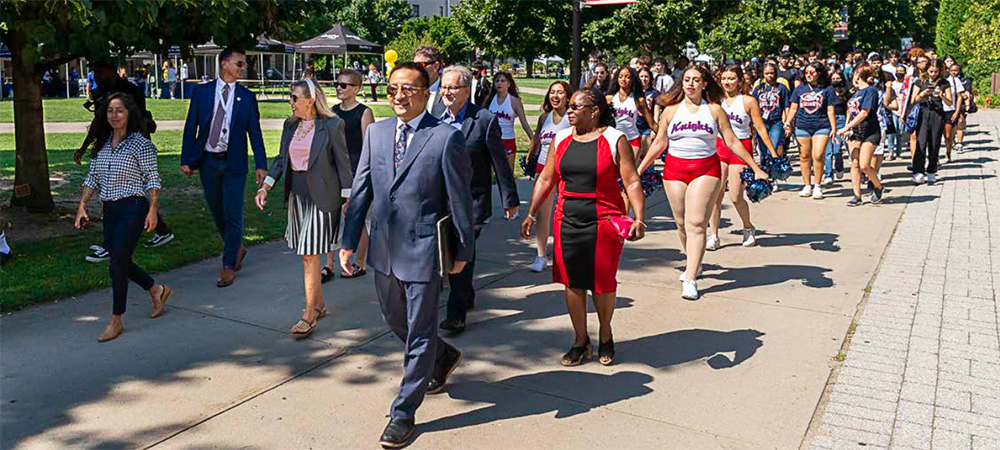
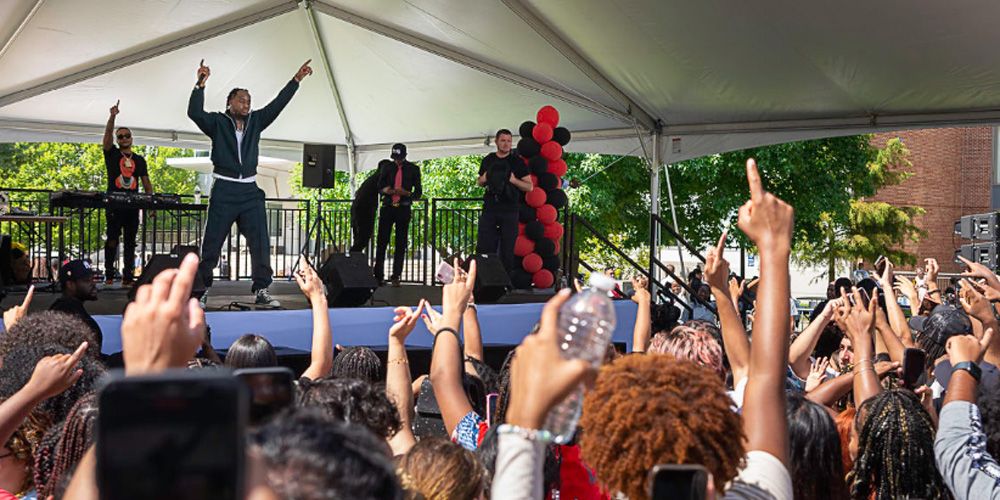
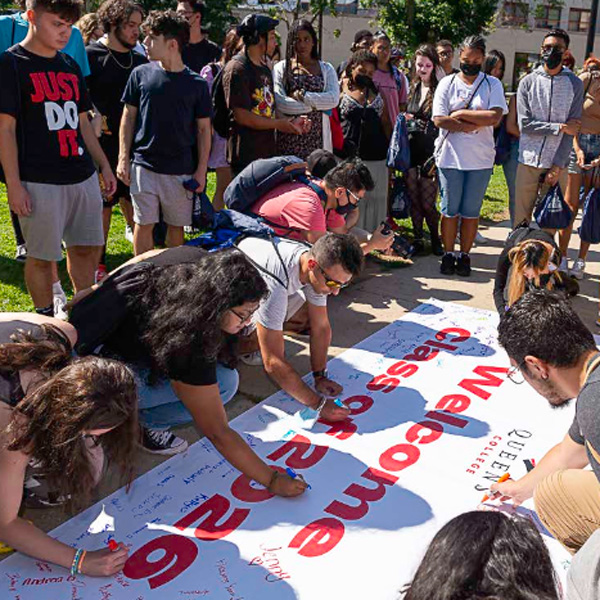
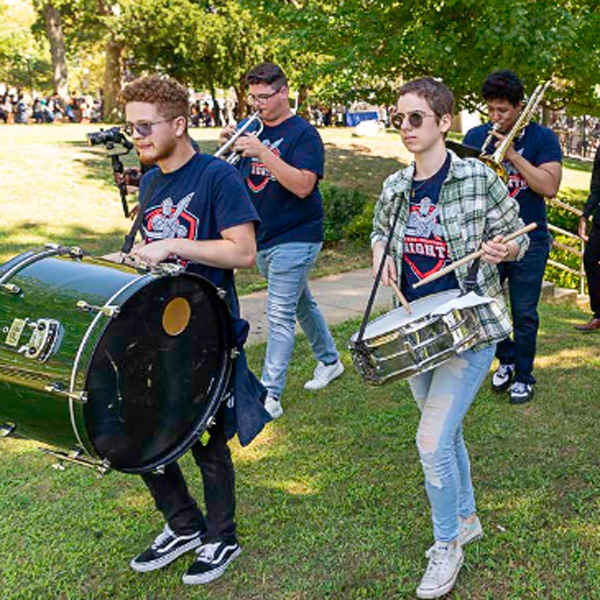
Welcome Day on Wednesday, August 24, brought more than 1,400 incoming first-year and transfer students to campus. In addition to the usual confetti cannon, the afternoon featured performances by rap artist Fivio Foreign and student groups, greetings from President Frank H. Wu and Student Association President Jamal Mark, and a club fair. You can enjoy the event all over again through this video. | |
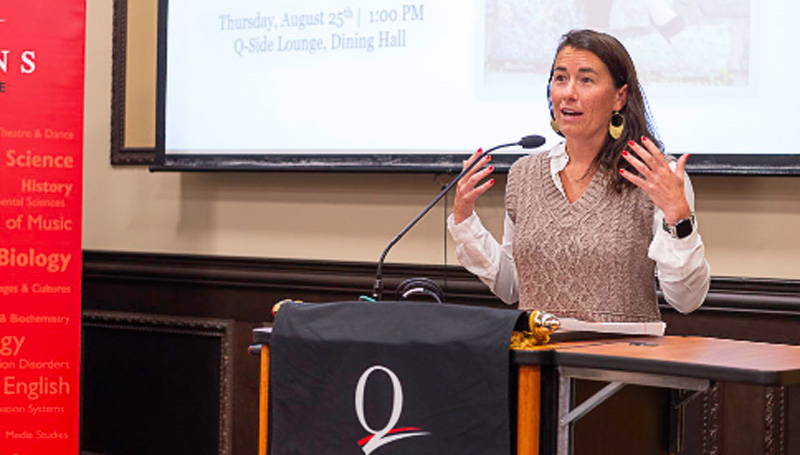
Sarah George, newly re-elected state’s attorney for Chittenden County in Vermont, spoke to the QC community on Thursday, August 25, at the Q-Side Lounge. Educated at public institutions—the University of Connecticut, Castleton State College, and Vermont Law School—George is the second woman in Vermont history to serve in this position. | |
|
How To Succeed at Access
As of this summer, the Cleared4 system is the only way to access campus; no one can be admitted on the basis of proof of vaccination or a PCR test. At entry points, faculty, staff, and students can tap in with their QCard—if it’s linked to Cleared4—or display their Cleared4 pass on a mobile device. For complete Cleared4 instructions, please see the latest advisory on this topic. An Ad Hoc Working Group on Campus Access chaired by Zeco Krcic (Facilities, Planning and Operations) will help advise on access matters. Current campus guidelines are posted here. Questions can be directed to ReturnToQC2022@qc.cuny.edu.
The university is still conducting random testing but on a reduced scale. If you were selected, but couldn’t visit a university test site within the prescribed 14-day time period, you’ll need to get tested at a CUNY site to return to campus. Walk-in visits are accepted at all locations. Information about CUNY’s random testing program is posted here.
Last week, President Frank H. Wu and a senior administrative team held two briefing sessions—one in person, one remote—about campus access. For the benefit of people who weren’t able to attend, a video of the remote session has been posted online.
| |
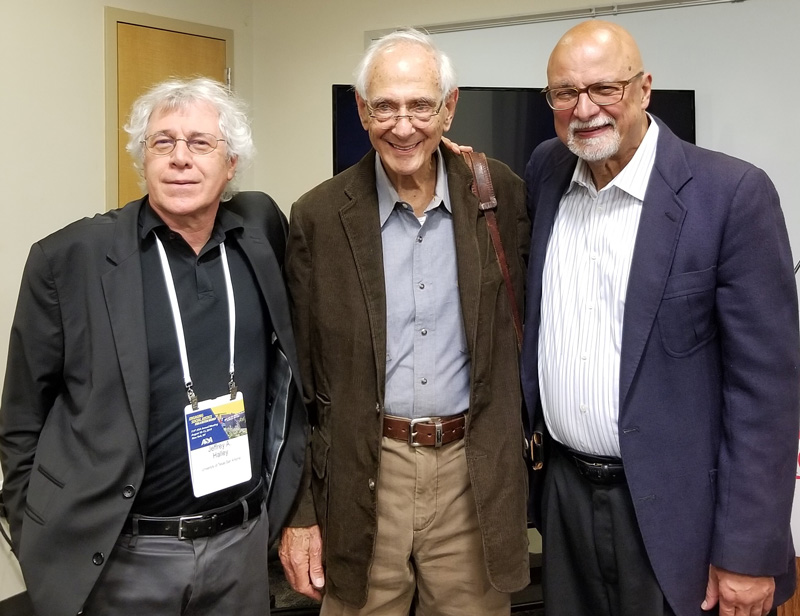
From left: Jeff Halley, Mike Brown, Gregory Mantsios | |
|
Changing Workers’ Lives through Education
Gregory Mantsios’s appointment in January 2018 as founding dean of the CUNY School of Labor and Urban Studies (SLU), following his 34 years of service to CUNY that began at Queens College, signifies the better part of a lifetime dedicated to using the tools of education to help working people get ahead.
The programs he established at CUNY, and before that at Empire State College/SUNY, have provided thousands of union members and adult learners—many of them non-traditional students from poor and working-class backgrounds—with the means to better their station in life by earning college degrees.
As Mantsios freely observes, but for an historic event, he might not have completed a college degree himself, given the challenging circumstances of his early life.
“I grew up in Jamaica, Queens,” he explains. “I was raised by a single mother. My father had died when I was an infant. It was a rather poor area: I lived on a block with single-room occupancy housing and a lot of alcoholism that later went over to drugs.”
“I was kind of a street kid,” he continues, “but I managed to do well enough in Jamaica High School that I got myself into Queens College’s evening program, which was at that time called the School of General Studies.”
Evening Matters
Mantsios took his first semester of classes evenings at John Bowne High School while working odd jobs during the day. “I was a custodian. I was a stock boy. I was a clerk. I was selling beer at Shea Stadium,” he says. “It wasn’t easy.”
Despite his initial excitement about beginning college and most particularly, the opportunity to take a course in Western civilization, he says, “I think I was just too tired.” He recalls long days and bus rides from Jamaica to campus on Parsons Boulevard. “I was bored to tears. I got a D in that course, and that was the lowest point for me. I was on the verge of getting thrown out or quitting. That was in 1970 at the end of my first year.”
Mantsios’s quandary was to be short-lived as his personal concerns were subsumed by one of the pivotal events of the Vietnam War era: the deaths of four students shot by members of the Ohio National Guard sent to Kent State University to quell anti-war demonstrations.
Like most American college campuses at the time, Queens College was riven by intense feelings about the war, but Mantsios says he was largely apolitical. When a member of Students for a Democratic Society asked him to sign a petition to prevent the Reserve Officers’ Training Corps from recruiting on campus, he argued that he knew people who had enlisted in military service to get out of their neighborhood. Kent State changed everything.
“There was this huge rally right after the killings at what used to be the old Student Union building,” he says. “I was on the fringes watching. This guy named Mike Brown came up to the microphone, and he gave one of the most powerful speeches I had ever heard. I was so moved by that.”
Rallying for Change
Brown concluded, Mantsios recalls, by asking everyone to walk out of the campus onto Kissena Boulevard and the Long Island Expressway, and march into Manhattan to join a giant rally at Washington Square Park. “Somehow, I was so outraged and so inspired, I joined that rally. It was so unlike who I was, but he just, just grabbed
Mantsios suddenly realized he was due in ten minutes at the job he had then, transporting jewels in a knapsack on the subway between a jeweler in Astoria and 47th Street in Manhattan. Calling his boss to explain his absence, he made a declaration that was stunning to both himself and his boss: “I’m marching against the war!” Stunning, Mantsios explains, because it was so completely out of character with who he was at the time.
“I did that and it just changed my life: I went back and decided I was not going to drop out. I was going to carefully select the courses that I was going to take, and I was going to sign up for this guy named Mike Brown in sociology. I took four courses, two with him and two with another sociologist named Jeff Halley. I finished that next semester with straight As. I finished the rest of my career at Queens College without getting anything less than an A from that point on. So, that was just this remarkable turnaround.”
“My trajectory before Queens was very different from where I wound up. It was that moment [Mike Brown’s speech], but it was also the quality of the faculty. There were so many inspiring people,” he says, citing in addition to Brown and Halley, John McDermott, whose philosophy classes were so popular and crowded that students would be lucky to find a place sitting on the radiator near the window.
As Mantsios’s commitment to opposing the war grew, he eventually became involved in the Student/Faculty Coalition, which allowed him to get to know faculty members in a more personal way. Two of them, Brown and Halley, became lifelong friends.
Digressing from his recollections, Mantsios notes that just before the pandemic’s closure of campus, he received a call from Halley, who said he’d been asked to present a distinguished career award to Mike Brown. The award was bestowed by the Marxist Section of the American Sociology Association; not entirely by coincidence, it was conferred at an event held at the CUNY School of Labor and Urban Studies. “So, there we were, the three of us after 50 years!”
Mantsios received his BA in Sociology, following which he and six fellow student activists decided to form an Astoria-based collective, where they would share space and do community organizing. One of their faculty advisers, however, convinced him and two other members of the group to return to QC to pursue master’s degrees and join something called The University Year for Action.
“It was like the domestic Peace Corps,” says Mantsios. “We enrolled In the Urban Studies’ master’s degree program which was chaired by Marilyn Gittell, who was a prominent education reformer and very dynamic. She, too, became a lifelong friend. Queens College was, and still is, such a vibrant place.”
Read more >>>
| |
|
Preventing the Spread of Monkeypox
State, local, and national authorities, in that order, have all declared emergencies in connection with the outbreak of monkeypox. New York City is a hot spot for this contagious viral infection, which causes flu-like symptoms and rashes. For information about how to protect yourself from monkeypox and what to do if you suspect you have been exposed, please see this message from CUNY Chancellor Félix V. Matos Rodríguez.
| |
|
Feds Offer Debt Relief; State Opens Wider TAP
Under a new program announced last week by President Joe Biden, people who took out federal student loans may have some of their burdens reduced. Individuals earning less than $125,000 a year are eligible to have $10,000 of their debt canceled; Pell Grant recipients are eligible for cancellation of an additional $10,000. For all borrowers, regardless of income, the pause on repayment of federal student loans is extended through December 31, 2022.
President Biden’s debt forgiveness “is going to have a significant impact for a great many CUNY graduates and current students,” said CUNY Chancellor Félix V. Matos Rodríguez in a statement issued on August 24. “Earning a degree should not mean spending years or decades repaying student loans.”
In that statement, Matos also highlighted Governor Kathy Hochul’s action earlier in August to extend New York State’s Tuition Assistance Plan (TAP) to part-time students. Full-time students can receive TAP awards of up to $5,665 a year; part-time TAP will be available on a pro-rated basis to eligible students taking six to 11 credits per semester, with no full-time prerequisite. An estimated 75,000 part-time students will now be able to apply for TAP.
| |
|
Loan Forgiveness for Public Servants
Last fall, the U.S. Department of Education temporarily extended the Public Service Loan Forgiveness Program (PSLFP) to millions of people who weren’t previously eligible. To date, 5,000 New Yorkers have each realized savings of nearly $64,000. If you have worked for the government or a nonprofit for 10 years and still carry federal student debt, you may be able to get it canceled—even if your application was rejected previously. But you have to act quickly. Forms require employers’ signature and must be submitted by October 31. For details, click here.
| |
|
Playing Soccer for Kicks
“The beautiful game” is rewarding at any level. The QC Community Soccer Club—back in action on weekday evenings—welcomes all QC faculty and staff, regardless of skill. To participate, college employees should fill out the membership form.
| |
|
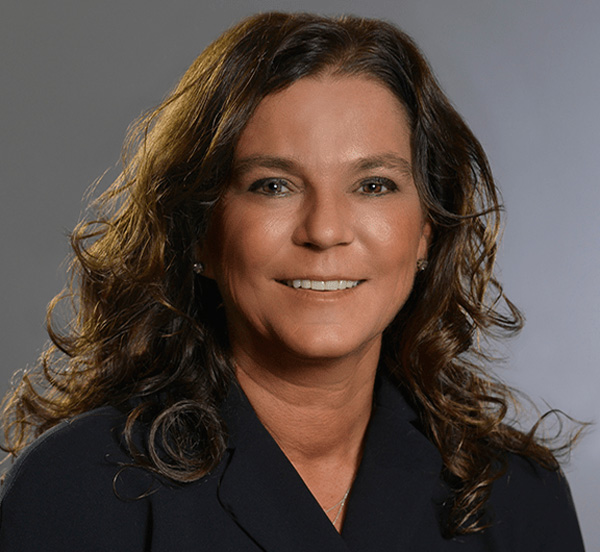
Penny Hammrich
Penny Hammrich, dean of QC’s Division of Education from 2003 to 2010, passed away on August 11 at the age of 58.
An outstanding high school athlete, Hammrich emulated her father by playing basketball at South Dakota State University, where she earned a bachelor’s degree in biology as well as a teaching certificate. She subsequently completed a master’s in biology/genetics at Minnesota State University and a doctorate in curriculum and instruction, with a concentration in science education, from the University of Minnesota.
Starting her academic career at Temple University, Hammrich served as professor of science education and founding associate dean of research and senior research associate at the Mid-Atlantic Laboratory for Student Success. She also created Sisters in Science, a children’s program added to the curriculum at many East Coast schools.
Hammrich expanded on Sisters in Science during her time at QC and testified before the House of Representatives on ways to improve education. Moving to Drexel University, she eventually became dean of its Education Department and is credited with launching labs where faculty and students could collaborate on educational research.
She published more than 150 articles, five science lab manuals for college biology courses, 26 science curriculum manuals, and six chapter books. In addition, she established and operated a foundation to support people suffering from cancer.
Hammrich is survived by her brother, sister, nieces and nephews, and her dog.
| |
Alicia Alvero, formerly QC’s associate provost and assistant vice president for academic and faculty affairs, has been appointed CUNY associate vice chancellor for academic effectiveness and innovation . . . . Alyson Cole (Political Science) published an op-ed, “Why can’t Trump say yesterday?” in the Pittsburgh Post-Gazette . . . . John Dennehy (Biology) was quoted in the New York Times article, “Polio May Have Been Spreading in New York Since April.” NYC Health & Hospitals cited Dennehy in announcing a wastewater surveillance program; Spectrum News NY1 , Harlem World Magazine, and other outlets covered this development . . . . Jay Hershenson (Communications and Marketing) reminisced in a Daily News op-ed about the time he tried to get an autograph from NBA star Bill Russell, who passed away on July 31 . . . . Meghan Moore-Wilk, former interim chief of staff at QC, has been named chief of staff at the CUNY School for Labor and Urban Studies . . . . Gregory Sholette (Art) will publish a new book, The Art of Activism and the Activism of Art on September 15 . . . . Alan van Capelle ‘97 has been named executive director of the High Line, effective January 2023. He is currently president and CEO of the Educational Alliance, a community center network . . . . John Waldman (Biology) published “Welcome back, sharks: Why we’re seeing more encounters between humans and the sea creatures” in the Daily News . . . . President Frank H. Wu was among the panelists at Representing People against Power, a discussion of Trial Lawyer, a memoir by attorney Richard Zitrin. The event aired live on Facebook . . . . Ying Zhou (Tech Incubator) has been named to the Anchor Institutions Task Force (AITF). AITF members represent anchor institutions from a range of fields including, education, economic development, health, and the arts . . . . Queens College is one of 35 Hispanic Serving Institutions (HSIs) participating in the Grow with Google HSI Career Readiness Program. As reported in QNS, this program offers free training and career workshops to Latino students. | |
The Q View is produced by the
Office of Communications and Marketing.
Comments and suggestions for future news items are welcome.
| | | | | |