Fall 2026 | Volume 15 | Number 4 | | |
|  | |
As usual, this edition of the Wharton Healthcare Quarterly covers a wide range of topics!
I think it’s important to note their insights balance coverage at the system level while also reinforcing how essential it is to take care of business at the level of the individual.
Without doing both, it is likely any new program, innovation, or technology will ultimately not live up to its potential when it comes to beneficial outcomes, positive progress, and an ROI achieved with integrity.
"Technology is nothing. What's important is that you have a faith in people, that they're basically good and smart, and if you give them tools, they'll do wonderful things with them."
Sadly, given everything going on in the world today, that quote by Steve Jobs seems positively naïve.
What can you do to contribute to changes that will make it a greater reality than it appears to be right now?
Z. Colette Edwards, WG’84, MD’85
Managing Editor
Contact Colette at: info@pausitivehealth.com
| |
Have an article to contribute or words of wisdom for the Philosopher's Corner?
| |
See what our alumni have been up to.
| |
Access previous newsletter editions. | | |
|
| |
Contributor: Bryan Bushick, MD’88, WG’89
I’m pleased to share the Alumni Association’s FY ‘27 (July 1 through June 30) is off to a tremendous start!
The transition to the WHAA’s new community engagement platform is underway and another fantastic fall conference, “Bold Bets at Healthcare's Tipping Point,” is scheduled for October 30th at Huntsman Hall (returning to campus for the first time since the pandemic). This year’s conference will also include a Pitch Competition that drew nearly 50 applicants, as well as our annual alumni dinner, both scheduled for October 29th at The Inn at Penn. Our dinner has evolved into a major regional gathering that attracts many who are unable to attend the next day’s stellar event. Read more.
| | | |
|
| This eclectic standing column features insightful musings, words of wisdom, life lessons, and stepping-stones to business success. This month's philosopher is Colin James, WEMBA'27, Patient Care Manager of Stanford Medicine's Destination Cancer Service Lines. Read more. | | | |
Affidavit: Healthcare and the Law - A RAPID Reminder that FDA Approval Does Not Mean Equal Coverage | | |
Contributors: Ryan Wesley Brown and Taylor Hertzler
In recent months, CMS has introduced initiatives aimed at expanding Medicare coverage for FDA-approved or -cleared products. One such initiative is the Regulatory Alignment for Predictable and Immediate Device (RAPID) Coverage Pathway, announced in April 2026, which is designed to expedite Medicare coverage for Class II and III Breakthrough Devices. Another is the GLP-1 Bridge, announced in July 2026, which offers GLP-1 weight-loss medications at a $50-per-month copay. These programs, however, underscore a critical point: FDA approval of a drug or device does not automatically result in Medicare coverage. Read more.
| | | |
To Your Health: What Healthcare Gets Wrong About Cost Avoidance - Why Investing Earlier May Be One of our Biggest Opportunities to Bend the Cost Curve | | |
Contributor: Brenda Navin
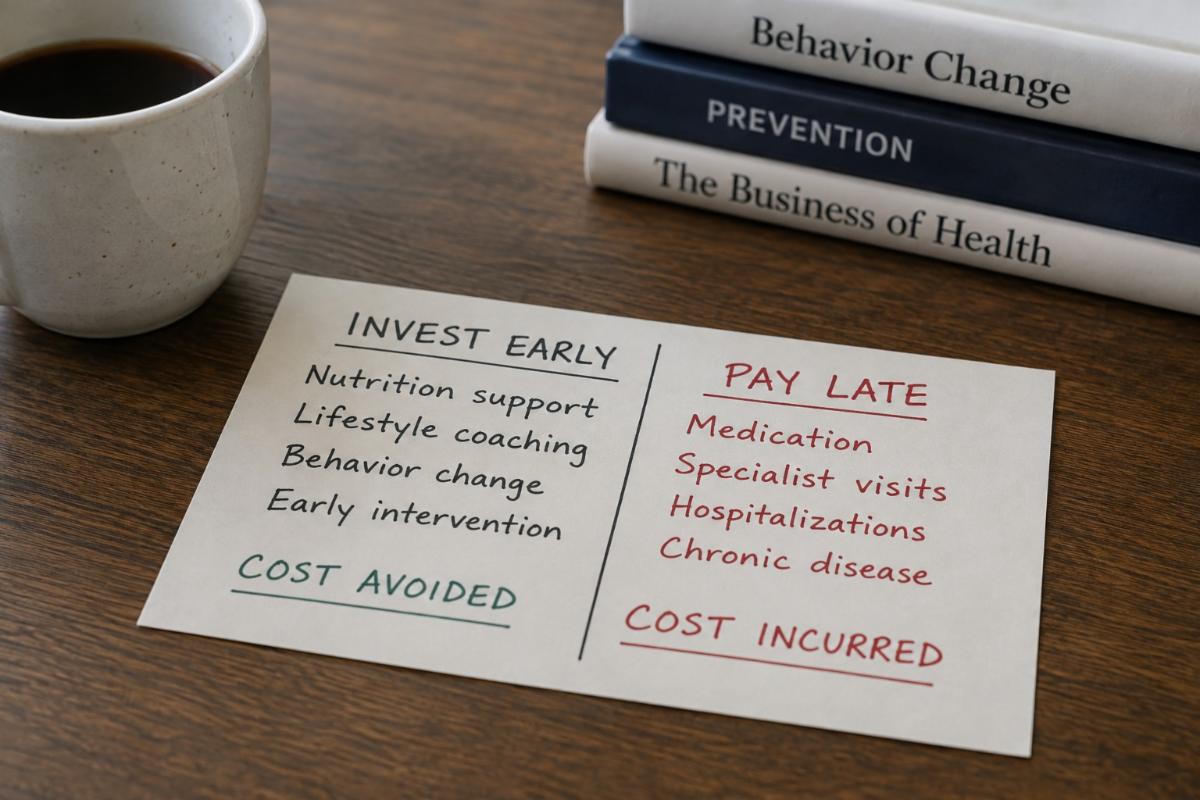
What if one of our biggest healthcare cost problems is actually a timing problem? We are very good at paying for care once someone becomes sick. We pay for the medication. The procedure. The specialist. The hospitalization. The ongoing management of chronic disease. What we are much less comfortable paying for is the intervention that might have changed the trajectory before all of that happened. Read more.
| | | |
Downloading Success: Career Advice for Private Equity Healthcare Candidates | | |
Contributor: Peggy Loughery, MSN, RN
A career in PE-backed healthcare can be demanding, but for those with the right mix of skills, experience, and determination, it can be highly rewarding as well. By focusing on your education, gaining relevant experience, developing the necessary skills, and maintaining a strategic career path, you can position yourself for success. Here, we outline three pieces of career advice for leaders to consider as they navigate the healthcare sector and consider a move to a private equity firm. Read more.
| | | |
CyberVitals: Cybersecurity Used to Be Overhead. Now It's Table Stakes. |
| |
Contributor: Vidya Murthy, WEMBA’42
Three things are colliding right now that turn security into a precondition for doing business, not a line item: the FDA is embracing AI itself, attackers are weaponizing AI faster than most teams can patch for, and everyone in healthcare is racing to ship AI-powered clinical tools before the competition does. Read more.
| | | |
AI in Healthcare - Part 2: Prior Authorization - When Both Sizes Automate | | |
Contributors: Wren Keber and Lisa Soroka
In Part 2 of our series “AI In Healthcare,”, we turn to prior authorization (PA), which can arguably be the clearest test of whether AI can deliver on a promise to reduce or lighten administrative burden, or merely enable payers and providers to each perform more of it. Read more.
| | | |
Building the Institutions That Will Shape South Jersey's Future
| | |
Contributor: Michael J. Charlton
South Jersey’s future will not be shaped by one project, one announcement, or one institution alone. I know what this region can be because I have lived it, worked here, hired here, raised a family here, and seen the strength of its people firsthand. It will be shaped by the choices we make now: to invest, to partner, to compete, and to build institutions strong enough to create opportunities for generations. Read more.
| | | |
Orienting to Purpose: The Quiet Work of Reminding People Why | | |
Contributors: Jennifer Tomasik, SM, FACHE and Carey Gallagher
We spent a year touring the US to speak with leaders of academic health systems, seeking to understand some of the cultural drivers that made the biggest difference to their performance. The CEOs we spoke with deeply understood that their people needed to internalize the “why.” Using tight and clear messaging, leaders must orient people to the purpose of their organization. They need to encapsulate why an organization pursues the work that it does, in the ways that it does. Read more.
| | | |
Why Leadership Development Programs Often Don't Survive Re-Entry | | |
Contributor: Linda Roszak Burton, ACC, BBC, BS
A clinical leader in a health system completed a three-day leadership intensive program on Friday, focusing on decision quality, shaping strategy, and improving outcomes. The intent was to begin implementing the new learnings. But on Monday, the leader returned to a margin shortfall report, news of a potential department closure, and a growing crisis situation that may lead to the resignation of a member of the leadership team.
Nothing about the leadership development program was wrong. What failed was a program omission, the lack of preparation for the whole-person re-entry, which we call the right conditioning to take the new knowledge back to the playing field. Read more.
| | | |
Wharton Around the Globe: Wharton Global Health Volunteers (WGHV) Continues to Support Innovative Healthcare Organizations in Zimbabwe and Thailand | | |
Contributor: Sydney Phillips, WG'27
As in previous years, this spring’s projects in Zimbabwe and Thailand culminated with students traveling on-site to collaborate directly with their client organizations. These visits allowed teams to get to know new cultures and countries, better understand local healthcare systems, and build relationships that shaped recommendations well beyond what would have been possible from afar. Read more.
| | | |
Disclaimer: The opinions expressed within are those of the authors and editors of the articles and do not necessarily reflect the views, opinions, positions or strategies of the Wharton School and/or the University of Pennsylvania, and/or their respective organizations. Publication in this e-magazine should not be considered an endorsement. The Wharton Healthcare Quarterly and WHCMAA make no representations as to accuracy, completeness, currentness, suitability, or validity of any information in this e-magazine and will not be liable for any errors, omissions, or delays in this information or any losses, injuries, or damages arising from its display or use.
| | | | |