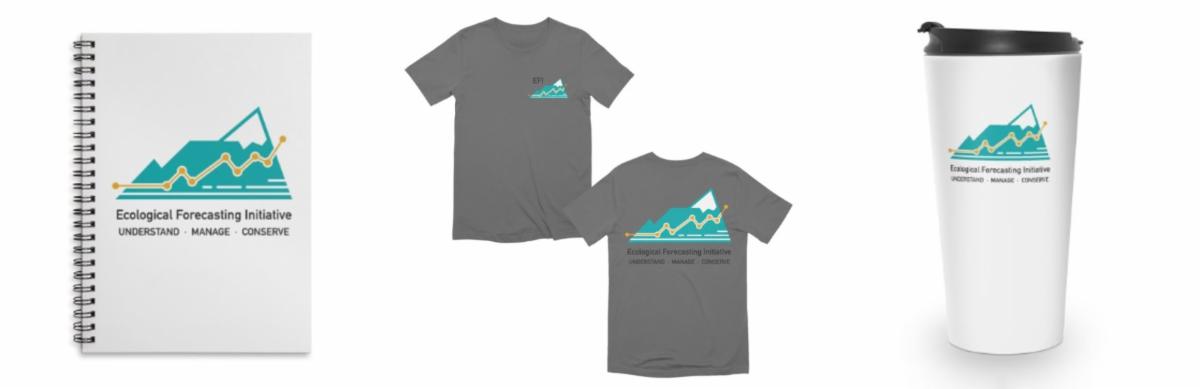
This month's EFI newsletter highlights elections, with a great line up of six candidates! Members should be getting ballots today, but if you're not an official member it's not too late to sign up and vote (and to get your EFI mug!).
Beyond elections, make sure to check out: the new blog post on translational science needs; upcoming conferences, webinars, and working group meetings; the CEFI summer course (application deadline March 12); and the call for papers for a Royal Society special issue.
Finally, as some parts of the U.S. start to head into spring, now would be a great time for folks to dust-off their models for the NEON Forecasting Challenge! If you've thought about participating before, but are daunted by the thought of automating a forecast, the EFI RCN crew has been developing new resources to make it much easier to get forecasts up-and-running using Github Actions (reach out if you have a group that is interested in a workshop that provides training in how to submit the Challenge or see appendix C of the Challenge documentation).
|
|
EFI Steering Committee Elections
It is time to elect two new Steering Committee members! Candidates' statements and ballots will be sent out to EFI members today.
Voting will end on March 15, 2023.
If you are not yet an EFI Member, you still have time to join as a Member and receive a ballot by filling out this form before voting ends on March 15.
The Steering Committee is tasked with developing and facilitating a long-term vision and plan to advance the broader ecological forecasting community.
Statements from the 6 candidates are provided below. The candidates are:
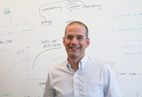
Christopher Brown, University of Maryland
Istem Fer, Finnish Meteorological Institute
Michael Gerst, University of Maryland
Chris Jones, NCSU Center for Geospatial Analytics
Rob Salguero-Gómez, University of Oxford
Anna Sjodin, Environmental Protection Agency
|
|
Steering Committee Election Nominees Statements
I am currently a Visiting Research Scientist at the Earth System Science Interdisciplinary Center of the University of Maryland, College Park. Prior to retiring from the National Oceanic and Atmospheric Administration (NOAA) in December 2022, I was Chief of the Cooperative Research Programs Division of its Center for Satellite Applications and Research, and responsible for the effective functioning of the division and the execution of grant applications submitted by several of our cooperative institutes and other institutions. Educated as an oceanographer, I use remote sensing and modeling to monitor and understand biological patterns in the ocean. My primary research interests include the detection, characterization and prediction of marine organisms, documenting the temporal variability of phytoplankton biomass and productivity in the global ocean, and developing water quality applications.
During the past two decades, I have been involved in various aspects of ecological forecasting, spanning from the development of species-specific predictions of marine organisms to their transition to operations. My first efforts included the short-term prediction of encountering sea nettles, a stinging jellyfish, in Chesapeake Bay (and displayed here) and the long-term projection of the cosmopolitan phytoplankton species Emiliania huxleyi in the global ocean. I co-authored several publications on the prediction of various coastal ocean species after that, which were summarized in the publication about the Chesapeake Bay Ecological Prediction System (CBEPS). At the time, CBEPS was one of only a few implementations of a near-real time, coupled physical–biogeochemical coastal ocean model to generate short-term ecological forecasts. I am presently working on a project to simulate riverine temperature and nitrate concentration based on NOAA’s National Water Model (NWM) framework that I hope will eventually lead to the construction and implementation of an Earth System Model to be used for ecological forecasting.
In addition to my research activities, I was a proponent and founding member of NOAA’s Ecological Forecasting Roadmap (EFR), which strove to ensure and accelerate the transition of NOAA’s ecological forecasts from research to operations, applications and commercialization (R2X). Within ERF, I served as co-chair of the Infrastructure & Process Team, the goals of which were to establish a system that would centrally generate and disseminate foundational environmental variables used in ecological forecasting, e.g., temperature, and thereby eliminate the need for projects to individually generate them, and to create a consistent R2X approach for ecological forecasts at NOAA that had been ad hoc to date. I also served as co-chair of EFI’s original Knowledge Transfer and Partner Working Group and currently sit as a member on its ‘successor’, the Translational Working Group.
I thrive on collaboration and am passionate about ecological forecasting. If elected to the EFI Steering Committee, I will do my best to advance the R2X of ecological forecasts and to engage the marine community, and thereby assist EFI in achieving its mission of building and supporting a broad community of practice around ecological forecasting.
|
|
Istem Fer, Finnish Meteorological Institute
I am a senior researcher at the Finnish Meteorological Institute, Carbon Cycle Research group. My research currently focuses on quantifying and predicting carbon sequestration in agricultural fields through model-data synthesis and near-term ecological forecasting. I routinely work with computer simulators of ecological systems and multiple data streams for which I specifically concentrate on developing reusable, accessible and scalable community informatics tools. In our research group, we adopted near-term iterative ecological forecasting as means for efficient distillation and dissemination of knowledge to our stakeholders which span from farmers to policy makers. We are aiming towards operationalizing our agricultural forecasts from their current prototype form to a service standard. In the past years we secured funding, established the underlying (cyber)infrastructure and built a web-based dashboard (fieldobservatory.org) towards this goal. I recently joined the EFI standards group to reconcile our team’s effort with the international community standards. I take part in the steering of the European chapter of EFI (EEFI) that we launched on 12 October 2022. I am also on the organizing committee of the EFI2024 Conference that will be hosted by the Finnish Meteorological Institute in Helsinki which will be the first EFI annual conference to be held outside of the U.S.
Goals for EFI
As a member of the steering committee
i) My primary goal will be to fortify efficient exchange of information between the EEFI community, the EFI2024 organizing committee and the broader EFI community. I believe both the European chapter and the EFI2024 conference are important cornerstones for contributing to EFI's strength, growth and impact internationally. By regularly organizing and attending committee meetings, I seek to ultimately support the progress of these projects to their full potential.
ii) I further aim to facilitate and accelerate addressing the real forecasting needs of stakeholders and bringing research to operations. As a civil servant I engage with partners and communities from different sectors who would benefit from adaptive, communicable and actionable near-term ecological forecasts. In the EFI steering committee I hope to pursue, promote and create opportunities for initiating and strengthening solid ties with a wide-range of actors through a from-research-to-operations approach, similar to what NWP has achieved in weather services.
|
|
Michael Gerst, University of Maryland
I am an Associate Research Professor at the Earth System Science Interdisciplinary Center (ESSIC) and a Senior Research Fellow at the Smith School of Business, both at the University of Maryland, College Park. My background is in engineering and multi-disciplinary decision and risk science and much of my work over the past decade has been at the intersection of social and physical sciences. As such, my interests are in understanding how Earth system measurements and models, including ecological forecasts, can be best used in decision-making and planning.
A recent salient example has been my decision support tool design and stakeholder engagement work on the Dashboard for Agricultural Water Use and Nutrient Management (DAWN) project. DAWN is funded by a five-year U.S. Department of Agriculture (USDA) grant and includes researchers and extension personnel across five academic institutions and one industry partner. The motivating goals of DAWN are to bring next generation climate and ecological modeling capabilities to farmers in the U.S. Corn Belt through a co-production process that iteratively engages farmers as models and decision support tools are scoped, developed, and deployed. In many respects, the project embodies many of the promises and challenges of creating usable model-based science, and its lessons learned inform much of the perspective on translation and actionable science that I bring to EFI.
In fall 2022, I started co-chairing EFI’s Translation and Actionable Science Working Group. Since then, I have led efforts (Feb 2 EFI blog post) to better understand the translation needs of the ecological forecasting community and prioritize those needs given feasibility and importance to the community. If elected to the Steering Committee, I plan to build on these efforts, as fostering capacity for ecological forecasts to be usable is vitally important for the sustainability of the community.
|
|
Chris Jones Research Scholar at NCSU Center for Geospatial Analytics
I am a research scholar at NCSU Center for Geospatial Analytics. My research focus is on integrating decision support systems with spatial-temporal models of insect or pathogen spread in forest and agricultural systems. I have built partnerships with State Departments of Forestry and Agriculture in multiple states and USDA agencies, specifically the Agricultural research service, Animal and Plant Health Inspection Service, and the Forest Service. I use participatory modeling to bring stakeholders into the modeling and decision-support process as soon as we start a modeling project. This helps ensure that the outputs from the model are able to be used as part of their decision-making. We work with the stakeholders to link their data collection processes and any anecdotal data on pest movements in the field to iteratively update our forecasts as new data and information are available. Since my work is on invasive insects and pathogens, the iterative process frequently includes hindcasting with new information to see how model performance improves. We are now including spatial uncertainty partitioning to better understand what data to collect and where to collect it to improve model performance in relation to decision outcomes. By linking the researcher and stakeholder goals, we are able to effectively work together for better outcomes for all. We learn and iterate faster about how to effectively forecast pest spread through space and time, and stakeholders are able to better use the model to plan sampling and management strategies.
Goals for EFI:
As a steering committee member, I would focus on two main goals:
- Focus on furthering non-academic partnerships and job opportunities for the EFI community. Researchers from my group have primarily gone on to non-academic careers due to the partnerships that we make during the research process. Introducing the EFI community to these stakeholder groups could provide good value to both groups. Jobs in the agricultural industry provide forecasting opportunities that would be a great fit for members of the EFI community. These jobs are frequently fast past with great data collection on an ongoing basis but aren’t often known to the EFI group and making a competitive application is very different than an academic job.
- Expand the number of spatial forecast opportunities for EFI challenges. Specifically, a great challenge would be ways to visualize spatial uncertainty through time effectively to stakeholders. Specifically, a visualization challenge to communicate the most important uncertainties in both spatial and temporal domains to stakeholders. This type of competition could be graded on a subjective sliding scale based on how well the stakeholders understood the visualization.
|
|
Rob Salguero-Gómez, University of Oxford, UK
Statement goals
I am excited about the opportunity to help the Ecological Forecasting Initiative (EFI) further advance its long-term goals of spatial expansion, improved diversity, and deeper impact by bringing my wealth of experiences, skills, and networks. My name is Rob Salguero-Gómez; I am a first-generation Spanish academic who has acquired significant leadership, research, and administrative across my training in three continents (Europe, America, Oceania) in the last 20 years. I am applying to this position because, from my current professional status and geographic location, I am ideally placed to help spread the impact of EFI across Europe, while maintaining and developing strong links with other parts of the world, where I am actively collaborating (e.g., South America, China, South Africa, Australia).
Ecology must gain the predictive power any mature science aspires to. Near-term forecasting is the next frontier in Ecology. Important developments in this area have taken place in the last decade. However, I have not yet observed the full potential of Population Ecology (including human demography statistical techniques) and Macroecology realised within the context of ecological forecasting. As such, I see both disciplines, of which I am an expert, as ideally positioned to fuel near-term forecasting. Indeed, Population Ecology and Macroecology have harnessed in the last decades long-term, spatially expansive data, and a wealth of statistical methods with which to project, compare, and contrast outputs that could strengthen our predictive power. I would like to bring this expertise and passion for knowledge dissemination (I have run >30 workshops on demographic and macroecological tools in >20 countries and 3 languages) to the board of the Ecological Forecasting Initiative. As a steering committee member, I would also inject my energy and enthusiasm for Ecology across the network and its members. This energy and enthusiasm has lead me to develop an educational videogame, and to organise outreach events at multiple secondary schools as well as at the Museum of Natural History of Oxford. During these events, I use my soft skills to discuss with children -and their parents- the main challenges of Ecology, and some of the benefits of thinking and acting interdisciplinarily, such as bringing robotics technology to aid in ecological monitoring.
Professional Qualifications
I am an Associate Professor in Ecology at Oxford, where my research group and I develop demographic methods, use big data, and novel frameworks to predict species extinctions and invasions. I have published >100 peer-reviewed articles on various ecological topics, including population projections and macro-ecology forecasting. My open-access efforts (lead curator of COMPADRE & COMADRE, as well as PADRINO, the three largest population ecology databases in the world; member of Open Traits) have been recognised with the Open Access award of the Spanish Ecological Society and the Elton Award of the British Ecological Society. My macro-ecological research received a honorable mention of the Tansley Medal of the New Phytologist. I have a proven record of excellence in supporting students and ECRs, with multiple teaching and mentoring awards and -most importantly- all of my students and postdocs finishing their projects on time and with several offers awaiting before leaving the group. I served as the first international chair of the Student Section and of the Early Career Section of the Ecological Society of America. I am used to communicating effectively with and listening to a diverse group of academics and stakeholders. I serve in the grant panels of the NSF, NERC, and the British Ecological Society.
|
|
Anna Sjodin, Environmental Protection Agency
Professional Qualifications:
I have been an active member of EFI since 2019, participating primarily in the Diversity, Equity, and Inclusion working group but also dabbling in Education and Tools and Methods. As part of my involvement, I have led four iterations of the DEI Book Club, helped to develop alternative forecasting frameworks that center inclusivity, and gathered data regarding the use and understanding of forecasts, predictions, and projections by a variety of researchers, including ecologists, epidemiologists, and sports forecasters. Outside of EFI, I am a biologist with the Environmental Protection Agency, where I focus on developing methods and models to better detect and measure environmental viruses. My work has included using occupancy models to understand viral distributions while accounting for failed detection, predicting hosts of unknown viruses to guide field-sampling decisions, and including evolutionary potential in forecasts of viral spillover and emergence. As part of the EFI steering committee, I will bring the expertise and experience I have gained to work towards three primary goals.
Goals for EFI:
1. Increase the role that ecological forecasting can play in the advancement of molecular ecology: In my experience as a virus ecologist, many virologists and molecularly-minded researchers do not use forecasts in their research. This does not mean that these two fields cannot mutually benefit from integration, and this gap represents an opportunity for untapped growth. As part of the EFI steering committee, I would like to act as a conduit between EFI and the field of molecular ecology, actively participating in both communities and advocating for the interests of each.
2. Integrate non-quantitative and abstract data into the ecological forecasting thought process: I firmly believe in the value of multiple ways of knowing and doing and that inclusion of such diverse thinking can improve the utility of ecological forecasts. As a member of the EFI steering committee, I would like to facilitate conversations about how intangible data types and alternative ways of knowing can be integrated into our current, quantitative way of thinking about forecasting, or how alternative forecasting frameworks can complement current methodologies.
3. Expand the demographic diversity of EFI membership: As part of the EFI steering committee, I will continue my efforts to learn from, and form relationships with, non-academic communities and traditionally under-represented groups in ecology. I will share the utility of ecological forecasts and iterative decision-making processes to address pressing issues facing these communities and help to facilitate their involvement and participation in EFI.
|
|
The Translation & Actionable Science Working Group has been working over the past five months to gauge the translational needs of the EFI community and to identify where modelers and physical scientists see gaps in connecting to end users to conduct translational research. This new blog post provides a summary of the 7 topics identified as priorities for translational needs. The post also highlights where there are connections to activities other EFI working groups and organizations are doing that the Translation working group can connect with. You can see the post at:
|
|
Canadian EFI Chapter (CEFI) Summer School 2023
CEFI is hosting a week-long short course on July 24-28, 2023 on “Forecasting for Decision-Making: An Epidemiological & Ecological Perspective.”
The application deadline is March 12, 2023.
This 5-day Summer School will provide participants with lectures and hands-on experience in forecasting epidemiological and ecological phenomena in decision-making contexts. The main objectives of this short course are to improve participant capacity to (1) produce more reliable and reproducible forecasting models; (2) generate accurate forecast horizons and relevant scenario analyses; (3) integrate decision-makers’ priorities and interests into forecasting models; and (4) effectively communicate forecasting model results, assumptions and uncertainties across various audiences including decision-makers and the public.
|
|
NEON Ecological Forecast Challenge
The NEON Forecast Challenge is continually ongoing for all themes across NEON sites. All the details about the NEON and meteorological data for the NEON sites, how to register, how to submit forecasts, helpful functions, FAQs, and an example of a forecast workflow are available here.
Currently, there are over 100 models that have 6,943 submitted total forecasts to the Challenge so far. With spring starting in the northern hemisphere conditions are beginning to change and we are moving into an exciting time to compare forecasts across sites and themes! You can see the forecasts at: https://projects.ecoforecast.org/neon4cast-dashboard/
In the spirit of making comparisons, the EFI Theory working group currently has 9 models automatically being run across all the Challenge themes and at all the NEON sites. The group is looking forward to being able to compare how well these model predictions perform to determine what ecological systems are easier or harder to forecast.
Virginia Tech Post-doc Freya Olsson has run training workshops for the NEON Ecological Forecasting Technical Working Group, Global Lakes Ecological Observatory, University of Edinburgh School of GeoSciences, and EU Horizon project Invent Water. She will also be running a workshop at the Ecological Society of America Meeting in Portland this summer. These workshops have led to an increase in submissions, especially in the aquatics theme. Please reach out to info@ecoforecast.org if you have a group that is interested in a workshop that provides training in how to submit the Challenge.
Forecast Challenge Themes
-
Beetle Communities - Weekly forecasts for beetle abundance and species richness at 47 NEON sites.
-
Tick Populations - Weekly forecasts for Amblyomma americanum nymphal tick abundance at 9 NEON sites.
-
Terrestrial Carbon and Water Fluxes - Half hour and daily forecasts of net ecosystem exchange (NEE) of CO2 and evapotranspiration (LE) at terrestrial NEON sites.
-
Aquatic Ecosystems - Daily forecasts of dissolved oxygen, water temperature, and chlorophyll-a from lakes and river/streams NEON sites.
-
Phenology - Daily forecasts of plant greenness (gcc) and redness (rcc) at deciduous broadleaf forests, evergreen needleleaf, evergreen broadleaf (tropical), grasslands, tundra, agriculture, and shrubland NEON sites as measured by Phenocams.
|
|
EFI and the Ecological Society of America Statistical Ecology Section are co-hosting the second round of the Statistical Methods webinar series.
In this series presenters provide an overview of a quantitative method in ecology and environmental science, the R code or R package related to the statistical method, and common pitfalls or stumbling blocks.
The remaining seminars in this round of presentations include:
-
March 6, 2023: State-space Models and the Template Model Builder (TMB) R package; Marie Auger-Méthé, University of British Columbia
-
April 3, 2023: Bayesian Stable Isotope Mixing Models and the MixSIAR R package; Brian Stock, NOAA
-
May 1, 2023: Integrated Species Distribution Models; Neil Gilbert, Michigan State University
|
|
State–space models (SSMs) are an important modeling framework for analyzing ecological time series and are commonly used to model population dynamics, animal movement, and capture–recapture data. SSMs are popular because they can account for biological variation in the state process separately from observation error, and can be used to model continuous, count, binary, and categorical data.
SSMs can be fitted with a variety of tools, each having their own strengths and weaknesses. One increasingly popular tool is the R package Template Model Builder (TMB). This package allows users to fit SSMs using Maximum Likelihood Estimation and has the advantage of being computationally efficient and relatively flexible.
Dr. Auger-Méthé will start by introducing SSMs. She will then present when it is advantageous to use TMB to fit a SSM. She will then demonstrate how to code a SSM in TMB, highlighting some of the peculiarities of using a package at the interface of R and C++. Dr. Auger-Méthé will finish on detailing a few methods to assess whether a SSM is adequate for the data at hand. The presentation will be based on a recent review led by Dr. Auger-Méthé in Ecological Monographs (open access).
|
|
European EFI Chapter (EEFI) Seminar Schedule
EEFI has a line-up of speakers for the first half of 2023! The seminars will take place on the second Wednesday of the month at 1pm CET.
|
|
8 March 2023: “Understanding and predicting the stability of ecological systems” by Owen Petchey, University of Zurich
Dr. Petchey will talk on the general subject of understanding and predicting stability. He will cover topics including how we might quantify elements of biodiversity that can predict community stability, how and why we might conceive of a measure of overall ecosystem stability, and how biodiversity can influence when catastrophic shifts in ecosystem occur.
|
|
Additional Seminars
12 April: Harry Watkins, St. Andrews Botanic Garden
10 May: Jelena Pantel, University of Duisburg-Essen
14 June: Cara Gallagher, University of Potsdam
|
|
Oceania EFI Chapter (OEFI) Seminars
OEFI is continuing the seminar series to share and highlight the ecological forecasting work being done in Oceania.
The calls will be on Thursdays at 3pm AET, noon AWT, and 5pm NZ.
A recording of the call from 23 February by Alfredo Huete (University of Technology, Sydney) on "Pollen forecasting and satellite-derived ecological connections between the environment and human health” is available on the OEFI webpage.
Jamie Cleverly (TERN & James Cook University) will present on 23 March. The title and abstract will be added to the website when they are available.
Future calls are on: 25 May, 22 June, 24 August, 21 September, 2 November, and 14 December
Sign-up here to receive communications about future OEFI events.
|
|
NEON Science Seminar: Using NEON soil and site properties to evaluate cross-scale freeze-thaw disturbance
Join Erin Rooney of the University of Tennessee Knoxville on March 14, 12pm MST for her talk about freeze-thaw disturbance and the use of NEON. The goal of the NEON monthly science seminar series is to build community among researchers at the intersection of ecology, environmental science, and NEON. Find the schedule of speakers for 2023 on our webpage Science Seminar and Data Skills Webinars, along with information on related data skills webinars.
|
|
June 4-6, 2024
The Ecological Forecasting Initiative 2024 Conference will be hosted by the Finnish Meteorological Institute in Helsinki, Finland
Mark your calendars for this first community-wide EFI conference outside of the U.S.! With this conference, we aim to build a more international ecological forecasting community. The meeting will be hybrid to allow for as broad and diverse participation as possible.
The EFI 2024 Conference will bring together scientists, agencies, industry, and stakeholders to build a community of practice and to advance research, applications, and collaboration around near-term (subdaily to decadal) ecological forecasts. The meeting will provide opportunities to network, activities for early career individuals, presentations and posters on the state of the field, and workshops and tutorials focused on skill development. There will be a call for session and workshop proposals in late 2023.
|
|
Find Out More About EFI
Over the next couple of newsletters, we will be using this section to highlight different EFI resources or ways to get involved with the community.
|
|
EFI's QUBES Repository
EFI has a number of Educational Resources for both instructors and students including a) inclusive pedagogy resources, b) a list of hundreds of data science and forecasting educational materials, videos, code repositories, modules, and online textbooks, c) an overview of what ecological forecasting is, potential careers using forecasting, and suggestions for courses related to forecasting, and d) infographics supporting learning and teaching R. In addition to being listed on the EFI Educational Resources webpage, many of these materials are available on the QUBES platform at: https://qubeshub.org/community/projects/educationworkinggroup.
|
|
Working Group Calls and Summaries |
|
The Working Groups are open for anyone to join at any time. Email EFI to be added to the mailing lists or Slack channels for these groups.
Schedule of Calls. All times are US Eastern Time.
A new schedule of calls for June-August will be set up in May.
-
Theory - March 20, April 17, and May 15 at 4pm
-
Forecasting Standards - March 27, April 24, May 22 at 2pm
-
Translation & Actionable Science - March 28, April 25, May 23 at 3pm
-
Education - March 16, April 13, May 11 at 2pm
-
Diversity & Inclusion - March 14, April 11, May 9 at 1pm
-
Methods/Cyberinfrastructure - March 15, April 12, May 10 at 2pm
-
Student Association (EFISA) - March 16, April 20, May 18 at 3pm
|
|
Steering Committee
The Steering Committee discussed recent and upcoming activities such as the early career panel held by EFISA, preparations for submitting a session proposal for AGU 2023 and the upcoming Steering Committee elections, and discussing how the group could be helpful as Jake Zwart (USGS) leads a workshop proposal (see the Methods & Tools and Cyberinfrastructure update below). The group also picked up on previous conversations about creating an Executive Advisory Committee (EAC) to gain advice on how to sustain and grow EFI over the next 10 plus years. Melissa Kenney (University of Minnesota) will take the ideas discussed to draft an initial scope of work for an EAC and then work with the Steering Committee to identify individuals to invite to participate on the EAC.
EFISA, led by co-chair Lynda Bradley (Emory University), held an engaging career panel this month where students had a Q&A with a diverse group of scientists that chose alternative career paths to a traditional career in academia. A recording of the panel can be made available upon request (eco4cast.students@gmail.com).
At the monthly meeting, EFISA took some time to discuss what members would most like to see happen in future meetings this semester. There were many great suggestions, including “flash talks” from different EFISA members about their research, creating new social opportunities, reading papers for new long-term discussion topics that could lead to future blog posts, and building a repository of materials for new graduate students. The group will begin next month with flash talks and encourages all members to participate with any research topic they are working on, forecasting-related or not. Flash talks are a low-stakes and helpful way to practice elevator pitches, find collaborators, and work through research problems.
EFISA has decided to move the final stages of their blog post on the use of the term “model complexity” in the literature to take place outside of monthly meetings. Please don’t hesitate to reach out via the #students channel of the EFI Slack Workspace or via email (eco4cast.students@gmail.com) to become involved at monthly meetings or in the current blog post. The EFISA group is always looking for new members to provide fresh perspectives and participate in projects.
The Theory working group is working on testing hypotheses about predictability. Abby Lewis (Virginia Tech) is leading an effort to submit a number of models that are applied across all the Forecasting Challenge themes and NEON sites. So far 9 models have been automated for submission to the Challenge. Shubhi Sharma (Yale University) and Cole Brookson (University of Alberta) gave an overview from a literature review on ways predictability has been assessed in climatology and meteorology. The group discussed realized vs intrinsic predictability and the use of relative and permutation entropy. Shubhi shared results from simulations to test intrinsic and realized predictability using an information theory framework. The goal is to apply this same approach to the Forecasting Challenge forecasts.
The Forecasting Standards working group is waiting for reviews for the manuscript "A Community Convention for Ecological Forecasting: Output Files and Metadata," submitted for publication. The manuscript summarizes the conventions for common formatting and archiving of ecological forecasts and their associated metadata. A preprint of this manuscript can be found at: https://ecoevorxiv.org/repository/view/4054/
In the meantime, Carl Boettiger (University of California, Berkeley) is working to develop a SpatioTemporal Assets Catalog (STAC) standard for the existing NEON Challenge parquet databases as well as a tool to generate the STAC standard. The group will discuss this during the call in March.
As mentioned above, the Translation and Actionable Working Group created a new blog post summarizing seven topics identified as priorities for the translational needs of the EFI community. The working group identified three (see below) of the seven topics as being of most interest to follow up on in the near term. Over the next month, working group members will pull together notes from previous discussions and resources that are already available for these three topics so the working group can add to what has already been done.
The three topics the Translation working group is focused on are:
- Helping colleagues find collaborators across disciplines (i.e., matchmaking) as well as providing guidance on what makes a fruitful multi-disciplinary collaboration
- How to understand stakeholder decision-making processes?
- How to make data, models, and systems that are documented and reusable (FAIR data, models)
The Education group continues to make progress on a manuscript that provides classroom activities to support ethical training related to ecological forecasting. Over the past month, the group provided feedback to Abby Lewis (Virginia Tech) on an activity that uses flying foxes to explore uncertainty. Cazimir Kowalski (University of Notre Dame) is going to get feedback about the activity from a group of undergrad students at Cal Poly Humboldt. Olivia Tabares (UNAM) and Dexter Howard (Virginia Tech) are working on an activity that uses a marine fisheries example to explore conflicts of interest in ecological forecasting. Cazimir and Jason McLachlan (University of Notre Dame) are preparing an activity focused on water quality and data sovereignty. Cazimir will share this activity with the students at Cal Poly Humboldt as well. Gerbrand Koren (Utrecht University) has offered to develop an activity that he has previously used in his undergraduate and graduate classes on equitable data sharing.
Olivia Tabares (UNAM) helped the Latin American and the Caribbean Chapter submit a symposium on “We are stronger together: Building community to face barriers for Latin American and underrepresented ecologists.” Olivia will be presenting a talk during the symposium on “Culturally relevant teaching: experiences from the Ecological Forecasting Initiative working with Black, Latinx and Native American students and teachers” and will highlight examples of things EFI has been working on. The group is also starting to make plans for the summer reading group and will select a book in the next couple of months. Finally, the group continues to push the blog post on barriers to ecological forecasting forward. Nicholas Record (Bigelow Laboratory for Ocean Science) will work on providing overall edits over the next month.
The Methods and Cyberinfrastructure working group discussed a timeline, funding sources, and content for the workshop proposal Jake Zwart (USGS) is leading to bring together forecasters with cyberinfrastructure experts to come up with ways to make current forecasting workflow more usable and searchable. The group also spent time brainstorming a number of project ideas for the Unconference and discussing what cyberinfrastructure and statistical methods are needed for the Challenge and forecasting.
|
|
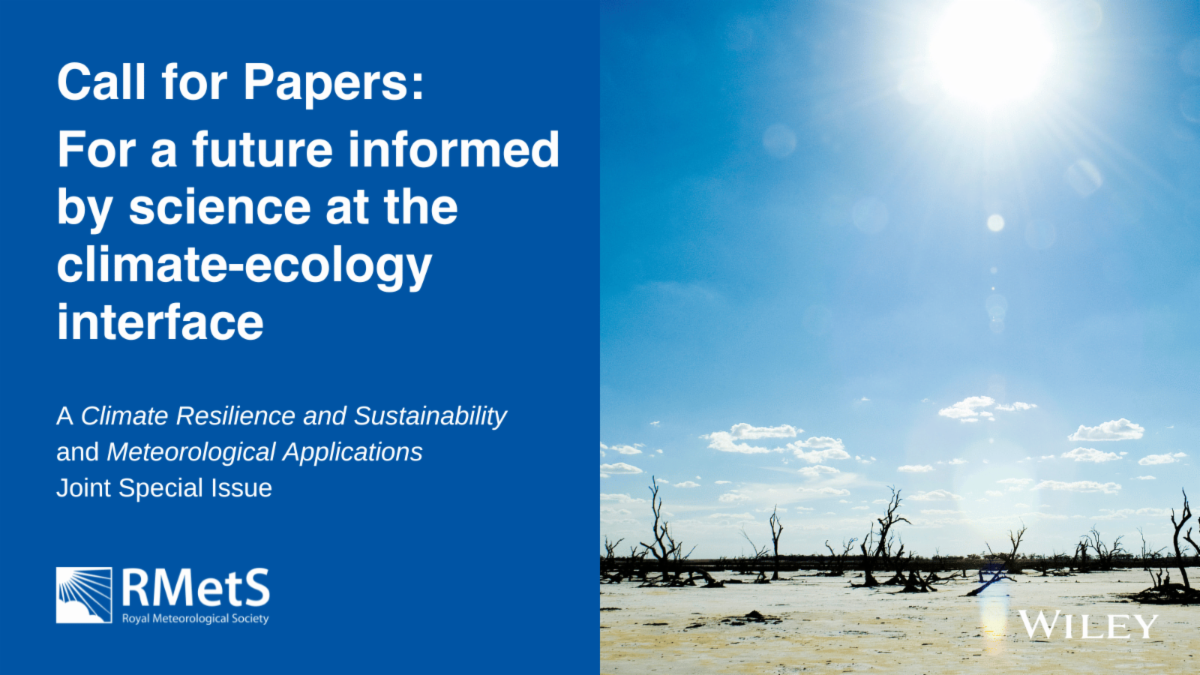
For a future informed by science at the climate-ecology interface
Submission deadline: 31 August 2023
This Special Issue provides a high-profile platform to showcase state-of-the-art research and innovation at the climate-ecology interface. It will demonstrate the need for further interdisciplinarity; a call-to-arms for more research and funding in meteorology and ecology.
Articles included in the Special Issue must be interdisciplinary in their approach – drawing on data, knowledge and practice from both meteorology / climate science and ecology – and should clearly demonstrate how the work improves our ability to anticipate and prepare for future environmental change. The Special Issue aims to include articles covering applied research, methodological advances, commentaries, and implications for policy and practice.
|
|
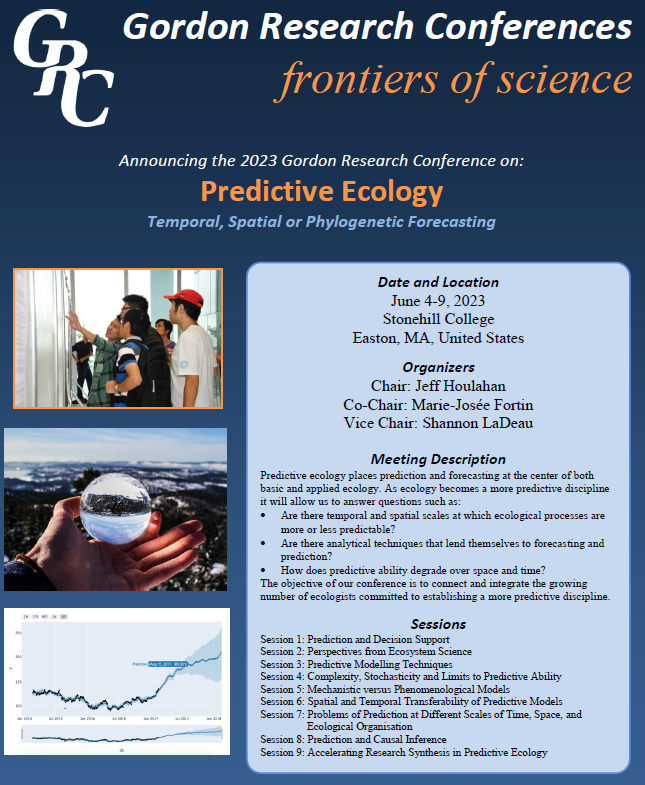
Details about the Gordon Research Conference are at:
Applications are due May 7, 2023
|
|
Teach Ecological Forecasting in Your Class! |
|
Are you looking for fresh curriculum ideas? Mary Lofton and Cayelan Carey (Virginia Tech) are seeking instructors to help trial ecological forecasting teaching modules and collect data to examine their effectiveness through December 2023.
The two modules include:
1) Module 6: Understanding Uncertainty in Ecological Forecasts
2) Module 7: Using Data to Improve Ecological Forecasts
These modules are part of the Macrosystems EDDIE series funded by NSF Macrosystems Biology.
The course content is delivered through R Shiny applications which you can view here for Module 6 and Module 7.
All the materials for instructors are available online here for Module 6 and Module 7
Instructors are asked to:
- Ask their students to fill out a pre-module questionnaire
- Teach the module!
- Ask their students to fill out a post-module questionnaire
- Complete a brief faculty reflection
|
|
New EFI Members
Jonas Hentati Sundberg - Swedish University of Agricultural Sciences
Michael Gerst - University of Maryland
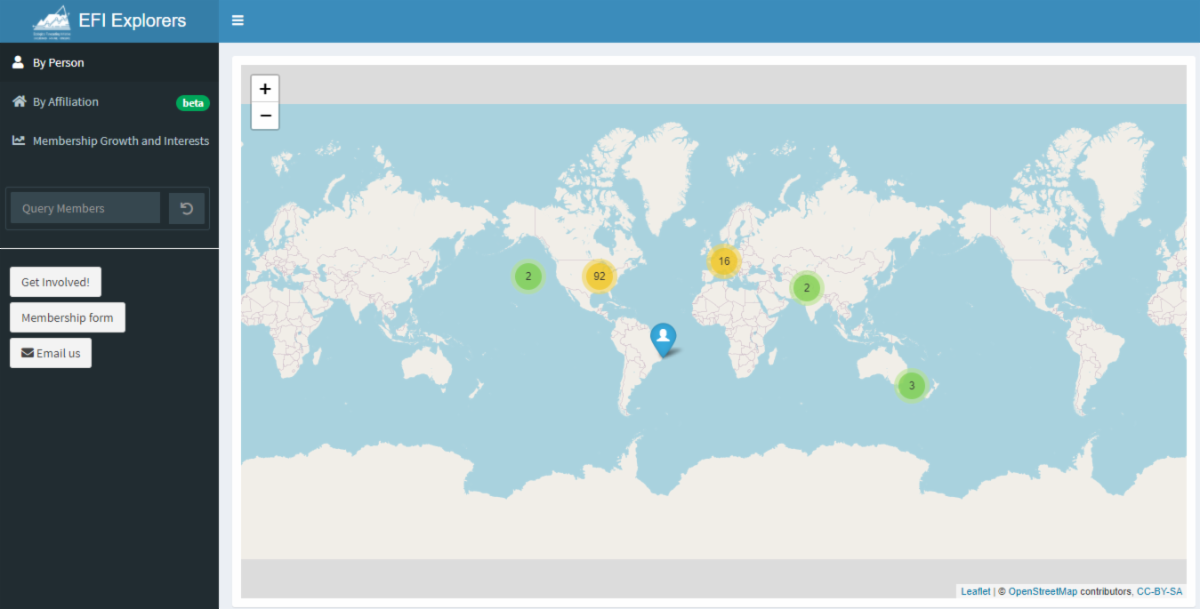
The EFI Members page provides a directory of the 241 EFI members and a map showing the general location of EFI members. EFI membership is free, allows individuals to be elected to the EFI Steering Committee and cast a vote in the Steering Committee elections, and demonstrates a commitment to the field of ecological forecasting. If you are not already a Member you can sign up here.
|
|
Zotero Library
EFI has a Zotero library with a bibliography of forecasting papers. You can use the Filter Tags section in the lower left-hand corner of this library to search for
-
Papers compiled by the Partners Working Group on co-production, team science, translational science, science communication, etc, tagged "EFI Partners & Knowledge Transfer Paper”
-
Papers provided on our EFI Diversity and Inclusion webpage tagged "EFI DEI Paper"
-
Papers compiled for best practices for visualizing forecasts tagged "EFI Visualization Paper"
-
Papers posted to the Slack #papers channel tagged "EFI Slack Paper"
-
Papers produced from EFI activities tagged "EFI Publication"
|
|
EFI Logos
The EFI logos are available for people to use in presentations.
|
|
EFI Slack Group
The EFI Slack Group provides an outlet for the group to share ideas and conversations quickly. This is a great resource for real-time updates and discussions for Working Groups, the NEON Ecological Forecast Challenge, new papers, job postings, and funding opportunities.
Email EFI to request access to the Slack Group.
|
|
Shop for EFI Gear
You can now get your own shirt, magnet, notebook, and more from the EFI Store, https://ecoforecast.threadless.com/. Proceeds generated from the sale of products will be used to support EFI awards and activities.
|
|
-
March 6, 2023: Statistical Methods Webinar - State-space Models and the Template Model Builder (TMB) R package
-
March 8, 2023: EEFI Monthly Seminar - Owen Petchey, University of Zurich
-
March 12, 2023: Deadline to apply for the Canadian EFI Summer Course on “Forecasting for Decision-Making: An Epidemiological & Ecological Perspective”
-
March 14, 2023: NEON Science Seminar: Using NEON soil and site properties to evaluate cross-scale freeze-thaw disturbance.
-
March 23, 2023: OEFI Monthly Seminar - Jamie Cleverly, TERN & James Cook University
-
April 3, 2023: Statistical Methods Webinar - Bayesian Stable Isotope Mixing Models and the MixSIAR R package
-
April 12, 2023: EEFI Monthly Seminar - Harry Watkins, St. Andrews Botanic Garden
-
May 1, 2023: Statistical Methods Webinar - Integrated Species Distribution Models
-
May 7, 2023: Applications due for the Gordon Research Conference on Predictive Ecology: Temporal, Spatial or Phylogenetic Forecasting
-
May 10, 2023: EEFI Monthly Seminar - Jelena Pantel, University of Duisburg-Essen
-
May 25, 2023: OEFI Monthly Seminar - Topic and speaker TBD
-
June 4-9, 2023: Gordon Research Conference on Predictive Ecology: Temporal, Spatial or Phylogenetic Forecasting
-
June 14, 2023: EEFI Monthly Seminar - Cara Gallagher, University of Potsdam
-
June 21-23, 2023: EFI 2023 Unconference - Bringing People Together to Do Forecasting: Training, Technology, Theory, and Translation
-
June 22, 2023: OEFI Monthly Seminar - Topic and speaker TBD
-
July 24-28, 2023: Canadian EFI Summer School - Forecasting for Decision-Making: An Epidemiological & Ecological Perspective
-
August 24, 2023: OEFI Monthly Seminar - Topic and speaker TBD
-
September 21, 2023: OEFI Monthly Seminar - Topic and speaker TBD
-
November 2, 2023: OEFI Monthly Seminar - Topic and speaker TBD
-
December 14, 2023: OEFI Monthly Seminar - Topic and speaker TBD
-
June 4-6, 2024: EFI 2024 Conference in Helsinki, Finland
|
|
|
|
|
|
|