|
Two of our Council members were honored for their outstanding contributions to the water sector. Manny Teodoro received the Donald R. Boyd Award from the Association of Metropolitan Water Agencies (AMWA) in recognition of his leadership in advancing safe, reliable drinking water nationwide. Alan Roberson received the Career Achievement Award from the Association of State Drinking Water Administrators (ASDWA), celebrating his decades of service and far-reaching impact across the industry.
We’re proud to have both leaders on the Water & Health Advisory Council and grateful for their continued commitment to a healthier, more sustainable future. Learn more about these honors below!
| | | |
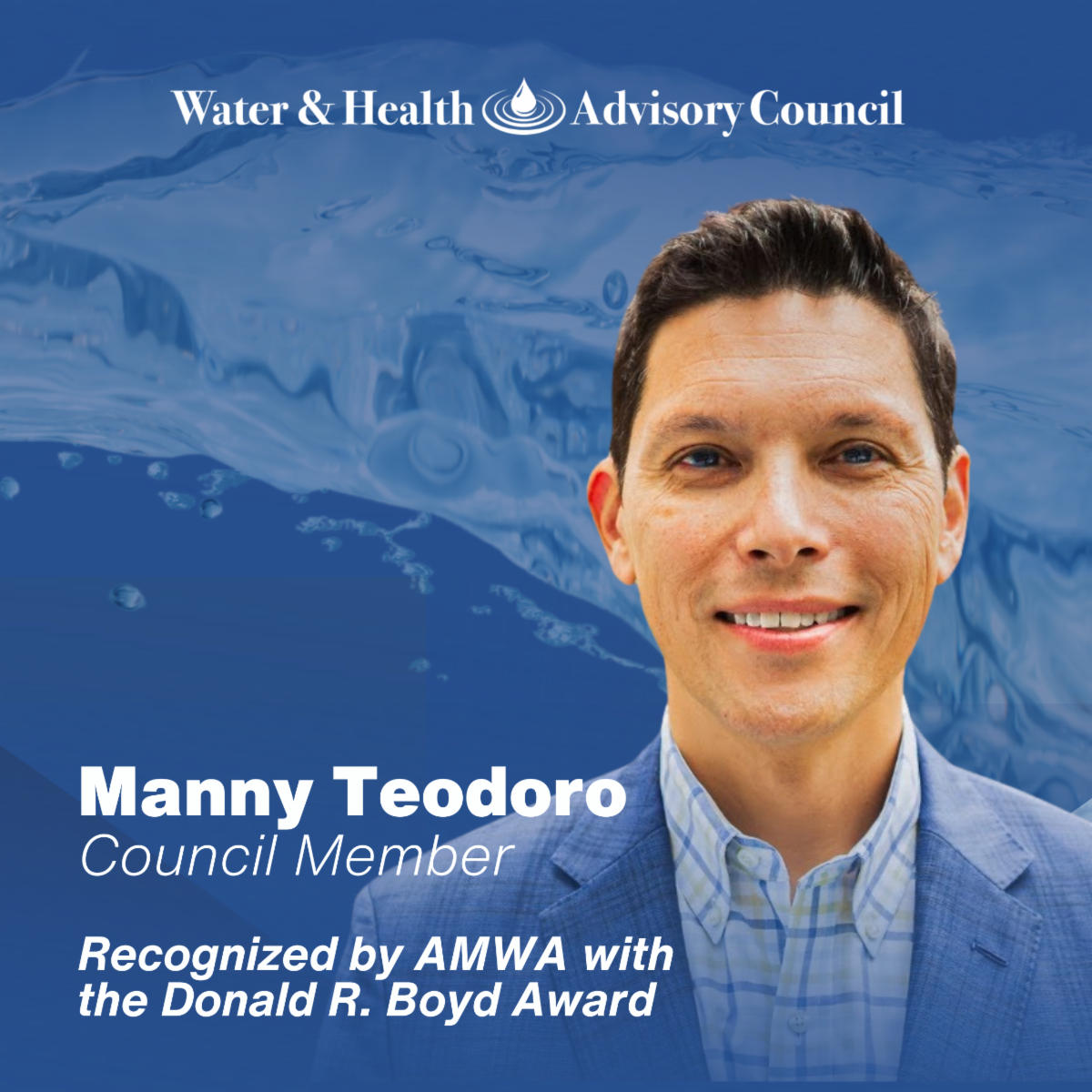
Council Member Manny Teodoro Honored with the Donald R. Boyd Award from AMWA
Congratulations to Council Member Manny Teodoro on receiving the Donald R. Boyd Award from the Association of Metropolitan Water Agencies (AMWA), recognizing his leadership and service to the drinking water sector. Since joining the Water & Health Advisory Council in 2022, Manny has been a clear, trusted voice on complex policy issues, helping advance safe, reliable drinking water for communities nationwide. We’re grateful for his expertise and partnership.
| |
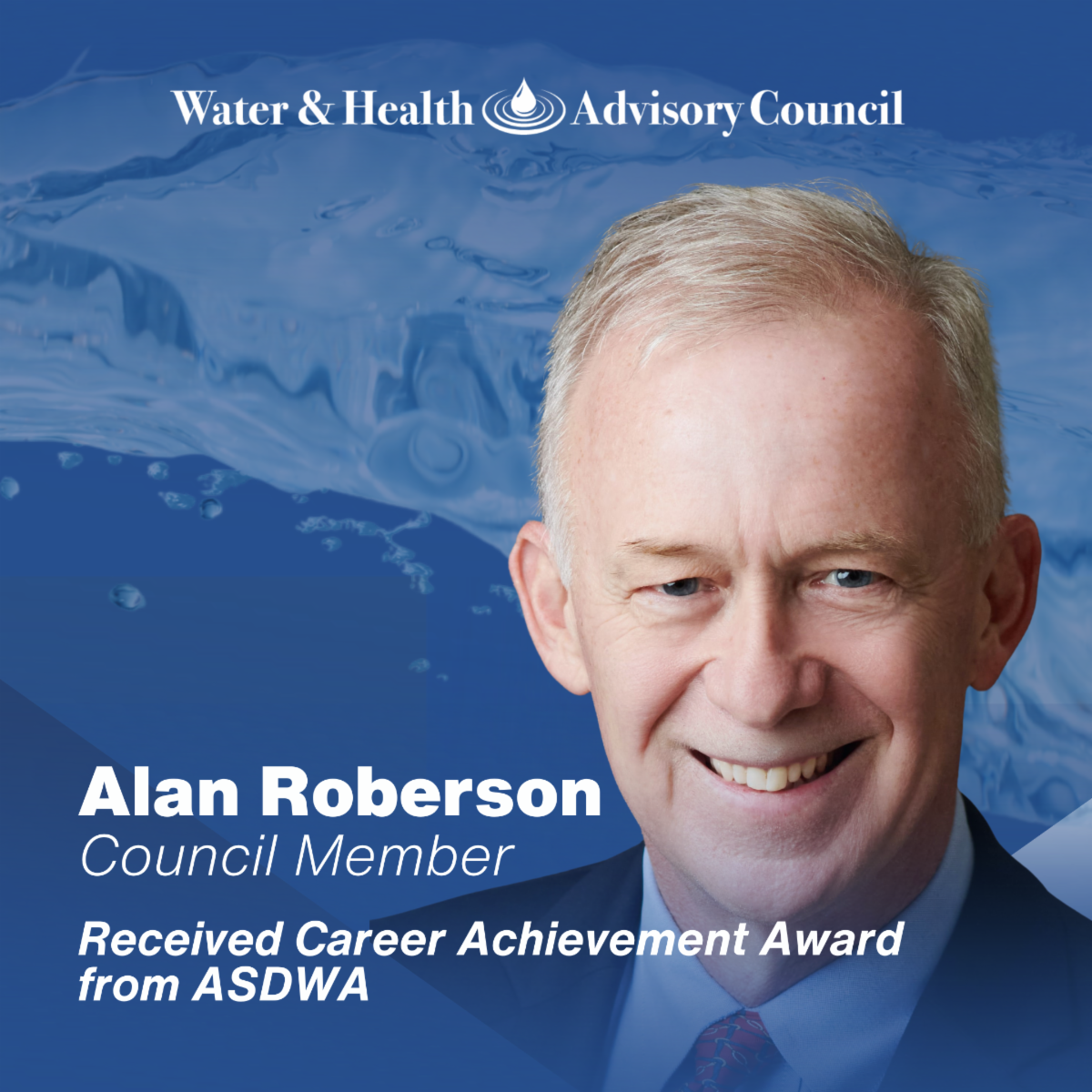
Council Member Alan Roberson Receives Career Achievement Award from ASDWA
Congratulations to Council Member Alan Roberson on receiving the Career Achievement Award from the Association of State Drinking Water Administrators (ASDWA). Alan served as ASDWA’s Executive Director for nearly eight years, drawing on more than three decades of water industry experience to guide the organization and the broader drinking water community. We’re grateful for his expertise and counsel on the Water & Health Advisory Council as we navigate the challenges of this next season.
| | | | |
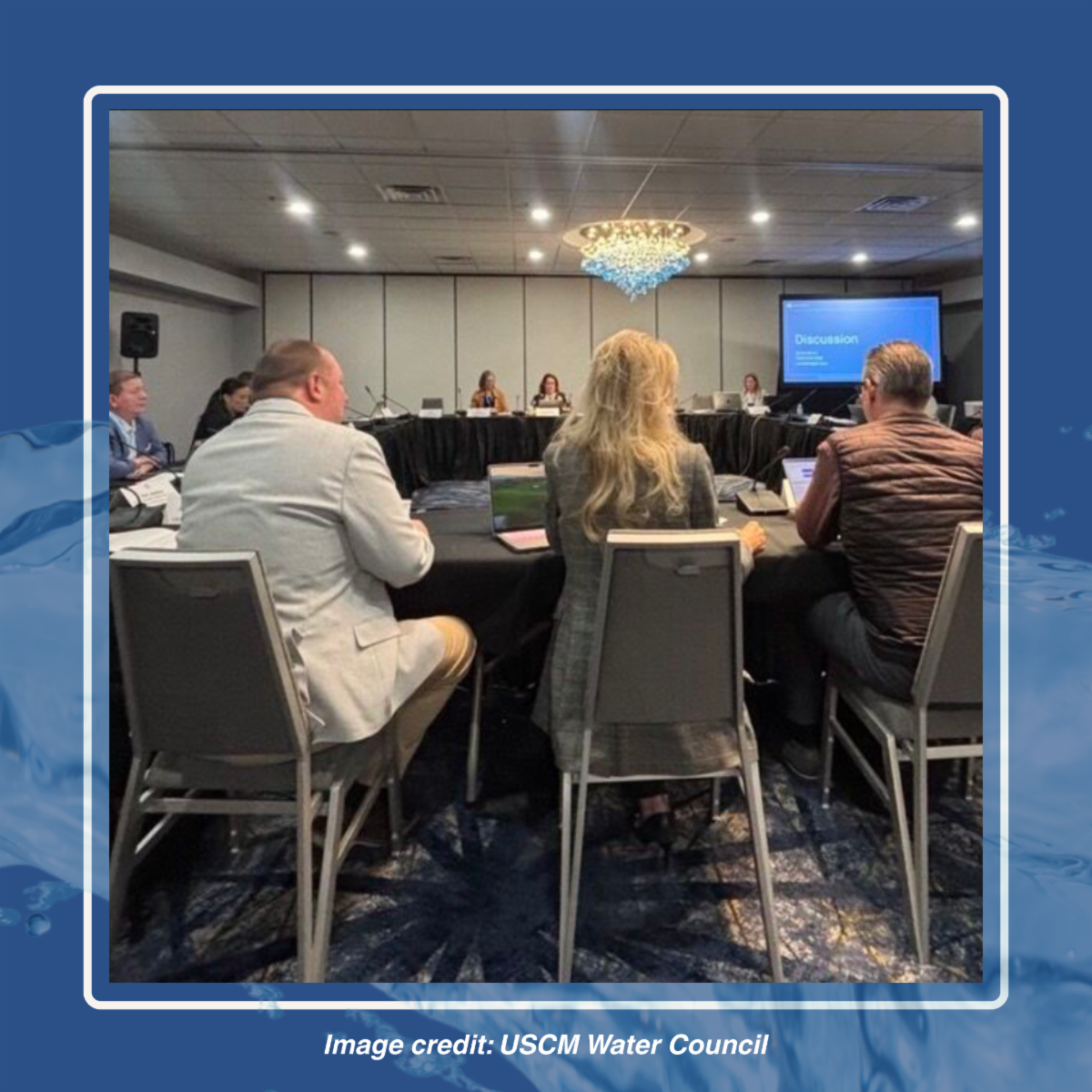
Water Leaders Gather at USCM Water Council Fall Meeting
Water industry experts and mayors from across the country met at the United States Conference of Mayors (USCM) Water Council Fall Meeting to discuss the future of the drinking water industry. Mayor John Marchand of Livermore led conversations on PFAS, Colorado River conservation, and long-term water security, while Council Member Chad Seidel shared key analysis on UCMR5 PFAS data and the cost implications of the final PFAS rule.
| |
Council Member Chad Seidel Participates in California Water Association Meetings on Emerging Water Challenges
Council Member Chad Seidel joined colleagues at the California Water Association meetings to discuss the intersection of wildfires and water systems.
As Chad noted, “Water systems aren’t designed or operated to fight wildfires — yet the public may have that expectation.” This thought-provoking dialogue underscored the importance of finding balance between wildfire protection and the ongoing mission to deliver safe, affordable, and reliable drinking water every day.
| | |
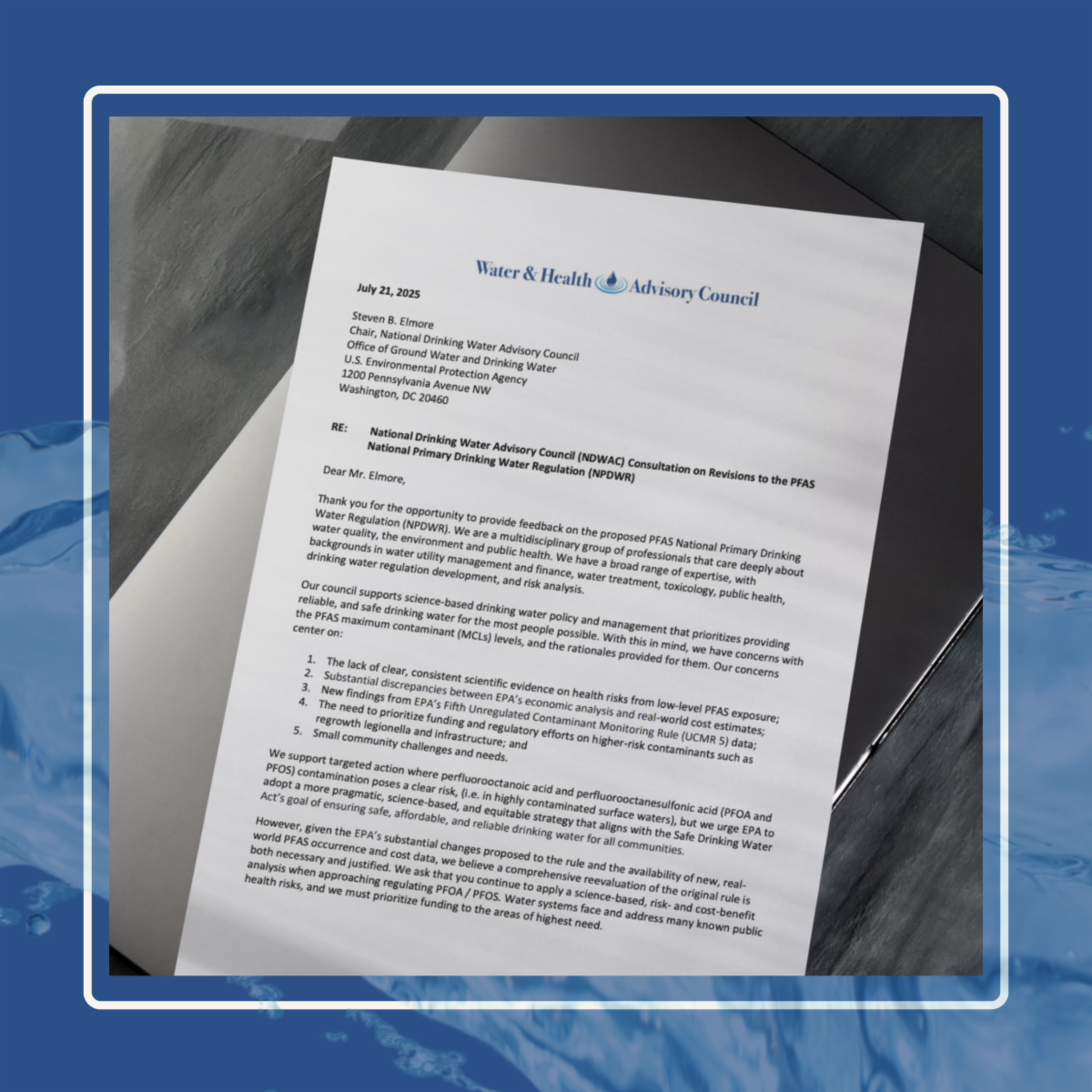
A Call for Science-Based Drinking Water Regulation: Our Comment on EPA’s Proposed PFAS Rule
The Water & Health Advisory Council submitted comments to EPA expressing support for science-based PFAS regulation while raising concerns about the rule’s scientific and economic foundations. We urge EPA to ensure policies that protect public health without overburdening small and disadvantaged communities.
| | | | | |
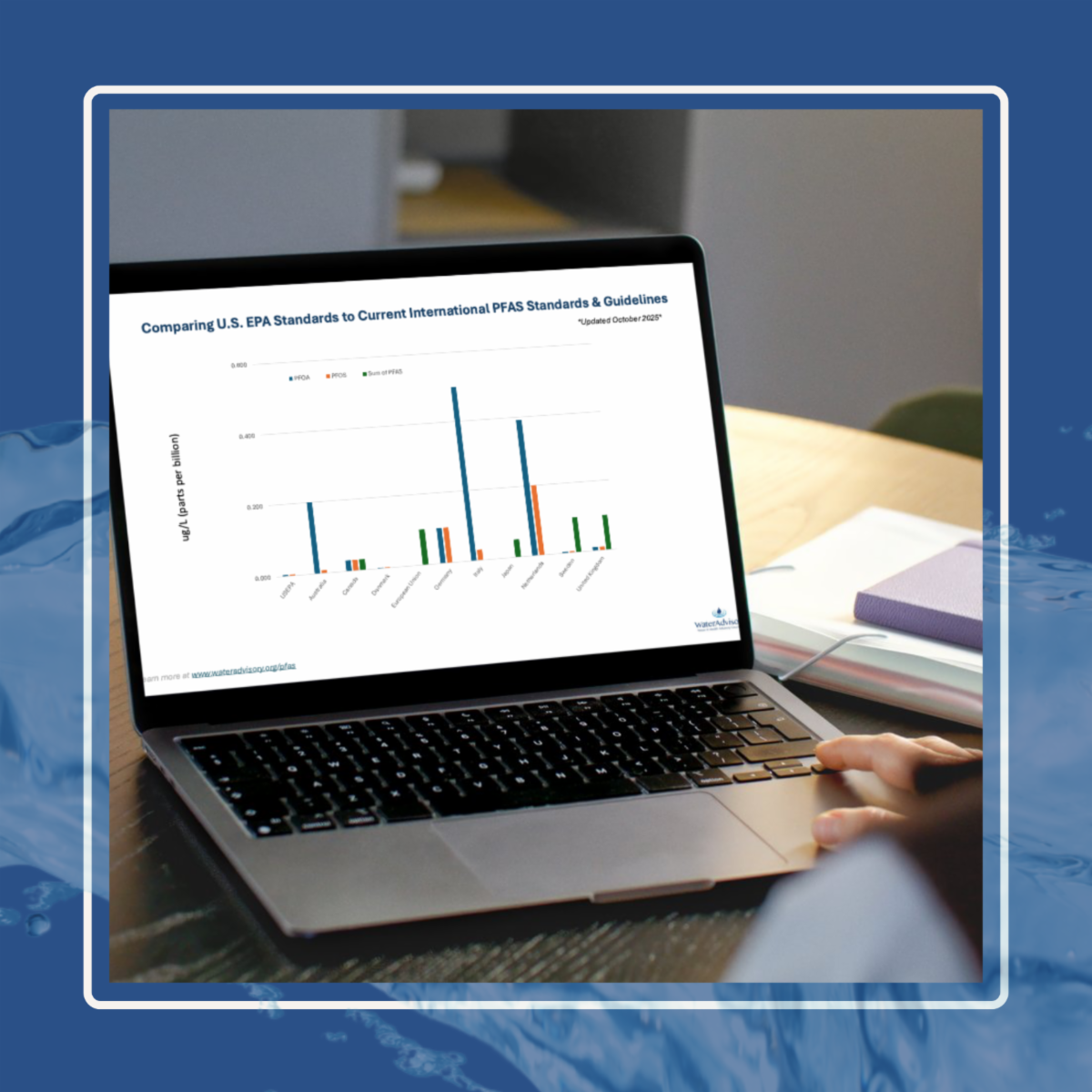
Comparing Global PFAS Drinking Water Standards
PFAS regulations are evolving worldwide. Our latest infographic compares current drinking water standards from the U.S. EPA and leading international authorities, highlighting how limits for PFOA, PFOS, and total PFAS vary across major jurisdictions.
Download the infographic to see how U.S. limits compare globally and use it as a quick reference for reports, presentations, and compliance planning.
| |
EPA: EPA Proposes Changes to Make PFAS Reporting Requirements More Practical and Implementable, Reducing Regulatory Burden
The U.S. Environmental Protection Agency (EPA) has proposed updates to its PFAS reporting requirements under the Toxic Substances Control Act (TSCA) to make them more practical and reduce unnecessary burdens on manufacturers and importers. The proposal would exempt low-concentration PFAS, imported articles, and certain byproducts, impurities, R&D chemicals, and non-isolated intermediates from reporting.
EPA says the changes will ensure it collects relevant PFAS data while cutting compliance costs—estimated at nearly $1 billion under the previous rule. Public comments will be accepted for 45 days following publication in the Federal Register.
| |
AP News: Texas voters have final say on $20 billion package to secure state’s water supply
Texas voters are considering Proposition 4, a $20 billion statewide water supply package that would create a dedicated fund for water, wastewater, and flood infrastructure across the state. While experts estimate Texas may need up to $30-40 billion to fully meet its infrastructure needs, this measure represents an important step toward securing reliable water for the future.
Sustained investment and long-term policy reform will be essential to ensure every community has access to safe, dependable drinking water for generations to come.
|
CT Insider: Connecticut communities struggling with deteriorating infrastructure and water main breaks
Across Connecticut, aging water mains are failing at an alarming pace, with pipe bursts flooding streets and disrupting homes and businesses. Much of the state’s infrastructure is more than 50 years old and long past its intended lifespan, forcing local systems to spend hundreds of thousands of dollars each year just to keep up.
To address this growing problem, communities must move beyond emergency fixes and commit to long-term investments that ensure safe, reliable drinking water for everyone.
|
Smart Water Magazine: Pennsylvania announces record-breaking $547 million investment to modernize water systems
Pennsylvania is making a record-breaking $547 million commitment to modernize water infrastructure, funding 30 projects across 23 counties to replace lead service lines and upgrade aging facilities. Demand for this kind of investment has surged, with funding requests increasing by 83% over the past five years.
This record investment is a meaningful step forward, but lasting progress will require sustained investment and long-term policy reform to address the nation’s growing infrastructure challenges.
| |
MinnPost: Weighing the opportunity cost of treating PFAS in drinking water
Every community deserves clean, safe water, but achieving it requires difficult choices about where and how we invest limited resources.
As commentary in the MinnPost by Ali Ling notes, we have the technology to make drinking water as clean as we want, but funding is finite. In places where PFAS poses the greatest health risks, treatment is essential. But many communities may achieve bigger health gains by investing first in stronger infrastructure and removing contaminants with higher local impact.
Reliable clean water starts with prioritizing local risks and investing in reliable infrastructure.
|
The Texas Tribune: It’s brown and burns your eyes. In small town Texas, clean water can be elusive.
Across rural Texas, aging water infrastructure is failing, leaving residents in small towns with discolored, foul-smelling water that often isn’t safe to drink. Years of underinvestment have pushed local systems beyond repair, forcing communities to rely on bottled water or makeshift solutions.
Supporting smaller towns with the resources to rebuild their water systems is essential to protect public health.
|
CBS News: Water main break floods streets, swamps cars, damages homes in North Philadelphia near Temple University campus
In North Philadelphia, a 30-inch water main burst and released nearly four million gallons of water into city streets. The pipe, installed in 1879, is part of a 7,000-mile network built over the past two centuries – a system now struggling to keep pace with modern demands.
Philadelphia’s experience underscores a national challenge: aging infrastructure is putting communities at risk. Securing reliable drinking water for every household depends on strong, sustained investment in modern water systems.
| | | | |