Many parts line up with evidence-based medicine, but critics worry about politicization
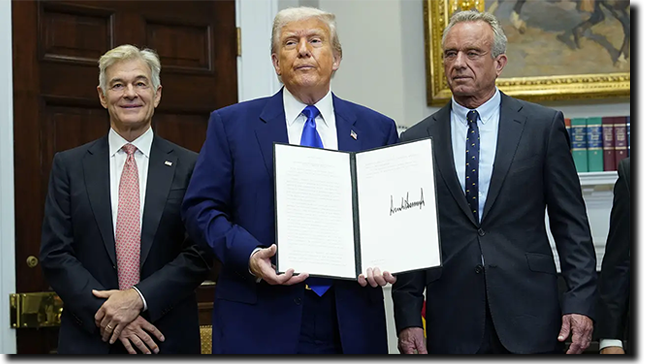
Federal health agencies are expected to adopt so-called "gold standard science" in line with an executive order, but many in the research community worry this framework creates yet another avenue for political appointees to control what is deemed legitimate evidence.
Characteristics of gold standard science listed in the order include being reproducible, transparent, communicative of error and uncertainty, accepting of negative results, and without conflicts of interest, among others.
Vesta Silva, PhD, a professor of rhetoric and global health studies at Allegheny College in Meadville, Pennsylvania, said naming this approach to research gold standard science is "rhetorically kind of brilliant," since by definition the gold standard is optimal and thus difficult to argue against. Plus, some research, like the randomized controlled trial, is colloquially referred to as the gold standard of medical evidence.
Read more
| | ATTENTION FELLOWS & RESIDENTS | |
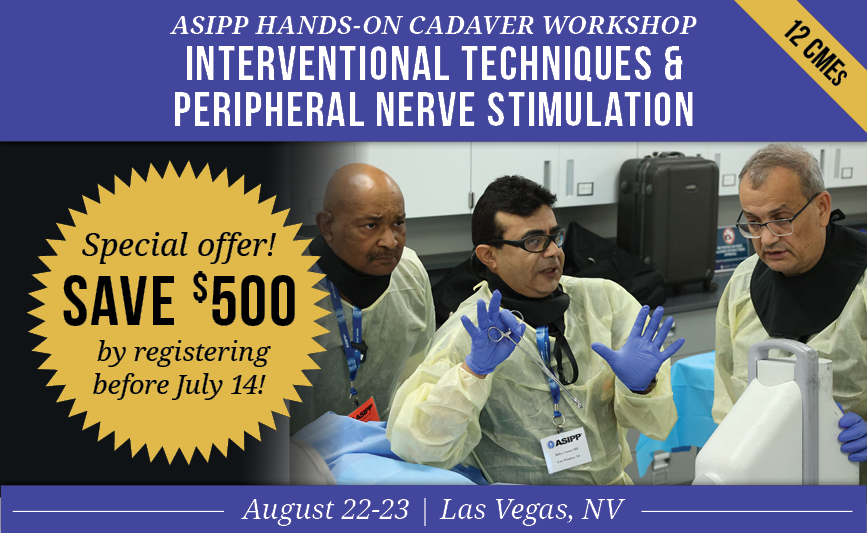
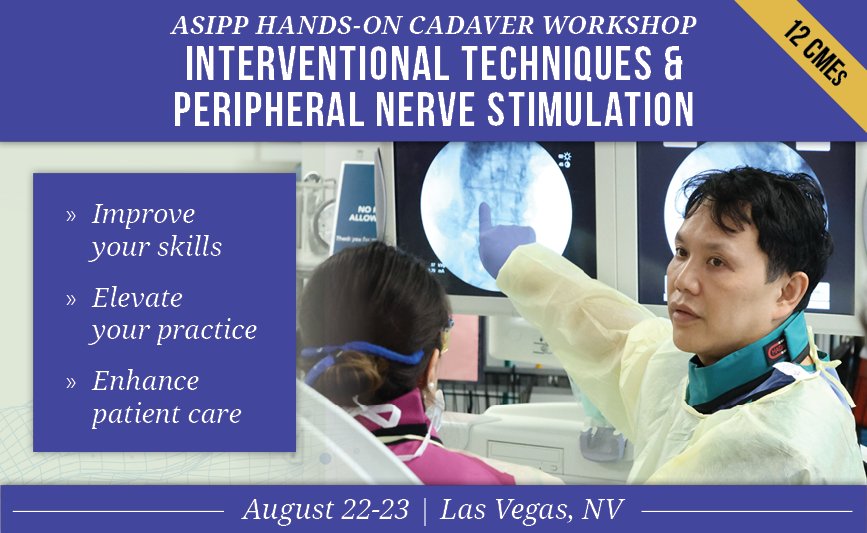
Join ASIPP for a weekend of hands-on training in exciting Las Vegas!
This Cadaver Workshop is designed to help you refine your interventional techniques with expert-led instruction.
Why Attend the Cadaver Workshop?
- Improve interventional techniques in a hands-on lab environment
- Learn from nationally recognized leaders in pain management
- Stay current on evolving best practices
- Reconnect with colleagues and expand your professional network
Special Fellow Rate: $250 (A $3,500 value!)
Don’t miss this opportunity to elevate your skill set and engage with the leaders shaping the future of interventional pain medicine.
| |
ABIPP Certification:
The 31.5 CME credits available through the TOBI Regenerative Medicine Review Course Webinar, Hands-On Cadaver Lab, and 2-Day Symposium meet the certification requirements for the American Board of Interventional Pain Physicians (ABIPP) competency certification in regenerative medicine. To apply for this certification, please visit abipp.org to submit the necessary documentation.
| |
Move comes as top medical journals have been scrutinized by Trump administration officials
The Trump administration has terminated contracts with publishing giant Springer Nature, according to a report by Axios and confirmed to MedPage Today by an HHS spokesperson.
German-owned Springer Nature has long received payments for subscriptions totaling millions of dollars from the NIH and other federal agencies, Axios reported.
However, in a statement provided to MedPage Today in an email, a spokesperson for HHS said: "All contracts with Springer Nature are terminated or no longer active. Precious taxpayer dollars should not be used on unused subscriptions to junk science."
Read more
| | JOIN or RENEW your ASIPP Membership for the best registration rates. | | |
Texas, Louisiana are first to pass such laws; remains to be seen if other states will follow suit
New "Make America Healthy Again" (MAHA) laws in Louisiana and Texas will require physicians to complete continuing medical education (CME) in nutrition.
The new mandate in Louisiana was touted in a recent announcement from HHS, and the Texas action was signed into law last month.
Starting in 2026, physicians and physician assistants in Louisiana will be required to complete a minimum of 1 hour of continuing education on nutrition and metabolic health every 4 years, according to the new law. The state's medical board will adopt rules to determine the specific content of the continuing education.
Read More
| | |
It's not clear why BTMPS is widely used in illicit fentanyl
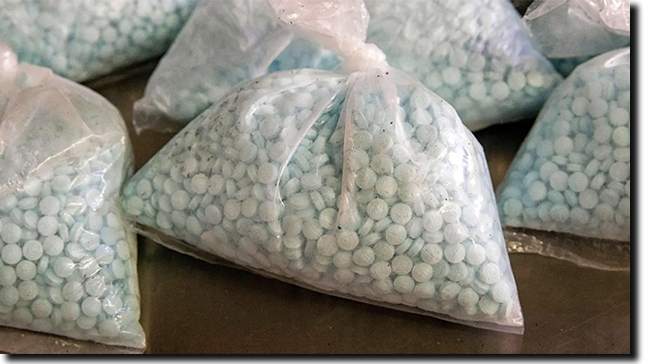
The latest adulterant in illicit fentanyl was not a sedative or other psychoactive substance but a plasticizer, and it spread across the U.S. in a relatively short period of time, a review showed.
BTMPS, which has a chemical name of bis (2,2,6,6-tetramethyl-4-piperidyl) sebacate, was first detected in June 2024 by community drug checking programs in Philadelphia and Portland, Oregon, after fentanyl samples tested positive for an unknown adulterant, according to Alex Krotulski, PhD, of Thomas Jefferson University in Philadelphia, and colleagues.
By September 2024 -- 3 months later -- BTMPS had been detected in almost all states that submitted samples to the National Institute of Standards and Technology, the researchers wrote in a viewpoint in JAMA Internal Medicine.
Read More
| | |
New Dates Just Announced
Mark your calendars!
July 26, August 30,
September 27, October 25,
November 15, & December 13
Four (4) hour virtual exam
- ABIPP Path – Combined CCPM/ CSM Exam
For those with subspecialty in Pain Medicine
Two (2) hour virtual exam
- ABIPP Competency Exam in IPM
For those without primary board certification
Two (2) hour virtual exam
- ABIPP Competency Exam in Regenerative Medicine
Two (2) hour virtual exam
- Controlled Substance Management Competency Exam
Two (2) hour virtual exam
- Documentation, Coding, Compliance, Practice Management Competency Exam
Two (2) hour virtual exam
| | |
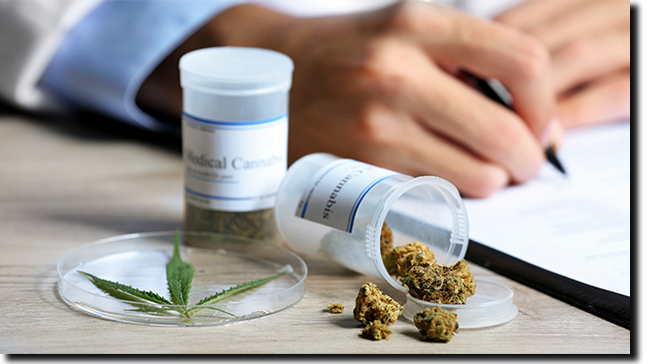
Cannabis use for medical purposes is on the rise, especially for the management of chronic pain. Marco Ternelli, MSc Pharm, a compounding pharmacist in Bibbiano, Italy, fields a steady stream of about 1000 such prescription requests every month, he told Medscape Medical News.
Yet despite the surge in demand, the scientific evidence supporting their use for pain management remains a complex and often contradictory picture, making it difficult for clinicians to know how to advise their patients.
“There is strong evidence from preclinical research that supports the hypothesis of cannabinoid-induced analgesia,” David Finn, PhD, professor of pharmacology and therapeutics at the University of Galway, Galway, Ireland, told Medscape Medical News. “But the clinical evidence is weaker, in large part due to low quality studies with low sample size or short duration of treatment and sometimes patient population not well-defined.”
Read More
| | | |
We're excited to let you know that the new ASIPP Community, hosted by DocMatter, is now live!
The ASIPP Community on DocMatter will serve as a place for members to collaborate around clinical and research topics to advance the care of their interventional pain patients.
Click here to be a part of the conversation!
| | |
An opioid-sparing protocol that combines patient education with a postoperative prescription for nonopioid analgesia (plus an opioid for breakthrough pain if needed) significantly reduced opioid consumption after outpatient orthopedic surgery, researchers reported.
In a single-institution, pre-post intervention study that included more than 10,000 patients, the volume of opioids dispensed was reduced by 18%, and patients who received the intervention were almost half as likely to become chronic opioid users after their surgery.
“The results from this study confirm the findings from a recent Canadian randomized controlled trial involving 200 patients that showed a significant reduction in postoperative opioid use with a multimodal approach,” senior author Jarret Woodmass, MD, assistant professor of orthopedics at the University of Manitoba in Winnipeg, told Medscape Medical News.
Read More
| | - ASIPP Members Only Site Information - | |
-
To log in for the first time you will need to click “forgot password” at the bottom of the login window.
- Check your email and then log in as directed.
-
If you have problems logging into your account, click here.
| | |
Pain Medicine Case Reports (PMCR) and Editor-in-Chief Alaa Abd-Elsayed, MD, PhD would like to invite you to submit case reports and case series to the PMCR journal. Your article will be published free of charge.
Open access journals are freely available online for immediate worldwide open access to the full text of published articles. There is no subscription fee for open access journals. Open access journals are no different from traditional subscription-based journals: they undergo the same peer review and quality control as any other scholarly journal.
Interested in becoming a member of the PMCR Editorial Board?
Editorial board members are asked to review 2-6 manuscripts per year. Please submit your most up-to-date CV to sgold@asipp.org for consideration.
For more information or to submit your articles, click here.
| | |
We are excited to announce that Pain Medicine Case Reports (PMCR) journal (eISSN 2768-5152) has been accepted for inclusion in MEDLINE and PubMed, the prestigious bibliographic database of the U.S. National Library of Medicine. PMCR, a companion publication to the prestigious Pain Physician journal by ASIPP, joins its counterpart in achieving indexing in both MEDLINE and PubMed, marking ASIPP’s dual presence in these renowned databases.
The inclusion of PMCR journal in MEDLINE signifies a higher level of selectivity, as MEDLINE consists of the top 5,200 biomedical journals. This indexing also means that articles from PMCR will be searchable using NLM Medical Subject Headings (MeSH terms) and other metadata.
The selection for MEDLINE follows a rigorous evaluation process by reviewers from the Literature Selection Technical Review Committee (LSTRC). According to their criteria, the scientific quality of a journal’s content is the primary factor considered for indexing.
We extend our congratulations to the Pain Medicine Case Reports Editor-in-Chief, Deputy Editor-in-Chief, Journal Team, and Editorial Board for this achievement, which underscores the significance and excellence of this esteemed journal.
| | | | |
|
ASIPP is now in collaboration with Curi Medical Liability Program
Since this malpractice insurance program officially launched in November 2018, ASIPP has signed up hundreds of providers with an average savings of 30%. This is professional liability insurance tailored to our specialty and will stand up for us and defend our practices.
Curi is a full-service advisory firm that serves physicians and their practices. Their valued advice is grounded in your priorities and elevated in your outcomes. They are driven by a deep understanding of your specific circumstances in medicine, business, and life. To read a few important points to keep in mind about the program, including discounts, administrative defense, cyber coverage, aggressive claims handling, and complimentary risk management CME activities, visit our website.
| | |
IMPORTANT UPDATE
SPR is happy to announce an important update regarding Humana Medicare Advantage. As of May 1, Humana is now recognizing SPRINT as a PNS therapy. Previously, SPRINT was categorized as PNT (Percutaneous Nerve Stimulation), which allowed denials on the grounds that the therapy fell outside the NCD.
Additional details are as follows:
Payer: Humana Medicare Advantage (click here to view policy)
Policy Title: Peripheral Nerve Stimulators
Policy changes: SPRINT no longer misclassified as PNT and is now appropriately classified as PNS. Humana is applying the Noridian Medicare LCD criteria to ALL PNS devices – Including SPRINT PNS!
Effective Date: 5/1/2025
Click here to view a PDF of the official policy update.
| | |
|
Group Purchasing Organization Offer Better Pricing and Creates Added Value
ASIPP has formed a partnership with Henry Schein and PedsPal, a national GPO that has a successful history of negotiating better prices on medical supplies and creating value-added services for independent physicians. Working with MedAssets, PedsPal provides excellent pricing on products like contrast media that alleviate some of the financial pressures you experience today.
Learn More
For updated information concerning tariffs on products, click here.
| |  |
|
ASIPP, Fedora Healthcare Solutions Partnership
ASIPP offers our members the benefit of a unique revenue cycle management/ billing service.
We have received a tremendous amount of interest in the ASIPP billing and coding program.
Click here to learn more about the negotiated rate for practices and more!
| | Like and follow ASIPP® on Facebook, X, LinkedIn, and YouTube for the most up-to-date news related to you, your practice, and your patients! | | | | |