|
Deep Dive
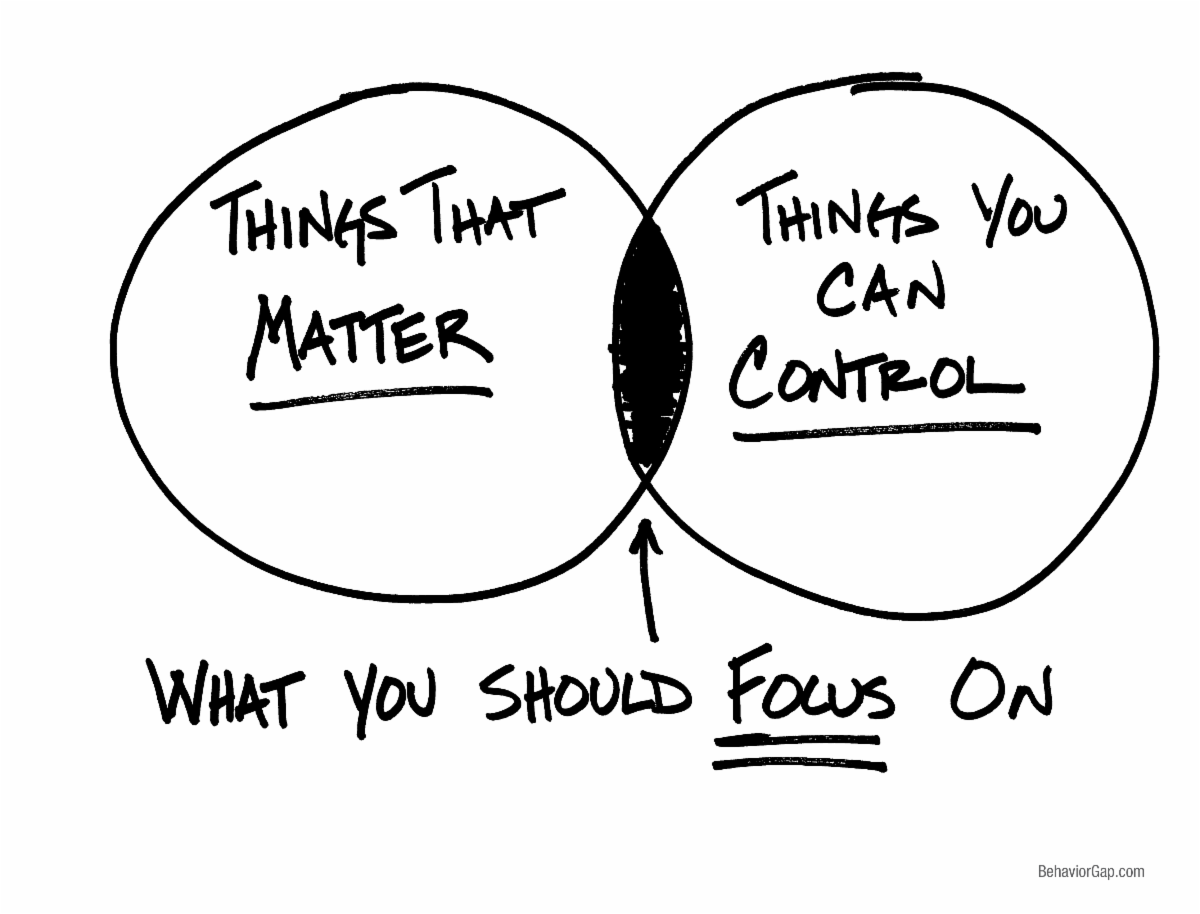
Consider these two simple yet profound questions:
1. Does it matter?
2. Can I control it?
This framework reveals four distinct scenarios in our lives (not only financial):
High Impact, High Control – These are the decisions worthy of your focused attention: your savings rate, investment strategy, spending habits, and the financial values you pass to your children. Here is where your energy yields the greatest returns.
High Impact, Low Control – Market volatility, economic cycles, and global events fall here. While we can't control them, we can prepare for them. Wisdom lies in acknowledging their importance while not letting them paralyze us.
Low Impact, High Control – Daily market movements, financial headlines, and short-term performance often occupy this space. While we can control our response to these, should they command so much of our attention?
Low Impact, Low Control – These are the financial world's background noise: market predictions, hot stock tips, and endless commentary. Learning to ignore these brings profound peace of mind.
Imagine the clarity and peace when you stop agonizing over the latest market predictions (low impact, low control) and instead focus your energy on maintaining a disciplined investment strategy (high impact, high control). Picture the freedom in acknowledging that while inflation matters greatly, your time is better spent adjusting your plan than worrying about Fed decisions.
Frankl's insight about response over circumstance feels especially relevant now when anxiety about the future collides with pressure for seasonal cheer. Maybe real wealth isn't just about what we can measure in portfolios, but in our capacity to face uncertainty together, to sit with discomfort, and to find moments of genuine connection despite – or perhaps because of – our shared vulnerability.
Steps to Implementation
Start Today:
- Identify your “attention thieves” – track what news or information you consume daily. Notice how much mental energy goes to low-impact items.
- Set up “worry time boundaries” – designate specific times to review headline news and market updates, freeing yourself from constant monitoring.
Use this reclaimed mental space for high-impact, high-control activities.
Next Steps:
- Develop your “response plan” – create a written response plan for market volatility. Each of my clients has an Investment Policy Statement, which prepares them to deal with market ups and downs.
- Schedule Quarterly Review – block time to focus on high-impact, high-control areas: review savings, rebalance investments, and assess spending patterns.
- Create your “Values-Based Decision Framework” – write down your core financial values and long-term goals.
Don’t navigate financial decisions alone. We're here to help.
|