A Note from our Planetarium Director |
Hello Astro Friends,
The planetary lineup of the four brightest planets continues in the pre-dawn sky. At the beginning of May, Jupiter will be close to Venus, and by month's end Jupiter will pair up with Mars. Truly an opportunity to see how we got the word "planet" from the ancient Greek word for "wanderer."
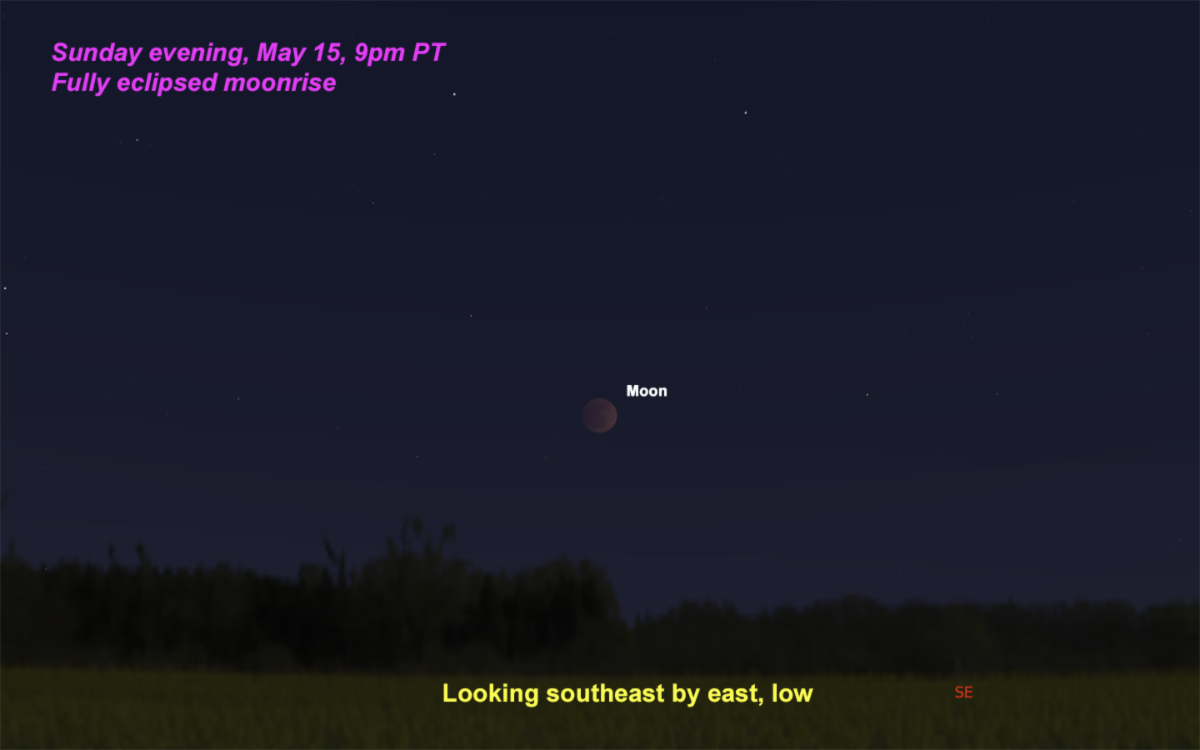
The big celestial event for May occurs the evening of the 15th. As seen from the Bay Area, the Moon will rise that night partially eclipsed by Earth's shadow. Starting at 8:29 p.m. PDT, the Moon enters a nearly 90-minute period of totality. During this time (weather-permitting), we'll see the Moon take on a red, coppery hue—a result of sunlight filtered by Earth's atmosphere, leaving only red light to cast on the Moon. No special equipment is needed, so enjoy the celestial show if you have a clear view of the southeastern skies.
Speaking of shows, the Planetarium will continue its run of Saturday public shows through May 14. Celebrate Asian American Pacific Islander Heritage month with our featured show on May 7, "Wayfinders: Waves, Winds & Stars," where you can learn Polynesian celestial navigation techniques used to successfully cross thousands of miles of open ocean between tiny islands. Then come back for our final shows of the season, featuring "Mayan Archeoastronomy" on May 14, where you can learn how the Maya incorporated their observations of the skies into the architecture of their temples. See you under the dome!
Wishing you clear, dark skies!
Toshi Komatsu
Planetarium Director
|
|
The De Anza College Planetarium is fully and solely funded through donations and ticket sales. Donate today. |
|
Virtual and In-Person Field Trips |
|
Tour Outer Space at Your School or Ours! |
This school year, our field trips are available online and in person! Virtual field trips are available M-F and we are also back to offering in-person field trips in the Planetarium at select times M-F. Visit our website to learn more about programming and scheduling. All field trips align with K-8 science standards. Check out the trailer for virtual field trips below!
|
|
|
|
Give the Gift of Lights and Wonder! |
Did you know we sell gift cards? Give the gift of an astronomy or laser show to friends and family this season. Visit us at the planetarium, it's full of stars.
|
|
April Astronomy Shows
Full Spring Schedule can be found here
|
|
|
|
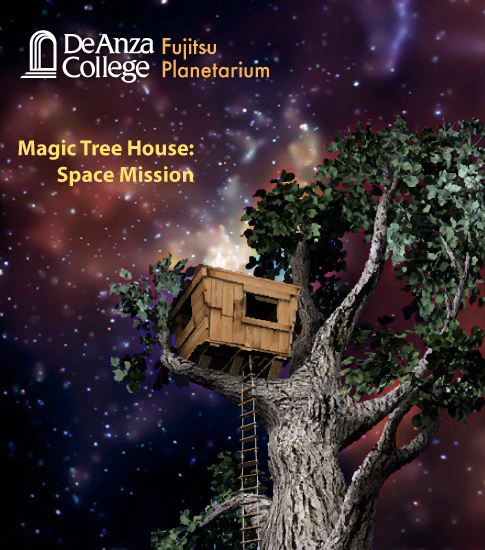
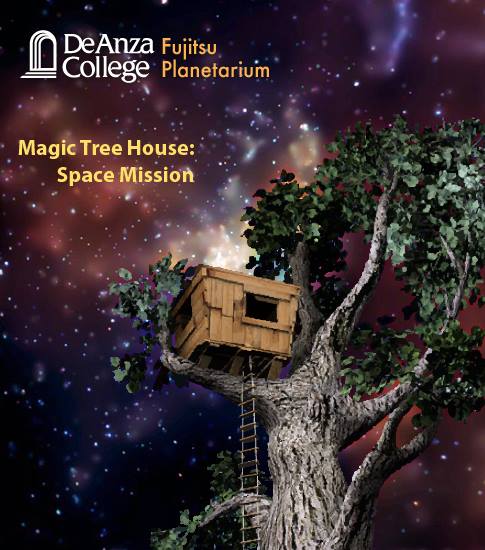
In Magic Tree House: Space Mission, a mysterious "M" sends the intrepid Jack and Annie on a fun-filled journey to discover the secrets of the Sun, Moon, planets, space travel and more. Aligned with early elementary information skills learning objectives, this beautifully produced show is a winner with Magic Tree House fans of all ages.
Family Audience / children 4 yrs and older
|
|
|
|
Join Luna and her friends for an exploration of the sky which includes phases of the Moon, seasons, constellations and planets. This is Our Sky! is a general astronomy show that contains elements of interest spanning a wide range of audiences.
Family Audience / children 5 yrs and above.
|
|
|
|
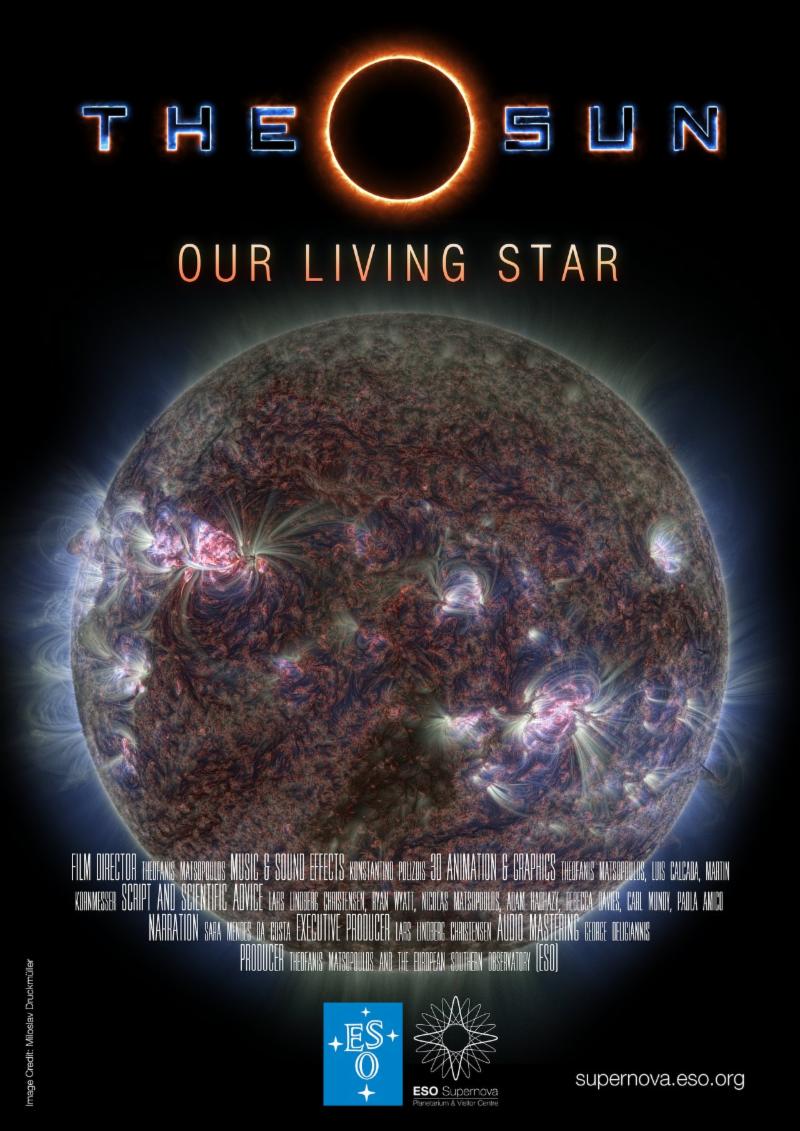
The Sun has shone on our world for four and a half billion years. The light that warms our skin today has been felt by every person who has ever lived. It is our nearest star and our planet’s powerhouse, the source of the energy that drives our winds, our weather and all life. The passage of the Sun’s fiery disc across the sky — day by day, month by month — was the only way to keep track of time for countless past civilizations.
Discover the secrets of our star in this planetarium show and experience never-before-seen images of the Sun’s violent surface in immersive fulldome format.
General Audience / children 8 yrs and older
|
|
|
|
In Magic Tree House: Space Mission, a mysterious "M" sends the intrepid Jack and Annie on a fun-filled journey to discover the secrets of the Sun, Moon, planets, space travel and more. Aligned with early elementary information skills learning objectives, this beautifully produced show is a winner with Magic Tree House fans of all ages.
Family Audience / children 4 yrs and older
|
|
|
|
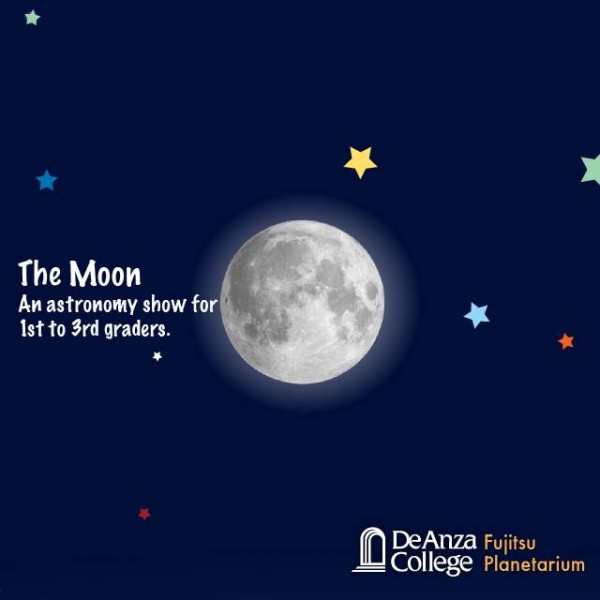
Have you ever wondered what makes the Moon so special? Apart from the Sun, the Moon is one of the brightest objects in the sky and it’s the second place, other than the Earth, that humans have set foot. Come and learn about the Moon’s phases, craters and other characteristics that make the Moon a very special place.
Family Audience / children 5 yrs and older
|
|
|
|
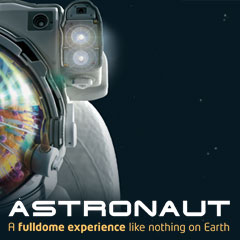
The exploration of space is the greatest endeavor that humankind has ever undertaken. What does it take to be part of this incredible journey? What does it take to become an astronaut? Explore the amazing worlds of the microscopic regions of the human body, float around the International Space Station and experience a rocket launch from inside the body of an astronaut. This immersive planetarium show takes you from Earth into Space and beyond.
Family audience / children 8 yrs and older
|
|
|
|
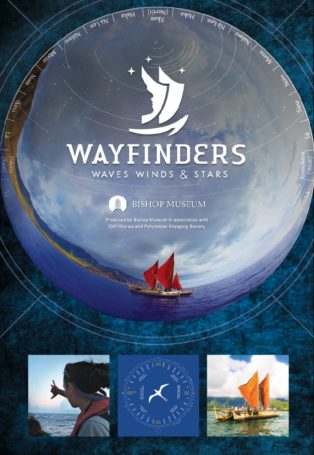
This live-action fulldome program puts you on the deck of the voyaging canoe Hokule'a as you explore traditional Polynesian navigation. Learn how to read the stars and interpret the winds and waves to navigate without modern instruments. The film tells the story of the Polynesian Voyaging Society and the recovery of the nearly lost art and science of traditional, non-instrument navigation in Hawaii.
This show will be an interactive immersion into becoming a Wayfinder. Unique to our regular programming, the full hour will include the fulldome program and opportunities to learn and pratice navigating the ocean using the skies.
General audience / children 8 yrs and older
|
|
|
|
In Magic Tree House: Space Mission, a mysterious "M" sends the intrepid Jack and Annie on a fun-filled journey to discover the secrets of the Sun, Moon, planets, space travel and more. Aligned with early elementary information skills learning objectives, this beautifully produced show is a winner with Magic Tree House fans of all ages.
Family Audience / children 4 yrs and older
|
|
|
|
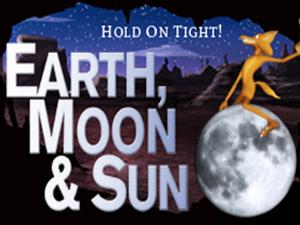
Explore the relationship between the Earth, Moon and Sun with the help of an amusing character adapted from Native American oral traditions who has many misconceptions about our home planet and its most familiar neighbors. How do the Earth, Moon and Sun work together as a system and what is the myth and science behind it? Why does the Sun rise and set? Why do we see different constellations during different seasons? What is an eclipse? Learn about the Moon's phases and orbit. Explore past and future space travel to our Moon and beyond.
Family Audience/ children 6yrs and older.
|
|
|
|
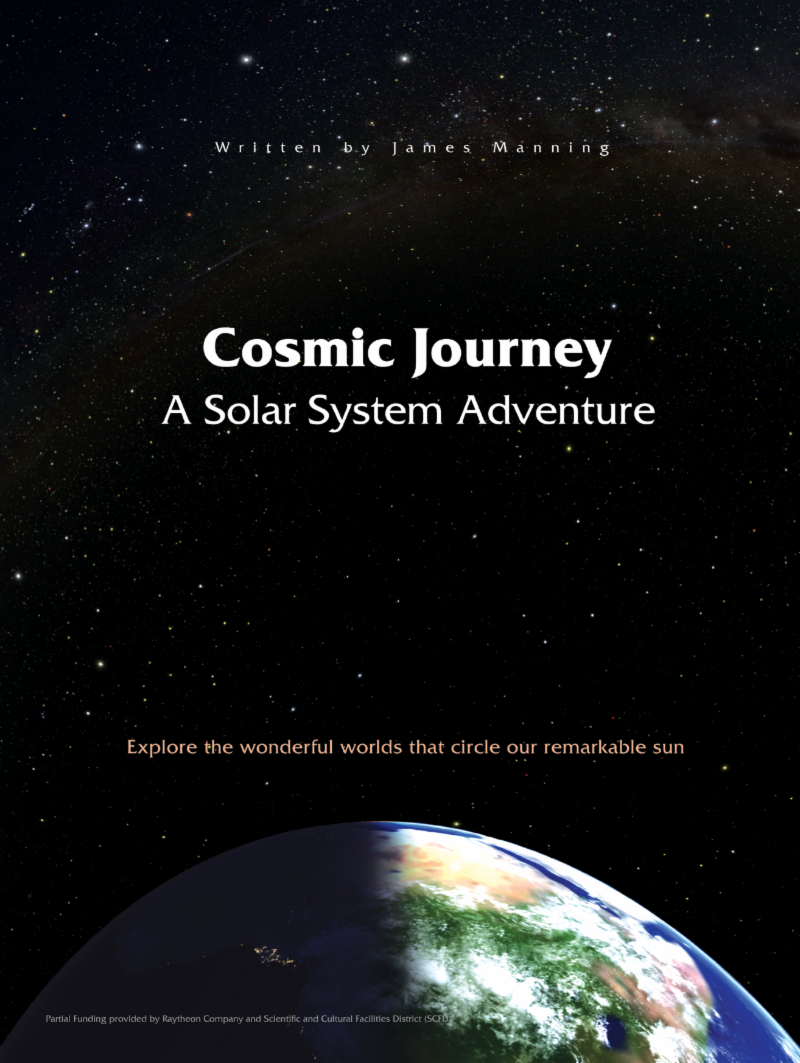
Travel from the outermost reaches of the solar system faster than the speed of light, taking in the wonders of the planets and their moons, from Pluto to Earth, zoom past planets revolving above you. See the ringed systems of the outer planets and the detail of various moons, all digitally rendered using real images from satellites. Finally, return home to Earth and contrast our home planet with the other worlds you've explored.
Family Audience / children 8 yrs and older
|
|
|
|
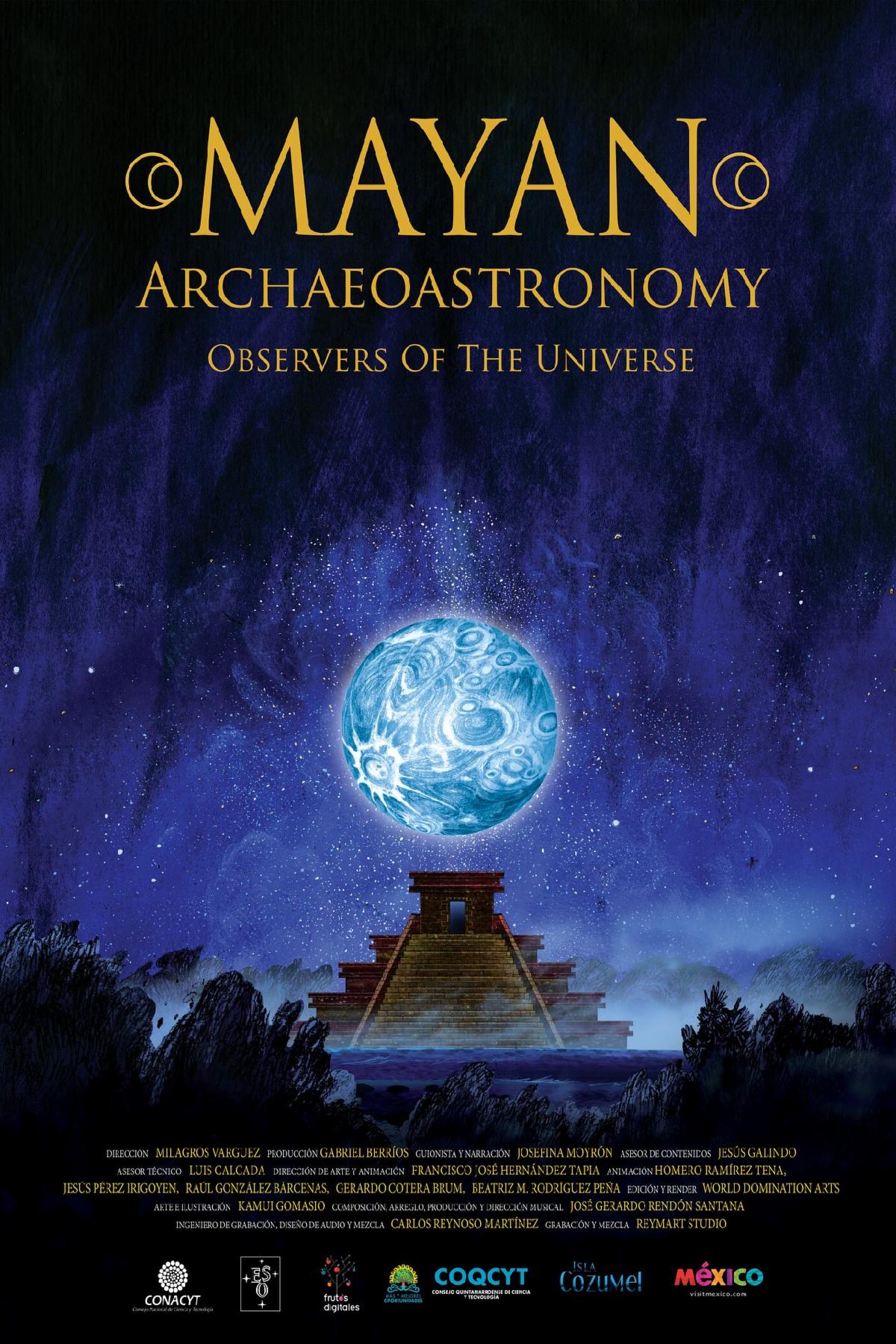
In a feast of colors and sounds, Mayan Archaeoastronomy: Observers of the Universe makes a tour of 6 Mayan temples: San Gervasio, Chichen Itzá, Uxmal, Edzná, Palenque and Bonampak where the spectator dives into a Mayan world of knowledge about the importance of the orientations of its temples in relation to the movement of some stars like the Sun, the Moon and Venus.
General Audience / children 8 years and older
|
|
|
|
May 5 - Eta Aquarid meteor shower |
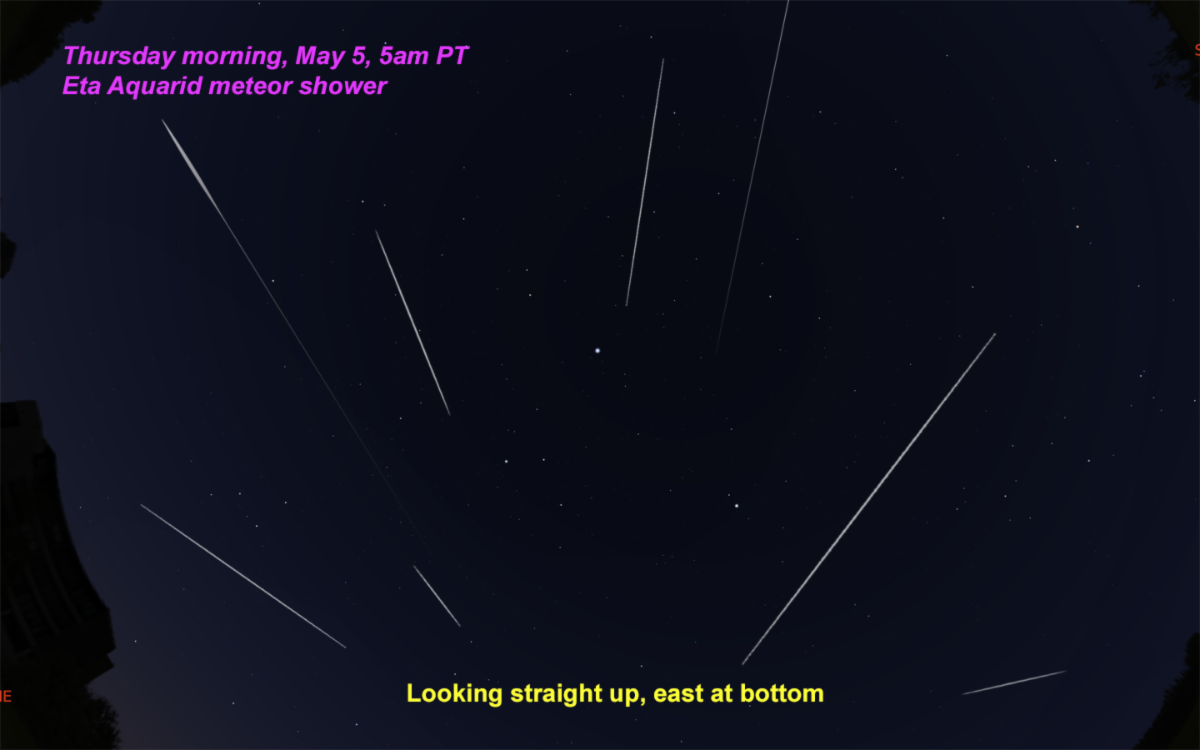
Try viewing the Eta Aquarid meteor shower after midnight when the crescent Moon sets, and before dawn. From the Northern Hemisphere, one might see as many as 30 meteors per hour in dark skies. Note that meteors may appear in any part of the sky, not just near the radiant. Many people find that laying back and viewing straight up gives the most rewarding view. |
|
|
|
Low in the southeast at 9:11 p.m. PDT, see the fully eclipsed Moon just after moonrise. The total phase of the eclipse ends around 10 p.m. The ruddy red color during the total phase happens because, at that time, the only light reaching the Moon is sunlight that passes through Earth's atmosphere. The more dust or clouds in Earth's atmosphere during the eclipse, the redder the Moon will appear. |
|
|
|
May 25 - Close approach of Venus, Mars and Jupiter |
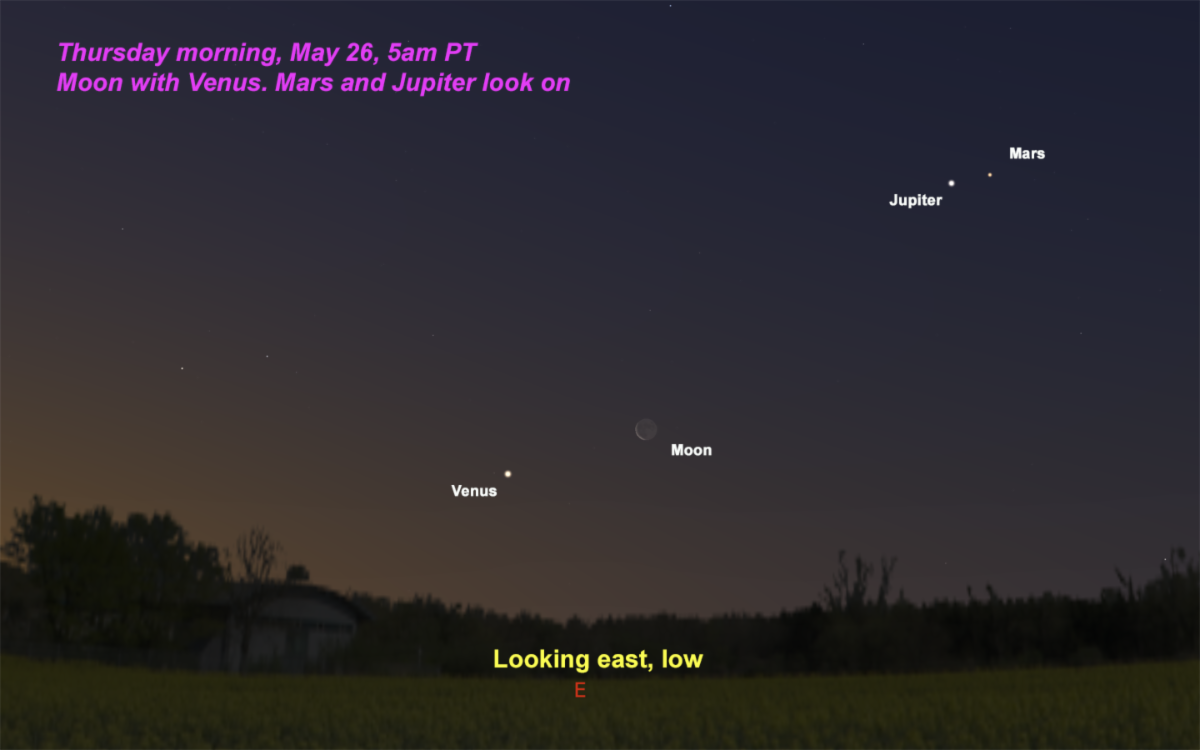
At about 5 a.m., check out this beautiful array of planets, with the waning crescent Moon close to dazzling, cloud-covered Venus. Ruddy red Mars and whitish Jupiter are above and to the right, speeding towards an encounter visible Sunday morning at about the same time. |
|
|
|
May 29 - Close conjunction of Jupiter, Mars and Venus |
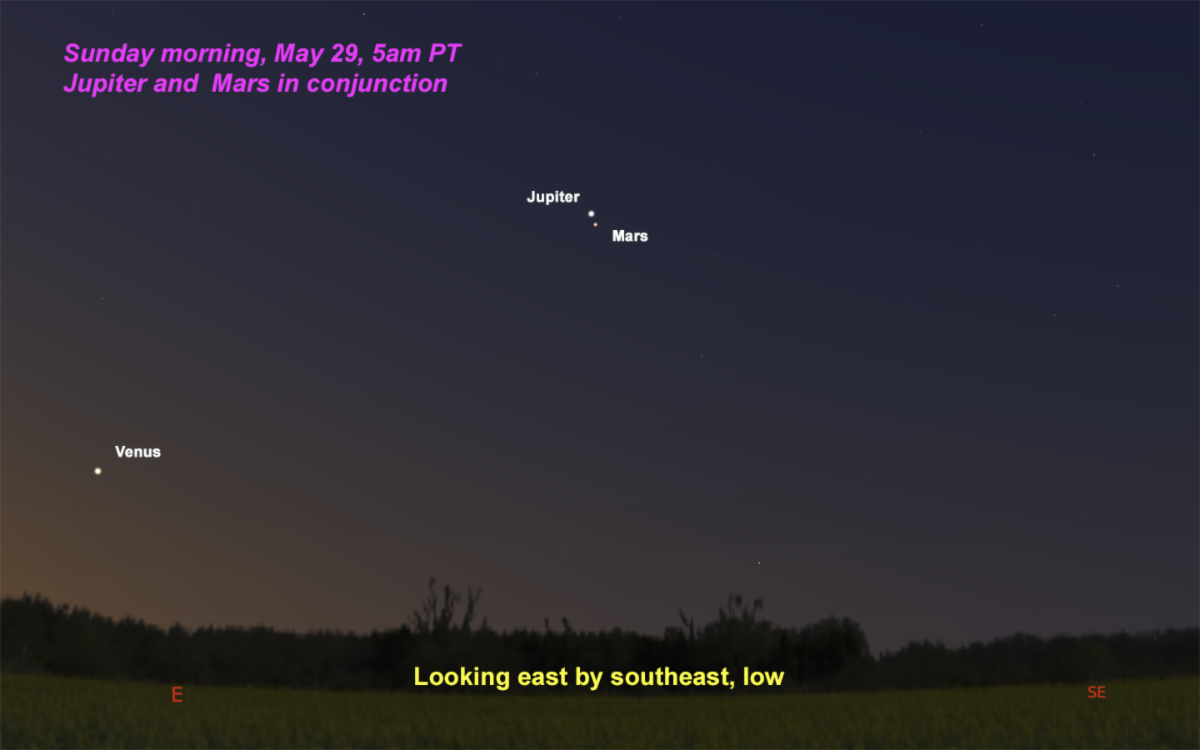
Nearby Mars snuggles up to distant, brighter Jupiter. The two planets appear to stand very close together, a condition astronomers call "conjunction." What's the bright object, lower and to the left of the pair? That's Venus! |
|
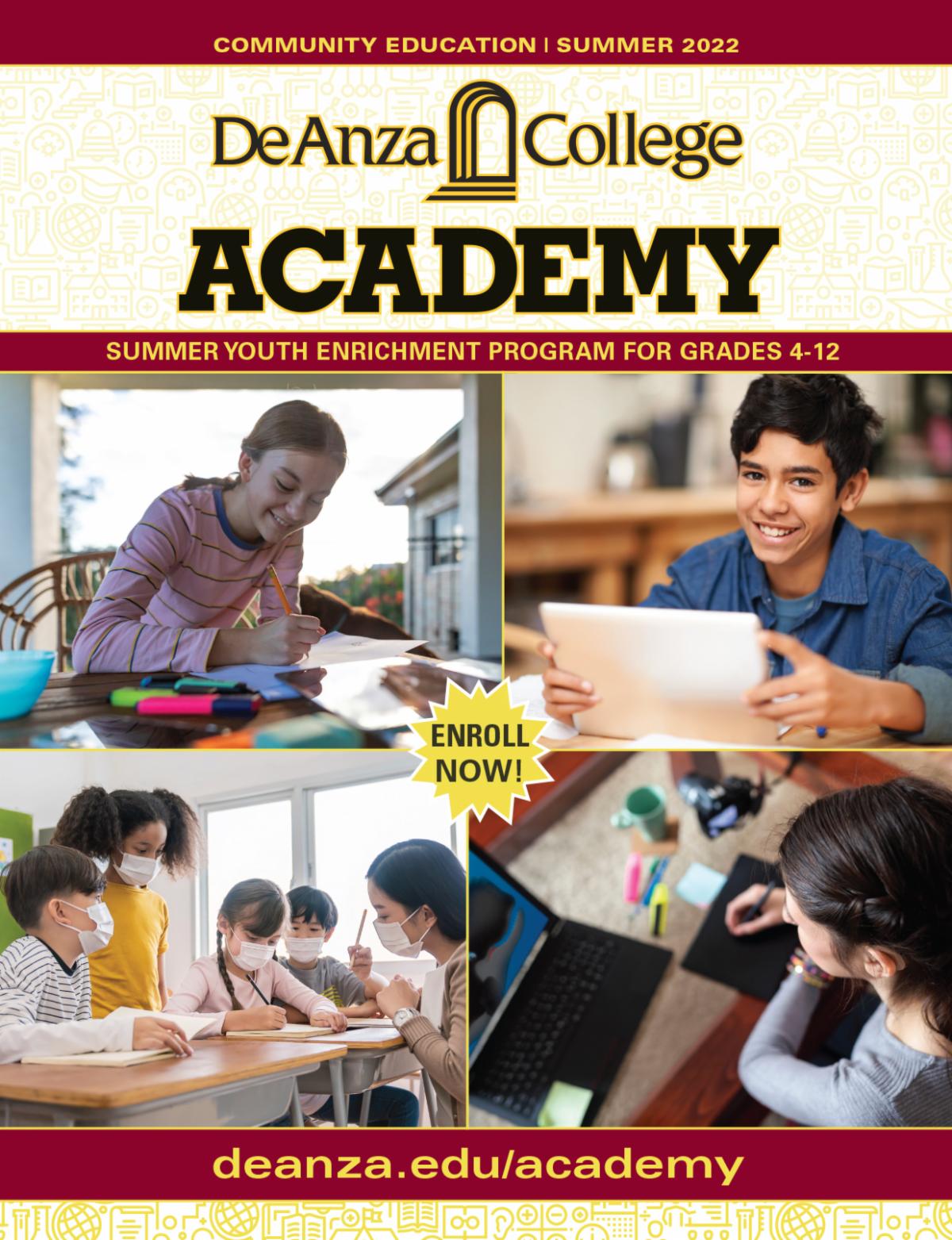
De Anza College Summer Academy 2022 |
|
In 2022, we will be entering our 38th year of summer enrichment programs!
Registration is now open!
Get a preview of this summer's class offering for grades 4-12 below:
|
|
|
|
|
A Taste of History - Saturday May 7, 2022 4 - 6:30 p.m. |
- Location: On campus in the Visual & Performing Arts Center (VPAC)
- Tickets: $150 per person; sponsorship rates available
-
More details here
|
|
De Anza College Online Community Education for Students of All Ages |
|
Learn at your own pace online with Ed2Go! Click here to register.
|
|
Enhance Your and Your Student's Education with Ed2Go |
De Anza’s Community Education Division offers more than 450 online courses that are informative, fun, convenient, highly interactive and designed for students 14 & up! There are dozens of courses that will boost your student's academic base such as Science, Math, International Languages, Art, SAT prep, Programming courses like Python and Java and more. Click here for more information.
Start dates:
Late registration is always available. For more information, please visit our Ed2Go Online Instruction Center.
|
|
|
|
|
|
|