Ohio is among 23 states that won the latest round of Preschool Development Grant funding, a competitive federal grant to help states enhance their early learning programs. | | “Child centers are always living on the margins. Our staff are never paid enough. We can’t charge families enough privately to cover what staffers make. So we’re always living on the margins, especially with the subsidy programs, and any change or hit to our reimbursements is going to be a house of cards.” | | |
Who:
Jeanie Harris, executive director of programs at First Learning, a group of child care centers in New York state
| |  | | |
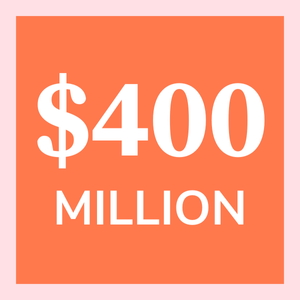
| The U.S. Department of Health and Human Services has been directed to pause federal child care funding to five states (California, Colorado, Illinois, Minnesota, New York), with other states facing new restrictions and data requests but without an official funding freeze as of now. Analysis from the Century Foundation estimates the cost of the funding hold to be $400 million (annually) to lost parental earnings and other impacts on affected families. A federal judge ruled last Friday to block the funding freeze for 14 days as the matter is discussed in court. | | |
City of Columbus
A new ordinance passed by City Council creates and funds a pilot program to help support families who have legally adopted children who were previously part of the Franklin County Children Services Kinship Care Program. The initiative, allocated at $50,000 for the year, allows the city to help families with the financial costs of adoption. Currently, kinship caregivers (family or extended family of the child, like grandparents, aunts, uncles, or older siblings) receive funds to assist with child care costs, but that funding goes away once they legally adopt the child, creating a financial disincentive to adopt.
| | |
Ohio
Cleveland.com outlines what Gov. Mike DeWine is expected to focus on in 2026, his final year as governor, including a continued emphasis on children’s initiatives — namely literacy and the OhioSEE program (helping children access glasses and vision care).
| | |
Federal
U.S. Sen. Jon Husted of Ohio hopes to mitigate the effects of the “benefits cliff,” what occurs when there is a sudden drop-off in public benefits for people once they earn more income and no longer meet income eligibility thresholds. Husted proposed legislation in Congress to establish a five-year pilot program for up to five states to allow them to combine 10 separate anti-poverty funding streams, such as SNAP and child care subsidy programs. The ultimate goal of the pilot would be that states could more flexibly design their anti-poverty policies to address the benefits cliff and elevate families out of poverty.
| | NAEYC has opened its 2026 ECE Workforce Survey to gather insights from early childhood educators and program administrators on key issues like compensation, staffing, challenges, and more. The survey is open to all EC professionals, is available in English and Spanish, and will close on January 22. You can find the survey here. | | The Ohio Department of Education and Workforce is hosting a summit to assist summer meal providers in the state. This event, which takes place on February 17 and 18 in Westerville, aims to offer networking and training on providing summer meals to Ohio youth through the federally funded SUN Meals program. | | Finland, a country lauded for its play-based and universal early learning programs (and more precisely, for treating early care and education as a child’s inherent right), is making headlines for intentional media literacy instruction to children as young as 3. Finnish schools are adding artificial intelligence literacy to their curricula in response not only to the rapid spread of AI, but as part of a larger effort to protect the country’s political interests in the face of propaganda and disinformation from neighboring Russia. | | New Mexico is building a $30 million literacy institute meant to help literacy instruction for students as well as adult readers. The state has the second lowest adult literacy rate in the nation. | | The National Institute for Early Education Research (NIEER) published a brief on choosing a high-quality preschool curriculum. The intended audience of the brief are policy makers who may regulate and recommend state preschool curricula, as well as early learning program administrators. | | A blog from the Center on Policy and Budget Priorities discusses how states can allow advance tax credits to help families address inflation and rising costs and outlines several considerations. Currently, Minnesota is the only state that allows families to receive advance payments for the Child Tax Credit. | | A recent study published in Early Childhood Research Quarterly highlights findings from a partnership between researchers at the University of Nebraska and the University of Missouri, and the National Workforce Registry Alliance, a nonprofit working with states to build robust early education workforce data systems. Researchers paired state early educator registry data with survey data to answer questions about the overall well-being of the early childhood workforce. Just over 900 early educators from Nebraska and Maine were sent a survey on professional well-being (e.g., burnout, job stress, job demands, job resources, job control) and personal well-being (e.g., perceived stress, depression, health-related quality of life). These survey items were paired with registry data, including educators’ workplace setting type (center versus home-based), role, wage, trainings, years of experience, tenure, urbanicity, ages of children taught, and whether they identified as a member of a historically marginalized group. Researchers analyzed predictors of personal and professional well-being and found that professional well-being strongly predicted educators’ personal well-being. They also found that decreased professional well-being was associated with respondents working in family child care homes, having more years of experience, and belonging to a historically marginalized population. The authors emphasize that this research could not occur without strong partnerships and that researchers should consider how they can partner with national and state agencies in data collection and analysis. | |
This edition was written by Jamie O’Leary and Janelle Williamson.
| | | | |