|
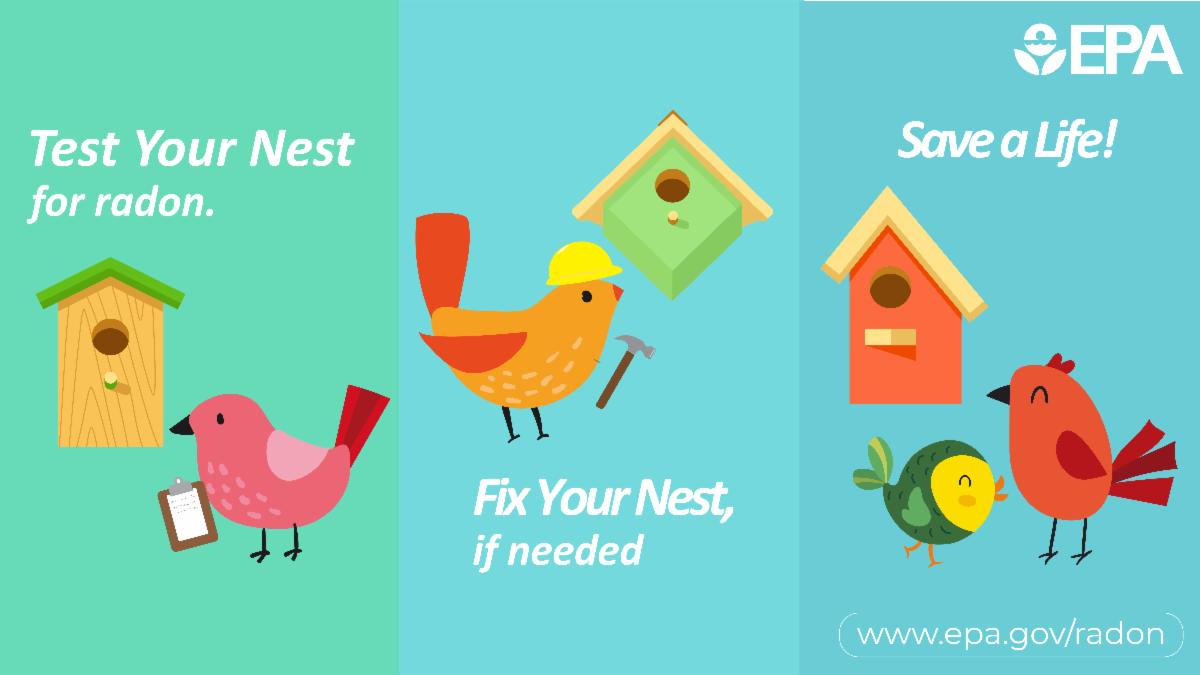
Recognized by the Environmental Protection Agency (EPA), January is National Radon Action Month! Do you remember the last time you tested for radon in your home? Take a few moments to review some basic facts about radon and learn how you can test your nest!
What is radon?
Radon is an odorless and invisible radioactive gas naturally released from rocks, soil, and water. Radon can build up in the air in any home or building whether it has a basement, is sealed or drafty, or is new or old.
What are the health effects of radon exposure?
Over time, breathing in high levels of radon can cause lung cancer. When you breathe in radon, radioactive particles from the decay of radon gas can get trapped in your lungs. It takes many years for lung cancer to develop. Most people don’t have symptoms until lung cancer is advanced and at that point it is harder to treat. For these reasons, it is important to take steps to reduce radon exposure throughout your life to help prevent lung cancer.
How do I test for radon?
-
Contact your state radon office for testing or purchase a test kit in a hardware store or online.
-
If your test shows that radon levels are above 4pCi/L or you are interested in reducing radon in your home, contact your state radon office to help you find a qualified or state-certified radon contractor in your area to fix your home.
- Lowering high radon levels requires technical knowledge and special skills so you should rely only on a qualified professional for these repairs.
- Test radon levels again after any repairs to be sure they worked.
For further information, check out the EPA’s A Citizen’s Guide to Radon PDF or visit the CDC’s Get the Facts on Radon webpage.
|