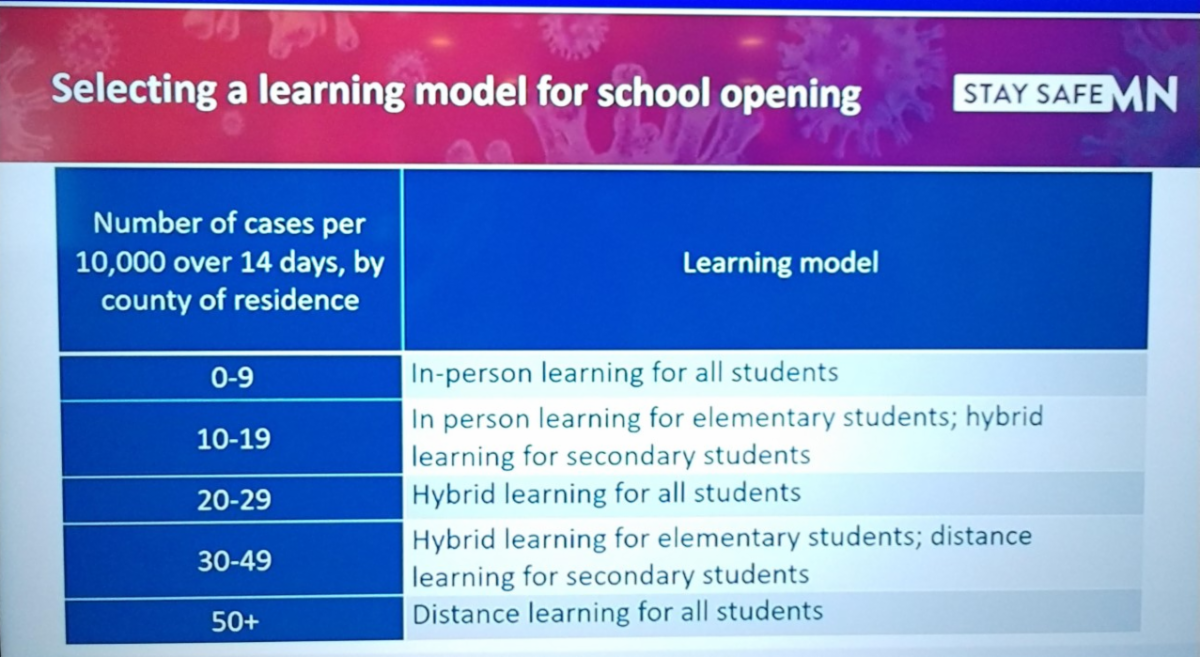
Tracking of new virus cases is the first hurdle schools have to jump to be able to reopen. To fully reopen, a county would need to have fewer than 9 cases of the virus per 10,000 residents over a 14-day period. Schools in counties with higher case counts could attempt to reopen on a more limited basis for full or part-time classes, with younger students getting priority for in-person instruction. All schools in counties with more than 50 cases per 10,000 residents would have to be fully online.
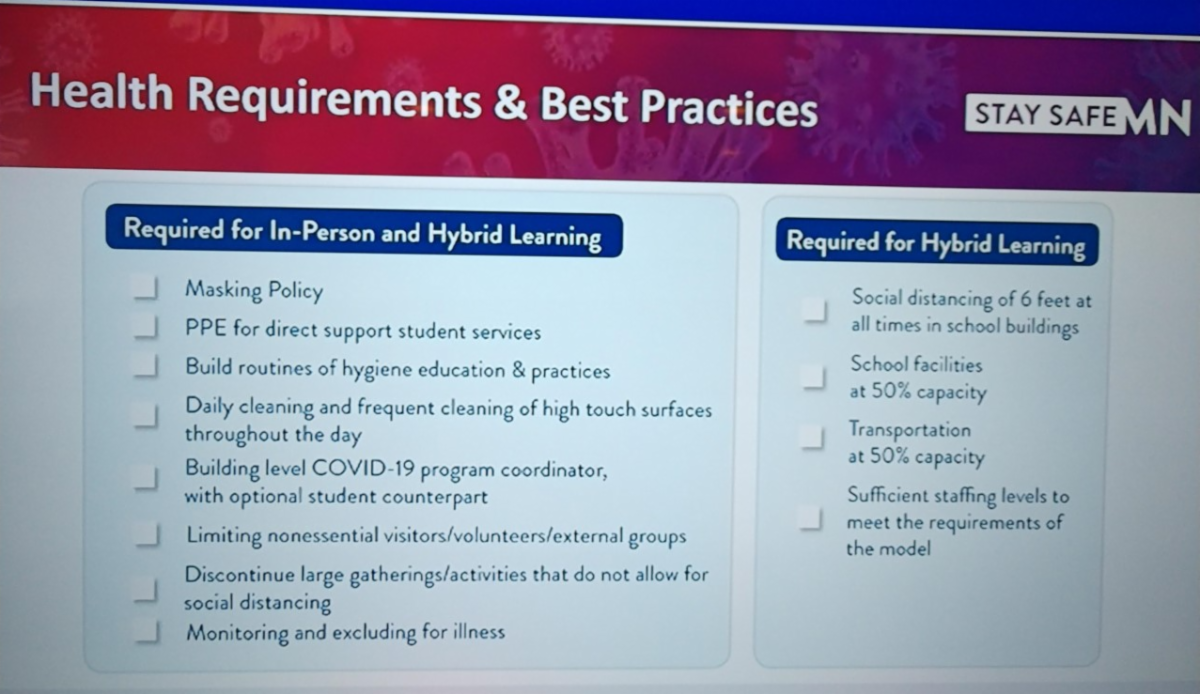
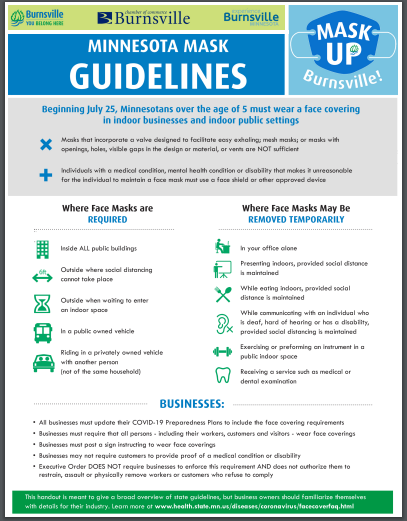
In schools that do open, masks would be required — and provided by the state — for both students and teachers. As in the first months of the pandemic, schools that are not fully open would be required to provide free childcare for school-age children of critical workers. Schools will also have to accommodate any students that do not want to return to in-person classes with options for full-time distance learning.
In a letter introducing the plan, the governor said it’s important for local school leaders to work with health officials and make the decisions that make sense for their communities — but that they should be prepared to shift gears if necessary. “Throughout the school year, we will need to be flexible and adapt with the fluid nature of this pandemic,” Walz wrote.
Michael Osterholm, executive director of the University of Minnesota’s Center for Infectious Disease Research and Policy, on Thursday offered praise for a school reopening plan that has “informed flexibility.” School districts will be encouraged to tailor and adjust their approaches over time based on the spread of the virus, he said. “It allows for the flexibility that schools are going to need right now because conditions are going to continue to change between now and the time we hopefully get an effective vaccine,” he said. Evidence in other nations has shown that schools safely reopened when there was low or declining COVID-19 transmission in surrounding communities, he said.
“We now know that, in fact, much of the risk related to school-based transmission is also related to what’s going on inside the community,” Osterholm said. “If we can drive down transmission in the community, schools will be a much safer place.” Responses won’t differ just by district, but by schools within the district, he added, because high school students present more risks for spreading COVID-19 in their communities compared with children in elementary schools.
Because districts may have flexibility as they design their plans, most will be unlikely to be ready to answer all of the questions facing teachers, school staff and families as they wrap up the final weeks of summer break.
In districts that can use a“hybrid” instruction model, with some classes happening online and students attending school in person part time, there is likely to be wide variation in the decisions about which students can be at school, and when.
Officials with the Minnesota Department of Education have said school districts will also have the flexibility to decline or limit in-person instruction, even if the state allows it. At least one district has already indicated that it is planning to start the year with schools closed; Minneapolis Public Schools officials outlined their plans in a meeting earlier this week, saying they intend to keep students at home for distance learning. Under the plan, some Minneapolis schools would be open on a limited basis for help with tutoring, technology and mental health services.
School sports and activities also remain an open question. Decisions in high school sports will need to be more collaborative due to conferences and game schedules, but Osterholm said he is concerned about those activities based on recent outbreaks among players in Major League Baseball and outbreaks among college students that appear partly tied to athletic participation.