US Biochar Initiative Newsletter
May 2021
Having trouble viewing this newsletter?
Choose 'display all images' and 'view entire message' or download file.
|
|
DEMAND IS UP, SUPPLIES INCREASE, and USDA FOREST SERVICE HELPS DEVELOP MARKETS
By Tom Miles, Executive Director
The biochar industry continues to grow and innovate. Some suppliers report a backlog of demand for soil blending and compost. New producers are entering the market. USBI receives many requests from buyers looking for suppliers and from producers looking for equipment. List your company in the USBI Directory.
Thanks to the USDA US Forest Service for their support. They recently awarded grants to enable biochar market development through their Wood Innovation programs. With USFS assistance, here's what the funding will make possible. USBI will work with University of Nebraska to develop “Tools for Success for Biochar Market Development” including new factsheets and case studies. Climate Action Reserve will develop methodologies to stimulate the production and use of biochar through carbon markets. Arizona Log and Timberworks LLC will integrate a biochar plant, firewood kiln, and pole peeler into the production process at a forest products facility. Orcas Power and Light Cooperative in Washington will explore biomass generation with biochar for island energy resilience. Pacific Benefit Corporation in California will upgrade a biomass power plant to produce biochar from forest biomass. University of Minnesota Duluth will expand markets for hazardous fuel from Balsam Fir demonstrating landfill capping and other applications. See more information about these USDA grant awards for helping expand wood products, wood energy markets, and community forests.
|
|
|
|
There would be so many more opportunities to grow the biochar industry if we had resources to pay staff. Our volunteer model is not sustainable. Support the USBI network!
|
|
|
MEET A BIOCHAR PRACTITIONER
Kevin Anderson and Stan Slaughter
Missouri Organic Recycling
|
|
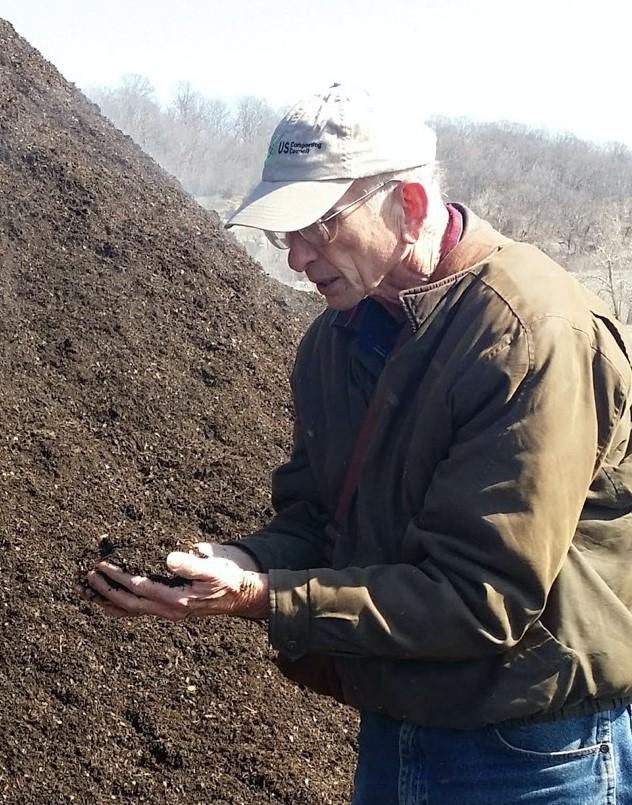
Missouri Organic Recycling (MOR) is a composting and soil building company that operates in the Kansas City metro area. CEO Kevin Anderson and Education Director Stan Slaughter tell us about their operations and wide array of products.
Q How did you get started with using biochar in your composting operations?
Kevin About five years ago, we had some organic growers approach us about the quality of our compost. They were not happy with it. They introduced us to David Yarrow, a gardening expert, who showed us how to use biochar, rock dust, clay and a few other ingredients to improve the compost. Biochar improves the composting process, too. It helps a lot...
|
|
Stan Slaughter, MOR Education Director |
|
USBI YouTube Channel
Find free educational videos on a ton of topics including current articles, books, podcasts, and more.Click below.
|
|
USBI Learning Center
All resources on the Biochar Learning Center are tagged and searchable by topic and media type. Click below.
|
|
HIGHSCHOOLER ON A VINEYARD BIOCHAR MISSION! |
|
William Thornton is a young man from San Francisco on a biochar mission! We recently had the pleasure of interviewing him.
Q How did you learn about biochar?
I’ve been interested in ways to prevent forest fires since 2018’s terrible fire season. I found out about controlled burns. My dad recently showed me a webinar on how forest waste could be turned into biochar. I researched biochar and asked my parents if we could make some at our George Ranch vineyard in Sonoma for my Environmental Science class project.
Q What most interests you about biochar?
Biochar captures lots of CO2 that would otherwise escape into the atmosphere. It also helps retain moisture in the soil. We’ve been putting our vineyard waste into a wood chipper but the chips eventually degrade into CO2.
|
|
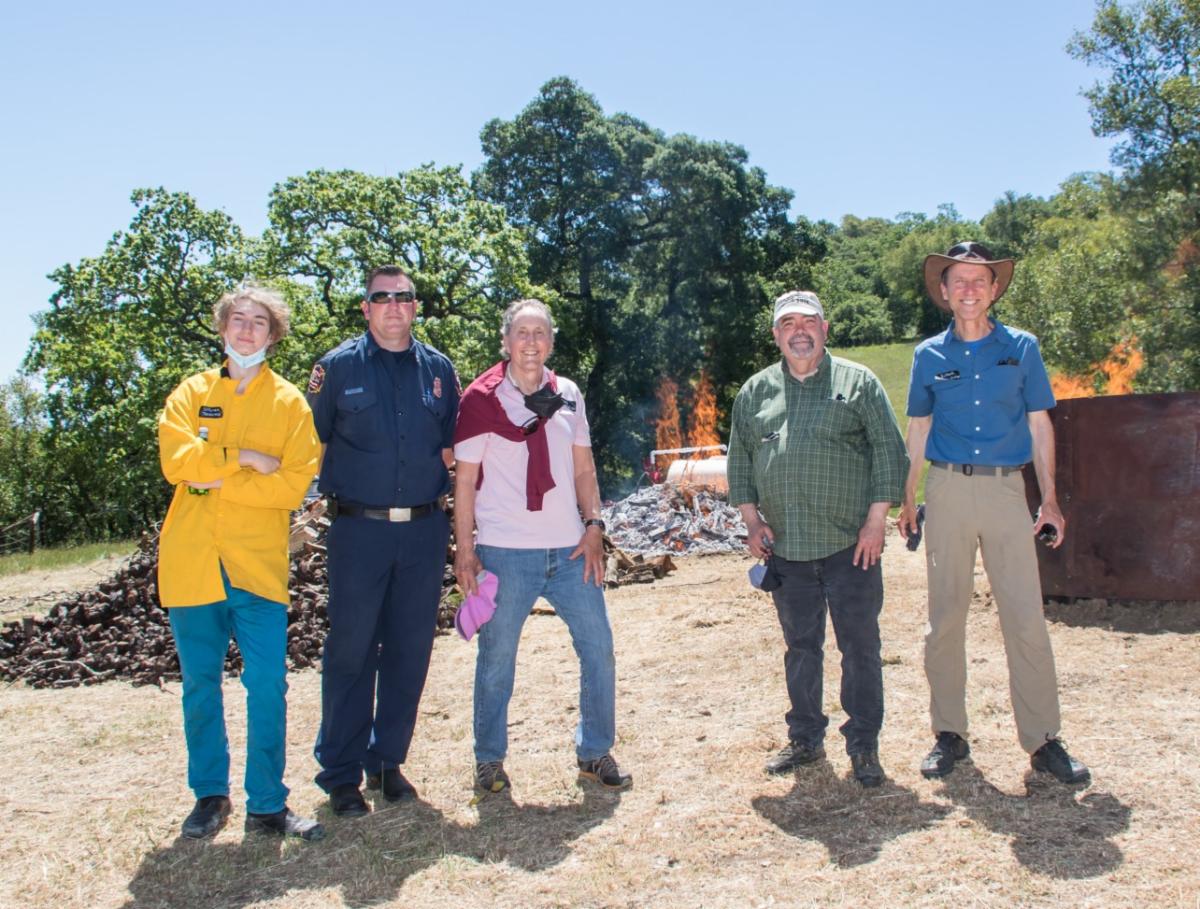
L- R above, William Thornton (student), Fire Captain Gary Johnson (Sonoma Valley Fire District) Laney Thornton (dad), Raymond Baltar and Richard Dale (Sonoma Ecology Center)
--------------------------
|
|
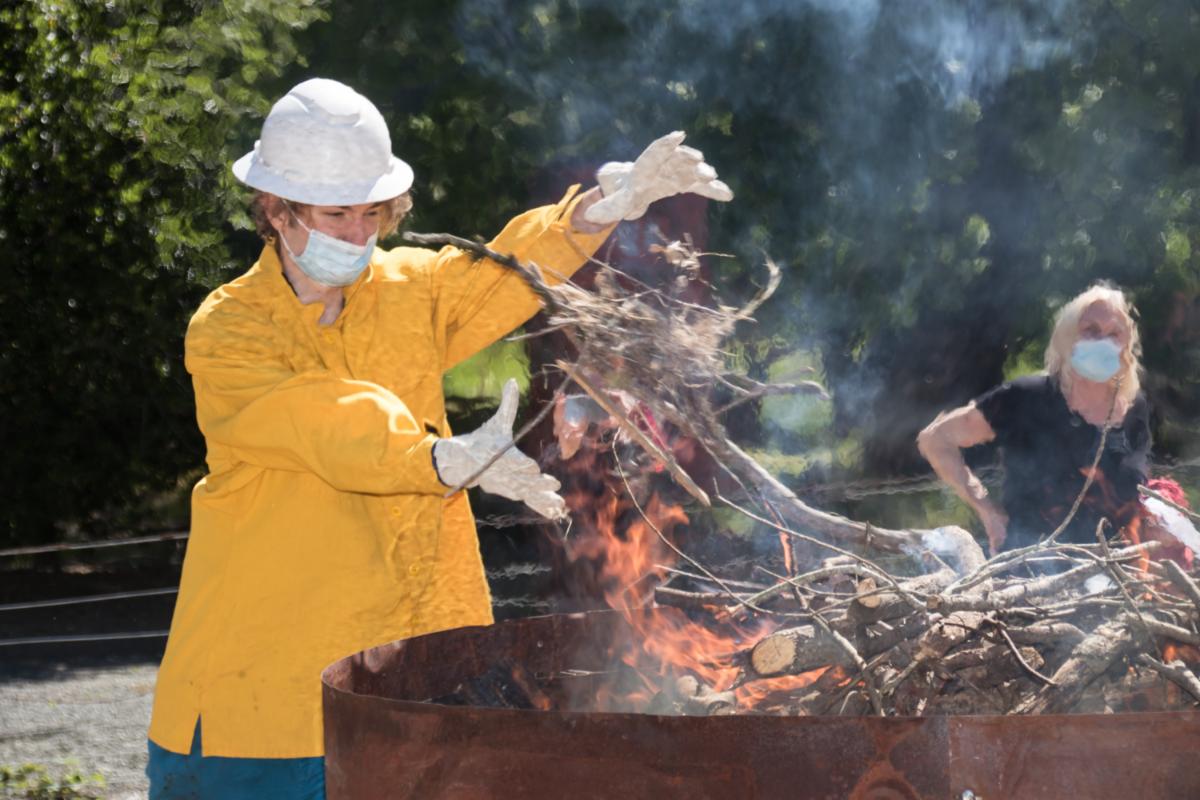
William Thornton, high school student using kiln from Wilson Biochar.com. |
|
Q How do you see your future and the world’s as it relates to biochar?
Next year, I’d like to do multiple biochar burns in kilns. Our vineyard is in a ranching community with several vineyards. Biochar has numerous advantages for soil improvement, water retention, and for getting rid of combustible waste. It can revitalize forests and agriculture.
|
|
ANNOUNCEMENTS AND OPPORTUNITIES |
|
----- Microsoft $1 Billion Dollar Climate Innovation Funding
|
|
----- NRCS State Conservation Innovation Grants Available -----
Due May/June 2021
|
|
Check here to see if there are Natural Resource Conservation Service Conservation Innovation Grants available in your state and get contact information. Grant size ranges from $100K TO $317M.
|
|
----- USBI Seeking Biochar Roundtable Participants -----
|
|
A Biochar Roundtable is forming. Roundtable participants will discuss common needs and issues such as current and future products, markets, quality standards, specifications, policy, safety, etc. If interested in participating, email USBI Board Member Jeff Waldon.
|
|
----- New, Enhanced USBI North American Biochar Directory -----
|
|
Join the Directory - Get your free biochar listing now!
● Help customers find your business.
● Find out who needs your services.
● Discover organizations that are working on biochar solutions.
Join the directory and use it to connect with the North American biochar network.
Make it easier for others to find out about your biochar company or project. Be sure to fill out as much as you can about your sector, products, applications, technology, and the scale of your operations.
Together we are putting the world's carbon budget back in the black and building the most comprehensive biochar directory for the US market!
Once you enter your information, you will be taken to a donation page. We ask for a suggested contribution of $25 annually for your directory listing. Please give more if you can afford it. Your contribution helps to keep the USBI website alive and growing!
Add your USBI listing - HERE. After review, your listing will be published in the USBI Biochar Directory.
|
|
ROLLING OUT THE GREEN CARPET FOR
NEW USBI DIRECTORY MEMBERS
|
|
BIOCHAR EVENTS CALENDAR
Send your events to cgribley@biochar-us.org.
|
|
|
|
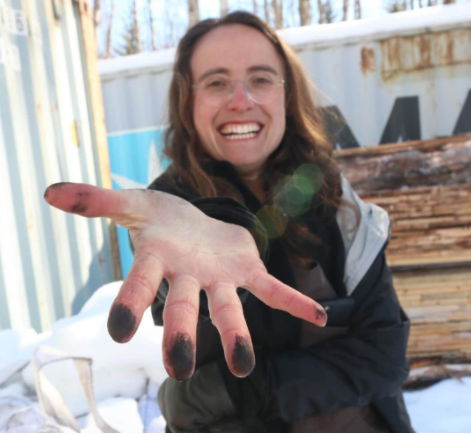
“We need to take a fundamentally different approach if we are to make a statistically significant difference for carbon sequestration,” says Natasha Kuperman, Seed the North Project Leader. Biochar is a new approach that she is taking to seed germination. Kuperman aims to encase seeds in biochar, a forest industry byproduct she calls ‘black, shiny gold’ for its ability to foster germination.
«Photo of Natasha Kuperman courtesy of The Tyee's Amanda Follett Hosgood
|
|
➤ Biochar is Bipartisan. Climate legislation being proposed in Congress reveals that natural climate solutions, like biochar, are enjoying bipartisan support.
|
|
➤ Alberta Research Projects Funded. Research projects looking at a range of topics from climate change to using biochar to address soil and fertilizer inefficiencies will receive funding from Alberta’s Results Driven Agriculture Research (RDAR) fund through its Accelerating Agricultural Innovations program.
➤ Economics of Unproductive Land Reconsidered. Sloughs and wetlands don’t grow crops, but they act as “buckets” to capture spring moisture, slowly giving up their contents over the growing season to benefit crops. Their willows can be harvested too, for bioenergy or biochar – or both.
➤ Maine Blueberries Can’t Take the Heat. Researchers say that, as water becomes scarcer, irrigation is not a good solution. Compost, mulch, and biochar can help, but they must be affordable and doable for growers.
➤ From the Amazon to Your Golf Course. Phytobiomes, biochar and nanotechnology inspire researchers to improve the turf. It’s all about aeration and microbes. “Biochar has some chemical components and the ability to hold nutrients with the water and air,” said Dan Dinelli, supervisor at North Shore Country Club in Glenview, Illinois.
|
|
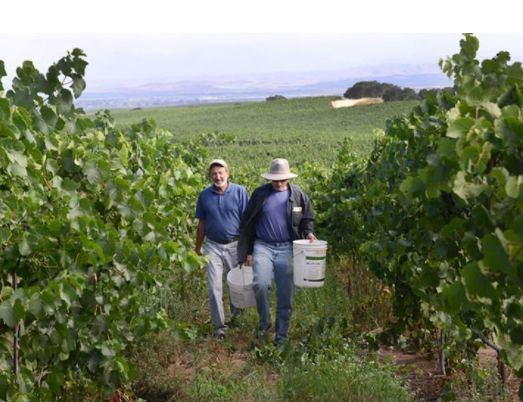
➤ Biochar Boosts Bottom Line for Wine. Vineyard expert Doug Beck has been trialing biochar and compost treatments with encouraging results. The total biochar cost was $200 per ton or $2,000 per acre, Beck says. The yield increase in the third leaf, the first year of production, was 1.3 tons per acre. At a grape price of $2,000 per ton, that’s additional revenue of $2,600 per acre.
Monterey Pacific’s Doug Beck (left) and UC Riverside's »
Milt McGiffen walk the Oasis Vineyard in Salinas Valley.
|
|
Photo courtesy of Raymond Baltar |
|
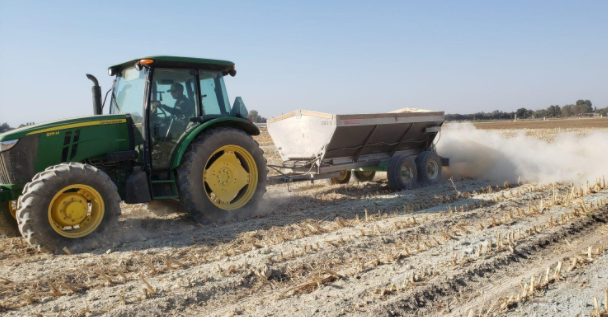
«Olivine rock dust is applied at the WLIC site on UC Davis’s campus corn field.
Photo Courtesy of Iris Holzer
➤ With Biochar, What Goes in the Landfill Stays in the Landfill. Wood recyclers have begun to explore converting waste wood into biochar. When waste gypsum fines were blended with biochar, H2S levels were uniformly below detection in the field tests. Biochar works on PFAS too, reducing levels found in leachate by 80%.
➤ Can Sewage Sludge Be Safely Pyrolyzed? Engineers say that toxic PFAS in sludge is not a problem for a proposed gasification facility in Massachusetts. Any PFAS not destroyed by high heat will be absorbed by biochar that gets locked up in a concrete product. Testing and monitoring are needed to verify the claims.
➤ Pork Project. Montauk Renewables plans to convert swine lagoon waste in North Carolina into renewable natural gas (RNG), bio-oil, and biochar.
|
|
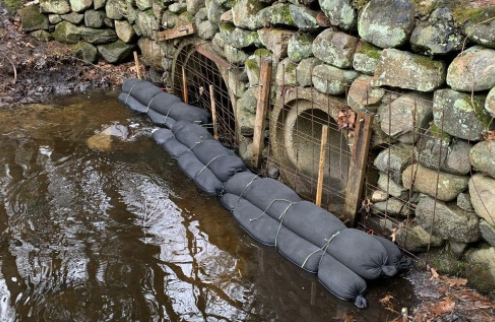
➤ Biochar Socks It to Algae. “You can think of these socks almost as giant Brita filters,” says Emilie Cademartori, the Lynnfield, Massachusetts Conservation Commission’s director of planning and conservation. “As the water flows through, biochar filters nutrients that allow algae to bloom in the pond. The idea is that you can reduce some of the incoming nutrients. It should help.”
Photo courtesy of Water and Wetlands, Consulting, LLC »
Architects Meet the Ithaka Institute. Ithaka Institute has developed biochar-based clay and lime plasters in which black carbon comprises up to 80% of the material. For each ton of biochar employed in buildings, one ton of CO2 is kept out of the atmosphere. Add bricks and roof tiles for a complete biochar building.
Can Carbon-Negative Materials Help Save the Planet? Biochar has been applied as a soil enhancer, water filter and agricultural filler, but it is increasingly being applied in industries such as construction and fashion to replace plastics. Carbon-negative thermoplastics can contain up to 85% of carbon sequestered from the atmosphere.
|
|
--------------------- promotional section ---------------------
|
|
Proceeds go to the International Biochar Initiative
|
|
|
|
|
|
|