Quick, Timely Reads
On the Waterfront
|
|
Girls versus Boys:
Word Puzzles and Chocolate Cake
|
|
Dr. David Frew, a prolific writer, author, and speaker grew up on Erie's lower west side as a proud "Bay Rat," joining neighborhood kids playing and marauding along the west bayfront. He has written for years about his beloved Presque Isle and his adventures on the Great Lakes. In this series, the JES Scholar-in-Residence takes note of life in and around the water.
|
|
The New York Times Word Puzzle |
|
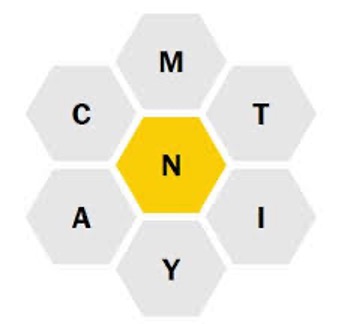
Mary Ann, my wife, is a regular New York Times puzzle player. The daily word game challenges players to make as many words as they can, using letters from the array that is presented, with the caveat that the center letter must be in each of the words. Puzzlers are awarded a grade based upon the total number of words that they come up with. The designation “Genius” is given to those who achieve a “mystical level of success.” I am always astonished by her relentless focus as well as her systematic approach to the game. She sometimes remains up into the wee hours of the morning, trudging intellectually toward the genius designation. I am also amazed that she often calls several friends who regularly work on the same daily puzzle for status updates and occasional hints. Her puzzle behavior reminds me of one of the many dark times of my academic career. Grade school spelling exercises.
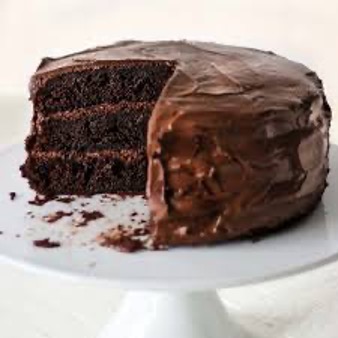
During the middle years of my primary schooling, the Sisters at my parochial school would traditionally roll out an annual word puzzle near the end of winter. Perhaps they were out of things to do. The spring puzzle contest involved the challenge of constructing as many words as possible from the letters in that year’s designated puzzle, anchor word. A name or phrase, such as “George Washington,” or “The Civil War” would be written on the blackboard on a Friday, after which students were challenged to identify and list as many words as they could create from the letters. For example, the words “ton,” “wash,” and “to” could be found within George Washington. Final submissions were due the following Monday and naturally there was to be a prize. The winner would be awarded a large piece of chocolate cake on Monday afternoon, which he or she could eat during class. The second-place winner would receive a smaller piece of cake. Third and additional places were to be awarded nothing. Nada!
This was one of the powerful lessons imbedded in Catholic school education during those days. “There were winners and losers, and losers did not get consolation prizes.” But they were allowed to watch while the first- and second-place winners ate their pieces of cake. And gloated.
|
|
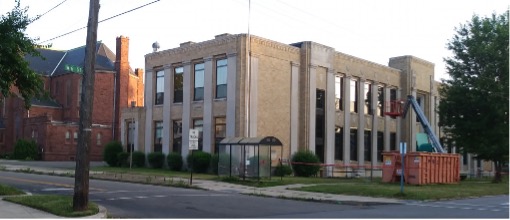
St. Andrew School, scene of the great spelling-word contest, has recently been transitioned from a grade school to a social service agency. |
|
Admittedly, spelling was not one of my strengths. I never lasted beyond the second round of the annual fall spelling bee. When word choices expanded to five letters or more, I was usually finished. But carving a proper name up onto smaller words, with the help of a dictionary, seemed like a doable objective. And for the first few years I literally threw myself onto the task. Motivated mostly by the cake, of course. After losing badly the first year, I devised a clever organizational system for year two. I wrote all the letters from the target word in alphabetical order on individual sheets of lined yellow paper and began brainstorming (and opening the dictionary to that letter). The “George Washington” target, for example, yielded 12 uniquely different letters: A, E, G, H, I, and so on. Then I focused on finding all the possible words that began with each particular letters: “A” ash, “E” Egg, “G” go, and so on. A brilliant strategy! As I toiled away, I asked for advice from parents and others. I was determined to win a piece of chocolate cake. And I improved significantly. The second year I advanced from 35th place out of a class of 50 to 25th position with an impressive submission of 31 words. Better, but still no cake. Several girls from the class had tied for first place and another group of girls had tied for second. Hmm? |
|
Chocolate cakes were provided by volunteer parents, whose intentions were to help motivate us kids to learn. There were more than enough cakes to serve everyone, including the losers, but that never happened. What kind of learning lesson would it be if losers were given cake? |
|
By the third contest year, something finally began to dawn on me. First prize during year one had been awarded to 21 girls who had tied after submitting an astonishing number of words. Something like 75 words. All those girls somehow had the very same number of words? Second place was also a tie. Several (17) girls had found 73 words. Another statistical coincidence? Third place (no cake) was awarded to a boy who had identified a paltry 26 words. And he was the smartest of all of us boys! That was the year I tracked down a grand total of 23 words, however two were disqualified by the judging committee. No boy ever won or placed during the three-year history of the contest. Were the girls really that much smarter than us? I wasn’t sure but I did give up. Apparently, I was just a cakeless loser. |
|
Decades later as a graduate student in a “psychology of problem solving” class, I stumbled onto something that made me wonder about those contests. There was an entire literature about how children approach problems and one of the more interesting substrains in the research involved gender differences. When presented with problems, girls tend to organize into cooperative teams. Boys are exactly the opposite. They interpret such challenges as individualized competitive opportunities and usually go off individually, trying to out-compete each other.
Major epiphany! Those grade school girls were not really smarter than us boys, they were just clever. After class that day, I went to the university cafeteria and ordered a piece of chocolate cake. I might not have been smart, but I had figured out a way to get a piece of cake. Problem solved in the short run, but the next day’s class was to be psychotherapy.
|
|
Accidental Paradise Available at TRECF!
Accidental Paradise
by Dr. David Frew and Jerry Skrypzak
|
|
The beautiful book on Presque Isle published by authors David Frew and Jerry Skrypzak – “Accidental Paradise: 13,000-Year History of Presque Isle” – is on sale at the Tom Ridge Environmental Center’s gift shop and through a special website, AccidentalParadise.com.
The book, priced at $35 plus tax and shipping, can be ordered now through the website sponsored by the TREC Foundation, AccidentalParadise.com.
Presque Isle Gallery and Gifts on the main floor of TREC, located at 301 Peninsula Drive, Suite #2, Erie, PA 16505 will also handle sales daily from 10 a.m. to 4 p.m.
For more information, send an email to aperino@TRECF.org.
To watch "Accidental Paradise: Stories Behind The Stories" click here.
|
|
ABOUT THE AUTHOR
Historian and author David Frew, Ph.D., is a Scholar-in-Residence at the JES. An emeritus professor at Gannon University, he held a variety of administrative positions during a 33-year career. He is also emeritus director of the Erie County Historical Society/Hagen History Center and is president of his own management consulting business. Frew has written or co-written 35 books and more than 100 articles, cases, and papers.
|
|
|
|
|
|
|