SciComm Spotlight
October 2026 Edition
| Welcome to the SciComm Spotlight! | |
Dear Science Communicators,
There’s plenty to explore in this month’s edition! Read about the importance of keeping humans at the heart of science communication with the wonderful SciComm polymath Paige Jarreau, whose work includes graphics, illustrations, social media, blogging, research, and much more (her YouTube channel “Facetime with Scientists” was our SciComm Socials account last month).
Then meet physicist and Kurzgesagt writer Lucas Kreuzer, our October SciComm Voice. And if you’re looking for something to add to your SciComm reading or viewing list, check out the recently published report on science communication from the American Chemical Society and spend some time exploring the Kurzgesagt YouTube channel. I have a feeling you’ll find something there worth your while and useful for your own science communication.
| |
Last month, Darío Sánchez Martín asked what happens when AI smooths away the uncertainty and complexity that are fundamental to science. This month’s SciComm Close-Up, “The Case for Human-Led Science Communication,” continues that conversation by asking a different question: What might we lose when AI begins to smooth away the human parts of science communication?
Science communication researcher and practitioner Paige Brown Jarreau, PhD, makes the case for keeping humans at the heart of how we communicate science. Drawing on her experiences as a writer, researcher, artist, and digital communicator, she considers what we risk when we offload more of our creative work to AI, and why storytelling, relationships, and trust may be parts of science communication we should be particularly careful about handing over to machines.
|
SciComm Voices
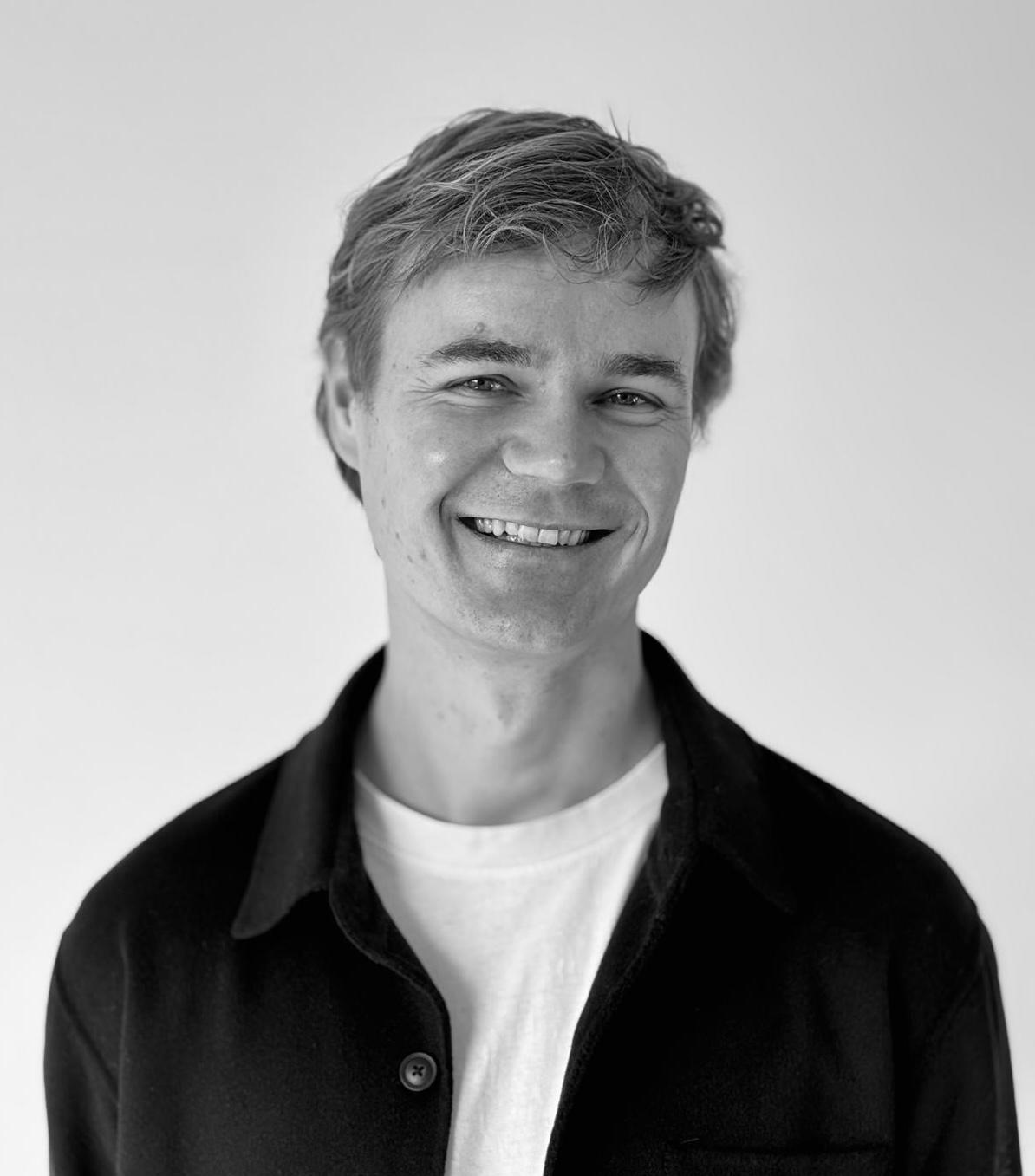
This month’s SciComm Voices features Lucas Kreuzer, PhD. Lucas is a physicist and instrument scientist at the neutron research facility FRM II in Munich, where his research focuses on functional polymer films and neutron scattering.
Alongside his research, Lucas works to make complex science clear, compelling, and visible. His science communication experience ranges from podcasting and social media to scriptwriting for kurzgesagt, one of the world’s most-watched science channels, which is featured below as this month's SciComm Socials account.
|
SciComm Resource
American Chemical Society's (ACS) "The Future of Science Communication: Authenticity, Connection, and the Modern Scientist"
While focused on communicating chemistry-related topics to public audiences, the ACS’s report, or interactive website, “The Future of Science Communication,” is a useful resource for anyone interested in science communication, especially those just starting out. You will need to enter an email address, but the site is free.
It contains examples from a diverse group of SciComm practitioners and great examples and guidance to make science content accessible and engaging. If you are curious how to make “I study catalytic reaction mechanisms in heterogenous systems” sound more engaging, don’t sleep on this site. That social media plays in how we (in the US at least) are exposed to science.
|
SciComm Socials
Kurzgesagt – In a Nutshell has been popping up everywhere in my science communication world lately. Several students in this year’s UMB Science Communication cohort have gushed about the channel, naming it among their favorite SciComm resources. And this month’s SciComm Voices guest, physicist and science communicator Lucas Kreuzer, PhD, is an active kurzgesagt contributor, as a scriptwriter.
Known for its colorful animations and story-driven approach, the channel makes complex topics in science, technology, space, biology, and society engaging and approachable. For science communicators, there is plenty to study — from visual metaphors and narrative structure to the balance between scientific complexity and compelling storytelling.
|
SciComm LinkedIn Group
Join the UMSGS SciComm LinkedIn Community to network with faculty, students and alums of the Science Communication Certificate Program at the University of Maryland School of Graduate Studies. Anyone interested in science communication is welcome.
|
SciComm Events
-
Conference: Science Writers 2026, September 25-28, Corvallis, OR (USA), hosted by the the Council for the Advancement of Science Writing (CASW) and the National Association of Science Writers (NASW) (NOTE: a virtual conference will follow October 14-16, 2026)
-
PhD Academy: Science Communication in Museums, Exhibitions and Science Centers, open to doctoral students, post-docs, and early-career folks, Applications due Dec. 1, 2026, at Venice International University, Venice, Italy, from April 12-16, 2027
-
Symposium: Trust in Science Community Day, Museum of Science, Boston & MIT Press, November 8, 2026, Boston, MA, daytime programming included with Exhibit Hall admission
Fellowships
Mass Media Science & Engineering Fellowship — AAAS
Summer 2027 | 10-week fellowship | Paid | Applications due January 4, 2027
- The Mass Media Science & Engineering Fellowship places scientists, engineers, and mathematicians (advanced undergraduate and graduate students and postdoctoral researchers in STEMM fields, as well as recent graduates) with media organizations such as newspapers, magazines, radio, and television outlets. Fellows work alongside journalists to communicate scientific and technical topics for public audiences while gaining firsthand experience with how science becomes news.
Early-Career Fellowship Program — The Open Notebook
Remote | Part-time | 12 months | Starts Feb. 9, 2027, | Application: Oct. 31, 2026, | Stipend: $6,600
- The Early-Career Fellowship Program is a paid, year-long opportunity for emerging science journalists to report and write four articles for The Open Notebook while receiving one-on-one mentoring from an experienced science journalist. Fellows spend an estimated 5–7 hours per week reporting, writing, revising, meeting with their mentor, and participating in editorial and cohort activities.
|
SciComm Chats
These monthly virtual conversations are designed to bring together students, professionals, educators, and science enthusiasts interested in science storytelling and public engagement. Here are the upcoming chats (with registration links):
Exchange ideas, ask questions, and connect with others interested in building stronger science communication practices.
|
SciComm Info Sessions
Learn more about the SciComm Certificate Program at the University of Maryland School of Graduate Studies from our faculty.
|
Want to Contribute to the Newsletter?
Are you interested in writing something for SciComm Spotlight, have a great SciComm resource that you want to share, or have additional suggestions for what else to include in the newsletter? We would love to hear from you.
You can use this survey to indicate your interest. Contributions to SciComm Spotlight are unpaid. You retain copyright to your work and grant permission for publication in this newsletter.
| |
We hope to see you at one of our upcoming SciComm Chats, an information session, or in a future cohort. If you have questions about whether the program may be a good fit for you, feel free to reach out to Isabell May at imay@umaryland.edu.
Until next month — stay curious, stay connected, and keep sci‑comming.
| |
Isabell May, PhD
Program Director, Science Communication Certificate Program
University of Maryland School of Graduate Studies
Source material adapted from user-provided SciComm newsletter content.
| | | | |