|
Upcoming Events
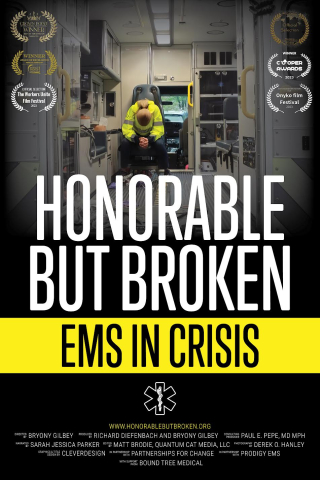
Film & Q&A: "Honorable But Broken: EMS in Crisis"
Thursday, February 5 at the Chappaqua Library - Register
Whisky Tasting
Friday, February 6 at the Greeley House - Buy Tickets
| |
|
Film & Q&A: "Honorable But Broken: EMS in Crisis"
Thursday, February 5, 6:30-9pm
Chappaqua Library
Register here
Cosponsored by the Chappaqua Volunteer Ambulance Corps that is celebrating its 90th anniversary this year, this event will screen the documentary film exploring the world of EMTs and Paramedics, the collapse of the EMS system, and what needs to be done to save it. Created by Chappaqua's own Bryony Gilbey (director) and Richard Diefenbach (producer). Narrated by Sarah Jessica Parker.
The event will be moderated by Marc Hirschfield, Captain at CVAC.Followed by light refreshments and a Q&A with Al Kim, Executive Director at Westchester EMS and Dan Blum, Life Member of Chappaqua Volunteer Ambulance Corps (CVAC).
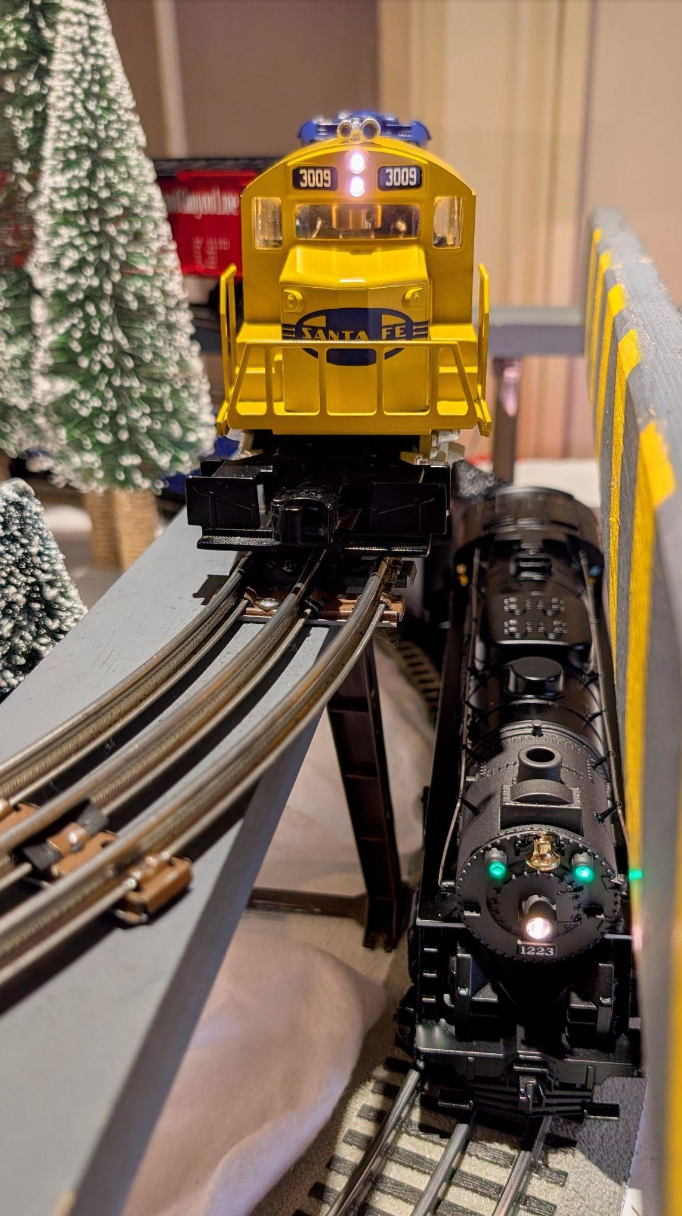
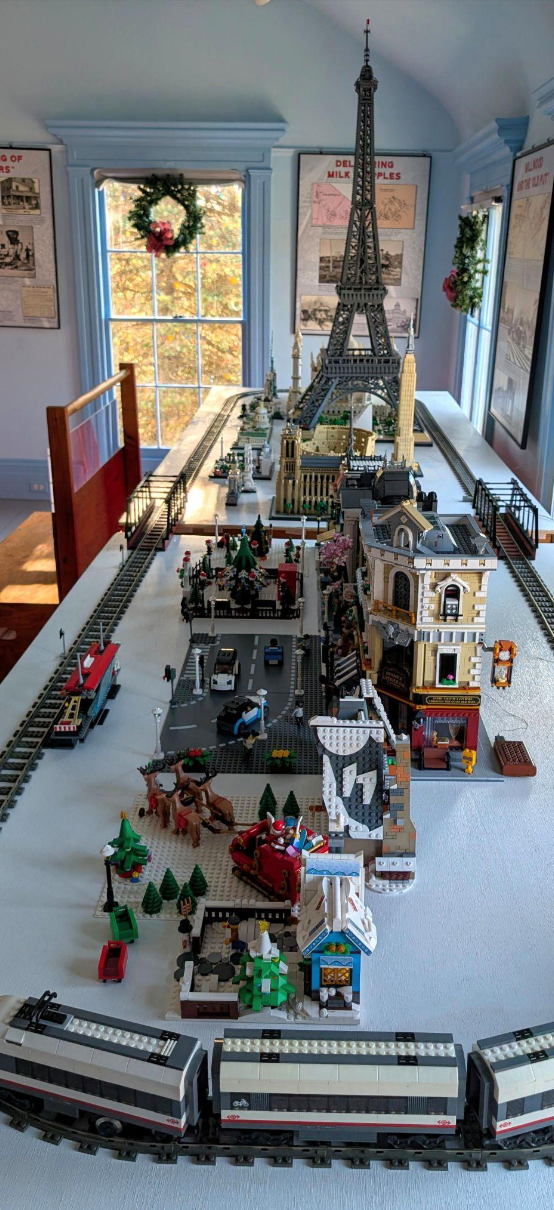
| | Thank You to Everyone Who Made our Annual Great Holiday Train Show a Success! | | Thank you to all of our volunteers, sponsors, local businesses that donated goods and services, and attendees who helped make our train show a huge success. We had over 2,600 attendees come through our doors to enjoy our most magical and important fundraiser of the year. | | |
Here Come the Trains
by Gray Williams, Town Historian
| | |
As another model train show comes to an end at the Horace Greeley House, we are reminded of the single most important event in the history of New Castle: the arrival of the railroad at Chappaqua.
By the late 1830s, the New York and Harlem Railroad had expanded beyond New York City and the village of Harlem on Manhattan and was laying tracks northward into Westchester County. Advancing a few miles at a time, it reached Chappaqua in 1846. Well, at least it reached the place where Chappaqua would be. Railroads don’t climb hills very well, and the route chosen for the New York and Harlem followed the valleys of the Bronx and Sawmill Rivers. What the railroad reached in 1846 was a highway through open farmland, near the headwaters of the Saw Mill River.
Until that time, Chappaqua consisted almost entirely of farms scattered along its few roads. It had no communal center except the neighborhood around the Quaker meetinghouse. The effect of the railroad was profound. An entirely new village center sprang up at the highway crossing, At the same time, in the surrounding countryside, what had been only self-sufficient subsistence farms were transformed into market farms, once their produce could be shipped quickly to New York City. Many of them specialized, becoming either apple orchards or dairy farms. The agriculture boom brought new prosperity to the area, lasting for several decades and indelibly shaping the future.
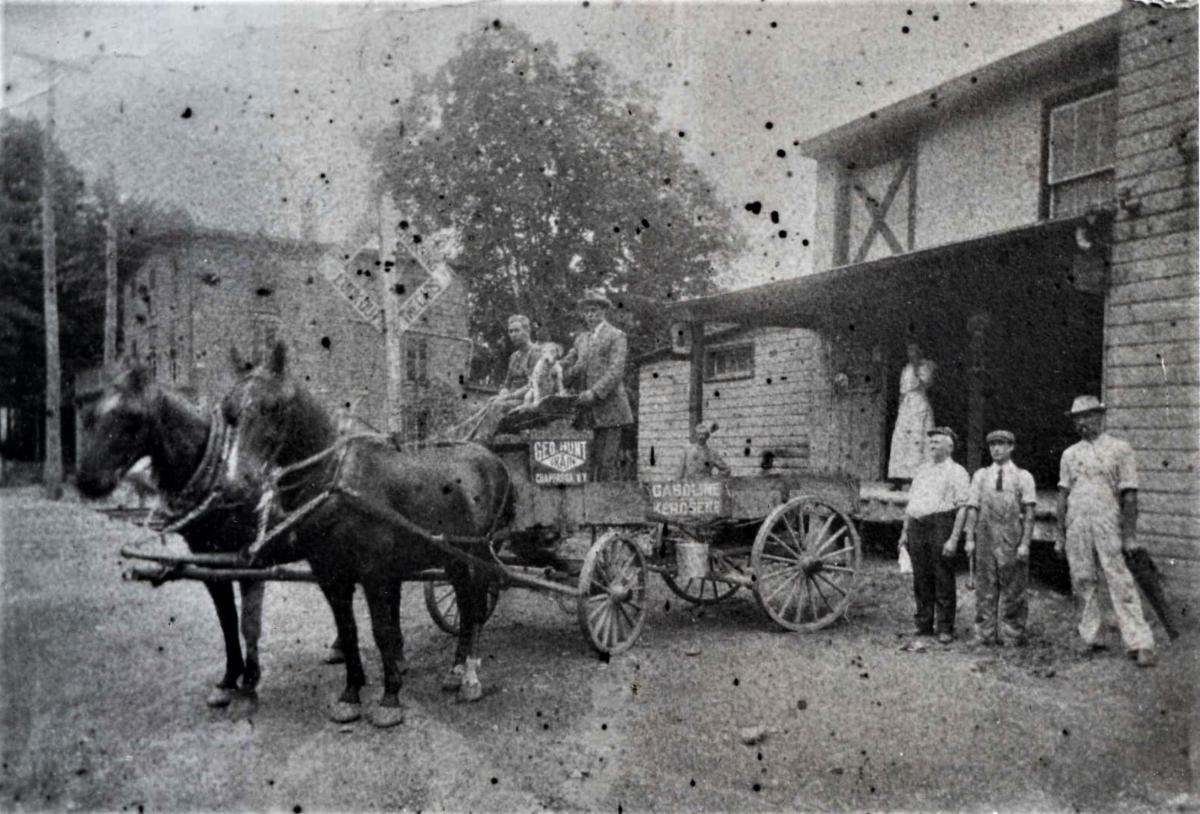
| | George Hunt's coal and fuel dealership | |
| |
The first buildings in the new village were concentrated around the railroad crossing, Perhaps the earliest of these was a utilitarian freight depot, located next to the railroad at the end of what is now Hunts Place. It served as a necessary collection point for produce being shipped to New York, milk in particular. Farmers would bring their cans of fresh milk to the station near dawn to be loaded into the morning milk train, and the empty cans would be returned later in the day to begin the cycle over again.
In the twentieth century, the building became the office of a coal and fuel dealership for several decades, and then the home of the Chappaqua Drama Group. The site is now occupied by multifamily 54 Hunts Place.
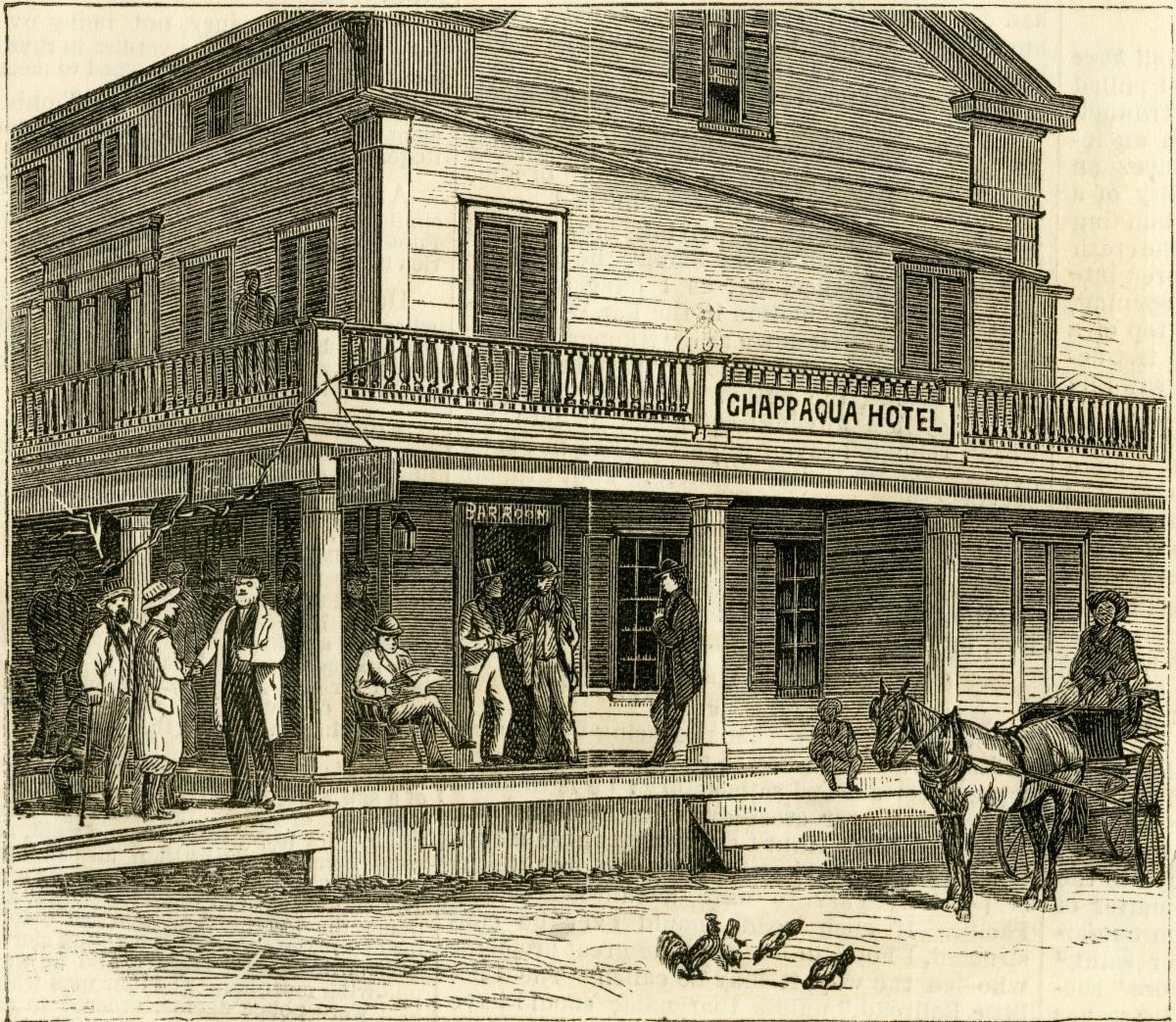
| | Wood engraving of the Chappaqua Hotel | |
| Another early building at the crossing was the Chappaqua Hotel, located diagonally from the freight station on the other side of the tracks. It initially served as the railroad passenger station, as well as the local telegraph office. In the early twentieth century, it was supplanted by the present mixed-purpose building at 1 King Street. | |
|
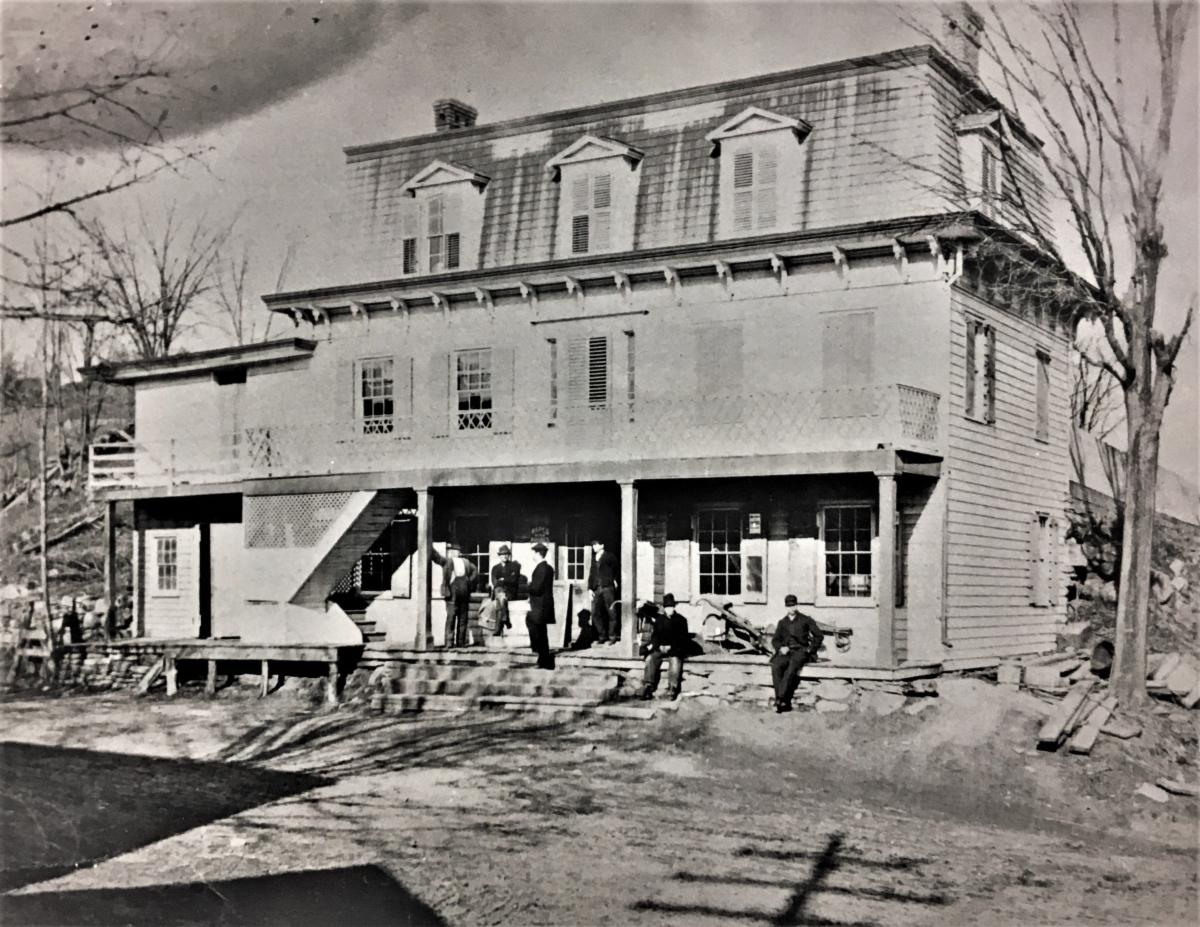
Directly across the tracks from the hotel was the general store of Levi Hunt, which provided staples of all kinds to a growing population. It also served as a social center for men in the community to share local gossip and discuss affairs of the day. Later in the century, as local stores became more specialized, it transformed into a grocer, and then, in the 1920s, it was the first home of the Chappaqua Library.
In 1930, the opening of the bridge over the railroad and the closing of the grade-level crossing cut the building off from the rest of the village, and it was soon demolished. All that remains of it is a parking lot, filled in and paved over the former foundation.
| |
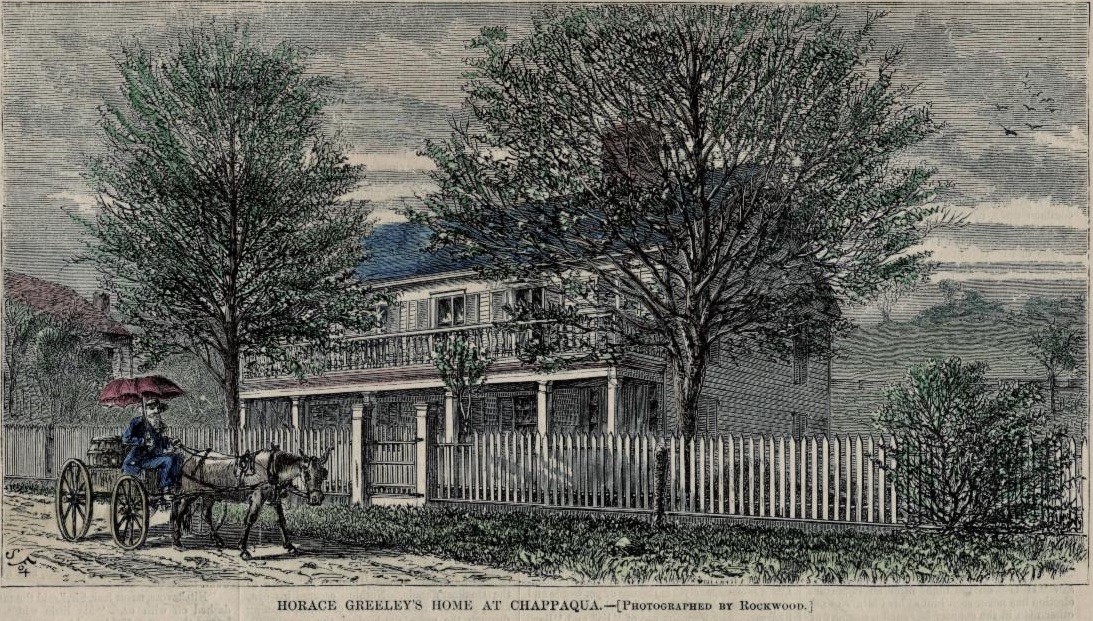
Wood engraving of the Horace Greeley House | |
Ready access from the city also attracted affluent families seeking to establish country homes, particularly for the summer months. Among the earliest of these were Horace and Mary Greeley, who, starting in 1852, bought 78 acres of open farmland within walking distance of the railroad station. Their first home lay deep in the woods at the far end of the property, but in 1864 they purchased a more convenient house on Main Street, which they enlarged and modified to create the residence you now know as the museum and headquarters of the historical society. | |
|
In memoriam: John S. Sorice
John S. Sorice, age 99, passed away on December 5, 2025. He served on the Board of the New Castle Historical Society from 2004 to 2014, including as treasurer. John was a long-time resident of Chappaqua and dedicated member of the community, including being elected to the Board of Trustees of the Chappaqua Library, and serving as President from 2005-2007. Obituary.
| |
| | | |