"NCA Health & Safety News" provides you with valuable information and assists in your quest to achieve a world-class safety culture. We believe that developing a safe work ethic is a never-ending process that must be part of every business's professional development.
Please do not hesitate to contact the office with your input, suggestions or safety questions.
We value your feedback!
|
|
NEWS RELEASE
Accelerated Second Dose Eligibility Continues Ahead of Schedule
Over 75 per cent of Ontario Adults Have Received A First Dose of a COVID-19 Vaccine and more than 19 per cent are Fully Vaccinated
TORONTO — With a majority of Ontario adults having received a first dose of the COVID-19 vaccine and over three million doses of the Moderna vaccine arriving in June, the province is continuing to accelerate its vaccine rollout by expanding eligibility for second doses ahead of schedule.
“Thanks to the efforts of Team Ontario we are making tremendous progress in our vaccine rollout, protecting communities at greatest risk of COVID-19 and variants,” said Christine Elliott, Deputy Premier and Minister of Health. “Every dose administered brings us closer to ending the pandemic and moving to Step Two of our Roadmap, and I encourage everyone to do their part and get their shot as soon as they are eligible.”
With a majority of Ontario adults having received their first dose of the vaccine, providing a strong level of protection from COVID-19, the province is accelerating eligibility to book a second dose appointment as follows:
- As of Monday, June 21, 2021 at 8:00 a.m., all Ontarians who received their first dose of an mRNA COVID-19 vaccine on or before May 9, 2021 will be eligible to book or rebook their second dose appointment at a shortened interval.
- As of Wednesday, June 23, 2021 at 8:00 a.m., individuals who received their first dose of an mRNA vaccine on or before May 30, 2021 and who live in the catchment area of one of the 10 public health units identified as Delta hot spots (Durham, Halton, Hamilton, Peel, Porcupine, Simcoe-Muskoka, Toronto, Waterloo, Wellington-Dufferin-Guelph, and York public health units) will be eligible to book or rebook their second dose appointment at a shortened interval.
- Starting the week of June 28, 2021 (days / sequence to be confirmed) all Ontarians aged 18 and over who have received their first dose of an mRNA COVID-19 vaccine will be eligible to book their second dose appointment. The appointment will be scheduled at least 28 days after the first dose, per the recommended interval.
|
|
Be safe and healthy on the job at
with these helpful tips provided by Jones DesLauriers Insurance Management Inc...
|
|
Fall Prevention and Working at Heights
Source: IHSA
Falls are a major cause of injury and death in Ontario workplaces. The vast majority of these incidents are falls from heights—even though the height may be no more than two or three metres.
This topic page provides helpful information about working at heights training and ways to prevent fall injuries and fatalities. Click Here
|
|
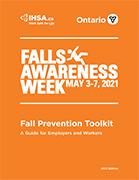
Fall Prevention Toolkit (W016)
Source: IHSA
|
Developed to promote Falls Awareness Week, this toolkit contains resources such as safety talks, forms, checklists, articles, advisories, and posters. These resources can help employers develop site-specific WAH training and educate their workers on how to protect themselves from fall hazards. 66 pages. Rev. Apr 2021.
It includes the following resources:
- Fall Protection Work Plan
- Job Safety Analysis Forms
- Fall-related Safety Talks
Falls Awareness Week is part of a campaign by the Prevention Office of the Ministry of Labour, Training, and Skills Development (MLTSD) to prevent falls, which is one of the leading causes of death and critical injuries in the construction industry. The purpose of the campaign is to support an open dialogue about fall hazards at work and foster a shift in workplace culture surrounding falls.
|
|
COVID-19 Eye Protection
Source: PSHSA
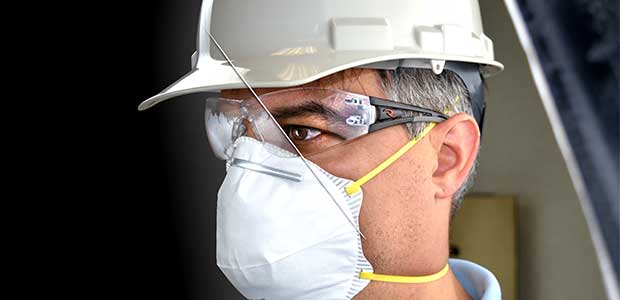
When workers are required to work within two metres of another person without a barrier, appropriate PPE is needed. This includes eye protection and surgical or procedure masks (or masks that provide equal or greater protection). Click Here
|
|
Four Tips For Tick Safety
Source: https://www.forconstructionpros.com
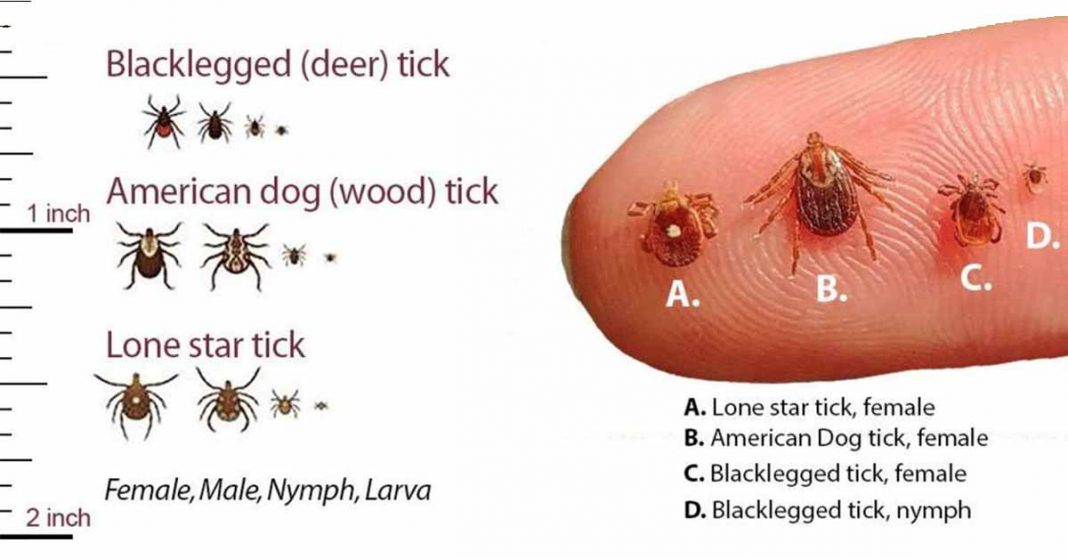
Blacklegged ticks, or Deer ticks, are found predominately in deciduous forest, and both nymph and adult stages (all shown here) transmit diseases such as Lyme disease, Babesiosis and Anaplasmosis.
Most people are aware of ticks and that they can transmit Lyme disease. And most people are aware that ticks often live in the woods or areas of long grass. That doesn't mean that construction workers shouldn't be on the alert for ticks on the jobsite.
Here are four tips from Insect Shield, a manufacturer of repellent work clothing, to help keep employees protected during the tick infested summer months.
-
Remove Ticks Safely - To safely remove attached ticks, first disinfect the area with an alcohol swab. Next, using a pointy tweezer, grab the tick "head" as close to the skin as possible and simply pull straight out. Remember to disinfect the bite site again after pulling the tick out.
-
Encourage Daily Tick Checks - The best time to do a full body tick check is right after ending outdoor activity. A more convenient time would be as you prepare to shower or bathe before going to bed. Prompt removal of most species of ticks can prevent transmission of tick-borne pathogens.
-
Wear Tick Repellent Clothing - If possible, wear tick repellent clothing.
-
Identify and Avoid Tick Habitats - Shady, wooded and weedy edges are favorite spots for ticks to hang out. Avoiding tick habitats can be difficult but there are plenty of ways - such as always walking in the middle of maintained trails - to limit tick encounters.
Be aware of areas where ticks may be present on the construction jobsite. And even it the site doesn't seem to have wooded or weedy areas, since you spend most of your day outdoors, a daily tick check is still a good idea.
Please see the below links for further information:
|
|
COVID-19, PPE and heat stress: beware of distraction
Source: WSPS - Apr 15, 2021
A year into the pandemic, COVID-19 precautions have become a part of routine daily life. But hot weather adds another consideration.
"While the use of face coverings, masks, face shields, gloves, and eye protection may not increase core body temperature - a warning sign for heat stress - workers may still feel hot and uncomfortable when wearing them," says WSPS Occupational Hygiene Consultant Michael Puccini. "This could distract them from their tasks and present a safety hazard."
Heat stress, a serious and potentially fatal condition, may occur when a worker's core temperature rises above 38°C. The most likely piece of COVID-related personal protective equipment (PPE) to raise our core body temperature is a full-body medical gown, but it’s used mostly in health care settings.
So why does facial PPE make us feel as though our temperature is rising?
"When we exhale while wearing a face-covering or mask, we feel warm and moist air against our skin and our mask may get damp, which makes us feel hotter," explains Michael. Distraction - and more serious consequences - may follow. Click Here
|
|
Heat Stress
Source: IHSA
Heat stress can occur wherever work operations involve heavy physical labour in hot, humid environments. The locations may be indoors or outdoors. Protective clothing can also contribute to the problem.
Heat stress causes the body's core temperature to rise. A series of disorders can develop, ranging from discomfort and pain (heat rash and heat cramps) to life-threatening conditions (heat exhaustion and heat stroke). An increase in heat can be from external sources that the worker may be in proximity to, for example, laying asphalt etc. Workers can also be at risk if they are not acclimated to the work conditions. Click Here
|
|
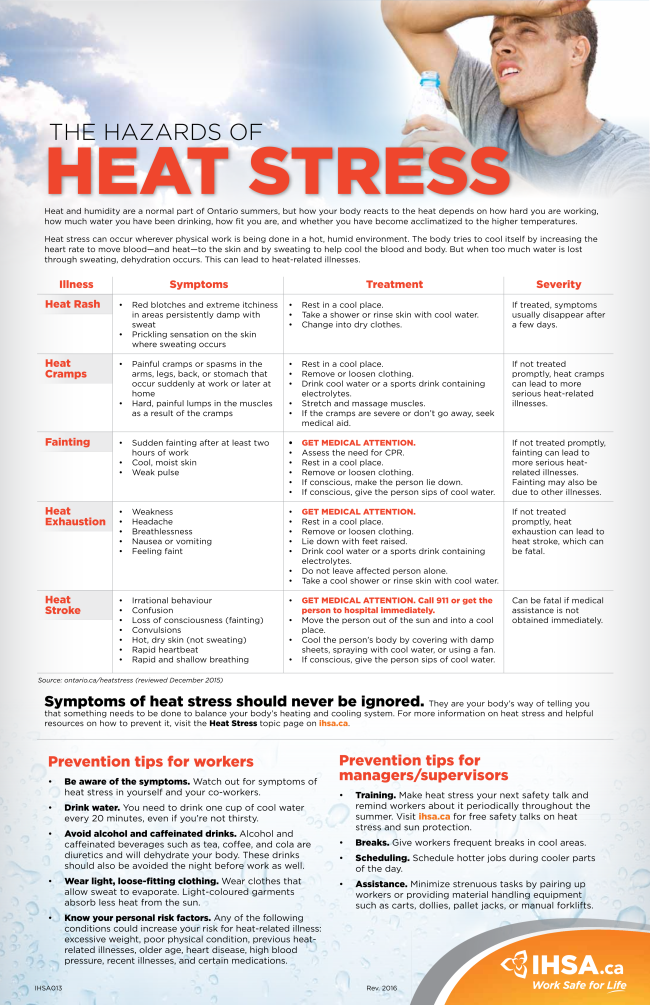
The Hazards of Heat Stress Poster
When working In hot environments, dehydration can lead to heat-related illnesses such as heat rash, heat cramps, heat exhaustion, and heat stroke. This poster provides tips for workers and supervisors on how to prevent these illnesses, symptoms to be aware of, and possible treatment options.
|
|
|
New regulation to streamline reporting requirements
The new regulation incorporates the critical injury definition and streamlines reporting requirements into a single regulation that applies to all workplaces covered under the OHSA.
The amending regulations are:
|
|
IHSA 2-Minute News - June 2021
- IHSA Safety Talk: Traffic Control – Public Roads Part I and II
- IHSA Safety Podcast now available
- Ministry of Transportation launches new online carrier record
- Product spotlight: Refrigeration and Air Conditioning Trade Health and Safety Manual (M074)
- Survey now open: Commercial motor vehicle alcohol and drug policies and use
Click HERE for the full newsletter
|
|
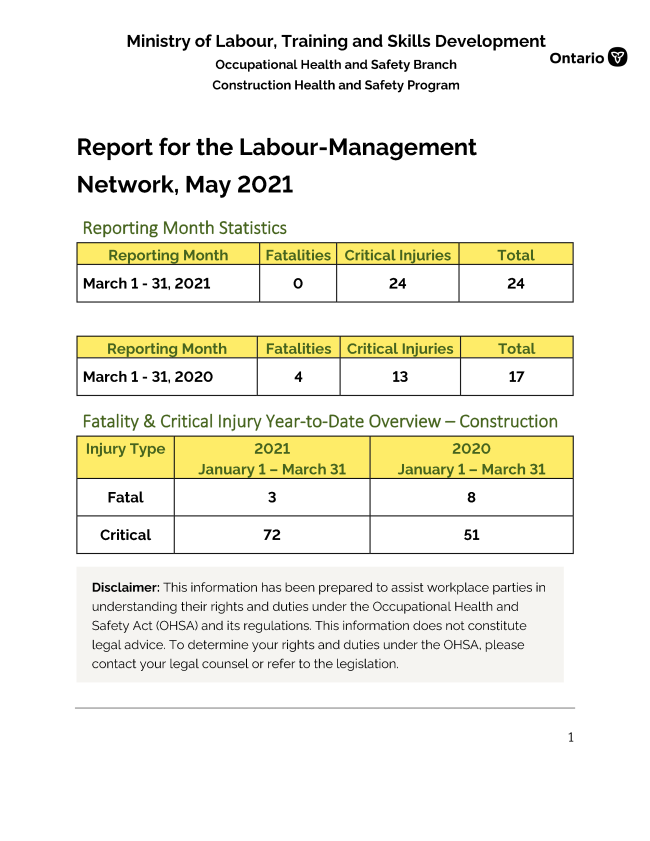
MLTSD Labour-Management Report for:
Click above for full reports (critical injuries, fatalities,
Provincial Coordinator's Comment, incidence details and codes, news)
|
|
What's New is published by The Ministry of Labour, Training and Skills Development.
|
|
(membership discounts)
♦ Live Webinars
♦ Online
|
|
Safety courses created to enhance health and safety awareness and help prevent injures to workers, e.g. Confined Space Safety Awareness, Pipeline Construction Safety Training and more - safety and management courses. Click HERE for available courses.
|
|
|
Helpful H&S Resources and Information |
|
What's New -
May 2021 issue here and June 2021 issue here
Ministry of Labour, Training & Skilled Trades NEWSROOM
|
|
Stay up to date with the latest industry safety news and training by clicking here.
*Occupational Health and Safety Links and QR codes -
|
|
Check out this valuable resource by clicking here.
|
|
Check out this valuable resource by clicking here.
|
|
Click Here for WSIB Newsletter
Compare health and safety statistics for businesses across the province here.
|
|
|
PARTNERS ALIGNED TOGETHER FOR HEALTH AND SAFETY
NCA has made safety awareness a primary initiative for our Association.
|
|
|
|
|
|
|