COMPLIMENTARY WEBINAR TOMORROW! |
|
Fellows, don't miss this career growth opportunity to make connections on a national stage.
This two-hour webinar is a wonderful opportunity for attendees to earn 2 AMA PRA Category 1 Credits™. Learn how Fellow Program Directors operate their fellowship programs and receive practice management advice from experts.
OBJECTIVES:
- Discuss treatment options for a typical patient with complex head/neck pain pathology.
- Review pertinent anatomy of common head and neck blocks and methods of accessing neural targets
- Explore fluoroscopic imaging techniques, views, and potential pitfalls
- Present practice management concepts for starting private practice
- Understand modern solo practice pain points and new opportunities for growth beyond employment models
|
|
Important News!
Most of the final rates remained close to the proposed rates. The physician payment rate changed from a 4.4% cut to 4.5% cut. Consequently, we have identified additional reductions. Here are the sample pages for fee schedules:
|
|
Great news! Representatives Larry Bucshon (R-Ind.) and Ami Bera (D-Calif.), are introducing a bill that would prevent a 4.4 percent Medicare physician fee payment cut from taking effect on January 1, 2023, through the introduction of the Medicare Access and CHIP Reauthorization Act of 2015 and associated payment mechanism.
This is the bill we have been requesting from members of the Congress to introduce for some time for the last few months. ASIPP has supported this and ASIPP members have sent over 5,000 letters to Members of the Congress to date.
Representatives Bucshon and Bera are supported in this endeavor by six additional representatives, Kim Schrier M.D. (WA-08), Michael Burgess, M.D. (TX-26), Earl Blumenauer (OR-03), Brad Wenstrup, D.P.M. (OH-02), Bradley Schneider (IL-10), and Mariannette Miller-Meeks, M.D. (IA-02). Together they sent a Request for Information: Medicare Payment System Reform letter to members of Congress. Click here to view the RFI Letter.
|
|
Authors:
Laxmaiah Manchikanti, MD, Nebojsa Nick Knezvic, MD, PhD, Emilija Knezevic, Salahadin Abdi, MD, PhD, Mahendra Sanapati, MD, Amol Soin, MD, Bradley W. Wargo, DO, Annu Navani, MD, Sairam Atluri, MD, Christopher G. Gharibo, MD, Thomas T. Simopoulos, MD, Radomir Kosanovic, MD, Alaa Abd-Elsayed, MD, Alan D. Kaye, MD, PhD, and Joshua A. Hirsch, MD
Abstract:
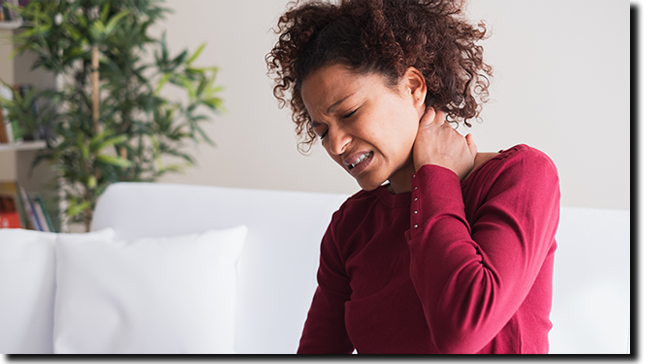
Background: Extensive research into potential sources of neck pain and referred pain into the upper extremities and head has shown that the cervical facet joints can be a potential pain source confirmed by precision, diagnostic blocks.
Study Design: Systematic review and meta-analysis utilizing the Preferred Reporting Items for Systematic Reviews and Meta-Analyses (PRISMA) checklist, quality assessment of the included studies, conventional and single-arm meta-analysis, and best evidence synthesis.
Objective: The objective of this systematic review and meta-analysis is to evaluate the effectiveness of radiofrequency neurotomy as a therapeutic cervical facet joint intervention in managing chronic neck pain.
Methods: Available literature was included. Methodologic quality assessment of studies was performed from 1996 to September 2021. The level of evidence of effectiveness was determined.
Results: Based on the qualitative and quantitative analysis with single-arm meta-analysis and Grading of Recommendations, Assessment, Development and Evaluations (GRADE) system of appraisal, with inclusion of one randomized controlled trial (RCT) of 12 patients in the treatment group and eight positive observational studies with inclusion of 589 patients showing positive outcomes with moderate to high clinical applicability, the evidence is level II in managing neck pain with cervical radiofrequency neurotomy. The evidence for managing cervicogenic headache was level III to IV with qualitative analysis and single-arm meta-analysis and GRADE system of appraisal, with the inclusion of 15 patients in the treatment group in a positive RCT and 134 patients in observational studies. An overwhelming majority of the studies produced multiple lesions.
Limitations: There was a paucity of literature and heterogeneity among the available studies.
Conclusion: This systematic review and meta-analysis shows level II evidence with radiofrequency neurotomy on a long-term basis in managing chronic neck pain with level III to IV evidence in managing cervicogenic headaches.
|
|
Resident/Fellow News and Updates |
|
After reading a paper published in The Annals of the Royal College of Surgeons of England last March, Andrew Thomas, an orthopedic surgeon in the UK, noticed that it was very similar to an article published the previous December in another journal.
In his letter, Thomas pointed out several apparent mistakes in the analyses, and also noted similarities between both papers and a 2017 article published in The Lancet Infectious Diseases , which has been cited 93 times, according to Clarivate's Web of Science.
|
|
Register today for these 2023 Virtual Review Courses and Competency Certification Exams |
|
Millions remain underinsured -- could monthly out-of-pocket cost caps help?
Only 8.3% of Americans were uninsured in 2021, a more-than 37% drop from 2013 (13.4%) -- the year before the marketplace and Medicaid expansion created by the Affordable Care Act began. So why are nearly half of working-age adults (46%) still skipping care or medications? Being uninsured is no longer our biggest problem, being underinsured is -- when you have insurance, but the out-of-pocket costs are still so high that you can't afford to use it.
What Has Been Done to Address This?
President Biden and his administration have made significant strides in improving the affordability of health insurance and healthcare for millions of Americans in his first 2 years. The American Rescue Plan Act of 2021 increased premium subsidies for buying health insurance through HealthCare.gov and state-based marketplaces through the end of 2022, which the Inflation Reduction Act (IRA) passed earlier this year extended until the end of 2025. The IRA also included a cap on insulin costs at $35 per month for those on Medicare starting next year, an annual cap of $2,000 out-of-pocket on all prescriptions starting in 2025, and introduced a framework for the program to negotiate drug prices -- opposed by the pharmaceutical industry, but popular among Americans.
|
|
THE LAST PART I EXAM THIS YEAR IS
Saturday, December 17
|
|
An undue focus on weight can lead to patient distrust and delayed care
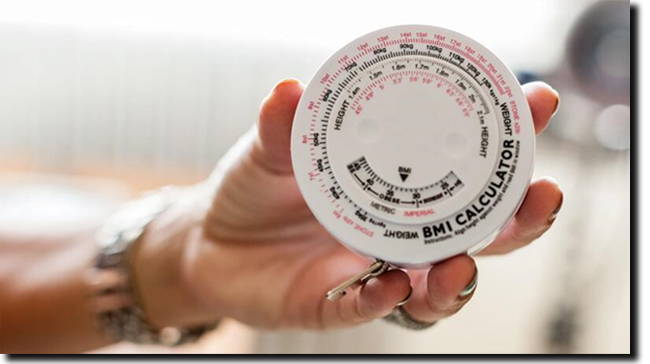
Imagine a sales rep comes to your clinic office to pitch a new gadget to gauge your patients' health. They tell you that it's not nearly as good as the measures you already have. It performs even worse with older people and athletes. It will drive large numbers of patients away, while it worsens symptoms in others. Then the sales rep adds sheepishly, at least it's cheap and easy to use.
Would you buy it? Of course not, who in their right mind would?
Except, that is, if that "new gadget" is a body mass index (BMI) calculator. Then buying it is what most of us in the health professions have already done, usually without questioning. And the consequences are dangerous.
|
|
Submit your abstracts by December 31, 2022
Questions should be directed to Savannah Gold at
|
|
"Generous" noninferiority threshold met, but could be unacceptable to many, says editorialist
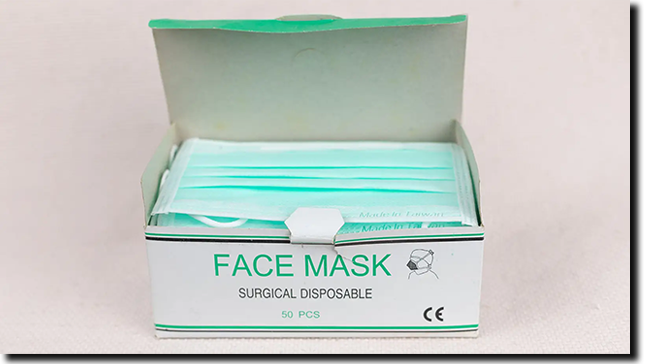
In a randomized trial, medical masks for preventing infection in healthcare workers interacting with COVID-19 patients fell within predefined margins of noninferiority versus N95 respirators, but researchers warned against drawing firm conclusions due to a host of limitations.
The study involved over 1,000 healthcare workers in four nations, and spanned multiple COVID-19 waves during periods before and well after the rollout of vaccines, ultimately showing a similar 10.5% rate of infection for healthcare workers assigned to medical masks for 10 weeks and 9.3% for those assigned to N95s (HR 1.14, 95% CI 0.77-1.69), reported researchers led by Mark Loeb, MD, of McMaster University in Hamilton, Ontario.
"Although the upper limit of the CIs of the pooled estimate for medical masks when compared with N95 respirators for preventing RT-PCR-confirmed COVID-19 was within the noninferiority margin of 2, this margin was wide, and firm conclusions about noninferiority may not be applicable given the between-country heterogeneity," the group wrote in Annals of Internal Medicine. "The observed results are consistent with a range of protection, from a 23% reduction in the HR with medical masks to a 69% risk increase."
|
|
Please plan to join us at the 2023 ASIPP Annual Meeting
March 16-18 National Harbor, Maryland
|
|
For meeting or exhibitor/sponsor information:
|
|
Toledo partners with RIP Medical Debt for creative use of American Rescue Plan Act funds
Toledo, Ohio has given its residents a new and unusual holiday gift: the promise of medical debt relief.
In early November, its city council voted to use $800,000 of American Rescue Plan Act funding to wipe out the medical debt of residents in need, with the help of an organization called RIP Medical Debt. Lucas County, where Toledo is the county seat, even said it would match the amount for a total of $1.6 million toward eliminating medical debt.
"I think this is going to help a lot of people with putting food back on the table, paying the rent, paying your utilities, help them go back to the doctor," Michele Grim, the city councilwoman and state representative-elect who led the push for the program, told MedPage Today.
|
|
- ASIPP Members Only Site Information - |
|
-
To log in for the first time you will need to click “forgot password” at the bottom of the login window.
- Check your email and then log in as directed.
-
If you have problems logging into your account, click here.
|
|
Marijuana use and heart-attack risk were correlated in a large human study, Stanford scientists and their collaborators found. A molecule in soybeans may counteract these effects.
People who use marijuana have an increased risk of heart disease and heart attack, according to a large study led by researchers at Stanford Medicine.
The study also showed that the psychoactive component of the drug, known as THC, causes inflammation in endothelial cells that line the interior of blood vessels, as well as atherosclerosis in laboratory mice.
The inflammation and atherosclerosis can be blocked by a small molecule called genistein that occurs naturally in soy and fava beans, the researchers found. Because genistein has limited brain penetration, it doesn’t inhibit THC’s ability to stimulate appetite, dull pain and tamp down nausea — characteristics vital to medicinal marijuana users.
|
|
Pain Medicine Case Reports (PMCR) and Editor-in-Chief Alaa Abd-Elsayed, MD, PhD would like to invite you to submit case reports and case series to the PMCR journal. Your article will be published free of charge.
Open access journals are freely available online for immediate worldwide open access to the full text of published articles. There is no subscription fee for open access journals. Open access journals are no different from traditional subscription-based journals: they undergo the same peer-review and quality control as any other scholarly journal.
Interested in becoming a member of the PMCR Editorial Board?
Editorial board members are asked to review 2-6 manuscripts per year. Please submit your most up-to-date CV to sgold@asipp.org for consideration.
For more information or to submit your articles, click here.
|
|
| CASE REPORT |
Jonathan Liang, DO and Michelle Poliak-Tunis, MD
Abstract
BACKGROUND: Spinal cord stimulation (SCS) is useful for treating several intractable pain conditions, such as failed back surgery syndrome (FBSS) or complex regional pain syndrome (CRPS). However, it is unclear how one stimulator can be used to treat multiple conditions in succession.
CASE REPORT: A 55-year-old man with a history of SCS placement for FBSS following 3 previous lumbar discectomies presented to an outpatient pain clinic with hypersensitivity, discoloration, and edema of the left foot following a fourth lumbar discectomy. This was consistent with CRPS type II of the left foot. The patient’s stimulator settings were then successfully adjusted to immediately provide 30% to 40% of pain relief, resolution of discoloration and edema, and improved walking ability. Three months later, he noted 90% resolution of left foot pain and increased ankle active range of motion.
CONCLUSION: A spinal cord stimulator was successfully used to treat both FBSS and CRPS in succession.
KEY WORDS: Case report, complex regional pain syndrome, failed back surgery syndrome, spinal cord stimulator
|
|
| SCOPING REVIEW |
Nivetha Srinivasan, BS, Benjamin Zhou, BS, and Edward Park, MD
Abstract
Background: Amputees commonly feel an intermittent tingling, piercing, or burning sensation in the region of the missing portion of the amputated limb, a phenomenon known as phantom limb pain. Current treatment modalities include medications, mirror therapy, transcutaneous electrical nerve stimulation, and more recently neuromodulation through spinal cord stimulation and dorsal root ganglion (DRG) stimulation.
Objectives: The aim of this review is to examine the existing literature to identify and analyze evidence for the use of DRG stimulation as a pain relief modality for phantom limb pain.
Study design: Scoping Review.
Methods: A literature search was conducted using relevant search terms. PubMed, Web of Science, Cochrane, and CINAHL databases were used, and reference lists of selected articles were searched for additional relevant literature.
Results: Most studies analyzed had low to moderate bias in all categories assessed. There are case reports and case series indicating that DRG stimulation could be an effective treatment method for phantom limb pain. Fifteen of 25 patients across 5 studies achieved satisfactory levels of pain relief and significant improvements were reported by all patients evaluated for quality of life. Patient selection and proper targeting of stimulation are important factors in limiting large variability in results while determining effectiveness of this pain relief modality.
Limitations: The studies included in this scoping review are limited by the number of cases and by the length of follow-up. Also, there are no randomized control trials or observational studies with large sample sizes that allow for adequate power. Many of these studies do not have a standardized methodology of quantifying pain relief from DRG stimulation.
Conclusions: The cumulative evidence at present suggests DRG stimulation may be a potentially effective treatment for phantom limb pain, however, a powered prospective randomized controlled trial is needed to assess the long-term benefits of this treatment modality. Given the increasing population of military veterans who are living with limb amputations, finding a modality for adequate long-term pain control is crucial.
Keywords: amputation pain; dorsal root ganglion stimulation; neuromodulation; neuropathic pain; phantom limb pain; phantom limb sensation; scoping review; Chronic pain.
|
|
| RANDOMIZED TRIAL |
Shereen Mamdouh Kamal, MD, Sahar Abdel-Baky Mohamed, MD, Khaled Mohamed Fares, MD, Rania Mohamed Abdelemam, MD, Heba Mohammed Elmasry, and Samar Mansour
Abstract
Background: An impaired immune system in the perioperative period has important clinical implications in patients with cancer. Despite the immunosuppressive properties of opioid therapy, it is still commonly utilized in the intrathecal or epidural space for the treatment of postoperative pain. Also, intrathecal dexmedetomidine has extended analgesic efficacy in postoperative pain; it can significantly affect immune function in perioperative patients.
Objective: To investigate the effect of intrathecal morphine, dexmedetomidine, or both in combination with bupivacaine on cellular immunity and cytokine production in cancer surgical patients.
Study design: A prospective randomized clinical study.
Setting: South Egypt Cancer Institute, Assiut University.
Methods: Ninety patients were randomly assigned to receive intrathecal morphine 0.5 mg (Group M, n = 30), dexmedetomidine 0.5 µg/kg (Group D, n = 30) or morphine 0.5 mg with dexmedetomidine 0.5 µg/kg (Group MD n = 30); 2 mL bupivacaine 0.5% was added to injected drugs in all groups. Blood samples were collected preoperative (T0), immediate postoperative (T1), 4 hours postoperative (T2), and 24 hours postoperative (T3) for measurement of CD3, CD4, CD4/CD8 and CD16+56(NK), interleukin(IL)-1beta (IL-1beta), IL-6, IL-10 and tumor necrosis factor alpha (TNF-alpha).
Results: A significant reduction in cellular immunity (CD3, CD4, CD8, CD4/CD8, CD 16+56) was noticed in the 24-hour postoperative period in all 3 studied groups, with a marked reduction in Group M in comparison to Group MD and Group D. Regarding inflammatory mediators, IL-10 and IL-1beta showed significant reduction in Group M in the first 24-hour postoperative period in comparison to Group MD and Group D, while IL-6 was significantly reduced in Group MD and Group D in comparison to Group M in the same period. TNF-alpha was significantly increased postoperative at T1 and T2 in the 3 studied groups, then at T3 it decreased without a statistically significant difference with the preoperative level.
Limitations: Our study has some limitations, such as the short period of follow-up and lack of postoperative clinical follow-up of patients to discover the association between immunity and patient outcomes.
Conclusion: Intrathecal dexmedetomidine has the least immunosuppressive effect than morphine and morphine-dexmedetomidine, in combination with bupivacaine.
Keywords: dexmedetomidine; immunity; intrathecal; morphine; postoperative; Cancer surgery.
|
|
ASIPP is now in collaboration with Curi Medical Liability Program
Since this malpractice insurance program officially launched in November 2018, ASIPP has signed up hundreds of providers with an average savings of 30%. This is professional liability insurance tailored to our specialty and will stand up for us and defend our practices.
Curi is a full-service advisory firm that serves physicians and their practices. Their valued advice is grounded in your priorities and elevated in your outcomes. They are driven by a deep understanding of your specific circumstances in medicine, business, and life. To read a few important points to keep in mind about the program, including discounts, administrative defense, cyber coverage, aggressive claims handling, and complimentary risk management CME activities, visit our website.
|
|
ASIPP® has formed a partnership with Henry Schein and PedsPal, a national GPO that has a successful history of negotiating better prices on medical supplies and creating value-added services for independent physicians. Working with MedAssets, PedsPal provides excellent pricing on products like contrast media that alleviate some of the financial pressures you experience today.
|
|
ASIPP® is now offering our members the benefit of a unique revenue cycle management/ billing service.
We have received a tremendous amount of interest in the ASIPP® billing and coding program.
Click here to learn more about the negotiated rate for practices and more!
|
|
|
up-to-date news related to you, your practice, and your patients!
|
|
|
|
|
|
|