|
From our refuge managers:
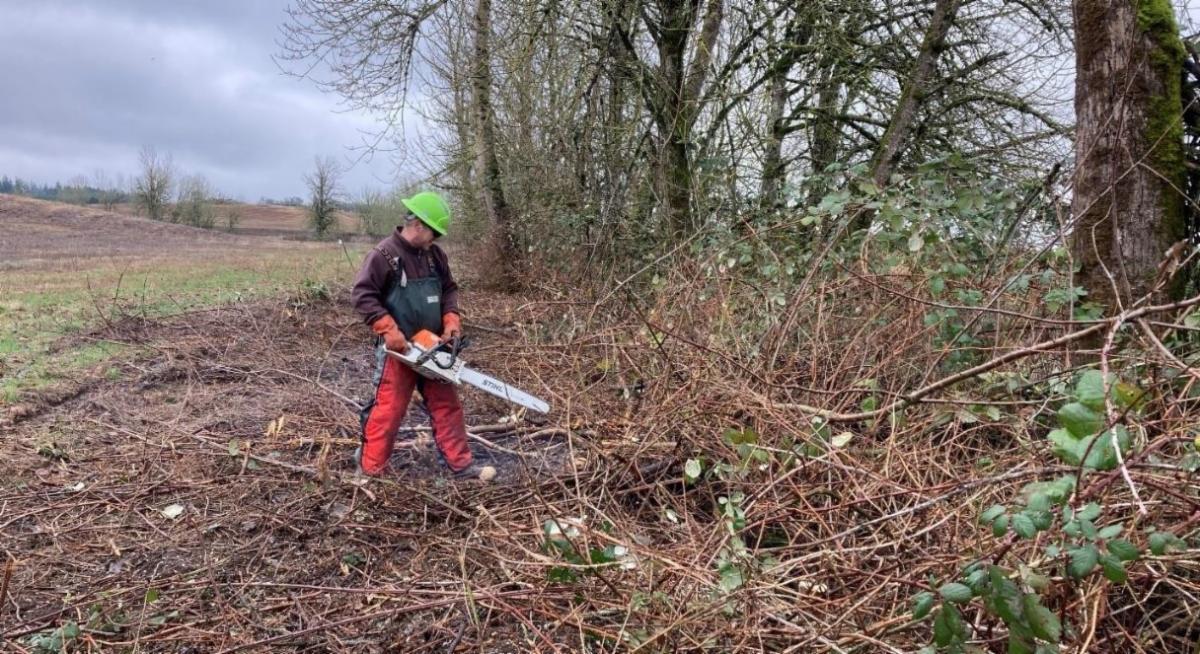
Spring Creek is a seasonal intermittent stream that drains the south Salem hills and flows through the Ankeny Hill Nature Center campus before its confluence with Peregrine Marsh. At some point prior to refuge acquisition in 1965 the stream was cleared and straightened. Today a few large cottonwoods and Oregon ash exist, but its riparian plant community is a fraction of what existed historically. Over the last few years refuge staff have controlled extensive blackberry that existed along the stream banks, removed non-native trees, and placed large wood within the stream channel.
One of the final large restoration components was planting native riparian species to begin the establishment of a gallery forest along the creek. The primary goal is native habitat restoration that improves water quality, provides shading and decreased temperatures, provides organic inputs and needed nutrients to the aquatic system, and to encourage natural stream development beyond its simplified and channelized state.
This winter, with the help of volunteer coordinators Pat and Bobbie Allaire, many other Ankeny Hill Nature Center (AHNC) volunteers, and refuge staff Shane Lyons, Aidan Frye and Jeremy DePiero, a large restoration effort was completed. First, residual blackberry that had been treated in fall and other undesirable woody vegetation was mowed and cleared. More medium and fine woody debris was added to the large debris clusters in the stream. Then, the real herculean effort of riparian planting began. Refuge staff collected thousands of native cuttings of black cottonwood, several species of willow, red osier dogwood, and Douglas spirea. Additionally, an AHNC volunteer donated dozens of potted trees and shrubs.
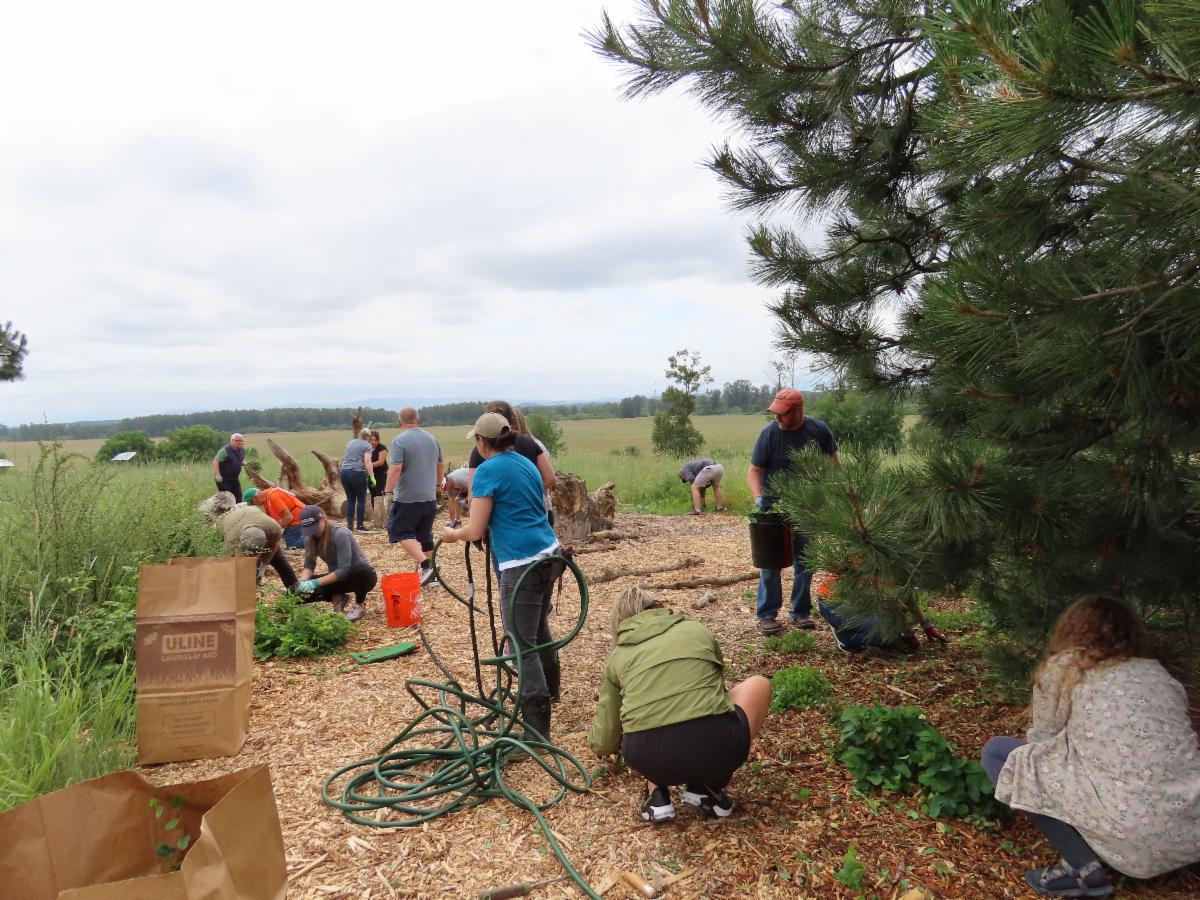
Over the course of two Saturday volunteer events in January and February and several days of staff time, approximately 4,000-5,000 trees and shrubs were planted along the entire reach and both sides of Spring Creek. If you see colored pin flags down by the creek they are marking the planting rows. Refuge staff will mow and control herbaceous vegetation around the new plantings for a few years before filling in between the rows and making everything look natural. Eventually, beavers will move in and all will be well with Mother Nature again.
|