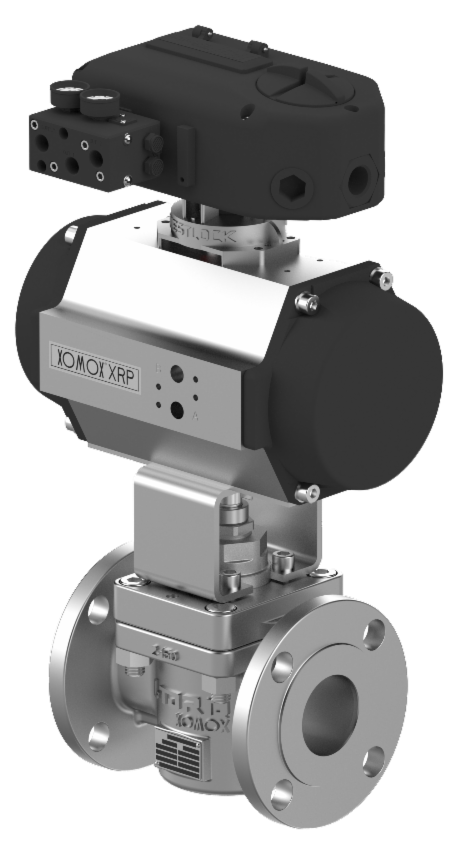
L-TORQ ENABLES COMPACT AUTOMATION IN OIL DESAND APPLICATIONS

How low-torque valve technology can simplify automation and maintenance in space-constrained desanding systems


Oil desanding plays an important role in maintaining separator performance in oil production. As sand and other solids accumulate inside separator vessels, periodic cleaning cycles are required to mobilize and remove these deposits. Automated valves help control this process, but limited installation space, demanding service conditions and maintenance accessibility can make valve selection particularly challenging

WHAT IS OIL DESANDING?

Produced fluids can contain a combination of oil, water and sand. During processing, separator vessels such as free-water knockouts and treaters separate these phases, while heavier solids settle and accumulate at the bottom of the vessel.


During a desand cleaning cycle, flush water mobilizes the accumulated solids, creating a sand-and-water slurry that can be discharged and transferred to downstream solids handling.

Why desanding matters


  • Helps maintain separator efficiency
  • Protects critical equipment
  • Supports production capacity
  • Improves overall facility reliability
 

THE VALVE CHALLENGE

AUTOMATING A DEMANDING PROCESS IN LIMITED SPACE


Oil desand systems can require numerous valves to manage isolation, flushing and slurry discharge. Converting manually operated valves to automated packages can significantly reduce operator intervention, but it may introduce another challenge: space.

In the underlying application, conventional automated sleeved plug valve packages were too large for the available space between existing piping and process equipment. Accommodating them would have required significant piping modifications. At the same time, conventional valves required removal from the line for service, adding maintenance effort at the remote facility.

KEY APPLICATIONS CHALLENGES


LIMITED INSTALLATION SPACE

Large actuator packages may conflict with existing piping and equipment.


HIGH AUTOMATION DEMAND

Multiple valves must be operated during the desand cleaning sequence.


MAINTENANCE ACCESSIBILITY

Removing valves from the line for service can increase maintenance time and logistical effort.


DEMANDING SERVICE

Valve equipment has to perform reliably within a process handling oil, water and entrained solids.


THE XOMOX SOLUTION

Lower Operating Torque

Reduced operating torque enables the use of a smaller actuation package, helping automated valves fit into installations where conventional automated valve packages may be too large. In the reference application, this allowed automation without redesigning the existing piping


In-Line Repairability

L-TORQ's serviceable design allows maintenance activities to be performed with the valve remaining in the pipeline, reducing the need to remove and transport complete valves for routine service.


Automation Ready

The compact valve and actuator combination enables previously manual valve operations to be automated, reducing the physical effort associated with repeatedly operating multiple valves during desand cycles.

RESULTS ACHIEVED

Operational Impact


  • Compact automation without piping modifications
  • Reduced operator effort through automated valve operation
  • Simplified maintenance through in-line repairability
  • Reduced maintenance and downtime potential at the remote facility.

Key Takeaway


In oil desand applications, successful valve automation is not only about selecting an actuator. Operating torque, available installation space, maintenance accessibility and the demands of solids-containing service all need to be considered. L-TORQ by XOMOX® addresses these challenges with a low-torque, compact and service-friendly valve platform.


FACING SIMILAR CHALLENGES?

Operating valves in oil desanding, solids handling or other space-constrained automated applications?

Talk to a XOMOX application specialist to explore how L-TORQ by XOMOX® can help reduce actuation requirements, simplify maintenance and enable compact automation in demanding process applications.

 
LinkedIn  Web  Email