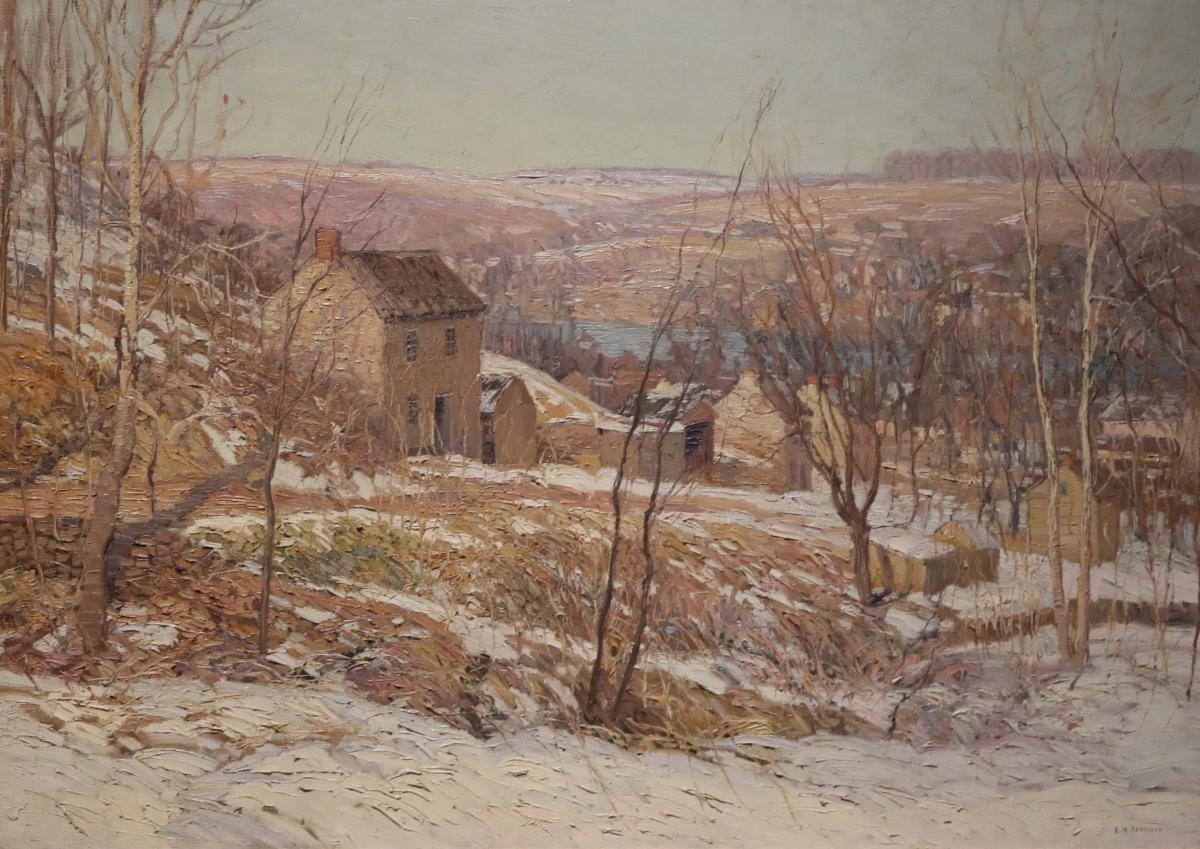
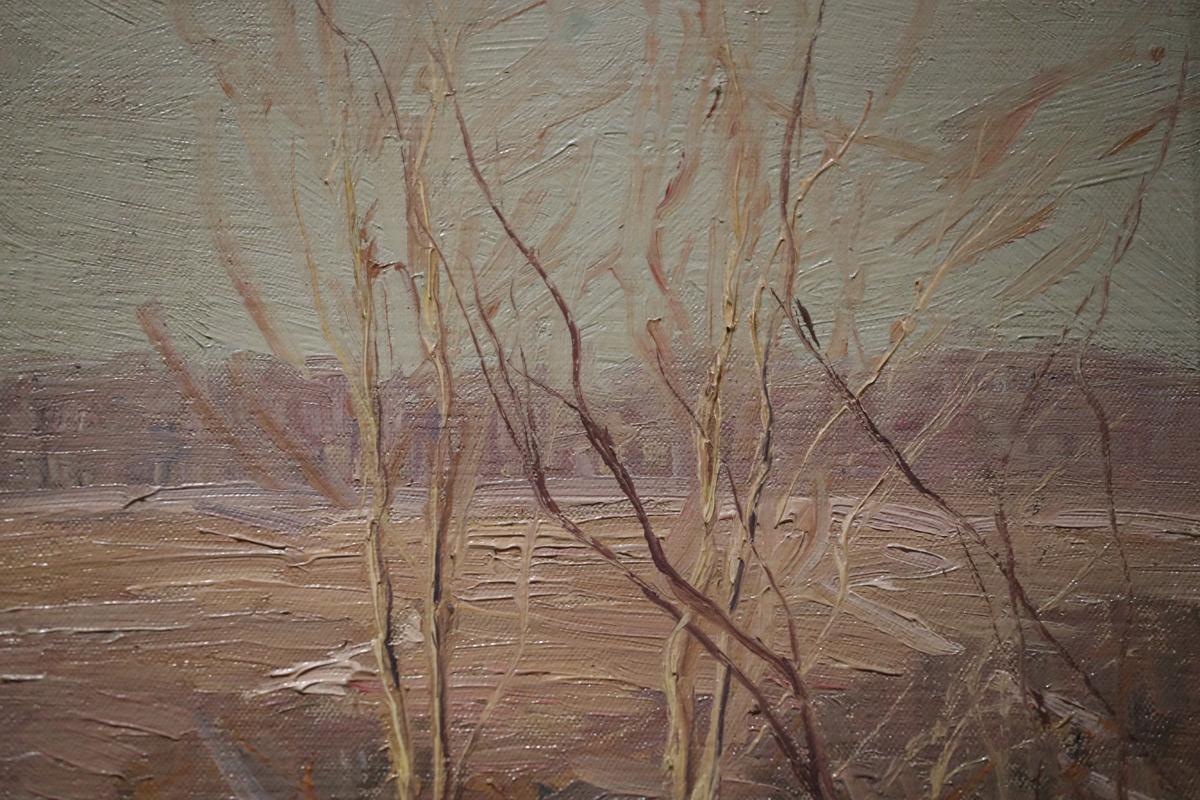
Redfield, who was a practitioner of
plein air
(out-of-doors) painting, traveled to France in 1889, following graduation from the Pennsylvania Academy of the Fine Arts, with classmate Robert Henri.
While in France, he studied at the Académie Julian with Adolfe William Bouguereau and at the École des Beaux-Arts with the intention of pursuing a career as a portraitist. Redfield noted that his greatest European influences were Claude Monet, Camille Pissarro, and Frits Thaulow, a Norwegian Impressionist renowned for his snowy landscapes. By 1891 Redfield was staying at the Hotel Deligant in Brolles, near Fontainebleau with a group of Americans. It was there that he painted
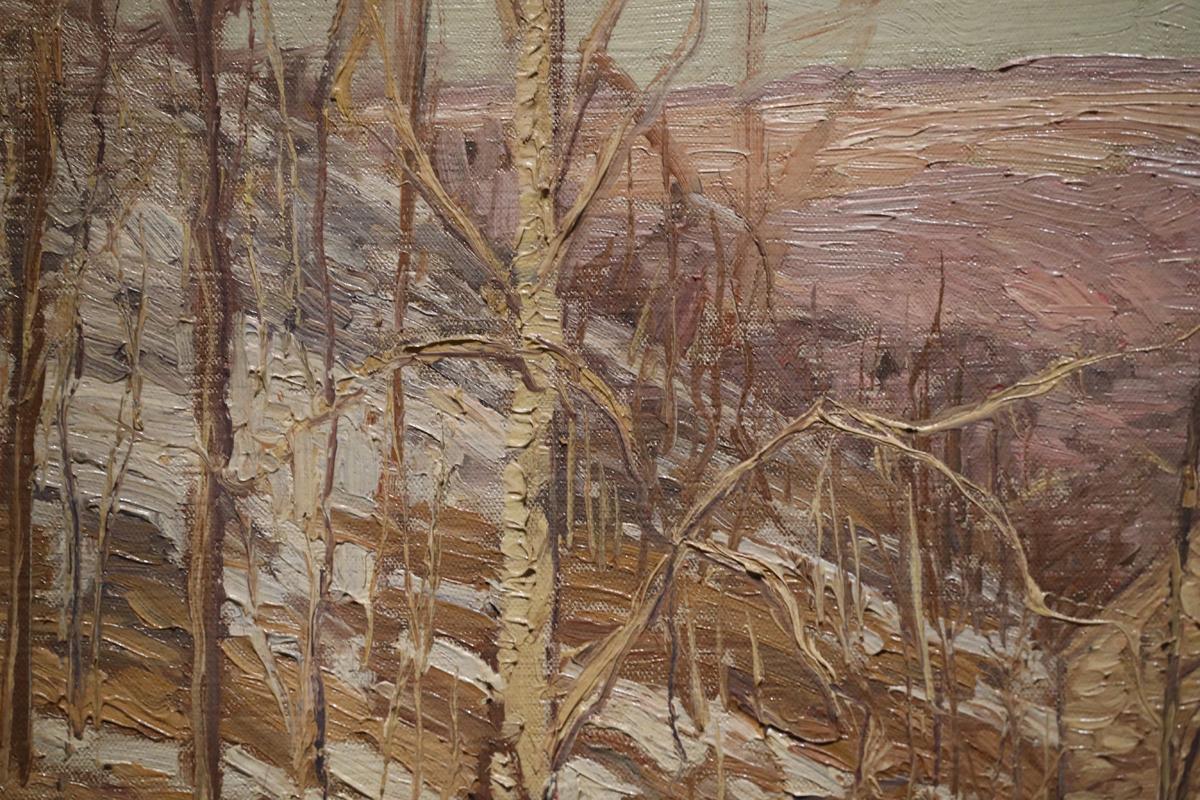
Road-Forest of Fontainebleau
, which was accepted by the Paris Salon.
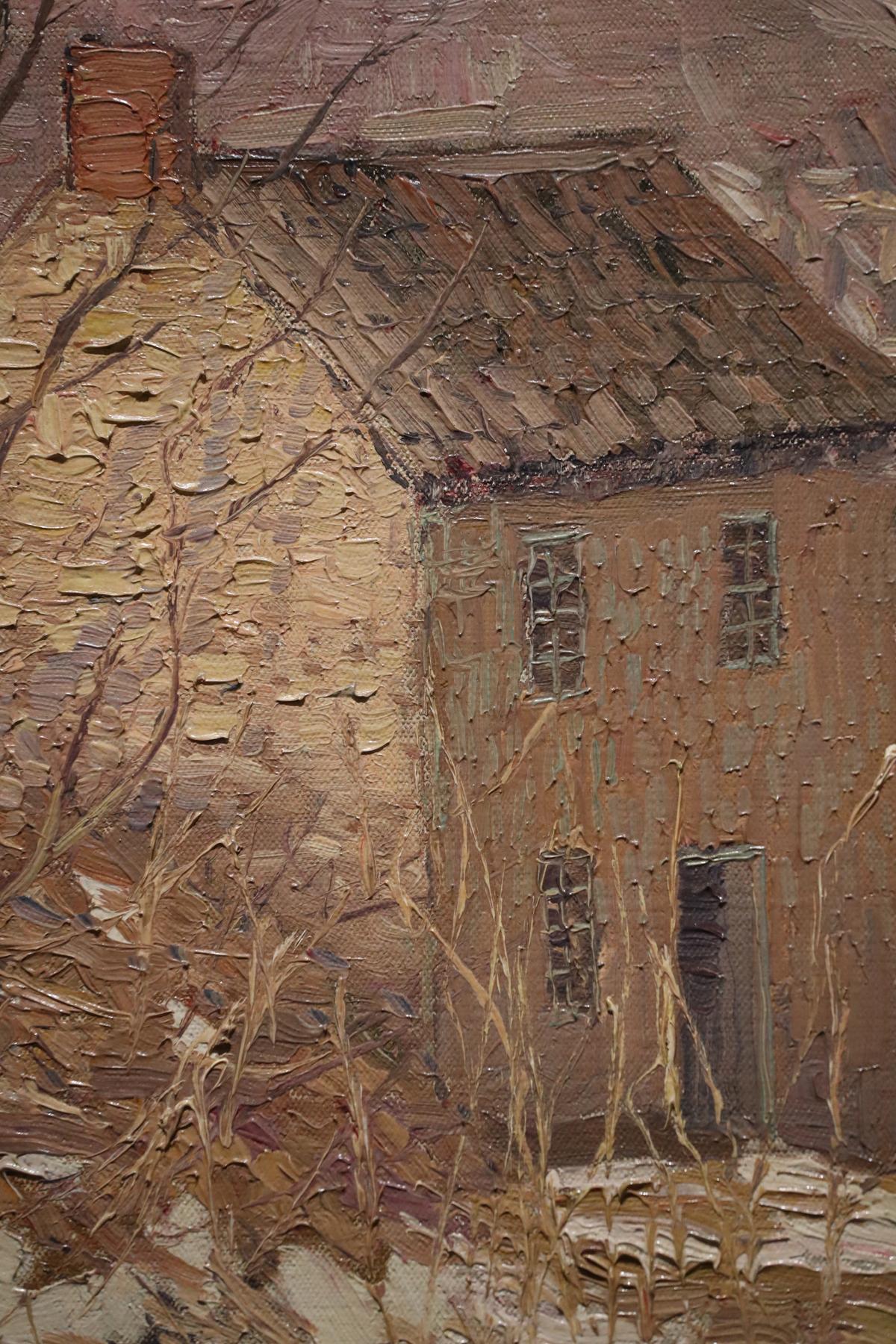
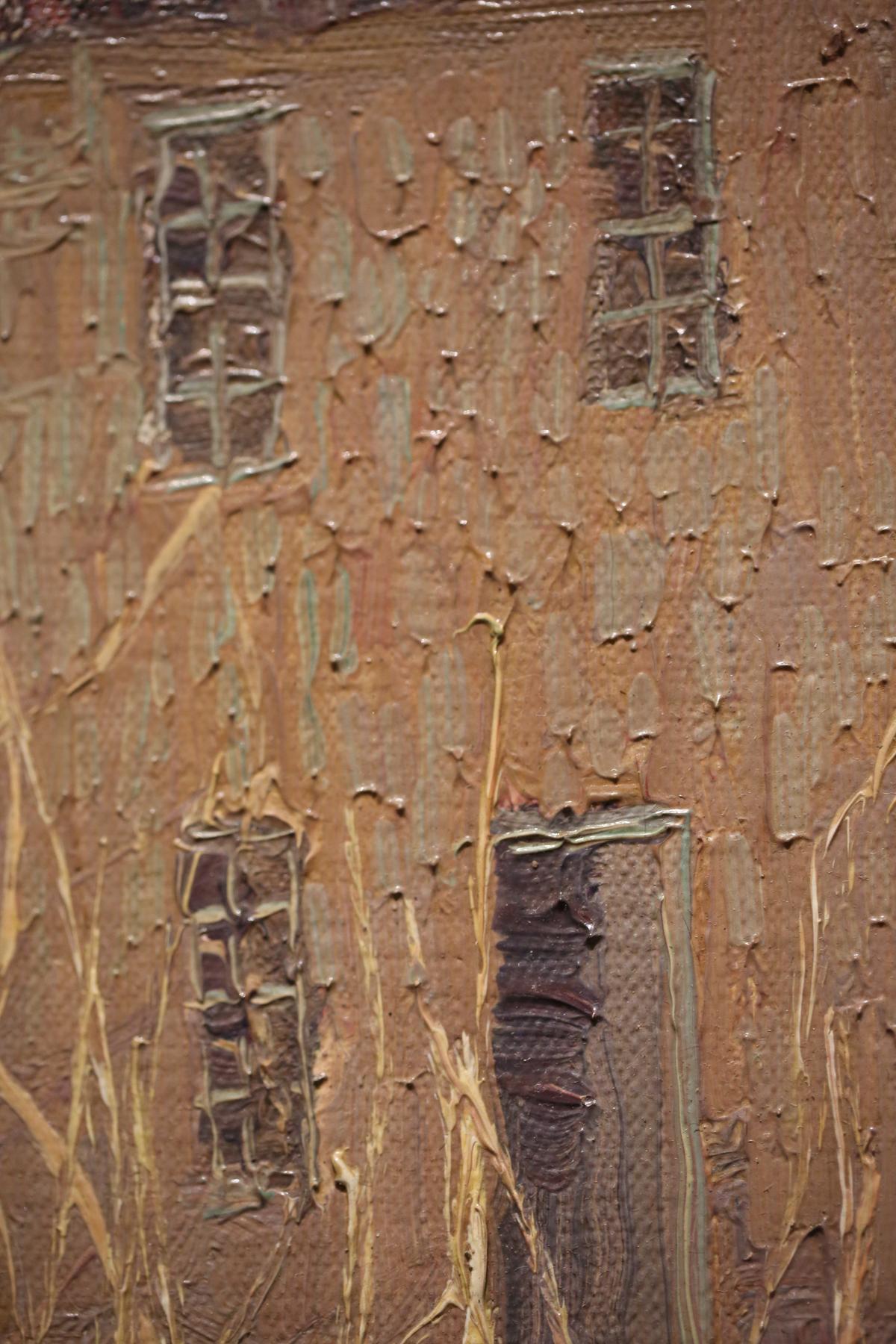
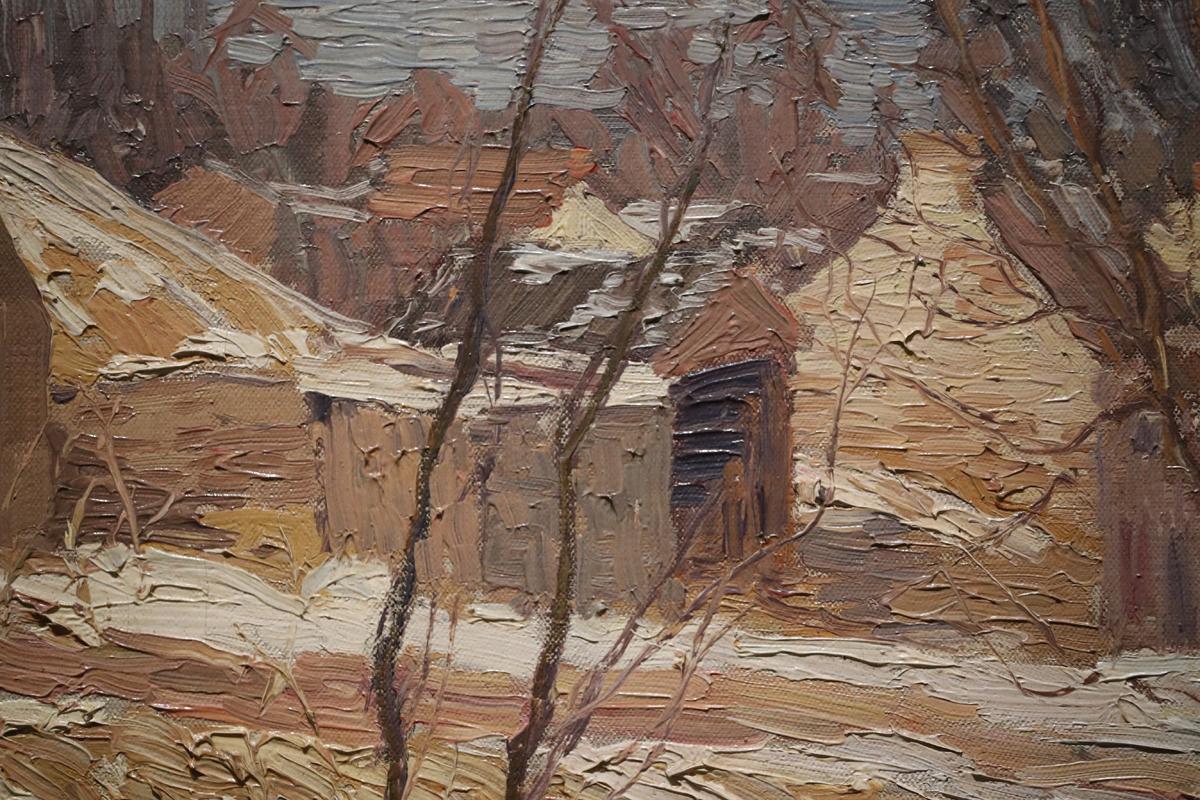
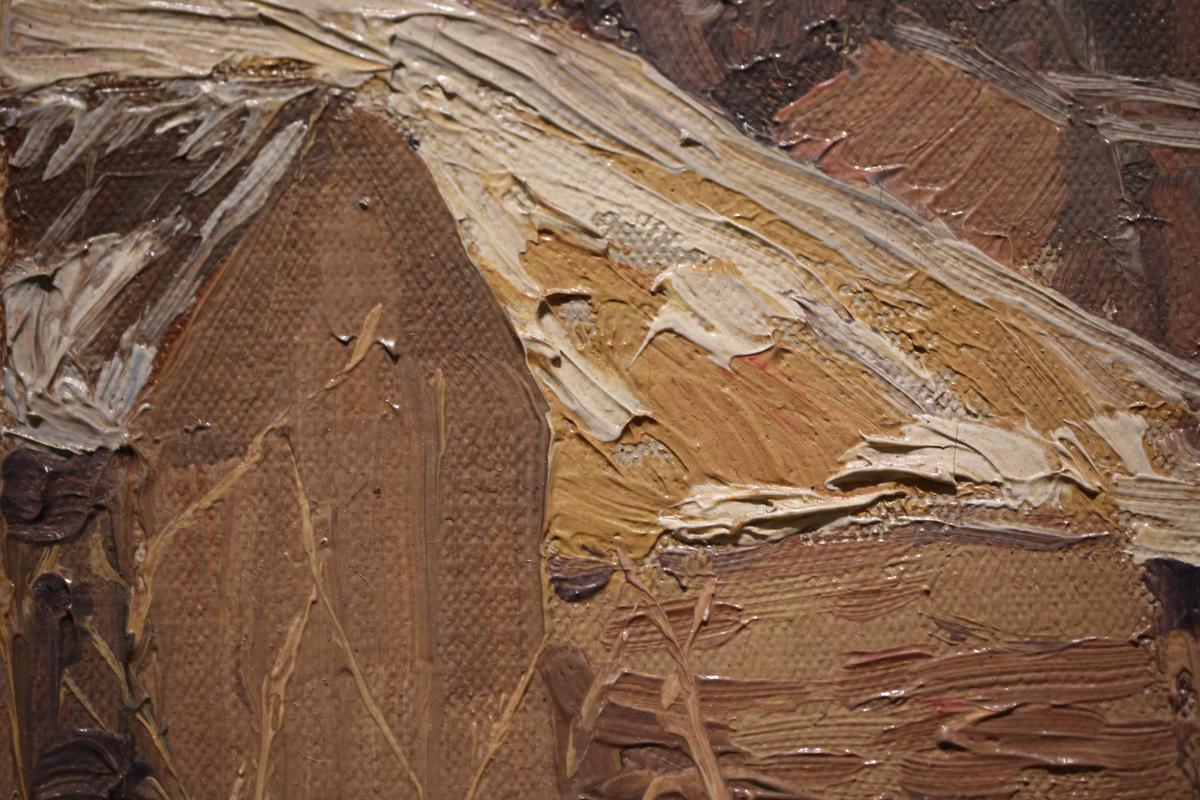
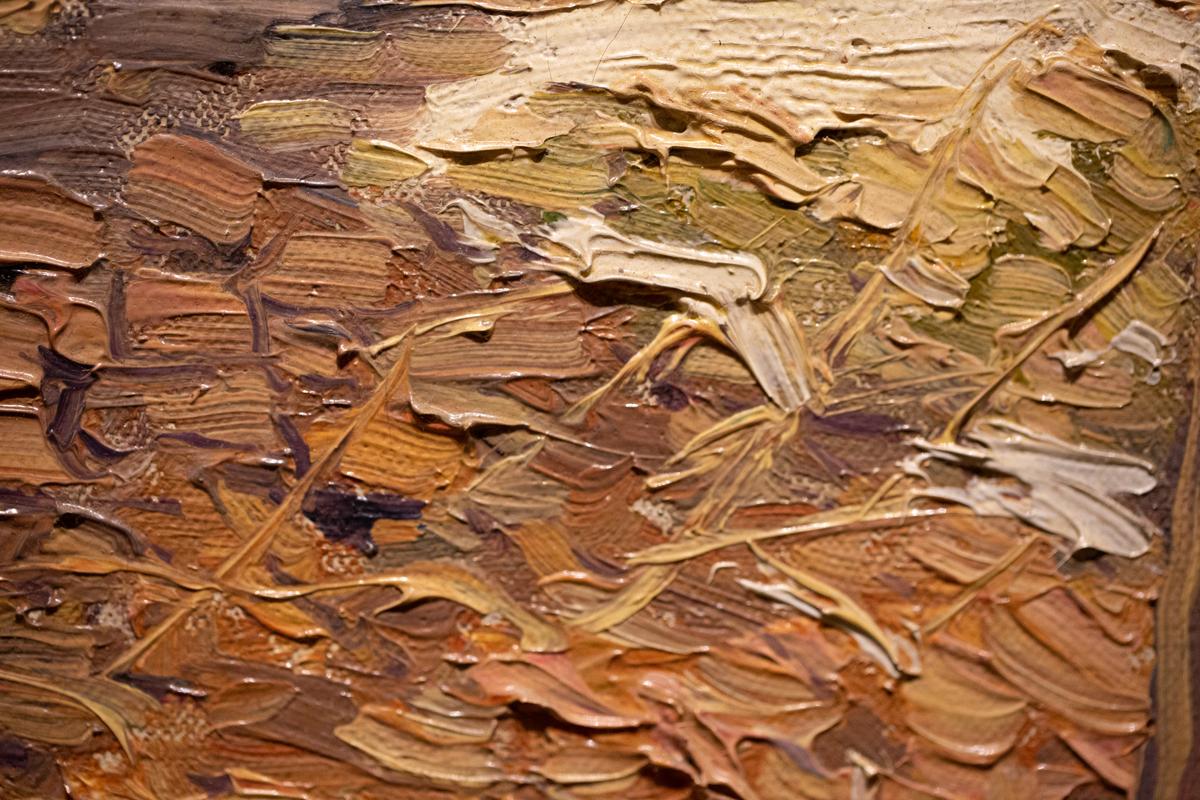
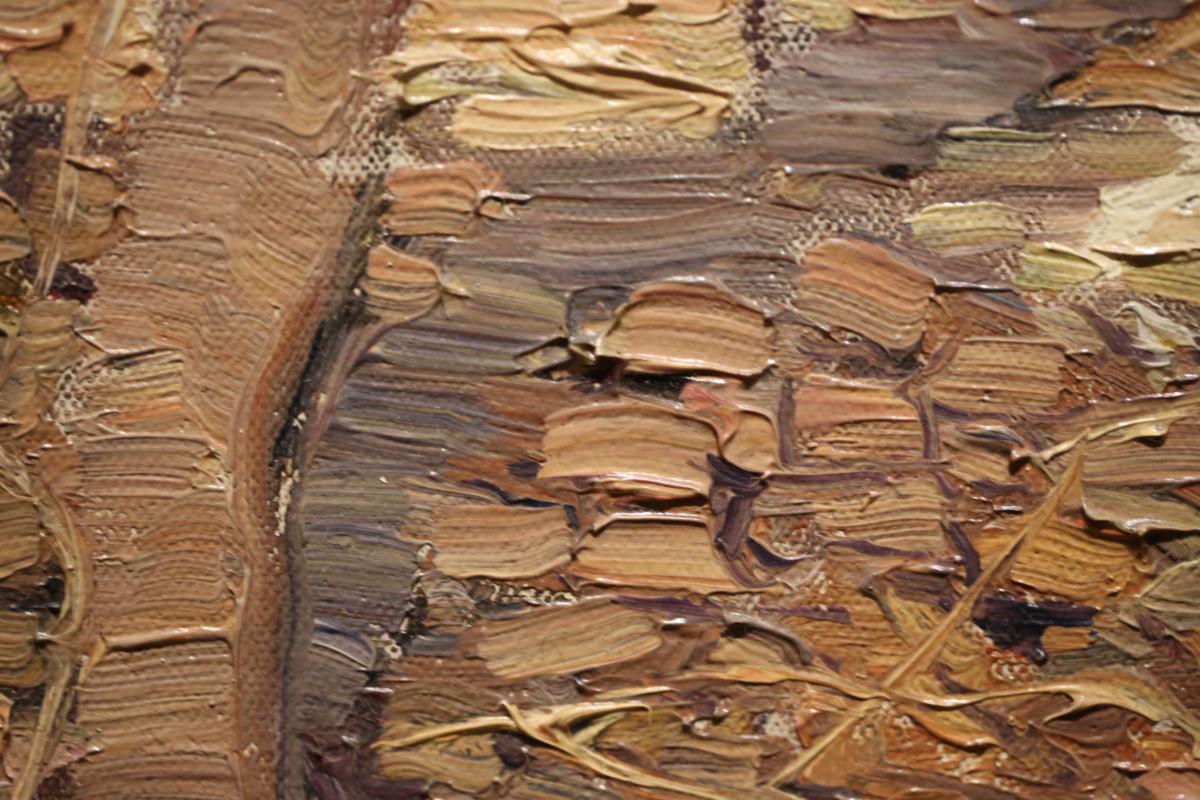
The lush, rich layers of paint on the surface of this canvas reveal Redfield’s unique brand of Impressionism. He used long brushstrokes, thickly applied. The artist advocated for painting outdoors, even in adverse weather conditions in the deepest cold of winter. He sometimes finished his canvases in “one go”
en plein air
, sometimes strapping his paintings to trees on especially blustery days, knee deep in snow.