Providers Can Earn Up to $2,000 for Adopting Technology Improvements | |
CalOptima Health is excited to share a one-time opportunity for our contracted providers to earn incentives for adopting digital technology improvements before the end of the year. Your office could earn the following incentives:
1. CalOptima Health Provider Portal Adoption – $1,000 Incentive
This incentive will be awarded at the Tax Identification Number (TIN) level when the first individual from a practice successfully registers for the CalOptima Health Provider Portal. Portal access enables providers to review member eligibility, view claims and referral status, and utilize additional resources essential to daily practice management.
2. Electronic Fund Transfer (EFT) Enrollment – $1,000 Incentive
This incentive is available for practices that transition from paper checks to EFT for both claims and incentive payments. EFT enrollment ensures secure, efficient reimbursement processes and reduces administrative burden.
Each provider organization may earn up to $2,000 per TIN by completing both the Provider Portal registration and EFT conversion.
Eligibility Requirements
To qualify for these incentives, providers must meet the following criteria:
- Their organization must be contracted as a CalOptima Health primary care provider (PCP) at the time of incentive payment.
- Their organization must be in good standing with CalOptima Health.
- A minimum of five CalOptima Health members must be assigned to the practice at the TIN level.
Digital technology adoption is eligible at any time between January 1 and December 31, 2026. CalOptima Health will conduct a comprehensive review of all qualifying portal registrations and EFT conversions completed during this period. Incentive payments will be distributed during the first quarter of 2027.
How to Register
Provider Portal: To register as a new user for the CalOptima Health Provider Portal, go to providers.caloptima.org and select Register As New User. For any questions regarding the Provider Portal registration process, please contact the Provider Relations team at 714-246-8600 or email providerservicesinbox@caloptima.org with your name, TIN and national provider identifier (NPI).
Electronic Claims Payments: To register for an EFT account through InstaMed Healthcare Payments, please click here. For any questions regarding EFT enrollment, please contact the InstaMed enrollment team at 866-467-8263 or email connect@instamed.com.
Electronic Incentive Payments: To register for an EFT account for incentive payments:
-
Complete this EFT Authorization Form. Ensure it is signed by an authorized officer of your organization, such as a chief executive officer, chief financial officer, chief operating officer, vice president or controller.
- Submit a bank letter from your financial institution dated within the last 12 months. This letter should verify that your account is active.
-
Submit the EFT Authorization Form and bank letter to ach.vendors@caloptima.org. Please include “Digital Incentive” in the email subject line.
Please note that it typically takes seven to 10 business days for the request to be processed. During this time, your organization will continue to receive physical checks. You will receive a confirmation email once everything is complete.
If you have any questions about these incentives, please email our Quality Initiatives team at QI_Initiatives@caloptima.org, or contact the Provider Relations team at 714-246-8600 or providerservicesinbox@caloptima.org.
Thank you for your partnership and for your continued commitment to serving CalOptima Health members.
| Use These Resources to Inform Your Patients About CalOptima Health Covered | |
Open enrollment for CalOptima Health Covered, our first product on the Covered California marketplace, launched on November 1, 2026, and will run through January 31, 2027.
We encourage our provider partners to help raise awareness of our CalOptima Health Covered plans by sharing educational materials with your patients and communities. English and Spanish versions of the CalOptima Health Covered Brochure and Plans at a Glance can be downloaded using the links below:
Please consider:
- Printing copies of these materials and making them available in waiting rooms, exam rooms and other patient-facing areas.
- Sharing the materials with patients who may be losing Medi-Cal eligibility or seeking affordable coverage options through Covered California.
- Posting links to the materials on your organization’s website, patient portal, social media channels and other communication platforms.
- Including the materials in newsletters, email communications and community outreach activities.
By sharing these resources, you can support members in learning more about their health coverage options and accessing the care they need through CalOptima Health Covered.
Visit caloptima.org/covered to learn more. Thank you for partnering with us to expand awareness of affordable health coverage for Orange County residents.
| DHCS Releases Toolkit and Updated Policy Guide for UIS Transition | |
Effective January 1, 2027, Medi-Cal managed care plan (MCP) members with unsatisfactory immigration status (UIS) will transition to Medi-Cal Fee-for-Service (FFS). To help providers and members prepare for this change, the Department of Health Care Services (DCHS) released the following resources:
-
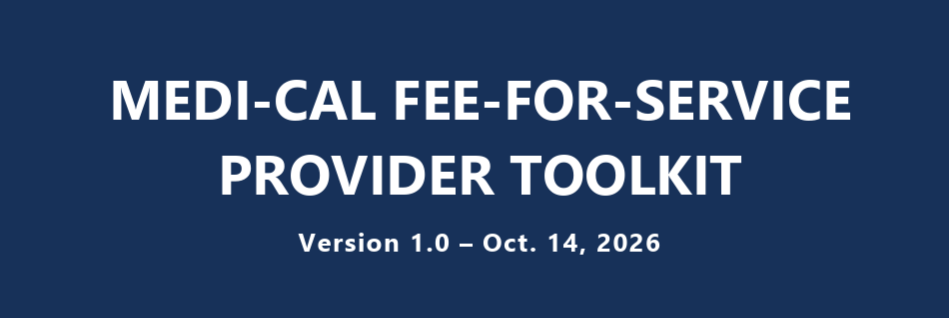
A Medi-Cal Fee-for-Service (FFS) Provider Toolkit, including information about provider enrollment and revalidation, eligibility verification, billing and claims processes, treatment authorization requests (TARs), transportation services, continuity of care, and other resources to support providers during the transition. The toolkit will be updated periodically as additional guidance, resources and operational information become available. Providers are encouraged to review and share the toolkit and check back for future versions to help ensure readiness and minimize disruptions to care for impacted members.
To help you communicate about other significant changes to Medi-Cal, CalOptima Health has also produced a Keep Your Medi-Cal, OC toolkit, including posters, social media images and social media posts in our eight threshold languages. The material connects to information about work and community engagement requirements and six-month renewals.
| Providers Must Enroll in Medi-Cal FFS to Continue Seeing UIS Patients | |
As a reminder, providers that want to continue serving UIS members after January 1, 2027, must be enrolled in Medi-Cal FFS. You can enroll by completing an application with the DHCS Provider Enrollment Division (PED). Although members will no longer be assigned a PCP under Medi-Cal FFS, enrolled providers may continue to see their patients.
If you are already enrolled via the Provider Application and Validation for Enrollment (PAVE), you may continue to provide services to UIS members and be eligible for reimbursement. If you are not currently enrolled through PAVE, you must submit an application and be approved to enroll by January 1, 2027, to receive reimbursement at FFS rates. For more information on PAVE enrollment, please visit DHCS’ PAVE website.
If you are not enrolling in Medi-Cal FFS, please ensure that appropriate records are shared with a colleague who will continue to care for UIS patients. A list of Medi-Cal FFS-enrolled providers is available on the California Health & Human Services Agency website.
Preparing for FFS Billing
DHCS strongly encourages all providers to familiarize themselves with Medi-Cal FFS billing processes to prepare for billing after January 1, 2027. This includes:
Medi-Cal providers have access to billing and claims assistance through DHCS’ California Medicaid Management Information System (CA-MMIS) and the contracted Fiscal Intermediary (FI). CA-MMIS and FI staff can assist providers with questions about paper claim submissions, electronic claim submissions, TARs and electronic TARs (eTARs).
You can contact the Telephone Service Center (TSC) Monday through Friday, 8 a.m. to 5 p.m. (excluding holidays), at 800-541-5555, or 916-636-1980 for those outside California. For faster access to TSC resources, Medi-Cal providers can refer to the TSC Main Menu Prompt Options Guide.
Support for Transition of Care
While Enhanced Care Management (ECM) and Community Supports are not covered under Medi-Cal FFS, certain care management, care coordination or case management (CM) services, as well as community health worker (CHW) services, are covered. Providers enrolled in Medi-Cal FFS may bill for these services using existing Medi-Cal FFS billing codes to receive reimbursement.
Providers are also encouraged to remind members to refill prescriptions before January 1, 2027, to avoid disruptions.
| | | Complex Care Providers Must Conduct UIS Transition Planning | |
As part of the UIS transition, we are required to continue authorizing, providing and paying for ECM, California Integrated Care Management (CICM), Community Supports, Complex Care Management (CCM), Transitional Care Services (TCS) and CHW services for all eligible UIS members through December 31, 2026.
ECM, CICM, CCM and TCS providers who have agreements with CalOptima Health must conduct transition planning and care coordination for UIS members prior to January 1, 2027. Required activities include:
- Coordinating with PCPs, other care management service providers, behavioral health providers, county agencies, social service agencies and community-based organizations to minimize disruptions in services prior to the transition.
- Verifying whether members’ current providers can and will continue to provide services in the Medi-Cal FFS delivery system. If a provider transition is needed, CM providers must identify alternative providers available to members post-transition using tools such as the DHCS Medi-Cal Fee-for-Service Provider Finder App.
- Assessing whether members may qualify for other available Medi-Cal FFS services, including chronic care management, behavioral health services, home and community-based services, county-based programs, or other supports available under Medi-Cal FFS or local delivery systems.
- Transmitting member assessments and care management plans, ensuring compliance with all required data privacy and confidentiality safeguards, to identified Medi-Cal FFS providers. If the receiving provider can accept a warm handoff, CM providers must complete that handoff as soon as possible, and no later than December 31, 2026. The receiving provider will not be eligible for reimbursement for the warm handoff, but can start providing services and submit bills and claims to Medi-Cal FFS starting January 1, 2027.
CHW Services
After December 31, 2026, CHW services will remain available to UIS members, potentially increasing the need for these services. Providers who meet all Medi-Cal allowable supervising provider type requirements may enroll to supervise and bill on behalf of CHWs for Medi-Cal FFS CHW services.
A supervising provider can only be a licensed provider; a hospital; an outpatient clinic as defined in 42 Code of Federal Regulations section 440.90, which includes an Indian Health Services Memorandum of Agreement 638 Clinic and Tribal Federally Qualified Health Center (FQHC); a pharmacy; a community-based organization; or a local health jurisdiction.
However, nontribal FQHCs and Rural Health Clinics cannot serve as supervising providers in Medi-Cal FFS.
Please refer to the DHCS CHW website for more information on becoming a CHW provider. Questions may be sent to CHWBenefit@dhcs.ca.gov.
| Care Team Referral Required for MTM Community Support After December 1, 2026 | |
Starting December 1, 2026, Medically Tailored Meals (MTM) will require approval from a member of the patient’s care team.
What it is: MTM is a CalAIM Community Support for members with nutrition-sensitive chronic or serious conditions. Meals are covered for up to 12 weeks. A registered dietitian (RD) will complete an assessment to determine whether the member qualifies for the program and how many weeks of meals are appropriate based on their clinical needs. Extensions beyond 12 weeks will require clinical justification.
Why the change: A care team referral confirms the diagnosis and medical necessity up front, so meals match the patient’s clinical needs.
Who can refer: PCPs, specialists, inpatient providers, RDs, hospital social workers and other clinicians managing the member’s condition.
How to refer: Submit through the Provider Portal, CalOptima Health Connect Portal or fax the referral form.
When evaluating a member for MTM, please ensure documentation clearly identifies:
- The qualifying nutrition-sensitive conditions
- Nutrition-related symptoms affecting the member
- How medically tailored meals are expected to support the member’s clinical outcomes
For members primarily experiencing food insecurity, we encourage referrals to community resources such as CalFresh, WIC, local food banks and other nutrition assistance programs.
If you have questions regarding MTM eligibility or referral requirements, please contact Mia Arias, Director, CalAIM Operations, at mia.arias@caloptima.org or Andrew Kilgust at andrew.kilgust@caloptima.org.
| Remember to Complete the Provider Survey to Tell Us How to Support You Through Medi-Cal Changes | |
With the changes to Medi-Cal due to H.R. 1 and state budget cuts over the next two years, we want to ensure our contracted providers have the support they need. To that end, we have created a short provider survey to gauge what challenges you are facing and the types of support that will be most beneficial for you. We will use your feedback to craft our future communications and provider outreach.
Please take five minutes to fill out the survey by clicking on this link. Thank you for your input and for the care you continue to give to our members.
| OneCare Claim Adjudication Will Change Starting January 1, 2027 | |
We are reminding CalOptima Health OneCare providers that, effective January 1, 2027, OneCare funding will be split to ensure that the dollars spent are allocated to the applicable funding source.
Currently, OneCare claims for both Medicare- and Medi-Cal-covered services are 100% paid under OneCare. This created unnecessary pressure on OneCare, limiting our ability to keep this line of business competitive. To correct this and be consistent with the standard coordination of benefits, starting January 1, OneCare claims will be paid 80% under Medicare and 20% under Medi-Cal.
Providers should have received contract amendments reflecting this change via email for execution through Adobe electronic signature. We appreciate you promptly signing these contract amendments.
Provider Impact
- What if I do not return the amendment?
- Claims received from providers who do not return the contract amendments will be paid at the OneCare 80% rate. The claim will be routed to Medi-Cal for adjudication. If no signed amendment exists, the claims will be paid only up to the Medi-Cal rate. This will often result in a zero payment as the provider has already received more than Medi-Cal would have paid.
- Do I have to rebill CalOptima Health once I receive the OneCare payment?
- No, providers submit a claim to the CalOptima Health OneCare Claims department. The claim will be adjudicated under OneCare. Providers will receive a check and Remittance Advice (RA) for the 80% payment made under OneCare. CalOptima Health will then route the claim from OneCare to Medi-Cal. Providers will receive a second check and RA for the remaining 20% payment under the Medi-Cal benefit.
- How will I match the multiple checks and RAs in my system?
- You can match the multiple checks and RAs by entering the member’s ID number from their card and the date of service.
-
How will I verify if both my Medicare and Medi-Cal payments were processed?
- You can view payments via the CalOptima Health Provider Portal. For each patient visit, you will see two claims that reflect payments from both Medicare and Medi-Cal.
If you need access to the Provider Portal, please email providerservicesinbox@caloptima.org with your provider name, Tax ID and national provider identifier (NPI).
Thank you for your dedication and continued partnership in providing quality care to our members.
| Depression Screenings Are an Essential Aspect of Person-Centered Care | CalOptima Health reminds providers that ensuring patients receive regular depression screenings is essential to delivering comprehensive, person‑centered care. Early identification of depression is key, and making depression screenings a standard part of care helps providers promote overall well‑being and reduce the long‑term impacts of untreated mental health conditions. For more resources, see the provider behavioral health page on our website, www.caloptima.org. | Training Will Focus on Providing Culturally Sensitive Care to Orange County’s Korean Population | |
We invite providers to attend the following training:
- Navigating Nuance: Korean Cultural Dynamics in Patient-Centered Care — This in-person lunch and learn will focus on understanding and serving the Korean community in Orange County, exploring the cultural stigma surrounding mental health and how traditional values can contribute to unaddressed psychological distress and elevated suicide risk. Lunch will be provided.
- Date: November 10, 2026
- Time: 11:30 a.m.–1:30 p.m. (lunch served at 11:30 a.m.)
- Location:
CalOptima Health
Room 109-N (First Floor)
505 City Parkway West
Orange, CA 92868
-
To register, please use this link.
For questions regarding these trainings, please email continuingeducation@caloptima.org.
| Mobile Mammography Events Available for Eligible OneCare and Medi-Cal Members | |
CalOptima Health, in partnership with KPC Health, is expanding access to breast cancer screening for certain members through a series of mobile mammography events across Orange County. Breast cancer screening remains one of the most effective tools for early detection and improved health outcomes. With your encouragement, eligible members can complete recommended breast cancer screenings.
Eligible members, based on current contracts with the mobile mammography vendor, include OneCare and Medi-Cal members in the CalOptima Health Community Network and Optum health networks.
Providers can help these members receive a breast cancer screening by:
-
Identifying members due for care: Review patient panels and identify members due for breast cancer screening.
-
Connecting members to care: Submit a mammography order for eligible patients to complete their screening at a radiology facility or share mobile mammography event details along with appointment information.
-
Conducting member follow-up: Contact patients with open mammogram orders or outstanding mammography needs and include event information in outreach calls.
-
Sharing resources: Display mammogram event flyers in waiting areas, exam rooms and check-out stations. Ensure front office staff, medical assistants, referral coordinators and care managers are aware of upcoming event dates and locations.
Upcoming Mobile Mammography Events:
- Chapman Global Medical Center
2601 E. Chapman Ave.
Orange, CA 92869
- Dates: Tuesday, November 17, 2026, and Thursday, December 10, 2026
-
Register here
- Orange County Global Medical Center
1001 N. Tustin Ave.
Santa Ana, CA 92705
- Dates: Tuesday, November 24, 2026, and Thursday, December 17, 2026
-
Register here
- South Coast Global Medical Center
2701 S. Bristol St.
Santa Ana, CA 92704
- Date: Monday, December 28, 2026
-
Register here
Thank you for your continued partnership and commitment to improving the health and well-being of our members. For any questions, please contact Quality Initiatives at QI_Initiatives@caloptima.org or the Provider Relations team at 714-246-8600 or providerservicesinbox@caloptima.org.
| | | Providers Can Promote PreMA to Improve Maternal Health | |
We encourage providers to promote the Preconception Medical Assessment (PreMA) to eligible members as part of our efforts to support healthier pregnancies and improve maternal health outcomes.
PreMa is a free, private, eight-question online tool developed by the Office of the California Surgeon General. It helps individuals understand how their current health and medical history may affect a future pregnancy and provides information to prepare for a healthy pregnancy.
Preconception health is an important part of maternal health. More than 80% of maternal deaths in California are considered preventable. Providing individuals with information about their health before pregnancy can help them identify questions or concerns to discuss with their provider.
Providers should discuss preconception health with members and encourage them to complete the PreMA and discuss any questions or concerns with their provider.
For more information about PreMA or to find the PreMA tool, please visit the Office of the California Surgeon General at osg.ca.gov.prema.
| Follow These Guidelines to Offer Comprehensive Pregnant and Postpartum Care | |
CalOptima Health requires providers caring for pregnant and postpartum Medi-Cal members to deliver timely, comprehensive and coordinated care in alignment with American College of Obstetricians and Gynecologists (ACOG) and Comprehensive Perinatal Services Program (CPSP) standards. This includes:
-
Submitting the Pregnancy Notification Report (PNR) from our website within five days of the first OB visit.
- Providing prenatal appointments within 15 business days of request; prior authorization is not needed for routine prenatal, maternal and preventive services.
- Ensuring access to folic acid, prenatal vitamins, dental screenings and oral health assessments.
Risk Assessments and Care Planning
- Conducting comprehensive risk assessments that are comparable with ACOG/CPSP standards early in pregnancy, each trimester and postpartum, including behavioral health screenings, Intimate Partner Violence (IPV) screenings and reproductive life planning.
- Maintaining documentation and developing an Individualized Care Plan addressing obstetric, nutritional, psychosocial and health education needs.
- Identifying high-risk pregnancies, assessing needs and ensuring timely specialist referrals.
- Connecting members to supports such as Women, Infant and Children (WIC), doulas, CalFresh, lactation services, transportation, breast pumps, ECM, CHWs and specialty care.
- Ensuring timely access to medically necessary lactation visits up to 12 months postpartum, including referrals to lactation professionals and WIC. Support prenatal and postpartum breastfeeding education and counseling.
Prenatal and Newborn Screenings
- Following all prenatal and newborn screening protocols, including noninvasive prenatal testing, genetic and carrier testing, and Critical Congenital Heart Defects screening.
- Informing members about the California Prenatal Screening Program (CA PNS); participation is voluntary and must be documented. Provide CA PNS educational materials during early prenatal visits.
- Educating members on the California Newborn Screening Program (CA NBS) and distributing required California Department of Public Health (CDPH) materials.
- Following CDPH requirements for positive or inconclusive screening results, including timely referral and coordination.
Family Planning and Reproductive Health
- Offering contraceptives, including a 12‑month supply of self-administered hormonal contraceptives.
- Educating on sterilization services, emergency contraception, pregnancy testing, sexually transmitted infections, prevention/testing/treatment, HIV testing and cervical cancer screening.
- Counseling on family planning options and a member’s rights to choose any contraceptive method.
| DHCS Releases Updated CalAIM ECM Policy Guide | |
On September 16, 2026, DHCS released the updated CalAIM ECM Policy Guide for Managed Care Plans. This guide outlines requirements for MCPs to implement ECM managed care benefits. This ensures that all members have access to a comprehensive set of services based on their needs and preferences across the continuum of care. All updated areas are marked throughout the policy guide with Updated September 2026 or Added September 2026 indicators.
Updates to the ECM Policy Guide include:
-
Benefit Management, Program Integrity and Provider Screening, Credentialing, Revalidation, and Recredentialing for all ECM Providers: Adds additional details around MCPs’ responsibilities to maintain strong oversight of ECM, ensuring program integrity, proper credentialing, network adequacy, timely transfers and adherence to Utilization Management rules.
-
Dosage and Outcomes: Adds new language and clarifications around ECM service expectations, including DHCS’ expectation that members in ECM should receive, on average, three or more encounters per month and that MCPs’ payments to providers should match service intensity.
-
Dual-eligible members: Language regarding dual-eligible members was updated and clarified.
-
QIMR to JSON Transition: DHCS is no longer accepting Quarterly Implementation Monitoring Report (QIMR) files after the final Q2 2026 submission on August 14, 2026, and has fully transitioned to JavaScript Object Notation (JSON) files.
| DHCS Sends Guidance Regarding Federal Gender Affirming Care Reimbursement Limits | |
On September 25, 2026, DHCS distributed updates to MCPs regarding federal reimbursement limitations on Gender Affirming Care (GAC) for youth enrolled in Medi-Cal and the Children’s Health Insurance Program (CHIP).
On August 13, 2026, CMS released a final rule, effective October 13, 2026, that prohibits state Medicaid programs from claiming federal Medicaid and CHIP matching funds for GAC
services for Medicaid members under the age of 18.
Notable updates in this guidance include:
- For dates of service (DOS) on or after October 13, 2026, DHCS will no longer reimburse specified GAC services for Medi-Cal members under 18 except for the situation below.
- The CMS final rule allows for a time-limited transition period of up to six months (until April 12, 2027) for Medi-Cal members who have existing hormone therapy as of October 13, 2026. Otherwise, reimbursement will occur through the Department of Health Care Access and Information’s grant program using state-only funding to support continued access.
- For DOS on or before October 12, 2026, there are no changes in reimbursement for gender affirming surgical interventions and medications rendered to Medi-Cal members under the age of 18.
| DHCS Releases Recuperative Care Community Supports Updates | |
On October 5, 2026, DHCS released the following documents:
-
The Community Supports Policy Guide Volume 2 Addendum — As described in DHCS’ CalAIM Section 1115 waiver renewal application, California plans to transition federal authority for Recuperative Care from Section 1115 waiver authority to Medicaid managed care In Lieu of Services and Settings (ILOS) authority and sunset Short-Term Post-Hospitalization Housing (STPHH) as a separate Community Support. DHCS has updated the Recuperative Care service definition to align with federal requirements and to strengthen and standardize service delivery statewide. The Addendum includes the following updates:
- The updated Recuperative Care service definition, effective January 1, 2027
- Removing room and board as required by federal ILOS policy
- More fully articulating required care coordination and case management activities
- Establishing a new supervision requirement
- The STPHH sunset plan
- Updated policy regarding the global cap on coverage of room and board services
-
Draft Community Supports Pricing Resource: The Recuperative Care Pricing Resource — The document provides an updated pricing benchmark for Recuperative Care and outlines the primary cost drivers and assumptions underlying it. The updated pricing benchmark reflects the requirements of the updated Recuperative Care service definition, as well as changes in wages and inflation. The pricing benchmark is nonbinding and should not be interpreted as a required reimbursement rate, rate floor or rate ceiling.
The document includes the following updates:
- Guidance about how MCPs and providers may use this resource to support contracting discussions.
- A high-level overview of the pricing methodology.
- A midpoint service price benchmark.
- The applicable pricing unit and Healthcare Common Procedure Coding System (HCPCS) code.
- The primary cost drivers and assumptions underlying the benchmark.
- Supplemental benchmark information from related programs and states.
| Reimbursement Rates for CHW Services Established | On September 21, 2026, DHCS distributed a provider bulletin to MCPs that reimbursement rates have been established for CHW services and HCPCS codes G0019 and G0022 in accordance with State Plan Amendment (SPA) 25–0016, and are effective retroactively for DOS on or after April 1, 2025. For additional information related to this update, refer to the CHW Provider Manual. | DHCS Transitional Rent Policy Clarifies Eligible Setting Types | |
On September 22, 2026, DHCS issued a clarification on the Transitional Rent policy to MCPs.
DHCS’ policy clarification included the following:
- The setting type “interim settings with a small number of individuals per room (not large dormitory sleeping halls)” refers to interim settings with no more than four beds per room and measures in place to ensure adequate and private sleeping spaces.
- Interim settings with more than four beds are not allowable settings under Transitional Rent.
- Going forward, MCPs should not authorize new Transitional Rent placements in interim settings with more than four beds per room.
| | |
- On September 21, 2026, DHCS distributed Revised All Plan Letter (APL) 25-011: House Resolution (H.R.) 1 – Federal Payments to Prohibited Entities to MCPs, which provides guidance on payments to Medi-Cal and Family Planning, Access, Care, and Treatment Program (Family PACT) providers who may be impacted by H.R. 1.
- On October 1, 2026, DHCS distributed APL 26-019: Dyadic Services, which provided MCPs with updated guidance on coverage requirements for the dyadic services benefit that became effective March 15, 2023, and clarified requirements for the benefit. This APL supersedes APL 22-029.
| |
Based on Medi-Cal Bulletins and NewsFlashes, CalOptima Health has updated the procedure codes and other relevant information for the subjects listed below:
- 2026 HCPCS Quarter 4 Update
- Justice-Involved (JI) Reentry Initiative: New Aid Codes for Members With UIS Coming Soon
- EWC Program Policy Updates: New Covered Procedure Codes and ICD-10-CM Diagnosis Codes
- Reimbursement Rates Updated for Select Radiation Treatment Delivery Codes
- Update to the Medi-Cal List of Contracted Incontinence Creams and Washes
- Billing Policy Clarification for Medi-Cal Enrolled Licensed PTs Who Supervise CHWs
- CPT Code 90616 Is a Medi-Cal Benefit
- Family PACT HCPCS Code Rate Update for 2026 Quarter 3
- Required Modifier and Minimum Age Updated for CPT Code 90683
- Reminder: Obstetrical Providers Encouraged to Use E&M Codes With Modifier TH
- Self-Collected Specimen Policy Clarification
- One-Time Timeliness Waiver for LMFT and Psychological Associate Services Delivered by a RHC or FQHC
- Provider Manual Revisions
- Removal of Enhanced FMAP for Emergency Services
- Kaiser Permanente Medi-Cal Health Plan and WCM Expansion in Monterey County
- Updates to Wound Care Medical Supplies and Select HCPCS Codes
- Place of Service Code 10 Added for Select CPT Codes
- ICD-10-CM Requirements for FQHC, RHC, IHS-MOA and Tribal FQHC Providers
- Hospital Presumptive Eligibility: New Requirements Coming January 1, 2027
- Reminder Regarding NPIs for Crossover Claims
- Reimbursement Rates for CHW HCPCS Codes G0019 and G0022
- JI Reentry Initiative: Care Management Bundle 5 for Correctional Facilities
- Dialysis Services Coverage Update for Members With Restricted Scope Aid Codes
- New Federal Reimbursement Limitations on Gender Affirming Care for Youth, Effective October 13, 2026
- DRG Payment System Update to Mapper Version 44.0 on October 1, 2026
For detailed information regarding these changes, please refer to General Medicine Bulletin 628, Medi-Cal Program & Eligibility Bulletin 51, Durable Medical Equipment and Medical Supplies Bulletin 613, Psychological Services Bulletin 613, Clinics and Hospitals Bulletin 625, Inpatient Services Bulletin 625, and Medi-Cal NewsFlashes from September 21, September 25, October 1, October 13 and October 15.
To access the updated Physician Administered Drug Prior Authorization List (PAD PA List), please refer to: www.caloptima.org/en/ForProviders/ClaimsandEligibility/PriorAuthorizations.aspx.
| Policies and Procedures Monthly Update | |
Click on the link below to find an outline of changes made to CalOptima Health policies and procedures during October 2026. The full description of the policies below is available on CalOptima Health’s website at:
www.caloptima.org/for-providers/provider-resources/manuals-policies-and-guides
Policies and Procedures Monthly Update
| | |
- CalOptima Health Board of Directors: November 5 at 2 p.m.
- Joint Meeting of the Provider and Member Advisory Committees: December 10 at Noon
All meetings have an option for virtual attendance. Visit the CalOptima Health website for more information.
| | | Follow Us on Social Media | | | CalOptima Health regularly posts on social media to engage members with health tips, community resources, event dates, program updates and other pertinent information. Follow us on Facebook, Instagram, X and LinkedIn. | | |
CalOptima Health, A Public Agency www.caloptima.org
| |
| | | |