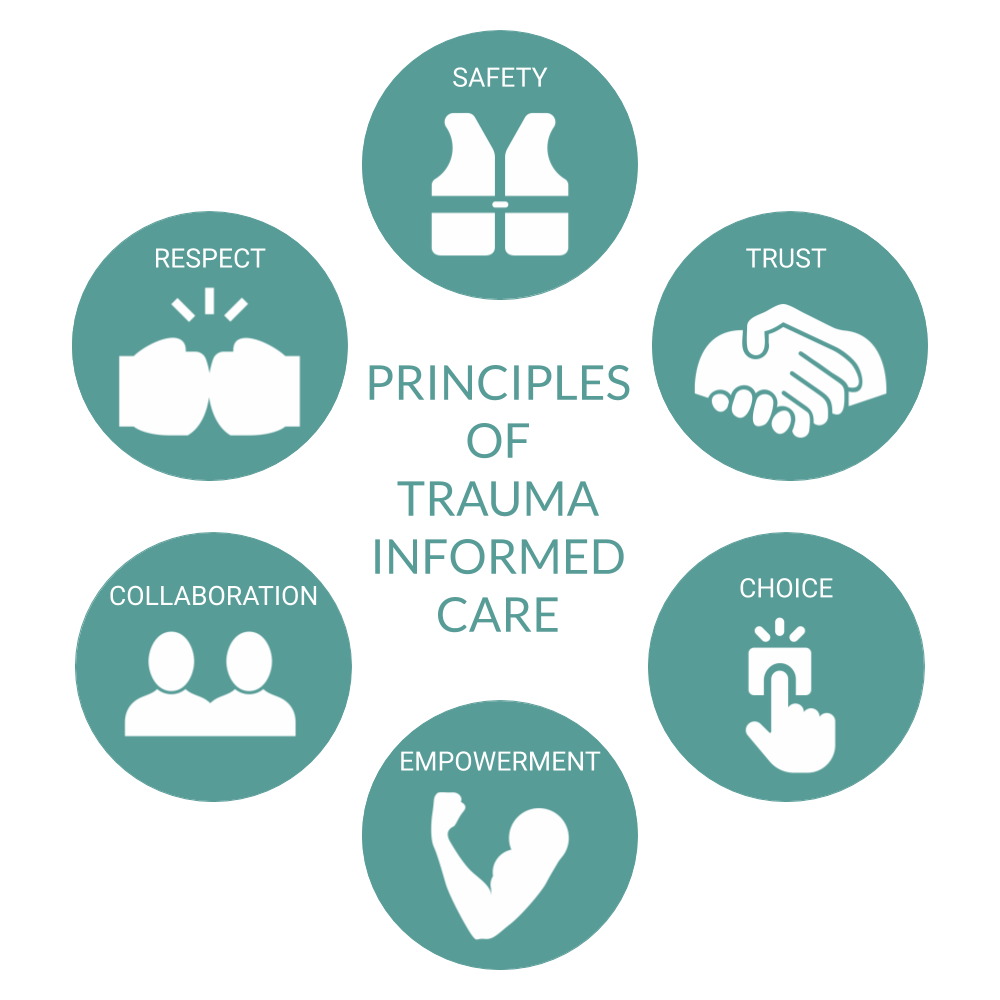
Trauma-Informed Care as a Universal Precaution Beyond the Adverse Childhood Experiences Questionnaire - Trauma-informed care (TIC) realizes the universal effect of trauma; recognizes how trauma presents in children, families, and staff; and responds in away that resists retraumatization. Trauma-informed care is rooted in the assumption that any child or adult could have a trauma history, and this approach should be used across medical settings with all patients whether an ACEs questionnaire is administered or not. Given the high rates of adversity in the lives of children and families, TIC should be a universal precaution.
Implementing Trauma-Informed Strategies for Mothers of Infants with NAS - Education on the impact of trauma on new mothers with SUD can promote collaboration between them and the neonatal team. Standardizing education for new mothers of infants with NAS can help to engage families of infants with NAS and improve clinical outcomes.
Trauma-informed care with women diagnosed with postpartum depression: a conceptual framework - Trauma-informed care (TIC) is a best practice that recognizes the importance of, and takes steps to promote recovery from, trauma while preventing retraumatization. The purpose of this article is to provide a TIC framework for service delivery for women diagnosed with PPD including explicit strategies for how TIC should be structured across roles, settings, and systems.
Trauma-informed care in the newborn intensive care unit: promoting safety, security and connectedness - Considering our intensive care units to be newborn intensive parenting units will focus parents and staff upon the primary relationship of parents and their babies. The care of the parent–baby dyad is then ideally supported by a developmentally sensitive caregiving staff and hospital that are placeholders for the eventual return of the baby–parent unit to their community.
Racial and Ethnic Disparities in Severe Maternal Morbidity: A Qualitative Study of Women’s Experiences of Peripartum Care - This study highlights missed opportunities for improved clinician communication and continuity of care to address emotional trauma when severe obstetric complications occur, particularly for Black and Latina women. Enhancing communication to ensure that women feel heard and informed throughout the birth process and addressing implicit bias, as a part of the more systemic issue of institutionalized racism, could both decrease disparities in obstetric care quality and improve the patient experience for women of all races and ethnicities.
B’More Fit for Healthy Babies: Using Trauma-Informed Care Policies to Improve Maternal Health in Baltimore City - The development and monitoring of trauma-informed interventions and policies within governmental and human service agencies can counterbalance social and environmental exposures. Applying a gender-based and traumainformed program provided B’more Fit participants with strategies for weight loss, improved nutrition, and better parenting.