Volume XXII–– November 2022 | |
Women Make History:
Stories we should have learned in school
| |
|
The American Revolution “...furnished no other similar example of
female heroism, fidelity and courage...”
than Deborah Sampson.
Congressional Report, 1837
| |
|
A heartfelt thank you to newsletter readers, Chris and Sherry, for suggesting that I feature Deborah Sampson and Dr. Mary Walker in honor of Veteran's Day.
First Woman in the Army
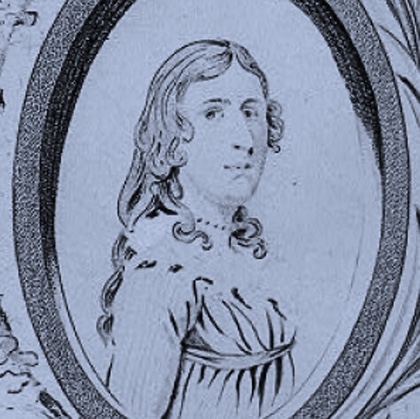
In 1782, Deborah Sampson disguised herself as a man and enlisted in the Continental Army. She fought for nearly two years in the Revolutionary War before her secret was discovered. Although other women concealed their gender in order to join the fight, Sampson was the first whose service was recognized by the government and the only woman to receive a full pension.
One of seven children, Sampson was born in Plympton, Massachusetts, in 1760. At age 10, her family sent her to work as an indentured servant for a large landowner. Eight years later, her debt paid, the self-taught Sampson then worked as a teacher and as a weaver.
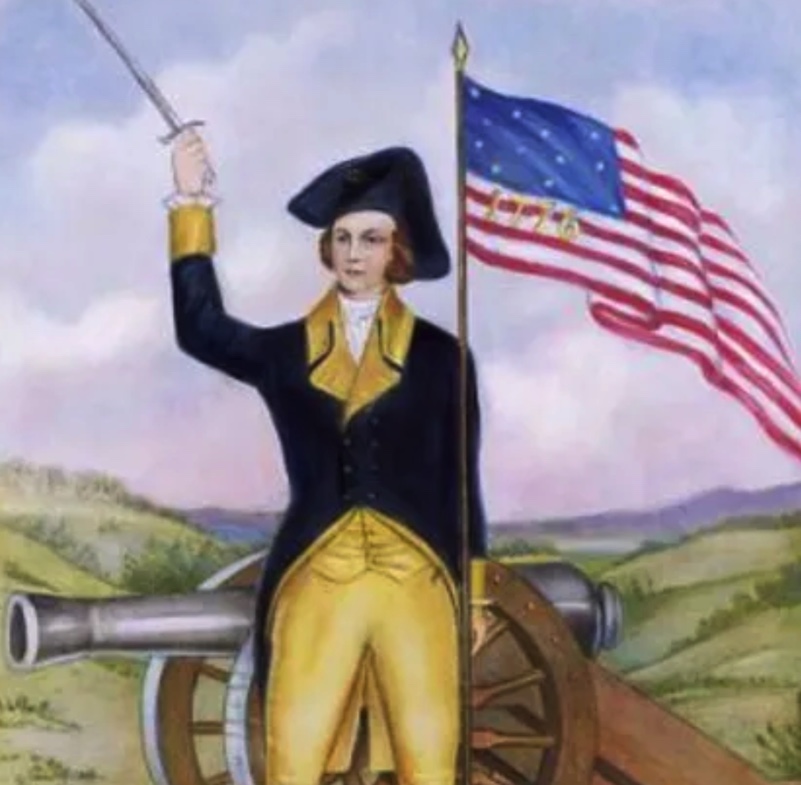
In 1782, as the Revolutionary War raged on, Sampson joined the Fourth Massachusetts Regiment under the alias, Robert Shurtleff. Assigned to Captain George Webb’s Company of Light Infantry, she scouted territories to assess British troops, and led raids on Tory strongholds. At the battle of Yorktown, Sampson dug trenches, helped storm a British redoubt, and endured canon fire.
| |
|
Despite being shot in the shoulder and leg in one battle and grazed by a sword in another, Sampson refused medical help She removed the bullets herself to protect her secret. After she developed brain fever, a common ailment among soldiers, she fell unconscious and was taken to a hospital.The attending physician discovered Sampson’s deception and informed her commanding officer.
While she recuperated, the two men maintained her charade. After her full recovery, Sampson was ordered to carry a letter to then General George Washington who granted her an honorable discharge. He is also reported to have given her money to cover her travel expenses home.
| |
|
Following the war, Sampson married and had three children. On the advice of her friend, Paul Revere, Sampson spent a year lecturing about her exploits throughout Massachusetts, New York, and Rhode Island, often wearing her full dress uniform. Three years later, Congress approved her request for a soldier’s pension at $4 a month, about $100 in 2022.
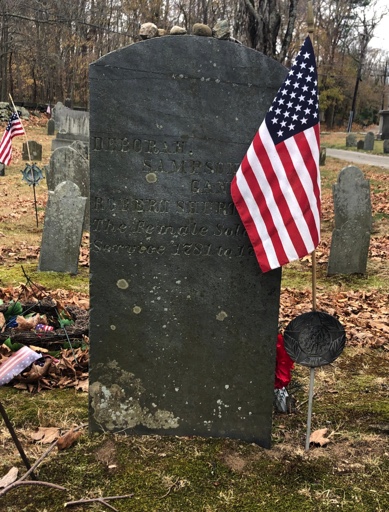
Sampson died in 1827 at age 66 and is buried at Rock Ridge Cemetery in Sharon, Massachusetts. Part of her tombstone reads: "Deborah Sampson Gannett, Robert Shurtleff, The Female Soldier Service 1781-1783."
Four years after Sampson’s death, her husband petitioned Congress for a military widow’s pension. Although the couple weren’t married at the time of her service, the request was granted.
| Sampson’s story is recounted in early histories about women including Elizabeth F. Ellet’s, The Women of the American Revolution, published in 1848, in Mrs. Hales Biography of Distinguished Women, 1853, and in Phebe A. Hanaford’s, Daughters of America,1882. While there are some conflicting accounts about Sampson, including the spelling of her name and her alias, one fact is undisputed: her courageous service during the Revolutionary War. | |
|
The First and Only Woman to Receive the Medal of Honor
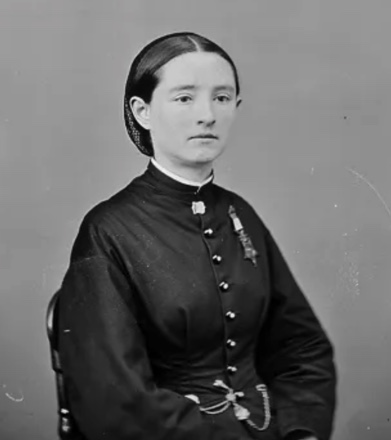
Dr. Mary Walker made history in 1865 when President Andrew Johnson awarded her the Medal of Honor for her service during the Civil War.
Born in upstate New York in 1832, Mary Walker grew up in a family that encouraged their children’s education. She earned her medical degree from Syracuse Medical College in 1855, although most women at the time were denied college. Walker entered private practice until the Civil War erupted in 1861. An abolitionist, she tried to enlist in the Union Army, but was denied because of gender.
| |
|
Instead, she volunteered as a surgeon working first in an Army hospital in Washington, D.C., then in field hospitals along Virginia’s front lines. As the war dragged on, in 1863 the Army relented and hired Walker as War Department Surgeon in Tennessee. Although not recognized as an enlisted officer, Walker was paid the equivalent of a lieutenant or captain.
In 1864, Walker crossed enemy lines to help a Confederate doctor. When the surgery was complete, she was arrested by Confederate soldiers and imprisoned. Four months later, she was released in a prisoner exchange. Some sources suggest that Walker was a spy and that her capture was intentional, allowing her to gather information for the Union Army.
At the end of the War, in 1865, Walker was awarded the Medal of Honor by then President Andrew Johnson. It was rescinded by the government in 1917 on the grounds that Walker had been a civilian and not a commissioned officer. Walker refused to return the medal, and she continued to wear it until she died two years later.
| |
Throughout her life, Walker was a pioneering feminist, suffragist, and advocate for women’s rights. In 1871, she attempted to register to vote but was denied. In 1912 and 1914, Walker testified before Congress in support of women's suffrage.
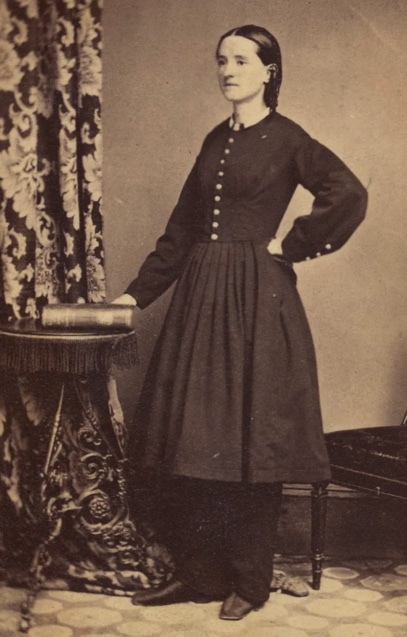
From an early age, Walker was a proponent of the Bloomer costume in which women wore trousers under a modified dress. Claiming it enabled physical mobility, she wore this attire throughout her wartime service. Later, Walker abandoned it in favor of wearing men's clothing. She was ridiculed and arrested several times for impersonating a man.
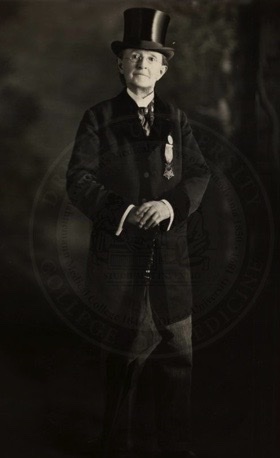
Walked died on February 21, 1919, and was buried wearing a man's black suit.
Today, out of the nearly 3,500 recipients of the Medal of Honor, Walker remains the only woman and her medal was rescinded shortly before she died. President Jimmy Carter restored Walker’s Medal of Honor in 1977, largely due to pressure from her descendants.
| |
|
Bring it Home: Conversation Starters
Ask a friend: More than 250 years after Deborah Sampson fought in the Revolutionary War, there is still bias against women in the military. How do you feel about women enlisting and serving in the armed forces?
Ask yourself: What would you do if a national honor was bestowed on you or someone you respect and then that honor was taken away?
| |
|
Spreading the Word: Upcoming Talks & Interviews:
Thank you, Russ Immarigeon, for your recent front-page article on Mary Ware Dennett in The Columbia Paper.
Thank you, Carol Kranes, for inviting me to speak at the Nov. 9 meeting of the Owl & Fork at Salt Lake City's Town Club. The overwhelming response to the stories I shared about Mary Ware Dennett, Dr. Glady West, and Zitkala-Ša, was a powerful affirmation of their importance to others. It keeps me motivated to keep writing and sharing them.
In June, I'll be a panelist at the 2023 Berkshire Conference of Women Historians in Santa Clara, California. It’s an incredible honor, especially to be presenting alongside Dr. Anya Jabour, Scott W Stern, Margaret Grace Myers, and Stephanie Gorton. I’ll be speaking about Mary Ware Dennett’s fight for reproductive rights.
Need a professional speaker to share stories about women we should have learned about in school–the achievers, iconoclasts, catalysts and especially the troublemakers? Contact me at: Sharon@SharonSpaulding.com.
| |
|
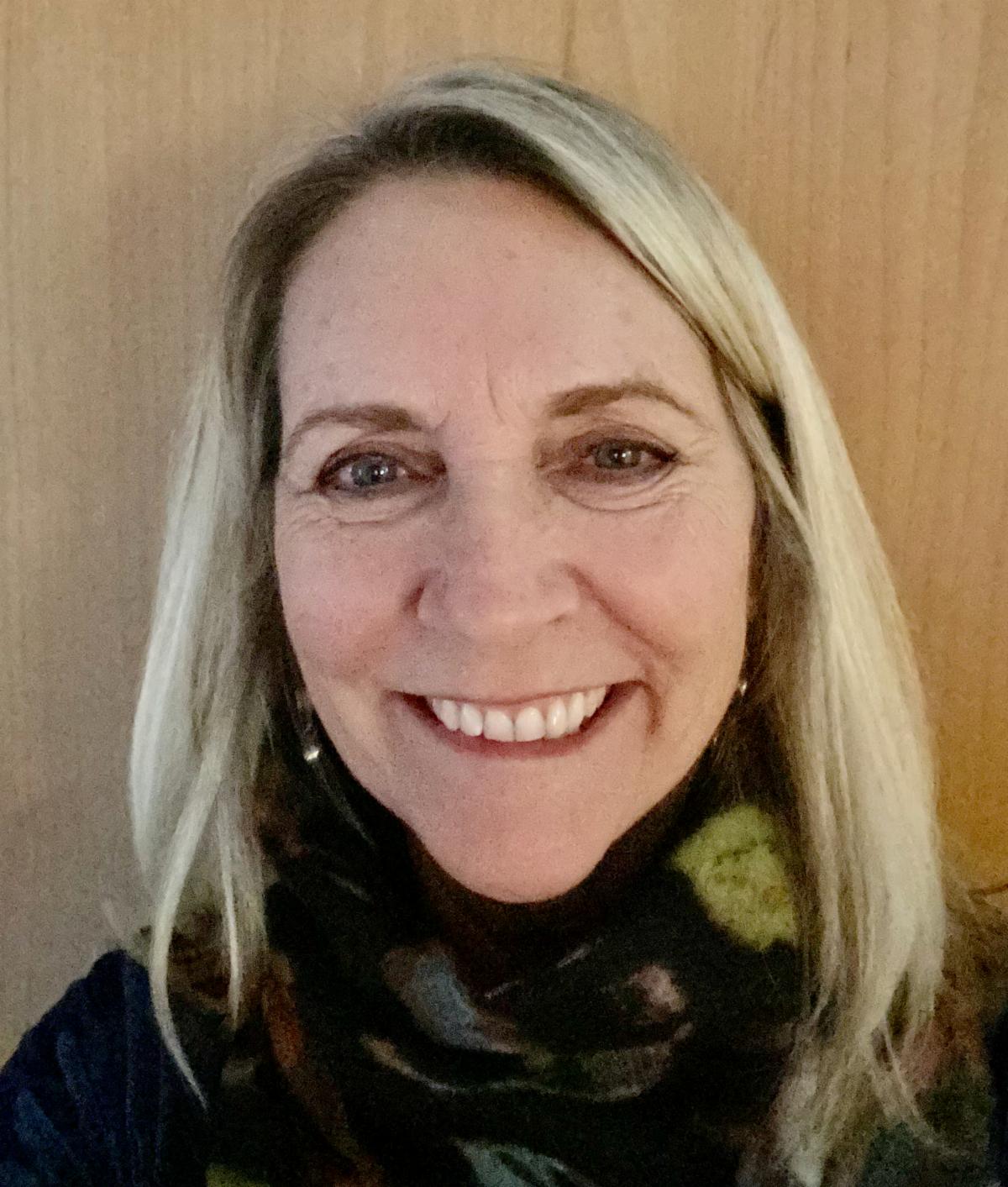
Sharon Spaulding is a feminist historian and researcher specializing in the life and times of Mary Ware Dennett (1872-1947). The curator of Dennett's family archives, Sharon is completing a book about Dennett. Time magazine included Dennett as one of the most important women in American history.
Sharon received a grant from Radcliffe College’s Schlesinger Library to support her work. Her essays have appeared in Ms.Magazine, Smithsonian, New Hampshire Magazine, and others. She lives near Salt Lake City with her husband and two dogs.
| |
|
Help reclaim the lives of remarkable women.
Share this newsletter and encourage others to subscribe.
Follow me on social media. SharonSpaulding.com
| | | | | |