Join the upcoming LIVE Breaking the Cycle discussion on May 9, 2022 from 8 to 9 p.m. ET, REGISTER to join. Visit the www.BreakingtheCycleFilm.org for more science, film guides, and resources.
|
|
Dear Friends,
The world seems to be moving in the wrong directions when considering what promotes wellbeing in children and adults. Adults get distracted with their own worries and forget about meeting the basic needs of children. To recenter ourselves on thriving, we need to refocus our attention and revamp our assumptions to embrace the orientations that most humans carried throughout our millions-year-old existence.
To that end, Four Arrows and I have a new book out this month that describes and discusses what we call the kinship worldview. We quote and then discuss 28 precepts of the Indigenous worldview, which integrates evolved nest practices. All royalties are donated to Indigenous/First Nation organizations.
Check out an upcoming LIVE event around Restoring Kinship Worldview below, along with a Kindred podcast with myself, Four Arrows, and Lisa Reagan, and enjoy a research paper from Four Arrows on Unsettling Coloniality In The Psychological Sciences By Restoring Our Kinship Worldview, here.
Happy Spring,
Darcia
Darcia Narvaez, PhD
Evolved Nest, Founder
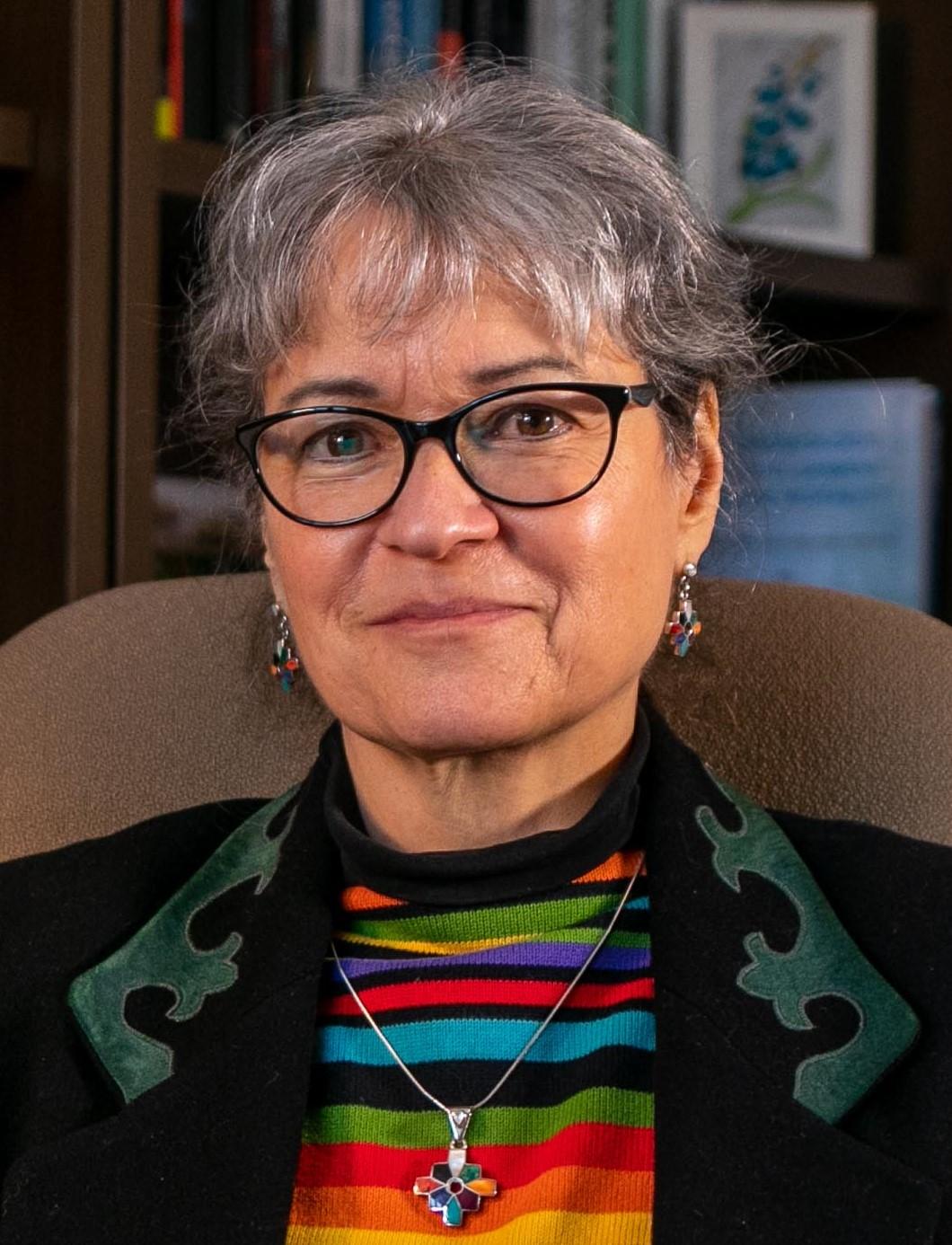
Photo by Mariah Miranda
|
|
"The idea that [a human’s] emotions might not be controlled by higher order consciousness – his God-given superior human intellect and will – the very things that were believed to separate him from inferior species – was blasphemous and unthinkable to religious Victorian England."
– Ludwig & Welch, 2019
|
|
Darwin’s Other Dilemmas and the Theoretical Roots of Emotional Connection |
Abstract: Modern scientific theories of emotional behavior, almost without exception, trace their origin to Charles Darwin, and his publications On the Origin of Species (1859) and The Expression of the Emotions in Man and Animals (1872). The most famous dilemma Darwin acknowledged as a challenge to his theory of evolution through natural selection was the incomplete Sub-Cambrian fossil record. However, Darwin struggled with two other rarely referenced theoretical and scientific dilemmas that confounded his theories about emotional behavior. These included (1) the origin of social instincts (e.g., altruism, empathy, reciprocity and cooperation) and the reasons for their conservation in evolution and (2) the peripheral control of heart rate vis-à-vis emotional behavior outside of consciousness. Darwin acknowledged that social instincts are critical to the survival of some species, but had difficulty aligning them with his theory of natural selection in humans. Darwin eventually proposed that heart rate and emotions are controlled via one’s intellect and cortical mechanisms, and that instinctive behavior is genetically programmed and inherited. Despite ongoing efforts, these two theoretical dilemmas are debated to this day. Simple testable hypotheses have yet to emerge for the biological mechanisms underlying instinctive behavior or the way heart rate is controlled in infants. In this paper, we review attempts to resolve these issues over the past 160 years. We posit that research and theories that supported Darwin’s individualistic brain-centric and genetic model have become an “orthodox” Western view of emotional behavior, one that produced the prevailing behavioral construct of attachment as developed by John Bowlby. We trace research and theories that challenged this orthodoxy at various times, and show how these challenges were repeatedly overlooked, rejected, or misinterpreted. We review two new testable theories, emotional connection theory and calming cycle theory, which we argue resolve the two dilemmas We show emerging scientific evidence from physiology and a wide variety of other fields, as well from clinical trials among prematurely born infants, that supports the two theories. Clinical implications of the new theories and possible new ways to assess risk and intervene in emotional, behavioral and developmental disorders are discussed.history score will be.
|
|
Creating a Compassionate World Interview Series |
As part of the Creating a Compassionate World interview series, Professor Paul Gilbert OBE, President of the Compassionate Mind Foundation, interviews Darcia Narvaez. The Compassionate Mind Foundation was founded as an international charity in 2006 by Professor Paul Gilbert and colleagues including Prof Deborah Lee, Dr Mary Welford, Dr Chris Irons, Dr Ken Goss, Dr Ian Lowens, Dr Chris Gillespie, Diane Woollands and Jean Gilbert. We believe that one of the greatest challenges facing humanity is how to stimulate compassionate ways of thinking and problem solving for the benefit of all.
The Compassionate Mind Foundation promotes an evolutionary and bio-psycho-social informed approach to compassion which now forms the basis of a psychotherapy (CFT) and Compassionate Mind Training.
|
|
|
|
Join the LIVE Discussion with Darcia Narvaez and Wahinkpe Topa (Four Arrows), Co-Editors of RESTORING THE KINSHIP WORLDVIEW |
Join us on Tuesday, April 12 at 8 p.m. Eastern Time.
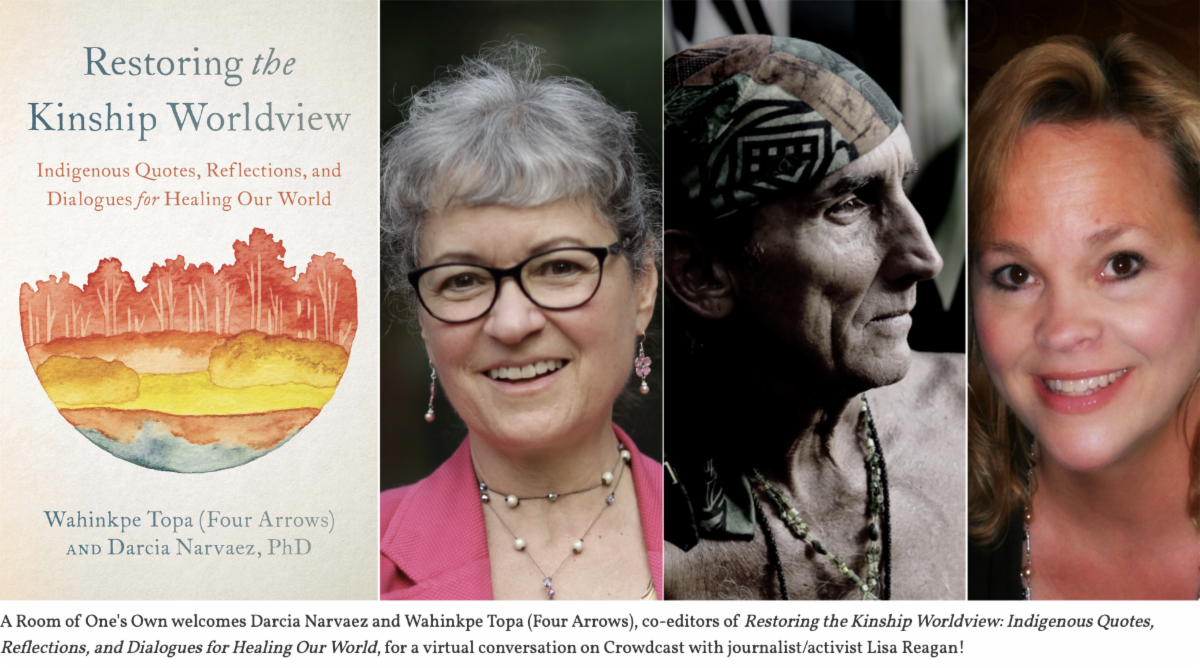
A Room of One's Own welcomes Darcia Narvaez and Wahinkpe Topa (Four Arrows), co-editors of Restoring the Kinship Worldview: Indigenous Quotes, Reflections, and Dialogues for Healing Our World, for a virtual conversation on Crowdcast with journalist/activist Lisa Reagan!
|
|
|
|
Join the LIVE Discussion with Darcia Narvaez and Wahinkpe Topa (Four Arrows), at CIIS |
Join us on Tuesday,
April 20 at 6 p.m. PDT
California Institute of Integral Studies hosts this LIVE discussion with Darcia and Four Arrows on their new book, Restoring the Kinship Worldview.
|
|
|
|
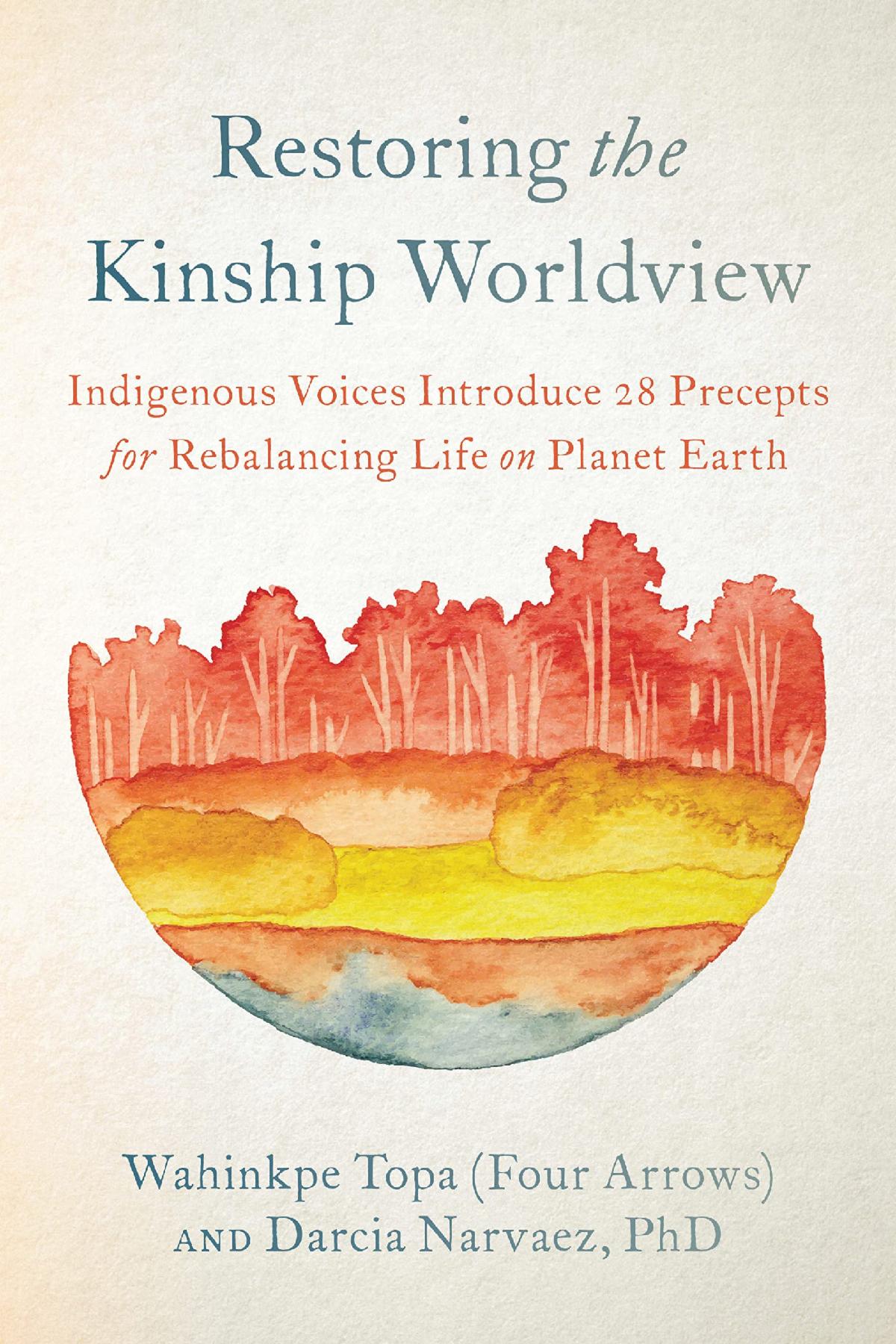
Restoring the Kinship Worldview: Indigenous Voices Introduce 28 Precepts for Rebalancing Life on Planet Earth |
"Humans have a particular ecological niche, a role as the custodial species of this earth. We must return our species to this niche within the next decade, or perish.This book, Restoring the Kinship Worldview, is a perfect place to start - the foundation is good relations, making kin both human and non-human - and here we have story from a gathering of some of the finest Indigenous thinkers in the world. Four Arrows and Darcia Narvaez have a particular way of bringing the right people together for such purposes." – Tyson Yunkaporta, author of Sand Talk: How Indigenous Thinking Can Save the World
Indigenous worldviews, and the knowledge they confer, are critical for human survival and the wellbeing of future generations. Editors Wahinkpe Topa (Four Arrows) and Darcia Narvaez present and analyze 28 powerful excerpted passages from Indigenous leaders that offer necessary wisdom for our times, illuminating a path away from extinction toward a sustainable, interconnected future.
The editors emphasize our deep need to move away from the dominant Western paradigm–one that dictates we live without strong social purpose, fails to honor the earth as sacred, leads with the head while ignoring the heart, and places individual “rights” over collective responsibility. Restoring the Kinship Worldview is rooted in an Indigenous vision and strong social purpose that sees all life forms as sacred and sentient–that honors the wisdom of the heart, and grants equal standing to rights and responsibilities.
Release Date April 12, 2022
|
|
|
|
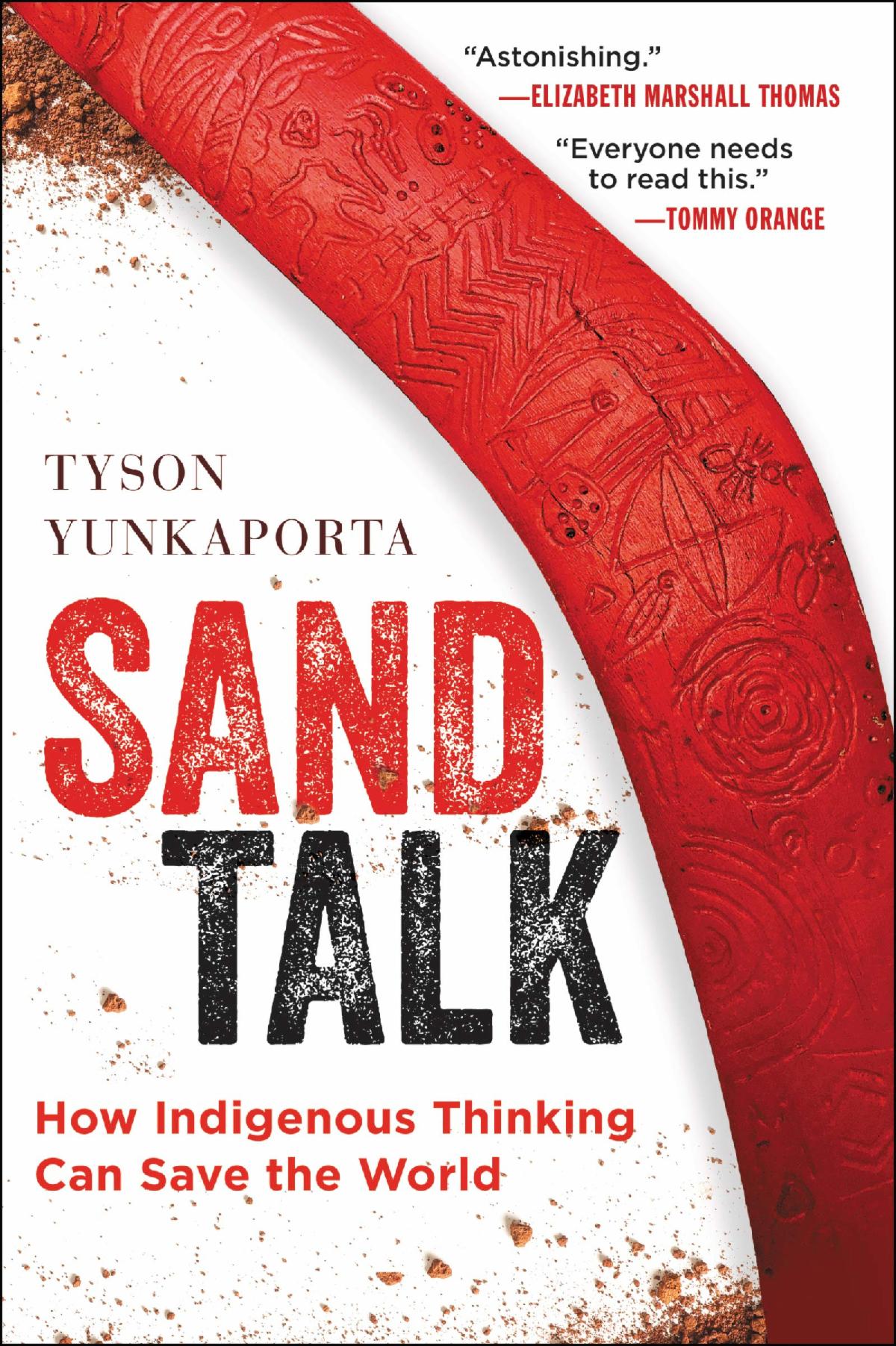
Sand Talk: How Indigenous Thinking Can Save the World |
A paradigm-shifting book in the vein of Sapiens that brings a crucial Indigenous perspective to historical and cultural issues of history, education, money, power, and sustainability―and offers a new template for living.
As an indigenous person, Tyson Yunkaporta looks at global systems from a unique perspective, one tied to the natural and spiritual world. In considering how contemporary life diverges from the pattern of creation, he raises important questions. How does this affect us? How can we do things differently?
|
|
|
|
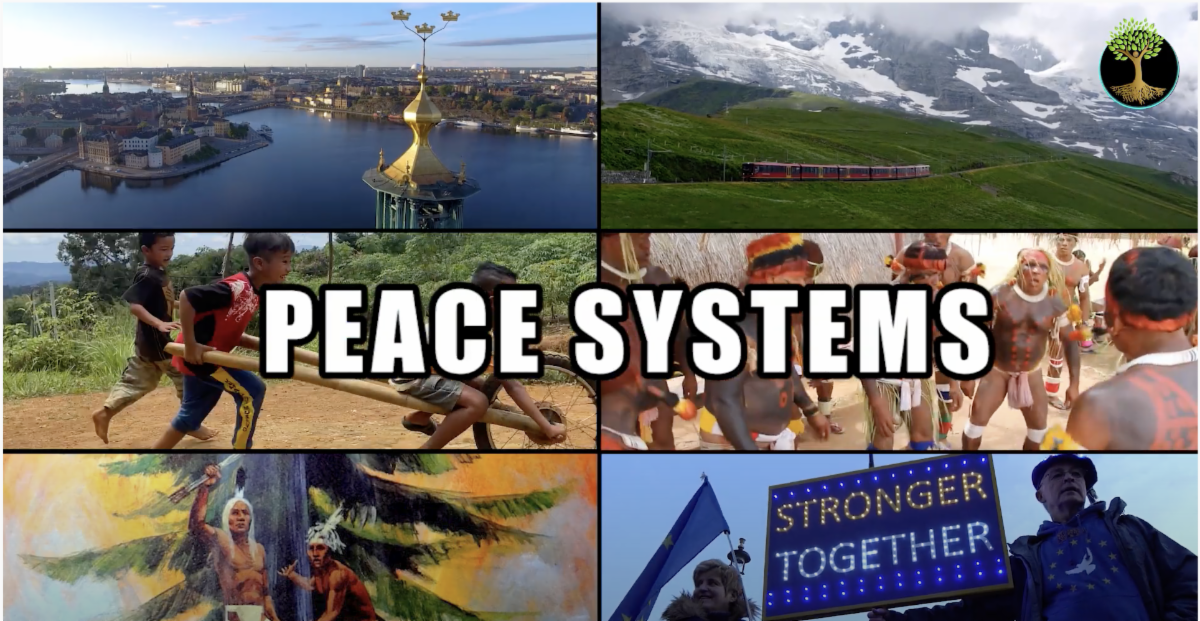
A Path Away From War: The Science Of Peace Systems |
Douglas Fry and Geneviève Souillac are pleased to share a short film on Peace Systems, “A Path Away From War: The Science of Peace Systems." Please take a look.
About the film: Scientific evidence shows that certain societies have successfully shunned war by creating peace systems. Peace systems are clusters of neighboring societies that do not make war with each other. Global challenges such as climate change, loss of biodiversity, pandemics, and nuclear proliferation endanger everyone on the planet and thus require cooperative solutions. The existence of peace systems demonstrates that at many times and in various places people have unified, stopped warring, and worked together for the greater good. This film introduces several historical and cross-cultural peace systems from tribal peoples to nations, and even regions, to explore how peace systems can provide insights on how to end wars and promote intergroup cooperation.
|
|
|
|
Restoring Our Kinship Worldview: Indigenous Voices Introduce 28 Precepts For Rebalancing Life On Planet Earth |
Listen to Restoring the Kinship Worldview editors, Four Arrows and Darcia Narvaez, talk with Lisa Reagan about their new book.
"Four Arrows and Darcia Narvaez take each brief quote as the seed for a conversation regarding one or another element of the kincentric worldview—a vision of our earth not as a collection of objects and objective, mechanical processes, but as an interactive community of sensitive and sentient powers: a communion of subjects.”
—DAVID ABRAM, author of Becoming Animal and The Spell of the Sensuous
|
|
|
|
Why Do Adults Spank Kids And What Are The Alternatives? |
Podcast Description: Spanking and other forms of corporally punishing children are widespread across the world and in different cultures. There is a global movement seeking to protect children from such punishments. Science today shows their long term harm on children and communities.
This podcast also includes an extensive post with the key points:
- Too many adults misunderstand child development, leading to unrealistic expectations.
- Children learn in different ways at different ages—they should not be punished for it.
- Children should be supported in their learning and, thereby, self-confidence.
|
|
|
|
What Does It Mean To Thrive? |
We all want to reach our potential but we need an understanding of what thriving looks like. Though positive psychology has provided a little guidance, there are many more aspects of thriving that we can find in those who are provided our evolved nest.
|
|
|
|
What Does It Mean To Be Indigenous? |
Everyone is Indigenous to the Earth, but two other ways matter most today.
KEY POINTS
- Indigeneity involves two characteristics, one general and one specific.
- Specific place-based knowledge of living well in a particular place involved Traditional Ecological Knowledge (TEK).
-
First Nation/Aboriginal Peoples share a general worldview we all can learn.
-
Embracing the Indigenous Worldview is associated with sustainable/durable lifestyles.
|
|
|
|
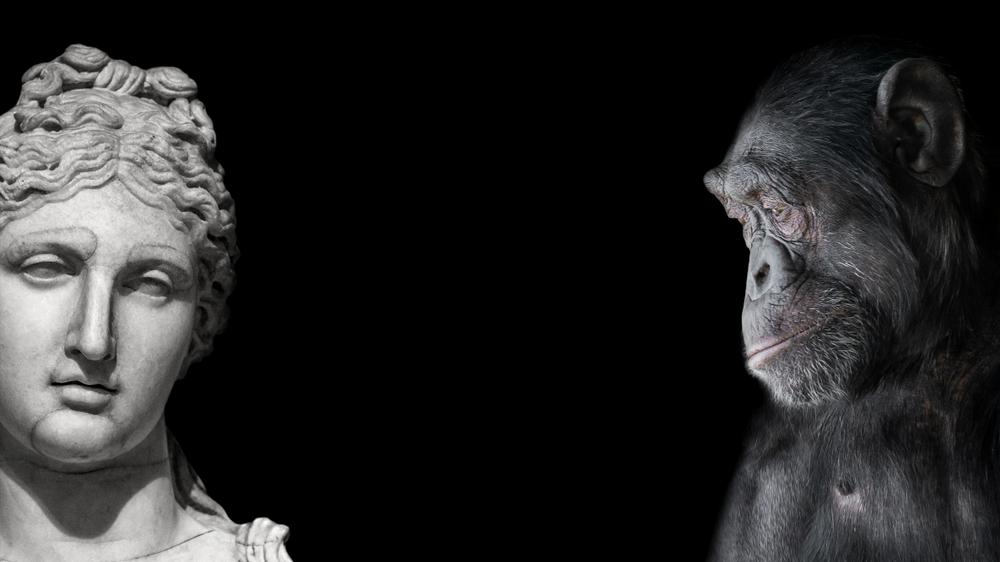
Misunderstanding Human Nature
And Its Development
|
"We are not born human, we are nurtured into our humanity."
What does it mean to be human? Correcting (narrow) Evolutionary Psychology.
KEY POINTS
- Narrow Evolutionary Psychology theory misfocuses our attention.
- Much more than culture is learned after birth. Our neurobiology is shaped for health or illness.
- We are not born human. Our humanity must be nurtured, in particular ways.
|
|
|
|
The Importance Of Movement In Early Childhood |
Darcia interviews Bette Lamont, the Founder and Director of Developmental Movement Consultants, an international organization designed to address underdeveloped or damaged brains. She is also known as The Brain Nanny© and works with parents, caregivers and organizations to strategize ways to create optimal environments, family by family including nannies, for infant development in the first years of life.
|
|
|
|
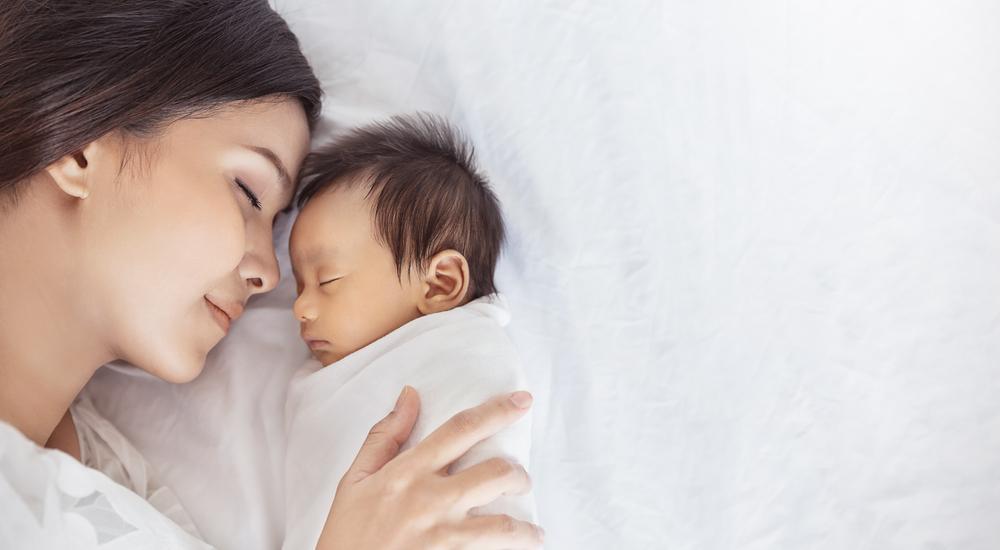
Welcoming Social Environments For Babies |
Body-to-body co-regulation is fundamental for health and sociality.
KEY POINTS
- Babies grow in healthy ways with positive support.
- Mothers and babies can become disconnected if they don’t co-regulate regularly.
- Interventions for visceral co-regulation can restore a cooperative relationship.
|
|
|
|
Join Our LIVE Discussions! |
|
See the Evolved Nest's Short Film - Breaking the Cycle! |
|
Below is your invitation to LIVE discussion about Breaking the Cycle, the Evolved Nest's short film, with Darcia Narvaez, PhD, and Lisa Reagan.
About Breaking the Cycle
"Breaking the Cycle" contrasts the two basic ways societies can function: the optimal approach, which most human societies through time have followed, is the Cycle of Cooperative Companionship, where children’s basic needs are met, they grow into well-functioning, cooperative community members (from neurobiology and on up), and as healthy adults, they maintain the cooperative system. Currently in the United States, the opposite pattern is in place—children’s basic needs are not met and ill-being and dysregulation ensue, creating adults who are detached and distracted and keep this Cycle of Competitive Detachment going. Not surprisingly from a transdisciplinary perspective on childhood adversity and its effects, the United Nations ranks the United States as 41st out of 41 developed countries for child and adult wellness.
See the Evolved Nest's six minute film and discover resources, including a film guide and a Spanish version of the film, at www.breakingthecyclefilm.org
JOIN MONTHLY LIVE DISCUSSIONS
Join Darcia Narvaez and Lisa Reagan for a discussion of the Evolved Nest's short film, Breaking the Cycle. You can watch the film and find resources, including a film guide on this website.
May 9, 2022 from 8 to 9 p.m. ET, REGISTER
The live discussions are free, but you must register to join.
|
|
Moving Toward Primal-Indigenous-Kinship Wisdom and Worldview |
We've collected Darcia's posts, interviews, videos, and podcasts on Indigenous Wisdom and Worldview onto one webpage for your viewing and sharing enjoyment!
Check out the Indigenous Worldview Resource Collection here.
|
|
|
|
The Evolved Nest's Self-Directed Learning Center |
What is our Evolved Nest?
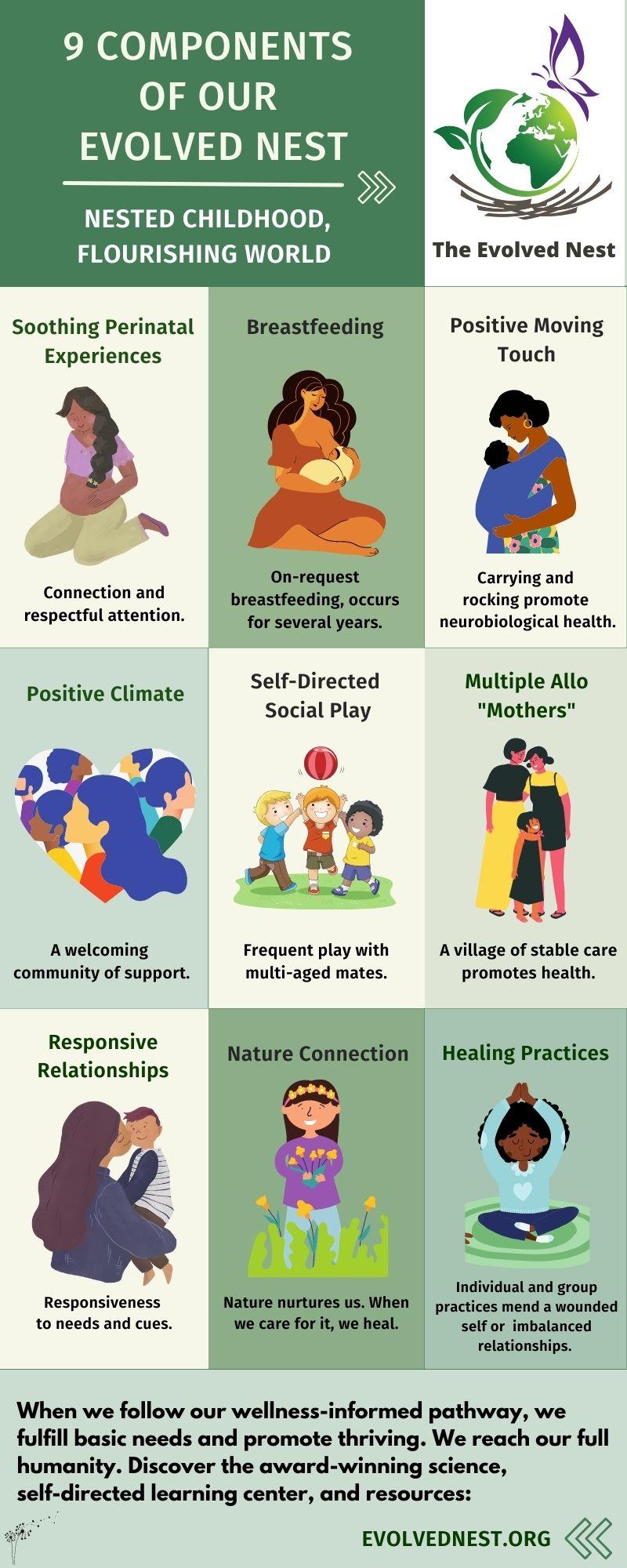
Children are biosocial creatures such that their biology is constructed by their social experience. The evolved nest or evolved developmental niche (EDN) is the ecological system of care provided by families, teachers and communities that aligns with the maturational schedule of the child, satiating the evolved needs of infants and children, allowing them to flourish and develop compassionate spiritualities. The EDN consists of soothing gestation and birth, on-request extensive breastfeeding and positive moving touch (no negative touch), a welcoming social climate, self-directed play with multiple aged mates, warmly responsive nurturing from mother and others, nature immersion and connection, and healing practices to repair miscommunication or hurts. Well-nested children and adults demonstrate social and moral flexibility, adapting to situations and others with emotional and spiritual intelligence
Below you will find links to each of the nine components of humanity's Evolved Nest.
Click on the links to go to each of the component's page to find articles, podcasts, and more, supporting that component.
Download the Evolved Nest's Nine Components in a PDF format here.
Download in a JPEG format here.
|
|
|
|
Join the Evolved Nest COMMUNITY |
|
Join Our Mighty Networks' Evolved Nest Community |
We are in the process of creating a safe, kind, and stimulating space to engage and connect with our Evolved Nest community through Mighty Networks!
This platform is ad-free, algorithm-free, and owned by us. You can download the app to the network and post and stay up-to-date with group discussions, research, and upcoming events.
Many organizations are charging a membership fee for these Mighty Networks' platforms, but we are opening up our group to you for free.
|
|
|
|
DONATE and Support the Evolved Nest! |
|
Read 88 Five-Star Reviews of Our Work and Kindred World! |
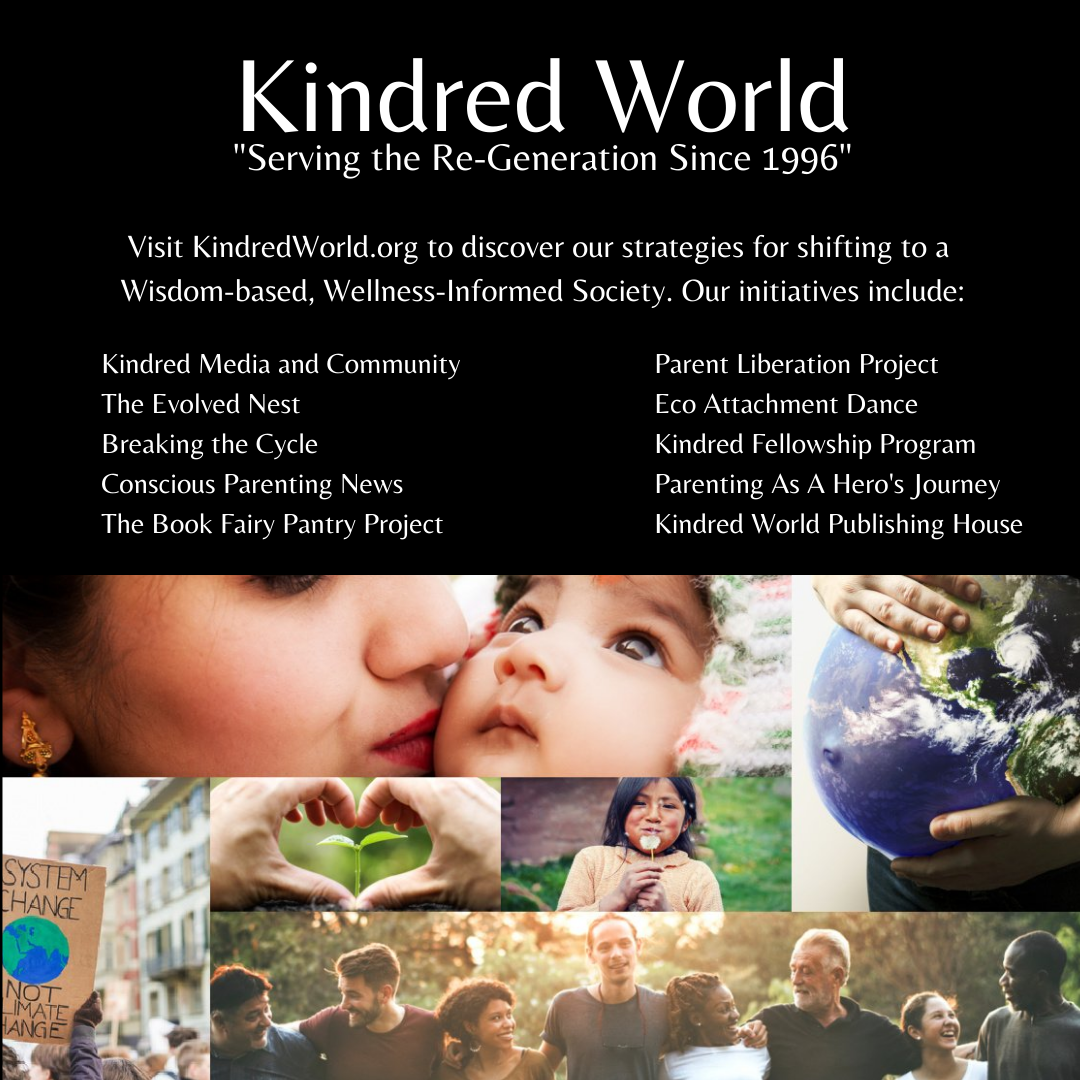
The Evolved Nest is an educational initiative of Kindred World, an American 501C3 nonprofit that has Served the Re-Generation Since 1996. Darcia Narvaez, PhD, is the founder of the Evolved Nest and the current president of Kindred World.
Learn more about what we've learned in a quarter century of exploring the creation of a wisdom-based, wellness-informed society, here.
Read our more than 88 five-star reviews here.
Our gratitude to everyone who has supported The Evolved Nest's work over these past four years.
|
|
The Evolved Nest - www.EvolvedNest.org |
|
|
|
|
|
|
|