|
Europe 2023
November 21
Hierapolis - Pamukkale
| |
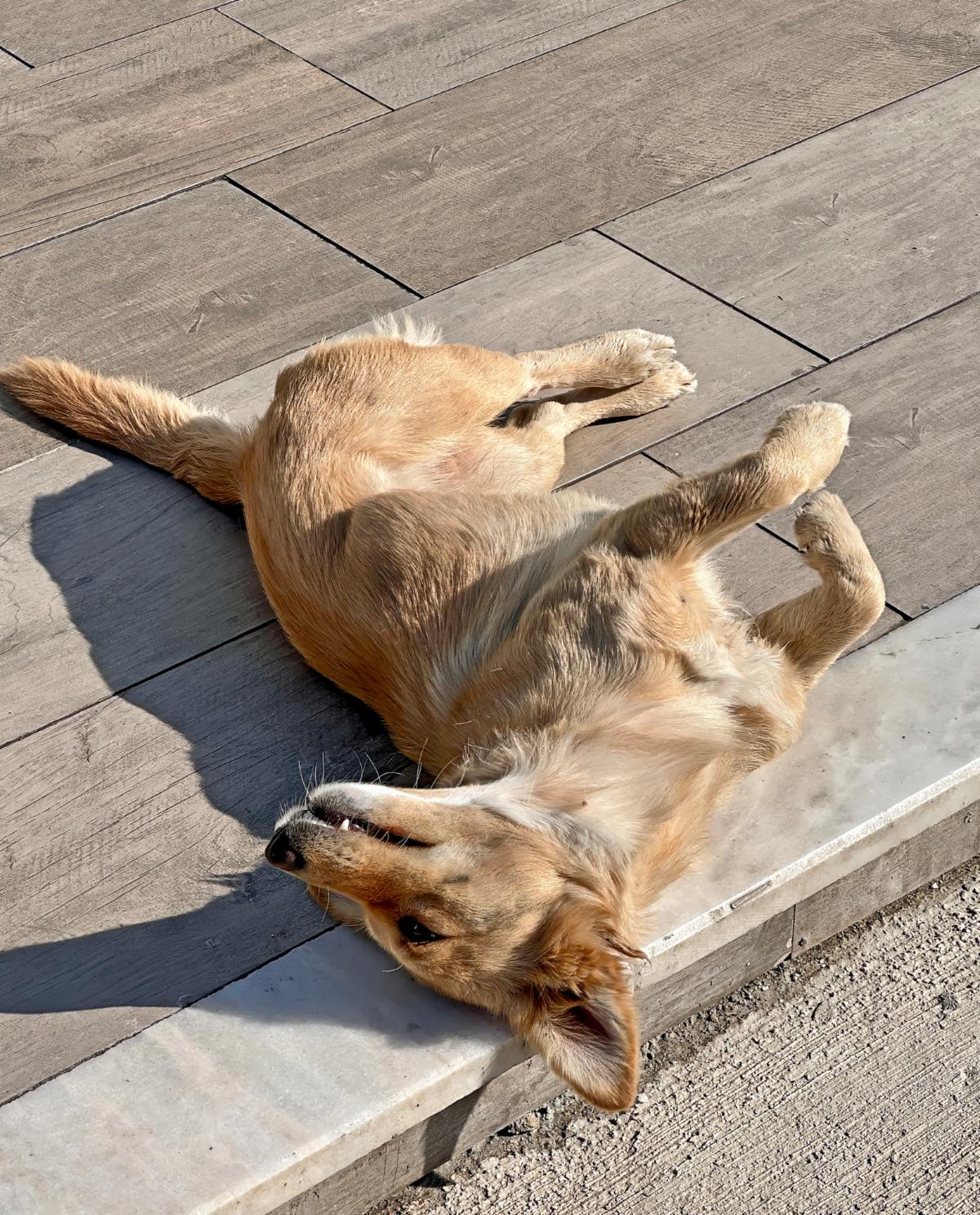
This is the typical Turkish dog. While kitties explore, dogs rest. | |
|
TUESDAY, NOVEMBER 21, 2023
HIERAPOLIS - PAMUKKALE
The most visited tourist site in all of Turkey is Heirapolis - Pamukkale. This amazing site consists of a white cliffside called Pamukkale, which means 'Cotton Castle,' and Hierapolis, the ruins of an ancient Greco-Roman city built on the plateau above the white cliffs.
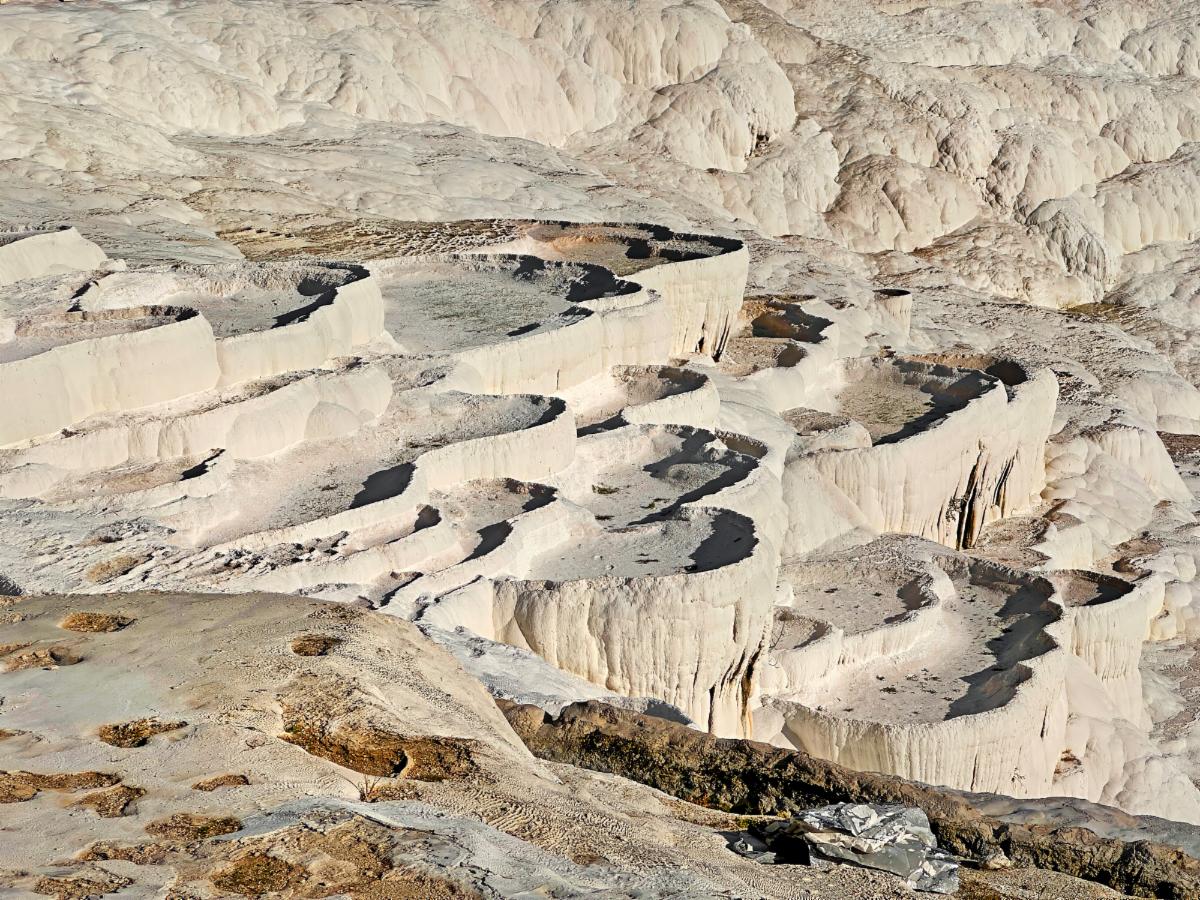
The draw to this area is the white cliffs. They are formed by a cascade of warm thermal spring water with a high concentration of calcium bicarbonate spilling over the cliffside. The water cools as it flows down the cliffs and leaves hardened deposits of white calcium that form natural pools, shelves, and ridges, which the inhabitants of Heiropolis could plunge and splash around in. The gorgeous turquoise mineral-rich pools of water were, and are, considered to have healing properties.
The pools are still there, and tourists still frolic in them. Unfortunately, as of late, the water flows have diminished, and few pools remain. The extensive white cliffs are impressive, and the water that does continue to flow is an intense turquoise. The cliffs are magical.
Not to be confused with the Pamukkale cliffs, the small town at the foot of the cliffs is also called Pamukkale. It is a quaint Turkish town with many nice restaurants and shops.
| 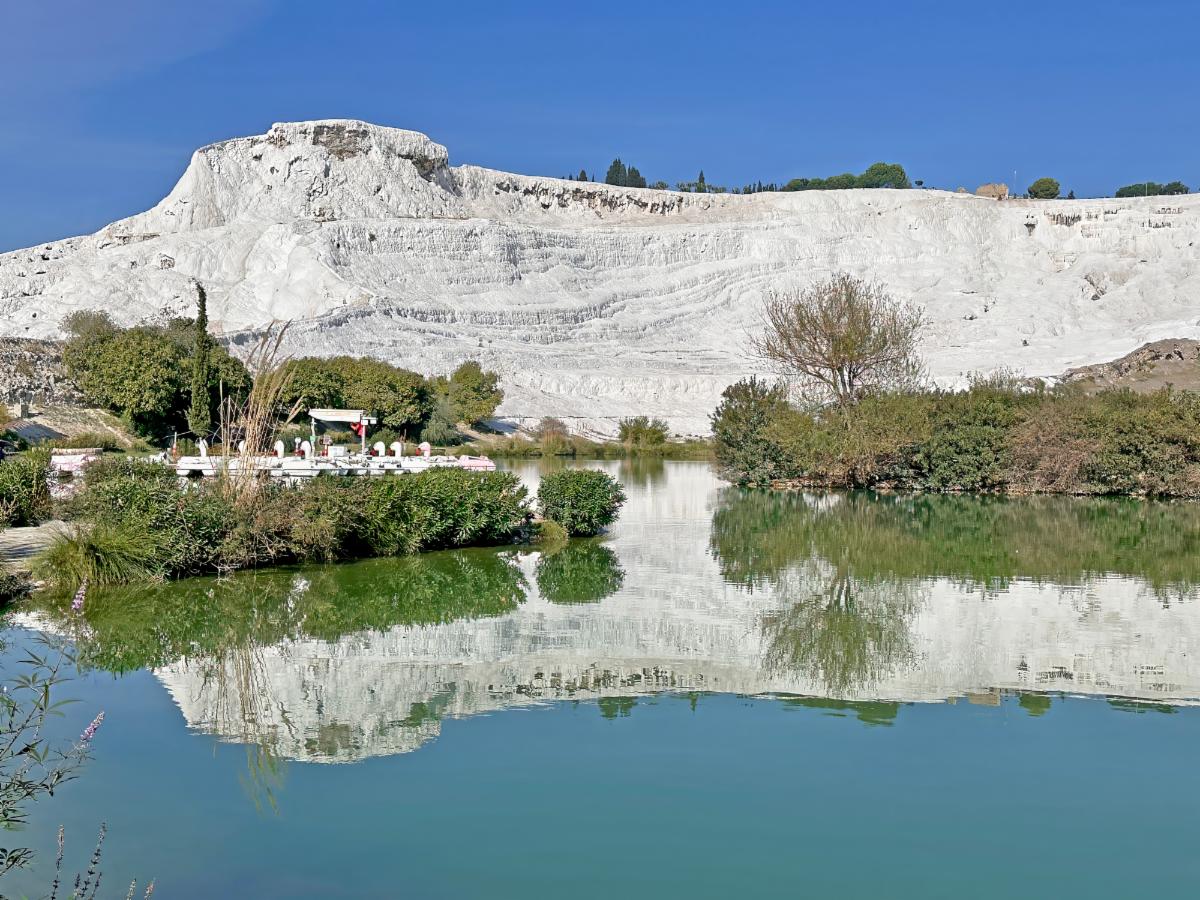 | Above and below: The white Cotton Castle cliffs of Pamukkale viewed from the town of Pamukkale. | 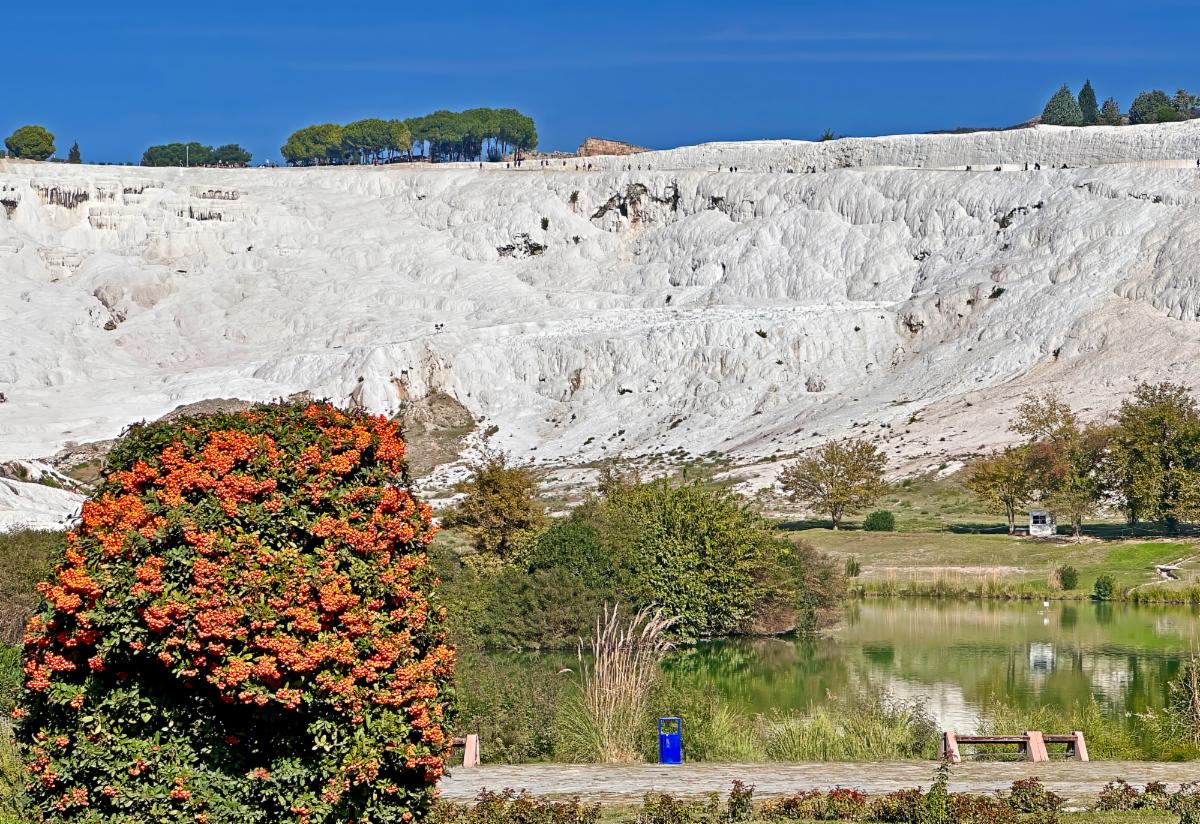 | |
Hierapolis and Pamukkale come as a package deal. The entire site is vast, at least 2 kilometers long and a half kilometer wide. Hierapolis was a significant city. The plateau where the ruins are located is not flat. A continuous uphill grade starts at the cliffs and continues through the ruins.
There are three entrances: 1) One right in front of the cliffs in downtown Pamukkale. It is a tough uphill slog to reach the top of the cliffs. 2) About a half kilometer south of Pamukkale is the second entrance. Even though it starts higher up the cliffside, there is very little parking, and touring the site still requires a couple of kilometers of walking uphill. 3) The north gate, where cars and buses can park, is the best. It starts at the highest point at the backend of the site. Our tour bus dropped us off up here and picked us up at the lower south gate - nice!
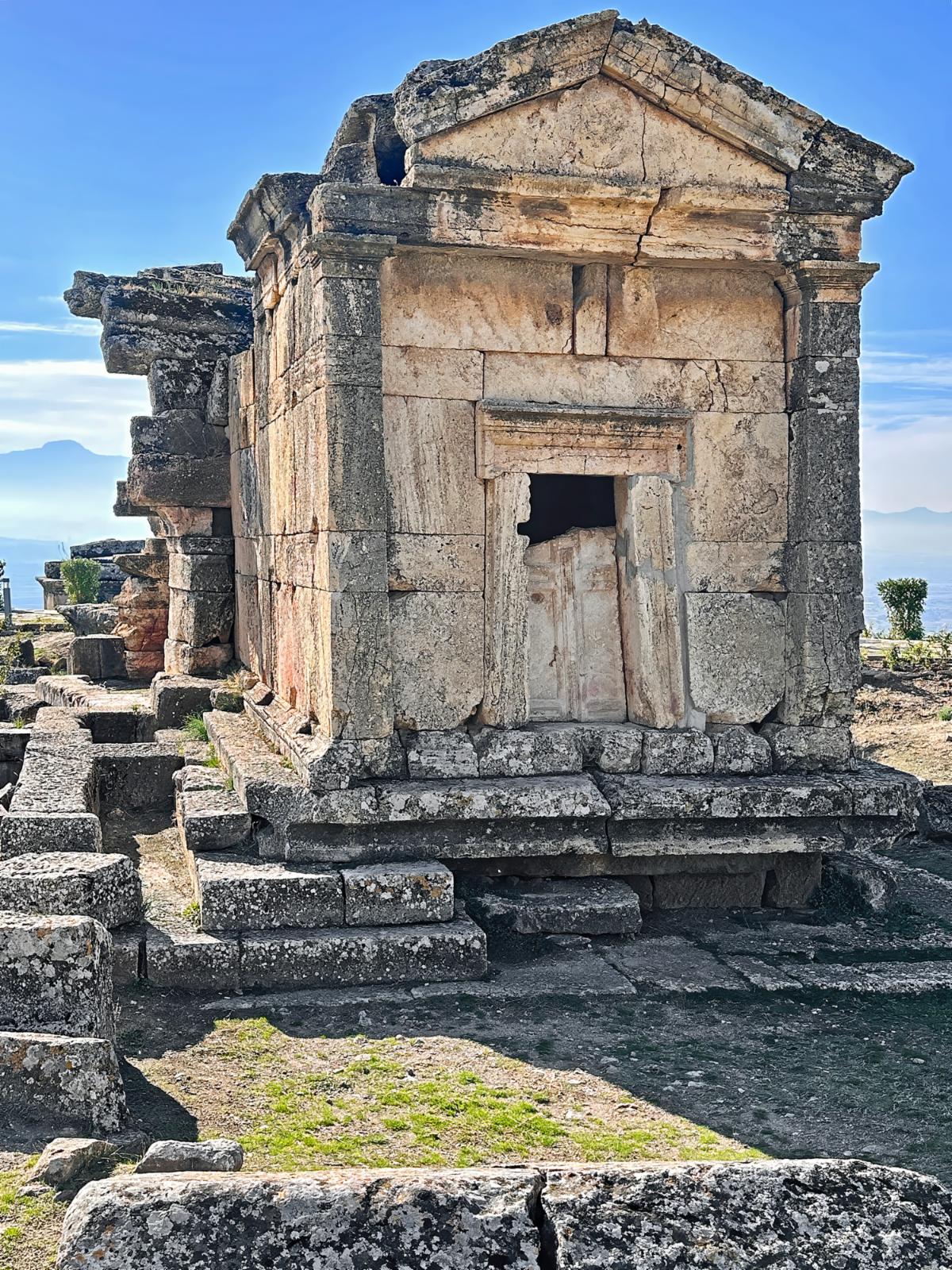
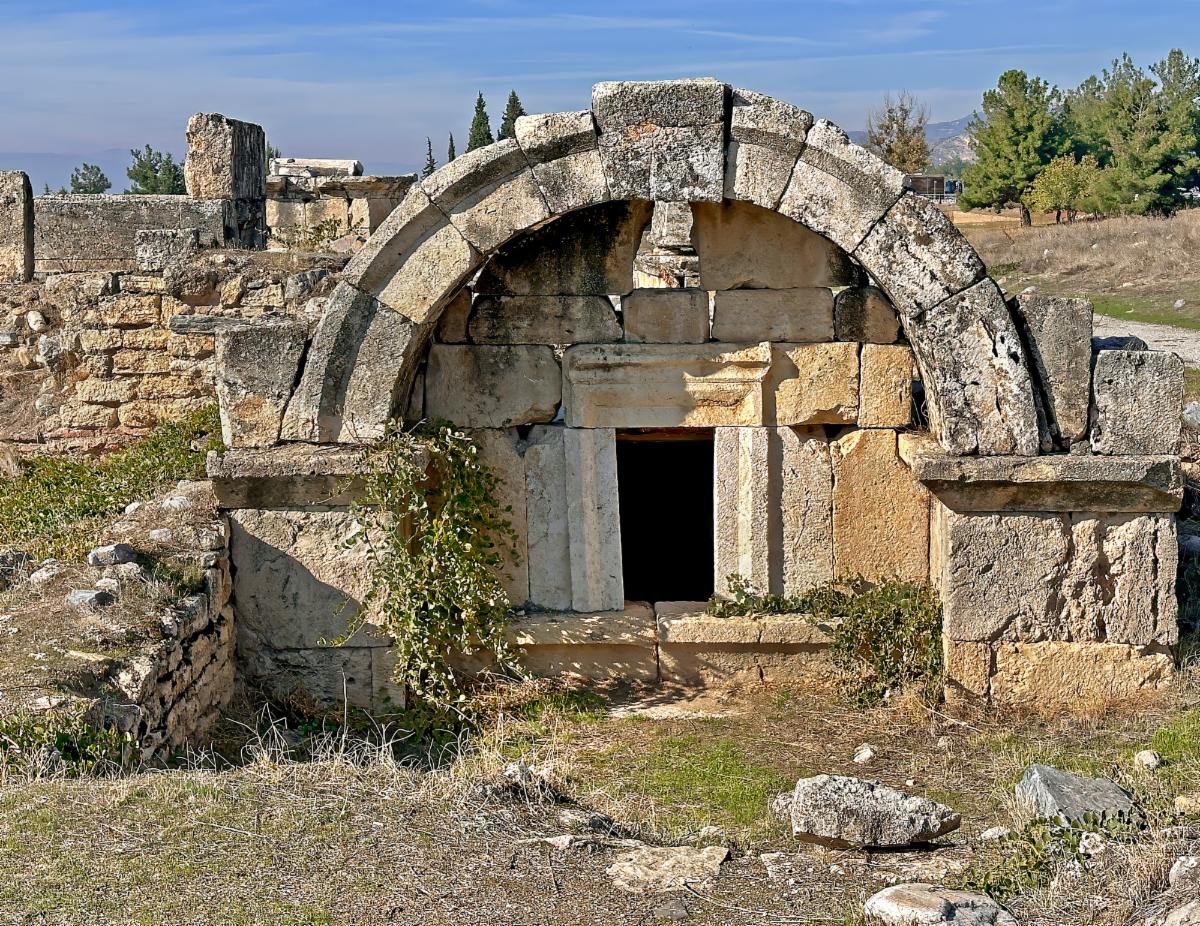
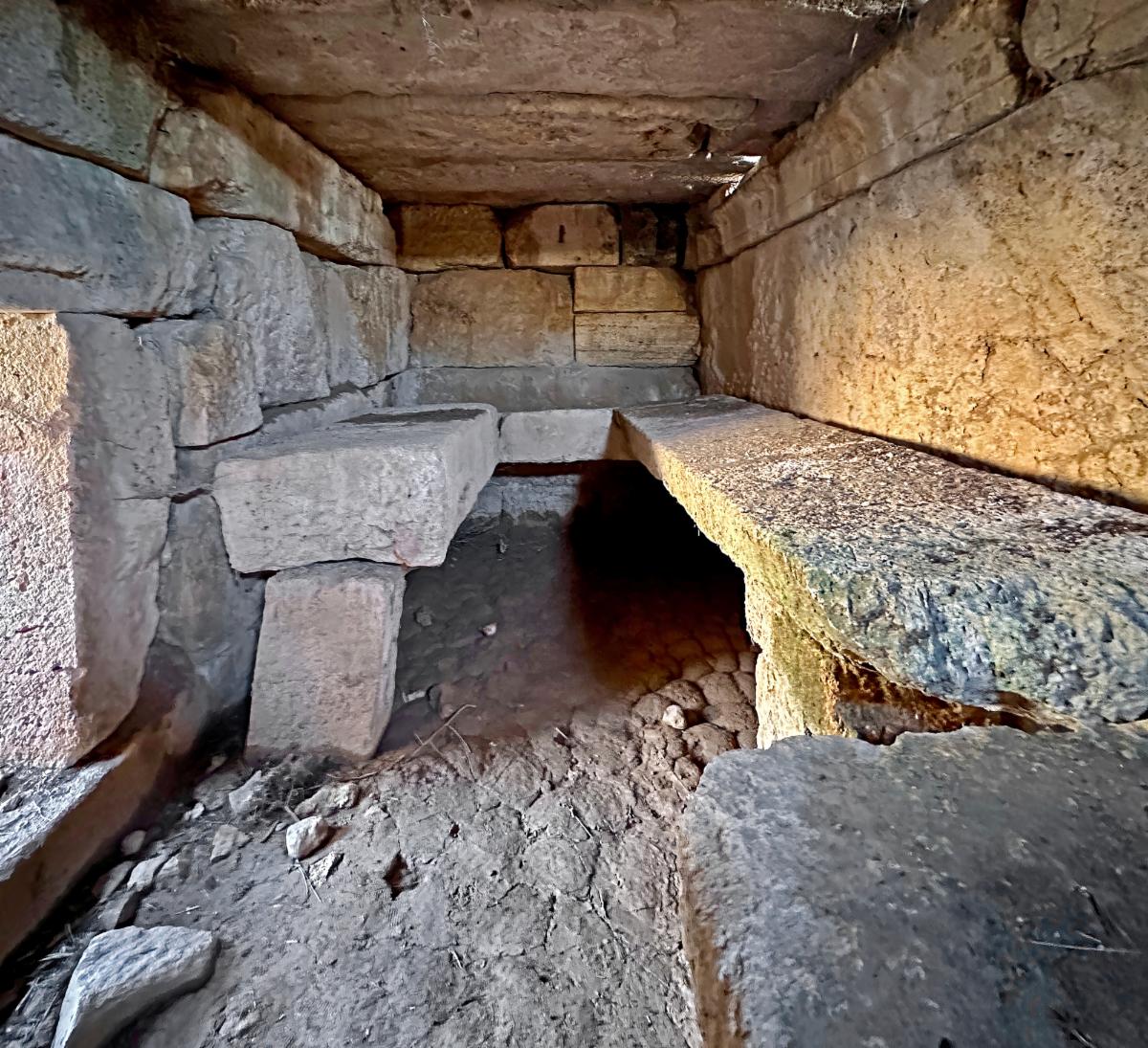
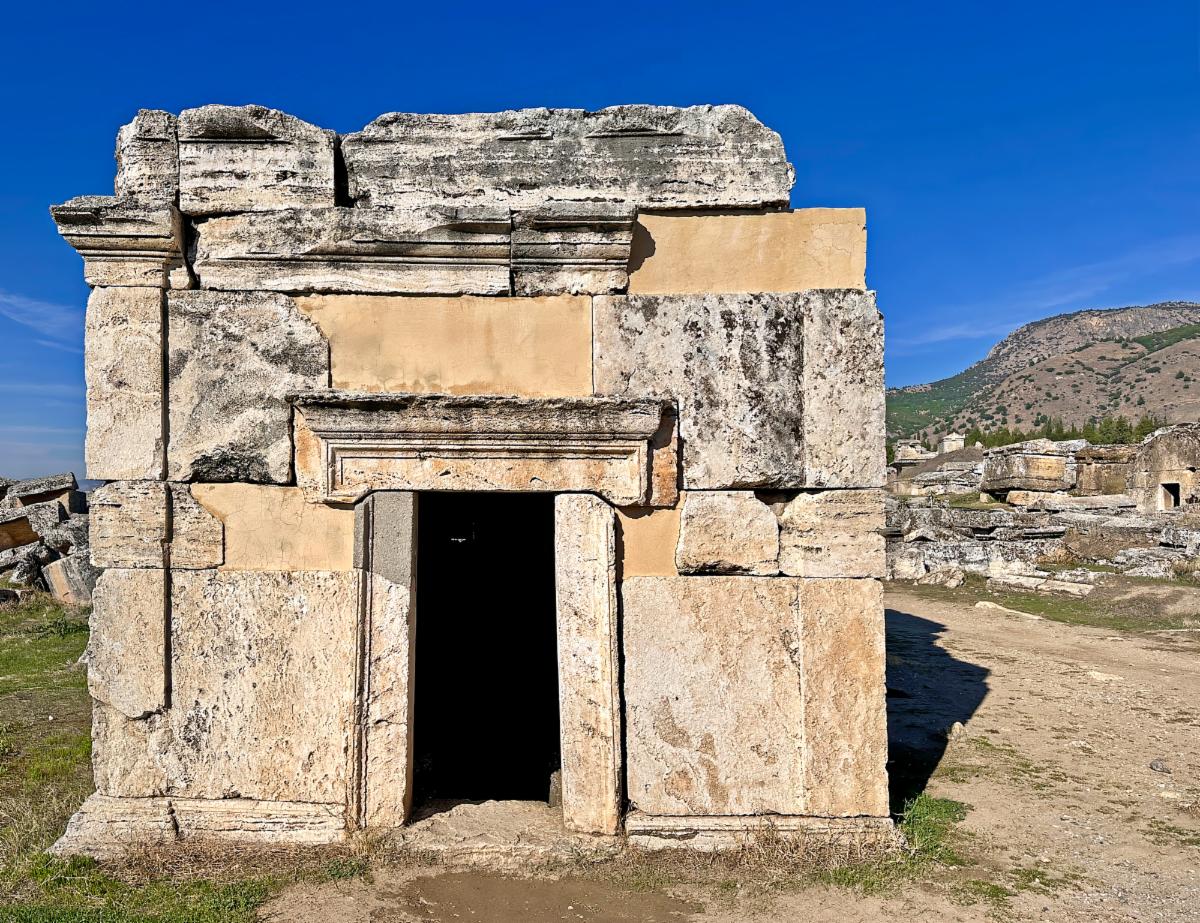
The entrance fee was a hefty 700 lira each (about $25 US). At the northern gate, Hierapolis starts with extensive burial plots. Thousands of tombs in various states of condition spread out for at least a half kilometer. Some tombs were large enough to go inside and see the beds where several sarcophagi would lay. (A coffin is made of wood or metal. A sarcophagus is made of stone).
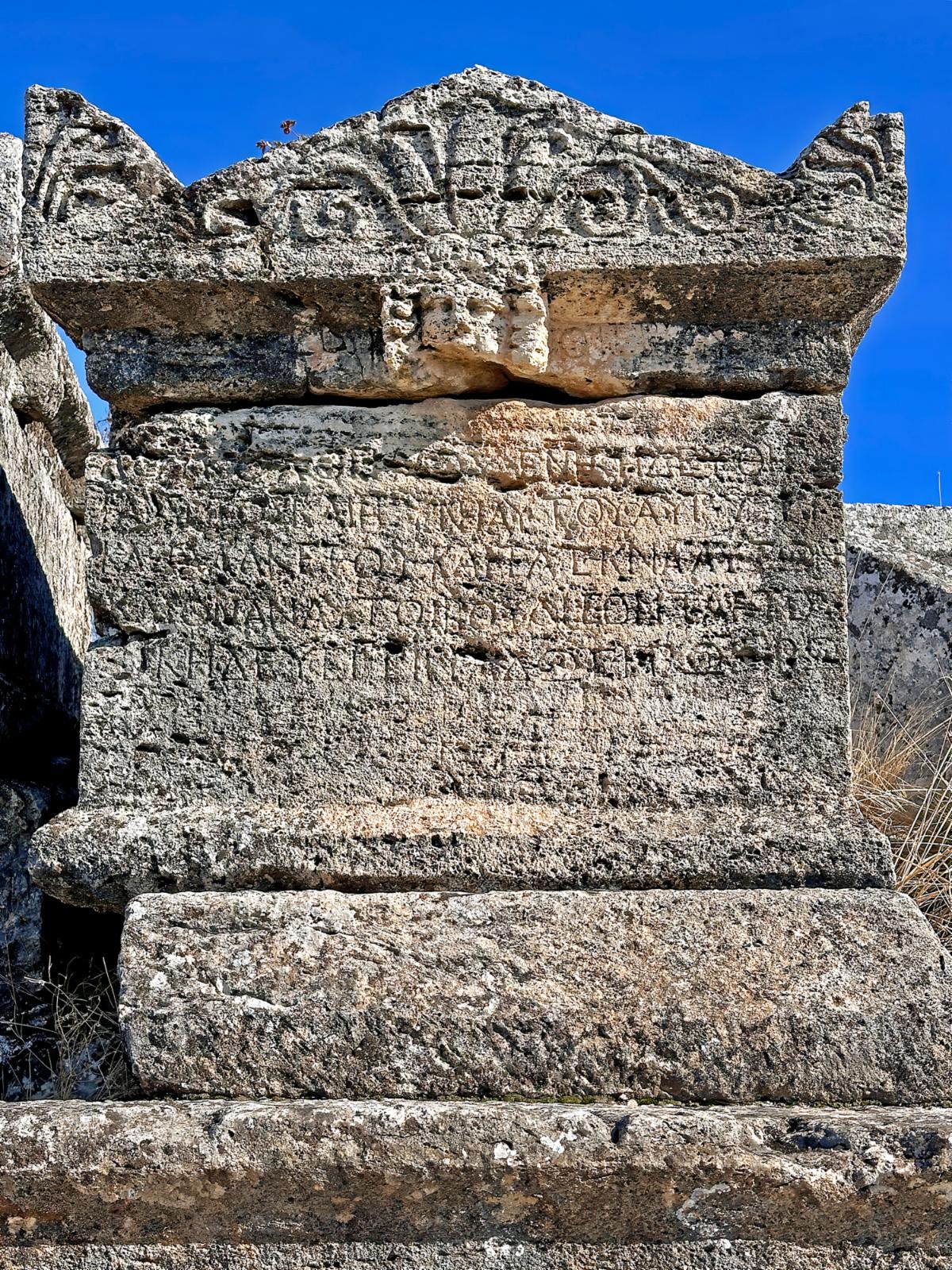
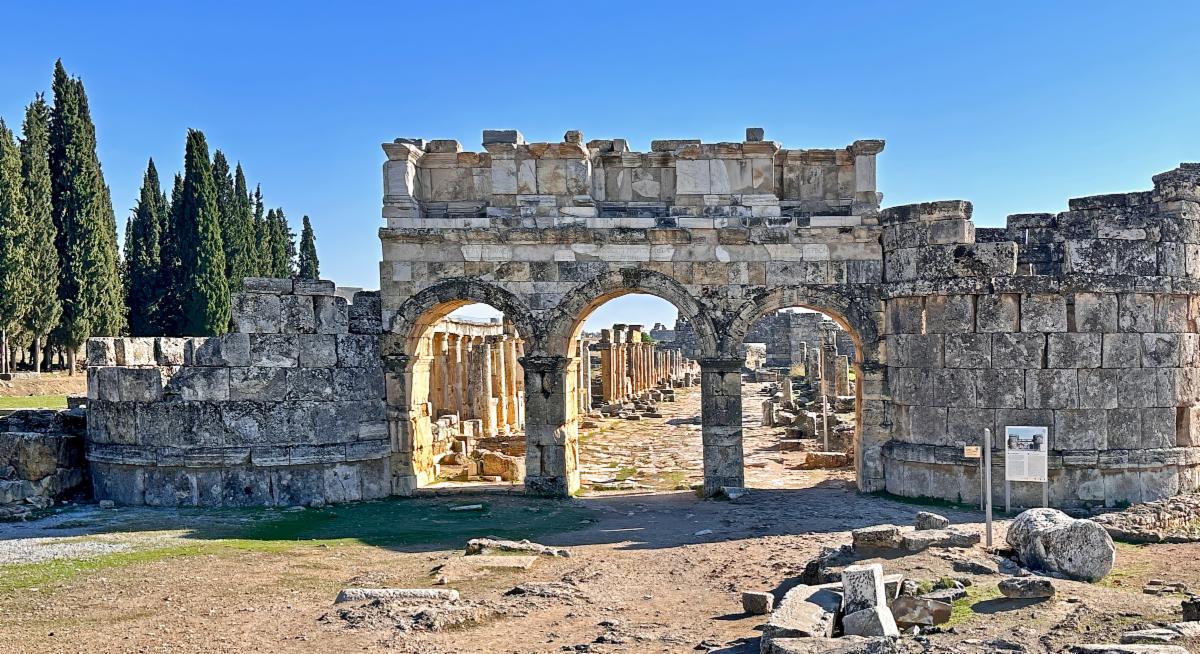
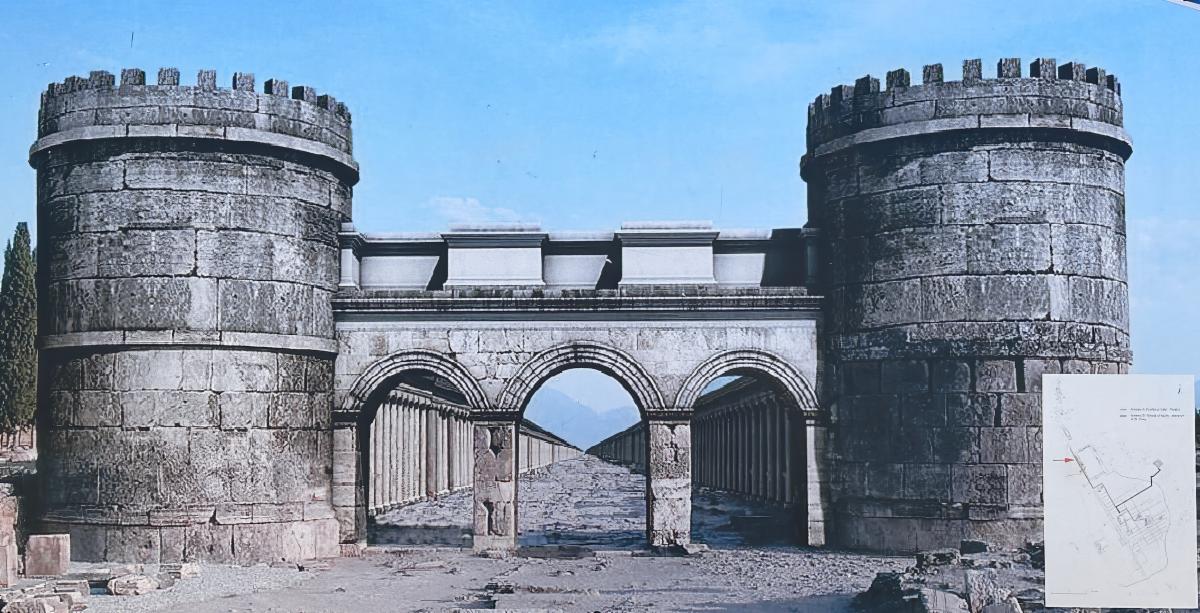
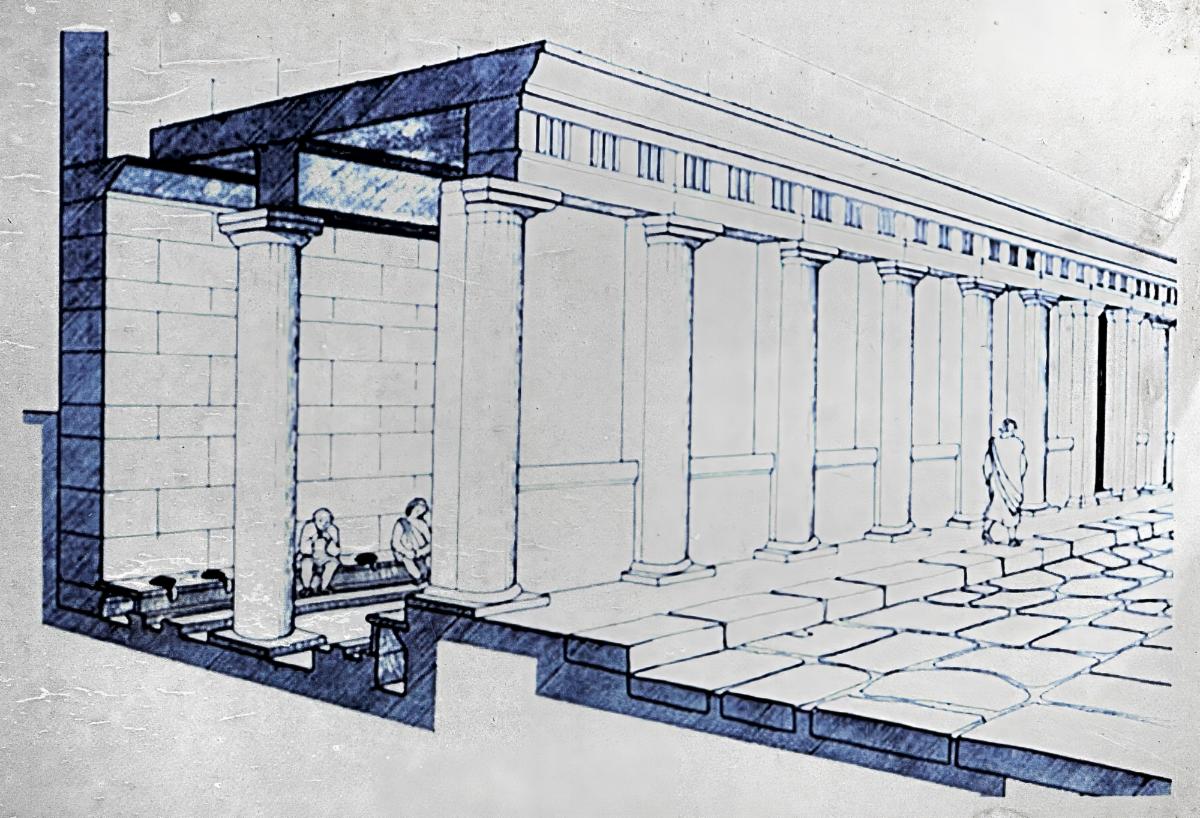
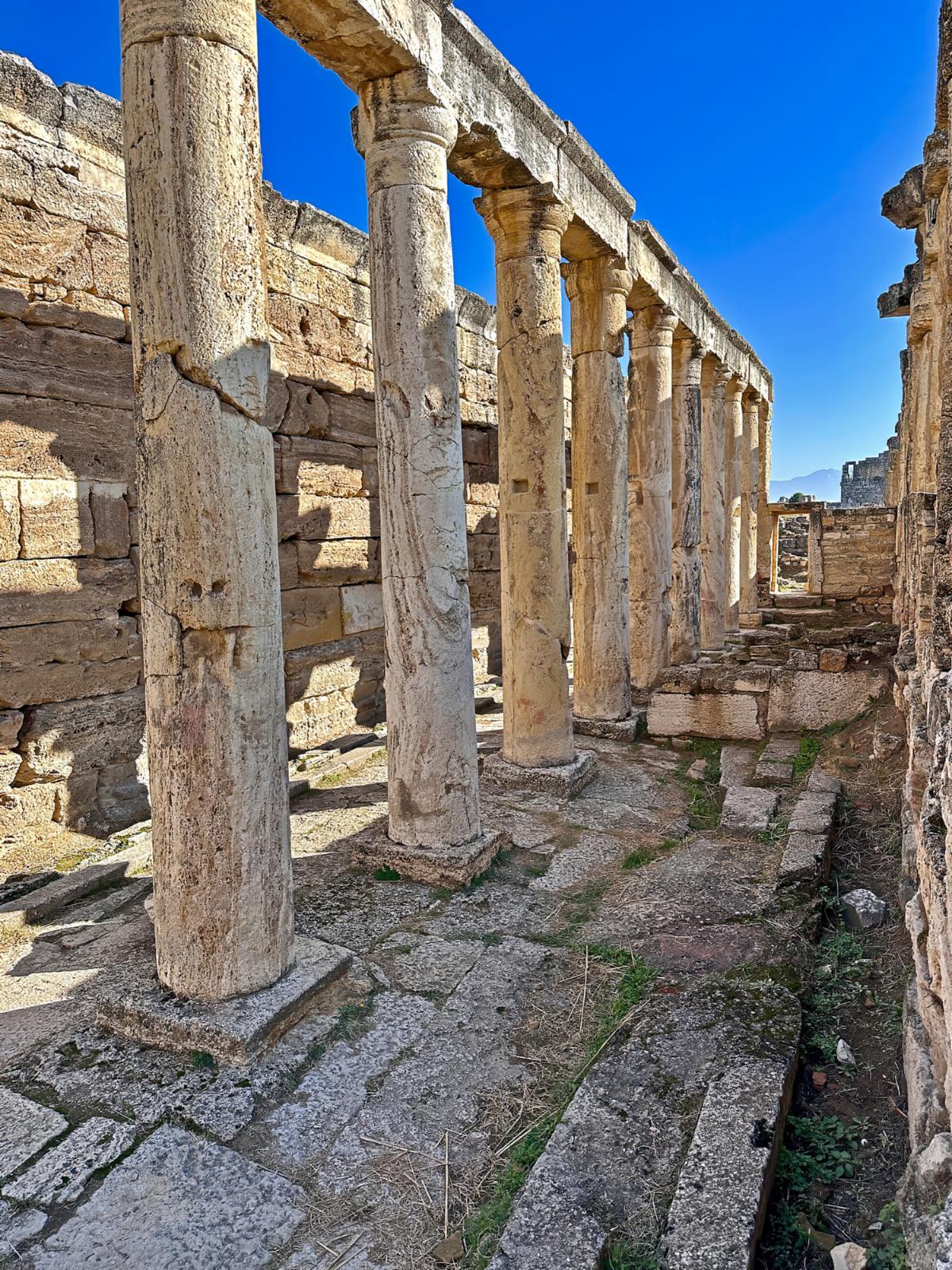
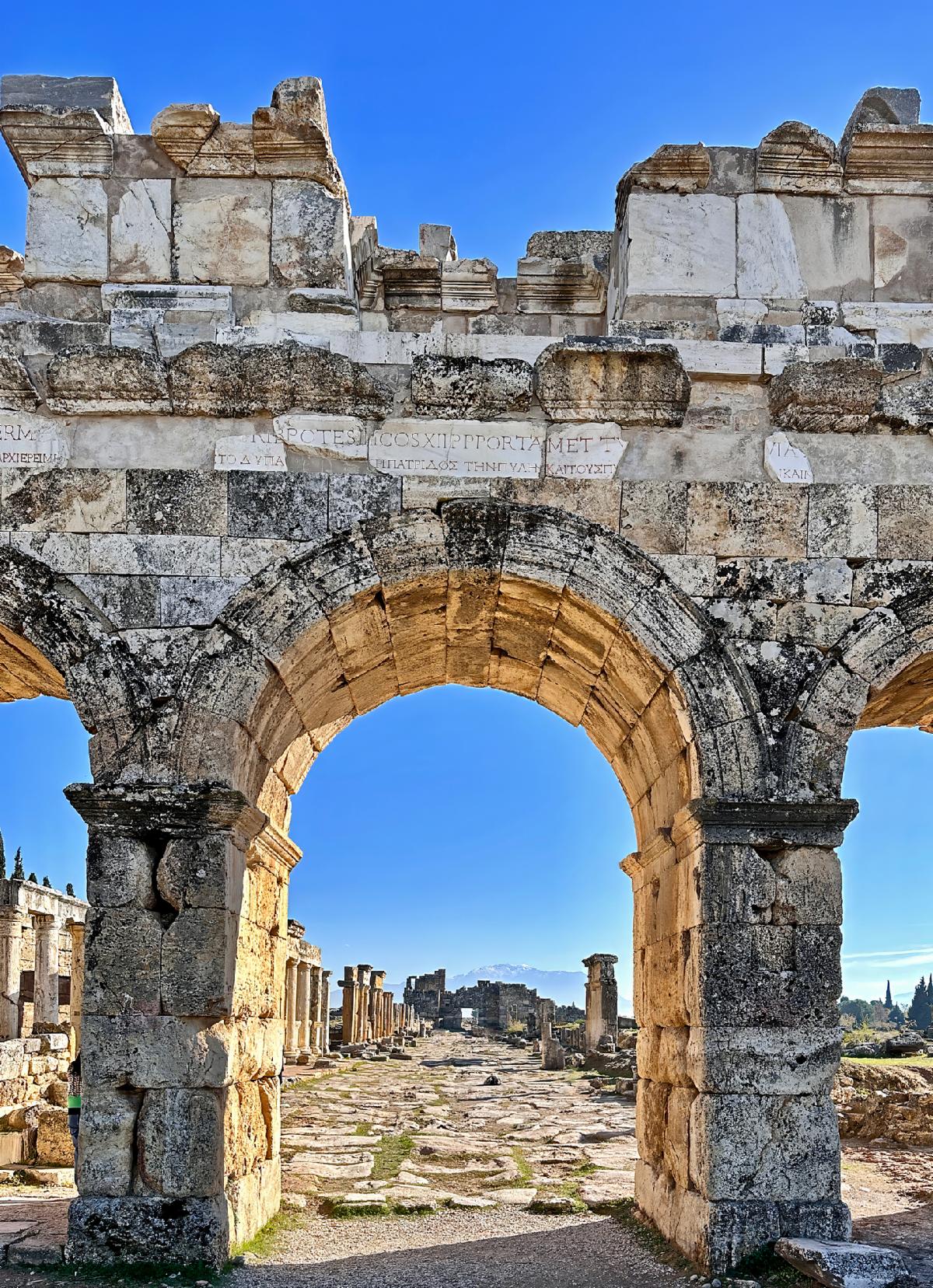
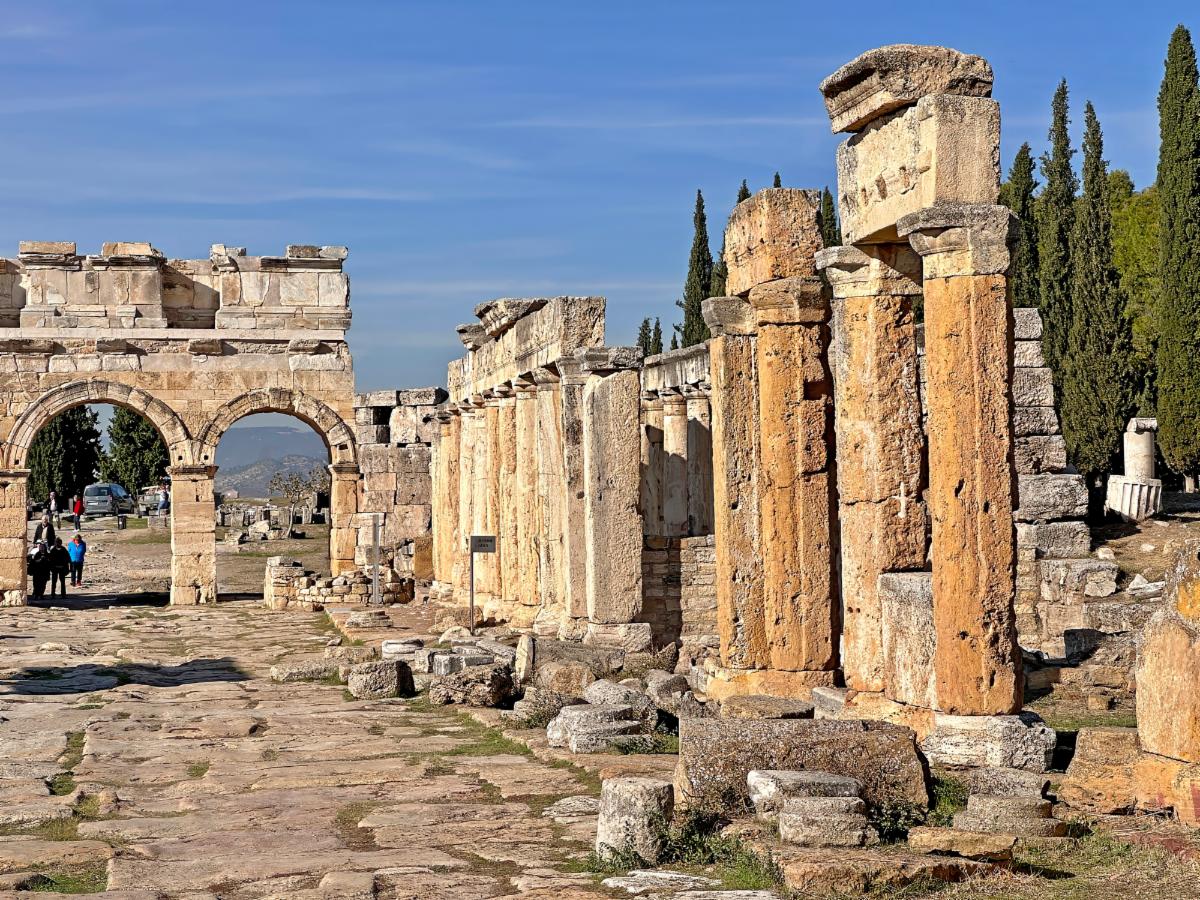
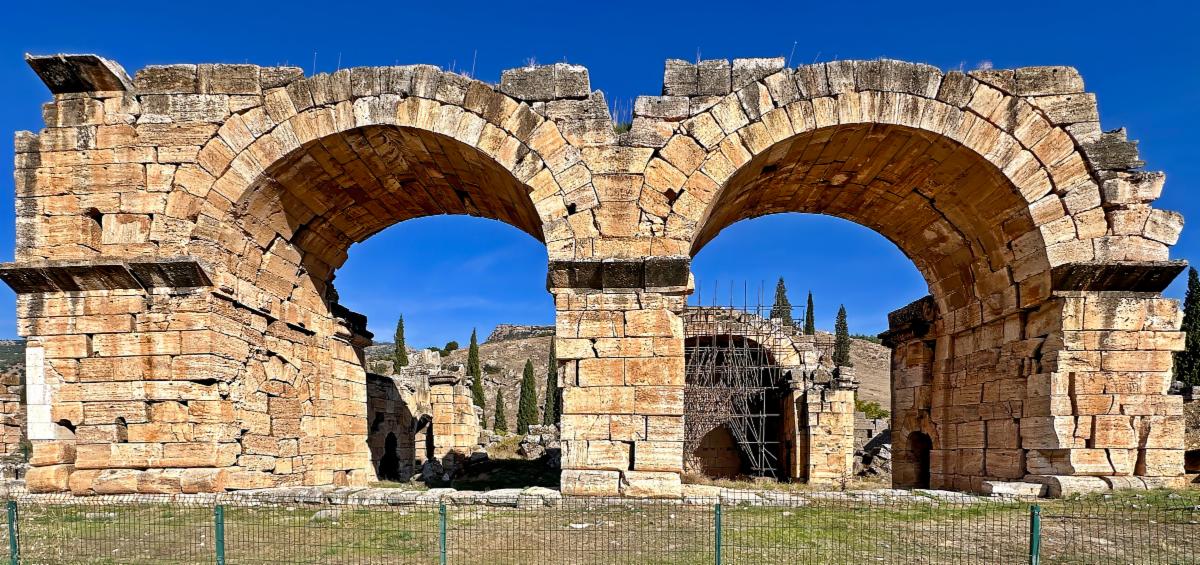
| 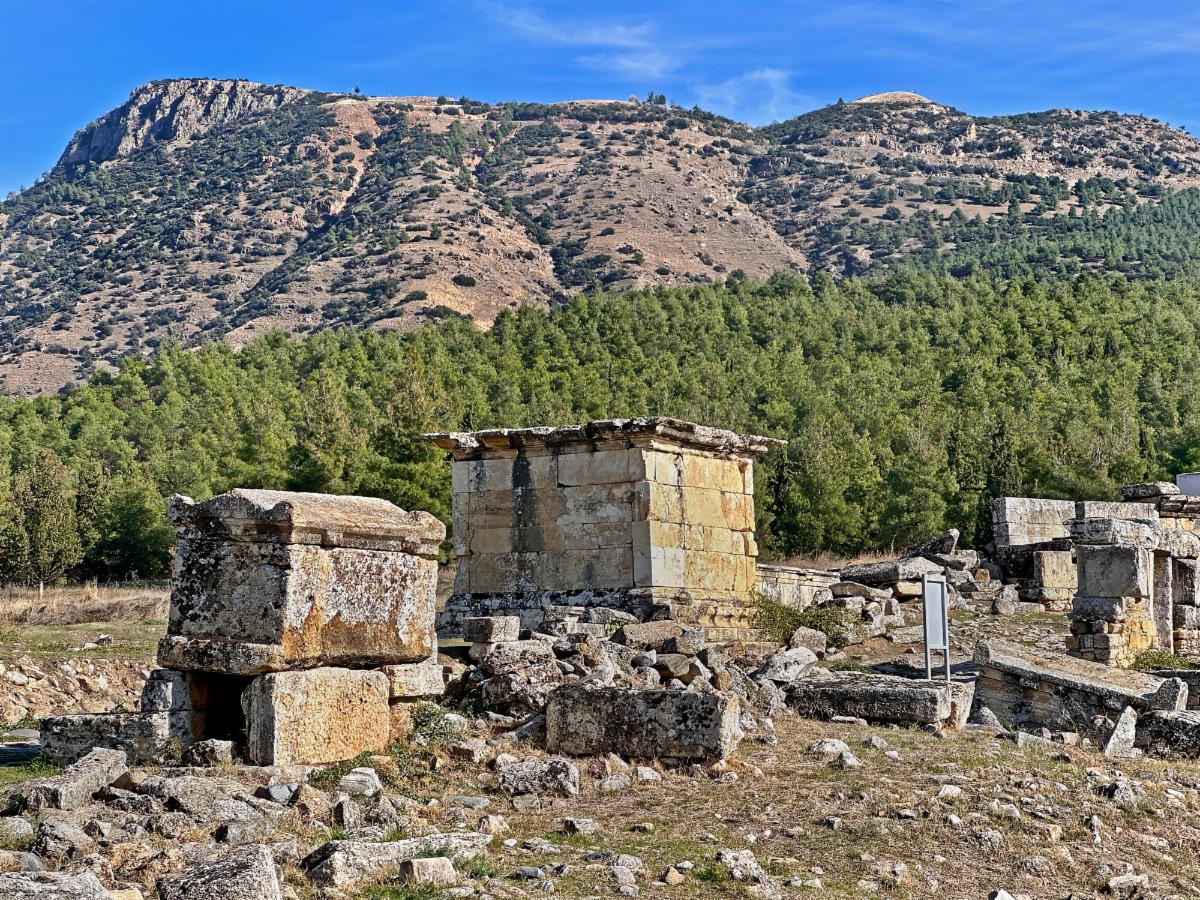 | Hierapolis is set on a beautiful sloping plateau between a tall mountain to the south and a deep valley to the west and north. | At the back end of the city lies the vast burial ground. Thousands of tombs line a grid of streets. | Tombs come in different sizes and shapes, representing different periods in the city's existence. | The interiors of the tombs could hold many sarcophogi. | This tomb is fit with a nice door header. | An imposing arched entrance gate, called Frontinus Gate, marks the beginning of the city. Just inside the entrance were the public latrines. This was a long stone bench with holes. Under the bench, water flowed, taking the waste away. There wasn’t any info on where the wastewater went or how it was treated (or not treated), but I hope it didn’t flow down to the beautiful white cliffs. The drawing of the facilities offered little privacy and no male/female separation. That, apparently, is a modern hangup. | The arched gate entrance to the city from the burial grounds. It is called Frontinus Gate. | An artist's rendition of what Frontinus Gate looked like. | This drawing depicts the public latrine just after passing through the arched gate entrance. | This is what remains of the public latrine. | Looking back through Frontinus Gate. | |
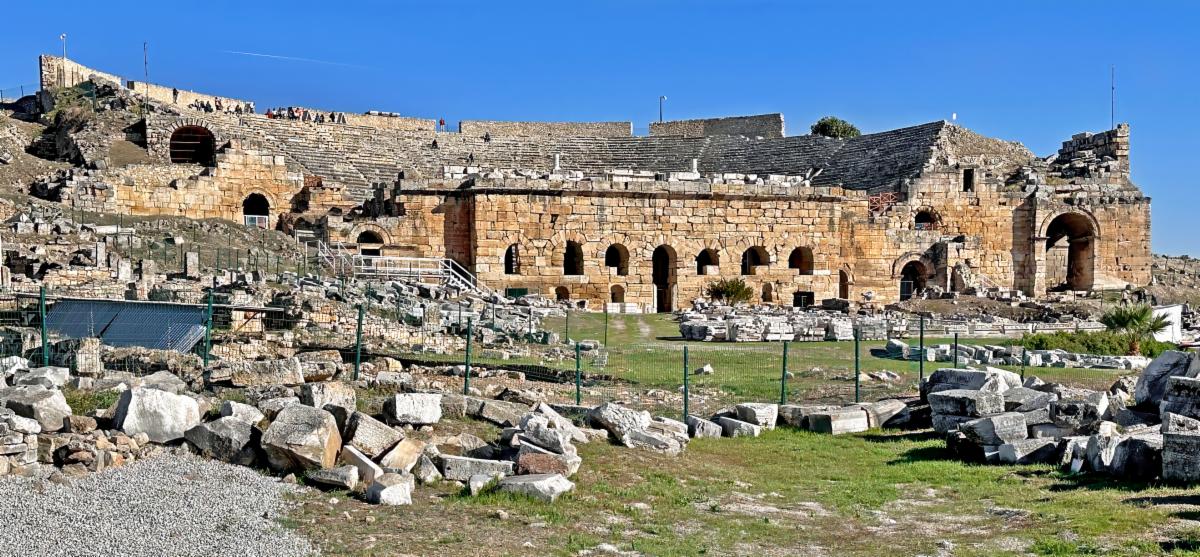
There are a couple of large buildings somewhat intact, and many smaller ones before reaching the Temple of Apollo, Pluto's Gate, and the Coliseum. Although the Coliseum isn't nearly as large as the one in Ephesus, it was a decent size. Entertainment was important in Roman society.
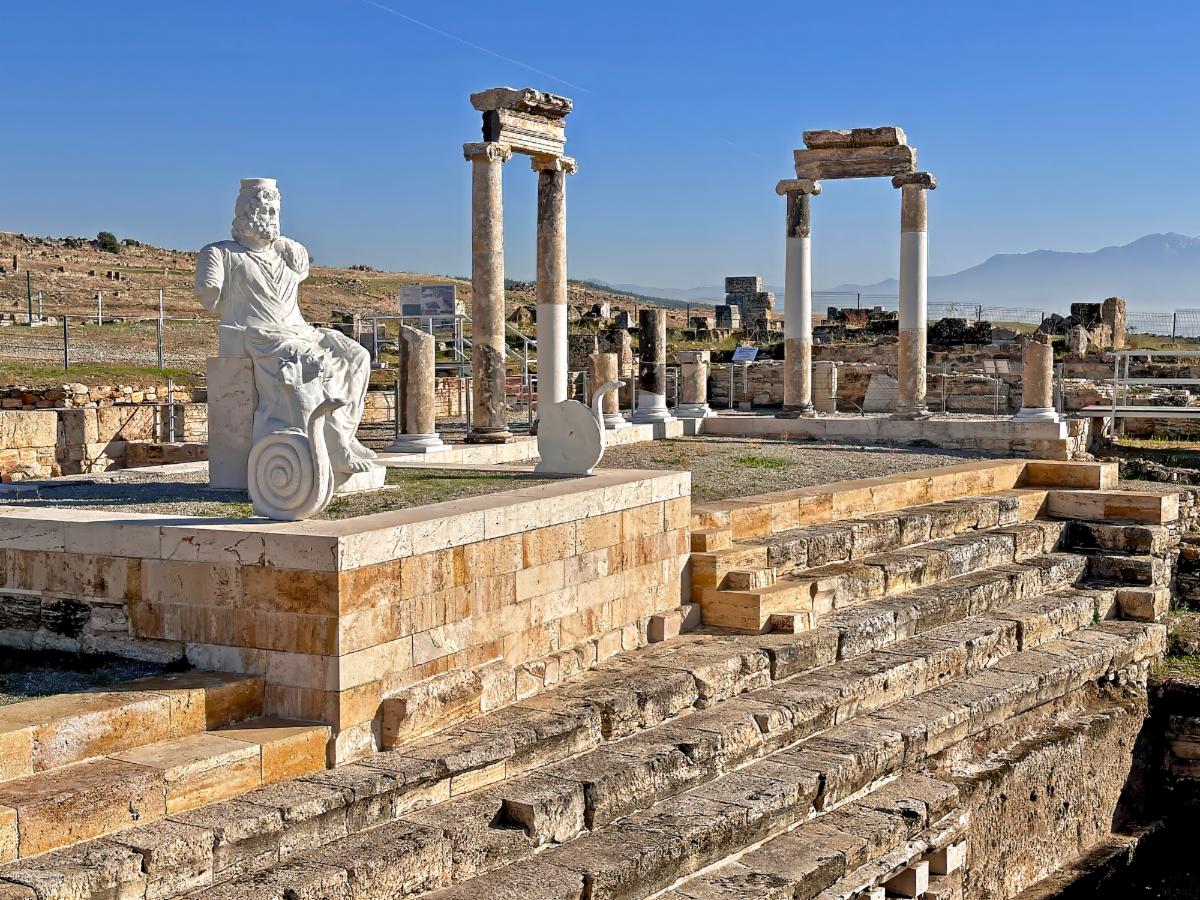
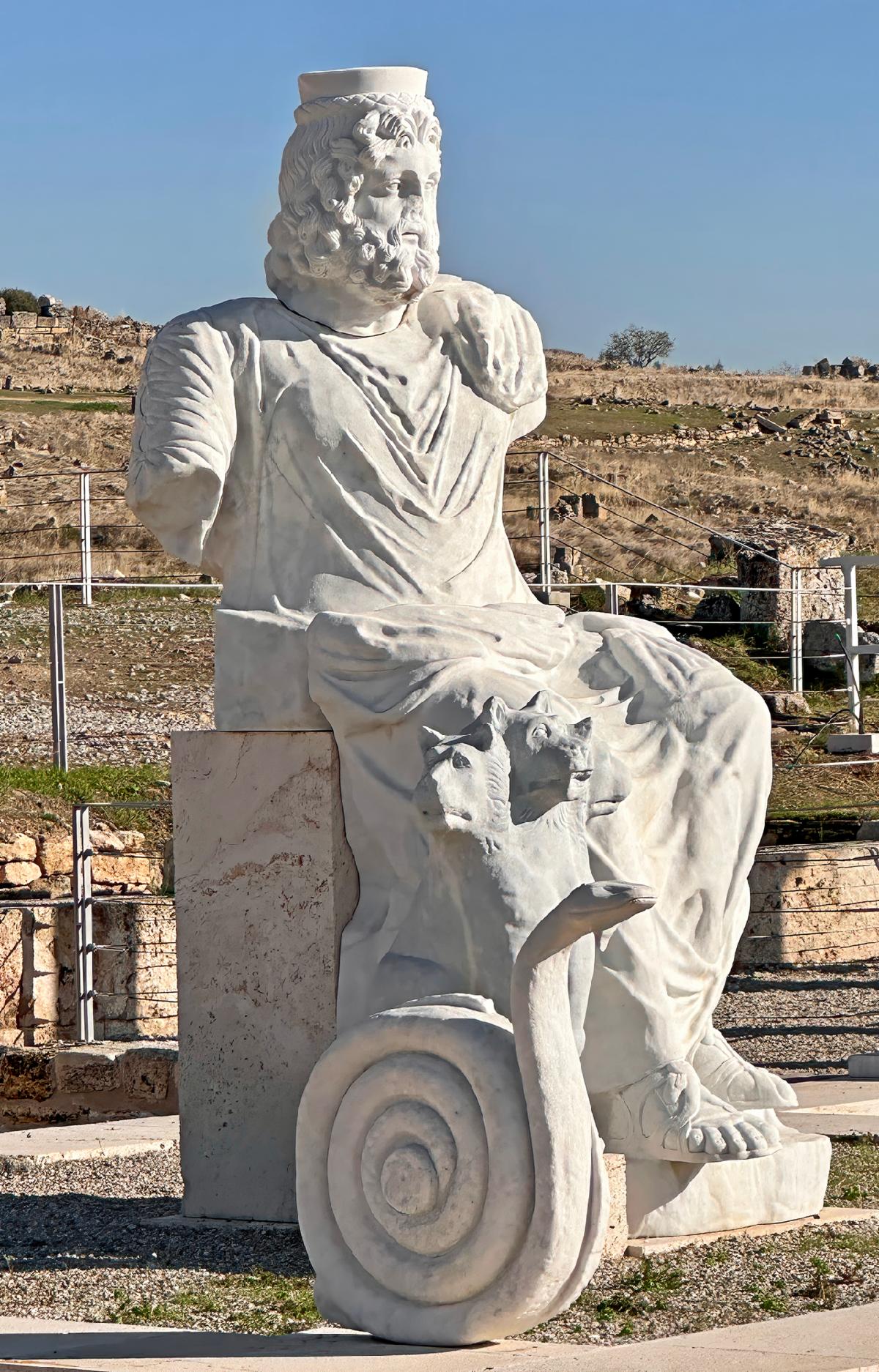
The Temple of Apollo was a mess of rubble. Pluto's Gate, or the Gate to Hell, has an fascinating history. It was built over a cave that vented toxic gases. Such caves were considered to be portals to Hades. Pluto, the god of the underworld, had a prominent statue standing at the portal in Hierapolis.
| This building held the Roman baths. Later, in the 6th century CE, it was converted to a Catholic Basilica during the Christian Byzantine period. | Gate to Hell. Below this structure is a cave that spews out toxic gases. It was considered the doorway to the underworld, or Pluto's Gate. Pluto was the Roman god of the underworld. Ritual animal sacrifices were common at this site. The animals would be thrown into the cave opening and would die from the fumes before being hauled back out by ropes. The statue is a replica of the statue of Pluto that was initially placed there. | The replica of Pluto guarding the Gate to Hell and his faithful three-headed dog, Cerberus. Of course, the snake has always been connected to Hades. | The Coliseum at Hierapolis. | |
Now, for a bit of history. The Phrygians began migrating from the Balkans to Anatolia (southwest Turkey) in 1200 BCE. They established a small kingdom within Anatolia. In the 7th century BCE, the Phrygians built a temple in what would become Hierapolis dedicated to the mother goddess Cybele.
Cybele was an interesting goddess. According to the cult of Cybele, she birthed all of nature, including animals, all the elements like rocks, wind, etc., and even some of the other gods. She is literally 'Mother Nature'. Even more interesting, the temple was built near the cave known as the Gate to Hell, or later in the Roman times, Pluto's Gate. The area was thought to be a portal to Hades.
When the Greek colonists arrived, they established Heirapolis as a thermal spa where the Temple of Cybele was and assimilated the mother goddess Cybele into the Greek religion. As we learned from our tour of Ephesus, the Greek goddess Artemis and the Anatolian mother goddess Cybele were rolled into one. The Greek colonists were great assimilators.
In 133 BCE, the Romans took over Hierapolis. In 60 CE, an earthquake demolished the city. The Romans rebuilt it in the Roman style. The Coliseum was built in 129 CE and renovated around 200 CE. It was during this period that Hierapolis reached its golden age. Thousands of people visited to benefit from the medicinal properties of the hot springs. Roman baths, a gymnasium, a fountain, a main street with a colonnade, and several temples were built. The city grew to a population of 100,000 and became wealthy.
During the Roman-Byzantine period, Heirapolis became an important Christian center and continued to flourish. The Roman baths were converted into a Christian Basilica.
Heirapolis' decline began in the 7th century CE. There were many invasions, and finally, a devasting earthquake in 1354 destroyed it. A thick layer of limestone slowly covered the ruins.
Serious excavations started in 1957. In 2008, a partial restoration of the site began by reassembling some toppled stones into recognizable structures. The Cotton Castle cliffs brought a flood of tourists in the 1900s. It is Turkey's most prominent tourist draw, and the tourist dollars bring in the funding to restore and preserve the site.
PAMUKKALE
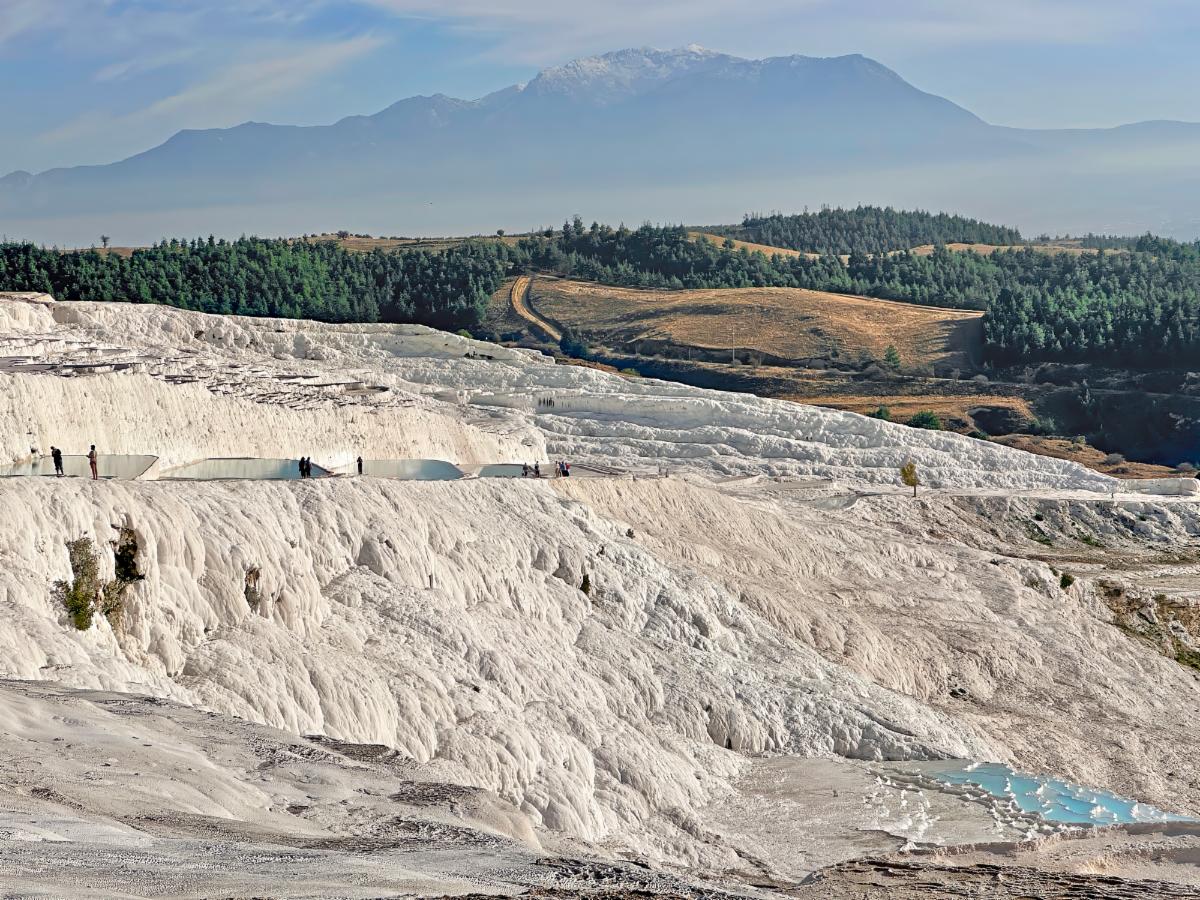
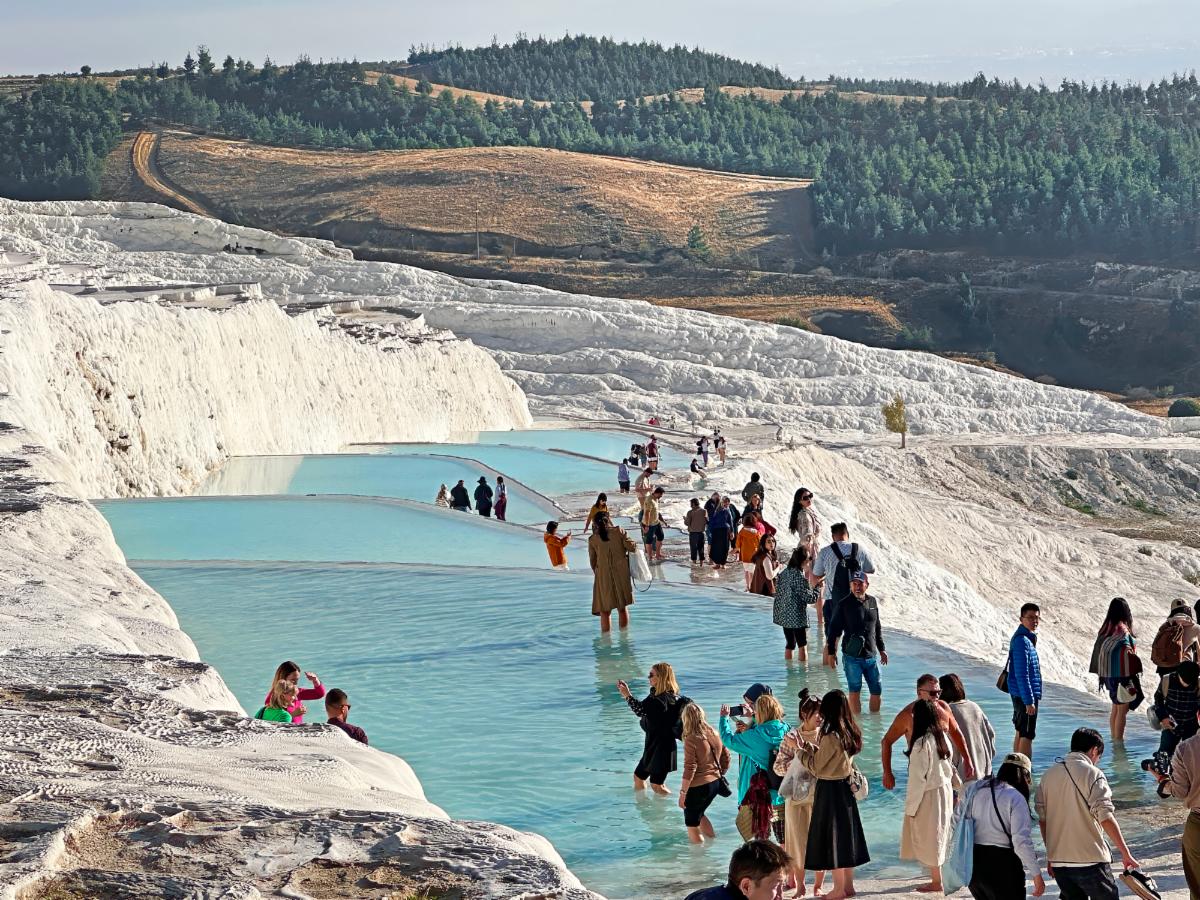
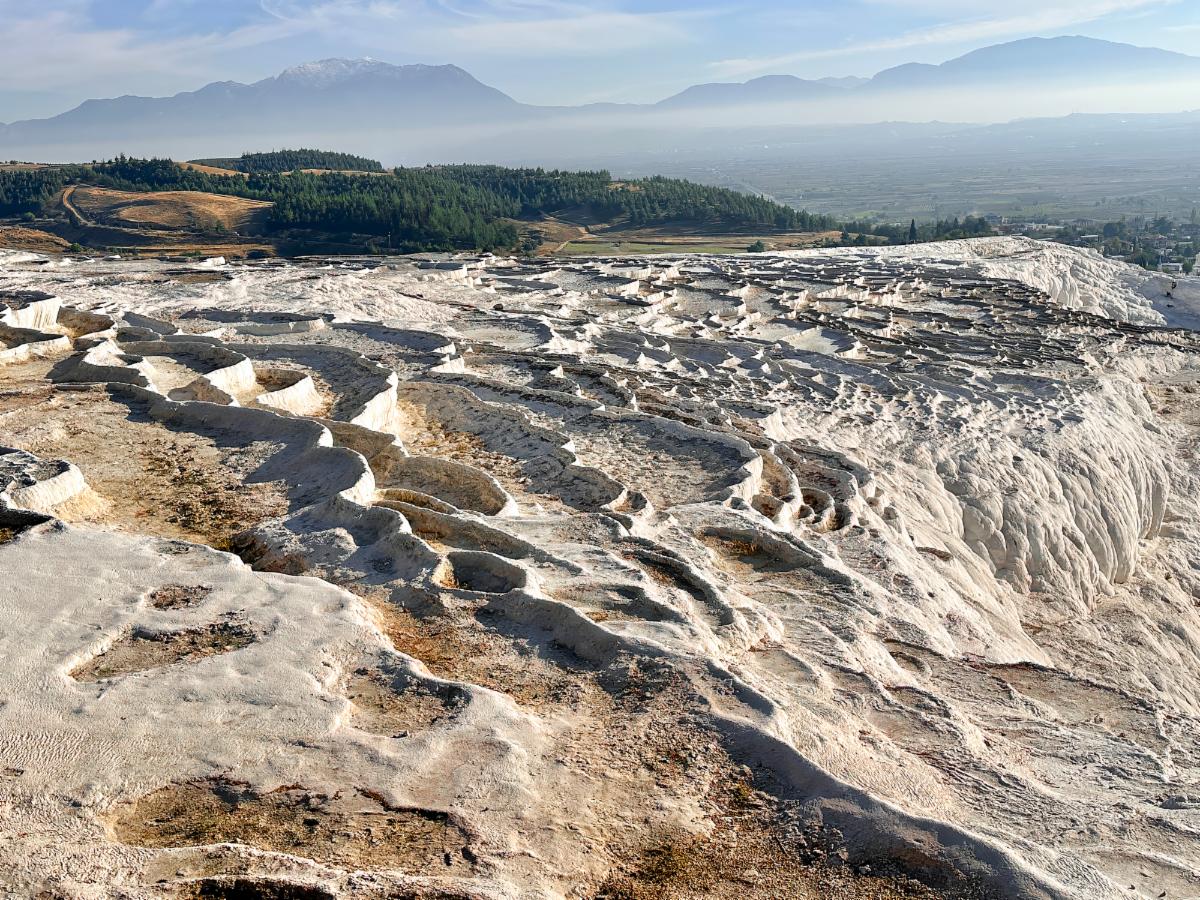
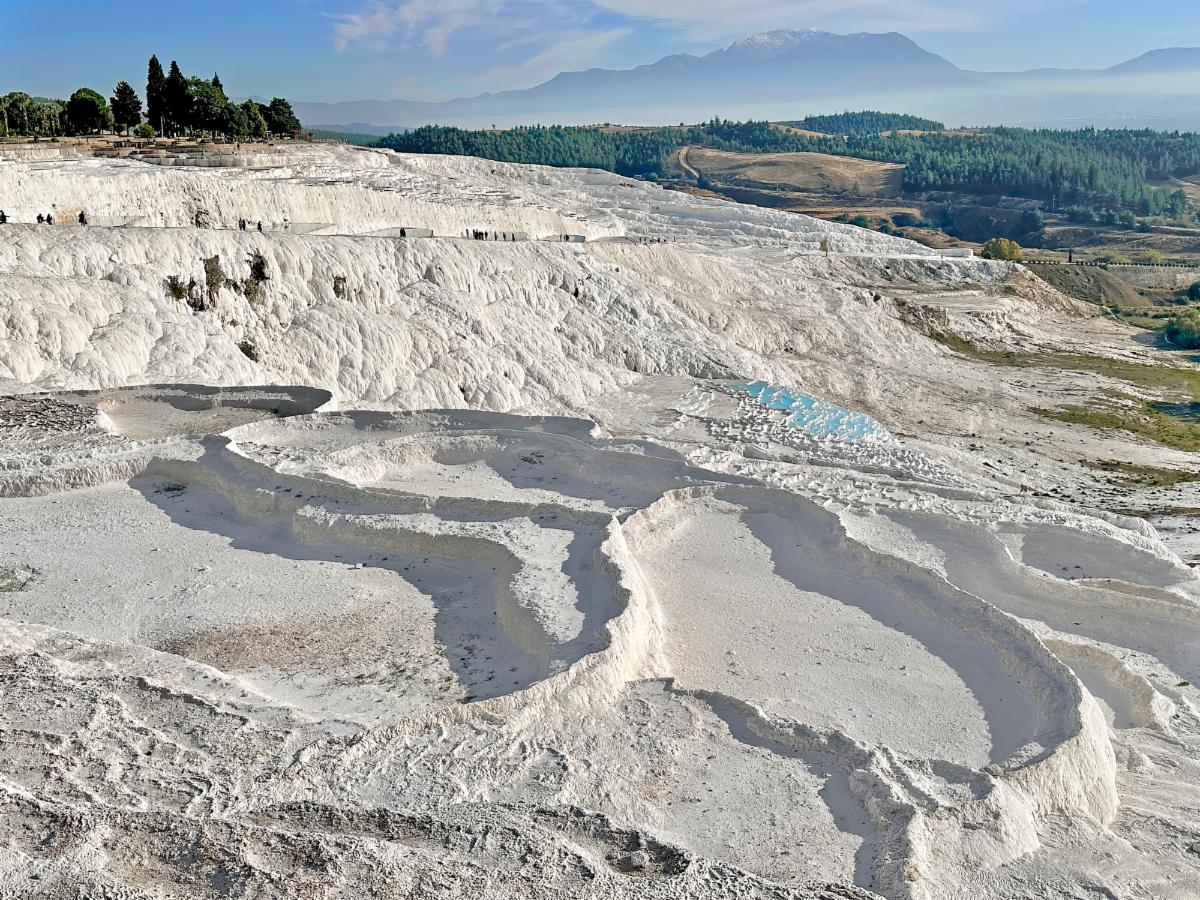
After walking through the fascinating ruins of Hierapolis, we finally came upon the Cotton Castle - the cliffs of Pamukkale. It was a fantastic view as the pure white calcium deposit draped over the cliffside. Bright, clear turquoise pools dotted the cliffside as the landscape made its way to the valley floor. We could see that at one time, there were many turquoise pools; however, most were dried up. I don't know if that is a seasonal thing, a recent trend due to a drought, or what. We saw several photos of Pamukkale with far more of the pools filled.
| 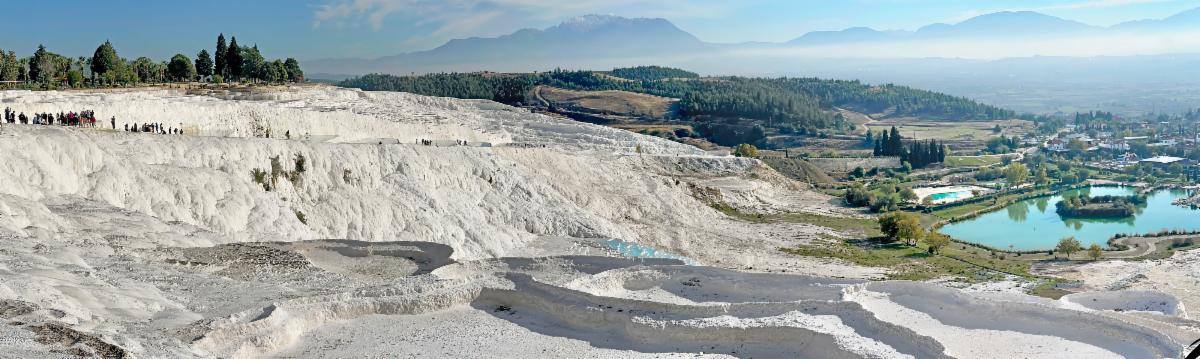 | |
Above: A pan of the Cotton Castle. Notice the dried pools in the lower right. The town of Pamukkale is at the foot of the white slope, just past the lake.
Below: A closer overview of the Cotton Castle.
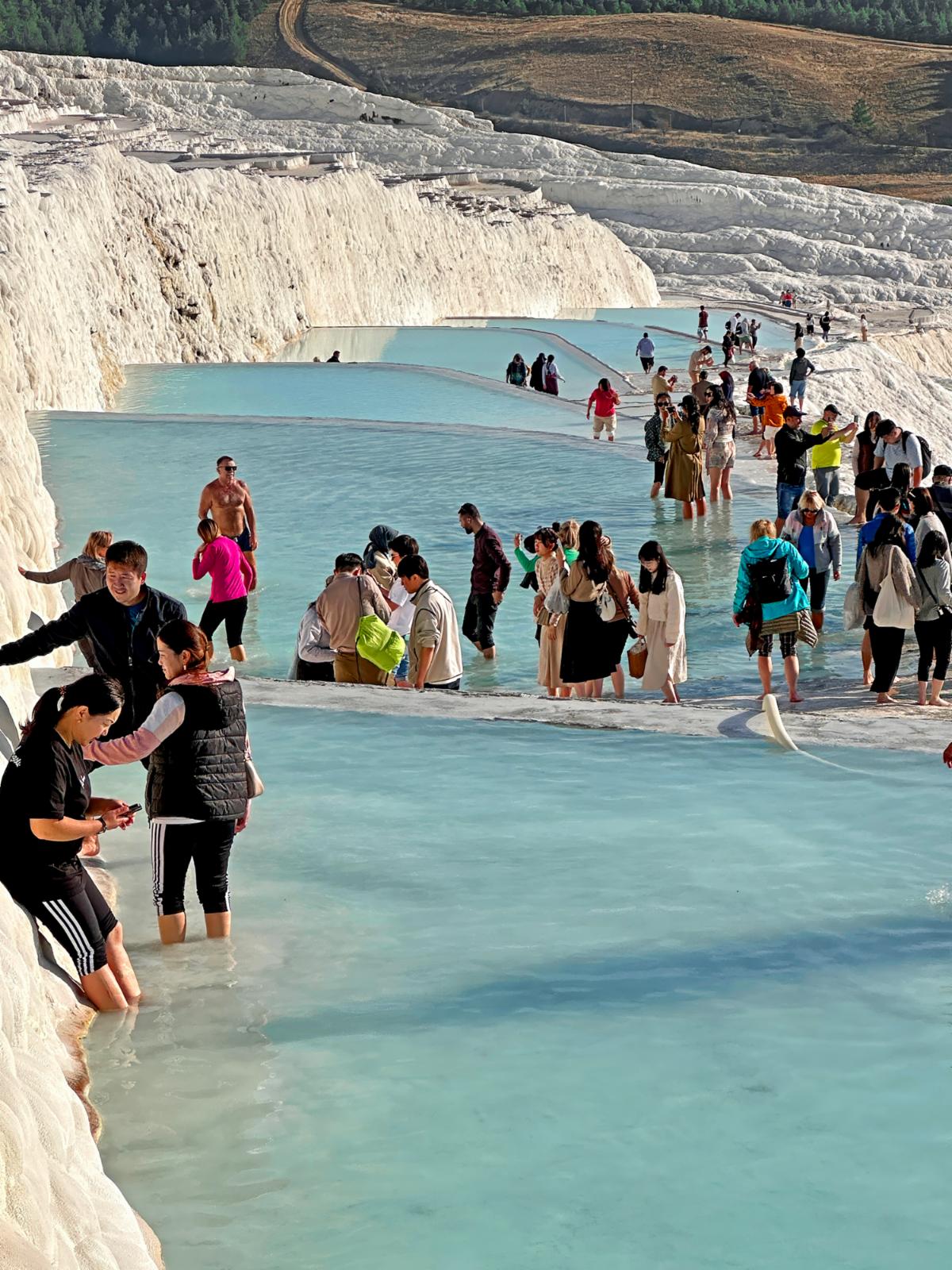
| Above and below: Tourists frolicked in the one area still flowing with the turquoise mineral water. | I could only imagine how gorgeous it would have been if all these dried pools were filled with turquoise waters. | |
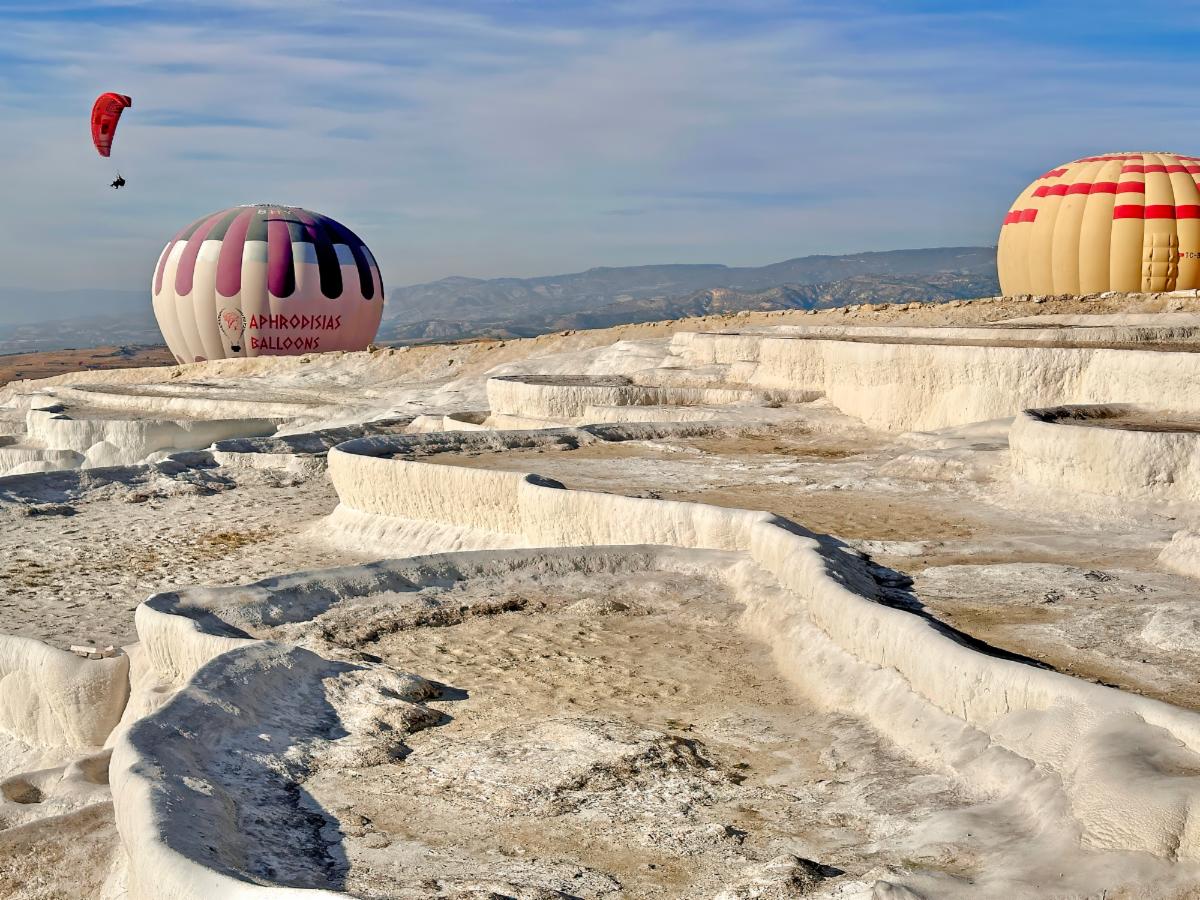
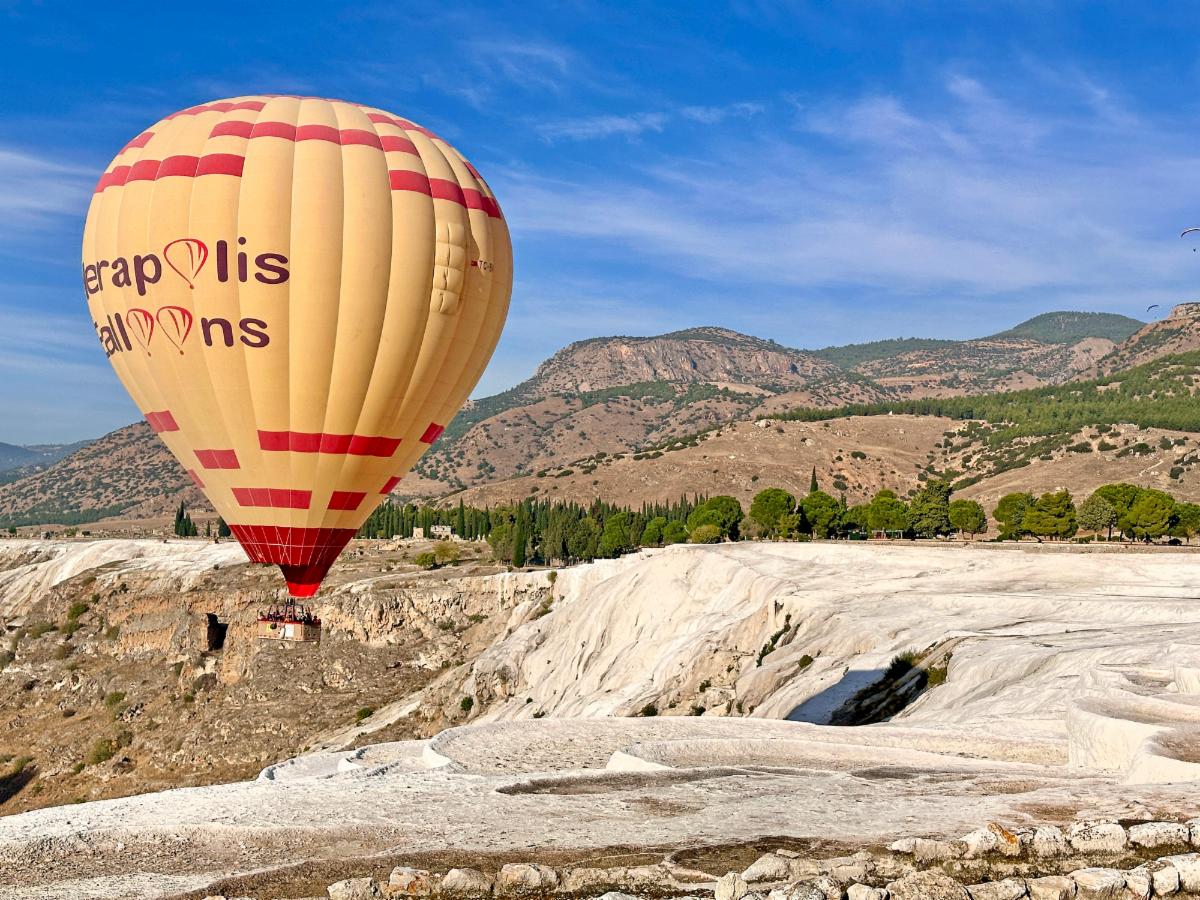
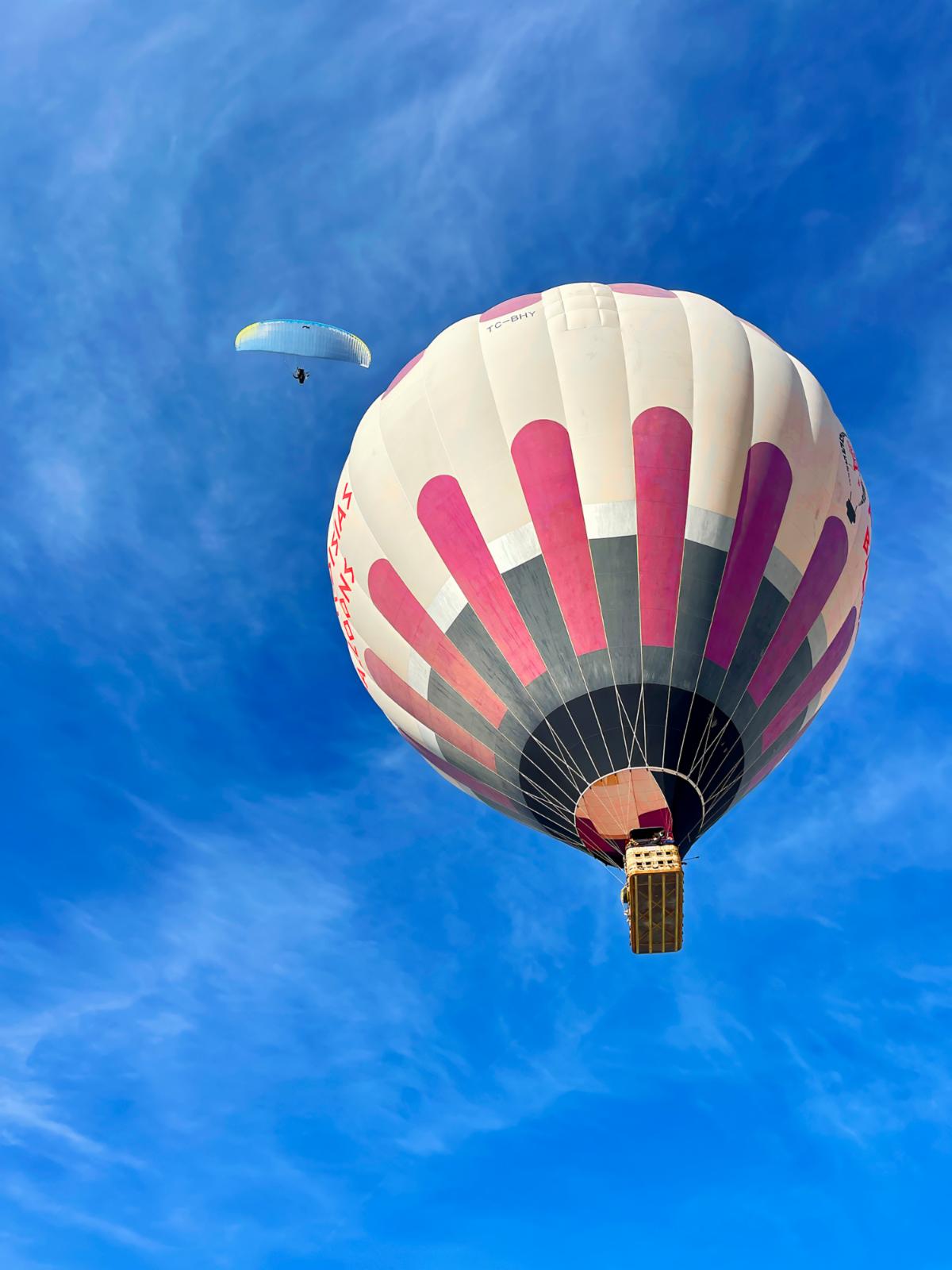
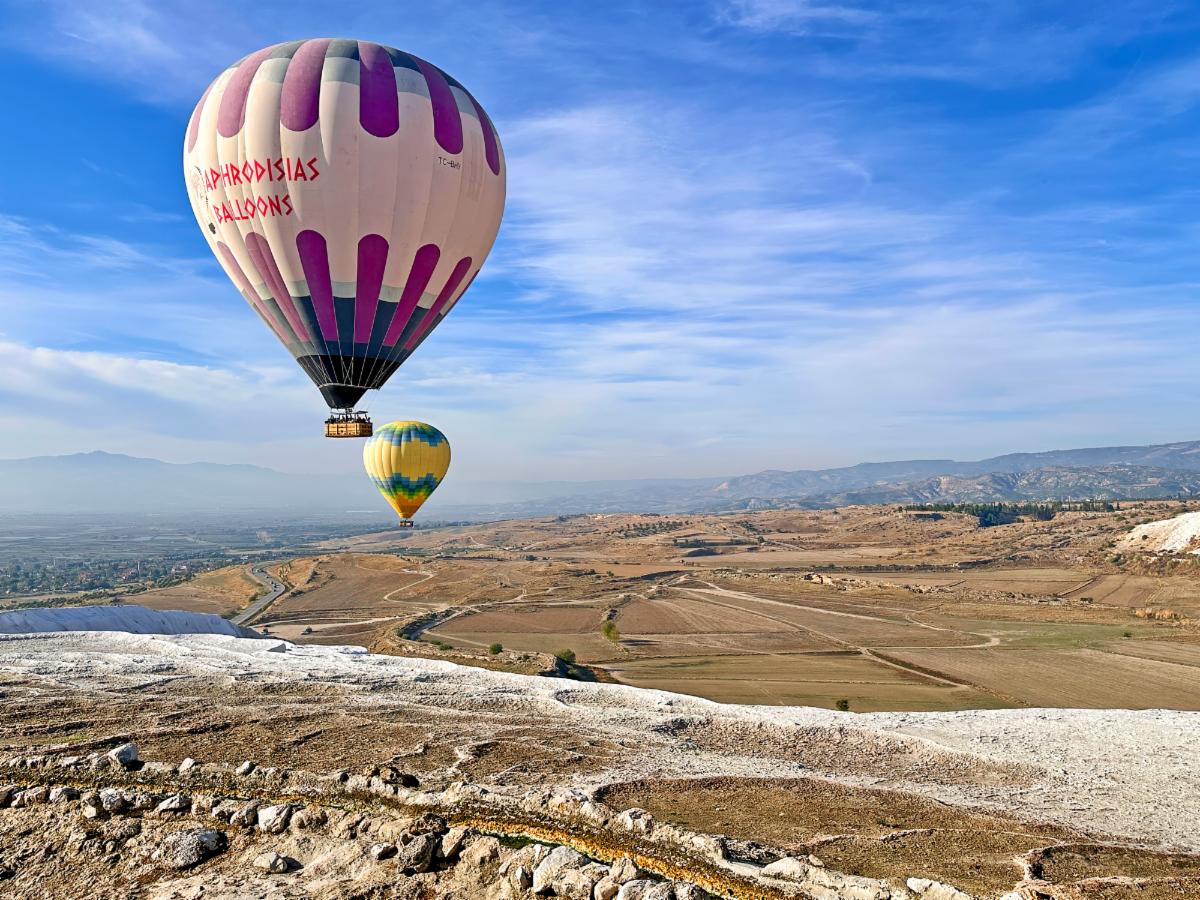
We toured the site with our feet. There are two other ways to see the area: 1) Hot air balloon. 2) Para-gliding. Both looked to be a blast, and if we ever went back, I would opt for the hot air balloon.
Three or four balloons floated over the ruins and cliffs at any given time, and the same amount of paragliders slid up and down in the thermals. The paragliders were doubled up with a skilled pilot attached to a tourist.
At times, the balloons got so thick that we witnessed two collide. Not a big deal, they just bounced off each other. Some barely made it up and over the cliffs, as they frantically lit up the burners. I wondered if the park officials approve of these conveyances due to the potential harm to the site and passengers if the balloon pilots got too reckless.
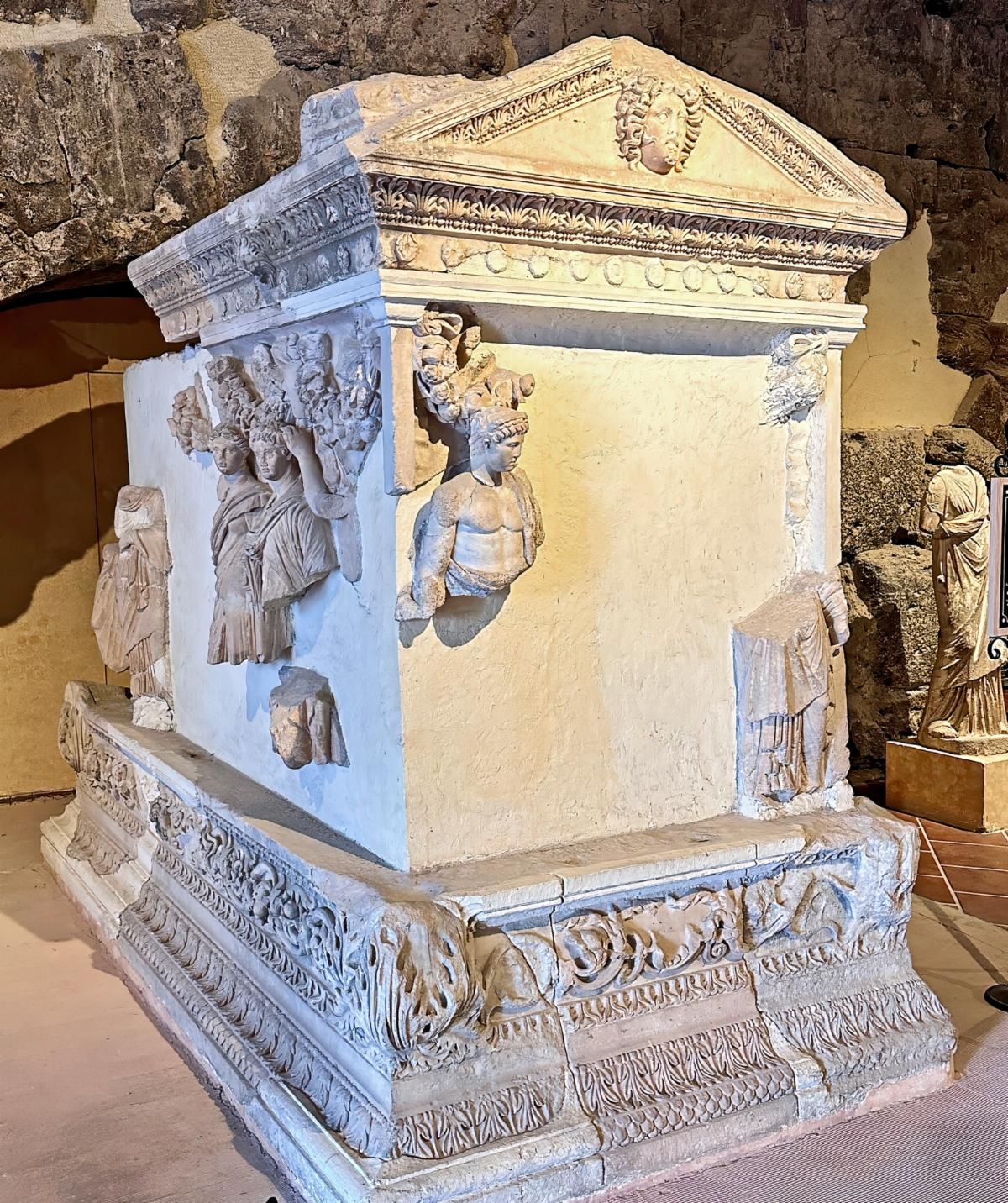
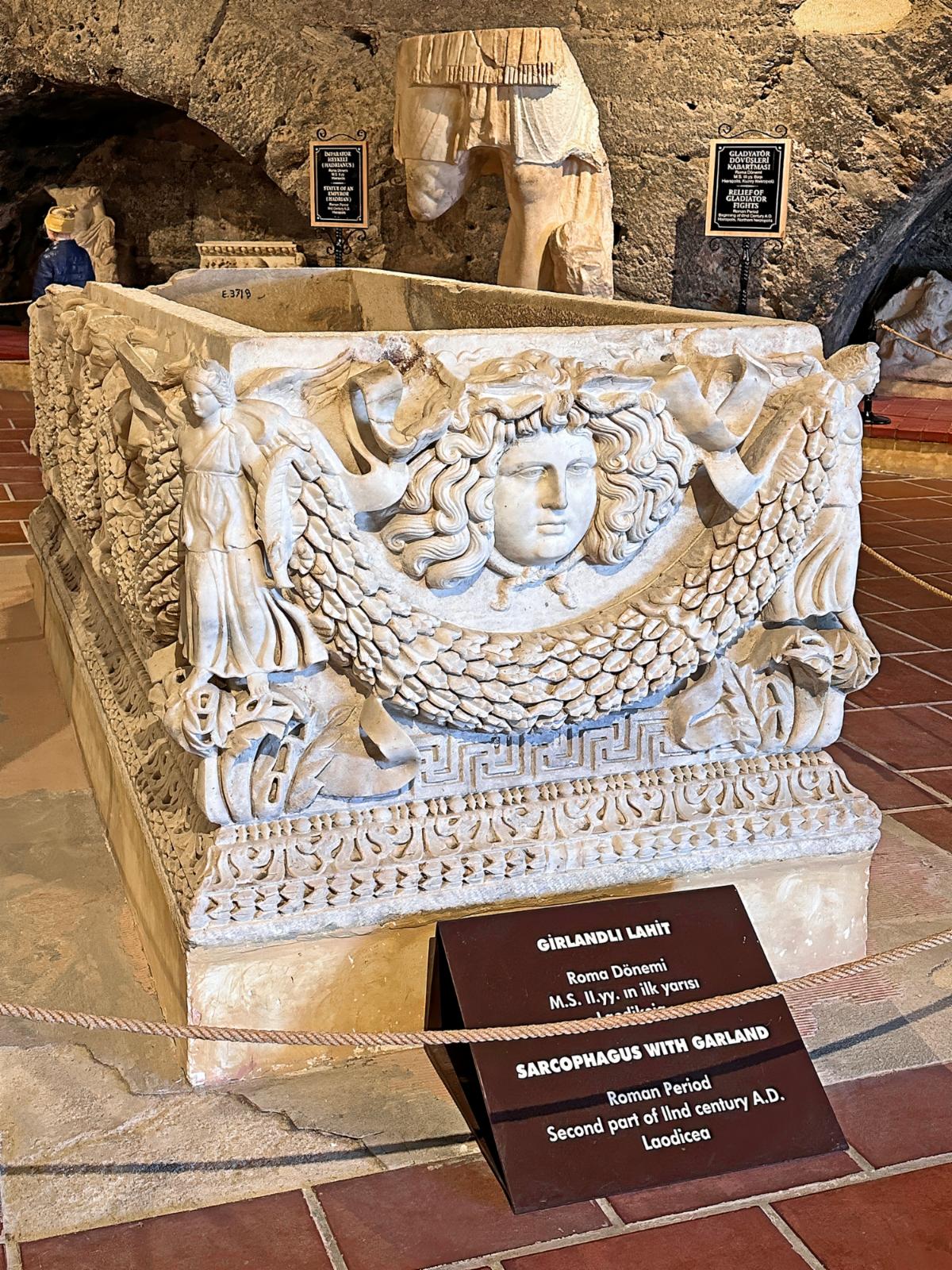
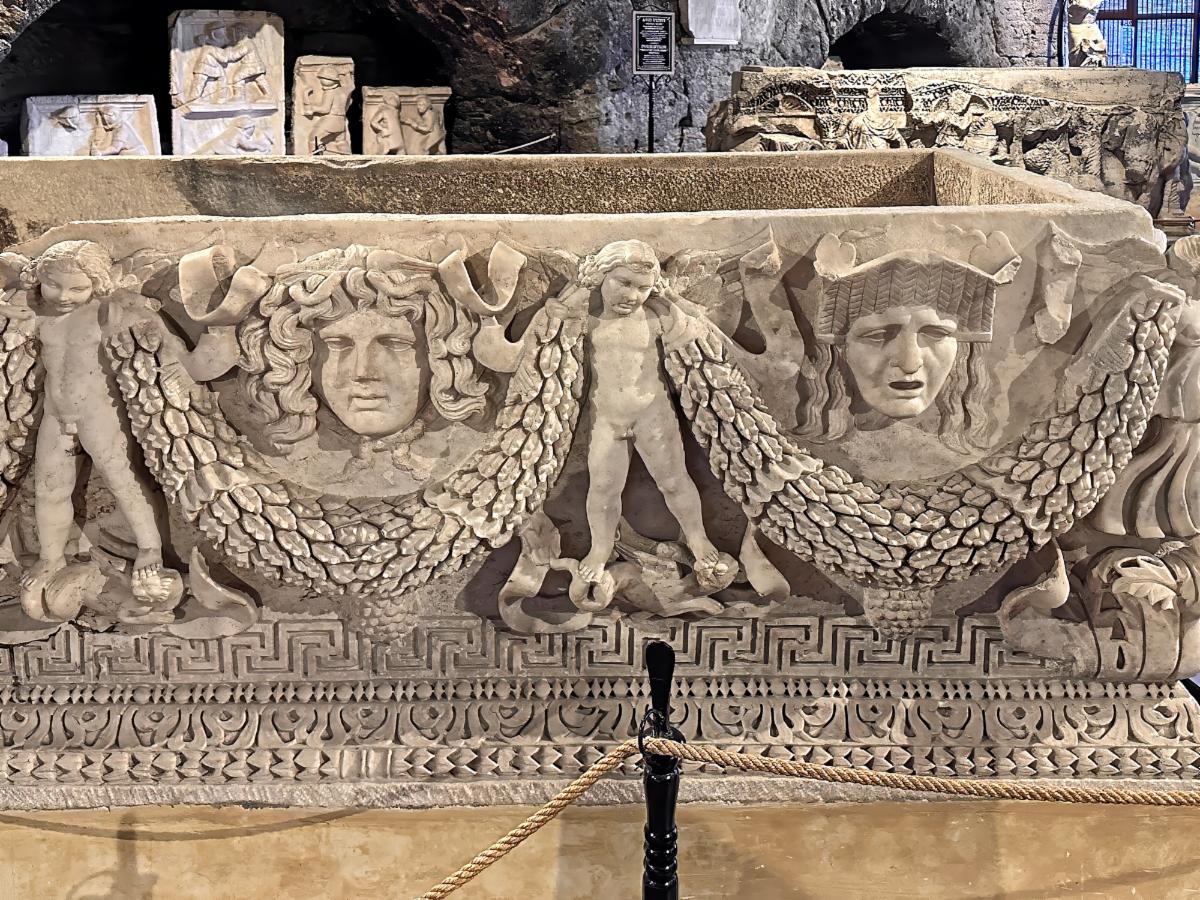
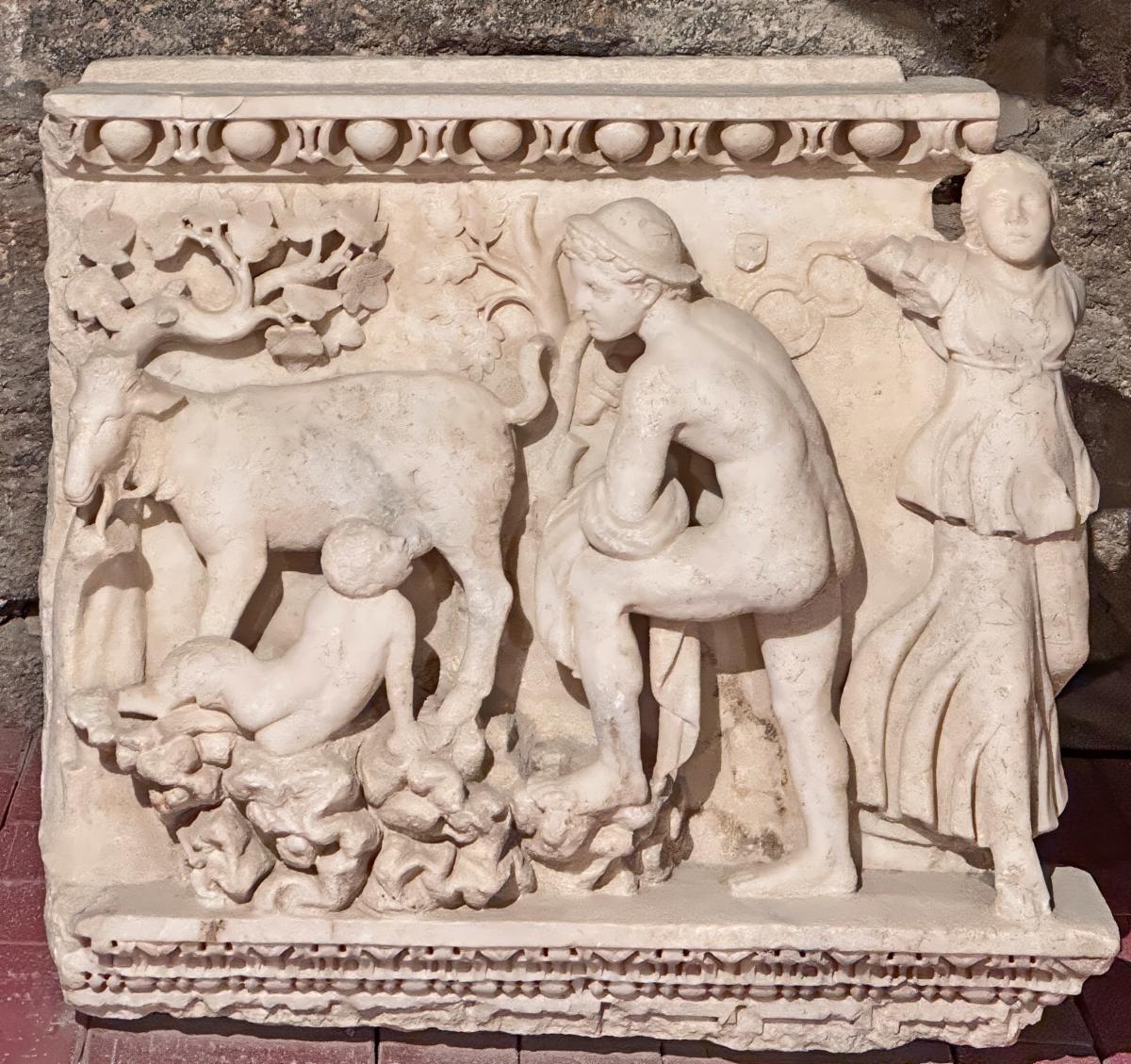
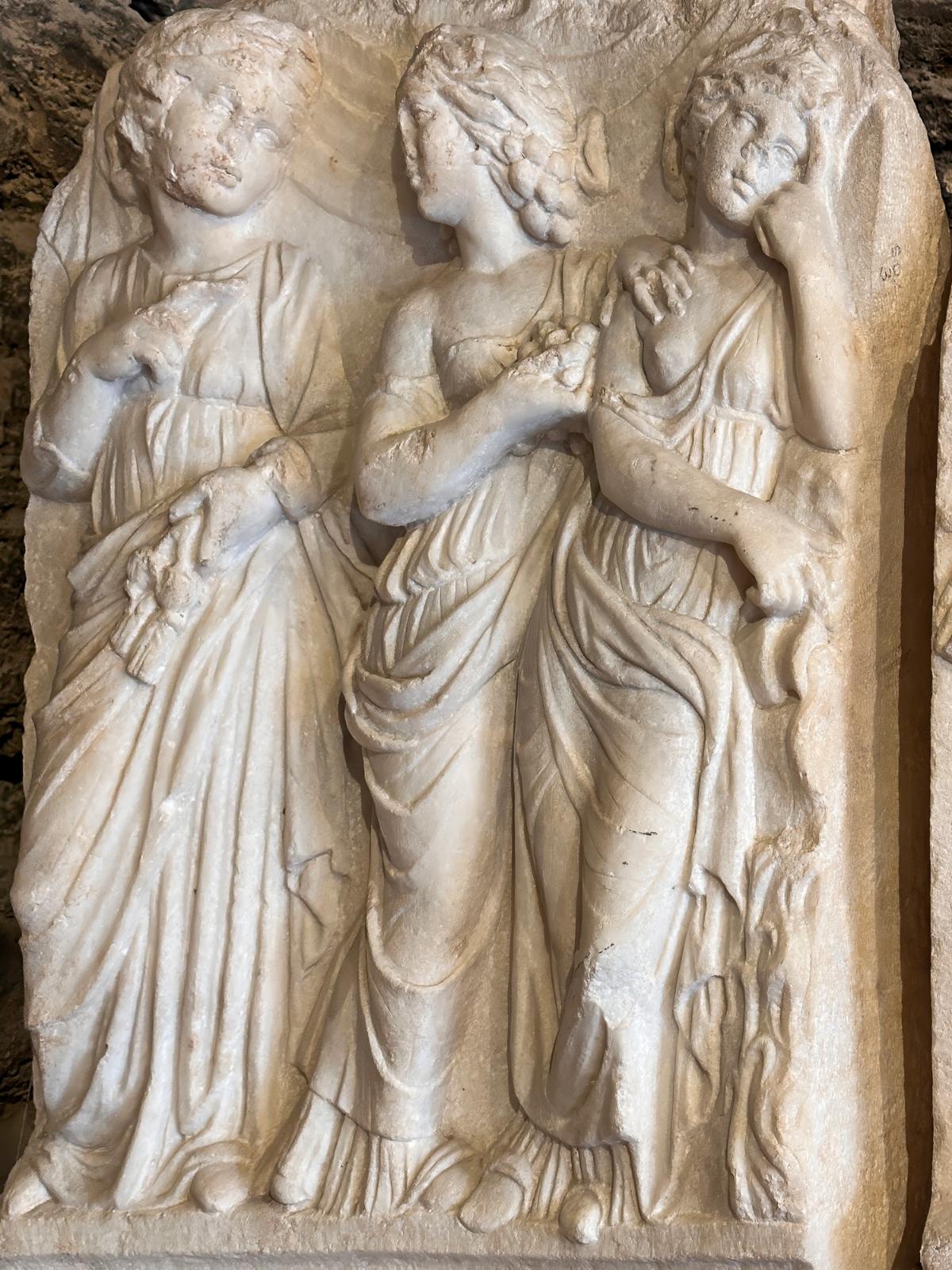
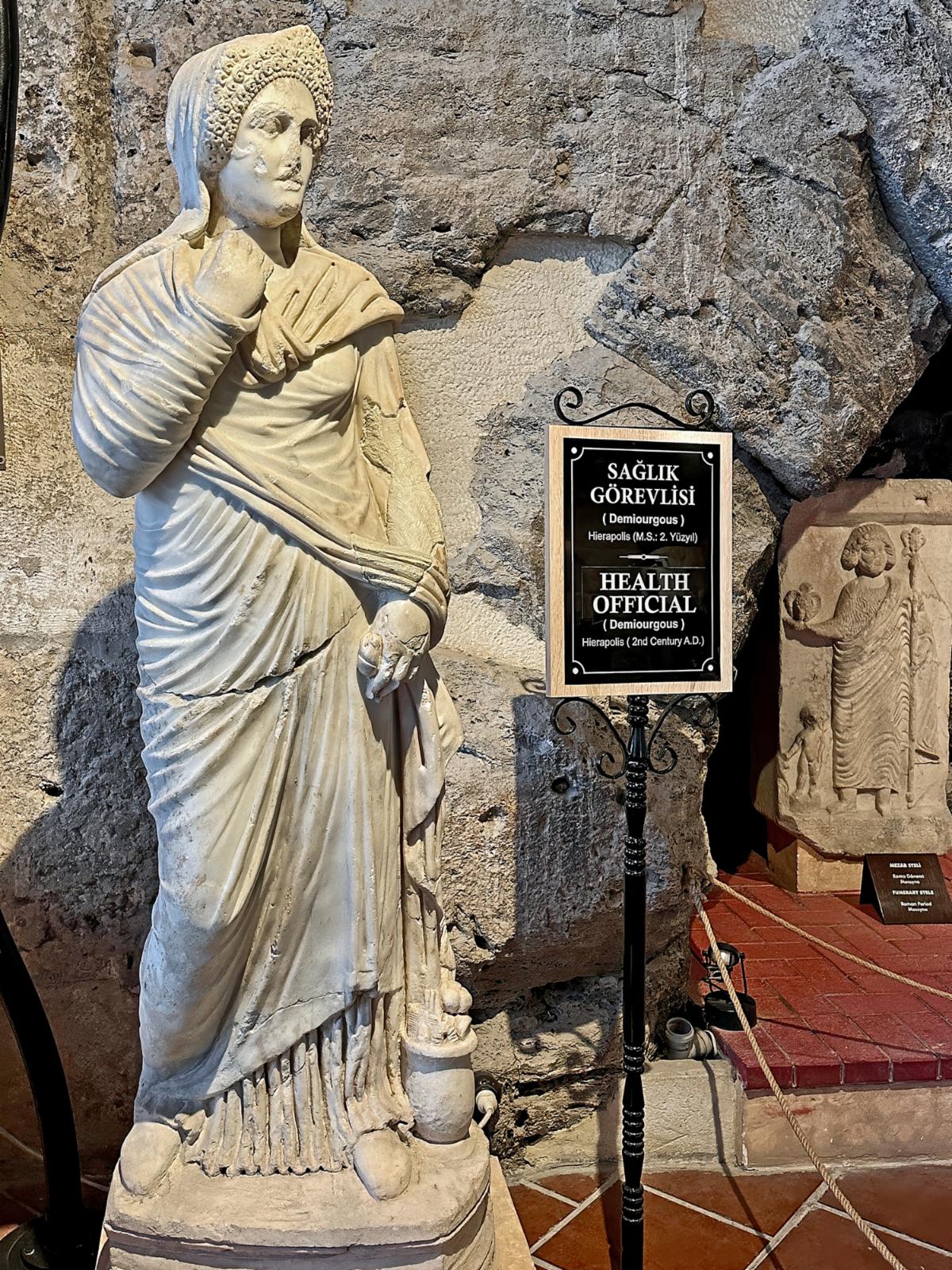
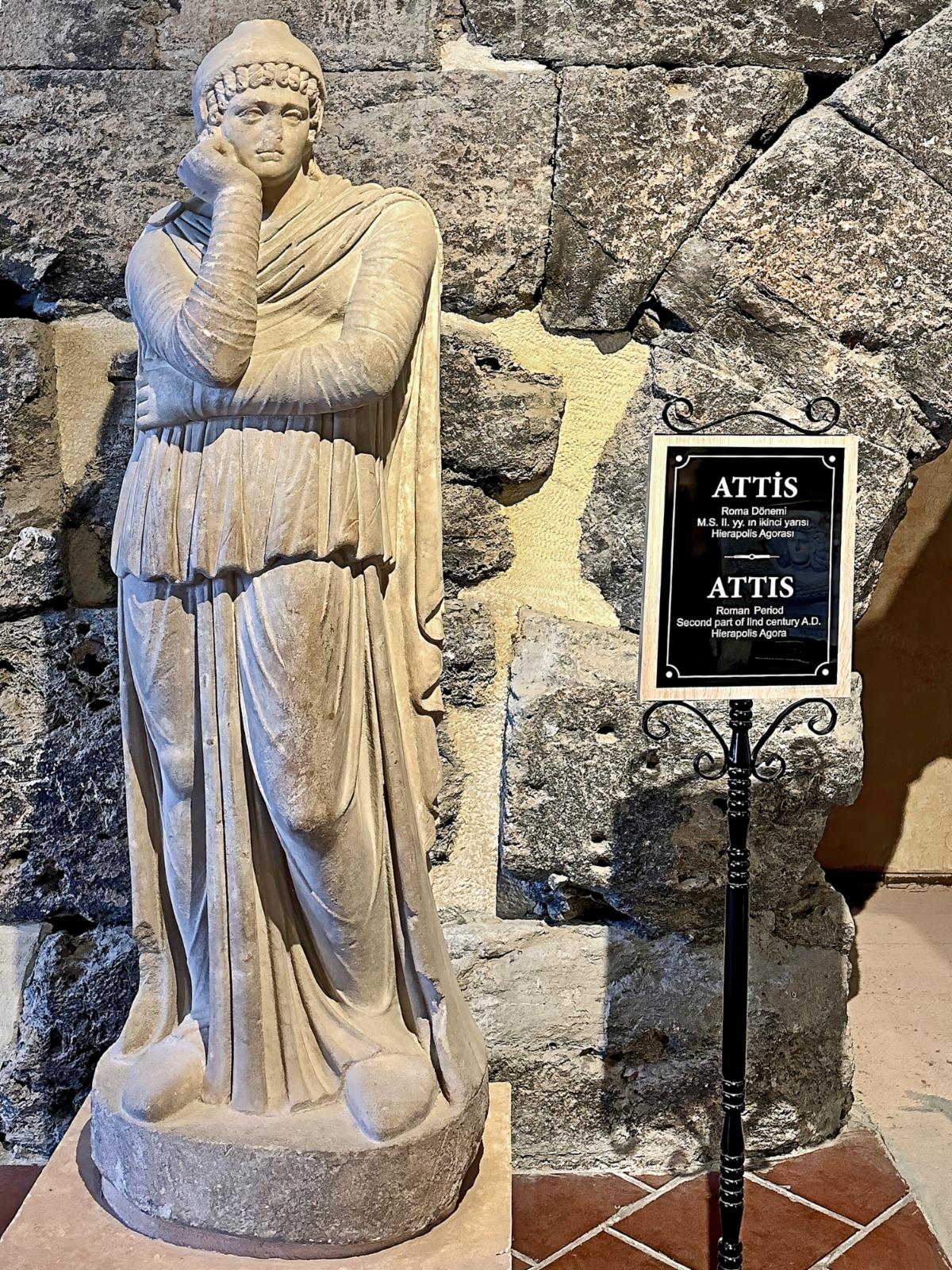
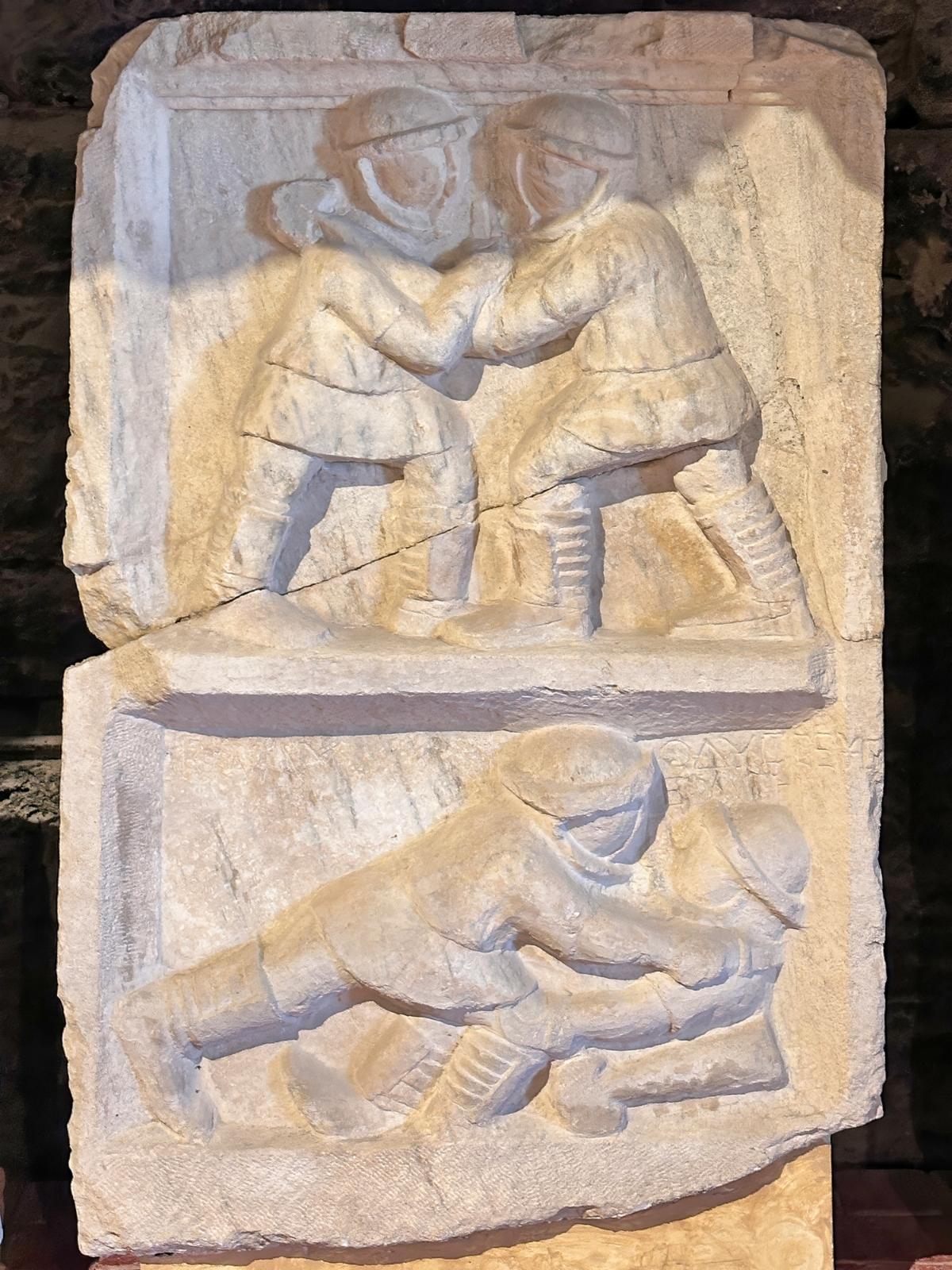
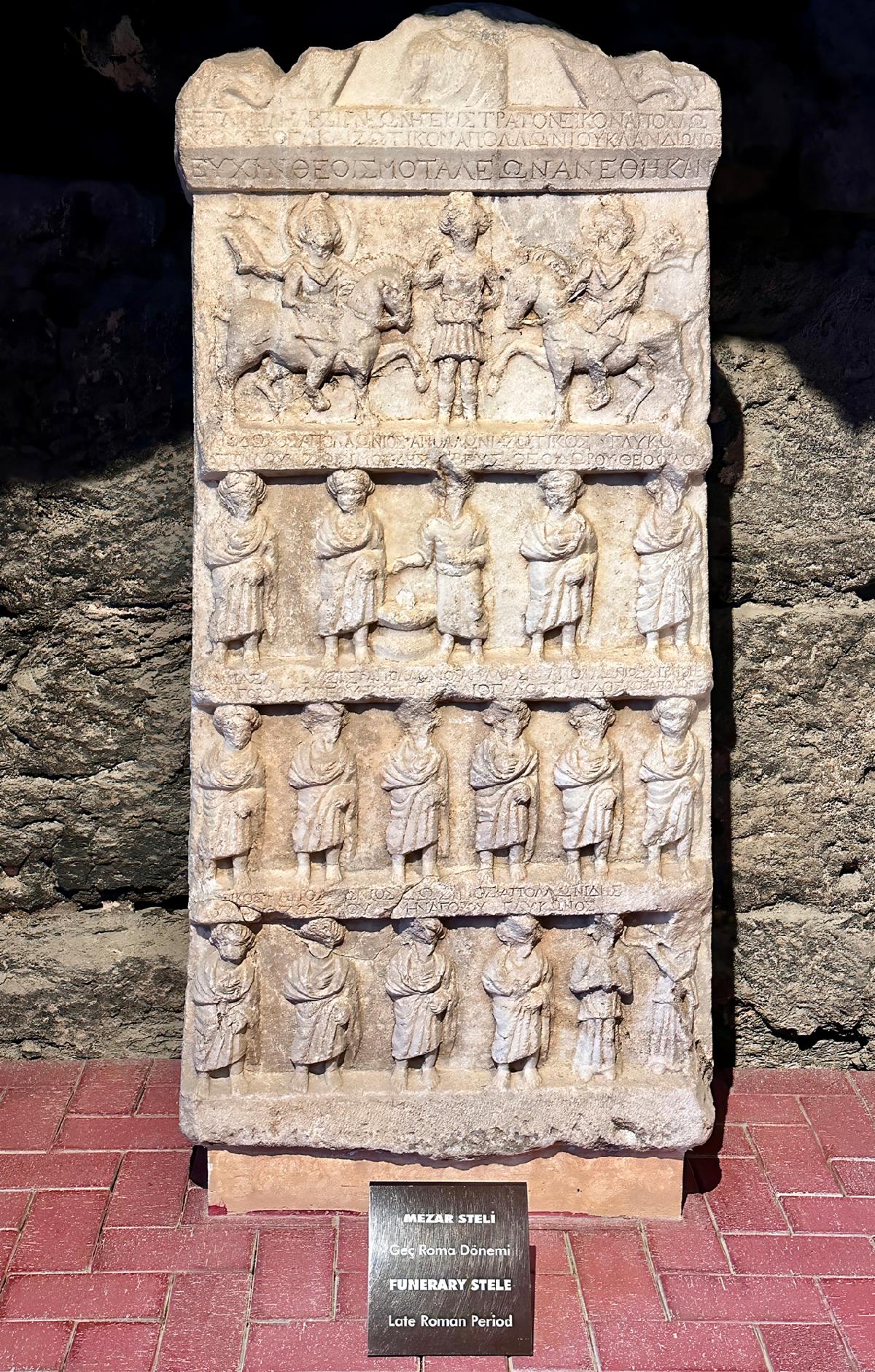
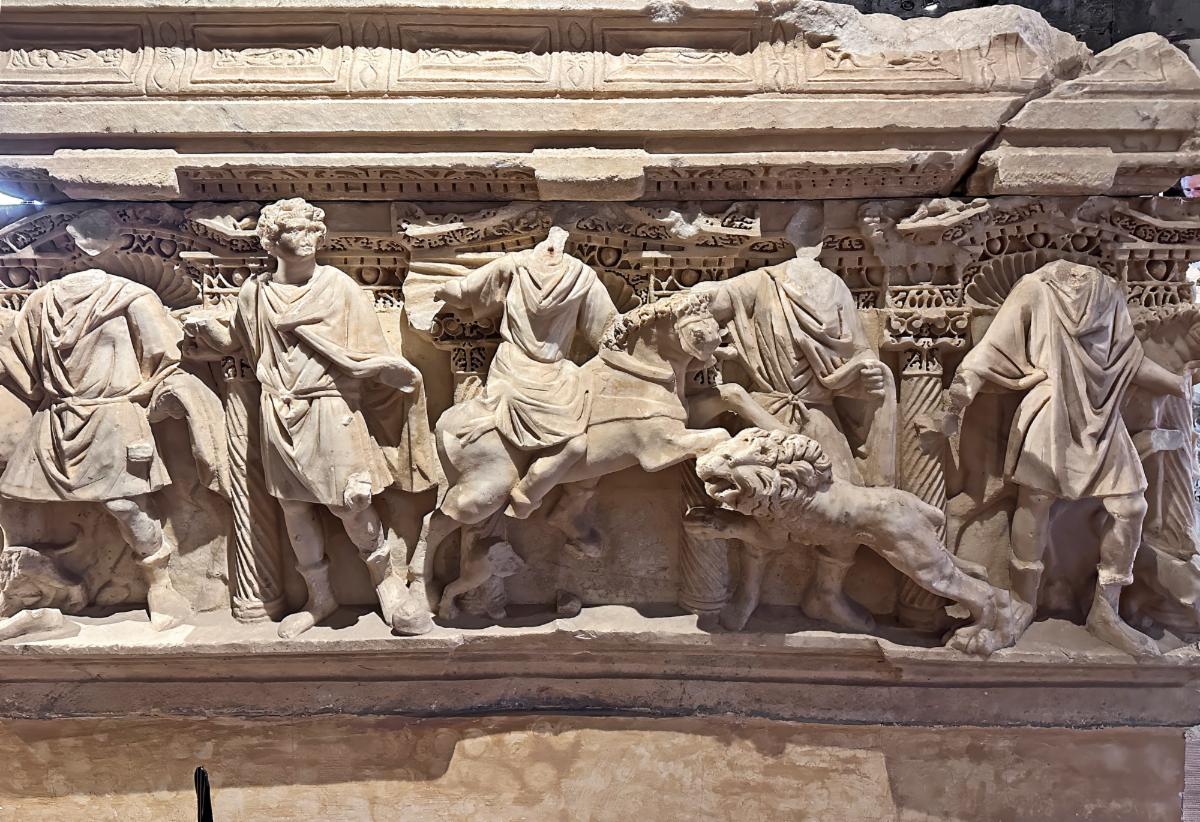
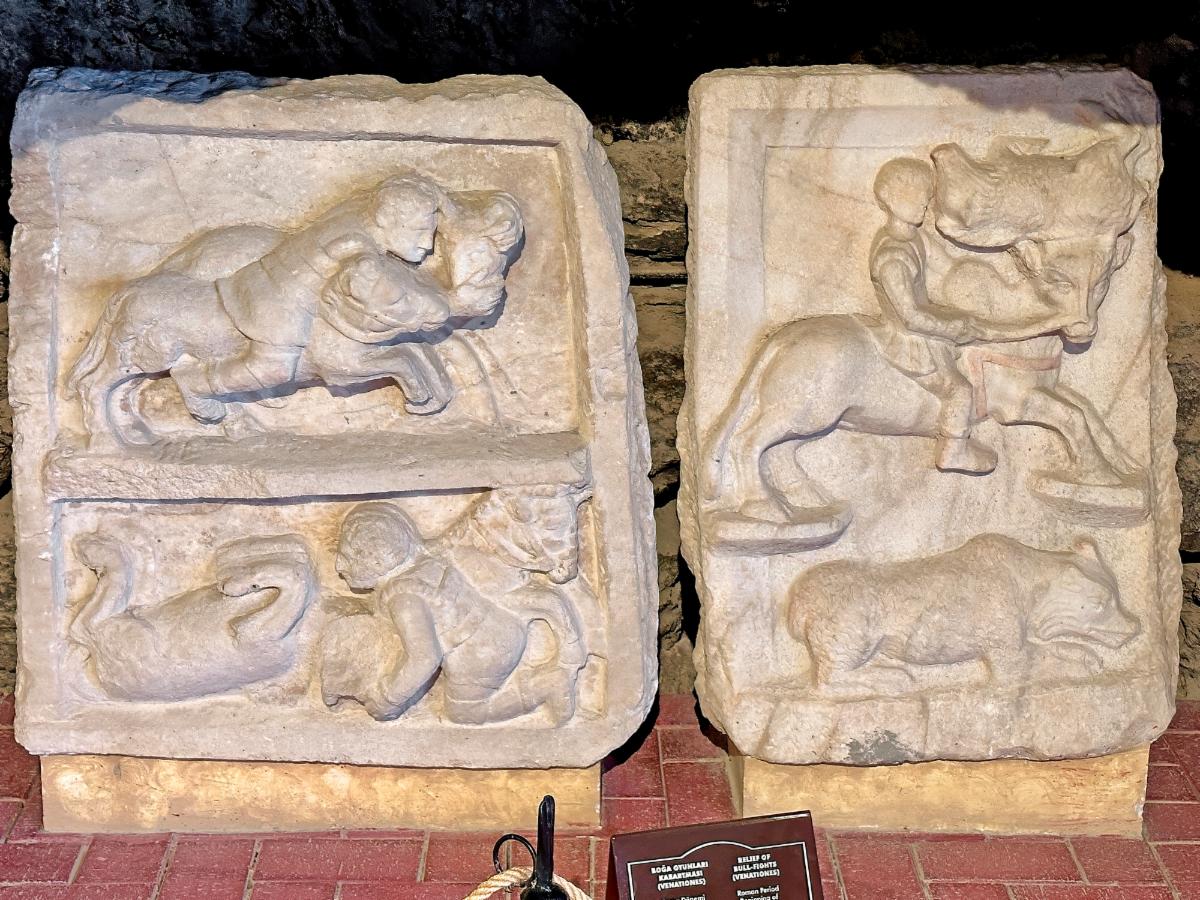
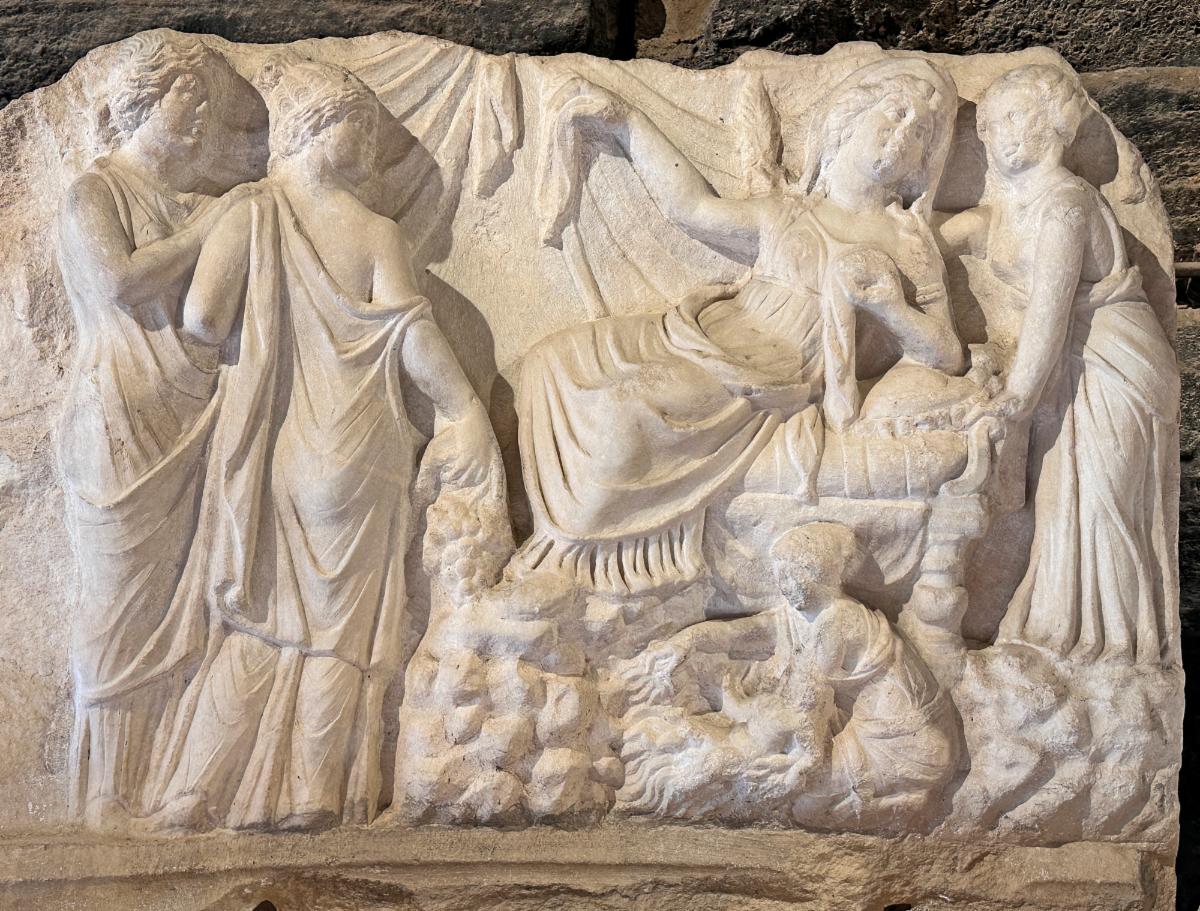
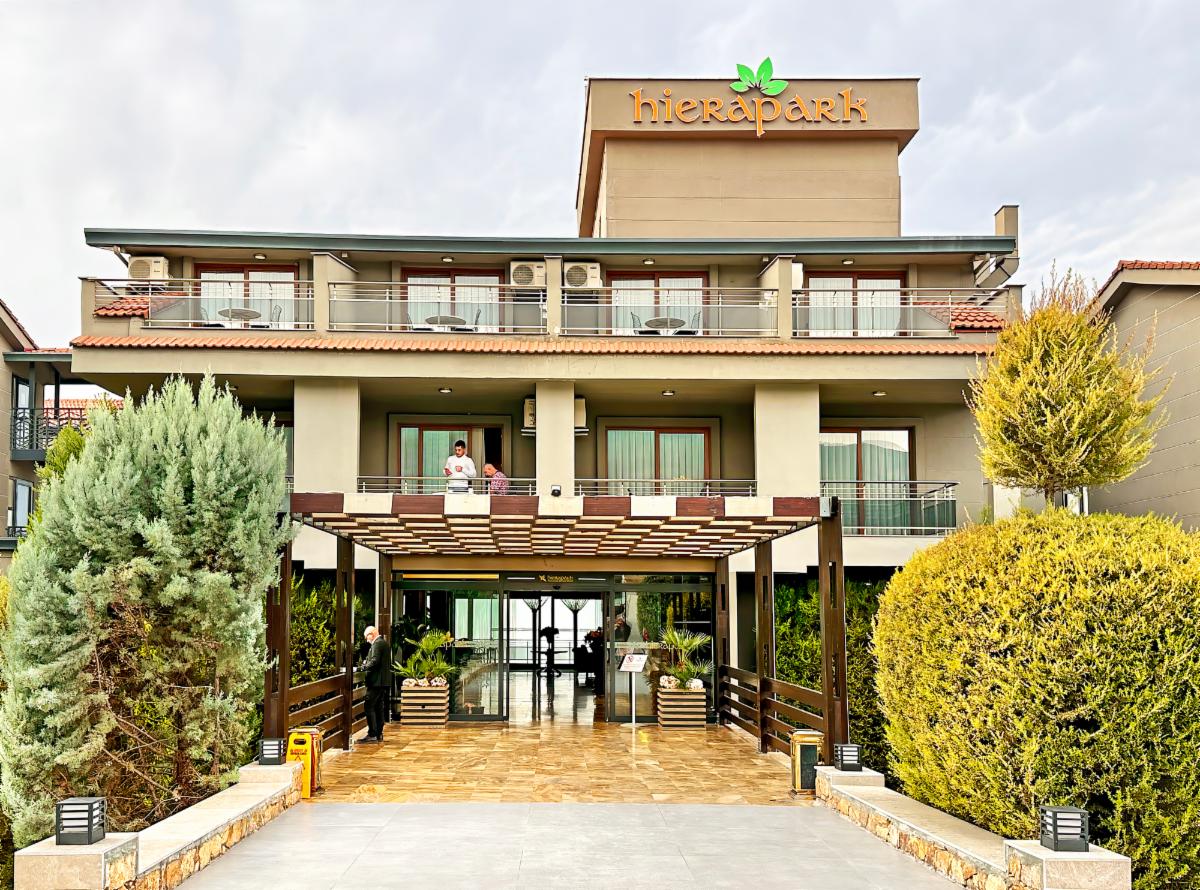
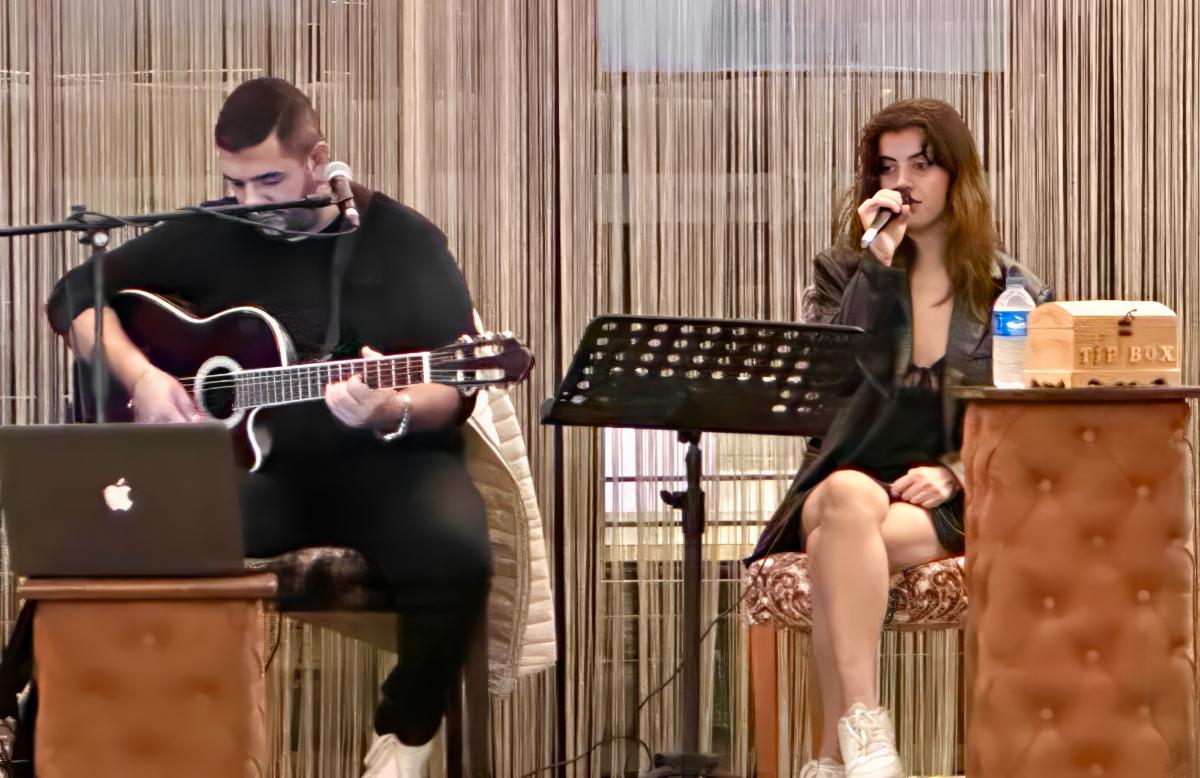
| Several hot-air balloons and paragliders played in the air currents around the cliffs. | Some of the balloons barely made it over the lip of the cliff. | If I ever returned to Pamukkale, I would take a balloon ride. Once, back in 1980, I took a balloon ride and loved it. | The little museum near the cliff tops houses some beautiful stone carvings excavated from the site, including some intricately carved sarcophagi. I like that the best of the best are being protected inside a building. The elements are harsh on these precious artifacts. | Can you imagine the cost of one of these babies nowadays? | Suckling directly off an animal's teet is a bit weird if you ask me. | I wondered what a Health Official actually did in the 2nd century CE. | The site was so large that the entire day was devoted to it. We didn’t leave Heirapolis - Pamukkale until sundown. We were then transported to a new fancy hotel and spa in the middle of nowhere. I could not understand how a major hotel complex could survive in such a remote area. But, the food was the usual awesome, and a good musical duo performed in the evening. Diane and Heinrich took advantage of the hot swimming pool while we listened to the music. | The hotel and spa in the middle of nowhere. | The entertainment at the hotel. The guitar player was very good. The girl singer had a good voice but forgot many words, and then she would crack up laughing. That, in itself, was entertaining. I supposed it was her first time performing as a duo with this guy, and the songs were new to her. That's my theory and I'm stickin’ to it. | |
|
Dave and Wanda
Vaccines: Your ticket to safe world travels.
Virtual Business Card
North America. Europe. Mexico. Asia. Product Reviews. Books & Maps.
We are on an RVing adventure through Europe that could last as long as six months. Traveling with family, we will start in Germany and explore several countries. We are excited to explore all that Europe offers and share our travels with you through this blog.
Share if you know someone who would enjoy tagging along. Please join our email list if you haven't already done so. On the slightest whim, tap 'reply' to this email and drop us a line. We'll get back to you whether you need travel help, have ideas, or just want to say hello.
Please send us your thoughts and any errors we may have missed. We're on the road, and cellular service is intermittent in the remote areas. We are eager to read your messages as soon as we get online.
Message us: 715-252-6664 | 715-252-3326
Email: alloverthemaptravelventures@gmail.com
| | | | |