While conflicts and crises escalate, so do our collective actions for a healthier and just world. Women and gender diverse leaders globally are taking action to protect biodiverse ecosystems, uplift Indigenous rights, stop environmental racism, halt fossil fuel projects, build food sovereignty, and so much more.
On April 4th the most recent Intergovernmental Panel on Climate Change (IPCC) Working Group III report was published, detailing the many steps necessary to keep global warming below 1.5 degrees Celsius. See our initial response to the most recent findings below. The time for global urgent action is now!
In this newsletter, please find information about upcoming events and campaign updates that exemplify the many forms of action we can take. Together we are rising for our communities and Mother Earth. We hope you can join us this month for inspiration, advocacy, and action.
|
|
Join us for WECAN's Upcoming April Events! |
|
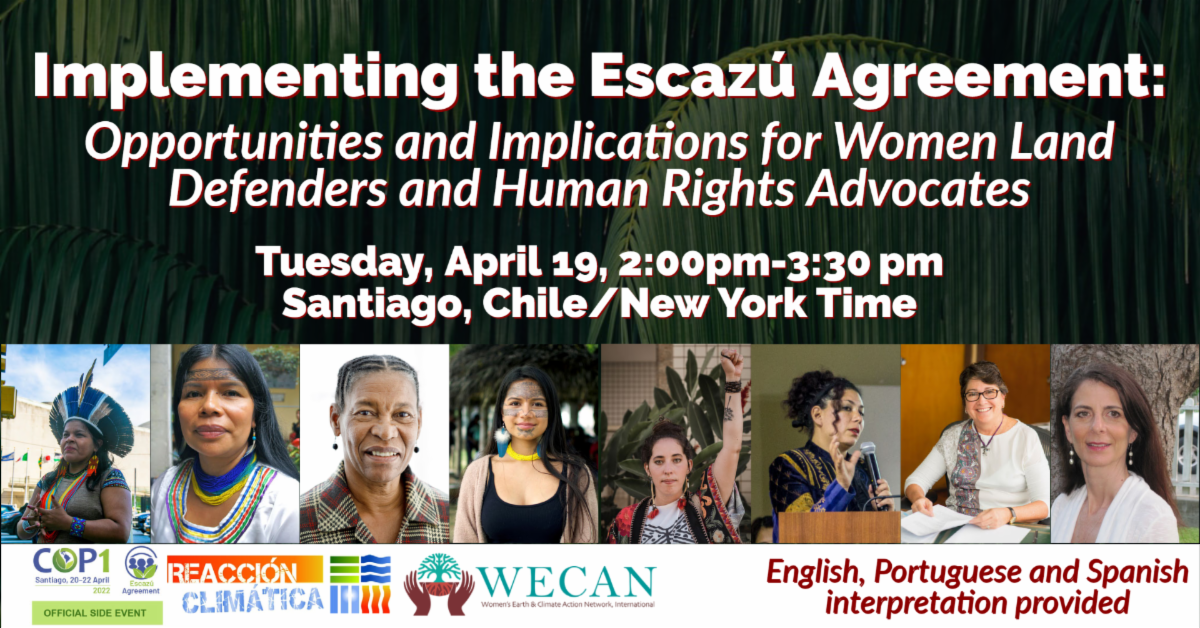
Implementing the Escazú Agreement: Opportunities and Implications for Women Land Defenders and Human Rights Advocates
Tuesday, April 19, 2:00pm ET New York / Santiago, Chile Time
**Please check your time zone to coordinate**
*Spanish, Portuguese, and English Interpretation provided*
|
|
Please be welcome to register and join WECAN on April 19th for our formal upcoming Escazu COP1 Side Event, "Implementing the Escazú Agreement: Opportunities and Implications for Women Land Defenders and Human Rights Advocates."
This is a historic gathering as the first government meeting on the Escazú Agreement, and WECAN is honored to participate and advocate. During the side event women policy makers, Indigenous leaders, and human rights defenders will highlight the challenges women land defenders face while protecting their communities and territories from extractive industries, and share further the implications and opportunities presented in the Escazú Agreement.
Speakers include: Patricia Gualinga (Kichwa), Indigenous leader from Sarayaku, Spokeswoman for Mujeres Amazónicas Defensoras de la Selva, Ecuador; Sônia Guajajara (Guajajara), Executive Coordinator for Articulação dos Povos Indígenas do Brasil (APIB), Brazil; Ruth Spencer, Deputy Chair of the Marine Ecosystems Protected Areas (MEPA) Trust, Antigua and Barbuda; H.E. Ms. Patricia Madrigal Cordero, Ex-Vice-minister of Environment, Costa Rica; Helena Gualinga (Kichwa), Indigenous youth social and climate activist, Ecuador; Paloma Costa, Member of the United Nations Secretary General's Youth Advisory Group, Brazil; Carmen Capriles, Founder of Reacción Climática, WECAN Coordinator for Latin America, Bolivia; Osprey Orielle Lake, WECAN Executive Director, USA.
|
|
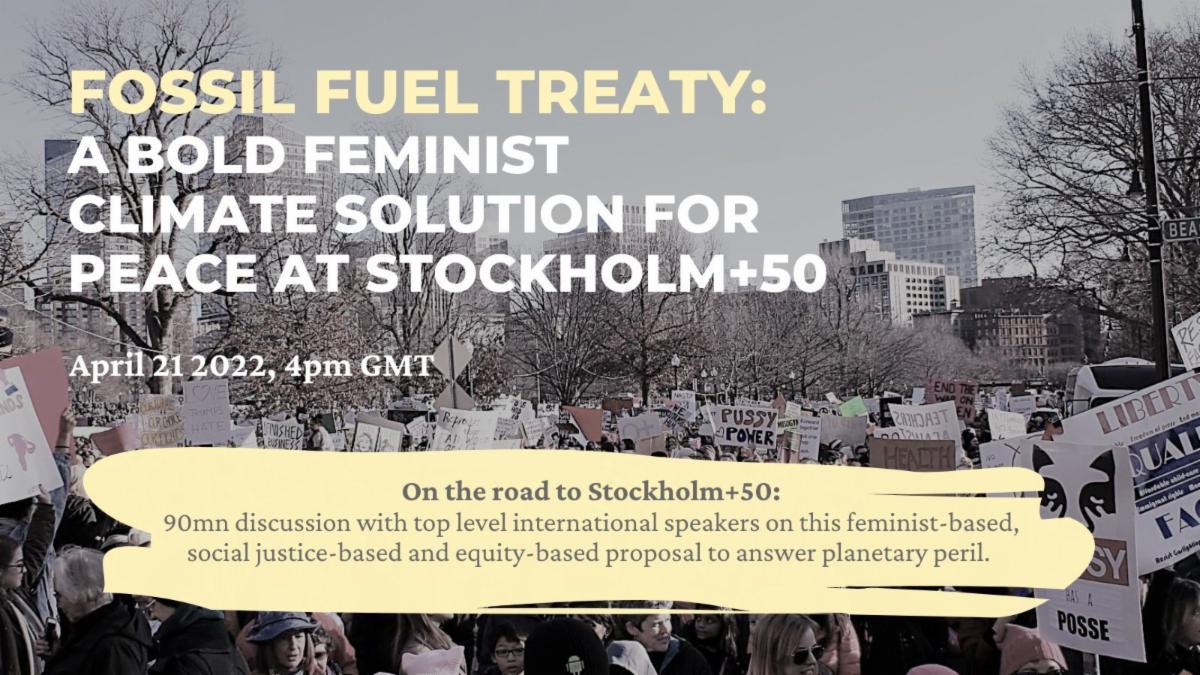
Fossil Fuel Treaty: a Bold Feminist Climate Solution
for Peace at Stockholm+50
Thursday, April 21, 12:00 PM ET New York Time
**Please check your time zone to coordinate**
|
|
Please join us on April 21st, for the upcoming event, “Fossil Fuel Treaty: a Bold Feminist Climate Solution for Peace at Stockholm+50”! Casey Camp-Horinek (Ponca Nation), WECAN Board Member, and Osprey Orielle Lake, WECAN Executive Director, will join powerful global leaders to expose the roots of the climate crisis and militarism, while elevating new approaches to building a healthy and just future. We hope you can join us! |
|
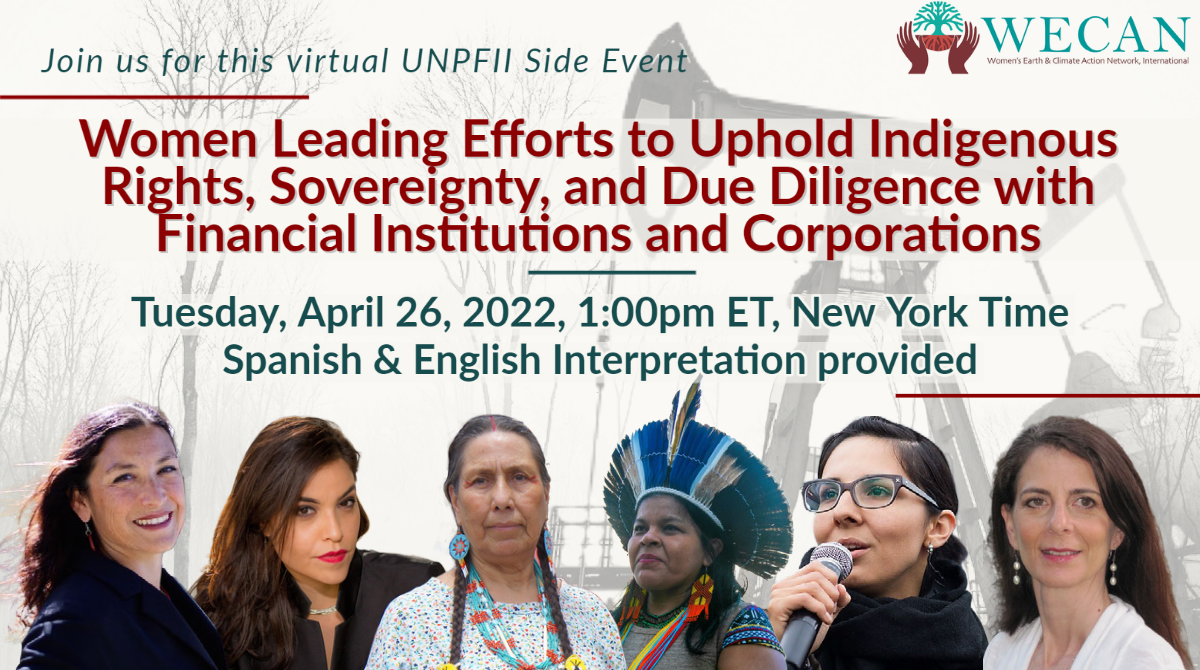
Women Leading Efforts to Uphold Indigenous Rights, Sovereignty, and Due Diligence with Financial Institutions and Corporations
Tuesday April 26, 1:00pm ET, New York Time
**Please check your time zone to coordinate**
*Spanish, Portuguese, and English Interpretation provided*
|
|
Join us on April 26th for "Women Leading Efforts to Uphold Indigenous Rights, Sovereignty, and Due Diligence with Financial Institutions and Corporations." This is a formal side event as part of the UN Permanent Forum on Indigenous Issues (UNPFII).
During the event, Indigenous women leaders and global advocates will discuss how financial institutions and corporations perpetuate human and Indigenous rights violations in relation to extractive and other industries and the necessary steps these institutions must take to stop these egregious activities— and instead, implement FPIC, Indigenous rights and due diligence, while also investing in solutions within a climate justice framework centering Traditional Ecological Knowledge.
From the frontlines of extractive projects, the boardrooms of financial institutions, to the halls of governments, Indigenous women are leading efforts to uphold Indigenous rights and sovereignty, including the right of Free Prior and Informed Consent (FPIC).
Speakers include: Casey Camp-Horinek (Ponca Nation), Ponca Environmental Ambassador and WECAN Board Member; Sônia Guajajara (Guajajara), Executive Coordinator for Articulação dos Povos Indígenas do Brasil (APIB); Eriel Tchekwie Deranger (Athabasca Chipewyan First Nation), Executive Director of Indigenous Climate Action; Michelle Cook (Dine’/Navajo), Human rights lawyer and founder of Divest Invest Protect and Indigenous Human Rights Defenders and Corporate Accountability Program; Leila Salazar-Lopez, Executive Director of Amazon Watch; and Osprey Orielle Lake, Executive Director, Women’s Earth and Climate Action Network (WECAN).
|
|
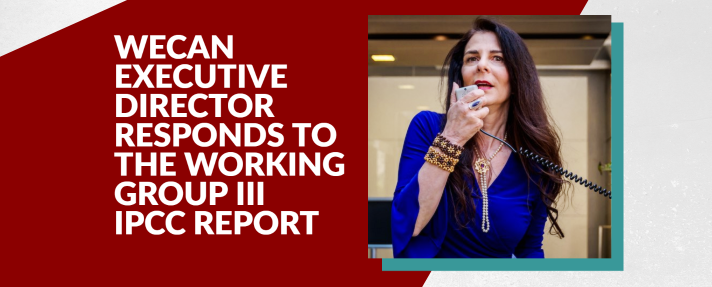
WECAN Executive Director Responds
to the Newest IPCC Report
|
|
On April 4, 2022, the latest report by The Intergovernmental Panel on Climate Change (IPCC) Working Group III was published. The report provides an updated global assessment of climate change mitigation progress and pledges, and examines the sources of global emissions.
In response to the report findings, Osprey Orielle Lake, WECAN Executive Director released the following statement:
"The most recent IPCC report reiterates what many have been shouting for years: we are at the very brink of ecological collapse, the world as we know it is barreling toward irreparable harm due to climate change brought on by centuries of colonization, patriarchy, racism, and capitalism.
The IPCC Working Group III report is clear: fossil fuels are driving climate chaos, escalating catastrophic harms to our communities and planet. We will overshoot the 1.5°C target of the Paris Climate Agreement if fossil fuel extraction continues to expand ceaselessly. Despite the science and global calls for a Just Transition, governments, corporations, and financial institutions are fortifying fossil fuel production for decades to come.
The door is closing, and millions of lives are at risk as governments continue to delay on real climate solutions. Governments and financial institutions have no more excuses and must end their delusions with false solutions and incremental fossil fuel phase out plans. Science is telling us, we must act now. There is a path forward for securing our collective future— and the key leadership for this path is coming from frontline communities who continue to bear the brunt of climate chaos.
We know solutions exist for the paradigm-shifting, systemic change that is truly needed to protect our planet— solutions that uphold Indigenous and human rights; implement the rights of nature; support low carbon economies grounded in care; uphold a Just Transition for regenerative, renewable energy; and center respect for each other and Mother Earth. We must immediately stop business as usual, declare a global climate emergency, and implement justice-centered solutions to ensure a habitable and thriving Earth for current and future generations.”
|
|
Indigenous Peoples' Free Land Camp in Brazil |
|
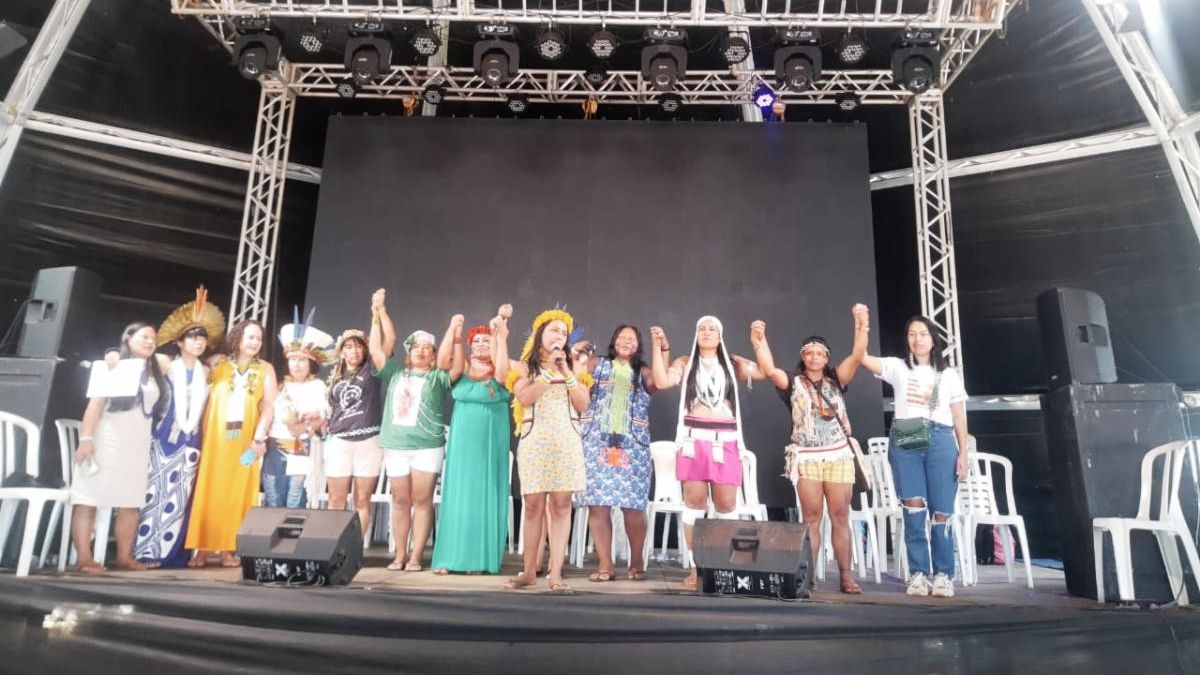
Indigenous women in Brazil are rising for the protection of their communities, territories and climate!
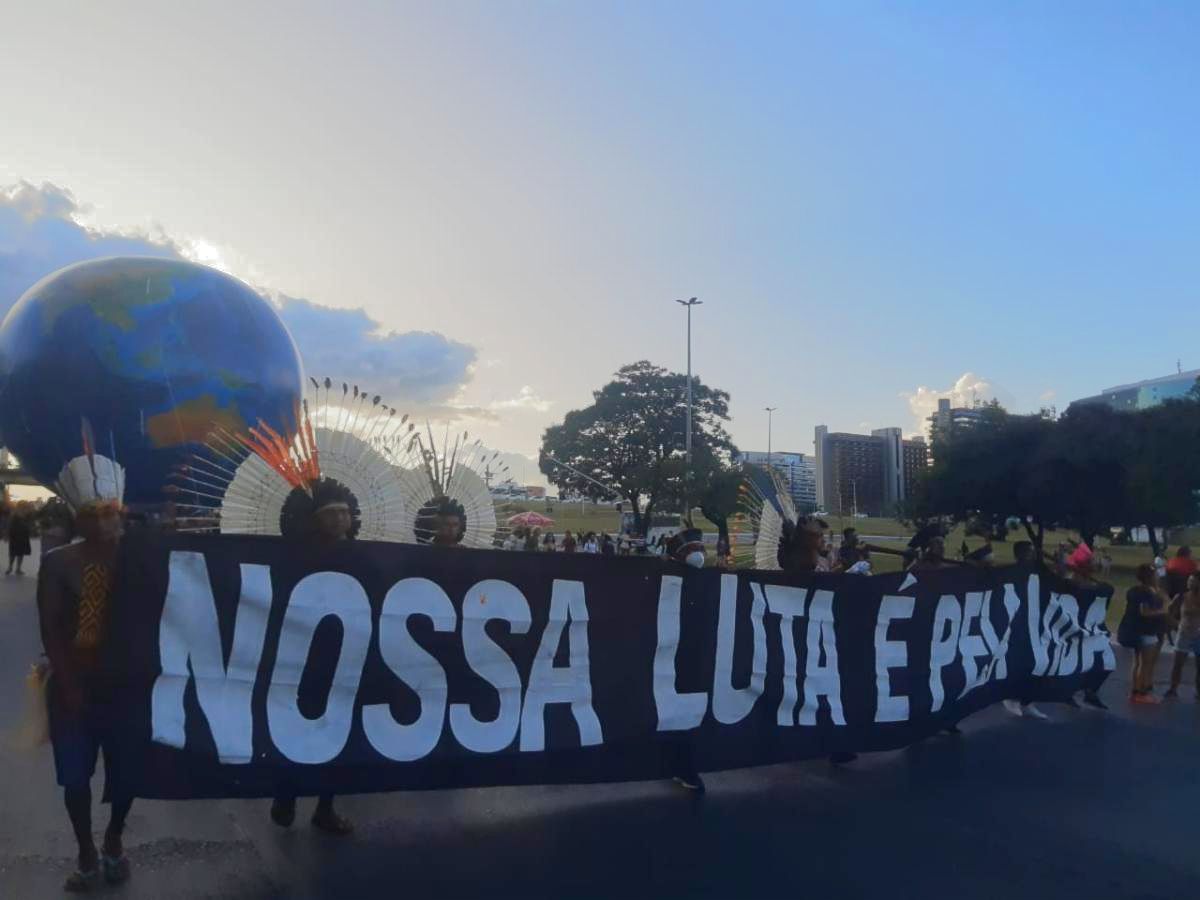
From April 4-14, Indigenous communities from across Brazil have been convening for the 18th Acampamento Terra Livre or Free Land Camp in Brasília, Brazil. During the encampment they are holding actions and forums that highlight political engagement, anti-Indigenous laws and policies, and the protection of Indigenous rights and the environment. These Indigenous communities are the central defenders of the Amazon, and we stand with them in their struggles.
Under Brazilian President, Jair Bolsonaro, there has been a significant increase in deforestation in the Amazon, and policies and programs that seek to strip the rights and sovereignty of Indigenous communities. In addition, Indigenous peoples often face threats and violence for protecting their territories.
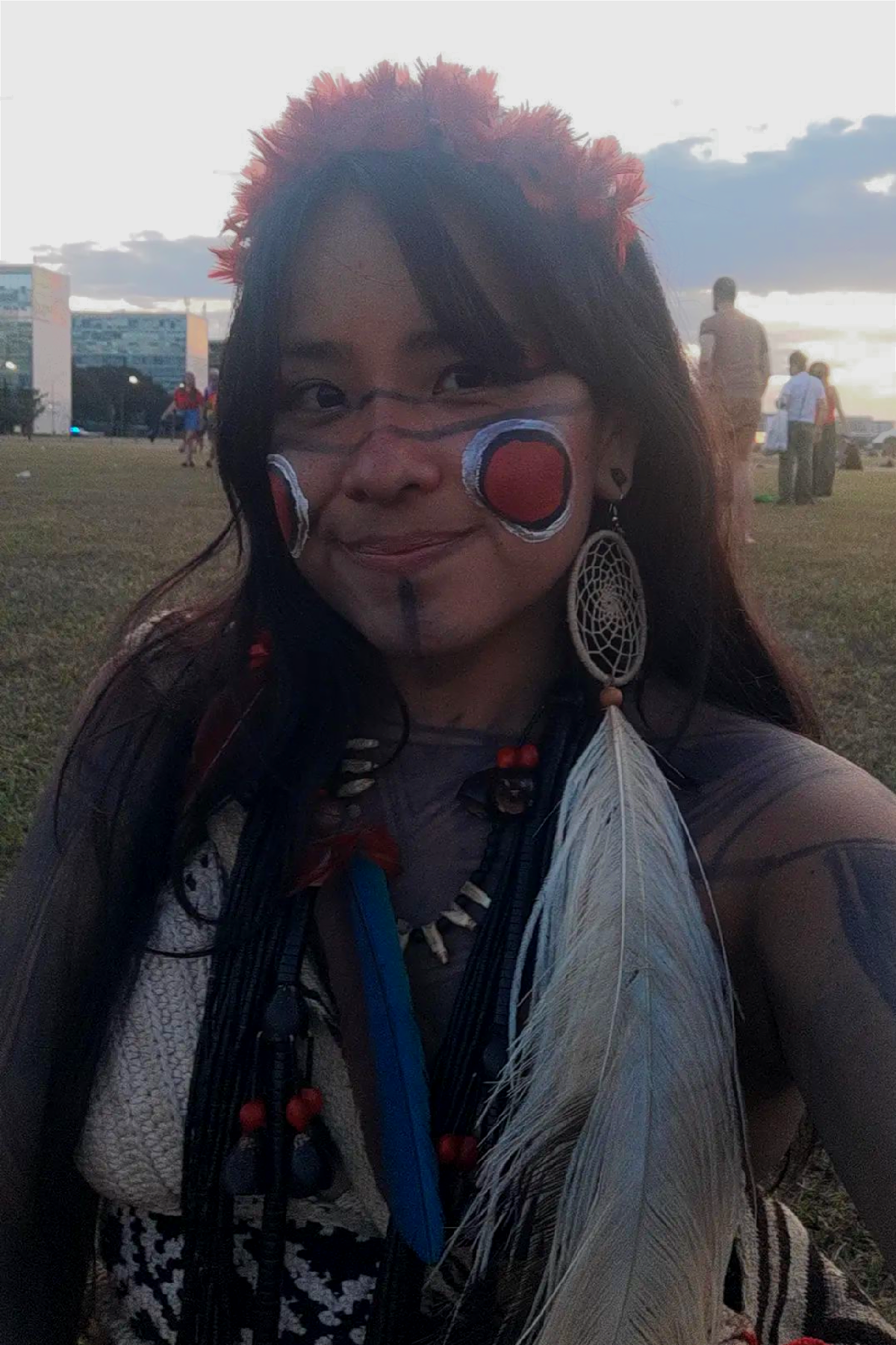
During the Free Land Camp, Taily Terena (pictured right), of the Terena Nation in Brazil, has been on the ground with WECAN documenting and sharing important information on the activities of the encampment.
|
|
Indigenous Women Speak out During Mass Mobilization In Brazil |
|
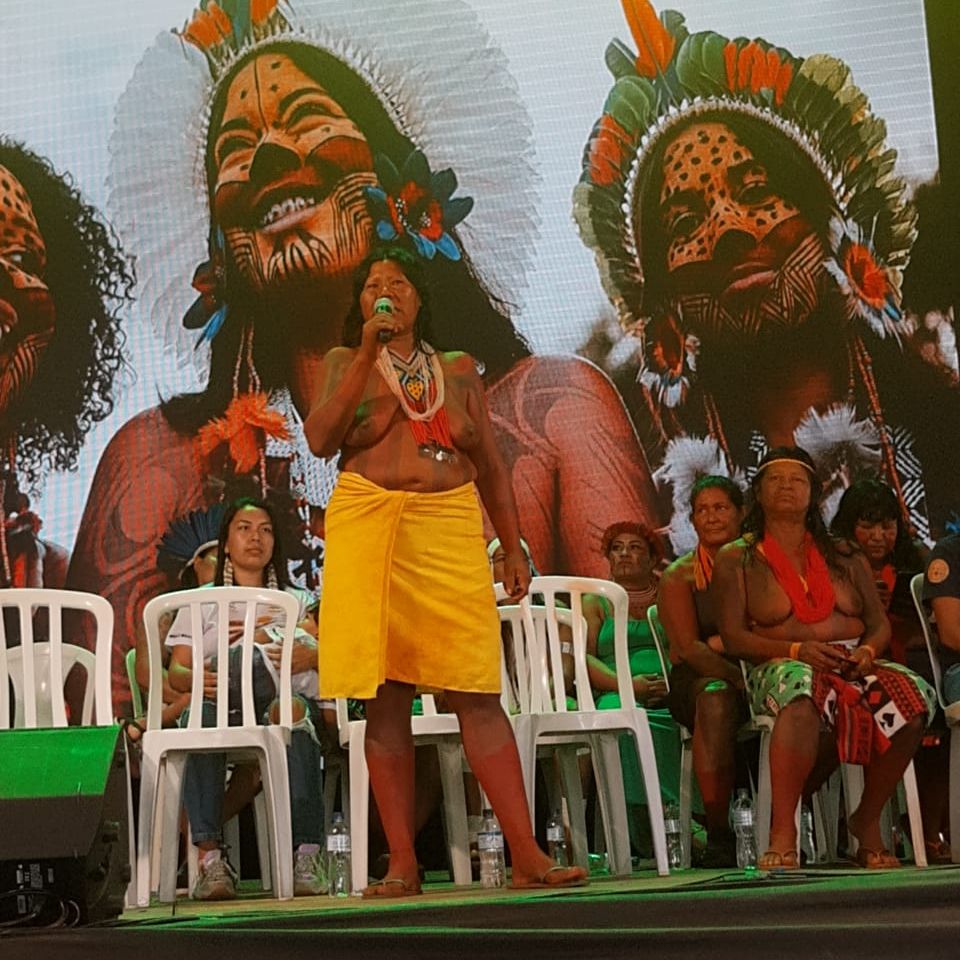
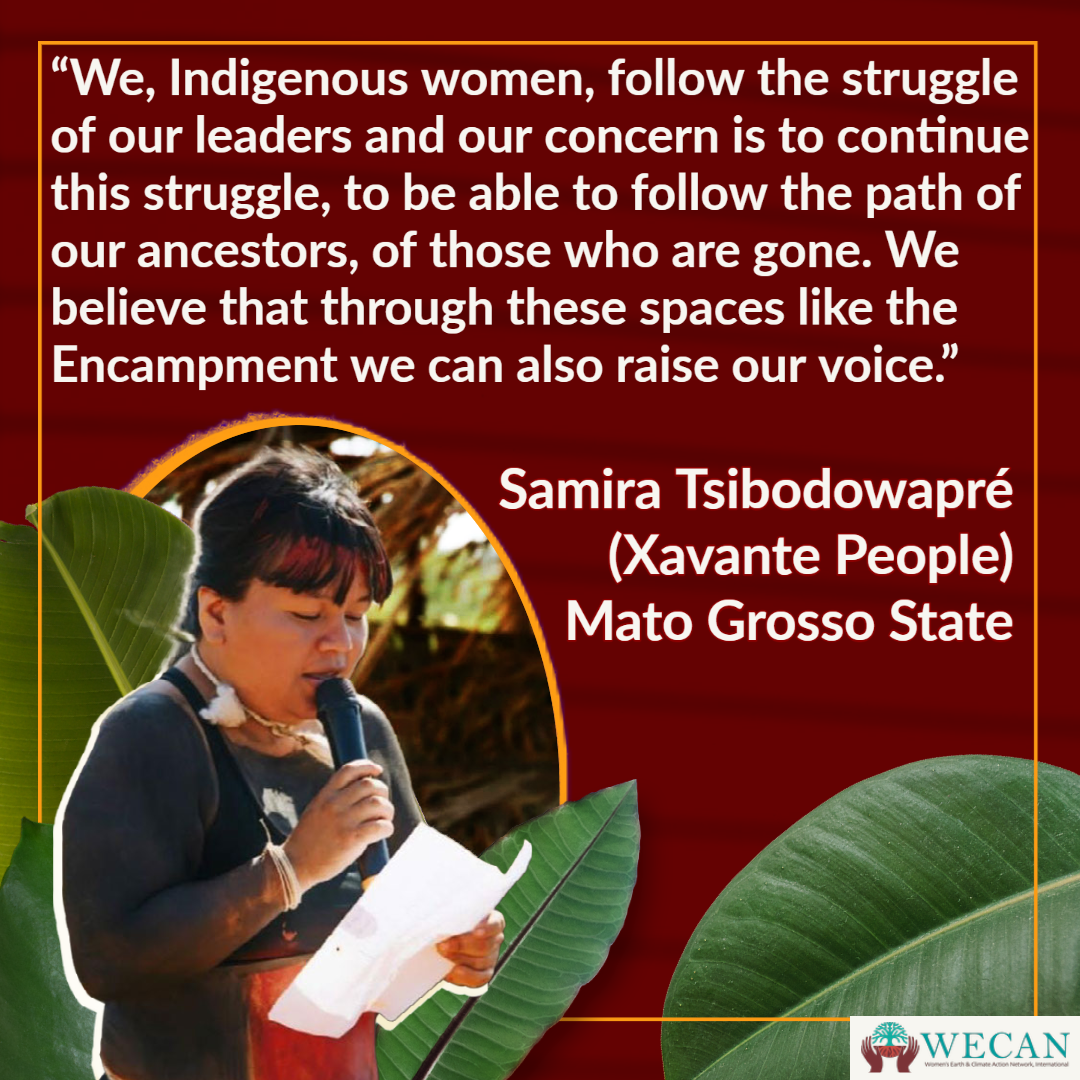
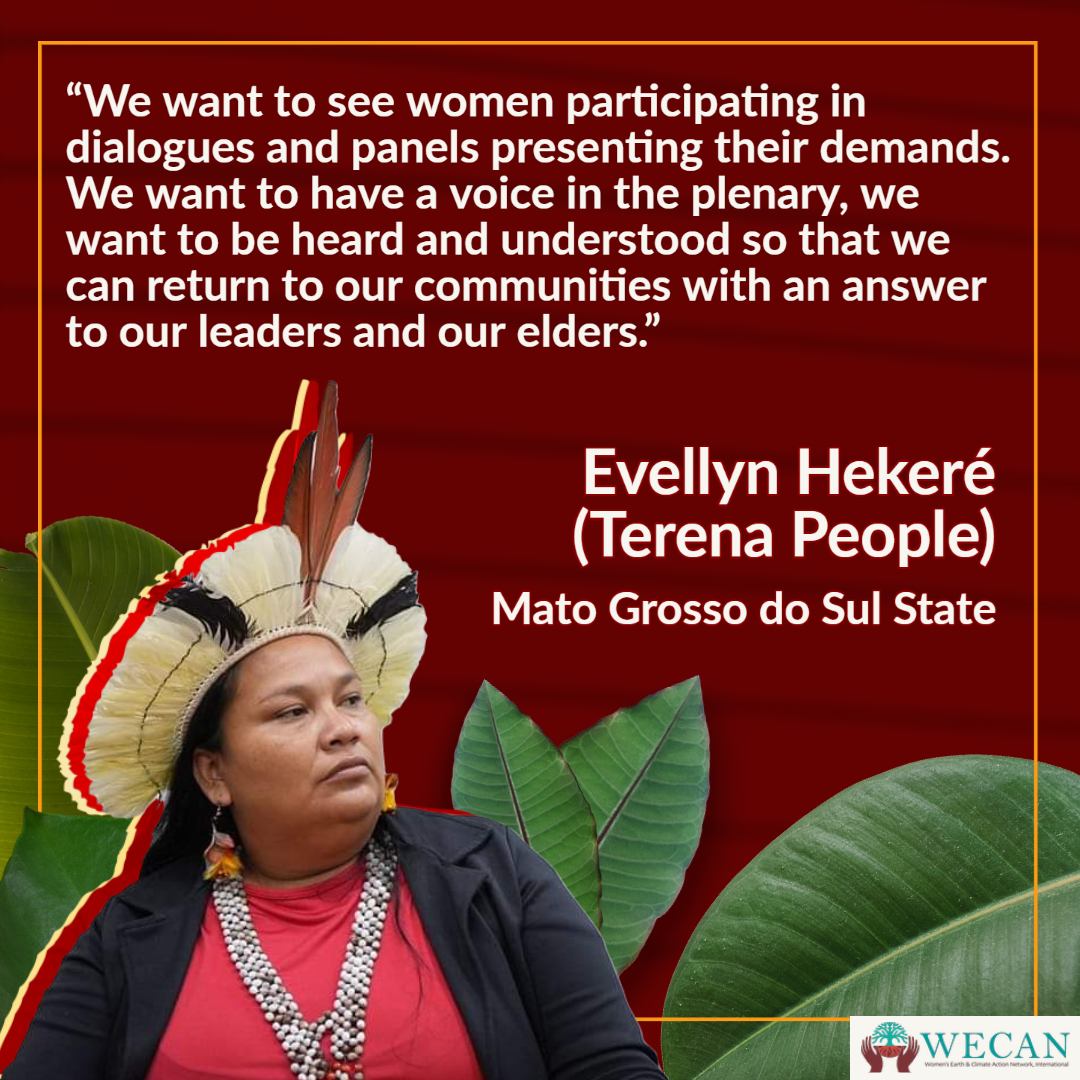
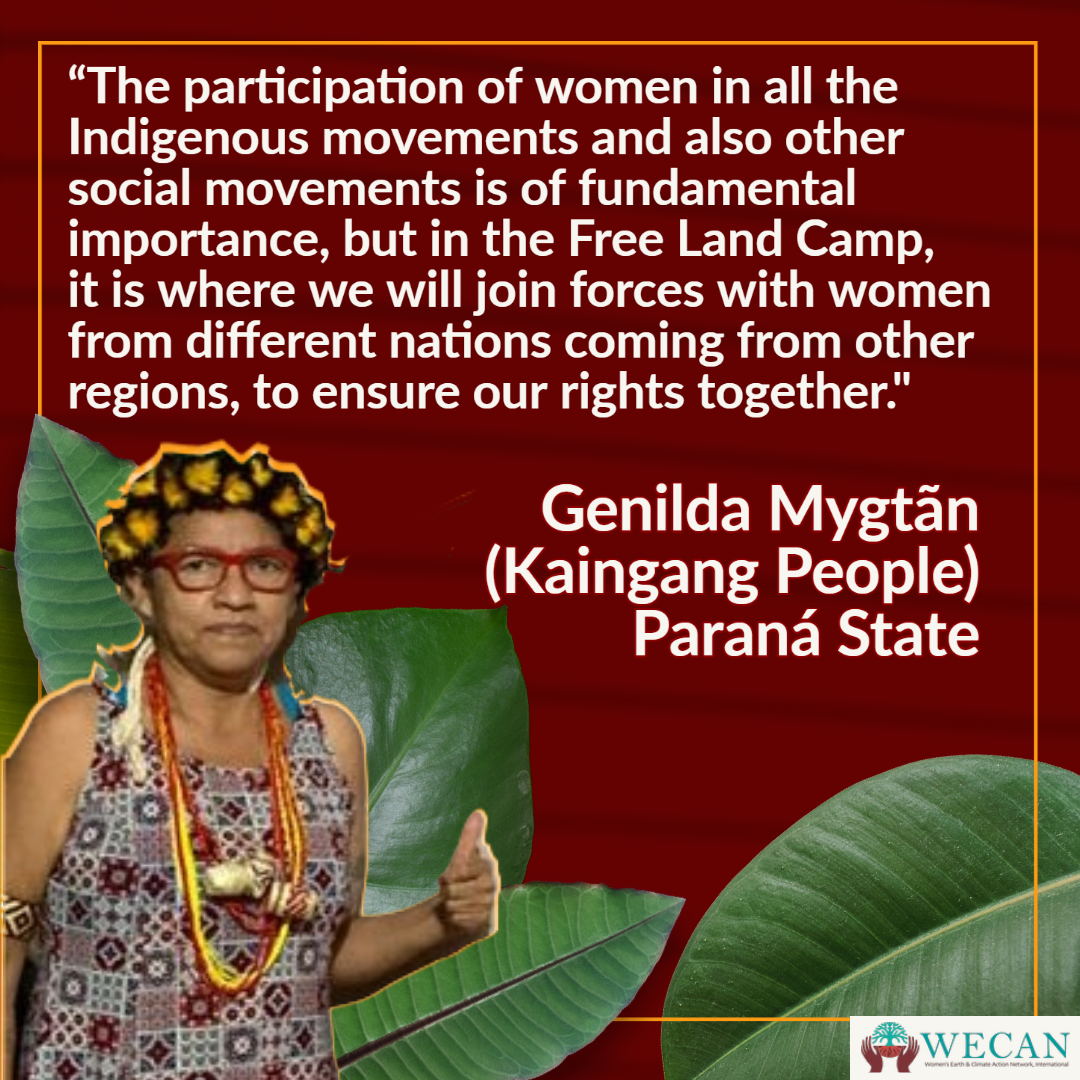
On April 8th, as part of the Free Land Camp, Indigenous women leaders convened a Women's Assembly to share expertise and knowledge, and take action for Indigenous rights and sovereignty.
WECAN has interviewed Indigenous women leaders about why women's participation is important. You can read their full statements via the button below.
Many thanks to Taily Terena who is on the ground in Brazil for WECAN and also gathered and translated all the statements!
|
|
|
Uplifting the Rights of Nature |
|
"Decades of environmental protection laws have achieved notable successes. Despite this, our modern legal systems have failed to prevent increasingly grave threats of global warming, degradation of Earth’s sacred systems of life, and the growing displacement and death of humans, plants and animals. We need Rights of Nature to transform our legal and economic systems, protect biodiversity from harmful extraction and build tangible and justice-centered solutions to address multiple, interlocking crises."
Osprey Orielle Lake
|
|
This month, WECAN is honored to have Osprey Orielle Lake, WECAN Executive Director, featured in the April magazine issue of "The Environment," by CIWEM. Read the full article here.
Since our founding, WECAN has been a strong advocate for the Rights of Nature, a framework and legal system based on the recognition and honoring of the Earth’s fundamental and inviolable right to exist, live, thrive, evolve and regenerate. Learn more about WECAN's Rights of Nature advocacy here.
|
|
Updates on Recent Events & Campaigns |
|
Reportback | Defund Formosa Week of Action |
|
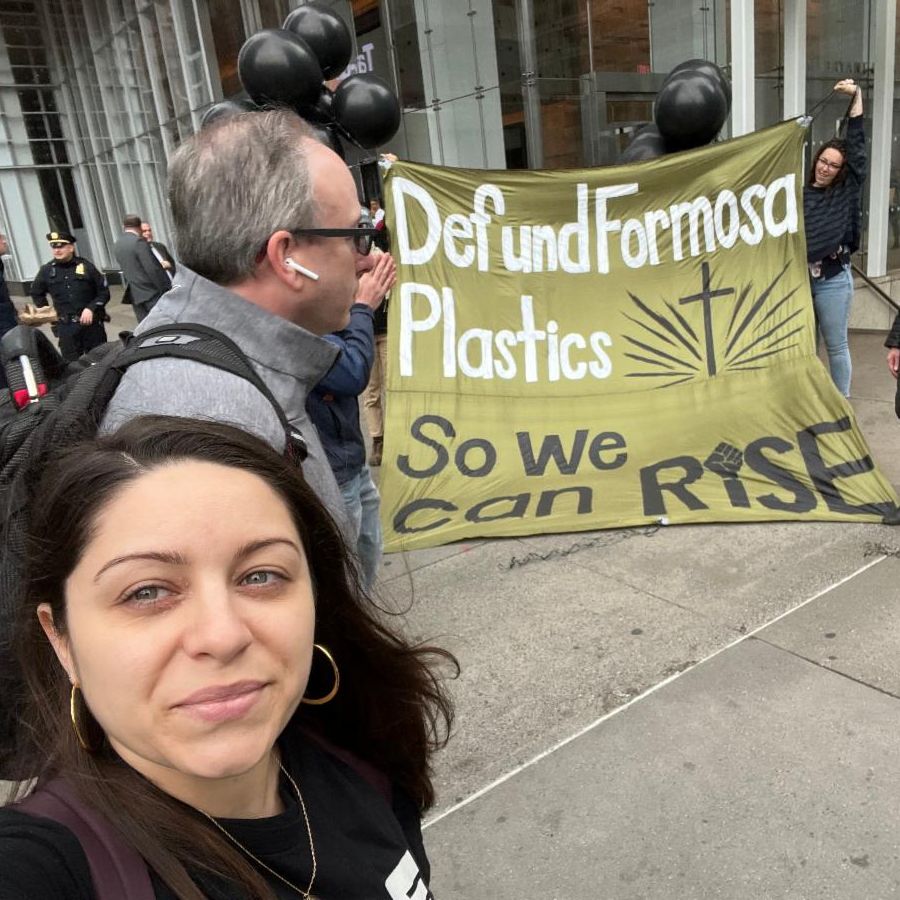
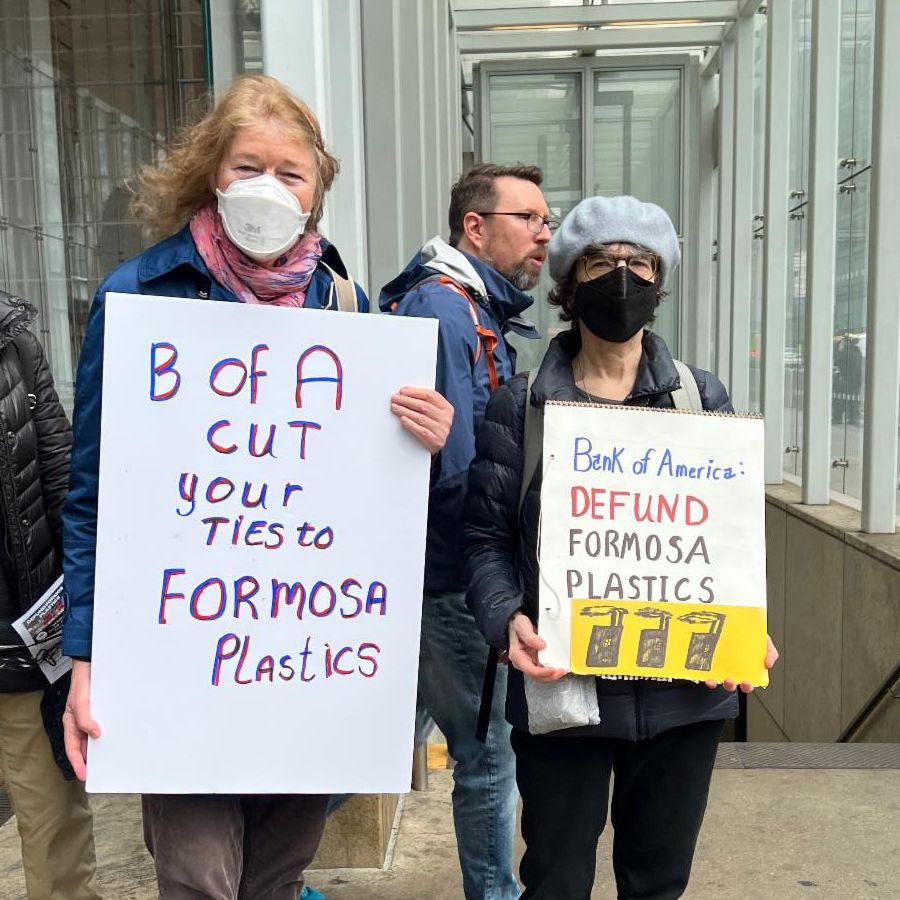
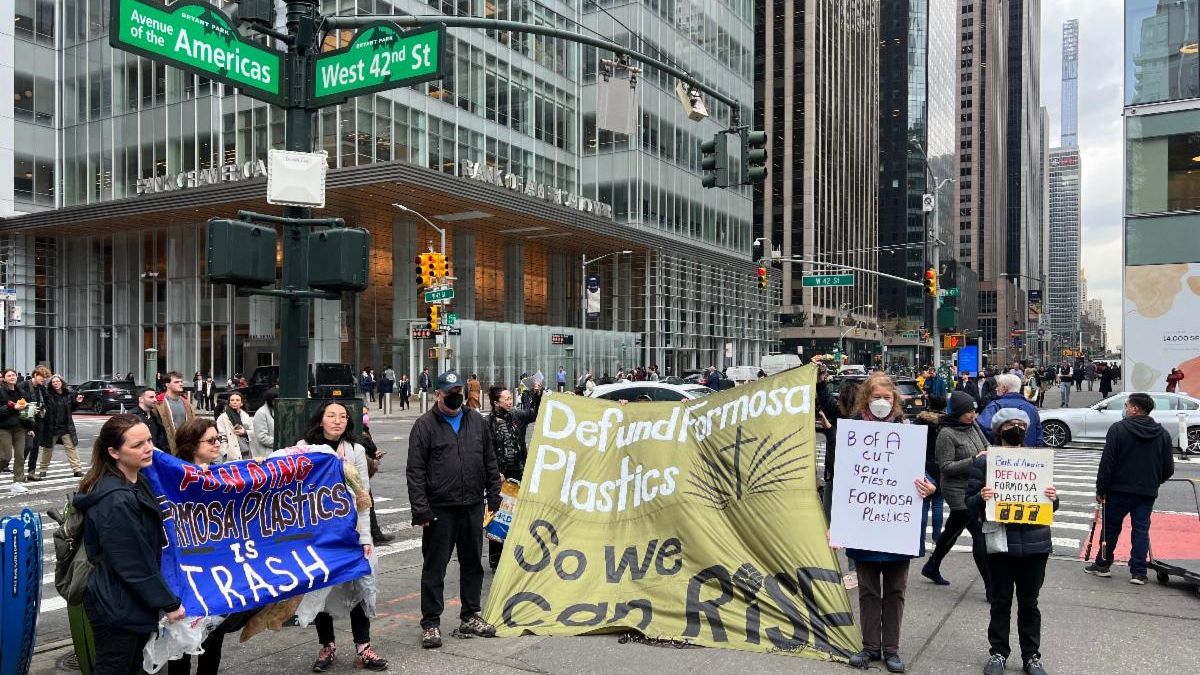
From March 28-April 1, WECAN joined actions nationwide to call for banks to Defund Formosa. In solidarity with Rise St. James, we participated in an action in New York City to deliver a petition, signed by nearly 100,000 people, demanding that Bank of America denounce environmental racism and not fund the Formosa Plastics Plant.
Formosa Plastics seeks to build a massive 14-facility petrochemicals complex in Louisiana, where it would produce the same air pollution as three new coal plants. Petro-chemical and fossil fuel industries are some of the leading contributors to the climate crisis, and it is necessary to rapidly divest from extractive industries that are locking us into a future of ever worsening climate chaos.
|
|
WECAN Program Associate Ashley Guardado at the Defund Formosa Action in New York City. |
|
People take action in New York City calling for Bank of America to Defund Formosa.
Photos by Ashley Guardado/WECAN International
|
|
In addition, If the complex is built, it would double toxic emissions in “Cancer Alley," where communities experience elevated risk of cancer and other health impacts. Rise St. James, and its partners are now requesting that banks and financiers step up and publicly pledge to not fund Formosa plastics, and instead put action behind their words and end financing for projects that harm people and the planet.
|
|
Watch the Recording | Building Systemic Change: Frontline Women-led Solutions for Climate Justice |
|
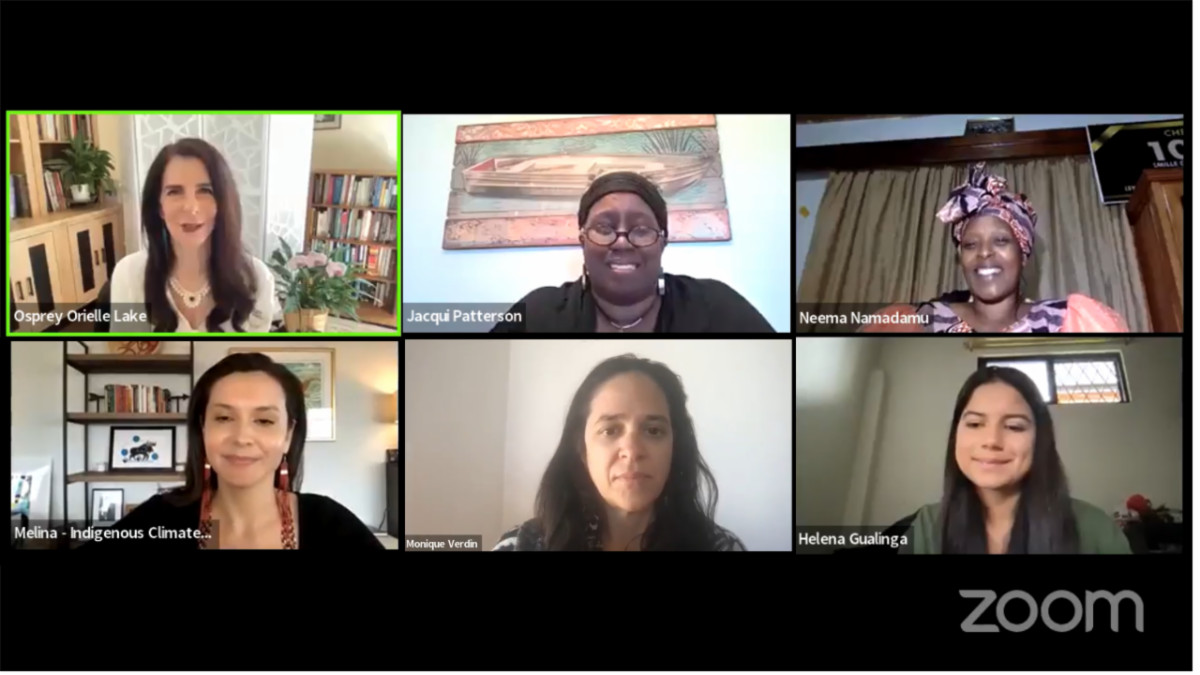
Thank you to all the speakers and everyone who joined us for the WECAN Event, "Building Systemic Change: Frontline Women-Led Solutions for Climate Justice," which was a formal side event held as part of the sixty-sixth session of the United Nations Commission on the Status of Women (CSW66).
During this event Indigenous, Black, Brown, and frontline women leaders and global advocates addressed multiple interlocking crises, and presented a diverse array of visions, projects, policy frameworks and strategies based in a climate justice framework, including forest and biodiversity protection, Indigenous rights, food sovereignty, protection of women land defenders, and community-led solutions.
Please find a recording of the event and resource links down below, and be welcome to share with your communities and networks!
|
|
Many thanks to the amazing speakers: Monique Verdin (Houma Nation), Director, The Land Memory Bank & Seed Exchange, and WECAN Indigenous Food Sovereignty Program Coordinator; Jacqui Patterson, Founder and Executive Director, The Chisholm Legacy Project; Melina Laboucan-Massimo (Lubicon Cree), Co-founder and Senior Director, Indigenous Climate Action, and Founder, Sacred Earth Solar; Neema Namadamu, Founder, Synergy of Congolese Women’s Associations (SAFECO), and WECAN Democratic Republic of Congo Coordinator; Helena Gualinga (Kichwa), Environmental and Indigenous Rights Defender, WECAN Young Women Project Lead; Osprey Orielle Lake, WECAN Executive Director.
|
|
Update | Tongass Action to Defund Climate Chaos |
|
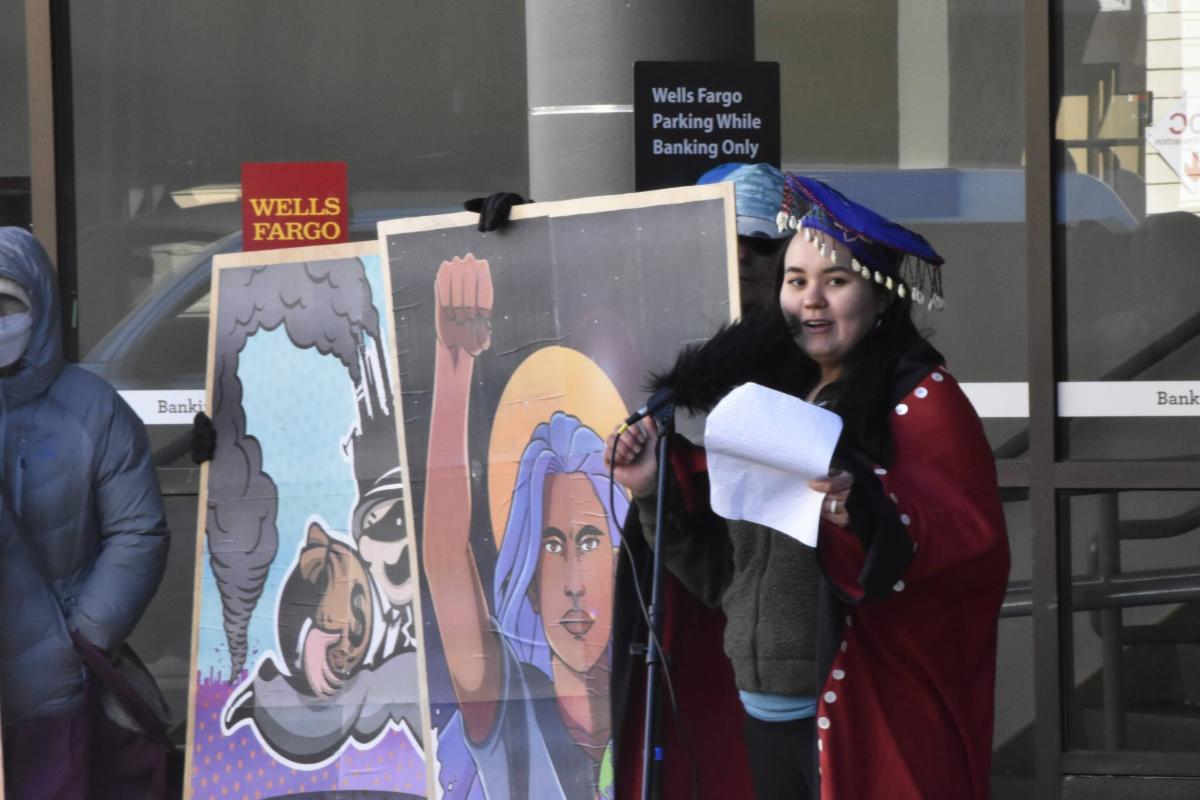
On April 11, WECAN Tongass Hub leaders Rebekah Sawyers (Yupik) (pictured right), Wanda Culp (Tlingit), and Yolanda Fulmer (Tlingit), participated in an action in Juneau, Alaska to urge Wells Fargo to stop funding fossil fuels. Learn more about the action in this Juneau Empire article.
The event is part of the national Defund Climate Chaos Week of Arts Action coordinated by the Stop the Money Pipeline to bring attention to Wall Street banks that are funding the climate crisis. Since the Paris Agreement, six US banks have loaned $1.2 trillion to the fossil fuel industry. Learn more about WECAN's ongoing divestment and forest program work on our website.
|
|
Reportback | Workshops with Financial Institutions |
|
In March, WECAN collaborated with BankTrack and other partners to host a series of workshops for the Equator Principles Association (EPA), intended to provide educational dialogue on how financial institutions can align with the foundational elements of the 2015 Paris Climate Agreement and the vital 1.5 degree guardrail.
The EPA is a consortium of 128 financial institutions in 38 countries that have adopted the Equator Principles (EP), a risk management framework used for “determining, assessing and managing environmental and social risk in projects and is primarily intended to provide a minimum standard for due diligence and monitoring to support responsible risk decision-making.”
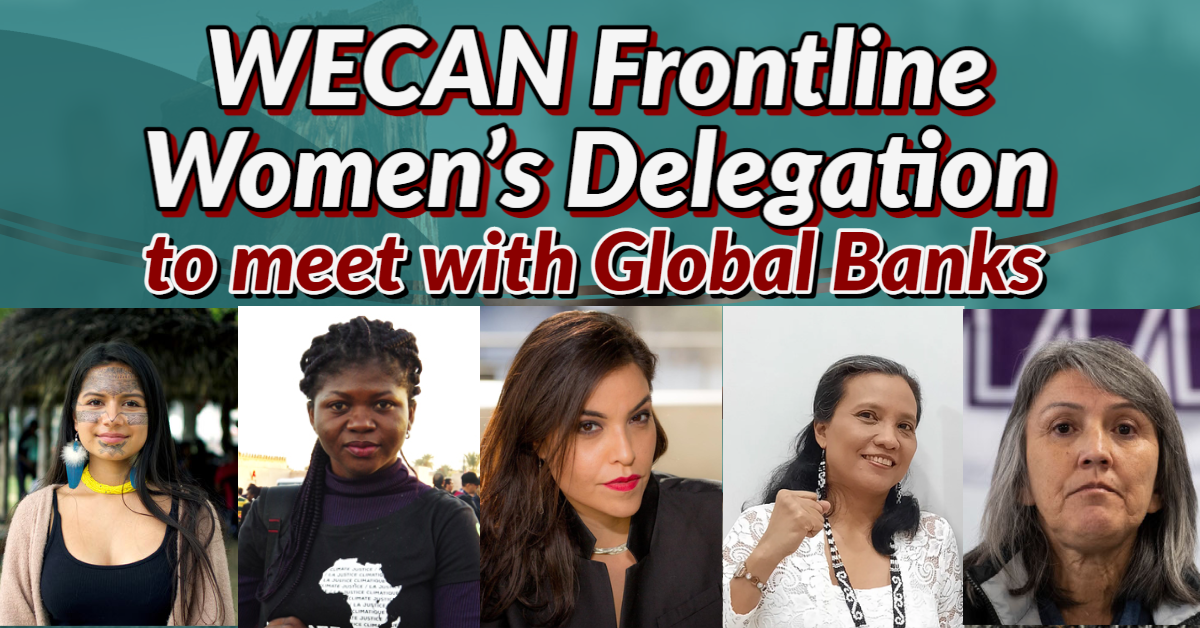
As part of these workshops, WECAN organized a frontline women's delegation to center their voices in these workshops and share their knowledge, experiences, and paths forward from the frontlines of deforestation and fossil fuel extraction.
The Delegation included:
-
Michelle Cook (Dine’/Navajo), Human rights lawyer and founder of Divest Invest Protect and Indigenous Human Rights Defenders and Corporate Accountability Program (IHRDCAP), USA.
-
Helena Gualinga (Kichwa), Indigenous youth social and climate activist, Ecuador
-
Devi Anggraini, President of PEREMPUAN AMAN – an association of Indigenous women across Indonesia and the women’s wing of AMAN, Indonesia
-
Rita Uwaka, Forest and biodiversity expert, Nigeria
-
Freda Huson (Chief Howihkat), Unist’ot’en – Wet’suwet’en People, Leader and spokesperson for the Unist’ot’en camps resisting the Coastal GasLink Pipeline, Canada
-
Osprey Orielle Lake, Executive Director, Women's Earth and Climate Action Network, USA
The workshops focused on climate impacts, fossil fuels, deforestation, biodiversity protection, and impacted communities. The workshops also highlighted the need to stop false solutions to the climate crisis, and the importance of human and Indigenous rights protections, particularly the role of Free, Prior, and Informed Consent (FPIC). Learn more in our press release here.
|
|
Watch the Recording | Rally to Stop the Mountain Valley Pipeline |
|
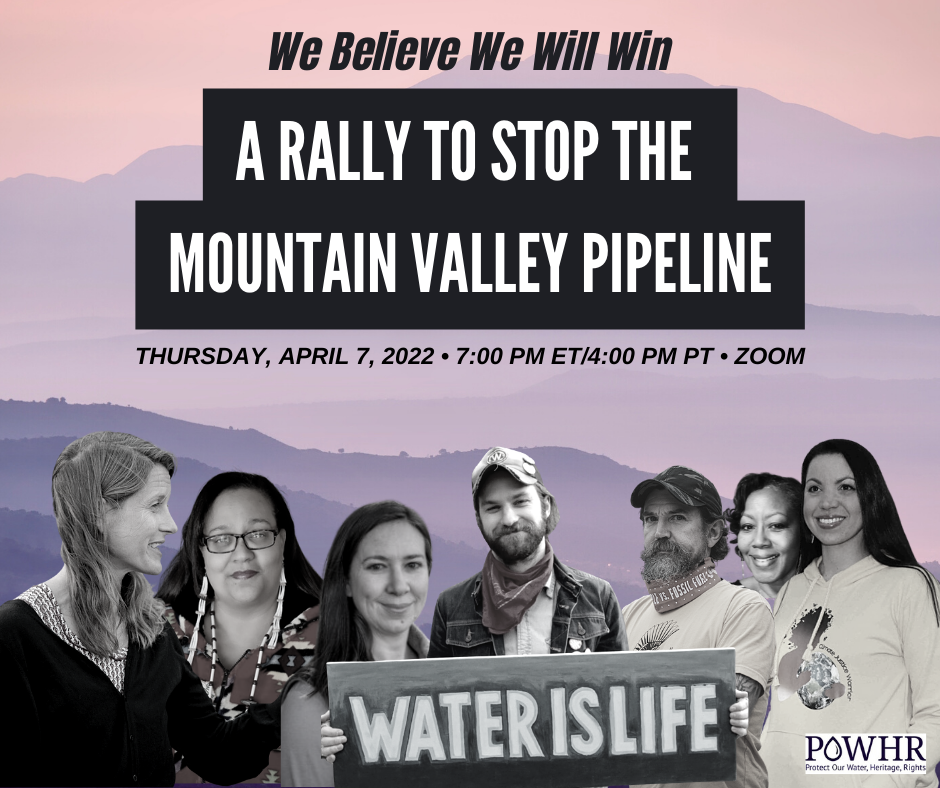
On April 7th, grassroots leaders led a national rally online to stop the Mountain Valley Pipeline! Watch the recording here.
A growing movement in Appalachia has been tirelessly working to stop the Mountain Valley Pipeline! In the past several months, the MVP has been denied critical permits for construction, stopping the pipeline from crossing the Jefferson National Forest and further endangering wildlife. And late last year, Indigenous and Black community leaders stopped the MVP Southgate extension’s Lambert Compressor Station.
If built, the MVP would emit the same amount of emissions as 26 US coal plants, causing irreparable harm for local waterways, ecosystems, and communities along the pipeline corridor.
During the rally, community leaders shared recent wins, strategies to stop the pipeline and ways for supporters to take action! WECAN is honored to be supporting this effort. To stay up to date on organizing efforts to stop the Mountain Valley Pipeline, see their website here: stopmvp.org
|
|
Please consider supporting WECAN as we continue to uplift the leadership and solutions of women and feminists worldwide fighting for climate justice and the defense of the planet for current and future generations. |
|
For the Earth and All Generations,
Women's Earth and Climate Action Network
(WECAN) International Team
|
|
S T A Y C O N N E C T E D |
|
|
|
|
|
|