Faulkner County Agriculture Update
July 3, 2026
| | |
Weather
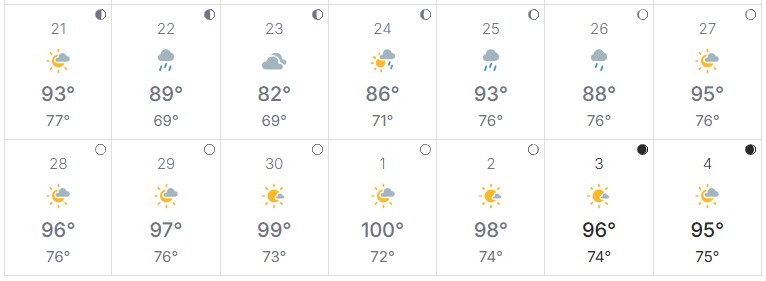
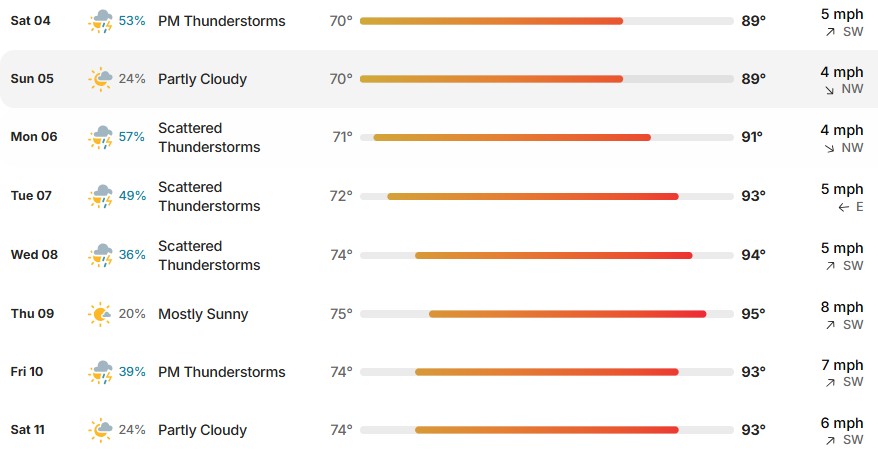
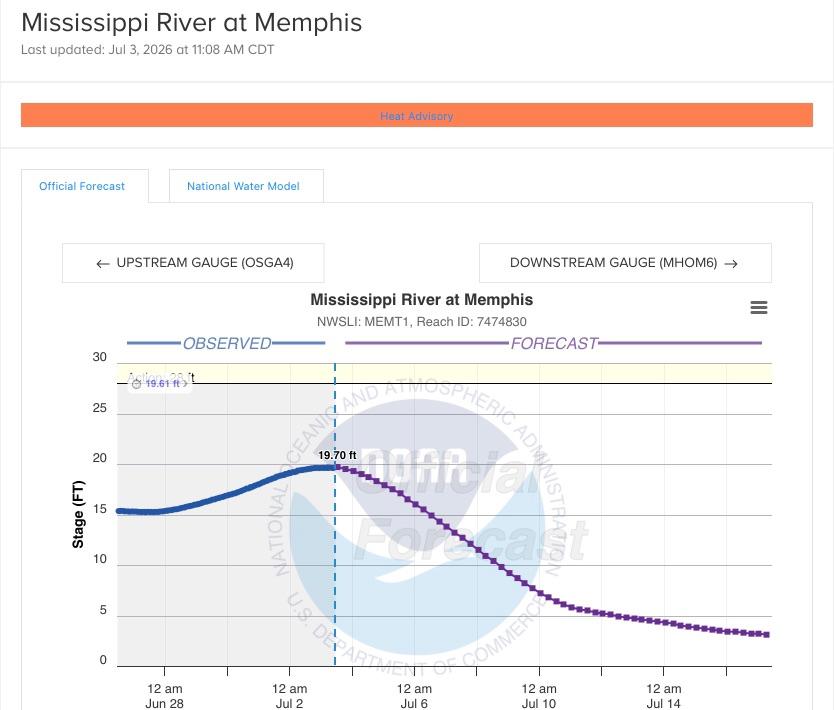
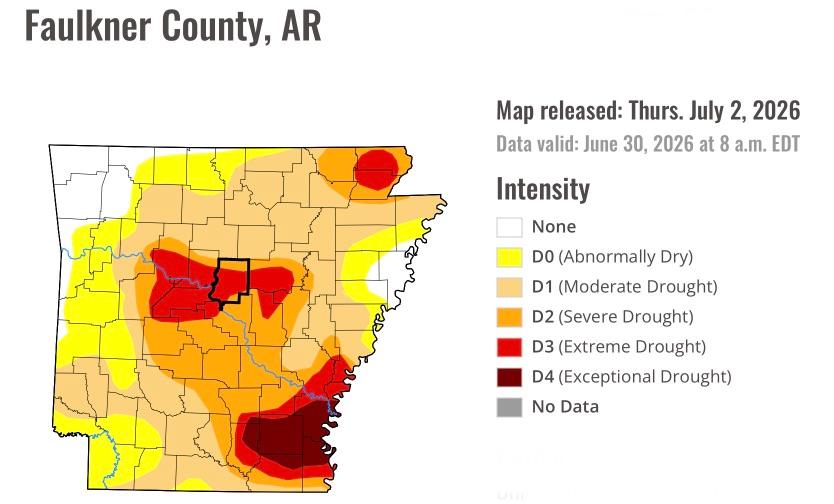
Temperatures were extremely high this week as we had our first 100 degree days. It was pretty miserable out there this week. This weekend looks like we will have a cool down with good chances of rain. We are really in need of a good general rain across the whole county.
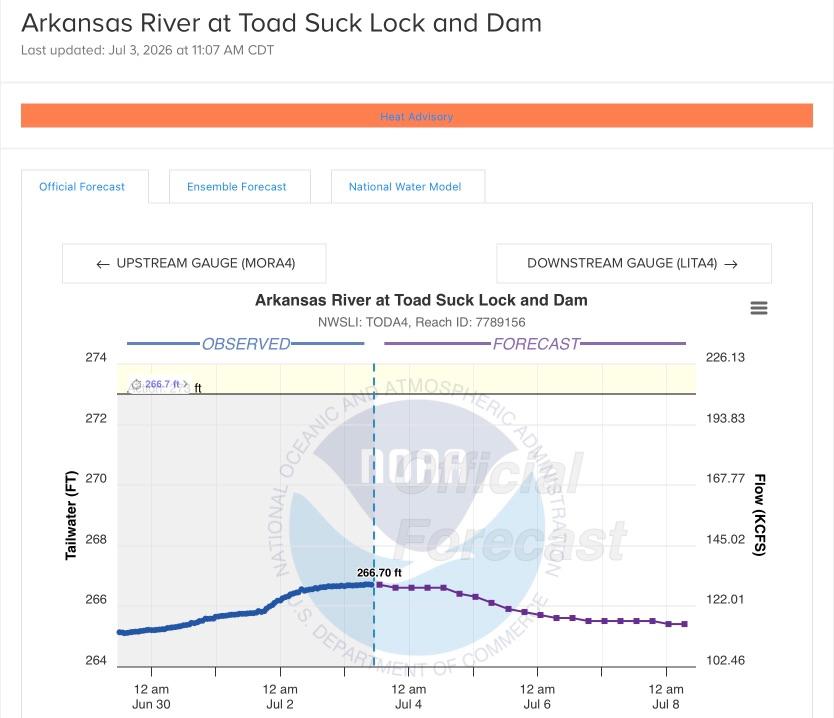
| | Arkansas and Mississippi River | | |
River Valley Row Crop Tour
Please save the date of Thursday July 16 for our annual River Valley Row Crop Tour. I will have more details next week.
|
Corn
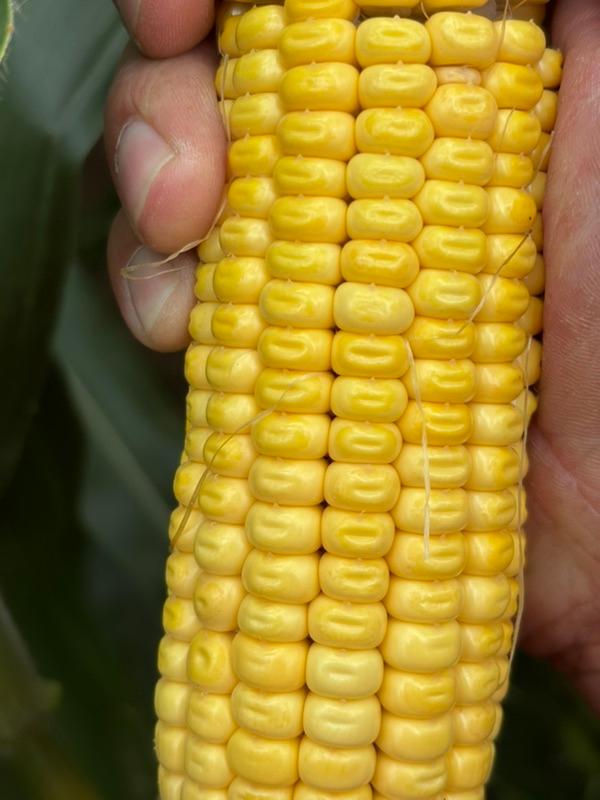
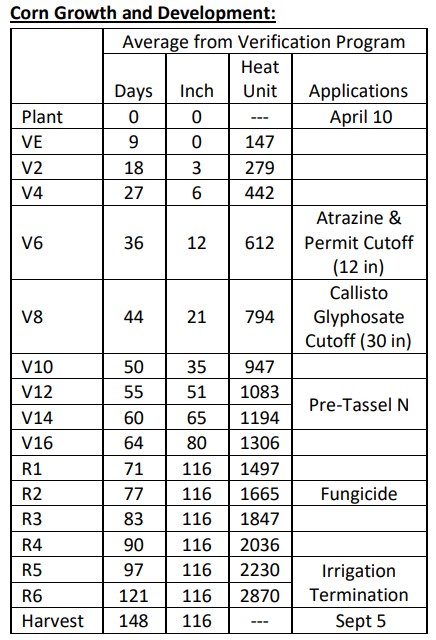
The corn update this week is easy - WATER WATER WATER! That is the the main concern right now. Next week we can start talking about irrigation termination on some of the early planted fields, but until then keep the pivots going and the row water flowing.
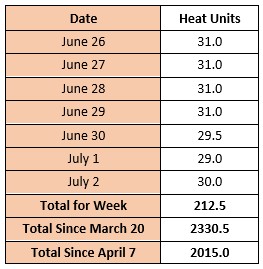
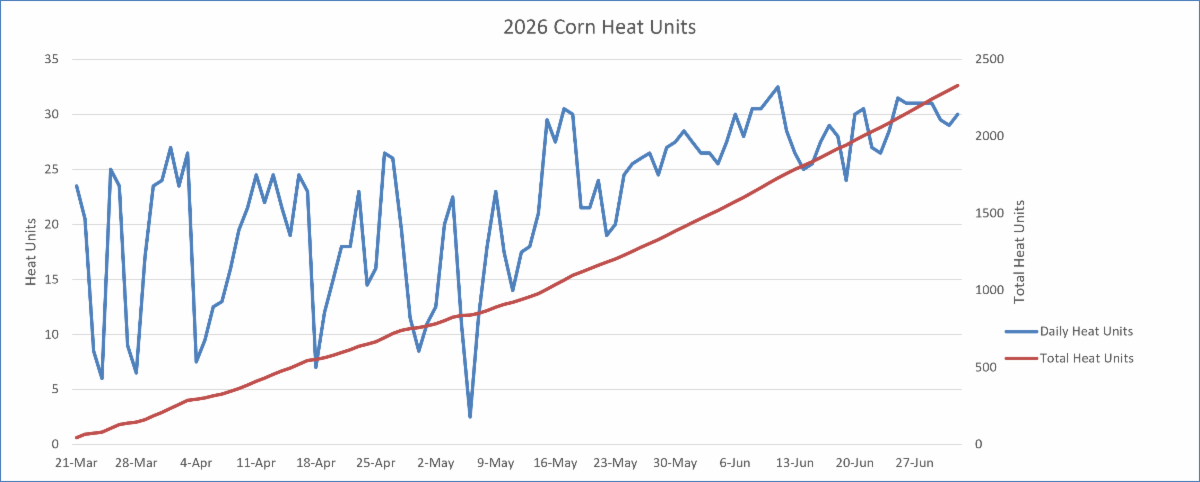
Heat units were through the roof this week. We were above or right at 30 heat units a day this week. Things are starting to move quickly. Heat units for corn planted on March 20 is at 2330.5 and for fields planted on April 7 there is 2015 heat units.
| | |
Rice
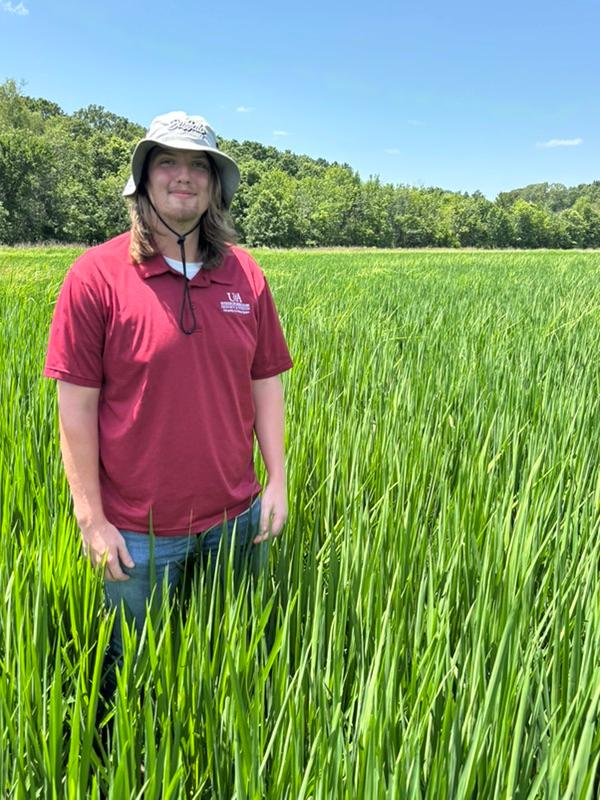
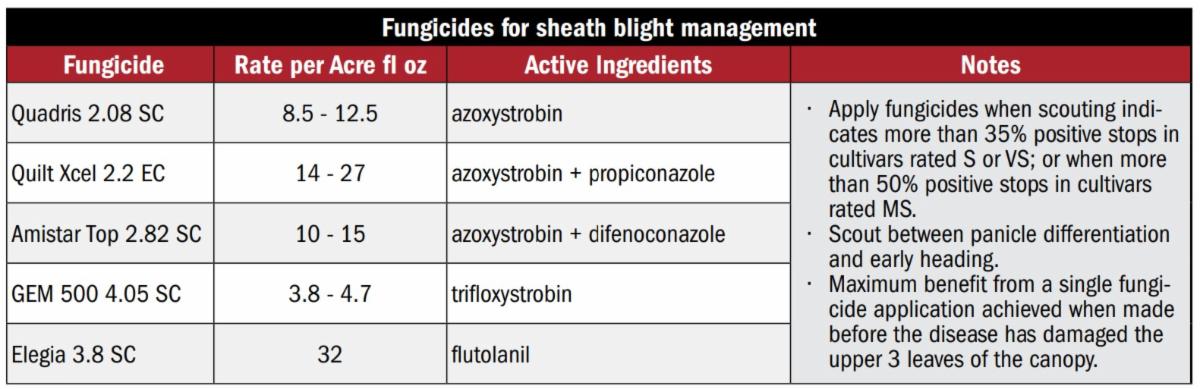
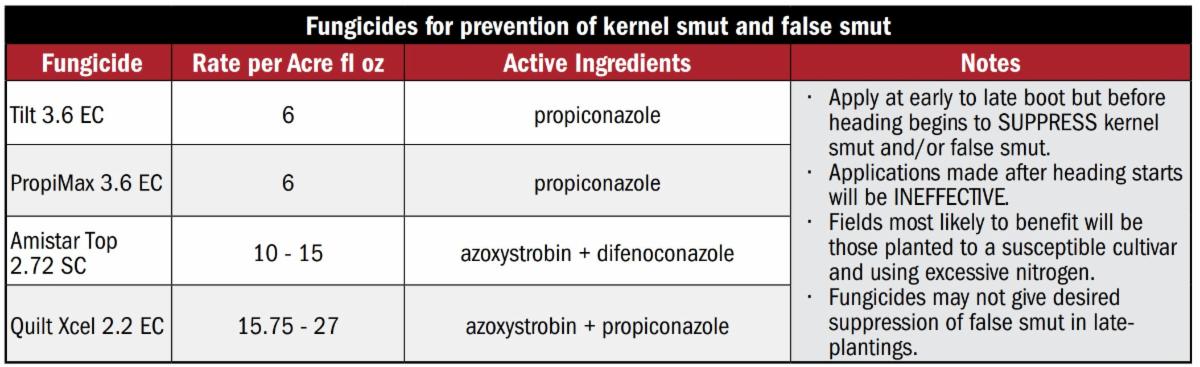
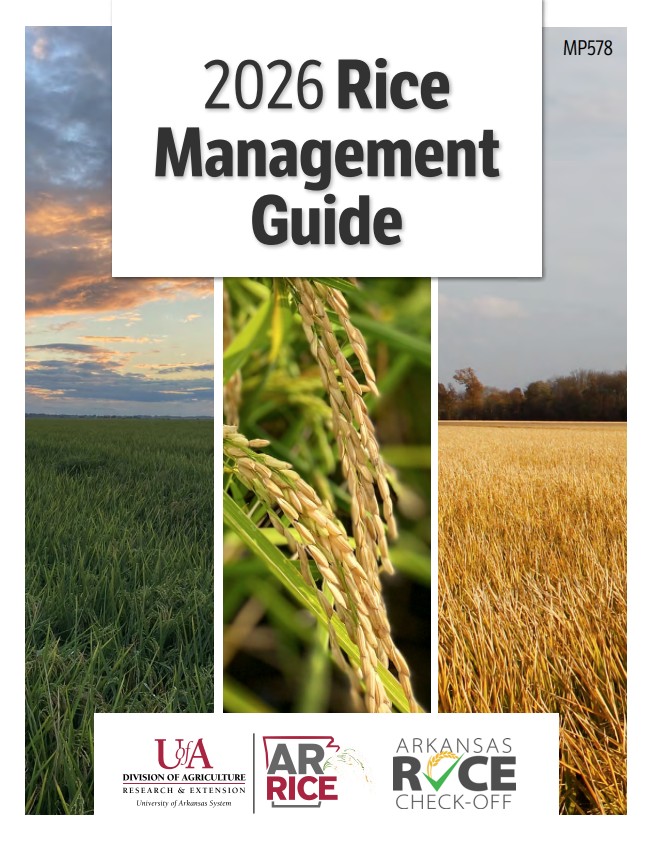
Rice is moving as fast as corn with all these heat units. I can see a few heads starting to pop through this week so if you want to spray propiconazole for smut it needs to go out asap. I haven't seen or heard of much sheath blight in fields, so maybe we will get by on that this year. Make sure to keep an eye on power units and water situations. Rice is at max use of water right now and a down power unit can cost you right now. Up next is stinkbugs.
| | Latest rice update from Dr. Jarrod Hardke and our 2026 Rice Management Guide. | | |
Soybeans
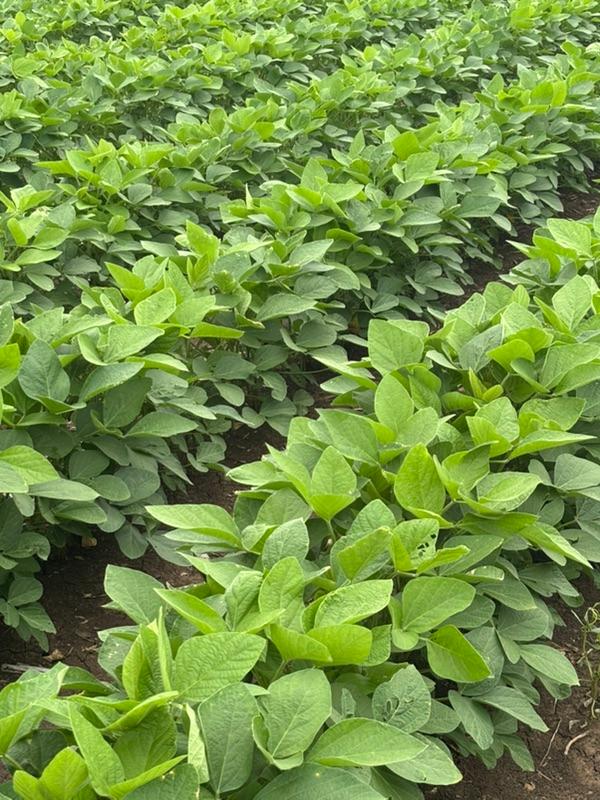
Soybeans are in the same boat as the corn and rice. We need water. I have seen lots of polypipe going out this week and pivots moving across smaller beans. Insects continue to be at a minimum but we will continue to scout fields.
| | |
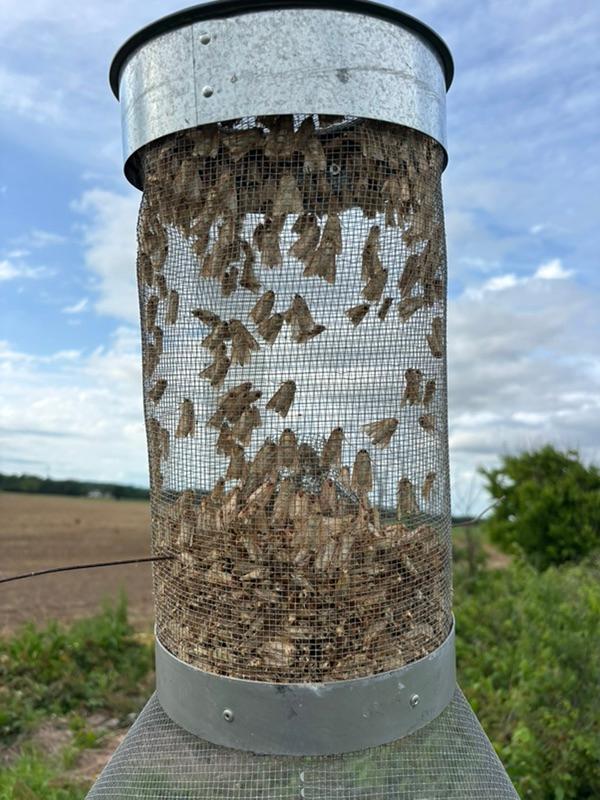
Corn Earworm Moth Traps
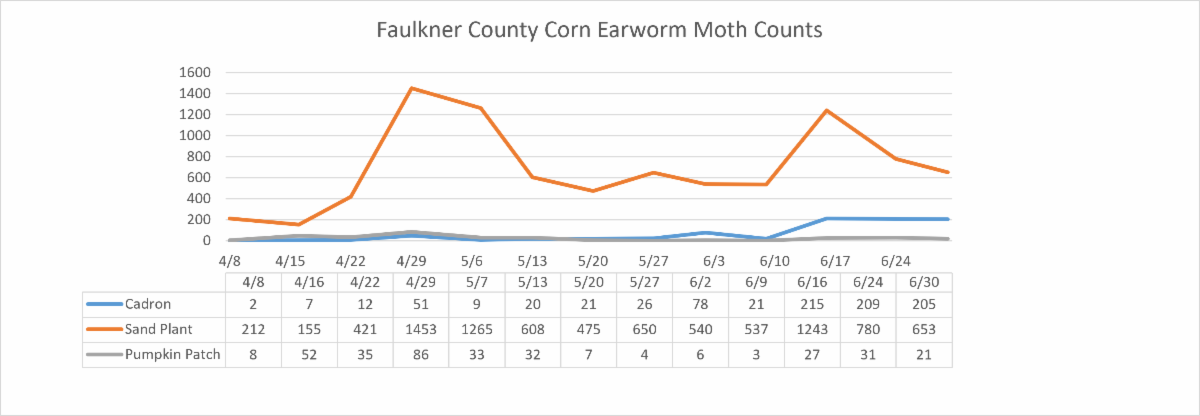
Corn Earworm Moth Counts for June 30, 2026
Cadron - 205
Sand Plant - 653
Pumpkin Patch - 21
| | |
Southern Lending and Credit Conditions
Ryan Loy, Assistant Professor and Extension Agricultural Economist, University of Arkansas
Pancho Abello, Assistant Professor and Extension Specialist, Texas A&M Agrilife Extension
Note: The following newsletter is an excerpt from a recent publication addressing the current agricultural economic downturn. This effort was jointly led by the Southern Risk Management Education Center (SRMEC) and the Texas A&M Agricultural Policy Center. Readers may access the publication here.
Lender Sentiment and Credit Conditions
As U.S. farmers navigate another challenging crop year, financing and marketing options remain uncertain. This uncertainty, due in part to unexpected market shocks, increasing trade competition, and shrinking margins, is evidenced by a significant decline in commodity prices while the inputs used to grow them have continued to get more expensive. The early post-pandemic years (e.g., late 2020- 2022) saw increases in commodity prices and significantly improved sentiment in agriculture returns and lending. Since late 2022, farmers and lenders have entered an increasingly cautious phase. Lender sentiment has shifted from a positive (or neutral) outlook to stricter credit discipline.
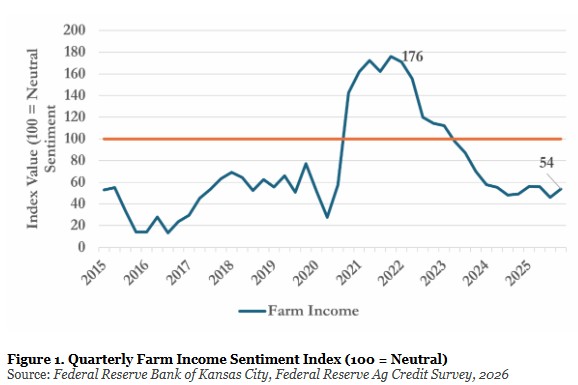
To frame current expectations in the agricultural sector, Figure 1 highlights the agricultural lender sentiment index towards farm income expectations (Federal Reserve Bank of Kansas City, 2026). The Federal Reserve Bank of Kansas City’s agricultural survey covers the Tenth Federal District, which focuses mainly on the Central Plains and surrounding states; however, given the similarities in production, input expense pressures, and credit conditions with the Southern region, this index serves as a reliable barometer of credit conditions across regions. Agricultural lenders are asked, “Are current conditions better or worse than the previous quarter?” The percent that answered “worse” is subtracted from those that answered “better” and added to 100. In short, an index value below 100 signals weaker sentiment, while an index value above 100 signals stronger sentiment. For the period between 2015 and 2020, lender sentiment was weak due to declining cattle prices, the first China-United States trade war, and the pandemic, which crippled global agricultural supply chains. Sentiment significantly improved in late 2020 due to improving on-farm margins and cash reserves from pandemic-related direct government payments and commodity price increases associated with the Russian invasion of Ukraine. Since then, global tensions, increasing trade competition, and high global commodity stocks have pushed sentiment to its lowest point since the pandemic (Q4 2025 = 54). This decline is consistent with lenders seeing tighter (or non-existent) margins due to lower commodity prices and increasingly expensive input costs, including interest expenses.
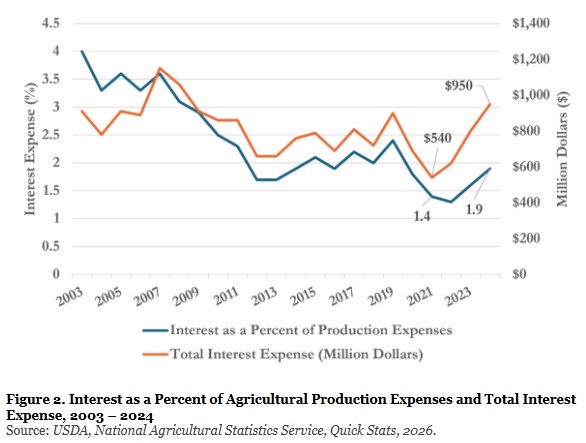
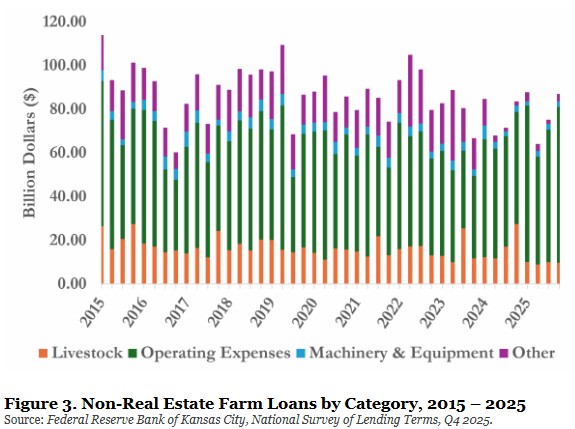
| | One of the clearest signs of tighter financial conditions in U.S. agriculture is the rise in interest expenses (Figure 2). After reaching a peak in the mid-2010s and subsequent decline following the 2008 financial crisis, interest expense measures reflected a lighter debt burden. This changed following the pandemic era, leading to a higher short-term interest rate environment, with total interest expenses increasing sharply (FRED, 2026). While short-term interest rates have moderated over the last two years, total interest expense has increased from $540 million in 2021 to over $950 million in 2024 (USDA-NASS, 2026). Farmers are carrying a larger debt burden and possibly financing a larger share of their enterprise. Interest, as a percentage of total production expenses, increased only modestly from 1.4 to 1.9 percent during the same period. This could suggest that total production expenses have grown substantially, keeping the relative share of interest expense lower even as interest expense has grown. The persistence of these conditions over several years increases lending risk for farmers due to tighter cash-flow margins and accelerates the burn-down of on-farm capital and reserves. From a lending perspective, the combination of higher interest expense and tighter cash flow translates into a more cautious outlook that emphasizes liquidity, stricter loan terms, and closer review of carryover debt. | | Loan demand within the row crop sector has remained elevated in recent years, but the mix of borrowing is an important credit signal (Figure 3). Operating expense loans represent the largest share of loan demand and have increased from about $48 billion in 2023 to approximately $72 billion in the last quarter of 2025 (K.C. FED, 2026). This pattern follows the increasing cost of production (e.g., seed, chemicals, fuel, repairs, and labor), which has forced farmers to borrow more through short-term credit. From a lender’s perspective, these larger operating lines also increase cash-flow risk because they must be repaid from harvest revenue, resulting in tighter margins that require farmers to roll debt balances into the next year or delay their planting and investment decisions. Notably, since late 2023, loans for machinery and equipment and “other” categories have made up a smaller share of total borrowing, indicating that farmers may be making fewer expansionary purchases. They are placing a greater emphasis on financing crops and maintaining liquidity rather than adding on-farm capacity. | | Overall, agricultural credit conditions have shifted from an optimistic post-pandemic period into a more cautious, risk-management-focused environment. The agricultural lender survey indices show that farm income expectations have continued to weaken. Repayment expectations have improved modestly but will continue to struggle amid the declining margins many farmers currently face. At the same time, higher input costs have sharply pushed up operating loan demand, increasing on-farm financial risk exposure. Although operating loan interest rates have eased since the post-pandemic peaks, they remain elevated, and market expectations forecast little relief in 2026. It’s also worth noting that commercial banks are not the only source of agricultural credit. Farm implement dealers and input suppliers also provide a significant layer of financing to agricultural operations. As conditions tighten, the stress on these non-traditional credit relationships becomes equally important to monitor since suppliers may also begin tightening terms or reducing credit availability. As a result, agricultural lenders will continue to be cautious regarding loans. For borrowers navigating this environment, moving forward will require deliberate financial planning, such as strengthening capital reserves and liquidity, and providing realistic budgets with clear repayment plans that keep potential losses shallow if conditions continue to deteriorate. | | Beef, Small Ruminants, & Forages | | |
Forages
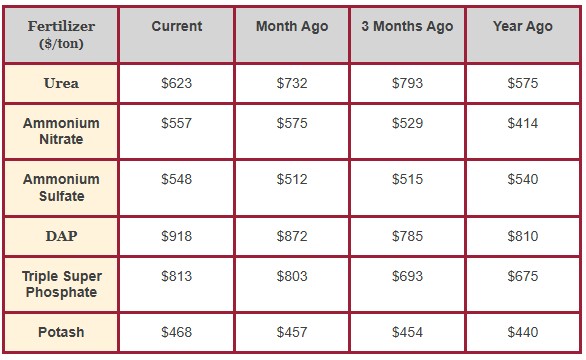
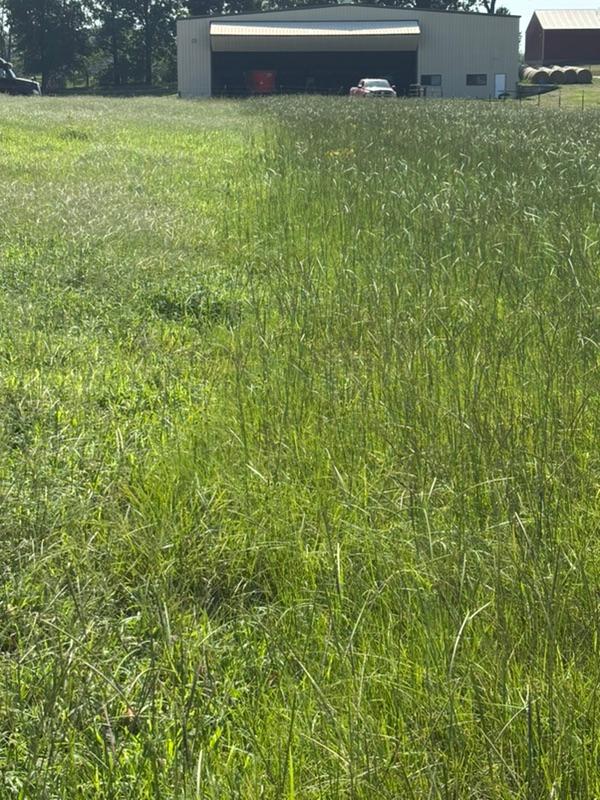
There was several acres of hay that was harvested this week. It was a great week for cutting and drying hay. With a chance of rain early next week, it is a good chance to get out a fertilize application. I recommend 100 lbs of Urea or 175 lbs of coated ammonium nitrate plus 100 lbs of potash. That is a good combination for the next round of hay if you can catch a rain.
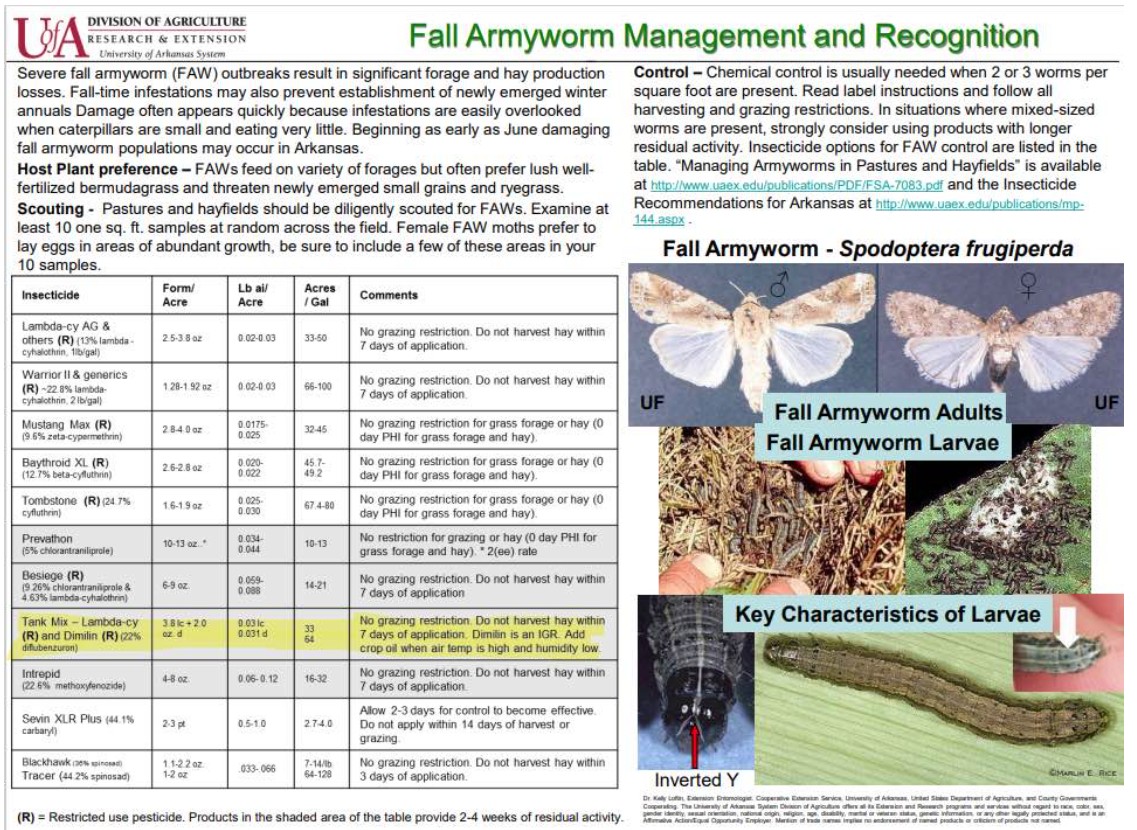
If we do happen to catch a rain, be on the lookout for fall armyworms. We have them in the state and where they are finding them in places that recently got rains. Be prepared to spray lambda cy and dimilin if you get them. I don't recommend lambda cy by itself anymore. It is too risky of an application to me, because the most expensive application is the one that doesn't work. Also remember you have to have your private applicator license to purchase lambda cy.
| | |
Beat the Heat: Protecting Beef Cattle Fertility Through an Arkansas Summer
Dr. Ramiro Oliveira – Beef Cattle Production Systems, Arkansas Extension
By the time July arrives, most spring breeding seasons are in full swing and so is the Arkansas heat. The combination of high temperatures, humidity, and toxic fescue puts reproductive performance under more pressure this month than at any other point in the year. The frustrating part is that the damage is largely invisible. Bulls keep breeding, cows keep cycling, and everything looks fine until you preg. check in the fall and find a stack of open cows and a strung-out calving window.
This issue walks through where summer quietly costs you pregnancies, and what you can do about it right now.
Heat Stress and the Bull: The Problem You Can't See
Bulls are often the most overlooked casualty of summer heat, and they may be the most important. A single sub fertile bull breeding a pasture of cows can wreck a calf crop in a way no single cow ever could.
The key concept is the sperm production timeline. It takes roughly 60 days for a bull to manufacture a sperm cell from start to finish. That means a heat insult today doesn't show up in his semen quality today, it shows up two to eight weeks later. A bull that sailed through a breeding soundness exam (BSE) in March can be functionally subfertile in July, with no outward signs at all. He'll still chase cows and breed them. He just won't settle them.
The bull's cooling system is the other piece. The scrotum is designed to hold the testicles a few degrees below body temperature, and that temperature gradient is essential for normal sperm development. When ambient heat and humidity overwhelm that system and when fescue toxicosis constricts blood flow on top of it, testicular temperature climbs, and sperm quality drops. Recovery is possible, but because of the 60-day cycle, a bull may need six to eight weeks after the heat breaks before his semen returns to normal.
Bull Rotation: Insurance for Your Pregnancy Rates
Because heat can knock a bull's fertility down without warning, how you manage bulls through the summer is one of the highest-leverage decisions you'll make. The goal is simple: never let one tired or sub fertile bull quietly compromise the whole breeding season.
A few strategies worth considering:
-
Rest and rotate. In longer breeding seasons, work bulls in shifts. Pull a bull after a few weeks, give him time to recover and regain condition, and sub in a fresh bull. This is especially valuable in midsummer, when the bull who's been working hardest is also the most likely to be heat-stressed. A practical way to build this in is to rotate bulls among different groups of cows every 20 - 30 days. Because the cow's estrous cycle runs about 21 days, swapping bulls on that schedule means any cow that doesn't settle on one cycle is exposed to a different bull on her next one. If one bull happens to be sub fertile from heat or any other cause, those cows still get a fair shot from a fresh sire rather than being bred, and missed by the same bull.
-
Use multi-sire insurance. Running more than one bull with a group provides a backup if one bull's fertility slips. The trade-off is social dominance and the real risk of injury and fighting, so watch the group and make sure a dominant bull isn't doing all the breeding (and all the failing).
-
Watch the bulls, not just the cows. Observe libido, willingness to mount, soundness, and whether a bull is actually completing services. A bull standing in the shade all day is telling you something. Lameness, foot rot, and pinkeye all climb in the summer, and all reduce a bull's breeding ability.
-
Mind the bull-to-cow ratio. A common rule of thumb is one mature bull per 20–25 cows, with fewer cows assigned to yearling bulls. Heat stress effectively shrinks a bull's working capacity, so don't run him at his maximum ratio in the worst of the summer.
Heat Stress and the Cow: Quiet Losses Add Up
Cows feel the heat too, and it works against reproduction at several points at once:
-
Reduced estrus expression. Heat-stressed cows show shorter, weaker heats, and more of their mounting activity shifts to nighttime when it's missed. Standing heats become harder to detect, which lowers both natural-service and AI breeding success.
-
Compromised egg and early embryo quality. Heat stress affects the developing follicle for weeks before ovulation, so the consequences can carry well past a single hot spell.
-
Lower conception rates. Elevated body temperature around the time of breeding creates a poor environment for fertilization and for the few days that follow. Heat stress can cut conception rates by 10 – 30% in cattle depending on severity, with the magnitude driven by THI level, lactation status, timing relative to insemination, breed thermotolerance and fescue exposure
The Hidden Cost: Early Embryonic Loss
Here's the statistic that surprises a lot of producers: most pregnancy loss happens in the first few weeks after breeding and a large share occurs in the first week, before many producers even realize a cow was bred. Fertilization itself usually works; somewhere around 90% of eggs are fertilized. The problem is survival. A sizable share of those embryos, commonly estimated in the range of 25% to 40%, never makes it to a confirmed pregnancy, and the bulk of that loss happens before 45 days, which is exactly the window most vulnerable to the summer stressors.
That early window is when the embryo is most vulnerable. A small rise in the cow's core temperature during the first several days after fertilization can be enough to kill the embryo outright. By the time the embryo is a week or so old and has developed further, it becomes considerably more heat-tolerant, but it must survive that fragile early stretch first.
Don't Haul a Pregnancy Out the Trailer Door: Transportation Stress
Working and hauling cattle is sometimes unavoidable in the summer, but transportation stress is a genuine and underappreciated threat to early pregnancies. The stress of loading, hauling, commingling, and the heat that builds up in a trailer all spike cortisol, and that hormonal stress response can disrupt a pregnancy during its most fragile stage.
The timing relative to breeding is everything. The general guidance from reproductive research is to avoid hauling cows during the critical embryo attachment window, roughly day 4 through day 45 after breeding. If you have to move recently bred cows, the safer options are:
- Transport within the first 3 days after breeding/AI, before the embryo reaches its most sensitive stage, or wait until after about day 45, once the pregnancy is established.
Hauling cattle in the middle of that window (two or three weeks after AI), is one of the easier ways to lose pregnancies you've already paid for. If a move is necessary, do it early, do it in the cool of the morning, keep handling low-stress, and make sure cattle have water before and after.
Managing the Heat: Four Practical Steps
You can't change an Arkansas July, but you can blunt its effect on your herd. The goal is simple: keep the animals' heat load as low as possible during the hottest, most fertility-sensitive time of the year. Four basics carry most of the weight:
- Put cattle in pastures with shade. Direct sun raises body temperature and cripples a cow's ability to dissipate her own heat; good shade can cut the radiant heat load by up to about 40%. Natural tree lines work well when they're thick enough to block the sun but open enough to let air move through. Where natural shade is short, portable shade structures are worth the investment.
- Provide clean, abundant water. Water is the cheapest and most effective cooling tool you have. A nursing cow can drink 20 to 30 gallons a day in summer heat, and stockers 10 to 20 gallons, so make sure tank capacity and flow keep up with peak demand. Keep water clean, provide enough drinking space that timid and lower-ranking cattle aren't shut out.
- Don't work cattle in the middle of the day. Gathering, sorting, hauling, and even rotating cattle all add heat on top of an already-stressed animal, and that handling stress is hardest on early pregnancies. Do this work in the early morning whenever possible and postpone non-essential handling on emergency days (see the guide below).
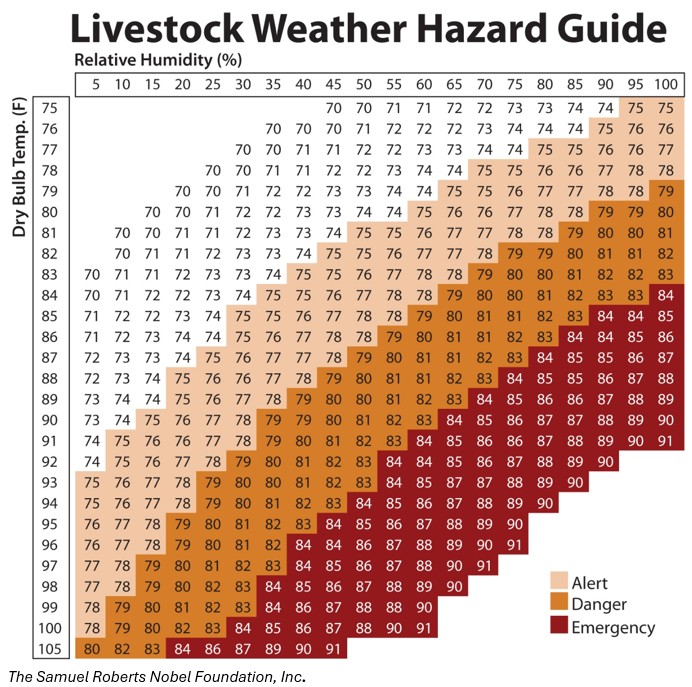
- Use the Livestock Weather Hazard Guide. Heat stress isn't about temperature alone, humidity is half the story, and Arkansas has plenty of both. The Temperature-Humidity Index (THI) combines the two into a single number you can act on.
THI = Temperature – 0.55 [(1 – Relative Humidity) × (Temperature – 58)] ■ THI < 72: No heat stress expected. ■ THI 72–79: Mild heat stress. ■ THI 80–89: Moderate heat stress. ■ THI > 89: Severe heat stress.
| | |
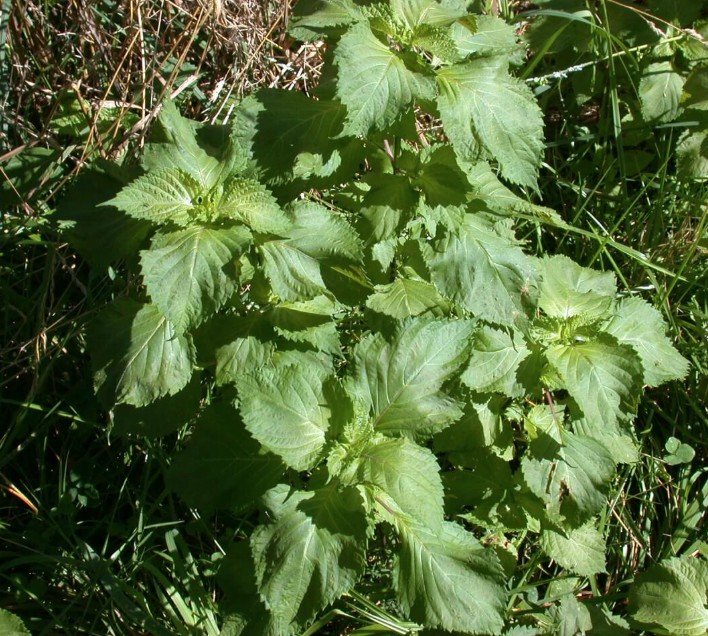
Perilla Mint
Korbin Singleton - Faulkner County Intern
Perilla mint (Perilla frutescens) is a highly toxic summer annual broadleaf weed that is prevalent in pastures. It is easily identifiable due to its square stem, serrated oval-shaped green and purple leaves, and its distinct odor. This weed grows in the shade and is often spotted around the edges of pastures, with problems most likely occurring during the late summer season. The leaves will continue to remain green during dry periods.
Perilla mint is occasionally hazardous to cattle and horses, as all parts of the weed are poisonous. The main toxins are perilla ketones, which are absorbed into the bloodstream and damage the lung cell lining, leading to acute respiratory distress syndrome (ARDS) and atypical interstitial pneumonia (AIP). The plant is most toxic when flowering, and toxicity can persist even after herbicide applications or drying in hay. The main symptoms of perilla mint toxicity are that cattle develop emphysema of the lungs, open mouth breathing, tiring easily, and grunting while exhaling. These symptoms can happen quickly, as in many cases the animal is found dead before being diagnosed.
For non-herbicide prevention strategies, the most effective would be mowing or hand pulling before the weed produces any seeds; however, due to the large quantity of seeds that perilla mint produces, control efforts would most likely be needed for several seasons.
For herbicide control Extension recommends an application of Grazon P+D at 1 qt/A or Weedmaster at 1 qt/A to control perilla mint. Apply in late May or early June when weeds are actively growing. Spray before the weeds are 12 inches tall. Add 0.25% nonionic surfactant to the spray mix. Bush hog large plants that have already formed flowers.
| | |
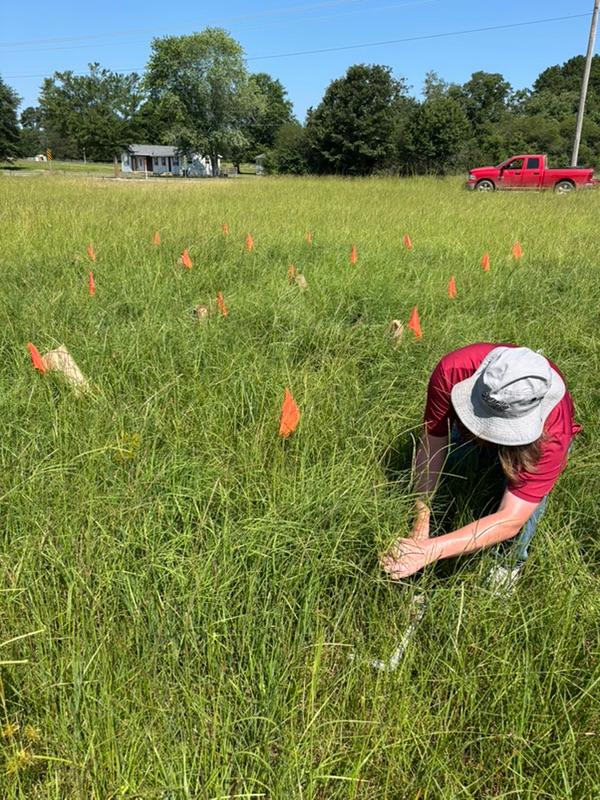
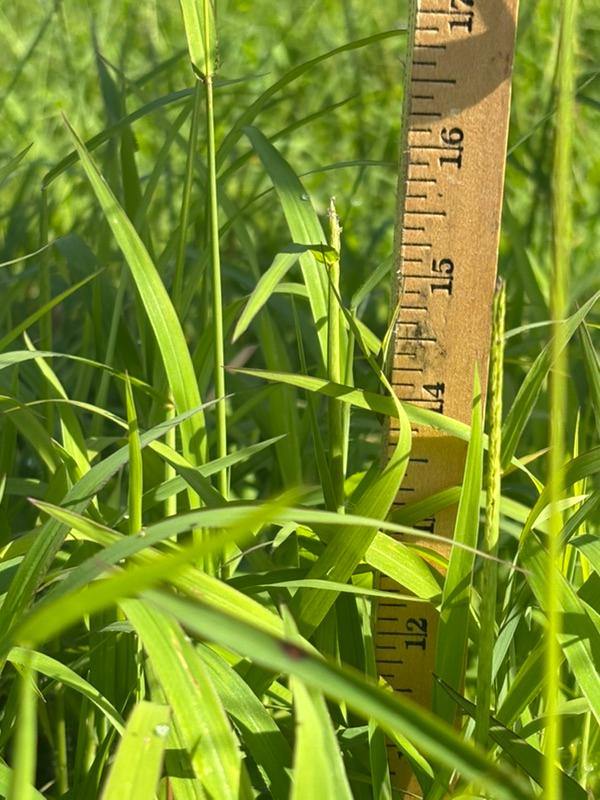
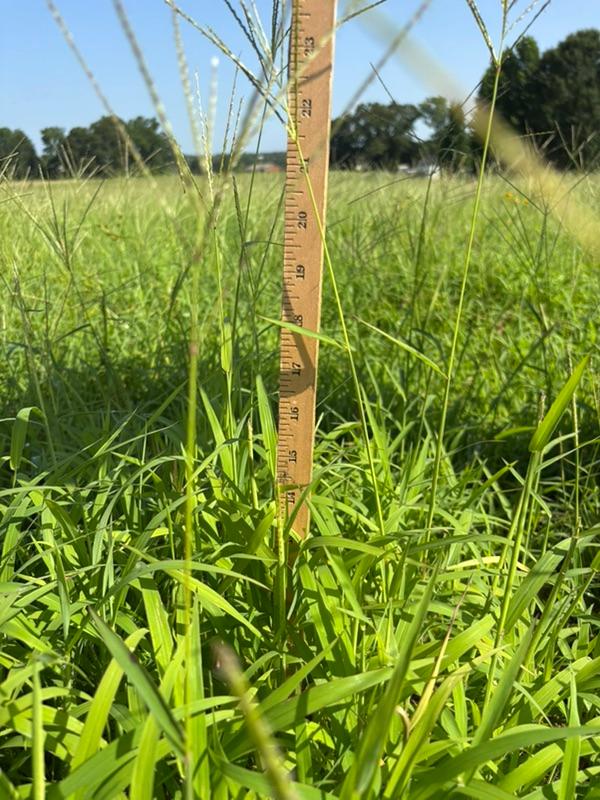
Harvest of Forage Demonstrations
We harvested several of our forage demonstrations this week, including our Pearl Millet Fertility Demonstration, Nitrogen + Potassium Fertility Demonstration, and the Crabgrass Establishment Demonstration. We are currently going through all of the data and it will be posted at the end of the season after they are completed. We have one more potassium demonstration to harvest early next week, then we will fertilize again and get ready for the next harvest.
| | |
Pasture to Plate
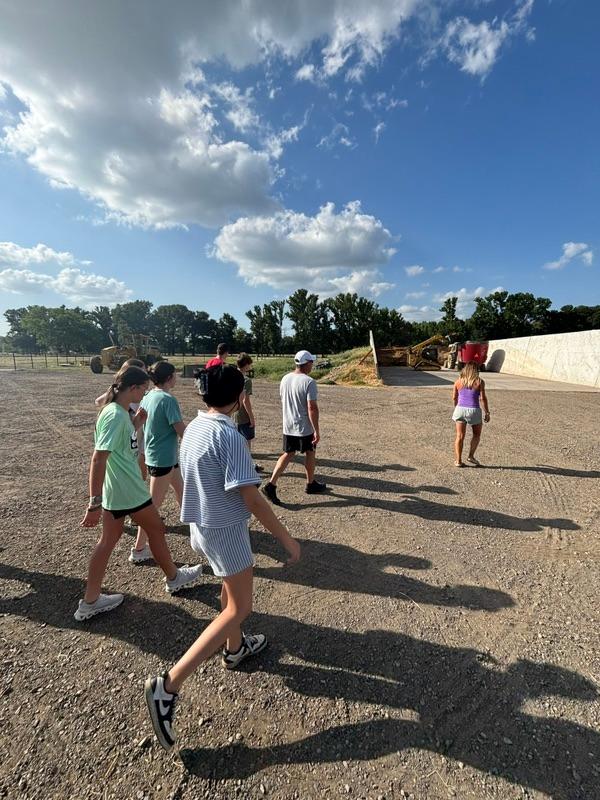
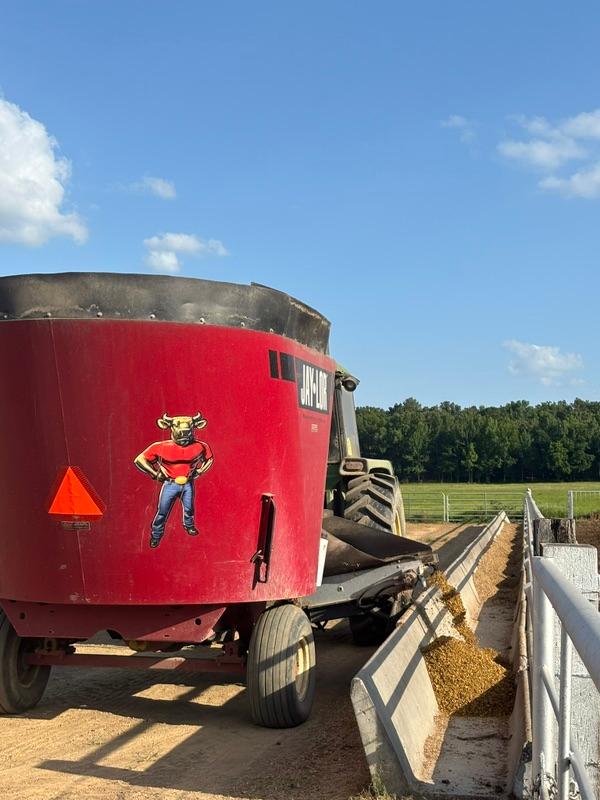
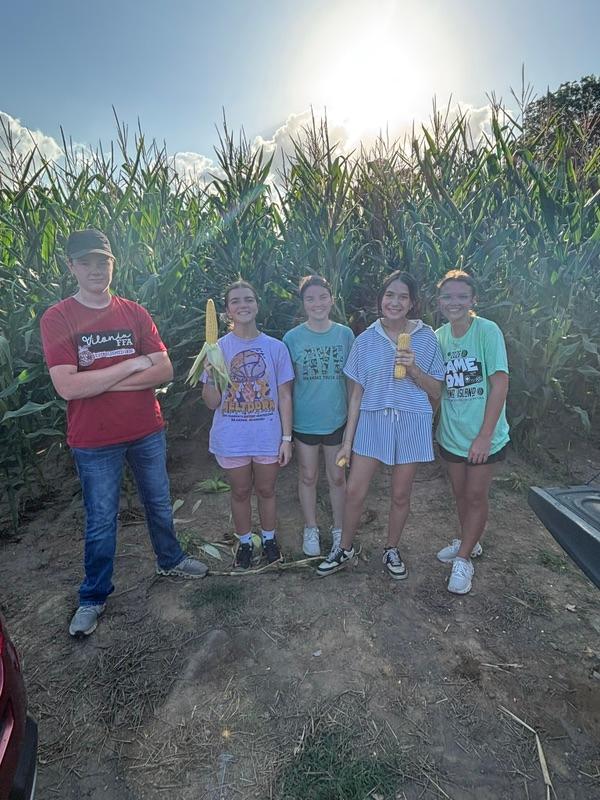
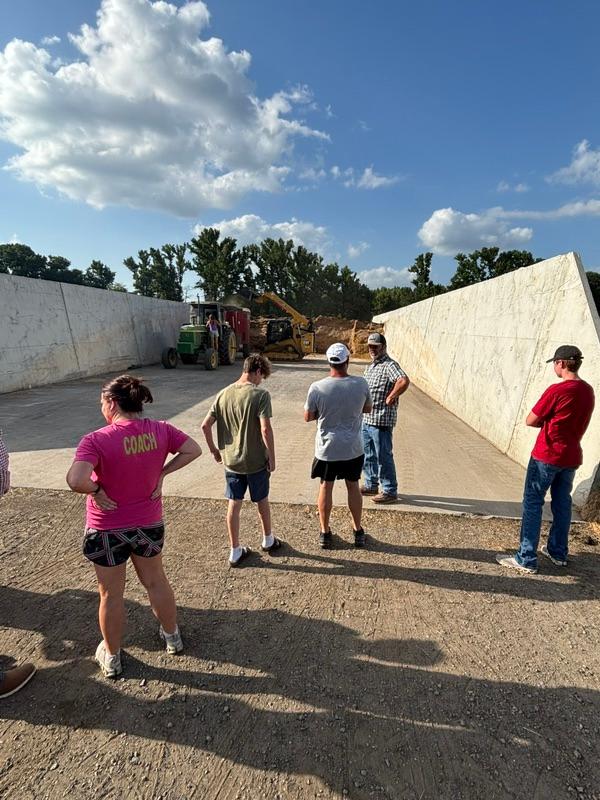
Our 4-H Pasture to Plate youth took a field trip to Tucker Farms this week to see a steer feedout operation. They got to see corn silage and different commodities like soybean meal being mixed into a ration. They watched the steers being fed through a bunk and hear how the farm operates. We finished the tour of the farm by seeing corn in the field just before it is to be harvested for silage. It was a great trip and we want to thank Jill Edwards and John Hartley Evans from Tucker Farms for showing the youth around.
| |
|
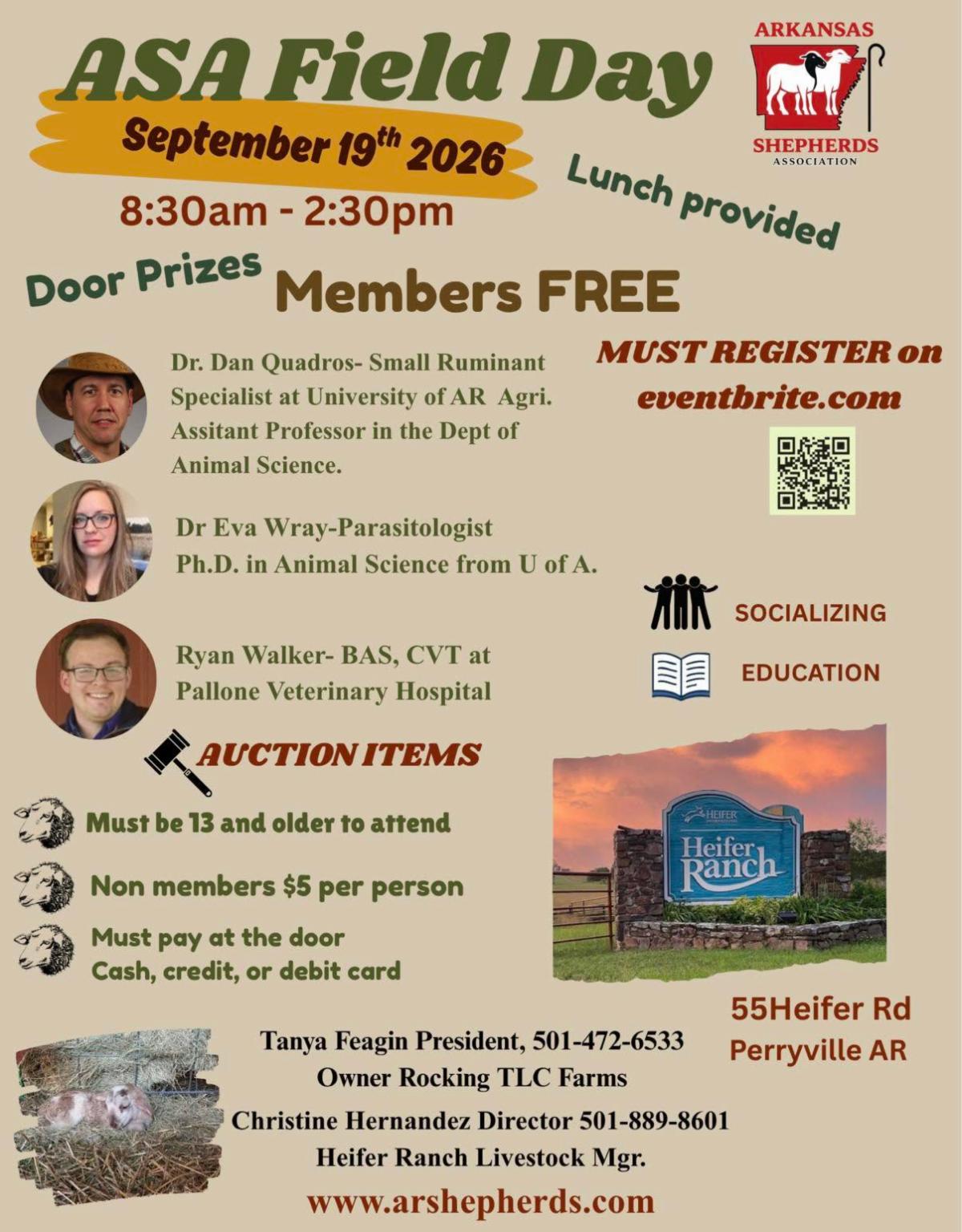
Arkansas Shepherds Association Field Day
ASA Field Day — Saturday, September 19, 2026
8:30am - 2:30pm
Heifer Ranch, 55 Heifer Road Perryville, AR
Join us for a full day of hands‑on learning, great speakers, door prizes, and silent auction items benefiting the Arkansas Shepherds Association.
Members attend FREE.
Non‑members: $5 per person, paid at the door.
Must be 13 and older to attend.
Everyone must register on Eventbrite to attend.
Topics include:
Nutrition
Hoof care and trimming
How to draw blood
How to give shots
Parasites
Signs/Symptoms
Identifying
Treatment
We’re excited to see producers from across Arkansas and surrounding states come together for education, community, and a great day at Heifer Ranch.
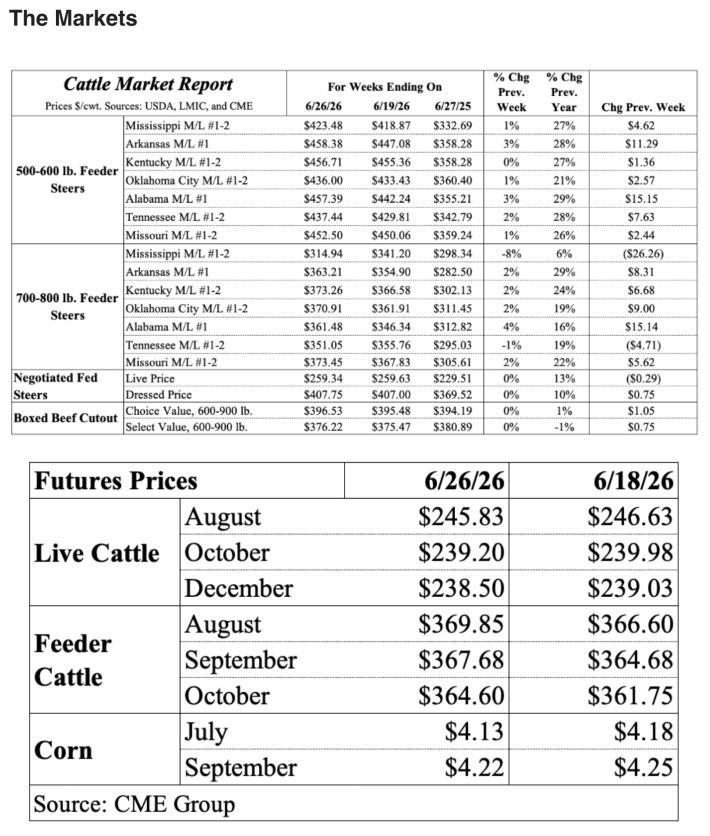
| | Here is this weeks Cattle Market Notes Weekly | | |
Pesticide Applicator Trainings
There will be no more in person Pesticide Applicator Trainings until this winter. If you need a license you can still do the training online. There is a link below for the online training and a link to check your license status.
| | |
Livestock Market Report
The following links are for the weekly livestock market report from the Arkansas Department of Agriculture website and the Livestock Auction Dashboard from USDA. Both sites have marketing data for all livestock sold at Arkansas Sale Barns.
| | |
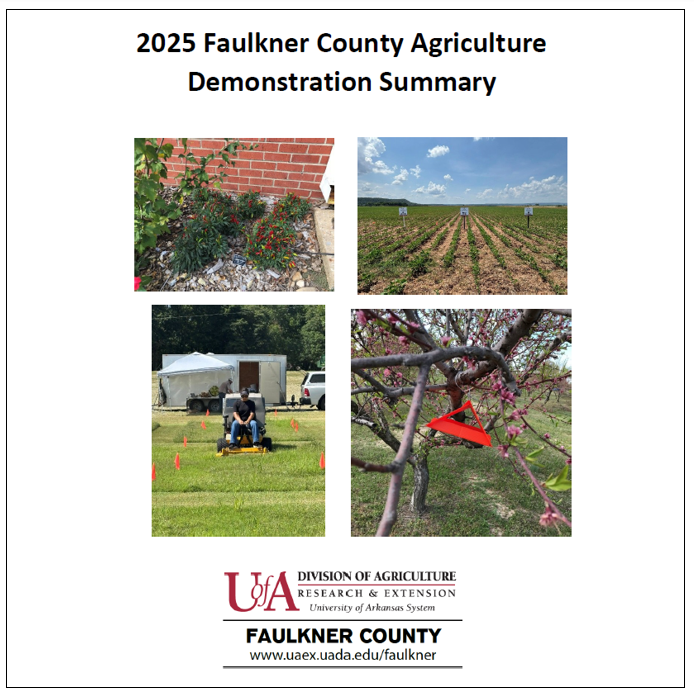
2025 Faulkner County Agriculture Demonstration Summary
The 2025 Faulkner County Agriculture Demonstration Summary is now available at the link below.
The 2025 Faulkner County Demonstration Summary is a collection of on-site demonstration results conducted in Faulkner County by local County Agents. Demonstrations are the cornerstone of the University of Arkansas System Division of Agriculture Cooperative Extension Service’s mission which is:
“We strengthen agriculture, communities, and families by connecting trusted research to the adoption of best practices.”
On-site demonstrations allow producers and homeowners to see firsthand how Extension recommended varieties and best management practices work in their counties and surrounding area.
| | |
Sign up for Text Alerts
You can now sign up for text alerts from me throughout the year. I have two areas you can sign up for which includes Faulkner Livestock or Faulkner Ag (Row Crop Updates). To sign up you can follow one of these links or use the QR Codes below.
| | Pursuant to 7 CFR § 15.3, the University of Arkansas System Division of Agriculture offers all its Extension and Research programs and services (including employment) without regard to race, color, sex, national origin, religion, age, disability, marital or veteran status, genetic information, sexual preference, pregnancy or any other legally protected status, and is an equal opportunity institution. | | | | |