Sunrise 2027 and Smart-Jet® Printers
Printing GS1 2D Symbols and GS1 Digital Links

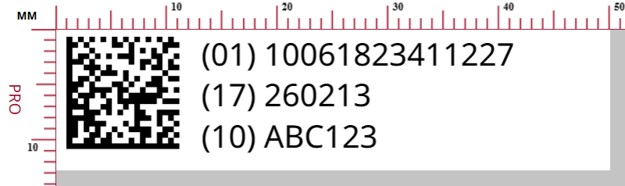
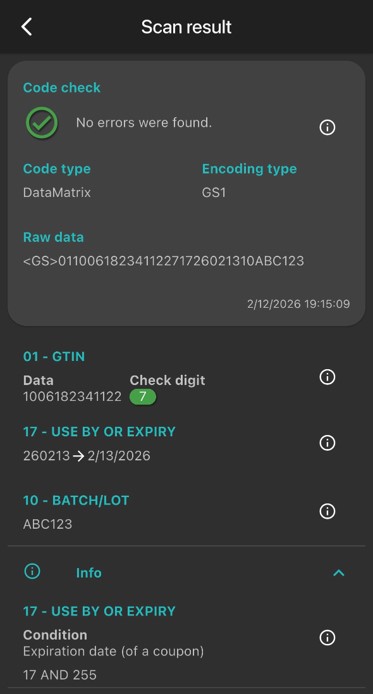
Can Smart-Jet® Printers print Sunrise 2027 compliant 2D symbols, as well as the GS1 Digital Link? Yes!


We are prepared to help you and your customers with Sunrise 2027 and GS1 Digital Link questions and compliance. Rather than try to explain what all this means, here is information directly from the source, GS1 (https://www.gs1us.org/industries-and-insights/by-topic/sunrise-2027):


What is Sunrise 2027?

The EAN/UPC bar code, or the one-dimensional (1D) linear bar code, has offered price lookup functionality for decades. However, it is no longer keeping up with today’s growing demands for greater product information transparency, traceability, and authentication. In response, the global supply chain is moving toward two-dimensional (2D) bar codes, including DataMatrix and QR Codes, that can carry more information.


Industry has set a date to make the transition to accepting 2D bar codes at point-of-sale (POS) or point-of-care (POC) — referred to as Sunrise 2027. By the end of 2027, retailers would need to ensure their POS systems are equipped with scanners capable of reading both traditional linear bar codes and 2D bar codes. The shift has already begun with the new technology being tested in 48 countries across the world, representing 88% of the world’s GDP.


2D bar codes allow for a single, standardized way to meet both supply chain needs and evolving consumer requirements. The information carried by 2D bar codes can also help enable:


  • Improved inventory management
  • Enhanced recall readiness
  • Greater sustainability and ethical sourcing
  • Better product authentication
  • Greater brand trust


With a single scan on a smartphone, consumers can get the information they need, like nutritional information, allergens, sustainability and sourcing data, as well as any other web engagement activities all powered by GS1 Digital Link. That same bar code can be scanned at point of sale for price lookup, at the patient bedside for medication administration, and a variety of other supply chain processes related to inventory management and recall readiness.


From The Industrial Ink Report:


GS1 Sunrise 2027: Why Your Current Coding Strategy May Already Be Obsolete

For nearly 50 years, manufacturers have relied on the humble UPC barcode. It has become so common that most production teams rarely think about it. That is about to change.


A global initiative known as GS1 Sunrise 2027 is driving one of the biggest transformations in product identification since the introduction of the barcode itself. Retailers, brand owners and manufacturers are preparing for a future where 2D barcodes such as QR Codes and GS1 DataMatrix codes become standard throughout the supply chain. These codes can contain significantly more information than traditional UPC barcodes, including lot numbers, expiration dates, serial numbers, traceability data and consumer-facing digital content.


Why This Matters to Manufacturers

Most discussions surrounding Sunrise 2027 focus on retailers and consumers. That is a mistake. The real impact will be felt on packaging lines. Many existing coding systems were designed primarily for simple date codes, lot numbers and basic identification. As manufacturers begin incorporating larger, more sophisticated 2D codes, print quality requirements become substantially more demanding. A barcode that scans perfectly in the plant may fail at a distribution center, retail checkout or warehouse scanner if print quality is inconsistent. This means coding technology is moving from being a production requirement to becoming a critical component of supply chain performance.


What Changes on the Production Floor?

The transition to 2D codes will place greater emphasis on:


• Print resolution

• Contrast quality

• Code verification

• Ink performance

• Substrate compatibility

• Scanner readability


In many applications, the quality of the printed code will become just as important as the information it contains. A poorly printed QR code carrying traceability information is worse than no QR code at all.


The Hidden Ink Challenge

Many manufacturers are focusing on software, scanners and compliance. Few are asking the most important question: Can our current ink reliably produce high quality 2D codes on our packaging materials? As code density increases, factors such as ink spread, drying time, adhesion and substrate interaction become increasingly important. The same ink that produces excellent date codes may not always produce optimal results when printing complex 2D symbols. This is why coding and marking teams should be evaluating both printer performance and ink performance long before 2027 arrives.


Q&A

Q: Is GS1 Sunrise 2027 a law?

No. It is an industry initiative led by GS1 to prepare retailers and manufacturers for widespread use of 2D barcodes at point of sale and throughout the supply chain.


Q: Will traditional UPC barcodes disappear immediately?

No. Most organizations expect a transition period where traditional and 2D codes coexist.


Q: Why should coding and marking professionals care?

Because code quality, readability and traceability will become increasingly important as manufacturers adopt 2D identification systems.


Q: What should manufacturers do now?

Begin evaluating how current printers, inks and packaging materials perform when producing high density 2D codes.


The Bottom Line

Most manufacturers believe Sunrise 2027 is a barcode story.

It is actually a coding and marking story. The companies that begin evaluating their printers, inks and substrates today will be far better positioned when customers, retailers and supply chain partners start demanding more data from every package. The future of product identification is not simply about printing more information.

It is about printing more information reliably.


Sources

GS1 Sunrise 2027 https://www.gs1us.org/industries-and-insights/by-topic/sunrise-2027

GS1 US 2D Barcode Initiative https://www.gs1us.org/upcs-barcodes-prefixes/2d-barcodes

GS1 Global Standards https://www.gs1.org


About The Industrial Ink Report

The Industrial Ink Report is published by USinks.com and covers industrial inks, coding, marking, labeling, traceability, packaging technologies and manufacturing trends impacting production facilities throughout North America.


What is GS1 Digital Link?


Per GS1 (clink on the button above to access the site directly):


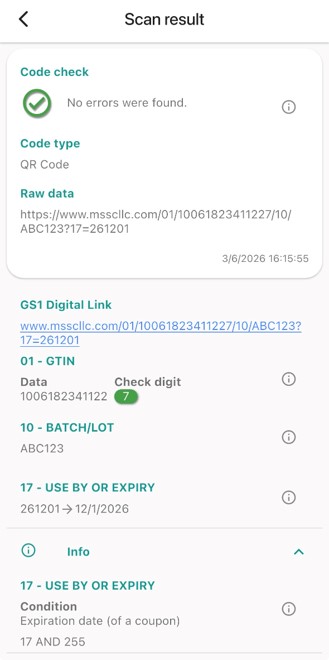
GS1 Digital Link upgrades traditional 1D linear bar codes to 2D formats (QR codes/DataMatrix) by enabling a single, web-enabled URL standard. It connects physical products to digital information, such as manufacturing history, sustainability data, and marketing content, using GS1 identifiers (GTINs). This standard allows scanning via smartphones or scanners to unlock real-time, personalized, and traceable data, enhancing consumer engagement, supply chain efficiency, and authenticity verification. 


Key Features and Benefits


  • One Code, Many Functions: A single 2D bar code replaces multiple bar codes, serving POS, inventory management, and consumer engagement simultaneously.


  • Web-Enabled Identification: By embedding a URL, it connects products to the internet, allowing for dynamic, up-to-date content.


  • Enhanced Traceability: Facilitates tracking of batch/lot numbers and individual serial numbers for improved recall management and anti-counterfeit measures.


  • Consumer Engagement: Enables brands to deliver rich content (videos, recipes, allergens) directly to consumer smartphones, boosting loyalty.


  • Future-Proofing: Prepares retailers for the transition toward 2D bar codes by 2027 (Sunrise 2027). 


Structure of GS1 Digital Link

The standard follows a structured format that typically includes: 


  • Domain Name (for example, www.msscllc.com)


  • Key Qualifier (for example, Application Identifier 01 for GTIN)


  • Additional Identifiers (for example, Application Identifer 10 for LOT Code, Application Identifier 17 for Expiry/Use By Date)


How It Works

A 2D bar code containing the GS1 Digital Link is scanned. A "resolver" (service that redirects the URL) enables the user to connect to the specific information they need. For instance, a consumer might see product usage instructions, while a logistics provider scanning the same code sees batch details.

How to Create GS1 2D Symbols for Sunrise 2027 Compliance and GS1 Digital Link Symbols with Smart-Jet® Printers

We have created a presentation that walks you through the steps of creating Sunrise 2027 compliant symbols, as well as GS1 Digital Link symbols. To access the information, please click on the link below that takes you to a Dropbox folder that contains the information.


We understand there is a lot of information available regarding Sunrise 2027 and GS1 Digital Link. If you have any questions or need additional information, please contact us. We are happy to answer your questions, guide you through the programming and creation of the symbols, and provide any assistance you need.

Visit MSSCLLC.com