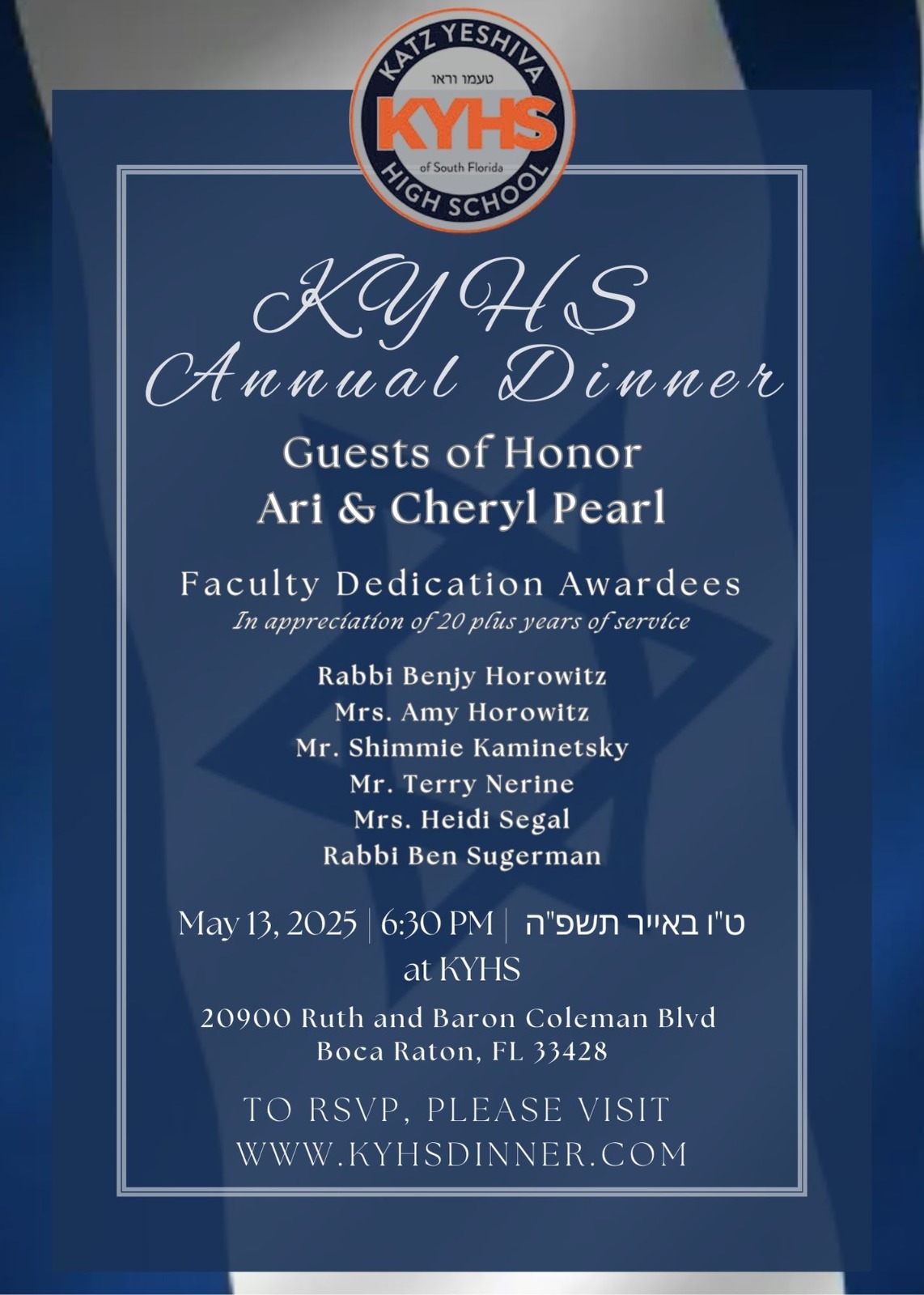
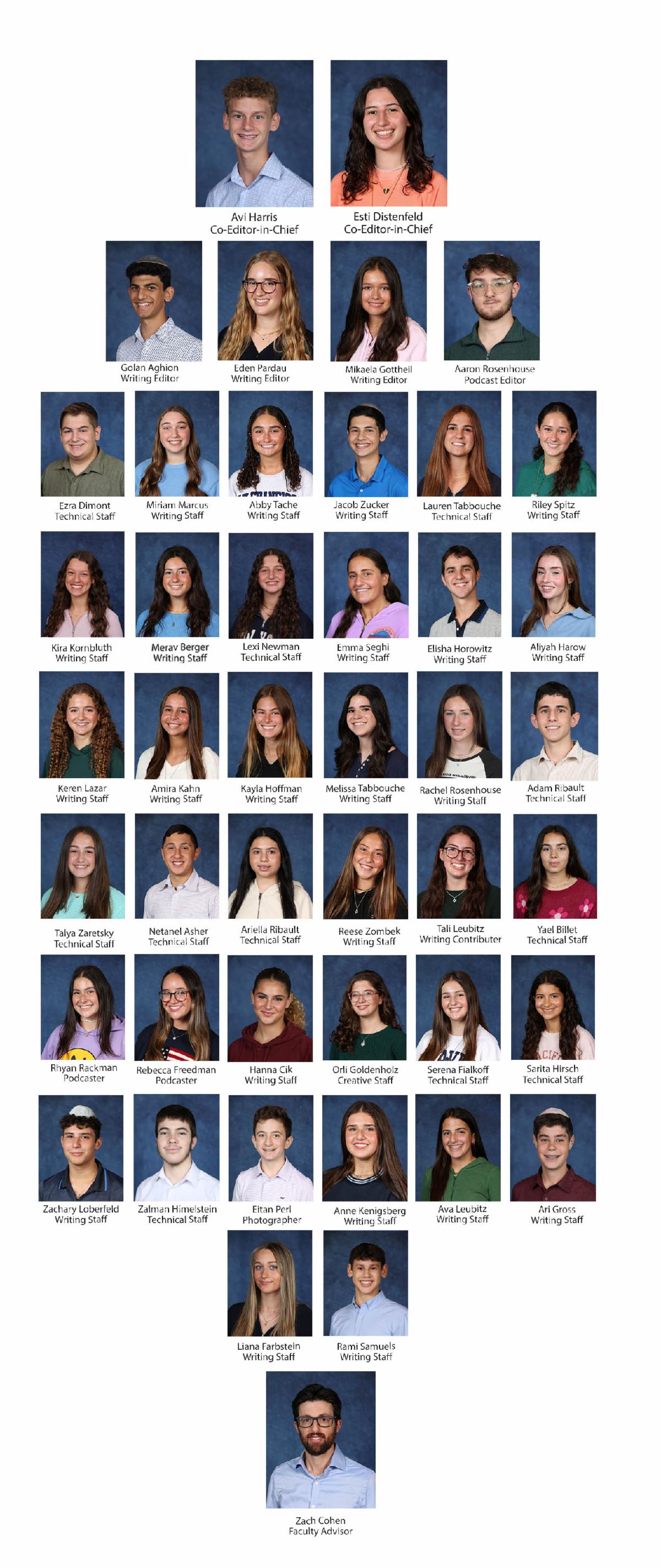
Graphic by Technical Staff

Upcoming Events:


AP Exams! 

May. 5-16


Seniors' last day of school!

May. 9

Good & Welfare:


Births:

Arianna (Halbstein ‘05) and Koby Sabghir on the birth of a baby boy

Eric (‘14) and Talia Ditchek on the birth of a baby girl 

Natalie and Simon (‘12) Markovich on the birth of a baby boy, Charlie Lev

Amy (Glaun ‘12) and Avi Wolf on the birth of a baby boy, Noah Isaac 


Engagements:

Sam Merkin (‘19) to Esti Weiss from Seattle, WA

Ellie Loberfield ('22) to Eitan Spiewak


Mazel Tovs:

Rabbi Chaim and Rina Lanner on the Aufruf of their son Yitzy (‘19) 


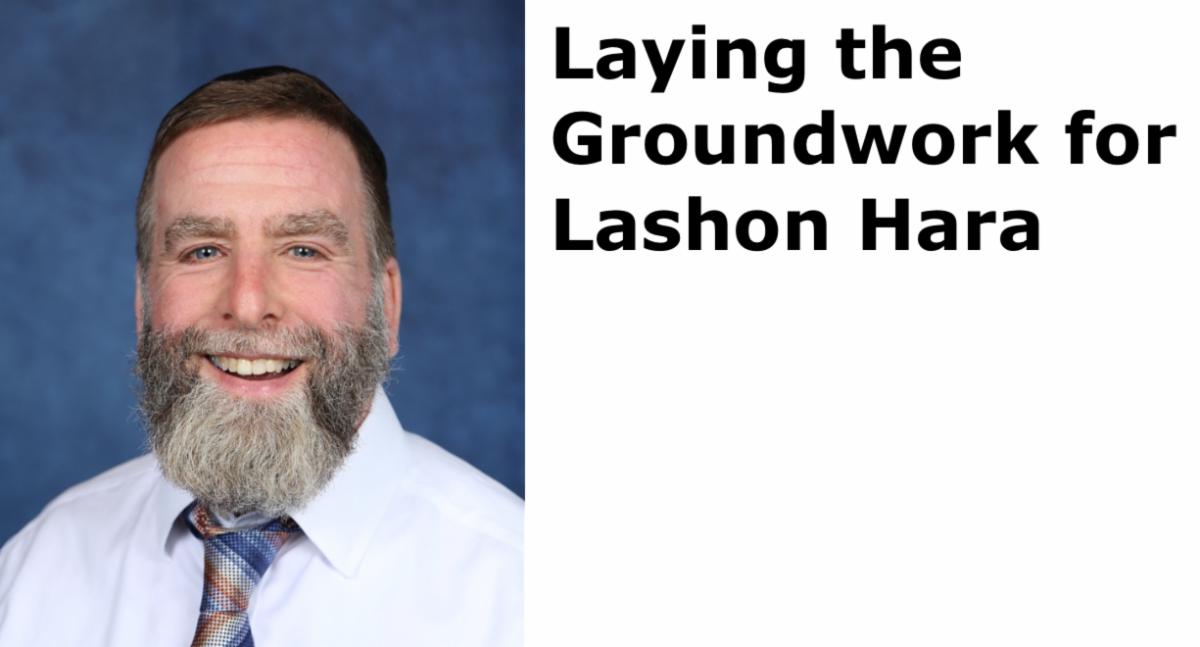
The Talmud is replete with the idea that one of the root causes of צרעת is the speaking of לשון הרע. It affords us the opportunity to examine one aspect of this prohibition.


The Rambam in the 7th Perek of הלכות דעות writes as follows:


ועוד אמרו חכמים שלשה לשון הרע הורגת, האומרו והמקבלו וזה שאומרין עליו, והמקבלו יתר מן האומרו

“Our Rabbis teach us that Lashon Hara kills three people: the one who says it, the one who accepts it and the one who is spoken about.  And the one who accepts it is more severe than the one who speaks it.”


A quick look in the מפתח of the Frankel Rambam tells us that although there is no gemara that speaks directly to this notion, there are a number of sources within the Talmud that indicates that it’s a graver error to listen to Lashon Hara than speak it, and based on a comment that the Rambam makes in his commentary to the Mishna on Pirkei Avos, it’s clear that the Rambam had a גירסא (text of the gemara) that states this explicitly.


The question now is obvious. Why should this be so? Without this Rambam, left to my own thought process, I would naturally have argued that speaking Lashon Hara is worse than listening. Speaking is active while listening is passive. Throughout the gemara we always find that aveirot that require action is more culpable than aveirot that are accomplished passively. 


A consideration….


The gemara in Shabbos after listing the 39 Melachot is bothered by the order of the first two. The Mishna first lists planting and then plowing. Anyone (myself excluded) knows that in the farming process, first you plow the land and then you plant. Shouldn’t the Mishna present the melachot in the correct order? The gemara answers that the land of Israel is so hard that what they would first plow the land once just so that the seeds would collect in the ground and then plow again afterwards so that the ground can be even more fertile environment for the growth of the seed; the double plowing both before and after the laying of the seed creates a rich environment one that promotes growth.


The speaker of Lashon hara needs a receptive audience. When nobody is listening, there is simply never a temptation to speak. The audience lays the fertile ground both before and after the speaker speaks so that the speaker knows that he has a rich environment to plant his Lashon Hara. The peaked interest of the listener invites someone with juicy information to share the goods knowing that he or she has a captivated audience. All this may be an explanation of the Rambam that listening is worse as the listener is the real catalyst to the exchange of information.


And perhaps within this context we can also now understand the prohibition of listening to Lashon Hara a lot better. How can someone be faulted for overhearing Lashon Hara being spoken? Is it my fault that I was simply in the wrong place at the wrong time? And what if someone just blurts out a comment about another without asking first if I was interested in hearing? Am I guilty for listening to Lashon Hara? Based on our explanation, we could argue that these examples do not fall under the category of listening to Lashon Hara. (This last point is not meant as a ruling but a simple analysis of the issue. For a ruling speak to your local Rav.)


Shabbat Shalom,

Rabbi Sugerman


Reasons Why You Should Go to YU!

KYHS 11th Graders Get the Privilege to Hear from YU Representatives

Graphic by Lexi Newman ('28)


Last Wednesday, the juniors had an exciting opportunity to hear from Yeshiva University admission representatives to learn more about the school. The presentation was designed to introduce students to the college’s academic and extracurricular opportunities. The representatives emphasized that Yeshiva University offers rigorous academic programs while still implementing Jewish values through a dual-curriculum. This allows students to pursue both secular and religious studies. 


To make the presentation more engaging, the representatives incorporated a kahoot trivia game. This game tested students' knowledge on YU through random trivia facts about the school, its history, and all the amazing things it has to offer. The competition was intense, and those who placed within the top three were rewarded with prizes—including tumbler cups and embroidered Comfys! YU swag was given out to all the students at the end of the presentation. Students were very engaged throughout the kahoot, eager to take home the win, but more importantly, just simply excited to learn more about YU: Chaya Cohn ('26) remarked, “This was such a fun way to learn more about the school.” 


As another aspect of the presentation, the representatives discussed changes to the honors program that will be put in place for next year’s applicants. As the end of junior year is sadly, but quickly approaching, students have begun their college planning processes and are looking into schools that they would be interested in attending. This presentation gave students more insight into a potential school they would attend and will help them make educated choices for their futures. The admissions representatives will return at the beginning of the next school year to share additional information about the school and help with the application process. Thank you to the representatives who flew in—we are looking forward to hearing more about YU in the fall! 


Article by Reese Zombek ('26)

 Holocaust Survivor Holocaust Fighter

KYHS Hears From Tova Friedman on Yom Hashoah

Graphic by Blimi Farkas ('26)


Six million Jewish lives were lost. Thirteen million people were murdered by the Nazis. Since then, the Jewish world has said, “Never forget.”


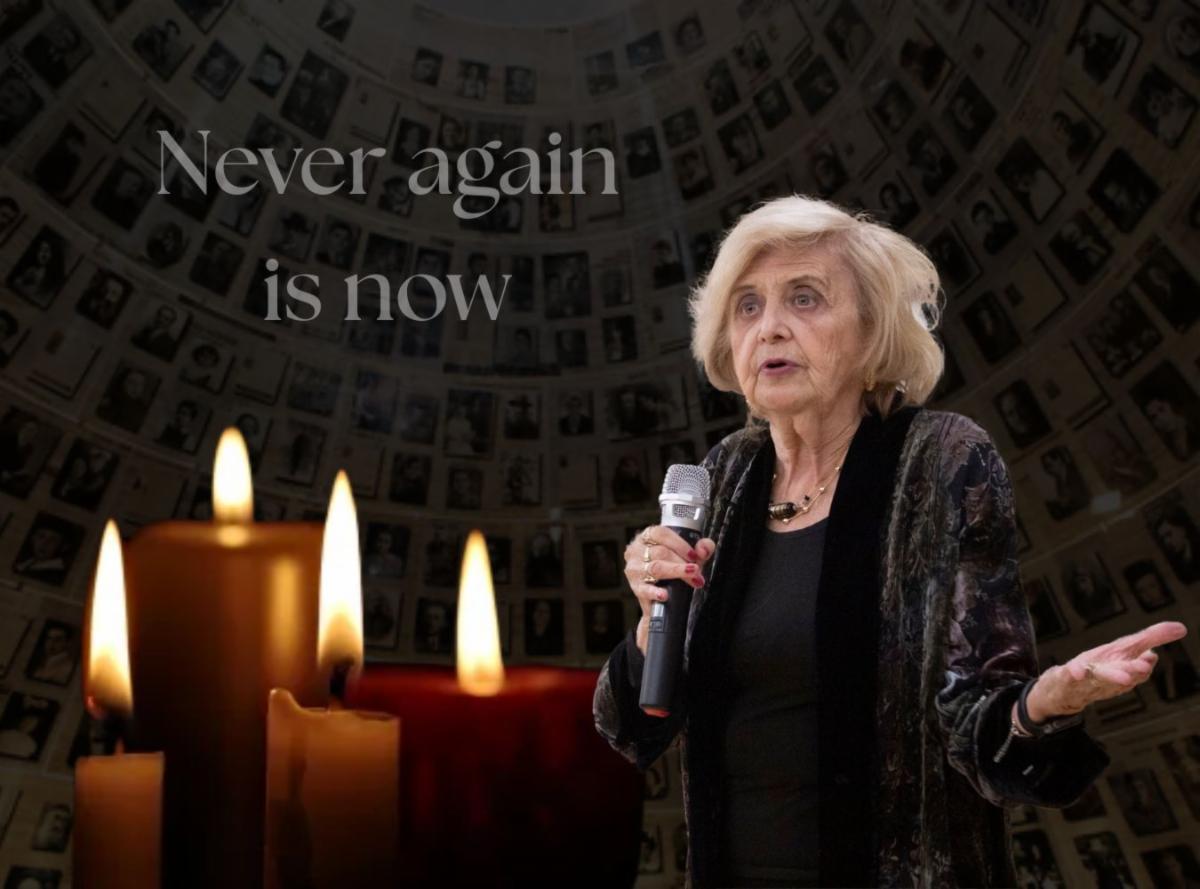
Last Thursday, KYHS commemorated Yom Hashoah by recognizing the gravity of the day with a moving assembly. We gathered together to share a moment of silence for all the lives lost, and we had the pleasure of hearing from Tova Friedman, one of the youngest survivors of Auschwitz. She explained that she does not identify solely with the title of Holocaust “survivor”—someone who endured extremely difficult times—but rather as a fighter who influences our nation every day. 


She walked us through stories of her childhood, growing up in Auschwitz, and what she felt when her mother advised her to behave obediently toward the Nazis. Tova showed us just how unimaginably horrible the times were. However, she admitted that as a child she never fully understood what being a Jew meant. She believed that “being Jewish meant death.” 


As students at KYHS, we have the responsibility to be thankful that we get to grow up with a sense of identity. We have the opportunity to learn that as Jews, we have a purpose. We must be grateful for being able to know who we are, where we came from, and where we are going. 


After the presentation, the upperclassmen watched October 8th, a contemporary documentary about the lives of Jews after October 7 and the rise of antisemitism in college campuses and social media. Although the saying “Never forget” seemed to protect us after the Holocaust, extreme antisemitism is resurfacing around the world. This movie and Tova Friedman’s speech should remind us that we must do something now. We have to take action and fight to stop antisemitism. What we learned after October 7 is that “never forget” is no longer enough; we have to fight until it’s “never again.”


Article by Rachel Rosenhouse ('27)

Rabbi Dee Tells His Story

Graphic by Mikaela Gottheil ('26)


April 7, 2023 is a day the Dee family will never forget. On chol hamoed Pesach, the Dees took a family trip to Teveria; Rabbi Dee and three kids were in one car, while Rebbetzin Lucy Dee and two of their daughters, Maia and Rina, were in the rear car. Tragically, terrorists popped out from hiding and rammed Lucy's car off the road, shooting viciously at the three precious souls. Maia and Rina were horrifically murdered immediately, but Lucy died from her unimaginable wounds a couple days later. The Dee family was left distraught and heartbroken, not knowing how such an atrocity could happen. Blaming Hashem was not an option for Rabbi Dee. Rather, he did the opposite and his faith in Hashem grew stronger as he dedicated his life towards serving God. The Jewish people united with Rabbi Dee and his family by sending love and support during their suffering. Charitable donations in memory of Lucy, Maia, and Rina flooded in and others dedicated things in their honor. 


Rabbi Dee continues to use his voice in order to share his tragic story and teach people to overcome their struggles. Last Friday, the juniors and seniors had the privilege of hearing from Rabbi Dee. Ronen Ben-Aharon (‘26) described Rabbi Dee as “very confident that everything in life is directed by Hashem happens for a reason.” He explains that Rabbi Dee’s main message is that “no one should fear something going wrong because Hashem always has our back.” Rabbi Dee passionately concluded his speech by encouraging everyone to make aliyah and continue our service to Hashem in our real home.


Article by Samuel Shapiro ('26)

Mock Trial Competition!

Schools Throughout the US Participate in a Mock Trial Competition at KYHS

Graphic and article by Highlites Staff


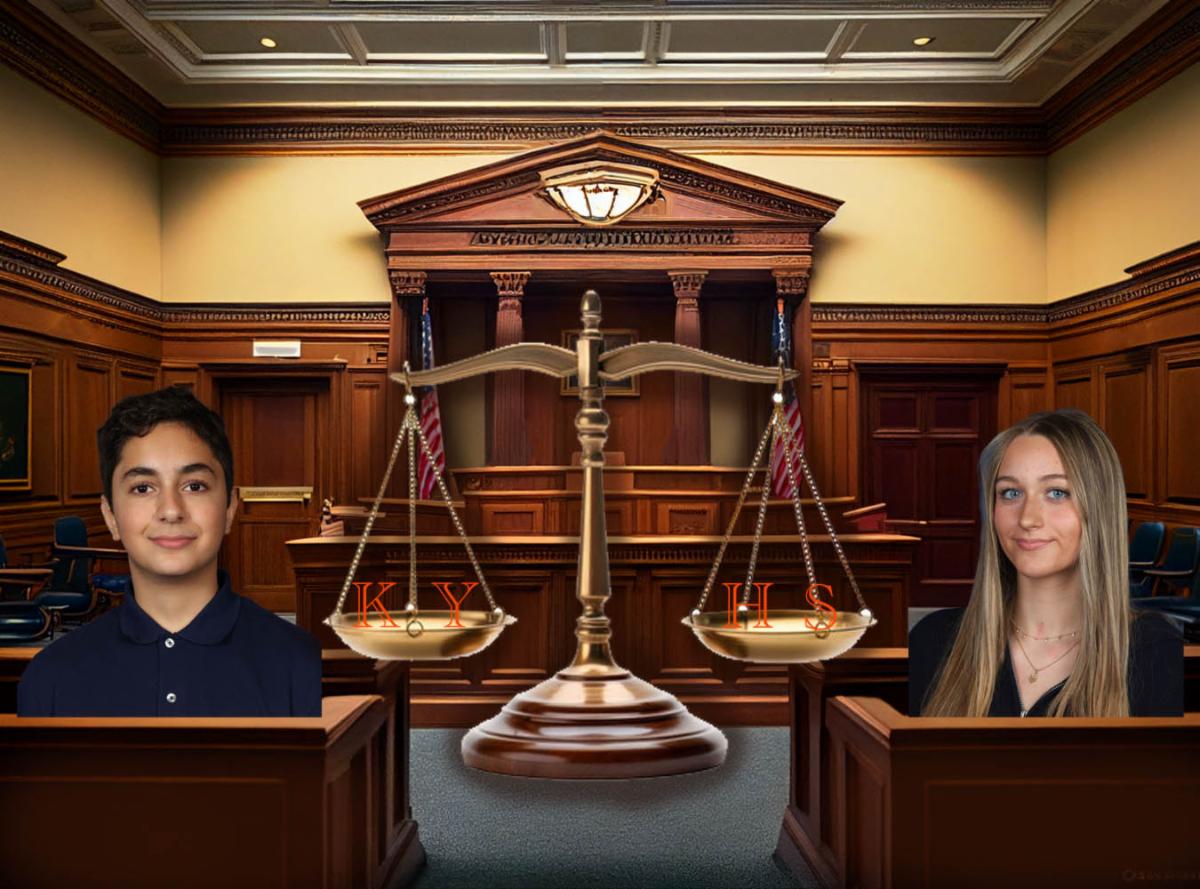
This past week, KYHS’s mock trial team had the opportunity to participate in the Yeshiva League’s Mock Trial. The competition was held Sunday through Tuesday and was organized by our very own Mrs. Sturm! The event was a great way for our mock trial team to practice the skills they have learned by playing witnesses and attorneys in a realistic courtroom setting. Evidently, their hard work paid off because KYHS came in 4th place!


The following students were chosen as “most effective attorney” on at least one ballot:

Daniel Aloni, Sruli Muschel, Yonathan Brik, and Inna Simakhov


The following students were chosen as “most effective witness” on at least one ballot:

Sari Kirschner, Orlee Shemesh, and Rachel Leifer


Congratulations to Liana Farbstein and Yosef Dahan for winning best attorney and witness, respectively, for the team!


Thank you, Mrs. Sturm, for making this successful educational opportunity possible.

Click to read more!

Click to visit website!