CWMA Newsletter 2019
2nd edition
|
|
President's Report
by Ron Mabry
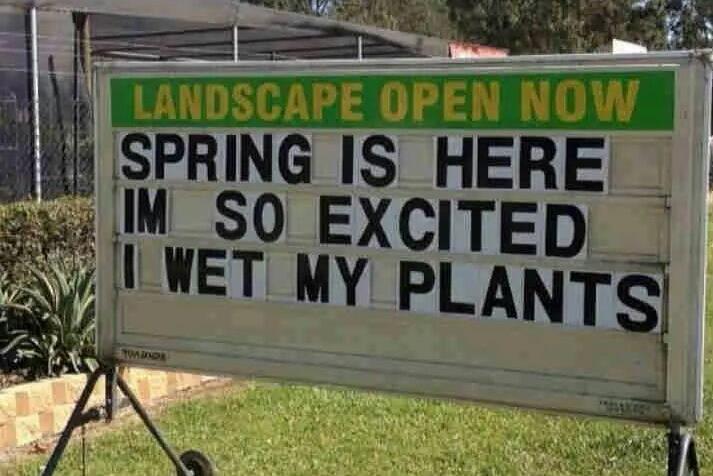
Oh hurry spring! I don’t know about you but I received another 6” of snow last night. Not complaining mind you. We need the moisture. Everything is happier when there is water including the weeds. It’s this time of year when I start to get anxious about the upcoming season. I start thinking about servicing equipment, ordering chemical, hiring seasonal help, making sure my license and insurance are up to date, etc… looking forward to an effective and productive weed control season.
Speaking of updating your license, we are bringing back the Spring Training School this year! The 2 day workshop will be held in Ft. Collins, April 17
th & 18
th at the Hilton Hotel. I’m really excited about our lineup of speakers this year. Some familiar faces and some new speakers are ready with all the current information to help you get your job done safely and effectively. If you need continuing education credits, we will have pretty much all the categories covered. Remember that this is your organization. Please support it. So reserve your spot at Spring Training School and book your rooms early.
I look forward to seeing you all there. Until then be safe out there!
-Ron Mabry
|
|
|
|
CWMA is a member-driven nonprofit organization, which means that we exist to serve you and your needs. We work hard to create the mix of programs, services and opportunities so that you can stay competitive in
the industry and help preserve and protect our environment.
CWMA is
your
one-stop-shop for tools and resources to:
-Connect with peers for support, advice and solutions
-Maintain your hard-earned license(s)
-Learn the latest identification and management strategies
-Increase environmental awareness among decision-makers and the broader public
-Advance your career and develop leadership skills
We know that life is busy, and your time is limited. So how can you maximize your benefits? My advice = take these five simple steps.
- Attend one of our many events including the Spring Training School (coming soon April 17-18!) and our annual CWMA conference in December. Earn CEU credits for your license(s) while expanding your network.
- Find ways to actively engage with other CWMA members, as they are your support system to share information, advice and solutions. Try seeking out colleagues facing similar challenges and volunteer with the organization.
- Make a point of reading our newsletters, with content that has been specially curated for you and your interests.
- Check out the many resources and informational tools we have on our website and in our publications. They offer the latest strategies for identifying and managing invasive species.
|
|
CWMA wants to make sure are delivering the right benefits to you. We’d love to hear your feedback, both now and throughout the year. Email your suggestions and ideas to us at
info@cwma.org
Monica Groh, CAE
Colorado Weed Management Association
|
|
2019 CWMA Spring Training School
2019 CWMA Spring Training School
April 17, 2019 - April 18, 2019
Spring Training School
info
Event Description:
Please join us April 17th and 18th for the 2019 CWMA Annual Spring Training School!
The CWMA Spring Training School is a great way to get your continuing education, network with peers in our industry and learn best practices in weed management.
Location:
The conference will be held at the Hilton Ft. Collins
425 West Prospect Road
Fort Collins, CO
Hotel Information:
Start booking your hotel reservation today by calling
970-482-2626.
You can also book a room online by
clicking here
.
|
|
Boot Station/Kiosk Manufacturing at
Creede High School
by Andrew Marino
The Mineral County Noxious Weed Department was formed in 2016 and one of our first hurdles was finding interested individuals who wanted to help by filling seasonal technician positions to treat invasive weeds. As the department manager, this was one of my first obstacles to overcome since living in a rural community can limit the size of interested parties.
That being so, I was led to our local High School for potential assistance and fortunately a mutually beneficial partnership was started.
In 2017, the Creede School hired Lis Richard as the new superintendent, who added a new learning opportunity for students through CTE (Career and Technical Education). This allowed students to get their hands on new and different technologies that previously had not been available. This meant that the students had access to architecture software for design ideas, a 3-D printer for visualization, and a full fabrications/welding shop, along with direction from teachers and industry professionals.
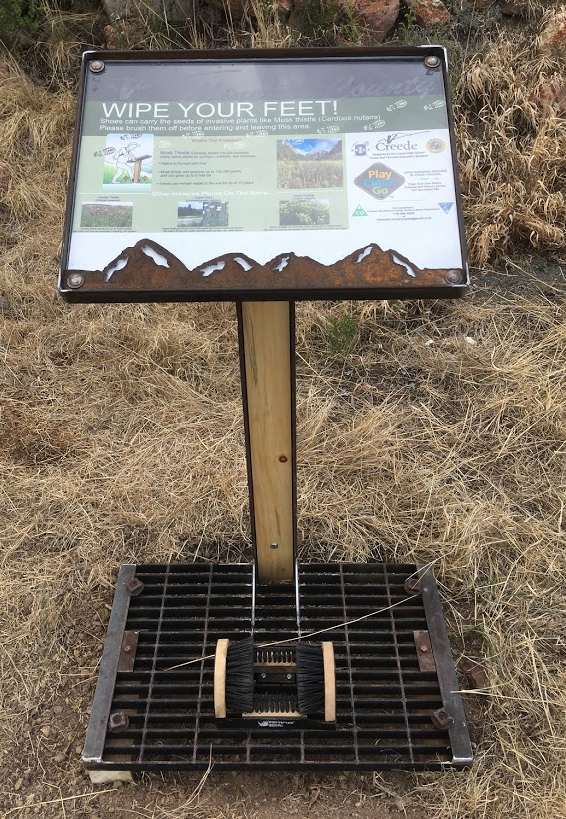
We needed a project to put this new technology and education to use that would be useful for the students as well as the Noxious Weed Program, thus we started creating boot brush cleaning kiosks. The kiosks are great for education, not just for the students and locals, but also for visitors to our community. Users of the kiosks have the opportunity to clean their shoes, which limits the spread of noxious weed seeds, while learning about the dangers of these invasive species and the threats to our public lands.
This was a fun and dynamic project aided by two great teachers from the school, Jason Whitehorn and Dave Richard. Jason had the students start by researching different signs they had seen and the angles of the displays for optimal viewing purposes. After that research was done, the students used Auto-Cad software to create a digital image of the boot cleaning station and then used the 3-D printer to make a model. The model was then discussed in class and any changes or additions were made before sending it out to the shop for fabrication. During the fabrication stage, Dave taught the students different welding techniques and offered design improvements to help with construction. While the welding was going on, there was another group of students creating the graphics for the display. The graphics team used “PlayCleanGo” which is an organization that Mineral County partnered with to promote awareness of invasive species and provided educational material. The students also used local pictures to highlight our noxious weeds and printed them on vinyl using the latest software and the new 60-inch plotter.
Additionally, they engraved the top of the plexiglass with our county name.
The key takeaway for me is that the students were able to learn about noxious weeds through this project, but it went far beyond that. The students also learned how to use new software, 3-D printing, welding, woodworking, and how to work together to accomplish a remarkable assignment for their community. There were so many positive outcomes from what started as a small project but has now grown in ways I’m not sure any of us expected. I currently have three students that help me seasonally, and one student has become a Certified Operator. Last year we built one boot cleaning station, three have been built in the last semester of this year, and we hope to eventually have a dozen to place throughout the county. I’ve also had other counties admire our boot cleaning stations and ask how we can go about helping them build their own.
In addition to all this awesome work with the students, I have noticed that the parents are becoming interested and are asking for help with their invasive species! This was, and is, a great community project that has increased the awareness of invasive species while teaching valuable life skills to our local students.
|
|
Legislative Update:
Colorado Weed Management Association Members,
We are nearing 3/4 mark of the 2019 legislative session, and things are really heating up down at the capitol. Fortunately, the applicator community and agriculture in general have been largely spared from some of the dramatic legislative proposals you may be seeing in the news.
Bills we are tracking for CWMA include
SB-186 Expand Agricultural Chemical Management Program Protect Surface Water, a bill originating out of the Colorado Department of Agriculture dealing with water quality issues, and
SB-131 Exempt Certain Businesses From Destination Sourcing Rule, which may have implications on the taxes on weed book and calendar sales. You can find the CWMA tracking sheet by clicking here:
https://coloradocapitolwatch.com/bill-analysis/3871/2019/0/
Additionally, we have been keeping an ear to the ground regarding rumors around local preemption of pesticides and potential pollinator protection legislation, but as of yet haven’t seen any real threats in these areas. We will continue to work with the agriculture and conservation communities to determine if these threats are heading our way. We are also communicating with our partner state agencies, Department of Agriculture, Department of Transportation, and Department of Natural Resources following up from productive meetings over the last year.
On Tuesday, March 19th, CWMA partnered up with several other organizations to host a Weed and Pest Control Legislative Reception, where we welcomed members of the legislature and staff to network and discuss issues facing our members. CWMA President Ron Mabry and board Members Alan Schwartz and Drew Moreno attended the reception, networking with elected officials and other pest and weed managers.
Partner organizations included the Colorado Agricultural Aviation Association, the Colorado Pest Control Association, RiversEdge West, and Rocky Mountain Agribusiness Association. Legislators in attendance included Representatives Marc Catlin, Matt Gray, Larry Liston, Barbara Mclachlan, Rod Pelton, Marc Snyder, Kerry Tipper, Don Valdez, Perry Will, and Senator Larry Crowder.
President Ron Mabry also represented our group at Ag Day at the Capitol on Wednesday March 20th, including chatting with new Commissioner of Agriculture Kate Greenberg and other members of Ag Council, representing commodity groups from around the state.
We will continue to work with President Mabry, Past President Alicia Doran, Incoming President Tina Travis, and Executive Director Dot Miller to represent your interests in Denver. Please reach out to us with any specific legislative or policy concerns that are popping up in your part of the state. We are here to make it easier for you to do your job!
Solomon Malick, Peak Government Affairs
Brett Moore, OnTheBallot Consulting
|
|
What’s the Difference Between Branded vs. Generic Chemistry?
by Fred Raish
Whether you are looking to purchase granola bars, pain relievers, or crop protection chemistry, a branded product you know over a low cost generic feel safe. But what’s the real difference between generic and branded chemistry? If the branded product is more expensive, is it more effective than the generic product?
What is a generic product? Generic products are manufactured and sold by a company other than the original manufacturer, but contain the same Active Ingredient, as the branded product. Generic chemistry is typically “off-patent,” meaning the original patent, from the branded company, has expired. Some branded companies have a fighting brand that is the branded companies answer to generic product pressure in the market.
Do generic products work as well as the equivalent branded products? The short answer is yes; generic products are not identical to their branded equivalent; they tend to be very similar in terms of performance. For a generic product to receive an EPA registration, a generic product must have the same technical make-up as the branded product. Many times the branded and generic products are manufactured at the same facility.
Are generic products identical to branded products? No, generic products are not always identical, so it is critical that you read and understand product labels.
Choosing to use generic products over a branded product has trade offs. If you are looking for the full support of a branded company, that is hard to find with the majority of generic companies. In my experience, Nufarm and Alligare support their products, but other generic companies do not support their products as well as the branded companies, such as Bayer or Corteva. If you want research and new active ingredients companies like Bayer and Corteva have established research programs, while companies like Nufarm and Alligare have research programs these programs are not as well funded or promoted.
The decision to use generic or branded products will depend on numerous deciding factors. This article was not written to influence your decision but has hopefully answered some of your questions on branded products versus generic products
|
|
Fred Raish
CHS AIP
Agronomy Manager
970-630-8525
|
|
Applications Sought for Noxious Weed Grants to
Mitigate Natural Disasters-2019
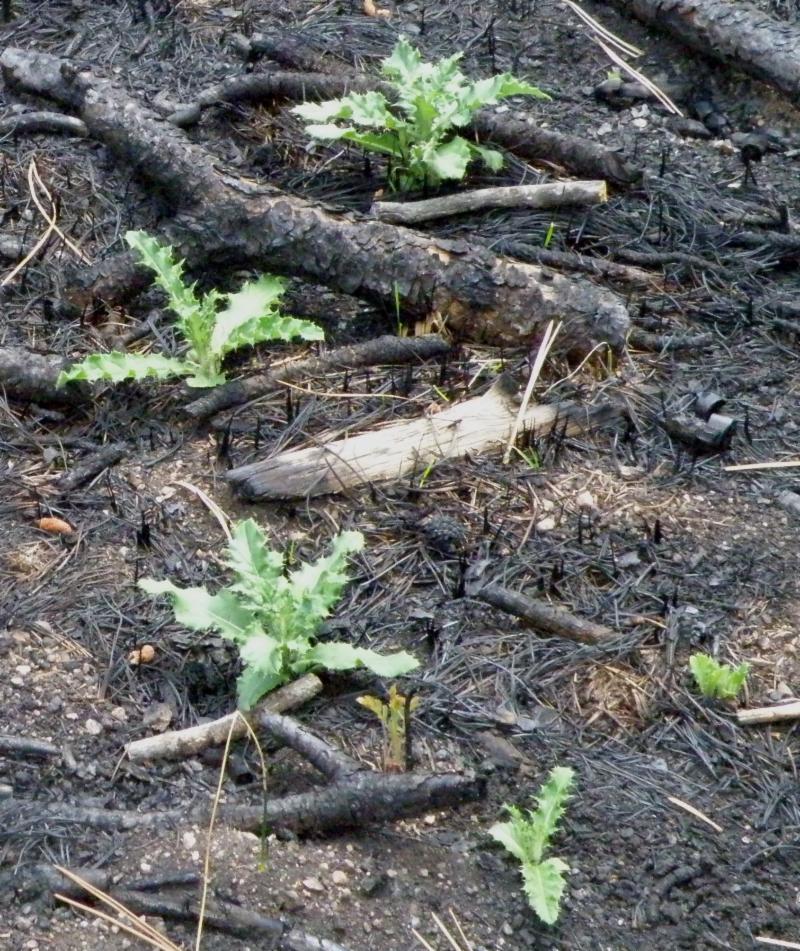
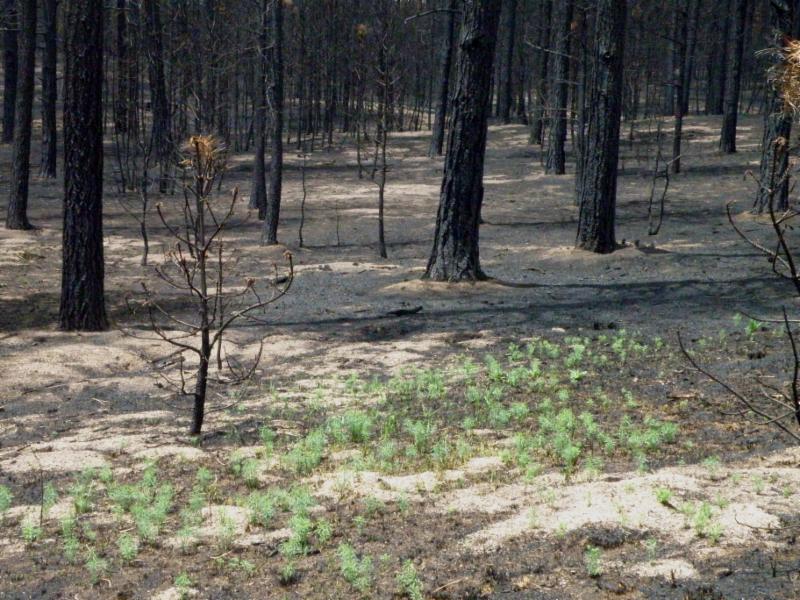
BROOMFIELD, Colo. –The Colorado Department of Agriculture (CDA) is now accepting applications for 2019 Post-Natural Disaster grants for controlling and preventing noxious weeds resulting from these events. This year, the Department plans to award $50,000 in grant funds to local governing entities, conservation districts, non-profit organizations and associations for projects that focus on controlling new noxious weed populations that result from natural disasters such as fire and flood.
“Due to significant wildfire activity in the state last year, noxious weeds may be particularly troublesome on those newly disturbed lands. We want to get out in front of these disturbance-based flushes of noxious weeds so they don’t become established and become a long-term and very expensive problem for counties and municipalities," said Steve Ryder, CDA’s State Weed Coordinator.
These funds are a subset of the $700,000 appropriated annually by the General Assembly for noxious weed management projects statewide. CDA awards these “Weed Fund” grants annually to over 50 counties, cities, conservation districts and non-profit organizations. Following the 2013 floods, a part of this funding has been directed specifically at noxious weed management following large or severe disturbances.
For more information about these grant programs, including the application forms, please visit the Department’s Noxious Weed website at:
Applications can be submitted starting March 1, 2019. Awards will be distributed on a first come, first serve basis until funds are exhausted.
For questions regarding the Post-Natural Disaster Noxious Weed grants, please contact the State Weed Coordinator, Steve Ryder at (303) 869-9034,
steve.ryder@state.co.us
or List B Noxious Weed Specialist, Lara Duran at (303) 869-9036,
lara.duran@state.co.us
|
|
Canada Thistle Rust Fungus,
Puccinia punctiformis
by John Kaltenbach
Canada thistle (
Cirsium arvense) is reported as the most abundant List B species in Colorado (EDDMapS: 33,029 records reported infesting approximately 159,758 Acres). It occurs in varied land types across the state and its extensive root system and ability to reproduce vegetatively makes it particularly difficult to control. Canada thistle is an ideal candidate for biological control, as chemical control can be limited due to its occurrence on marginally productive land and/or not desiring to spray in natural or riparian areas, and it is often necessary to apply herbicide over multiple years to achieve effective control.
|
|
|
Since 2013, the Colorado Department of Agriculture’s Palisade Insectary has been working on how to utilize a host-specific pathogenic rust fungus,
Puccinia punctiformis (CT rust) to control Canada thistle. The CT rust is adventive (not intentionally introduced) and has appeared around the world where Canada thistle occurs, most likely having arrived in the root stalks of early infestations. In Colorado, CT rust has been identified at more than 50 sites.
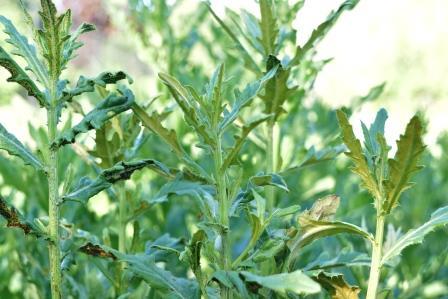
Prior to the work in Colorado, it had been documented that CT rust would kill its host. However, to make it an effective biological control agent we had to overcome the difficulty in getting it established in a thistle patch. We have now developed effective protocols for harvesting, processing and establishing CT rust as a systemic infection in the roots. We have seen a 50% average stem density reduction in our monitoring transects at 30 months after inoculation. Results will vary depending on how well established the weed is (both patch size and density, the extent of root system and competition from other vegetation).
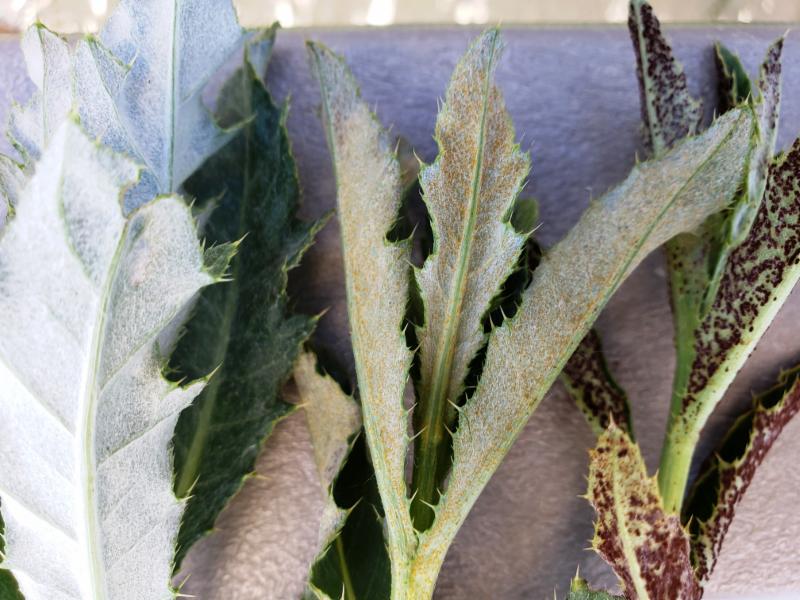
The best time to identify if CT rust is present (already there or after inoculation) is to scout in the spring when diseased Canada thistle shoots emerge. The plants will appear unusually tall, light green, and the undersides of the leaves will be covered with yellow spermagonia (spores) that have a fragrant flower-like scent.
|
|
The Water Resources Development Act of 2018
by Elizabeth Brown, Colorado Parks and Wildlife Invasive Species Program Manager
|
|
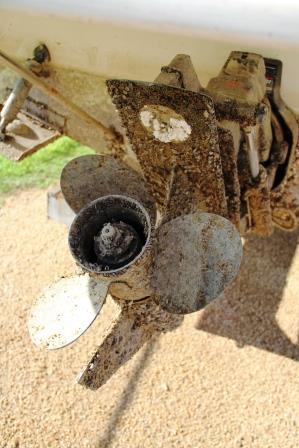
The reauthorization of the Water Resources Reform and Development Act (WRRDA, 2014) and Water Infrastructure Improvements for the Nation Act (WIIN, 2016) included funding for watercraft inspection and decontamination stations in four (Columbia River Basin) states to prevent the spread of aquatic invasive species, primarily zebra and quagga mussels, as well as provisions for monitoring and rapid response.
The FY 2016 federal budget included four million in appropriations for watercraft inspection and decontamination stations. The Senate’s FY 2017 Energy and Water Appropriations bill included four million for watercraft inspection and decontamination stations and one million for monitoring. The WRDA has successfully been used to provide much needed resources to states for the implementation of watercraft inspection and decontamination stations and monitoring in the Columbia River Basin on Army Corps of Engineers impoundments.
The 2018 Water Resources Reform and Development Act (S. 3021) was passed by the 115th Congress and signed into law last October. Section 1170 includes a provision which directs the U.S. Army Corps of Engineers to establish, operate, and maintain new or existing watercraft inspection stations to prevent the spread of aquatic invasive species in the Columbia, Upper Missouri, Upper Colorado, South Platte and Arizona (should be Arkansas) River Basins. The provision also authorizes the Army Corps to assist states with monitoring and rapid response efforts in the case of an infestation of quagga or zebra mussels. An administrative solution is needed to correct the typo is Section 1170 from the nonexistent Arizona River Basin to the Arkansas River Basin per the Senate’s intent. Please do not delay appropriations or planning in the Upper Colorado or South Platte Basins while the Arizona/Arkansas Basin typo is corrected.
The Army Corps of Engineers is the owner of numerous high priority facilities in the Western USA. In some situations, states are currently expending their financial resources to protect Army Corps of Engineers impoundments from AIS through the implementation of watercraft inspection and decontamination stations, monitoring and education. Elsewhere, there are no resources to protect “at risk” facilities. In some states, there are large infestations of zebra or quagga mussels that are threatening natural resources and outdoor recreation, along with water supply, storage and distribution infrastructure for municipal, industrial and agricultural use.
Containing the spread of mussels in the West is the highest priority of the “
Quagga Zebra Action Plan for Western Waters
” (QZAP), and is in alignment with State AIS Management Plans, the Department of Interior’s “Safeguarding the West Initiative”, the Western Governors Association’s “Biosecurity and Invasive Species Initiative”, and prior Army Corps of Engineers contributions to prevent mussels in the Columbia River Basin.
|
|
Appropriation for the Arkansas Basins within WRDA will fill a critical gap to reduce the amount of infested boats moving throughout the US. The QZAP identifies and prioritizes strategies to address the invasion of quagga and zebra mussels in the West. A QZAP grant program within the Department of Interior has provided funding to state and local agencies to prevent the spread of invasive mussels and other AIS. The QZAP grant funds have greatly reduced the threat of contaminated watercraft leaving the lower Colorado River Basin. There is a gap in funding, resources and strategic focus to stop the spread of mussels in the lower Arkansas basin and funding is needed to protect the headwaters from invasion.
The entire West, and many eastern states, will benefit from 2018 WRDA if appropriations are expanded to maintain existing allocations to the Columbia River Basin and meet the prevention and containment priorities of the new basins included in the 2018 WRDA—Upper Colorado, South Platte and Arkansas. This will not only protect critical infrastructure and natural resources in the headwaters, but also will directly reduce the amount of infested
watercraft moving throughout the country. The movement of trailered watercraft from infested waters is the pathway of highest risk. The risk increases substantially when watercraft have been moored in mussel-infested waters, such as those that exist in downstream states in the Arkansas Basin.
The threat of AIS continues to escalate which puts water infrastructure, aquatic resources, human health, and outdoor recreation in jeopardy. We must be vigilant to keep these harmful species out of our reservoirs and river systems, and we need help from federal agencies with vested interests in protecting their water storage and delivery systems. The implementation of a comprehensive watercraft inspection and decontamination program, coupled with education and monitoring, is our best defense against mussels and other AIS.
How Can You Help?
Contact U.S. Senators and Representatives, and the U.S. Army Corps of Engineers, and encourage them to secure an administrative solution to correct the typo in Section 1170 of S. 3021 (WRDA-2018) changing Arizona River Basin, which does not exist, to Arkansas River Basin, which was the intent of the Senate.
Encourage U.S. Senators and Representatives, and the Army Corps of Engineers to provide increased appropriations of $15M beginning in FY 2020 to accommodate the expanded geographic scope in WRRDA 2018—Upper Colorado, South Platte Arkansas and Upper Missouri River Basins—and maintain current operations in the Columbia River Basin. Funding will provide federal cost share for zebra and quagga mussel prevention and containment watercraft inspection and decontamination staff, operations, infrastructure, monitoring and rapid response.
|
|
|
Thinking Outside the Norm -
Building County Noxious Weed Programs Through Collaborative Efforts
by Shelly L. Simmons
Most county noxious weed programs have taken a very standard organizational approach: They are housed within county government, sustained by county tax revenues, and employ one or two full-time employees and a few seasonals.
However, many Colorado counties do not have active or robust noxious weed programs. Why? The most prevalent answer is most counties do not have a big enough tax base to support a stand-alone noxious weed program. Other public health and safety programs take precedent due to limited financial resources.
Las Animas County, in particular, poses many challenges for noxious weed management. It is the largest county within the State (and one of the largest in the Nation), at roughly 4,700 square miles and boasting 1,700 miles of county roads. It is also one of the least populated counties in the State, thus it has a very small tax base. County resources are very limited and must focus on essential services like maintaining roads and public safety. Over the years, the County has maintained a small program for annual treatment of County Right-of-Ways and spraying of List A species, but there has never been enough County fiscal resources to grow their noxious weed program.
So how can a county create a noxious weed program not directly housed within county government? Our answer has been through the local conservation district in conjunction with many supporting partners. Local conservation districts are perfectly positioned to administer noxious weed programs within a county, as long as noxious weed management fits within district priorities.
The Purgatoire Watershed Weed Management Collaborative (PWWMC) was born out of the desire of many partners to establish a
comprehensive noxious weed program for Las Animas County. Comprehensive meaning not only increasing the County’s ability to treat more miles of ROW and acres of List A species, but also providing the additional capacity to run private lands noxious weed programs, coordinating county-wide noxious weed mapping among all land management jurisdictions, and heavily promoting public education and outreach efforts. The only way to make it happen was to combine resources of several key organizations.
PWWMC’s organizational structure has worked very well, and noxious weed control has exponentially increased on an annual basis since its inception in 2016. There is one full-time coordinator, who implements all program components and supervises one part-time hourly employee. The Spanish Peaks Purgatoire River Conservation District (SPPRCD) houses PWWMC: The SPPRCD Board of Directors provides oversight for PWWMC, manages over 90% of awarded funding, employs the part-time noxious weed technician, houses and provides substantial financial support for four private lands noxious weed programs, serves as the formal partner for an Intergovernmental Agreement (IGA) with Las Animas County to assist the County with ROW and List A treatments, provides administrative support for PWWMC and recently purchased a UTV, spray rig and spray logger system to expand the noxious weed program.
RiversEdge West (formerly Tamarisk Coalition) was critical in getting PWWMC up and running. REW employs the PWWMC Coordinator, provides substantial administrative support, has brought diverse funding and partners into the fold of PWWMC and heavily assists PWWMC with operational and funding strategies.
Las Animas County, through their IGA with SPPRCD, provides support for PWWMC through the use of a County Vehicle and other County equipment as needed, mechanical assistance for SPPRCD equipment, maintaining and managing all County noxious weed mapping data, and in 2019, is providing financial assistance for the noxious weed technician.
PWWMC has thus far relied heavily on state, federal, non-profit and foundational grants. Thus, the Coordinator spends much of her time researching potential funding sources, writing grants, grant reporting and managing grant funding. Organizations that have provided substantial financial support for PWWMC include: Colorado State Forest Service, Colorado Water Conservation Board, Colorado Parks and Wildlife, Colorado Department of Agriculture Noxious Weed Fund, Gates Family Foundation, REW’s Restore Our Rivers program and Duck’s Unlimited through a US Fish and Wildlife Service grant.
The ultimate goal for PWWMC is to become a stand-alone program housed within the Spanish Peaks-Purgatoire River Conservation District. However, in order for this to happen, much work remains to secure long-term, sustainable funding such as through local philanthropic organizations/landowners, increasing the current SPPRCD mil levy, and though other creative fundraising efforts.
One major challenge that PWWMC has faced is funding for capacity (i.e. the people needed to run noxious weed programs). Many funders to do not want to fund “people” but only project work; but project work cannot move forward without designated people to make it happen. PWWMC has taken on that challenge by trying to stimulate change within several funding organizations, bringing this issue to the forefront; in order for many Colorado Counties to achieve successful noxious weed programs, funding for capacity must be a priority. PWWMC hopes to serve as a model for other Counties struggling to establish a noxious weed program.
The first step for creating the backdrop for a sustainable noxious weed program has been implementing on-the-ground noxious weed control and land restoration projects, proving PWWMC success to stakeholders and funders. Stay tuned for Part II – PWWMC Accomplishments.
Shelly L. Simmons
Coordinator, Purgatoire Watershed Weed Management Collaborative
Spanish Peaks-Purgatoire River Conservation District/RiversEdge West
|
|
President
Ron Mabry
President Elect
Tina Travis
Secretary/Treasurer
Casey Cisneros
Board of Directors:
James Herman
Bonnie Loving
Kayla Malone
Drew Marino
Curtis Marshall
Jonathan Rife
Alan Swartz
|
|
Ex-Officio Members:
Alicia Doran-Past President
Steve Ryder
Mark Eike
Brock Bowles
Executive Director:
Dot Miller
Please note our new address:
7187 W. 79th Drive
Arvada, CO 80003
Please note our new phone number:
(303) 210-7077
|
|
|
How can CWMA work for you!
Do you want to make a difference with CWMA? Would you like to influence the direction that CWMA is leading?
Spring Training School Committee - Ron Mabry (970) 626-9775 ext 23
Annual Conference Committee - Tina Travis (719) 520-7839
Education Committee - Kayla Malone (719) 221-0102
Membership Committee - Brock Bowles (303) 866-3567 ext 8142
Communications Committee - Tina Travis (719)520-7839
Nominations, Awards & Scholarships - Alan Swartz (303) 434-8358
Publications Committee - Alicia Doran (303) 271-5989
Colorado for Healthy Landscapes (C4HL) - Alicia Doran (303) 271-5989
|
|
|
|
|
|
|