We welcome you to the Federation For A Manufacturing Renaissance (FMR). We will send a curated monthly newsletter highlighting the great work of our members and the impact they make in driving an inclusive industrial policy that involves the entire community. -- Jan 30, 2024

March 1, 2025 Issue


FMR Guiding Principles


  • We recognize the central role of manufacturing in building communities and a sustainable society.


  • We are committed to strengthening inclusion at all levels in the manufacturing ecosystem.


  • We have a deep commitment to economic democracy.

What Are Our Members & Allies Doing?

sddefault image

Democrats Have a Future. Here It Is. Congressmen Spells Out New Industrial Policy for Manufacturing


By Ro Khanna

New York Times Op-Ed


Mr. Khanna, a Democrat, represents the 17th District of California in the House.


Feb 13, 2025 - Millions of Americans approve of the Trump administration’s efforts to eliminate supposedly wasteful federal spending by any means necessary. That puts my party in a bind. But Democrats must do more than just confront the cuts. We must also break free from a stale, conventional platform.


We have to acknowledge what we spectacularly failed to recognize in the last election — that the status quo is broken and Americans are feeling a righteous anger about the real damage that the governing class has done to their lives over the past few decades.


With the establishment of both parties defeated, we are, as you may have heard, at a fork in the road. Either the country will continue to succumb to a burn-it-all-down political nihilism and disillusionment, or Democrats can use this moment of crisis to reframe the terms of the debate. We must persuade people that transformative government is capable of improving their lives by reversing what many have experienced as decades of stagnation and decline.


What is saddest to me about the rise of President Trump — and his elevation of those fixated on dismantling our institutions, such as Russell Vought and Stephen Miller — is that it reflects the deep disdain that many Americans have for politicians and politics. They think we roll out poll-tested policies for votes. They think we spend too much time raising money and catering to wealthy donors. They think we prioritize procedure over action.


As a result, many would rather have Elon Musk and nearly a dozen other brash billionaires disrupt bureaucracy and just get the government out of the way. They have responded to a simple but bygone vision of American expansionism led by business tycoons who see the federal project as a relic oppressing private enterprise and believe deregulation is the answer to America’s problems.


It was not always this way. Perhaps, more than any nation in the world, we take pride in self-government. I remember the exhilaration I felt when I spoke up as a high school student at a school board meeting in the early 1990s, published an opinion essay in my suburban Philadelphia paper, The Bucks County Courier Times, and mustered the courage to ask my congressman, Peter Kostmayer, a Democrat, a question.


As a young Indian American in Pennsylvania, I grew up with the quiet confidence that this government was as much mine as anyone else’s. It is this spirit, which I inherited as a birthright, along with my American citizenship, that allowed us not just to come together to mobilize for war, but also to pass Social Security, a minimum wage and Medicare.


How do we begin, then, to build a transformational instead of a transactional politics? For one, we need to see and hear people. It is rough out there. Over 23 percent of Americans cannot find full-time work or make over a $25,000 poverty wage. Instead of talking about joy, Democratic representatives like Chris Deluzio of Pennsylvania, Delia Ramirez of Illinois and Pat Ryan of New York are out in their communities hearing directly from those who have been shafted. They are going to factories, restaurants and sporting events to build their platforms, not relying on a network of donor-funded NGOs, think tanks or focus groups conducted by inside-the-Beltway consultants.


Actually listening can help heal divisions in a nation that, despite appearances to the contrary, is longing for reconciliation. For this to happen, the first step is for my party not to look down on people who have differing viewpoints on social or cultural issues. “Canceling” needs to stop, as does policing language and lecturing people on exactly how they must express themselves. Without giving up on our values as a party, we should respect different ways of life across our vast nation and show humility about our own prejudices and imperfections. ...Read More


67bc9c44cc90477c52182742-appleusinvestmentaustinresearchfacility02 image

Apple Commits to New Plant in Houston


$500 billion investment in U.S. operations throughout the next four years means more R&D, call centers and TV shows, but only one big manufacturing commitment.


By Robert Schoenberger

Industry Week


Feb. 24, 2025 - Computer and smartphone giant Apple plans to open a server manufacturing plant in Houston next year that will eventually employ thousands, part of a massive spending plan announced Monday.


The tech giant, long know for outsourcing the overwhelming majority of its product manufacturing to Foxconn and other suppliers, says it will take server production in house to feed the growing demand for AI and data center work. The 250,000-square-foot facility is slated to open in 2026.


“We are bullish on the future of American innovation, and we’re proud to build on our long-standing U.S. investments with this $500 billion commitment to our country’s future,” said Apple CEO Tim Cook.


That $500 billion figure is eye-popping, but it doesn’t include a lot for direct manufacturing. Much of it will go to suppliers such as Taiwan Semiconductor Manufacturing Co. (TSMC) to make chips for future Apple phones and computers at TSMC’s upcoming plant in Arizona. Apple is including those dollars in its funding announcement along with more money for call centers and the salaries that it pays to Adam Scott to star in the Apple TV+ show Severance.


“The $500 billion commitment includes Apple’s work with thousands of suppliers across all 50 states, direct employment, Apple Intelligence infrastructure and data centers, corporate facilities, and Apple TV+ productions in 20 states,” the tech company said in its announcement.


Some of the money will also go into academies that will promote advanced manufacturing careers throughout the country and into its venture capital fund that supports manufacturing startups. ...Read More

IMG_4817 image

Photo: Exus Renewables North America co-founder Dhaval Bhalodia describes how the asset management firm has repowered aging wind farms across the U.S. at their offices at the Energy Innovation Center in Pittsburgh’s Hill District on Feb. 10. (Photo by Quinn Glabicki/PublicSource)


Pittsburgh Could Be A Green Energy Hub.

But Does It Have The Workers?


As research and investment flow to the region, Pittsburgh strives to develop a workforce to build the green energy future.


By Quinn Glabicki and Alice Crow

PublicSource.org


February 24, 2025 - Brandon Grainger stood beneath a towering, 13,800-volt webwork of power lines and transformers constructed inside a laboratory at the Energy Innovation Center in the Hill District, home to the University of Pittsburgh’s GRID Institute. Solar panels layer the sawtooth roof and a prototype wind turbine spins high above the parking lot. Both provide energy to the lab, and a research opportunity for those seeking to understand how to best integrate renewable energy.


As power demands increase from booming tech and AI development, the GRID Institute studies how to efficiently get electricity where it’s needed, and Grainger and other professors prepare students to eventually work in advanced industry. 


But concerns persist, and a question remains: Do we have enough labor — from doctoral candidates to electricians — to meet the demands of the future?


“Well, the answer is no,” said Granger, an associate professor of electrical engineering. His graduate students, mostly electrical engineers, are being hired nearly eight months before they graduate, he said, and undergraduates, too, are being scooped up by industry well before they leave campus... ...Read More


Here's Our Membership Packet


Take A Look Here


Then Download the PDF,

and Pass It Around


Our New Draft Bill Is Preparing to Be Reintroduced This October!


Previously: Manufacturing Reinvestment Corporation Act


Text of Earlier HR 5124 Bill


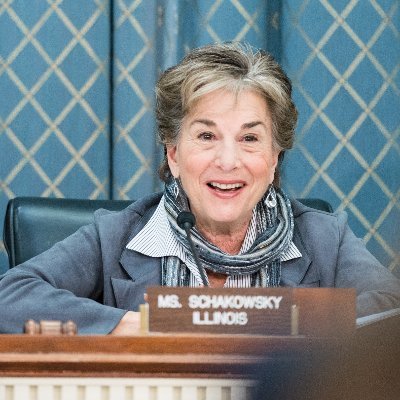
Thanks to Jan Schakowsky for taking the lead! Details in our next issue.

FMR Organizing Committee


Dan Swinney, FMR Co-Chair, Manufacturing Renaissance, Erica Staley, Manufacturing Renaissance | Ibon Zugasti, LKS Mondragon | Ander Caballero, FMR International Organizer, Basque Country | Michael Peck, 1Worker 1Vote | Michael Bennett, African American Leadership and Policy Institute | Carl Davidson, Re-imagining Beaver County | Alan Minsky, Progressive Democrats of America | Michelle Burris, The Century Foundation | Doug Gamble, Manufacturing Renaissance | Michael Partis, FMR Co-Chair, New York City | Teresa Cordova, Great Cities Institute, University of Illinois | Matt Wilson, Great Cities Institute, University of Illinois | Michael Moriarty, Chicago Teachers Union Foundation | Bob Creamer, Democracy Partners | Chris Cooper, Ohio Employee Ownership Center | Katy Stanton, Urban Manufacturing Alliance | Kristen Barker, Co-op Cincy | David Levine, American Sustainable Business Network | Andrew Dettmer, Australian Manufacturing Workers Union, Louis Tierno, Pennsylvania and Appalachia Sustainable Business Network