Public Service Announcement: Online Shopping Scams
Online Shopping Scams
The FBI's Public Service Announcement warns Internet users about a surge in online shopping scams.

More and more shoppers are being directed to fraudulent websites via social media and online search engines. These bogus vendors are actually making the most of the health crisis, social distancing and remote workforce.
(reference Hot for Security / Bitdefender)
How It Works

  • Scammers set up fake websites or smartphone apps, often made to look just like a trusted retailer.
  • Some bogus websites are made to look like a legitimate, if unfamiliar, shopping destination.
  • Scammers lure shoppers with emails, text messages and ads on social media.
  • They offer hot items at a fraction of the usual cost and may throw in free shipping and overnight delivery.
(reference AARP Fraud Watch)
What You Should Know

  • Some of the sham sites do deliver merchandise, but typically a knockoff brand, while others don’t bother sending anything at all.
  • Bargain-basement prices on popular gift items should make you suspicious if the discount is greater than 55 percent.
  • Legitimate retailers have meticulous websites — look for spelling errors, bad grammar or no contact information that may indicate the site is a fake.
(reference AARP Fraud Watch)
What You Should Do

  • Rather than click on a link from an email, text or social media ad, open your web browser and type in the web address yourself. This ensures you are going to the correct site and reduces the risk that clicking on a link brings with it — namely adding malware to your device to steal your credentials.
  • When making an online purchase, use a credit card, which gives you more protection than a debit card, should fraud occur.
  • Be sure to keep your operating system and antivirus software current.
(reference AARP Fraud Watch Network)
And Those Phone Calls .....

Ron just finished buying six or seven gifts online for his grandchildren. So when he got a phone call from Amazon that claimed that he had nearly $800 in charges on his account, well, he kind of panicked. "It was a recorded message, supposedly from Amazon, stating that there was a pending charge of $799.75," he said. "This is Amazon calling," he remembers hearing.

Scammers, no doubt, will be working overtime in December to impersonate all sorts of big names, including Amazon, as holiday shoppers order more online to deal with social distancing as COVID-19 cases spike in many communities.

Scammers try to scare you into thinking that your bank account or credit card has somehow been compromised — and you must act immediately by handing over more personal information to fix the problem.

One red flag of a scam: The robocall asks you to hit 1 or some other key to continue. 

Previous scams have involved situations where the scammers direct potential victims to a phony website that looks exactly like the Amazon website. The target is then asked to re-enter personal information, including bank account information.

Best practice is don't answer a call if you do not know the caller. If you do answer, don't panic, and just hang up.

(reference Susan Tompor/Detroit Free Press/ USA Today)

And there's more ...
Using Contactless Payments

The downside to using the same credit card everywhere is that it increases the chances of it being compromised and used for fraudulent transactions, which can be a huge hassle this time of year.

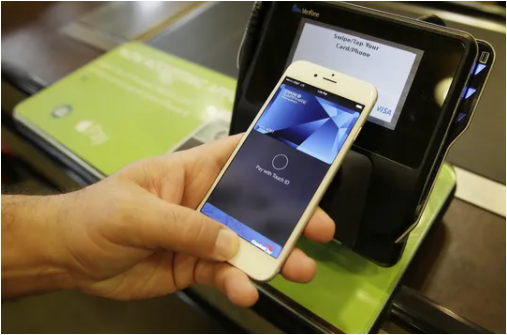
Preventing merchants from actually knowing what your credit card number is best practice. This is possible through a "tokenized purchase system" which virtually eliminates the possibility of your card getting compromised. Examples of this type of payment system are smartphone based payment systems, Apple Pay and Google Pay.

Smartphone-based payment systems use tokens with one-time use passwords that are passed to the merchant’s processing system, instead of your actual card number. This means that if the merchant is hacked, your credit card number is protected because they never received it in the first place.

The two most popular platforms for general retail are Apple Pay, which only works on iOS devices and Google Pay, which works on Android and iOS devices.

Here's our Tech Connect page with our Tip on using contactless payments.
Winter Class & Webinar Schedules
Our classes teach how to use technology with individual attention and hands-on instruction for beginners to advanced students. Our free webinars are class introductions where we show what can be done using today’s technology.

Our Winter class schedule
Our free Webinar schedule
SeniorNet @ FSL website
Family Service League website