|
What first brought you into road safety and was there a particular moment or incident that convinced you that you wanted to focus on it?
My focus on road safety really crystallized around the opportunity to use technology to address two of the most significant factors in serious crashes: drunk driving and speeding. LifeSafer has spent decades reducing drunk driving – and the results show that ignition interlock programs are working. That’s why we’ve shifted our focus to speed, with the use of Intelligent Speed Assistance.
Tell our readers a little about active intelligent speed assistance (ISA) and how it works.
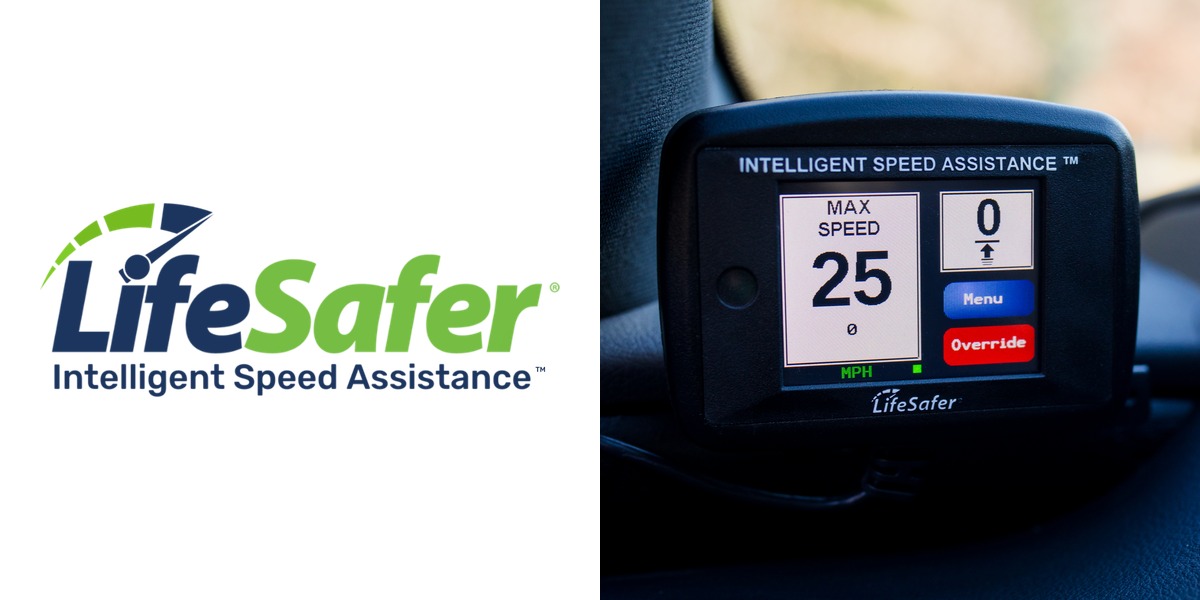
Active Intelligent Speed Assistance – or “ISA” – is an aftermarket vehicle safety device. Once installed, ISA uses GPS technology and onboard speed maps to recognize the current speed limit for the road a vehicle is traveling on and prevent speeding in real time. These devices are sophisticated enough to know the difference between a side street, on ramp, and highway, making them trusted by fleets, parents of teen drivers, and court authorities.
To me, active ISA represents an important shift in road safety—from passively informing drivers about risk to giving them technology that prevents unsafe behavior.
Over the last few years, ISA has moved from fleet pilot programs to being used in more of a mass scale. What do you think has been the reason behind this shift?
It’s true. Makers of ISA devices have conducted many pilot programs over the past few years, from small-scale trials to city-wide programs. With each additional success story, the demand for ISA – and the demonstration of its ability to save lives on our roadways – has grown. Let’s not forget, however, that the core technology behind the current iteration of ISA has been around for decades, in multiple countries with thousands of vehicles installed and millions of miles driven. The widespread adoption of active ISA we’re seeing now is a direct result of fleet programs proving its effectiveness.
Can you tell us a little more about where you see ISA as having the most impact? Will it be young drivers? Commercial and public fleets? Or in regards to stop super speeder laws that we are seeing passed in states across the US?
Active ISA is having an impact for all three of these important groups. For young drivers, ISA acts as training wheels, giving them the opportunity to learn important driving early on, before bad habits have time to form. For commercial and public fleets, ISA is an added layer of protection – for both drivers and everyday citizens who share the road with the millions of commercial vehicles. For super speeders, ISA offers an opportunity to continue driving – more safely and in accordance with the law. For these drivers, ISA is all about behavior correction and rehabilitation. I’m not surprised so many states have already introduced and passed legislation to address super speeders; in fact, there’s clear line of sight to nearly every state in the United States having a Super Speeder ISA program. Similar to ignition interlock programs, ISA programs are already having a real impact on road safety, and we couldn’t be more excited about the opportunity to improve road safety through these three programs.
What do you see as the biggest barriers to widespread ISA adoption over the next three to five years—technology, regulation, consumer acceptance, data and mapping, or something else?
Education and training. Four years ago, I. S. A. weren’t three connected letters, and now they’re on the radar of legislators and safety officials, but general public awareness is still incredibly low. I cannot overstate the value of educating everyone about what active ISA is – and what it is not. It is a support tool; it is not going to control a vehicle or remove a driver’s autonomy. Active ISA just provides an additional safety element to the highest risk drivers on the road. Independent studies conducted by IIHS and GHSA have confirmed the significance of education when it comes to ISA; once drivers, companies, and parents are aware of the option of active ISA, we see adoption.
If we look five years down the road, what would success for ISA look like to you—not just in terms of vehicles equipped with the technology, but in terms of the deaths and crashes it can ultimately prevent?
We know that speed accounts for approximately 30% of fatal crashes. My belief is that over the next five years, we see a steady, measurable decline in this statistic. Not just the deaths and injuries directly attributed to speed, but deaths and injuries across the board on our roads. We know that slower vehicle speeds reduce injuries. ISA is all about saving lives.
Are there any misconceptions about ISA that you would like an opportunity to address?
I often hear two misconceptions.
First, I hear confusion from people who think that active ISA is ‘already’ in new vehicles. From a technology perspective, there’s a huge difference between passive ISA (an alert system) and active ISA (a real-time intervention).
Second, I hear confusion around who should use active ISA. These devices are intended for drivers who have a need for technology to provide an added layer of protection. I trust drivers to make good decisions. I do not believe in forcing every single driver worldwide to use an intelligent speed device. These devices only belong in the vehicles that need them the most. The highest volume drivers, the least experienced drivers, and the drivers that have shown that they have a speed habit that they need to break.
|