Wednesday Weblog for October 22, 2025 | | It is better to be a warrior in a garden, than a gardener in a war. Chase Winovich | | |
If you've just received this email from someone who thinks you are a smart reader. Validate their faith in you signing up and click the link below to subscribe. Or if you are forwarding this to you husband, or wife, or boyfriend, or girlfriend, or brother, or sister, or mother or father or son or daughter, someone at work, consider encouraging them to sign up.
| | Leading Off: Audiobook Launch | | |
The Audiobook version of Observations at the Speed of Life: Lessons in Every Moment launched worldwide last week (at last). It is available on Audible, Amazon Kindle, and Apple iTunes. Here's hoping that it boosts sales enough for me to slow down a little bit.
If you acquire the book, there are a couple of things you should know.
The Narrator: Of course, it was me. As my longtime fraternity brother and UMass Soccer Alumni Gary McKenna in North Carolina always says: 'You write like you talk, and I can hear you when I read the Wednesday Weblog."
The Errors: Since I am not a professional narrator, it is not perfect. Oh, I didn't burp or anything, but sometimes I talk too fast, or don't pause between paragraphs: that kind of stuff.
The Sound: I recorded the chapters over a five- or six-month period on Adobe Audition from my home office and sent the MP4 to the publisher's audio engineer who cleaned up what he could. Still, some chapters sound different than others.
If I ever do it again, I know how to fix things, I think.
| | There are some timeless concepts for self-management that have been used by millions of successful people over the years, and I’ve used one or two myself. I think back to 1974 when I read the book (and saw the video) called “How to Control Your Time and Your Life” by Alan Lakein. My time management courses and regular practices are due to the fact that I have been following most of the principles in that book for decades. | | |
I recently discovered a connection between a book I read way back in 1992 and my professional work today. You know, one of those “I was today years old” when I discovered that the book, and my focus on its principles would come full circle and give me a depth of expertise through decades of practice, that I didn’t realize, in a manner that surprised me, in a way I was unprepared for. Here’s the full circle story.
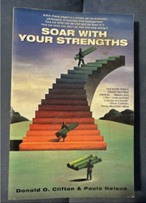
The book is called ‘Soar with Your Strengths’ and it starts out with this parable, which I have typed in here word for word.
| |
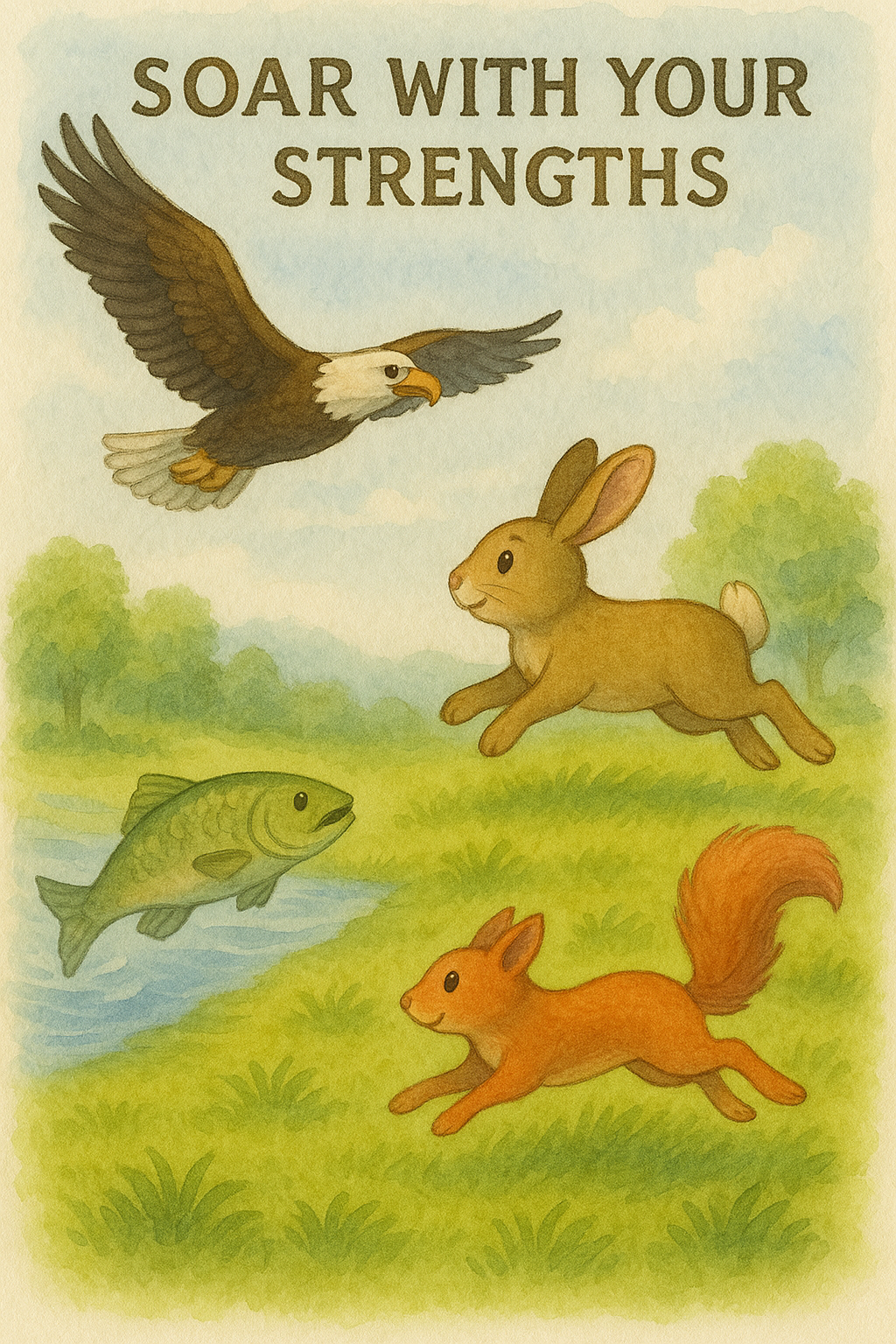
Let the Rabbits Run: A Parable
Imagine there is a meadow. In that meadow there is a duck, a fish, an eagle, an owl, a squirrel, and a rabbit. They decide the want to have a school so they can be smart, just like people.
With the help of some grown-up animals, they come up with a curriculum they believe will make a well-rounded animal: running, swimming, tree climbing, jumping, and flying.
On the first day of school, little br’er rabbit combed his ears, and he went hopping off to his running class.
| |
There he was a star. He ran to the top of the hill and back as fast as he could go, and, oh, did it feel good. He said to himself, “I can’t believe it. At school, I get to do what I do best”.
The instructor said: “Rabbit, you really have talent for running. You have great muscles in your rear legs. With some training, you will get more out of every hop”.
The rabbit said, “I love school. I get to do what I like to do, and get to learn to do it better”
The next class was swimming. When the rabbit smelled the chlorine, he said, “Wait, wait? Rabbits don’t like to swim”.
The instructor said, “Well, you may not like it now, but five years from now you’ll know it was a good thing for you”.
| |
In the tree-climbing class, a tree trunk was set at a 30-degree angle, so all the animals had a chance to succeed. The little rabbit tried so hard he hurt his leg.
In jumping class, the rabbit got along just fine; in flying class he had a problem. So, the teacher gave him a psychological test and discovered he belonged in remedial flying.
In remedial flying, the rabbit had to practice jumping off a cliff. They told him if he’d just work hard enough, he could succeed.
The next morning, he went on to swimming class. The instructor said, “Today we jump in the water”.
“Wait, wait. I talked to my parents about swimming. They didn’t learn to swim. We don’t like to get wet. I’d like to drop this course”.
| |
The instructor said, “You can’t drop it. The drop-and-add period is over. At this point, you have a choice: Either you jump in, or you flunk”.
| |
The rabbit jumped in. He panicked! He went down once. He went down twice. Bubbles came up. The instructor saw that he was drowning and pulled him out. The other animals had never seen anything quite as funny as this wet rabbit who looked more like a rat without a tail, so they chirped, and jumped, and barked, and laughed at the rabbit.
The rabbit was more humiliated than he had ever been in his life. He desperately wanted to get out of class that day. He was glad when it was over.
He thought he would head home, so that his parents would understand and help him. When he arrived, he said to his parents, “I don’t like school. I just want to be free”.
“If rabbits are going to get ahead, you have to get a diploma”, replied his parents.
The rabbit said, “I don’t want a diploma”.
The parents said, “You’re going to get a diploma whether you want one or not”.
| |
The next day, he headed off to school with a slow hop. Then he remembered that the principal had said that any time he had a problem to remember that the counselor’s door is always open.
When he arrived at school, he hopped up in the chair by the counselor and said, “I don’t like school”.
And the counselor said, “Mmmm, tell me about it”. And the rabbit did.
The counselor said “Rabbit, I hear you. I hear you saying that you don’t like school because you don’t like swimming. I think I have diagnosed that correctly. Rabbit, I’ll tell you what we’ll do. You’re doing just fine in running. I don’t know why you need to work on running. What you need to work on is swimming. I’ll arrange it so you don’t have to go to running anymore and you can have two periods of swimming.
| |
When the rabbit heard that, he just threw up.!
As the rabbit hopped out of the counselor’s office he looked up and saw his old friend, the Wise Old Owl, who cocked his head and said, “Br’er rabbit, life doesn’t have to be that way. We could have schools and businesses where people are allowed to concentrate on what they do well.
Br’er rabbit was inspired. He thought when he graduated, he would start a business where the rabbits would do nothing but run, the squirrels could just climb, and the fish could just swim. As he disappeared into the meadow, he sighed softly to himself and said, “Oh, what a great place that would be”.
| |
So, all those years ago, I read the parable and the rest of the book, and developed the idea that we should all do what we do best. We’d get better results and be happier. Being a huge sports fan, I realized that is how sports teams are designed and developed.
No coach makes the quarterback jump off a cliff, I mean, practice his blocking.
No hockey coach makes his goaltender jump in the pool, I mean, practice stickhandling through the defense.
No baseball manager (anymore) has his pitchers take batting practice, except maybe Ohtani with the Los Angeles Dodgers.
It is a sound concept, rooted in common sense, with plenty of precedent. Yet some businesses, and educational facilities, treat their employees, leaders, and students like br’er rabbit in the parable and require them to spend more time on what they don’t do well.
| |
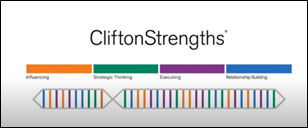
Fast forward to 2018, almost thirty years later, and the first time I take the Gallup Strengthsfinders Profile to identify the rank order of 34 Strengths, ranking from Achiever, to Empathy, to Self-Assurance, to Strategic Thinking and everything in between.
In the back of my mind, there was something familiar about the concepts and the messaging. As I said earlier, I was today years old when I realized that one of the authors of that book was Don Clifton, and the profile I took was the Clifton StrengthsFinder.
Without realizing it, I had been learning and practicing the concepts during my professional career. In fact, as part of my consulting practice, I help organizations and individuals understand the best way to leverage strengths to form a good team and to develop effectiveness.
| |
Since signing on with Gallup more than two years ago, with the ability to generate profiles and reports, I have reviewed the Strengthsfinders profiles of more than 200 people, in a variety of organizations, including some who are reading this right now. It has made a difference to many of those individuals, giving them sort of ‘permission’ to focus on what they do best. It has made a difference to the organizations as well, increasing engagement, lowering turnover, enhancing decision making and improving results.
| | What the Strengthsfinders Profile does, is help people better understand what they are ‘naturally’ talented at, and what to do about it, and where they are not talented and what to do about it. In short, people and organizations learn how to make a bigger impact on their lives and their organizations. | |
As a sports fan, I use the sports analogy referenced earlier to reinforce the fact that focusing on strength development makes a lot of sense. Would a team be better off if their star quarterback developed his blocking skills or his passing skills? How about if the offensive lineman practiced placekicking?
Just like with the rabbit analogy at the start of the weblog, spending time and effort on things you are not naturally good at might help sometimes, but the biggest payoff is when you get better at things you naturally do well. That is how high school football players get to play in college and how college football players get to make the NFL.
Gallup also promotes the concept of building a well-rounded team as opposed to a well-rounded individual. Having five starting quarterbacks, no matter how talented, probably doesn’t work.
The book Soar with Your Strengths made a lot of sense back then, and it helped me naturally use my talents of mentoring and one on one communication to be successful as a consultant.
If you can’t swim or jump off cliffs, or climb trees, it is better to soar with your strengths.
| If you’d like more information about Gallup StrengthsFinder, and perhaps take the Profile yourself, reach out. I’m happy to discuss individual coaching or team development. My email address is at the bottom of this weblog. | | Surprise Photo at the End: | | Joe's Positive Post of the Week | | Join the Smart Subscribers | | If you are reading this on a social media platform, click below and you'll automatically receive a 'different' story every week on Wednesday. | | |
The Roll Call of states and countries where readers reside: Arizona, California, Colorado, Connecticut, Delaware, Florida, Georgia, Hawaii, Illinois, Indiana, Iowa, Kansas, Kentucky, Louisiana, Maine, Massachusetts, Michigan, Mississippi, Missouri, Montana, New Hampshire, New Jersey, New Mexico, New York, North Carolina, North Dakota, Ohio, Pennsylvania, Puerto Rico, Rhode Island, South Carolina, South Dakota, Tennessee, Texas, Vermont, Virginia, Washington and Washington DC, Wisconsin plus Canada, Conch Republic, Australia and the United Kingdom.
| | Refer a friend to Sign Up for the Wednesday Weblog | | |
Ed Doherty
774-479-8831
www.ambroselanden.com
ed-doherty@outlook.com
Forgive any typos please.
| | | | | |