How Do Youth Engage with Elders Contest |
#ConnectedIndigenousElders contests
Share self-care tips & youth show us how you engage with elder for gift cards
|
In September, the National Indian Council on Aging (NICOA) launched a campaign addressing the issue of social isolation and loneliness among American Indian and Alaska Native elders. Caregiver issues, and youth and tribal leader engagement were also included in the #ConnectedIndigenousElders campaign to remind everyone they all play an important role in our elders’ mental wellbeing and physical health. NICOA encourages everyone to view the website or our social media channels to view resources available for youth, elders, caregiver and tribal leaders. We also have some items for caregiver and youth who participate in our contests.
The campaign is part of a project supported by a grant from the CDC Foundation using funding provided by donors to the CDC Foundation’s COVID-19 Emergency Response Fund.
|
How do you engage with your elder?
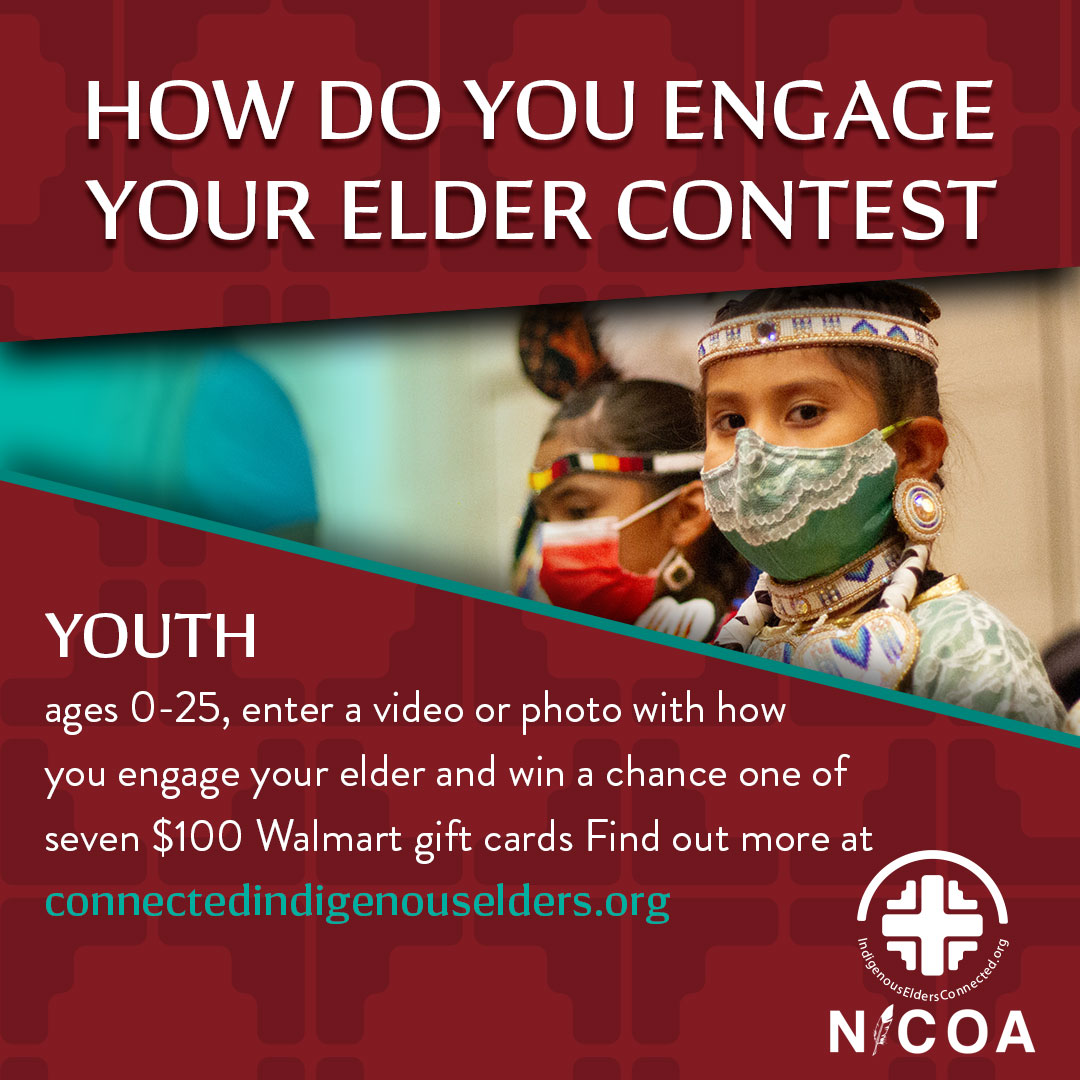
Youth, how do you engage with your elders? Enter you and your elder in this contest and be entered into a drawing for seven $100 Walmart gift cards to share with your elder. Contest rules are below:
- To be eligible, a youth age 0 to 25 will need to show a photo of an elder, or include them in the video or photo for submission. All submissions must use hashtag #youthandindigenouselders and tag NICOA at @NICOAAging on Facebook, @NICOA_Aging on Twitter, or @nationalindiancouncilonaging on Instagram.
- Videos should be short, within one to three.
- When posting, please tell us your tribal affiliation or tribal territory and use the phrase, “This is how I engage with my elder …” and show the action, for example, video chatting with your elder, walking, baking, beading, drumming, driving to appointments, etc. If submitting a photo, please include tribal affiliation or tribal territory and a short description of how you engage with your elder in the social media post.
- One entry per person.
- Drawing will be held on December 1. Recipients will be notified by a social media post on NICOA’s social media channels, Facebook, Twitter and Instagram. Recipients may also be sent a message via those channels.
|
|
|
|
How Do You Self-Care?
Enter our Caregiver Self-Care Kit Giveaway
|
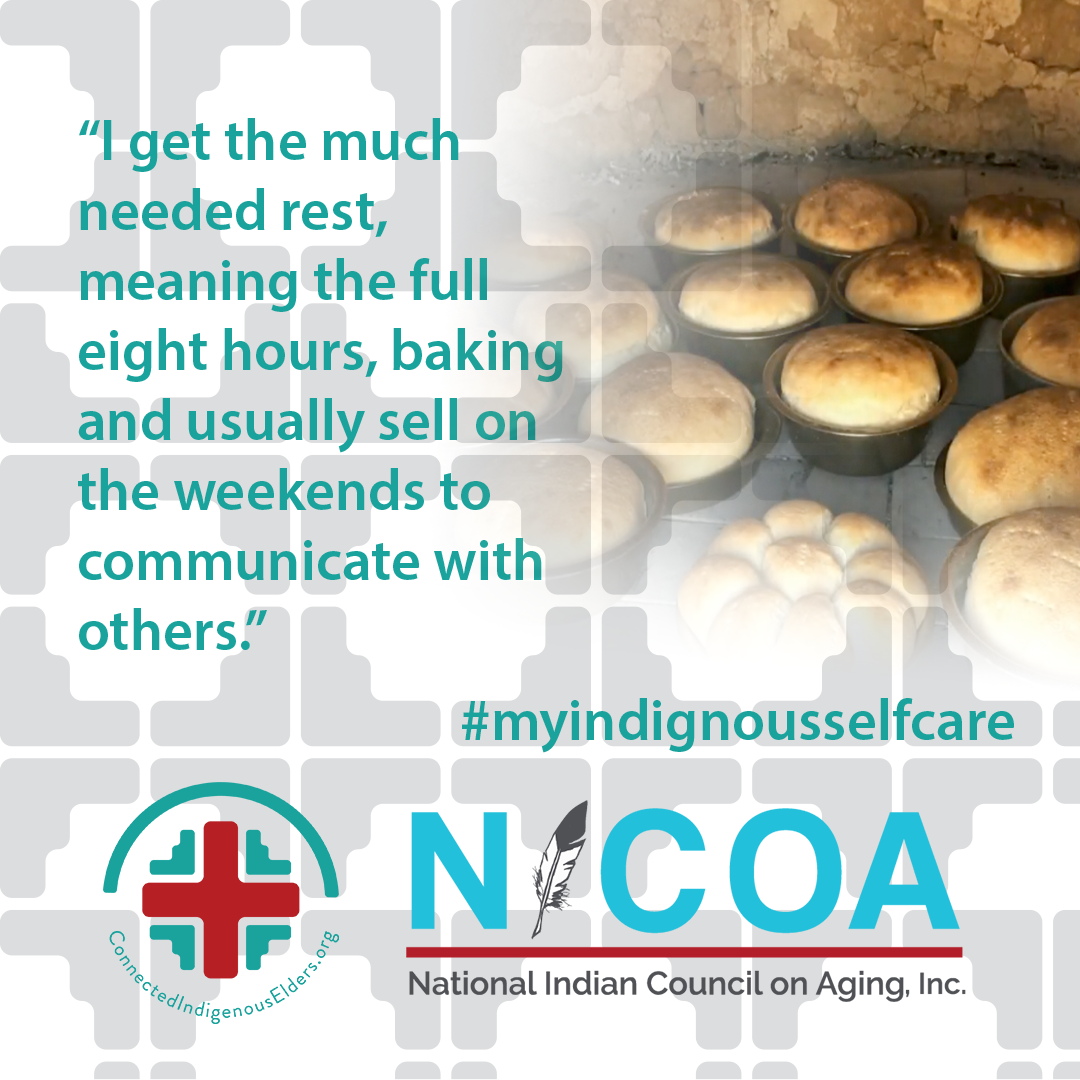
We have updated our “How do you self-care” contest so that caregivers can anonymously give self-care tips to receive a self-care kit. Just fill out this form and we will share your tips on our social media channels, such as the one below. |
|
|
|
Progress, Potential, and Possibilities |
Last month NICOA Executive Director Larry Curley spoke with Ira Pastor during his podcast, “Progress, Potential, and Possibilities: Discussion with Fascinating People Designing A Better Tomorrow”. They discuss comprehensive health, social services and economic well-being for American Indian and Alaska Native elders. |
|
|
|
Free Webinar Offers Tips for Communicating with People Living with Dementia |
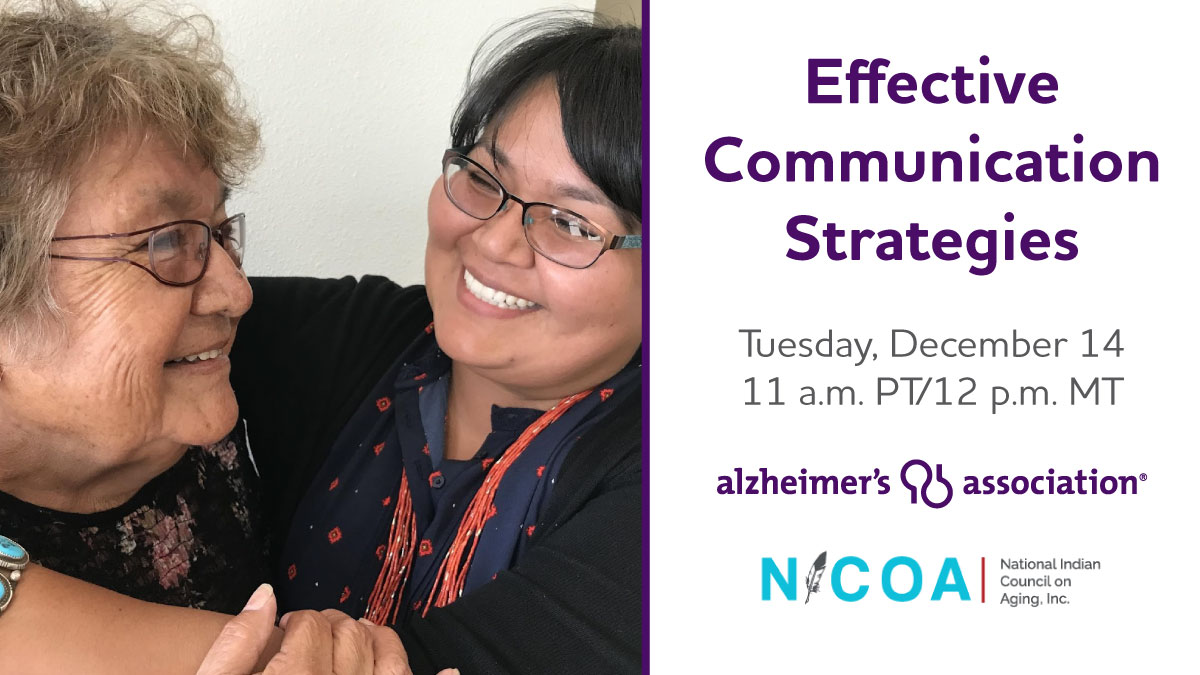
In partnership with NICOA, the Alzheimer’s Association is offering a one-hour webinar “ Effective Communications Strategies” on December 14. This free webinar will examine how communication changes for people living with Alzheimer’s and dementia as the disease progresses.
Valerie Tsosie (Navajo), an Alzheimer’s Association community educator, will share tips and strategies to help family caregivers stay connected and meet the needs of loved ones even when verbal communication becomes challenging or is lost completely. Participants will learn how to decode the verbal and behavioral messages delivered by someone with dementia, and identify strategies to help connect and communicate at each stage of the disease.
The December 14 webinar will take place at 11 a.m. PT / 12 p.m. MT. Individuals interested in attending can register here. |
|
|
|
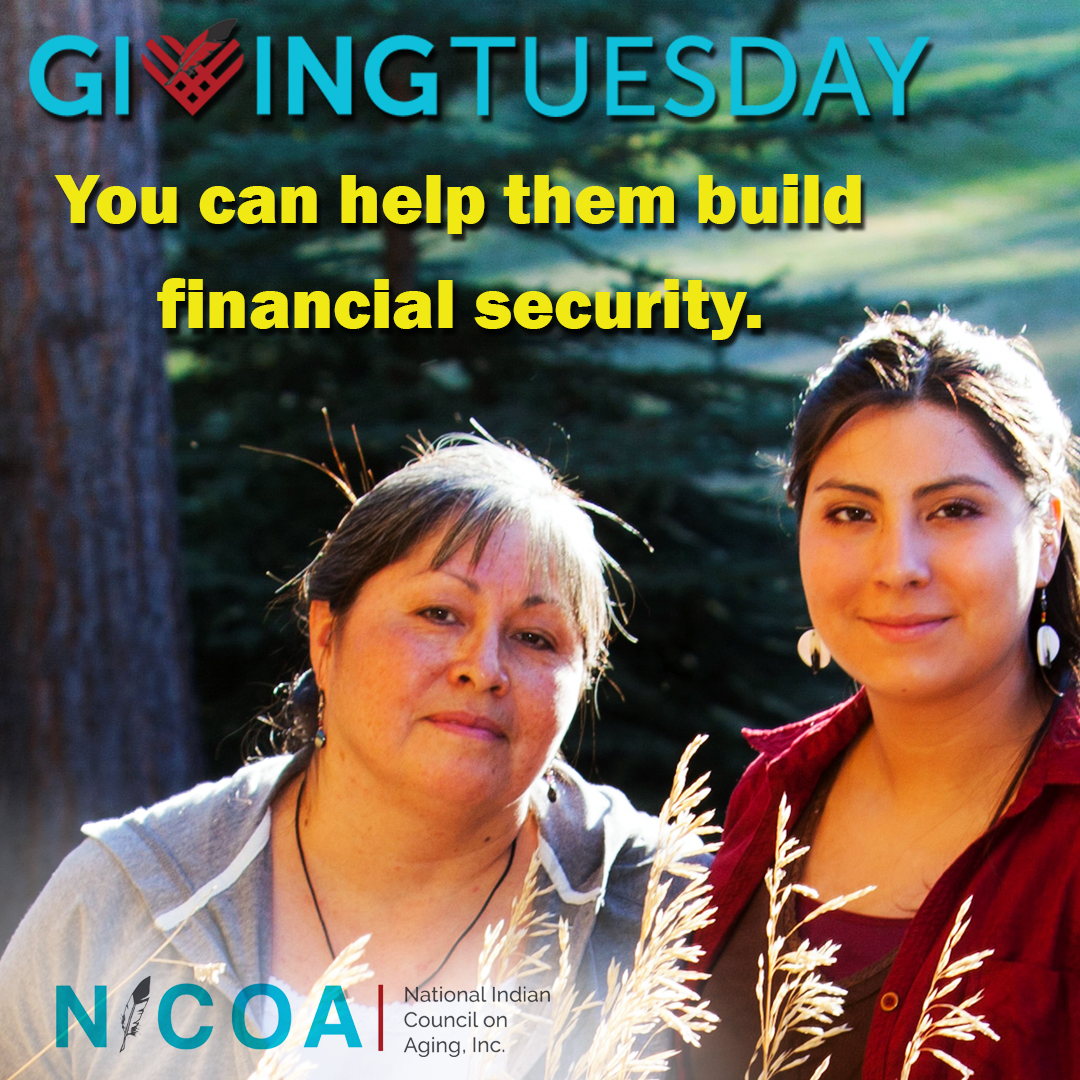
You Can Help Elders Build Financial Security This Giving Tuesday |
Did you know that American Indians and Alaska Natives had the highest poverty rate of any group — more than 29 percent — as opposed to the nation and the projected rates in 2030 of 10.9 percent, which is more than twice the rest of the population.
At the National Indian Council on Aging (NICOA) we serve our elders through our Senior Community Service Employment Program, which helps thousands of low-income elders each year by promoting job training and building real-world skills, as well as by our Older Adults Equity Collaborative, which protects elders by raising awareness of elder abuse, financial exploitation, scams and fraud. Your gift to NICOA is key so that we can continue to provide these lifesaving programs. The challenges are real — more than one in four Native people live in poverty.
In honor of Giving Tuesday on November 30 we hope you will consider helping us uplift our elders. Your donation will go toward providing resources that are vital to our programs. Here is how you can make your donation: Click here and make your gift online. Donate via our website or mail your gift to National Indian Council on Again, 8500 Menaul Blvd NE, Albuquerque, NM 87112.
On behalf of our elders, thank you.
|
|
|
|
2020-2021 Membership Available Online |
|
Membership with NICOA offers many valuable benefits. As a paid member you will receive NICOA’s online bimonthly newsletter, legislative updates on important issues and resolutions affecting elders, voting privileges for qualified members and discounted registration fees for qualified members to attend our biennial conferences.
Be an important part of a national membership network and become a NICOA member by applying online or by mail. |
|
|
|
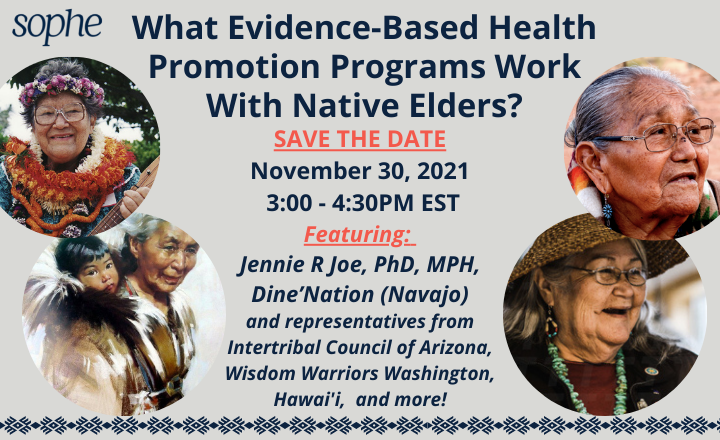
What Evidence-Based Health Promotion Programs Work with Native Elders? |
The purpose of this webinar is to introduce American Indian, Alaska Native, and Native Hawaiian communities to evidence-based health promotion programs and illustrate best practices from these communities currently offering programs. In this webinar, presenters will engage in a dialogue to address these questions as well as offer examples of programs that successfully resolved some of these challenges in American Indian, Alaska Native, and Native Hawaiian communities.
|
|
|
|
This webinar will help identify two existing evidence-based health promotion programs that can be linked to serve their community, and identify two potential challenges in linking an evidence-based health promotion program to an American Indian, Alaska Native, or Native Hawaiian community. Listeners will be show how to assess existing and available resources, policies, programs, practices, and interventions.
Featured speakers are Jennie R. Joe, PhD, MPH, MA (Navajo); Kate Lorig, DrPH; and representatives from the Intertribal Council of Arizona; Wisdom Warriors Washington, Hawaii, and more. In this event, participants will be able to distinguish an EBP from one that is not evidence-based, identify at least three ways that their community can benefit from EBPs, link with existing programs, adapt programs to fit within the community, and identify possible challenges.
|
|
|
|
IA2 to Host December Dementia Trainings |
IA2, the International Association for Indigenous Aging, is pleased to host three new trainings in December in conjunction with their partners from the University of Nevada, Reno and Alzheimer's Los Angeles. These trainings are free and available exclusively for American Indian and Alaska Native staff, healthcare providers, and tribal community members via IA2. The trainings are being hosted as part of an upcoming 2022 series focused on meeting the needs of Native caregivers and increasing awareness and knowledge about dementia, Alzheimer's disease, and brain health in tribal, urban Indian and Alaska Native communities.
December 6 1-3 p.m. Pacific Time: Dementia Friends for American Indian and Alaska Native Communities. Join us for the first virtual training and learn how you can become a friend to those with dementia or memory problems in your community. Content covers types of dementia, culturally appropriate ways to work in your community, opportunities to reduce the risk for dementia, 10 signs of possible dementia versus usual signs of aging, words and actions you can take to make people with memory issues feel more supported, and the six key Dementia Friends messages. To register for the Information Session, click this link: https://bit.ly/3Dz7odc
|
|
|
|
December 8 9-12 p.m. Pacific Time: Dementia Friends for American Indian and Alaska Native Communities CHAMPIONS Training. In three hours, you will learn how to present and bring the Dementia Friends program to your community. Training includes a resource binder with script, review of program details and tips for successful sessions, and brief teach back sessions. No detailed knowledge of dementia or Alzheimer's needed. NOTE: To participate in the Champions Training you must attend the December 6 information session. To register for Champions Training, click this link: https://bit.ly/3x2oqhl
|
|
|
|
December 14 1-4 p.m. Pacific Time: Dementia Support Group Facilitator Training for American Indian and Alaska Native Communities. This special Alzheimer’s Los Angeles Support Group Facilitator Training is for American Indian and Alaska Native community staff interested in starting up and facilitating a dementia-specific support group. Professionals and community members (young adult to elders) are welcome. This session provides a discussion of the purpose and value of support groups, information on starting and maintaining a support group, and an understanding of group dynamics and the group process. Email your contact information to register today.
|
|
|
|
Support has been provided by a grant from the CDC Foundation and by the Centers for Disease Control and Prevention through a cooperative agreement.
|
|
|
|
Important Emergency Broadband Benefit Program Updates for Tribes |
Congress recently created the Affordable Connectivity Program, a new long-term, $14 billion program, which will replace the Emergency Broadband Benefit Program. This investment in broadband affordability will help ensure we can afford the connections we need for work, school, health care and more for a long time.
The Emergency Broadband Benefit is an FCC program to help families and households struggling to afford internet service during the COVID-19 pandemic. This new benefit will connect eligible households to jobs, critical healthcare services, virtual classrooms, and so much more.
The Emergency Broadband Benefit will provide a discount of up to $50 per month towards broadband service for eligible households and up to $75 per month for households on qualifying Tribal lands. Eligible households can also receive a one-time discount of up to $100 to purchase a laptop, desktop computer, or tablet from participating providers if they contribute more than $10 and less than $50 toward the purchase price.
Households enrolled in the Emergency Broadband Benefit Program as of 12/31/21 will continue to receive their current monthly benefit during a 60-day transition period. But there are changes coming:
- The maximum monthly benefit will change from $50 per month to $30 per month for households not located on qualifying Tribal lands. The monthly benefit will remain at $75 per month for households on qualifying Tribal lands.
- Households have new ways to qualify for the Affordable Connectivity Program such as: receiving WIC benefits or having an income at or below 200 percent of the Federal Poverty Guidelines.
- Households that qualified for the Emergency Broadband Benefit due to a substantial loss of income due to job loss or furlough since February 29, 2020 or by meeting the eligibility criteria for a participating provider’s COVID-19 program will need to requalify for the Affordable Connectivity Program.
The Emergency Broadband Benefit is limited to one monthly service discount and one device discount per household. The FCC is seeking comment on the changes enacted in the Infrastructure Investment and Jobs Act and will be adopting rules for the Affordable Connectivity Program. |
|
|
|
The Older American Indian: Yesterday and Today |
By Larry Curley, NICOA Executive Director |
As I sit and reflect on the paths that have been taken by the older generation of American Indians as they adapt to the new world in which we now live, I can only come up with one word that captures their lives: Resilience. In 1974 when I began my journey in the field of aging, I was mentored by two individuals to whom I am grateful and from whom I learned much: Dr. Theodore Koff and Marian Lupu. The former was my college professor and the latter the director of the Pima Council on Aging in Tucson, Ariz., where I interned and later worked as the Gerontological Planner for the area agency on aging.
What has changed among the Indian older adult population in the last 47 years is a topic that requires some thought.
|
|
|
|
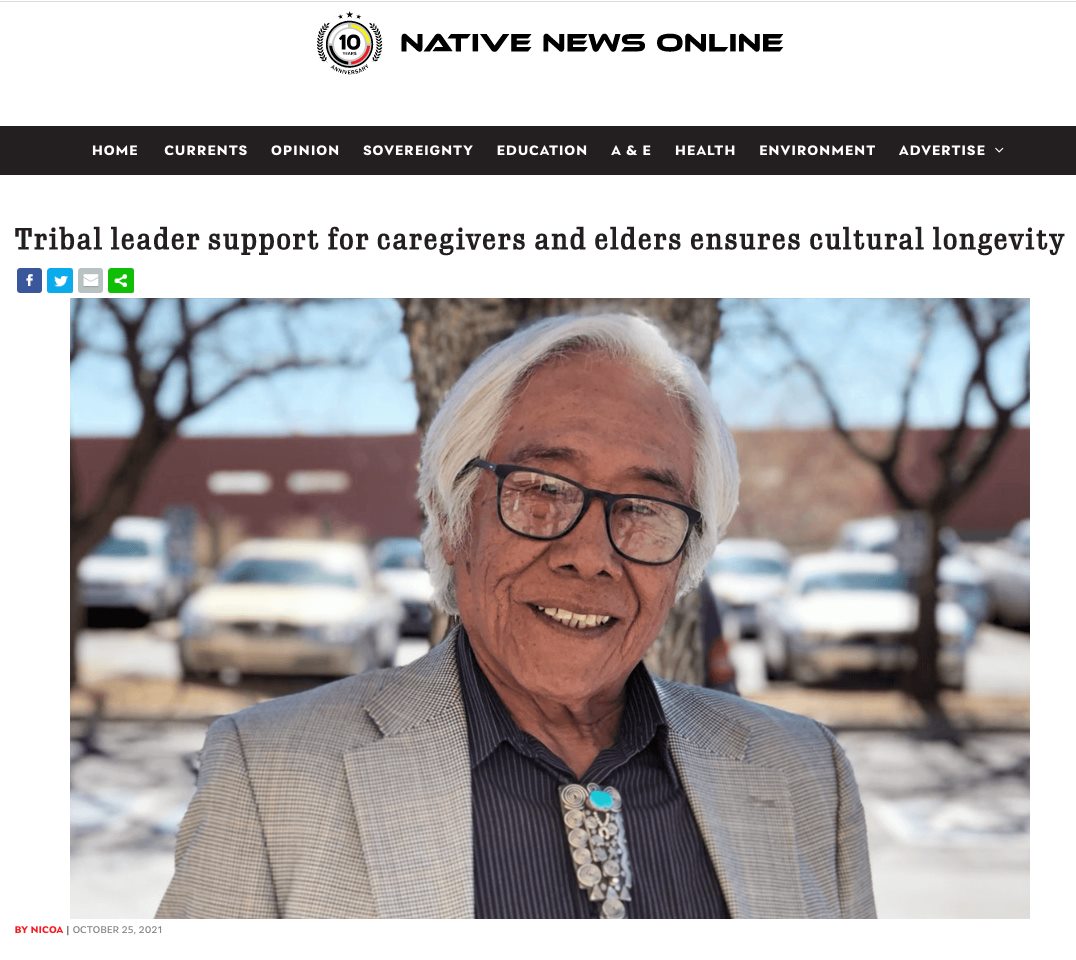
Tribal Leader Support for Caregivers and Elders Ensures Cultural Longevity |
By Larry Curley, NICOA Executive Director |
At no other time in recent history have tribal leaders across Native America been challenged in ensuring the health and safety of Indian people. That challenge has been immense and that weariness has also extended to those who care for our culture and language keepers, our elders, and their families.
Title VI of the Older Americans Act, legislation drafted and supported by the National Indian Council on Aging (NICOA) in 1978, established nutrition and supportive services for American Indians, Alaska Natives and Native Hawaiians. More than 250 tribes and tribal organizations use the funding for elder centers, home-delivered meals, information, referrals, transportation and personal care.
Title VI was later expanded to include caregiver support services to help families caring for relatives with illness or disabilities and grandparents caring for grandchildren. The program, depending on the tribal needs, offers information, individual counseling, supports groups and training, and respite care or short-term care for a loved one to relieve the primary caregiver. This can include adult day care, home health care, or care in a facility. These programs were created to keep families together, provide culturally relevant services and reduce the costs of medical or institutional care.
|
|
|
|
|
|
The National Indian Council on Aging, Inc. (NICOA) is a not-for-profit 501 (c)(3) charitable organization. Please consider adding NICOA to the charities you support.
NICOA needs your financial support as the advocacy and political work we do for our elders is not free. Grants that have helped fund NICOA are under threat in Washington, D.C., but you can help.
Your financial support will go directly to support our mission to improve health, social services and economic wellbeing for all American Indian and Alaska Native elders. Donations are tax deductible.
|
|
|
The National Indian Council on Aging | 8500 Menaul Blvd. NE, Suite B-470, Albuquerque, NM 87112 | 505-292-2001 | www.nicoa.org
|
|
|
|
|
|
|