Greetings!

Monthly News & Updates

December 2025 Issue

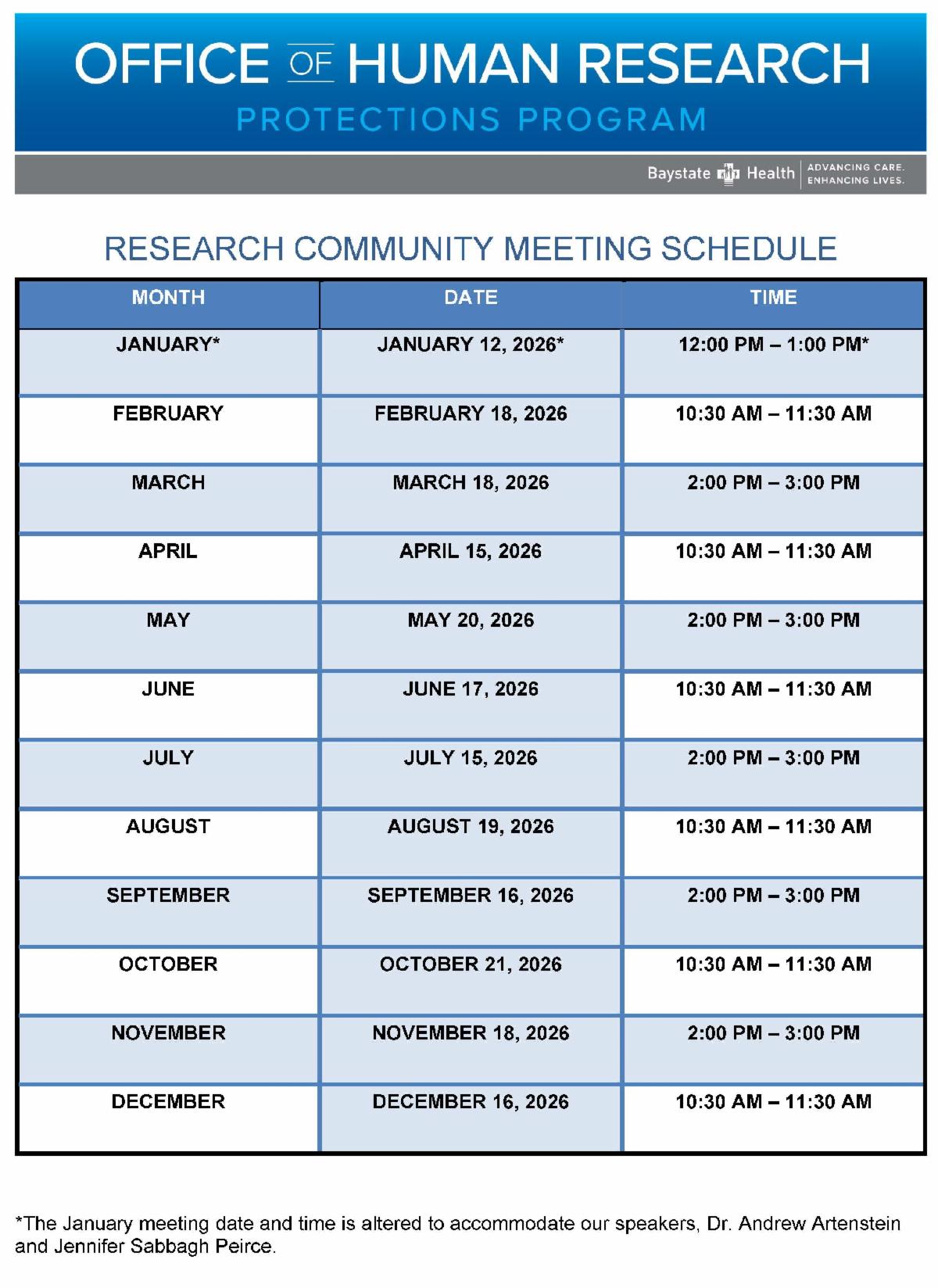
2026 Research Community Meeting Schedule

Please visit the HRPP Website to watch the December 17, 2025 Research Community Meeting and past meetings.


The next Research Community Meeting will be held on Monday, January 12, 2025, from 12:00 PM - 1:00 PM ET.


Did you know… therapeutic misconception often occurs during the consent process and can rise to the level of coercion?


It happens when participants think the study is designed to provide personalized treatment or that enrolling is the best or only option. Because clinicians, as well as research staff, are seen as authority figures, even subtle comments can sway decisions. To protect voluntariness and prevent undue influence, research staff should stick strictly to the facts in the IRB-approved consent form, avoid personal opinions, explicitly reinforce that participation is voluntary, and focus on helping participants understand the study rather than guiding their choice. Clear, factual communication ensures participants make informed, unpressured decisions about participating in a research study. Learn more via the link below.


January 2026 Research Community Meeting


The January Research Community Meeting has been rescheduled and will occur on:


Monday, January 12, 2026

12:00 PM - 1:00 PM ET

Via Zoom


During the meeting, Dr. Andrew Artenstein and Jennifer Sabbagh Peirce will address the research community by providing updates and answering your questions.


Zoom Link


2026 Research Community Education Curriculum (Preview)


We are pleased to share that the 2026 Research Community Education curriculum is taking shape and will include the sessions listed below. We will provide more information and additional topics soon.


  • February: OnCore & Billing

Presenter: Dr. Viorika Nelson

  • March: Patient Panel

Moderator: Dr. Tashanna Myers

  • April: Non-Regulatory Reviews in Your IRB Submission: Why Is the IRB asking for that Information?

Presenters: Sola Odesina & Jennifer Pacheco


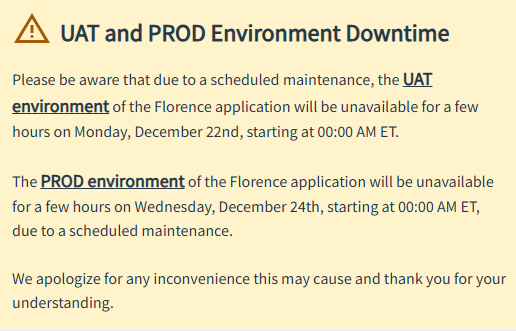
Florence eBinder Downtime


The Florence eBinder system will experience scheduled downtime this week. Please take note of the dates and times below to plan your work accordingly and avoid any interruptions.


Case Study: Responsible use of AI in Preparing IRB Submissions 


In the November newsletter, the case study,

Responsible use of AI in Preparing IRB Submissions, was presented (link to newsletter).


The Case Study Answers can be found below:


Question 1: What are the investigator’s and CRC’s responsibilities when using AI to help prepare an IRB submission? 


  • Carefully review the work of the AI, disclose substantial use of the AI, and take full responsibility for its output. The NIH Guidelines for the Conduct of Research (2025 revision) include guidance on responsible AI use. The guidelines define substantial use of AI. Using AI to write text is a substantial use. See, NIH Guidelines on the Conduct of Research, chapter on information technology: https://oir.nih.gov/system/files/media/file/2025-09/guidelines-conduct_research.pdf


Question 2: Should the investigator and CRC have disclosed the use of the AI to the scientific review committee and the IRB?  


  • Yes, because this information could be useful to the IRB and scientific review committee in evaluating the submission materials. For example, informing these committees about the use of the AI could have helped them to be on the alert for potential problems with the submission, such as a literature review not being up to date. Although the investigator is ultimately responsible for disclosure, the CRC also has some responsibility to disclose, since the CRC assisted with the IRB submission. The CRC should have reminded the investigator that the use of the AI needs to be disclosed.   


Question 3: What are the responsibilities of the scientific review committee and/or the IRB in this case?  


  • The Scientific Review Committee is responsible for ensuring that the research is well-designed to address important scientific questions. The IRB is responsible for ensuring that the research complies with ethical and legal requirements. It is 8 possible that the Scientific Review Committee failed to meet its responsibilities because the protocol did not address risks of the drug interactions that had been identified in the recent literature. If this information had been in the protocol, then the IRB would be able to make sure that it would also be included in the consent form and considered when reviewing the study.


Question 4: Do you think people are hesitant to disclose the use of AI in drafting documents?


  • The Conduct of Research guidelines provide some suggested disclosure language – “AI Usage Disclosure: This document was created with assistance from AI tools. The content has been reviewed, edited, and approved by all authors. For more information on the extent and nature of AI usage, please contact the author(s).” 


Additional Resources:

https://www.chronicle.com/article/why-we-should-normalize-open-disclosure-of-ai-use


----------------------------------------------------------------------------------------------------------------

Baystate Health's policy on the use of Artificial Intelligence can be found on Scribble and through the link below.


Deploying Digital Twins and Synthetic Data in Evidence Generation


Join MRCT on Thursday, January 15th, from 11:00 AM - 12:00 PM ET, for the third webinar in the MRCT Center’s Digital Twins and Synthetic Data series. This session will examine the appropriate use of digital twins and synthetic data in evidence generation, including their potential role in regulatory submissions.


Panelists will discuss evidence quality, validation, and model transparency, and will reflect on the evolving regulatory landscape for these technologies in clinical research. The session will include a moderated discussion and time for audience Q&A.


Register Here


CITI Program link to IRBNet


You are now able to link your IRBNet account with your CITI Program account. Linking your IRBNet account to CITI allows your CITI training

records to be automatically available in IRBNet. Click on the link below for instructions on how to do this.


All Baystate IRBNet users will be required to link

their accounts by February 1, 2026.

Linking Citi
 

Community Members Needed


We are seeking community members to join our Institutional Review Board (IRB). We welcome individuals from all backgrounds — both scientific and non-scientific — to bring their unique perspectives to the table. Members attend one meeting per month. Preparation time can depend upon how many studies a member is assigned to review. However, meetings typically run about 2 hours and preparation time could be around three to four hours per month.


Recipe of the Month


Soft and Chewy M&M Cookies


The best Soft and Chewy M&M Cookies. Crisp chewy edges, soft centers, and loaded with colorful M&M's. Everyone goes crazy for these. 

You can make these with regular M&M's, holiday M&M's, mini M&M's, or a combination of M&M's and chocolate chips.


December Humor


Q. What did one snowman say to the other?

A. I only have ice for you.

Q. What's the hardest thing about learning to

skate?

A. The ice.

Q. Where do gingerbread men sleep?

A. On cookie sheets.

Q. What kind of salad do they serve at the North

Pole?

A. Iceberg lettuce.


Don't forget to use ServiceNow for all requests going to the HRPP Education and Quality Assurance Program (EQA). Link to ServiceNow.

Email Michael Boland at michael.boland@baystatehealth.org if you have something that you would like included in a future newsletter.