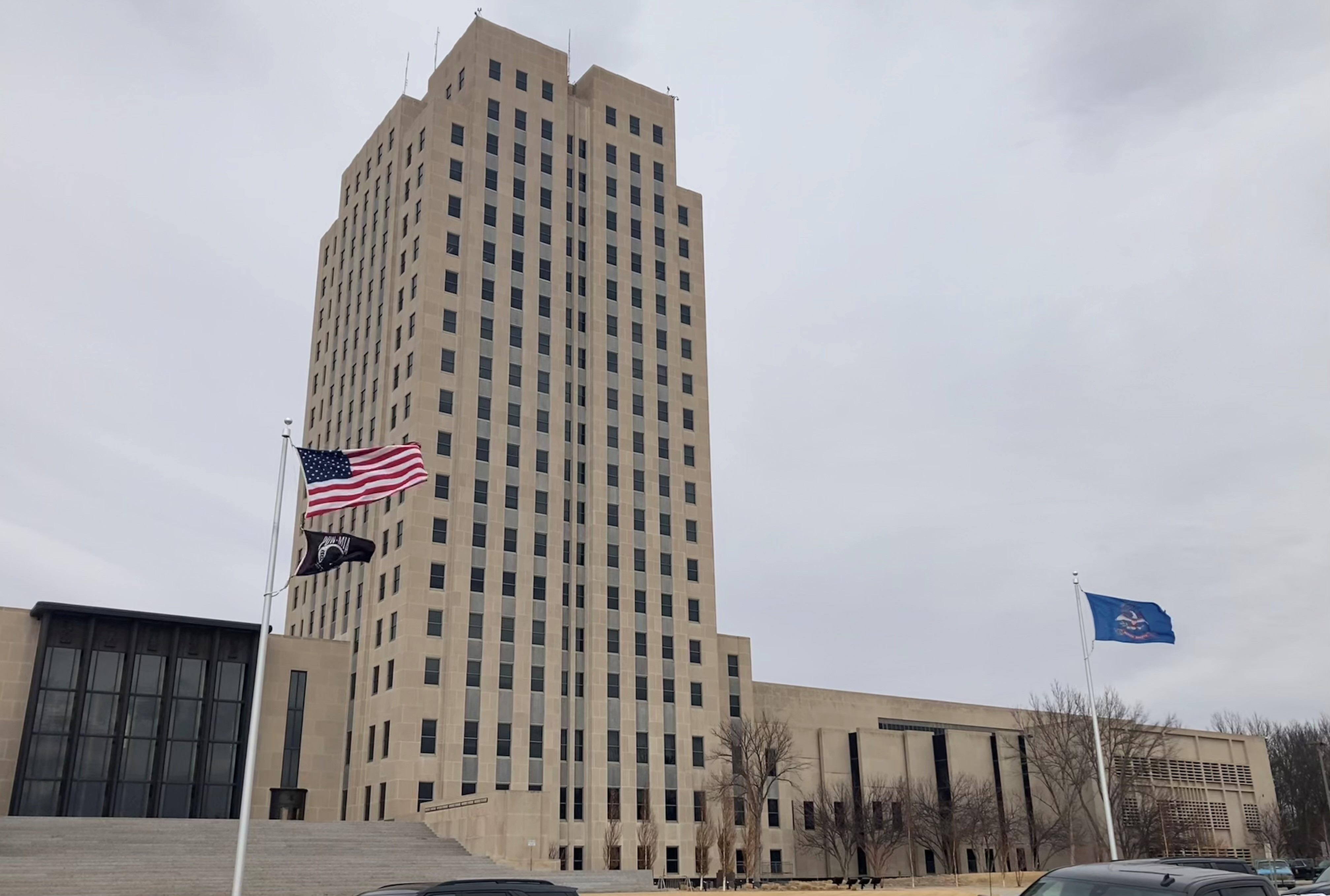
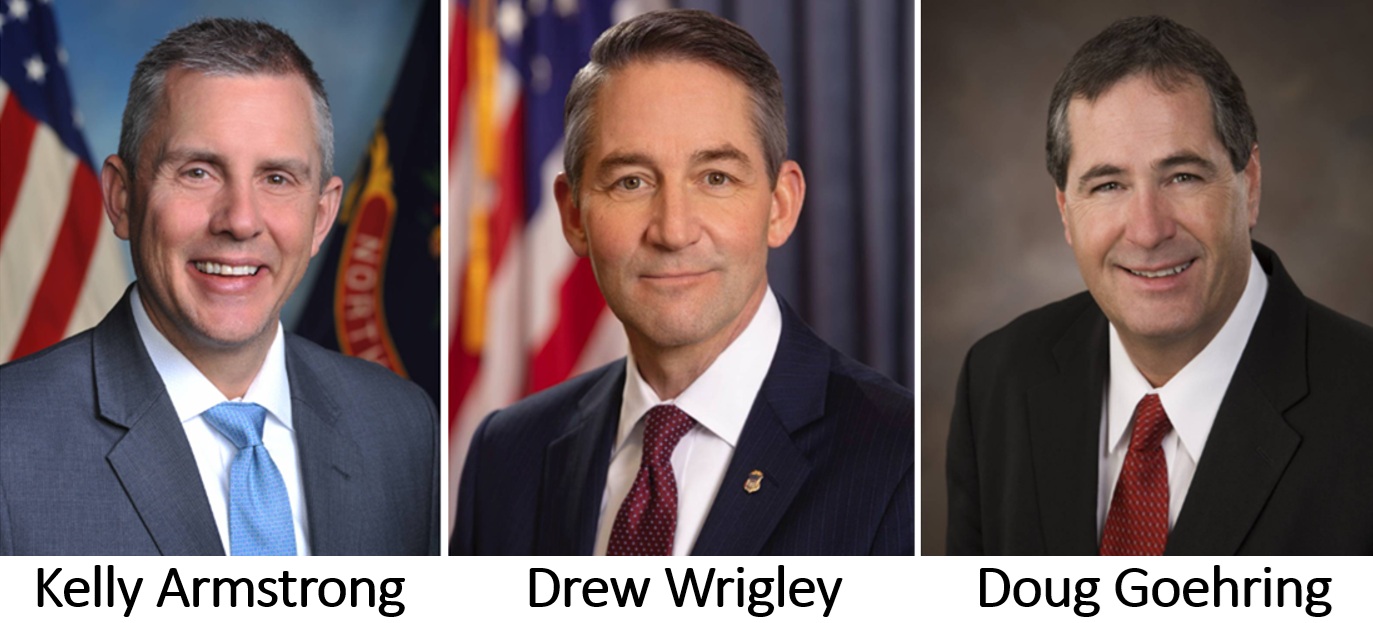
Old Glory was flying straight out in the stiff breeze that began the week at the North Dakota Capitol. The strong winds prompted Gov. Armstrong to declare a statewide fire emergency.
|
|
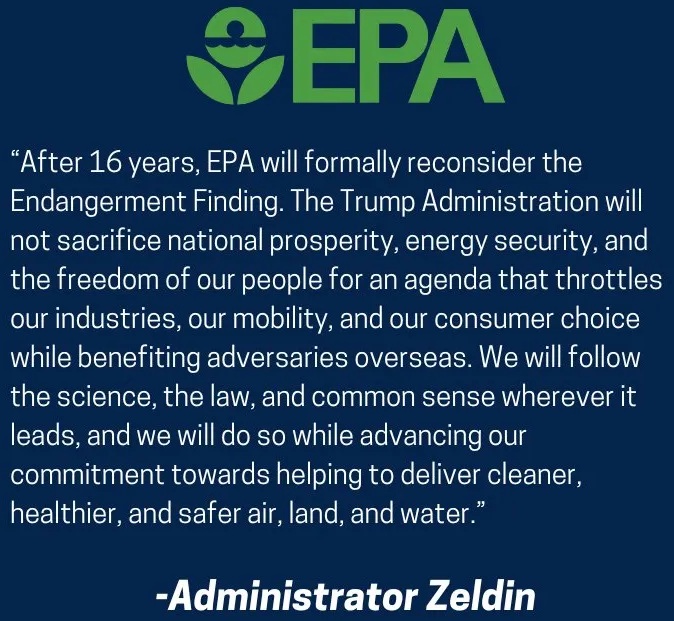
EPA: Biggest Deregulatory Action in History
Zeldin Announces Plans to Reconsider 31 Rules
Endangerment Finding Repeal to End "Green New Scam"
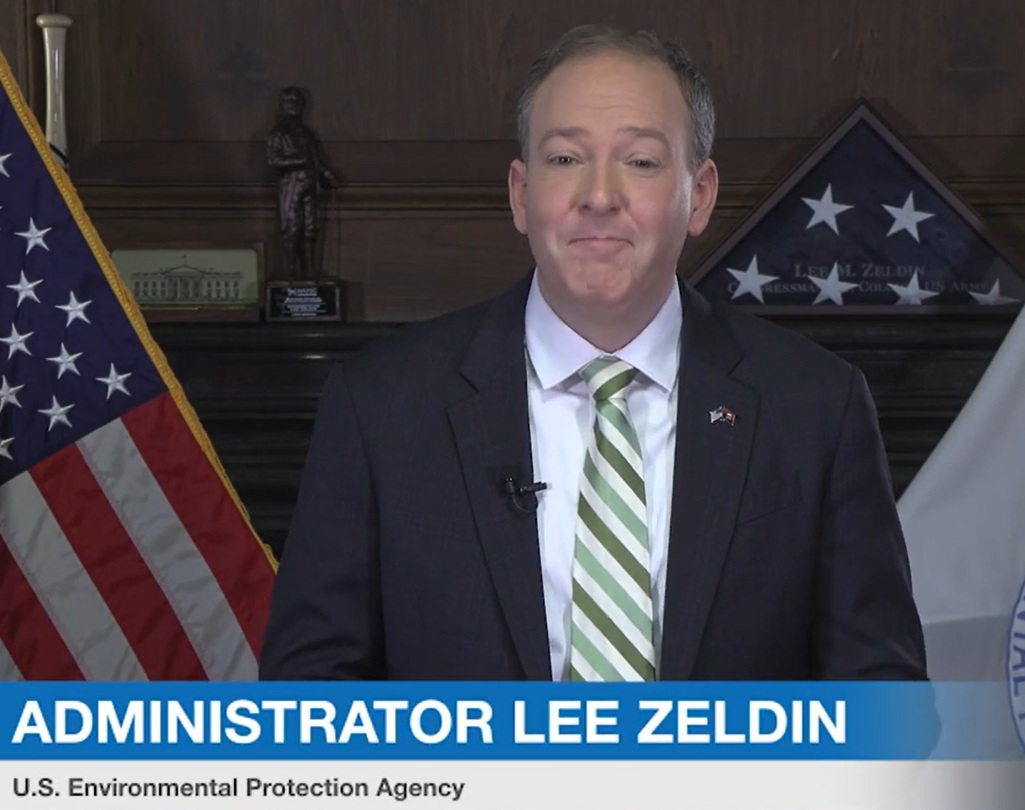
In a bombshell announcement this week, EPA Administrator Lee Zeldin said the agency will undertake 31 actions in "the most consequential day of deregulation in U.S. history," to advance President Trump’s executive orders and power the "Great American Comeback." Zeldin said while continuing to protect the environment, the agency is committed to fulfilling Trump’s promise to unleash American energy, lower the cost of living for Americans, revitalize the American auto industry, restore the rule of law, and give power back to states to make their own decisions. “We are driving a dagger straight into the heart of the climate change religion to drive down the cost of living for American families, unleash American energy, bring auto jobs back to the U.S. and more,” he said. Zeldin said historic actions will roll back trillions in regulatory costs and hidden “taxes” on U.S. families. Click here to listen to Zeldin's comments. Zeldin said the EPA also planned to reexamine the controversial 2009 Obama-era decision that declared carbon dioxide a pollutant. Repealing the EPA finding would eliminate the justification for many other costly regulations that followed it. Click here to listen to Zeldin's comments. Zeldin said the regulatory rollback will reduce the cost of living for American families. He said it will be more affordable to purchase a car, heat homes, and operate a business, and it will be more affordable to bring manufacturing into local communities. Click here to see a list of the 31 regulations to be reconsidered.
|
|
EPA Right to Reconsider Endangerment
Ruinous Finding a Destructive Regulatory Act
By Alex Epstein The EPA just announced it’s challenging the single most destructive regulatory action in US history: the “endangerment finding.” This bogus “finding” allowed Obama and Biden to ban gas cars, shut down power plants, slow US oil growth, and lock up our limitless natural gas. Ever wonder why the Biden EPA was able to become an economic dictator, prohibiting most Americans from buying a gas car after 2032 and effectively banning all coal plants and new natural gas plants after 2039? It started with the Obama EPA’s bogus “endangerment finding.” In 2009, the Obama EPA issued a “finding” that GHGs “endanger both the public health and the public welfare of current and future generations.” But GHGs mostly come from fossil fuels, which on net had clearly been enhancing health and welfare—and would continue doing so. Since human beings began harnessing uniquely cost-effective energy from fossil fuels, human health and welfare have increased dramatically everywhere. Why? Because the benefits of cheap, reliable energy for billions far outweigh any negative side-effects of fossil fuels. Before and since the “endangerment finding,” which is supposedly about reducing climate danger, fossil fuels have on net made us far safer from climate danger by creating incredible climate resilience. That’s why climate disaster deaths have declined 98% over 100 years! In considering whether fossil fuels’ GHGs “endanger” us and thus should be restricted, EPA should have considered:
1. Overall benefits of fossil fuels
2. Climate resilience benefits of fossil fuels
3. Both positive and negative climate impacts of GHGs
EPA failed on all 3 counts. • The “endangerment finding” was particularly inane because it concluded that the US restricting US GHG emissions would accomplish anything globally—when in fact all it accomplished was harming us and offshoring industry to China, which now has 300+ new coal plants in the pipeline! • By falsely claiming that fossil fuels “endanger” human health, welfare, and climate safety when they were—and have continued to be—a net benefit, EPA has justified giving itself totalitarian powers that, if not stopped, will crater the US economy. • Drawing on its bogus “endangerment” finding, the Biden EPA passed GHG rules that effectively ban all coal plants and new natural gas plants—by requiring them to capture at least 90% of GHGs, which no plant has ever done at all, let alone cost-effectively.
|
|
North Dakota Oil a $48.8 Billion Industry
Accounts for 63,000 Direct and Indirect Jobs
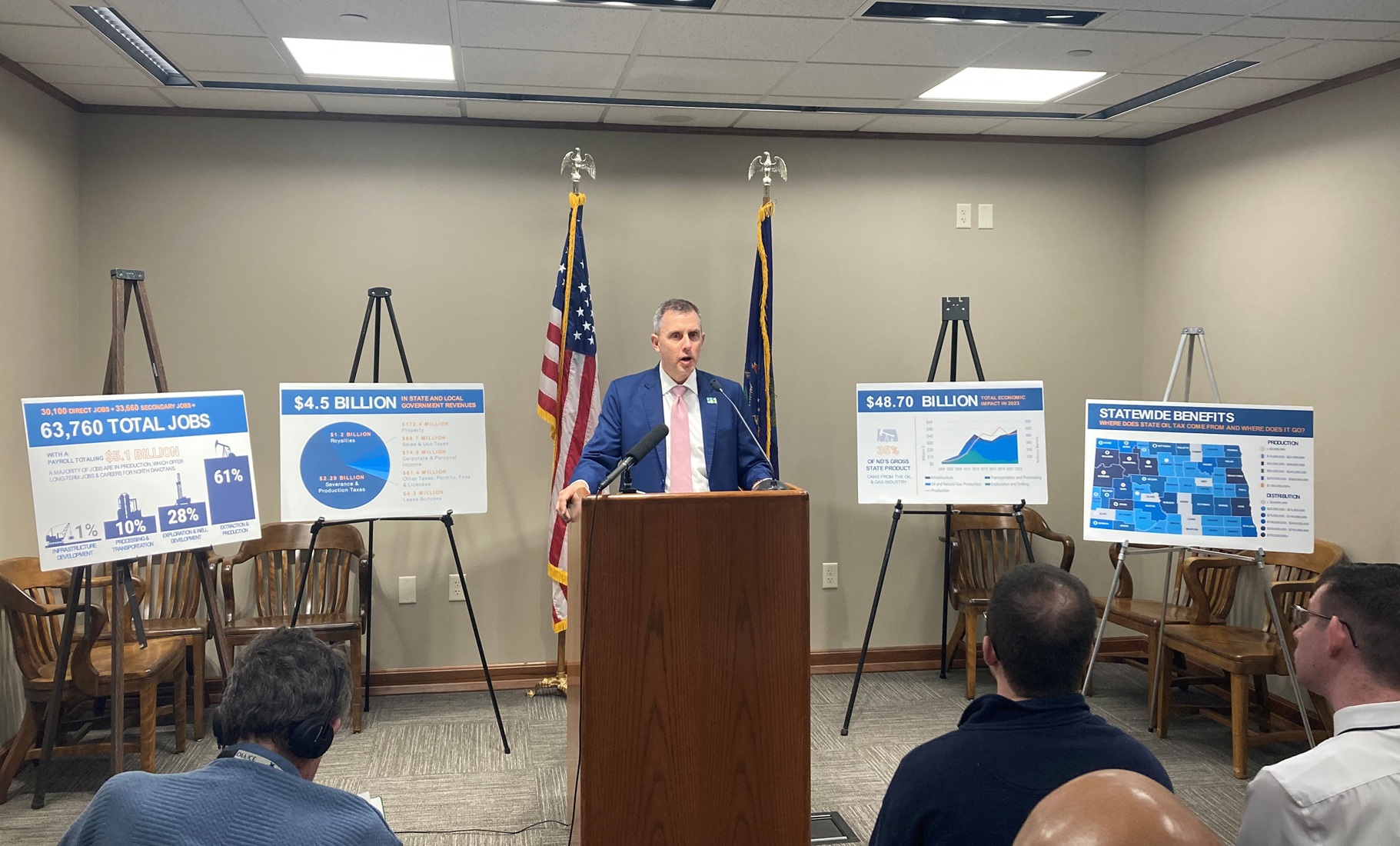
The oil and gas industry in North Dakota remains a powerhouse for the state’s economy, accounting for more than $48.8 billion in gross business volume and more than 63,000 jobs in 2023. It was the tenth study of oil industry impacts developed by economists at NDSU for the North Dakota Petroleum Council. NDPC President Ron Ness said the first study completed in 2005, prior to the onset of Bakken development, pegged the industry's impact at just $3.2 billion. He said 20 years ago, the industry supported just 5,000 jobs, with 3,300 wells producing 92,000 barrels per day. Governor Kelly Armstrong said the oil and gas industry benefits the entire state, supporting state and local investments in infrastructure, schools, communities, tax relief and the Legacy Fund. Beyond the economic benefits, Armstrong said the most important thing it's done is create job opportunities throughout the state. Click here to listen to Armstrong's comments. North Dakota State University researchers Dean Bangsund and Nancy Hodur studied the economic contribution of oil and gas exploration, extraction, transportation, processing and capital investments to the state in 2023, the most recent data available. Similar studies have been conducted every two years since 2005.
Their findings show that North Dakota’s oil and gas industry directly employed 30,100 people in 2023, while economic activity from the industry's indirect and induced effects supported an additional 33,730 jobs. Employee compensation, which includes wages, salaries and employee benefits, was estimated at $5 billion.
Total gross business volume, which includes direct sales in the oil and natural gas industry and business generated from indirect and induced economic activity throughout North Dakota, set an all-time high record at $48.8 billion, an increase of $6.2 billion over 2021 and more than 30% of the state’s gross business volume. Ness noted that North Dakota’s oil and natural gas industry pays more than half of all state taxes collected and provides over 63,000 good-paying jobs in the state.
“Thanks to our industry’s continued investment in technology, innovation, and infrastructure, oil and natural gas will continue to be a major force in North Dakota’s economy for generations to come,” he said. According to another recent study conducted for the Western Dakota Energy Association and the ND Petroleum Foundation, tax revenues paid by North Dakota’s oil and natural gas industry from fiscal years 2008 to 2024 now exceed $32 billion. These revenues supported $5.9 billion for local communities and infrastructure, over $2.36 billion for K-12 education, $1.75 billion for water and flood control projects, and over $1.24 billion for property tax relief. Additionally, $8.5 billion in oil and gas taxes went into the Legacy Fund, which benefits future generations.
“The impact of the oil and natural gas industry can be seen throughout the state," said WDEA Executive Director Geoff Simon. "From education funding to property tax relief to infrastructure funding, every county and community has and continues to benefit from this industry.”
|
|
House Weighs 'Oil-Producing' Definition
SB 2397 Seeks Funding for Lesser 5 Counties
The ND House Finance and Taxation Committee is considering a bill that seeks a new definition for "non-oil-producing counties" that would allow Billings, Bowman, Burke, Divide and Stark Counties to qualify for additional transportation funding.
SB 2397 would define a "non-oil producing county" as one with an average annual oil production of fewer than ten million barrels based on a rolling three-year average. The aim of the legislation is to provide an opportunity for the lesser-producing counties to receive much-needed transportation funding, including infrastructure dollars provided by the Operation Prairie Dog bill enacted in 2019. Powers Lake Senator Mark Enget described the significant inequity in the current definition of oil-producing county. Enget said Billings, Bowman, Burke, Divide and Stark Counties are considered oil-producing counties, but they receive considerably less oil tax revenue than the four major producing counties of Dunn, McKenzie, Mountrail and Williams. Enget said there are increasing oilfield traffic impacts to roads in the "Little Five." Click here to listen to Enget's comments. Enget said with heavy oilfield traffic on the rise, the counties need additional help to main roads to keep the industry moving. Click here to listen to Enget's comments.
Western Dakota Energy Association Executive Director Geoff Simon spoke in favor of the bill. Simon pointed out LoadPass Permits, the oversize truck permitting system operated by WDEA, issued 112,000 permits to oversize or overweight vehicles in the previous year. He explained that while the current definition applies to any county that receives more than $5 million in gross production tax (GPT) revenue annually, the figure is calculated by including the revenue received by the cities, school districts and townships as well. Using the example of Burke County, which received a total of $7.1 million in GPT revenue, Simon said just $3.8 million went into the county's budget. Click here to listen to Simon's comments. North Dakota Petroleum Council President Ron Ness said that infrastructure maintenance costs ultimately fall on the oil and gas industry when the counties fall behind on the upkeep.
Listen to Ness's comments here. SB 2397 received unanimous approval in the Senate, and awaits further action in the House Finance and Taxation Committee.
|
|
House Defeats "Chevron Deference" Bill
Measure Allowed Judges to Ignore Admin Rules
The North Dakota House has defeated a bill that would have allowed state judges to effectively ignore administrative rules adopted by state agencies to implement a law, and instead enforce their own interpretation of the statute. SB 2285 was modeled after what was known as "Chevron deference," a legal doctrine stemming from the 1984 Supreme Court case Chevron U.S.A., Inc. v. Natural Resources Defense Council, which required courts to defer to federal agencies' interpretations of ambiguous laws they administer, as long as those interpretations were reasonable. However, in June 2024, the Supreme Court overturned the Chevron doctrine, shifting the responsibility for resolving statutory ambiguities to the courts, not agencies. Grand Forks Rep. Steve Vetter said the North Dakota Supreme Court has adopted a similar policy, directing state courts to rely on expertise of state agencies to interpret state laws in the administrative rules process. Vetter said the policy puts decision-making in the hands of state bureaucrats rather than elected officials. Click here to listen to Vetter's comments. Jamestown Rep. Bernie Satrom said eliminating Chevron deference makes sense at the federal level, where activists working within federal agencies have written some radical rules, but he said agencies in North Dakota abide by the law and write common sense regulations. Satrom said allowing courts to ignore agency interpretation could have serious consequences. Click here to listen to Satrom's comments. Satrom characterized the defeat of the bill as one of the most consequential decisions of the 2025 Legislature. The House rejected the bill on a 57-31 vote.
|
|
Summit Seeks Pause in SD Permitting
Eminent Domain Ban Puts Project in Doubt
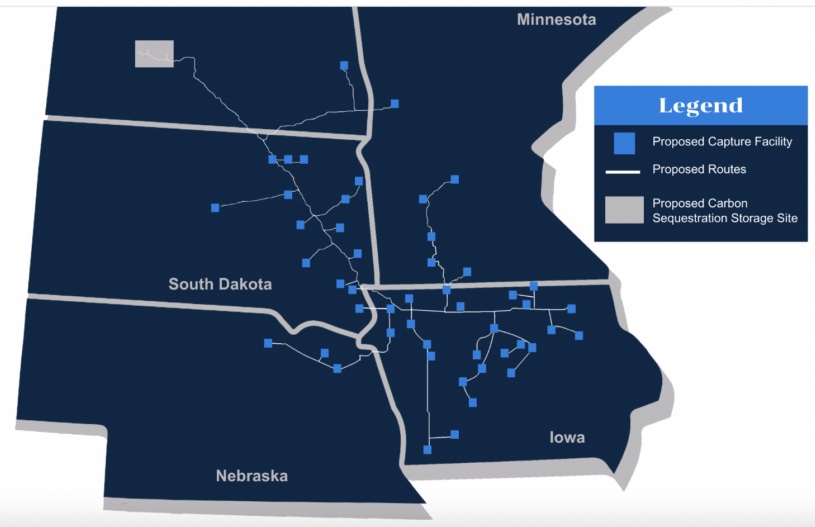
By Joshua Haiar | South Dakota Searchlight Summit Carbon Solutions wants the schedule of proceedings for its South Dakota permit application “paused for review and adjustment” after the state legislature and governor approved a ban on the use of eminent domain for carbon dioxide pipelines. The company filed a motion Wednesday with the South Dakota Public Utilities Commission asking for a suspension of the scheduling order and an indefinite extension of the deadline for regulatory action on the application. The existing schedule includes a multi-day evidentiary hearing in August and September. Summit cited HB 1052, signed last week by Republican Gov. Larry Rhoden, as a significant obstacle to completing land surveys along the pipeline’s planned route. “With the passage of HB 1052, the Applicant’s ability to obtain survey permission has changed,” wrote Summit attorney Brett Koenecke. “The surveys which are necessarily required to inform the route decisions as to right of way will be significantly delayed.” Summit spokeswoman Sabrina Zenor responded to South Dakota Searchlight questions with a statement reiterating language in the motion and adding, “Summit Carbon Solutions remains committed to working through this process and advancing the project in states that support energy and innovation.” The ban has been hailed as a victory by some landowners who have resisted Iowa-based Summit’s proposed $9 billion CO2 capture pipeline. The project would transport carbon dioxide emissions from dozens of ethanol plants in five states to an underground storage site in North Dakota. It would qualify for billions in federal tax credits incentivizing the sequestration of greenhouse gas emissions. The project has permits in other states including North Dakota. South Dakota regulators rejected Summit’s first application in 2023, largely due to the route’s conflicts with local ordinances that mandate minimum distances between pipelines and existing features. The company has since made adjustments to its route and reapplied. Click here to read more from South Dakota Searchlight.
|
|
A Plea to SD on Energy Infrastructure
State is in the Way of America First Agenda
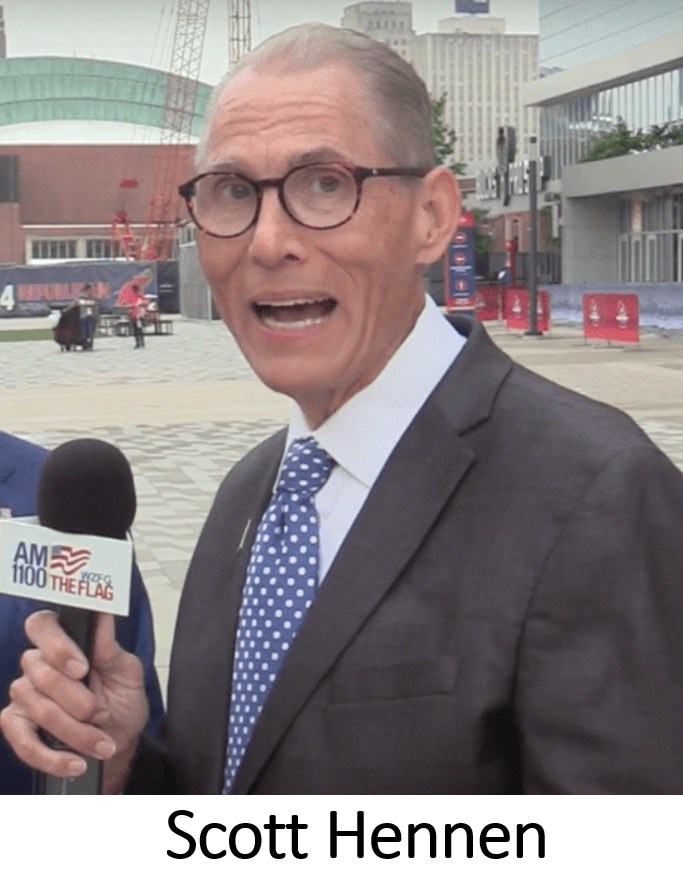
By Scott Hennen | Fieldstone Group Dear South Dakota, It’s your old friend North Dakota writing. We’re kindred spirits who share deep bonds that date back to the Dakota Territory, established in 1861. On Nov. 2, 1889, we were both admitted to the Union. President Benjamin Harrison did us a favor that day. He signed the statehood papers in an order that was intentionally mixed up, so no one knows which state was admitted first.
But it seems you have lost your way. South Dakota once gained a reputation as one of the most business-friendly states in the U.S. due to your pro-business policies and low taxes. You’ve never had a state income tax. And in the 1940s, when most other states were adopting personal and corporate income taxes, you stood strong! In 1980, you eliminated usury laws that led major financial institutions like Citibank to move credit card operations, turning South Dakota into a major hub for the financial industry. You have been a giant in agriculture, fueling innovation of value-added ag that brought corn farmers into the energy business by producing the fuel of ethanol. And you made us all proud when you refused to succumb to the fear-mongering and overreach of government that gripped America during the pandemic. You were open for business when most other states shuttered their doors, masked their citizenry, and sent students home alone with laptops. But that great reputation is all being threatened by a group of misguided Republicans who have been duped by big-money lawyers and extreme environmental groups. They have taken over your legislature and your state party. They are standing in the way of President Trump’s “America First” energy agenda, which relies on infrastructure. Gov. Larry Rhoden shared great wisdom when he warned legislators against changing the rules in the middle of the game. His plea to keep South Dakota open for business is being disregarded.
An $8.9 billion pipeline project, approved in Iowa, Minnesota and here in North Dakota, is being derailed in South Dakota. Tax incentives enhanced in 2018 during the first Trump term brought a massive private sector investment to get it built. But South Dakota is on the verge of stopping it. Removing industrial carbon off the stacks of your ethanol plants to send for sequestration and ultimately for enhanced oil recovery would unlock $1 trillion worth of oil trapped in the Bakken fields to spark American energy dominance. A national energy company, GEVO, has invested $200 million already in a planned $1.63 billion plant in Lake Preston, S.D. Because of your toxic political environment, founder Dr. Patrick Gruber told me he may have to move the plant. “I have to go convince people from Wall Street to invest in South Dakota. How can I do that in a place that changes the rules of the game after we’ve started and spent money?” You are playing with fire, my dear friends. Hopefully, you’ll push reset and give South Dakota a bright future in ag and energy.
|
|
Summit Pipeline CEO: The Path Forward
Company Working to Advance Ethanol, Biofuels
By: Lee Blank, CEO, Summit Carbon Solutions The path of progress is rarely a straight line, but the direction remains clear: biofuels are essential to the future of American agriculture and energy independence. As we continue advancing our carbon capture and storage project, the foundation remains solid—built on partnerships with industry leaders like POET and farmers who are the backbone of our rural economy. Biofuels have long been a critical pillar of U.S. agriculture, creating market opportunities for farmers, supporting rural communities, and providing a homegrown energy source that strengthens our national security. Ethanol production in particular has transformed agriculture, increasing demand for corn and ensuring a reliable market for producers. But to remain competitive, we must continue to evolve. That’s where carbon capture and storage (CCS) comes in—providing ethanol producers with a long-term pathway to access premium low-carbon markets and to secure the future of biofuels. Summit Carbon Solutions was founded to enhance the value of ethanol, and our commitment to that mission is unwavering. We’ve made tremendous progress, securing key regulatory approvals and signing easements with thousands of landowners who see the opportunities this project presents. Across the Midwest, we will build the infrastructure necessary to ensure that biofuels remain a driving force in the energy economy for generations to come. In South Dakota, recent legislative changes have temporarily slowed our timeline, but they have not altered our vision or our determination. We remain confident that our project is moving forward in a way that benefits farmers, ethanol producers, and rural communities. Read the rest here.
|
|
Eminent Domain Legislation Discussed
Senate Bills Aim to Protect Property Rights
North Dakota lawmakers continued to mull concerns tied to eminent domain during several bill hearings this week.
The House Energy and Natural Resources Committee heard a bill that has passed the Senate that would require written landowner consent or a court order before entry for surveys. SB 2379 aims to strengthen property rights while ensuring necessary public projects move forward in a structured and lawful manner. The bill also clarifies that landowners may seek damages only in cases of negligence, wantonness or malice. It specifies that the survey and location of the condemner's project must be located in the manner that provides the greatest public benefit and the least private injury.
The bill was introduced by Mandan Senator Keith Boehm, who shared emotional personal testimony during his introduction of the bill. Boehm recounted the negative health impacts experienced by his father during two federal eminent domain proceedings faced by the family. During discussion on the Senate floor, Boehm called the legislation a critical safeguard for property owners during the necessary and delicate process of eminent domain.
Listen to Boehm's comments here.
Opponents argued that the changes outlined by the bill were unnecessary, burdensome, and costly. Dennis Pathroff, representing the Power Companies of North Dakota, said the legislation would lead to delay and additional costs, jeopardizing projects necessary for public use and ultimately increasing costs to consumer.
Listen to Pathroff's comments here.
Prior to reaching the House, the Senate narrowly passed the bill on a 25-22 vote. The House committee is also considering a bill that seeks to reimburse landowners for the cost of expert witnesses during eminent domain proceedings. SB 2321 provides that if a property right is being acquired by a company through condemnation proceedings, the company is bound to pay the landowner reasonable costs for both attorney's fees and the cost of an expert witness, such as an appraiser, for assistance during the trial. The aim of the legislation is to ensure the landowner "be made whole again" following eminent domain litigation. Senate Majority Leader David Hogue stood in support of the bill when it was debated on the Senate floor, offering the example of South Dakota's approach to eminent domain. Hogue argued that South Dakota's recent prohibition of CO2 pipelines from exercising the right of eminent domain is the wrong approach to attract large scale infrastructure investment to the state. He spoke of the need for balance between landowners and developers. Listen to Hogue's comments here.
Opponents of the bill said it would create unnecessary financial burdens for infrastructure developers that will ultimately increase utility costs for North Dakota consumers. It was further argued that existing eminent domain laws provide adequate balance and protection, specifically in the awarding of costs. SB 2321 passed the Senate unanimously and awaits further action in the House. Click here to read more about the bill in a previous issue of the WDEA newsletter. Click here to read more about the South Dakota Legislature's recent decision.
|
|
DAPL Greenpeace Trial Winding Down
Parties Make Closing Arguments Next Week
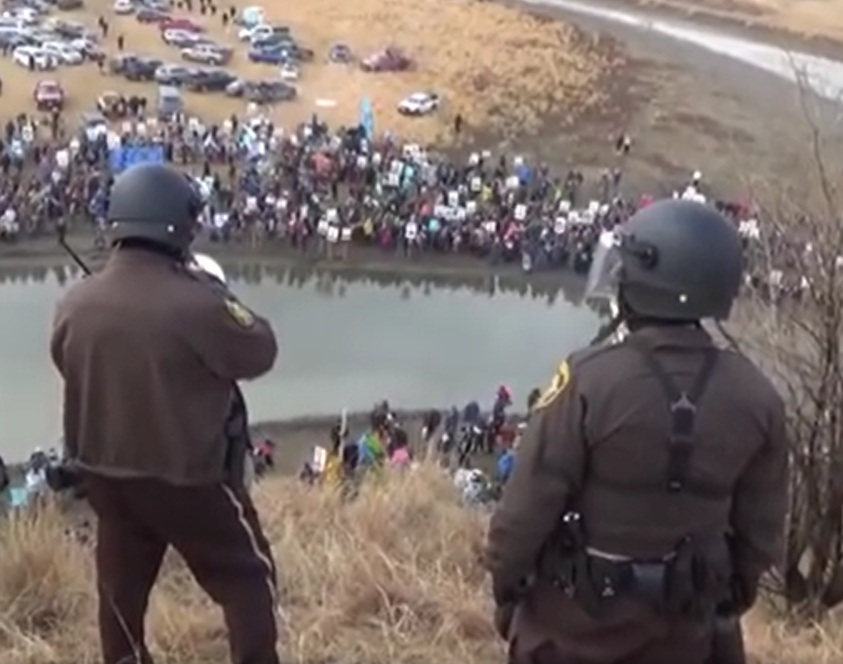
By Morgan Sweeney | The Center Square The long-anticipated North Dakota lawsuit between Energy Transfer and Greenpeace is winding down, with both parties resting their cases this week in the trail at the Morton County Courthouse in Mandan. Energy Transfer installed the Dakota Access Pipeline from 2016-2017 but was met with opposition in North Dakota by the Standing Rock Sioux Tribe. The pipeline would cross through land and waterways the tribe says contained sacred sites and were designated as tribal land by the Treaty of 1868. Greenpeace supported the protests with funding and training, and Energy Transfer has claimed the environmental activist group was behind the protests’ growth into a demonstration large enough to attract worldwide attention and lead to vandalism. The energy company has alleged that Greenpeace interfered with private property, aided and abetted trespass and engaged in defamation that caused multiple harmful effects to the company and its employees. The company cites the protests as the reason for a five-month delay in the pipeline’s completion, forcing it to miss a Jan. 1, 2017, online production date that they say cost them lost profits and shareholder value. It’s suing Greenpeace for $300 million. The lawsuit is a jury trial, beginning several weeks ago after being filed in 2019. The jury has seen testimony and depositions from the head of Greenpeace International, many higher-ups at Greenpeace USA, expert witnesses, the pipeline’s project director, direct action trainers and others. Greenpeace finished its case with witnesses testifying that banks did not divest from the Dakota pipeline because of defamatory statements by Greenpeace but because of their own values. The final deposition was of former Energy Transfer CEO and current chairman of the board, Kelcy Lee Warren, and Carol Jean Larsen, a local woman who participated in the protests for a time and testified she witnessed no violent behavior. The judge will instruct the jury on how to apply the law to the case and Greenpeace and Energy Transfer will give their closing arguments early next week before jurors begin deliberations. Click here to read more from The Center Square. Click here to read a story about the trial from Legal Newsline.
|
|
PSC Reschedules Transmission Line Hearings
Required Notice Did Not Get Published in Newspaper
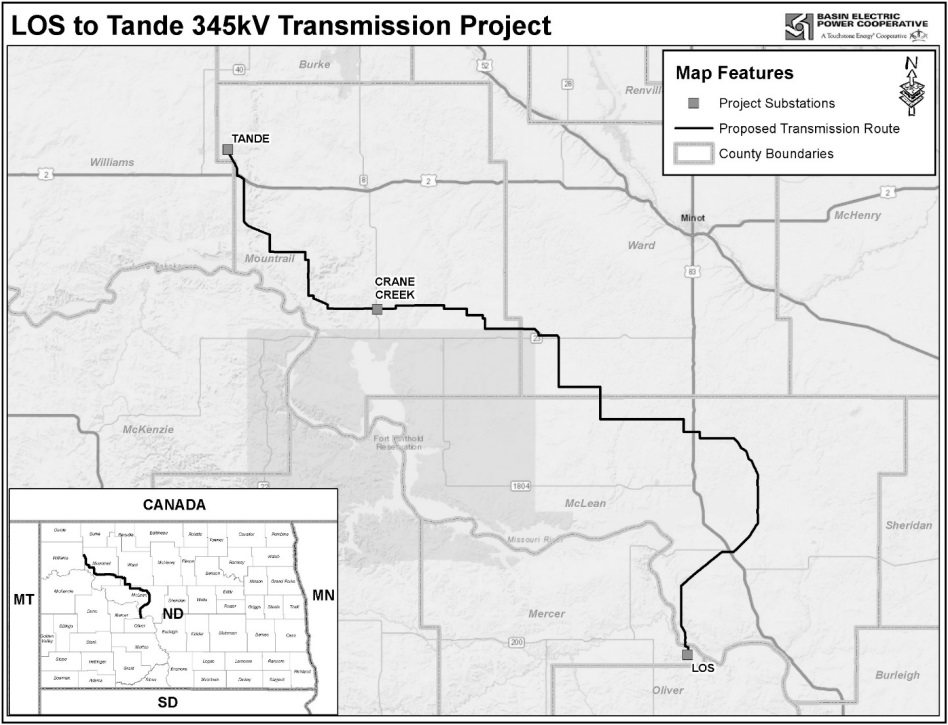
The North Dakota Public Service Commission has rescheduled public hearings in Underwood and Stanley on a proposal by Basin Electric Power Cooperative to construct a 162-mile transmission line through Mercer, McLean, Ward, Mountrail and Williams Counties. Due to a newspaper publication error, the legally-required PSC public hearing notice did not make it into the Hazen Star. State law requires that the notice appear in the county newspaper of record in all five counties in which the line is to be built. A previous hearing in Underwood on February 26 went on as scheduled before the error was discovered, but because the notice wasn't published, a second hearing must be held in the same location. Basin is requesting a siting permit for the 345-kilovolt transmission line that would originate at the Leland Olds substation southeast of Stanton and would end at the Tande substation east of Tioga. The estimated cost of the project is $317 million. The Leland Olds-to-Tande transmission project was deemed necessary for the reliability of the transmission system by the Southwest Power Pool, a regional transmission organization that delivers electricity to parts of North Dakota. The project will provide more reliable service to electric cooperative customers as well as diversify power resources on the larger transmission system. Basin received a Notification to Construct Approved Reliability Network upgrades notice in May 2022 from SPP. The first hearing is scheduled for Monday, March 31, at 1:00 p.m. at Underwood City Hall. The other is scheduled for Friday, April 4, at 9:00 a.m. in the Mountrail County South Complex in Stanley. People with concerns, questions or support/opposition for the project are encouraged to attend a hearing and present their information which will become part of the official record. Basin officials have said construction will take about 18 months once all easements and permits have been obtained. The project is planned to be energized in late 2026.
|
|
A Better and Brighter North Dakota
Industrial Commission Pens Op-Ed
By the ND Industrial Commission
The February cold snap served as a powerful reminder that reliable electricity is a non-negotiable, life sustaining necessity in North Dakota. Interruption in the flow of electricity impacts human life, safety, business viability and food production, processing and preservation. Beyond our personal needs, health care, commerce, manufacturing, energy production and national security all require a reliable and uninterrupted electric power supply.
But it's not enough just to have electricity. We need to be able to move it, and North Dakota is on track to dramatically grow our electric grid in the near future. Because electricity is not easily or efficiently stored, a robust transportation system is required to move electricity from the generator to our homes and businesses. High voltage transmission lines lead to substations and ultimately to the distribution lines that connect to the end user. The electric grid is a delicate machine that requires critical planning and operation.
North Dakota is served by two regional transmission organizations, the Southwest Power Pool and the Mid-Continent Independent System Operator. SPP and MISO collect information from their respective utility members to conduct exhaustive grid reliability studies. These studies inform the approach to expanding the state's electrical transmission infrastructure.
The SPP and MISO studies have identified several transmission projects in North Dakota that are needed to address congestion, reliability, new load and new generation. A 35-mile, 345-kilovolt transmission project from Killdeer to Johnson's Corner was completed by Basin Electric Power Cooperative in December. BEPC has another approved 175-mile, 345-kilovolt transmission line in the works from Leland Olds Station to Tioga and two 230-kilovolt projects connecting to Sask Power. These lines are needed to address load growth and grid reliability. Minnesota Power Allete is modernizing its High Voltage Direct Current line, increasing the capacity from 550 to 900 megawatts. SPP and MISO have also identified a 345-kilovolt transmission line project that will run from Mapleton to Big Stone, South Dakota. Grid United has plans to build a 525-kilovolt HVDC line from Colstrip, Montana, to St Anthony/Center. Otter Tail Power Co. and MDU are planning a 100-mile, 345-kilovolt transmission line from Jamestown to Ellendale.
What do these projects do for North Dakotans? First and foremost, the expansion of the transmission network increases grid reliability, a vital element for public health, public safety and national security. Expanded transmission capacity provides delivery of energy to domestic manufacturing and processing facilities. Ethanol plants, soybean processing, and potato processing expansion provide security and market opportunities for our farmers. Additional transmission capacity will be needed for continued oil and gas development, data processing and the general electrification of the economy. This growth reaches across every business sector and builds a stronger economy, and it provides low-cost electricity and safe living conditions for all our citizens.
We recognize growing our transmission infrastructure is not without challenges, and we are proud of North Dakota's leadership in responsibly developing its energy resources while simultaneously protecting the land and our communities. Lights out is not an option, and we must continue to work together build a better and brighter North Dakota.
|
|
ND House Considers Charter Schools
Touted as an Expansion of Public Education
House lawmakers heard a bill this week that provides for the establishment of public charter schools in North Dakota.
SB 2241 ensures that public charter schools remain part of the state's public education system while operating under a charter performance agreement with the Superintendent of Public Instruction. Charter schools would be required to meet or exceed state academic and graduation requirements, as well as report student data and comply with federal and state education laws and regulations. They would also be required to enroll all students wishing to attending, unless the number exceeds enrollment capacity, and could not engage in any religious practices in curriculum, admission or employment.
The bill, sponsored by Bismarck Senator Michelle Axtman, also provides mechanisms to revoke or deny renewal for any public charter school that fails to meet academic or financial performance standards in its performance agreement. The state superintendent would approve and oversee all charter schools. They would receive the same per-pupil state funding as all other public schools, but would not receive any local funding. The bill also requires that charter schools follow the same public school finance laws and regulations, including audits.
"SB 2241 is not about replacing or reducing the importance of our traditional public schools, it is about expanding opportunities for students and families who are looking for a public-school option," Axtman said. "By passing this legislation, we are allowing for educational innovation while opening new professional opportunities for teachers and support personnel. Bill supporters argued that charter performance agreements result in a high level of accountability and transparency, and that the local community support required in the bill would foster strong levels of parental involvement. Additionally, the increased flexibility and tailored curriculum offered by charters schools would provide families increased educational options, particularly for those students who have experienced challenges in a traditional school setting.
Lisa Grover of the National Alliance of Public Charter Schools said the legislation is "highly accountable, transparent, and provides the right level of flexibility to do things differently." Grover offered that the addition of charter schools would accelerate the innovation already taking place in the North Dakota public education system.
Opponents of the bill argued that the introduction of charter schools would duplicate the role of the state's existing public schools, negatively affecting existing funding levels and the education workforce. The question of whether public charter schools were needed in the state was raised by North Dakota United's Nick Archuleta. Archuleta said the state's teachers have long been adopting and expanding innovative practices designed to make learning more meaningful and practical for their students.
Concerns were also raised surrounding the lack of specificity for students receiving Individuals with Disabilities Education Act (IDEA) services and Section 504 accommodations. While charter schools would be required to comply with the regulations, those opposed to the bill said it does not outline how the services and accommodations would be delivered by the charter schools. It was argued that the bill's passage could leave existing public schools with a disproportionate share of the responsibility in serving students with disabilities, while further diluting specialized staff between traditional public schools and charter schools.
Click here to listen to Anna Rackley of the Protection & Advocacy Project outline those concerns. SB 2241 passed the Senate 40-7, and is awaiting action in the House Education Committee.
|
|
Virtual Learning Reforms Approved
Bill Prevents Abuse of Distance Learning
A bill that would provide school districts greater authority over their virtual learning policies has unanimously passed in the North Dakota House and Senate.
HB 1105 would allow the board of a school district to adopt a policy that enables students to engage in virtual instruction and ensure district oversight in establishing timelines for enrollment, eligibility, and attendance requirements. Changes outlined in the bill would also grant districts the authority to determine whether a course warrants prerequisites to support academic integrity and promote student success. Districts would dictate the minimum number of courses a student is required to take onsite, whether virtual or in person and grant guidance on course retakes. The bill requires the district to pay for a virtual course if it's not offered in the local district, while allowing the district to pass the cost of a course retake to the family when appropriate.
The legislation was introduced as a follow up to HB 1376 enacted by the 2023 Legislature, which sought to expand parental school choice by requiring the state to provide educational services through the ND Center for Distance Education. The provision brought about unintended consequences, such as students choosing virtual learning due to a student's dislike for a local teacher or classroom expectations. The change also resulted in a significant cost to the local districts for distance education tuition.
In his written testimony, Bismarck School Superintendent Jeff Fastnacht described some of the consequences. "During the 2023 legislative session, I genuinely believe the legislature passed a bill to expand NDCDE programming reasonably and responsibly to all children within the great state of North Dakota," wrote Fastnacht. "However, the rules that were desired to expand access to students and families disregarded the vital role of educators in molding and guiding the learning experience of our children. The guardrails that had existed in many schools were abruptly disbanded, leaving open the opportunities to game the system, cheat with little recourse, and put the burden of those follies on districts that were already strapped to provide the same brick and mortar courses in their school buildings." WDEA President Leslie Bieber, Superintendent of the Alexander School District, also submitted testimony on the bill. "The bill addresses significant gaps in the current system, which has allowed students to bypass in-person courses for reasons other than academic necessity," Bieber wrote. "This misuse of virtual learning placed a financial misuse of taxpayer dollars and of a well-rounded education." Bismarck Senator Michelle Axtman, who pitched the bill on the Senate floor, said it "ensures that virtual instruction remain a valuable tool for student learning without becoming an undue burden on our local schools." Listen to Axtman's comments here. The bill is now on the governor's desk awaiting his signture.
|
|
Oil and Gas Operator Course Announced
Training Coming to Bakken Area Skills Center
The Bakken Area Skills Center is now offering a new Oil and Gas operator training course that has created immediate interest among area students. Daniel Stenberg, McKenzie County Economic Development Director, said the instruction is a combination of online and hands-on training at the Bakken Area Skills Center, as well as site visits. The program is facilitated through Bismarck State College. Stenberg said the first class is already full, but another class May 19 through June 20 has spots currently available. Click here for more information. The five-week hybrid training program is designed for individuals seeking entry-level skills for a career as an oil and gas operator. The program consists of 100 total hours of training: • 52 hours of online self-paced learning, structured with built-in assessments and required competencies. Participants must complete these competencies prior to attending in-person sessions.
• 48 hours of in-person instruction, conducted during Weeks 2-5 at the Bakken Area Skills Center Facility, with dedicated learning lab days and industry site visits. Click here to read a story about the training in the McKenzie County Farmer.
|
|
Statewide Fire Emergency Declared
Dry Conditions Persist, Fire Risk is High
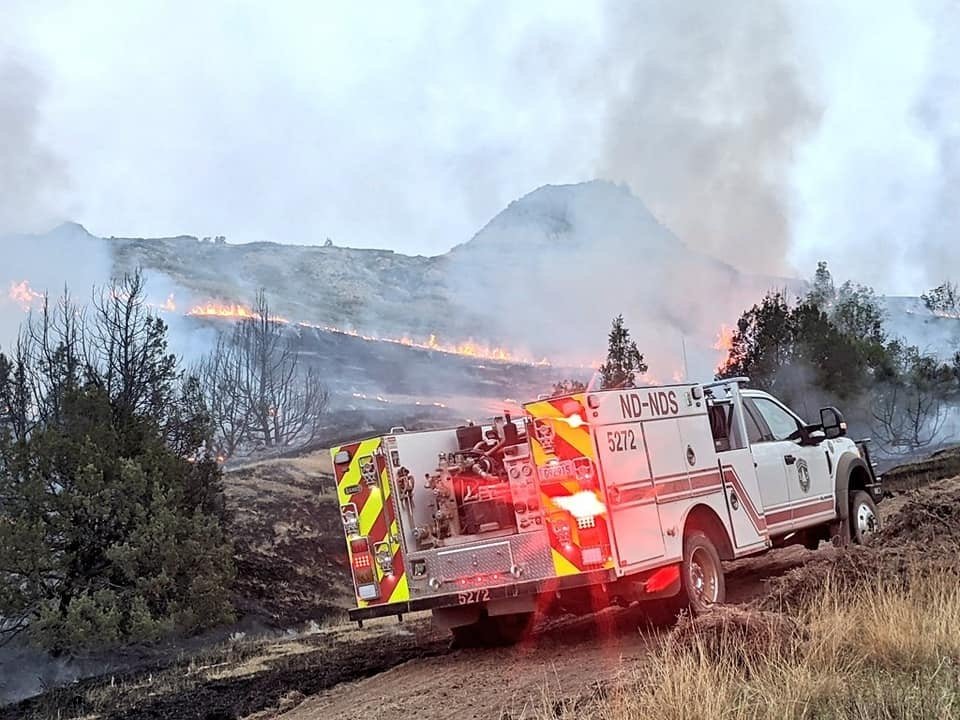
Governor Kelly Armstrong has signed an executive order declaring a statewide fire emergency and activating the State Emergency Operations Plan as above average temperatures and below average precipitation continue to exacerbate drought conditions and increase the risk of wildfires. “North Dakotans endured some of the largest, deadliest and most destructive wildfires in recent memory last year, and the actions being taken now will ensure we are fully prepared for another intense wildfire season,” said Armstrong, a former volunteer firefighter. “The state is committed to using every resource at our disposal to protect life and property in collaboration with our local and federal partners. Citizens can do their part by staying updated on fire conditions and taking precautions to prevent wildfires, because every fire that doesn’t start is a fire we don’t have to fight.”
Drought conditions are rated as extreme in about 5% of North Dakota and severe in about 22% of the state, all in western North Dakota, while much of southeastern North Dakota is in moderate drought. Overall, more than 40% of the state’s residents are living in drought-affected areas, according to the U.S. Drought Monitor. Under the emergency declaration, all state agencies, including the ND Department of Emergency Services, ND Forest Service, and ND National Guard, are ordered to maintain high levels of readiness to combat fires to save lives, homes and communities. This declaration allows the state to preposition resources for a rapid wildfire response given the high fire danger conditions that exist and are expected to persist, and even worsen, through the spring until vegetation begins to green.
|
|
Preparations for Statewide Fire Emergency
Forest Service Ramping Up in Western ND
The North Dakota Forest Service is ramping up wildfire response efforts following North Dakota Gov. Kelly Armstrong’s declaration of a statewide fire emergency. With drought conditions persisting and an early thaw leading to an extended fire season, the Forest Service is coordinating with state and local agencies to ensure rapid deployment of firefighting resources. The agency has already staged fire engines and personnel in high-risk areas, including Dickinson and Bismarck, to support local fire departments. “Fire season has arrived in North Dakota,” said State Forester Tom Claeys. “As over 90 percent of wildland fires in the state are human caused, we advise extreme caution as people work and travel across the drying landscape.” In preparation for high fire danger, the agency relocated a wildland fire engine to Dickinson on Sunday. The Williston and Kindred Fire Departments also were activated as part of the Wildland Fire Task Force. By Monday, multiple fires had ignited in western North Dakota, prompting the Forest Service to send three fire engines, an ATV equipped for firefighting and additional personnel to assist overwhelmed local departments. Gov. Armstrong’s emergency declaration allows the state to preposition resources and maintain high readiness levels as fire conditions worsen. Last year’s wildfires burned over 120,000 acres and officials are urging residents to take precautions to prevent new fires. Click here for updates on fire conditions, prevention tips and reporting tools on the Forest Service fire management website.
|
|
Wise Roads Shots of the Week
A Bit of Snow and Northern Lights
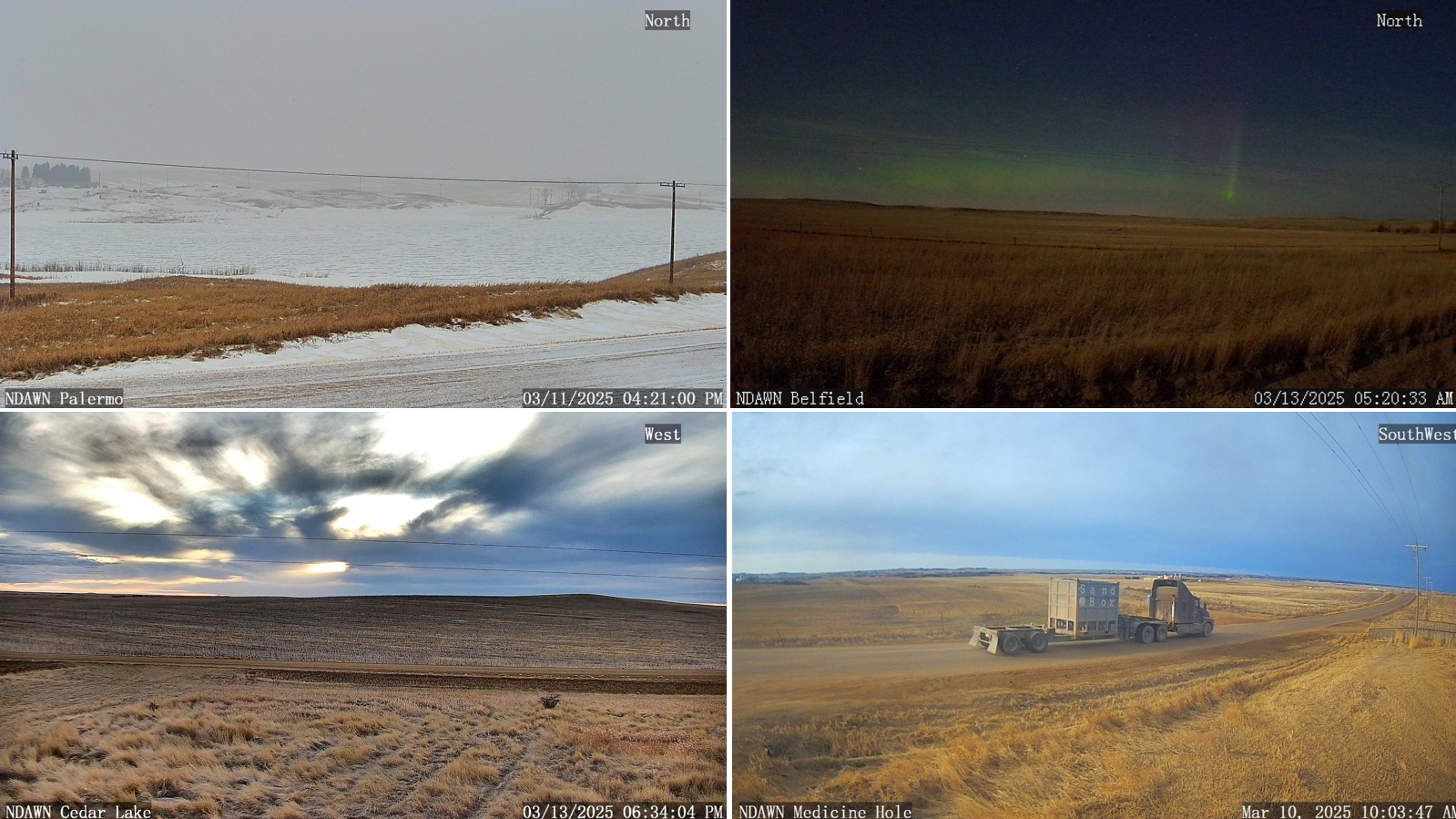
Northern reaches of North Dakota received several inches of snow this week, and the persistent Northern Lights were once again visible a couple days during the week. As usual, the high-resolution cameras on weather stations that are part of the Wise Roads network also captured images of beautiful sunsets. Photos from Wise Roads cameras are updated continuously throughout the daylight hours on the Wise Roads web page.
The Wise Roads project (Weather Information System to Effectively Reduce Oilfield Delays and Disruptions) was developed by WDEA to increase the efficiency of the movement of oilfield truck traffic. Most weather stations were placed in the core area of Bakken production, focusing on Dunn, McKenzie, Mountrail and Williams Counties. The project provides more accurate weather information to county road managers, especially about rain events, to minimize the need to impose weight restrictions when gravel roads get wet. It was developed in partnership with NDAWN, which maintains the stations for WDEA. The project was also assisted with a $250,000 grant from the Oil & Gas Research Council.
Fifty new stations have been installed, 39 of which are located in the four core oil-producing counties. Prior to the start of the project, Dunn and McKenzie Counties had just one station each, Mountrail County had three and Williams County had four. Weather station data and high-resolution photos can be found at wiseroadsnd.com. There is also an interactive Google Map that users can access to pinpoint the location of Wise Roads and NDAWN weather stations. Additional information is also available from NDAWN. Featured shots this week are clockwise from upper left: Palermo, with a significant amount of new snow on the ground; Belfield, with a glimpse of the Northern Lights on the horizon; Medicine Hole, with a frac sand truck making a delivery in Dunn County; and Cedar Lake, with a colorful cloud formation as the sun begins to set. Click on the link for a high-resolution image.
|
|
|
Quick Connect
• State sees uptick in oil wells that qualify for tax exemption -- North Dakota Monitor
• Could geothermal power plants repurpose old oil wells in ND? -- Bismarck Tribune
• SD law raises questions about future of huge Midwest pipeline -- Bismarck Tribune
• Canadian sentenced to 25 years for destruction of energy facilities in Dakotas -- DOJ
• North Dakota Transmission Authority opens applications for electric grid resilience projects -- KX News
• DAPL developer outlines damage claims, rests case against Greenpeace -- North Dakota Monitor
• Pipeline attorneys call out discrepancies between Greenpeace witness testimony -- The Center Square
• ND clean fertilizer project falls through; no cash spent from $125M state pledge -- Bismarck Tribune
• Interior Department approves expansion of Montana's massive Spring Creek coal mine -- E&E News
• Lawmakers hear new revenue forecast predicting lower-than-expected earnings -- Bismarck Tribune
• Lawmakers weigh questions of fairness in North Dakota property tax debate -- North Dakota Monitor
• State prepares for earlier, longer fire season due to low precipitation, higher temps -- Minot Daily News
• ND Office of Legal Immigration proposes rebranding itself as Office of Global Talent -- Dickinson Press
• More testimony heard recently by legislators about term limits in North Dakota -- Minot Daily News
• Tribal lawmakers push for creation of missing Indigenous people task force with HB 1199 -- KFYR - TV
• North Dakota delegation welcomes EPA's decision to restore definition of WOTUS -- Minot Daily News
• ND lawmaker became disoriented by darkness before plane crash that killed family -- Bismarck Tribune
• Williston announces new construction project as part of effort to improve infrastructure -- KX News
• Johnson & Sundeen appointed as Acting States Attorney; Perez resigns -- McKenzie County Farmer
• NDDOT puts load restrictions on all highways from Hwy 200 south to South Dakota border -- KX News
• Bowman & Slope Coun?ty Community Foundation announces grant round -- Bowman County Pioneer
• Bottineau campus leader Simone among five Dickinson State president finalists -- North Dakota Monitor
• DSU fighting for $48.5 million to save aging campus buildings, expand resources -- Dickinson Press
• Access to nutritious meals is fundamental to a child's ability to learn and thrive -- North Dakota Monitor
• Committee recommends passing bill that supports elementary foreign language education -- KFYR - TV
• Superintendent candidate for Williston Basin School District withdraws from running -- Williston Herald
• Congressional panel debates the future of school choice programs, vouchers -- North Dakota Monitor
• Inaugural AI event explores the promise and pitfalls of artificial intelligence -- UND News Release
• The Crosby Journal offers a paid writing internship for high school or college student -- The Journal
• Montana Technological University students tour Bakken operations to learn about oil industry -- MTech
• Thirty-one bills dealing with education advanced this legislative session; 51 introduced -- Hazen Star
• North Dakota GOP executive director Nyhus resigns to lobby for school choice -- North Dakota Monitor
• State still waiting to find out what Education Dept cuts mean for schools, colleges -- Dickinson Press
• How natural gas became America's most important export under Trump's White House -- Energy Now
• US interior secretary urges room of energy executives to drill more, mine more on public lands -- KFGO
• U.S. EPA's deregulatory sweep extends to rules impacting the oil and gas sector -- S&P Global
• Wright: Trump administration aims to cancel oil reserve sales, support small nuclear power -- Reuters
• US producers predicted to boost output from improved efficiencies rather than new drilling -- Oil Price
• Tech and gas companies eye congressional AI energy group led by Rep. Julie Fedorchak -- E&E News
• Trump's tariffs on steel, aluminum are poised to raise costs for US energy firms, experts say -- Reuters
• Ontario premier announces suspension of plan to slap surcharge of electricity exports to US -- Reuters
• Energy industry should not overreact to Trump's tariff threats: oil group CEO -- S&P Global
• World needs upstream investments in existing oil, gas fields to support energy security -- Oil Price
• Follow the money: How corrupt climate bureaucrats are robbing taxpayers blind -- Irrational Fear
• Trump EPA cancels $40M environmental justice grants to Biden admin advisers -- Free Beacon
|
|
Factoid of the Week
The United States is energy independent. US total annual energy production has exceeded total annual energy consumption since 2019. In 2023, production from all sources was about 102.83 quadrillion Btu, while consumption was 93.59 quads. The largest consumer was the transportation sector at 27.96 quads.
|
|
March 20
Stark County Road Maintenance Shop
March 22
Minot State
March 25
Bismarck and via Teams
March 27
Bismarck and via Teams
March 27
Williston State College
March 29
Raymond Family Community Center
March 31
Underwood City Hall
April 4
Mountrail County South Complex
April 28 - 30
Regina, Saskatchewan
May 20
Watford City
|
|
Oil prices and rig count
March 14, 2025
WTI Crude: $67.18
Brent Crude: $70.58
Natural Gas: $4.10
North Dakota Active Oil Rigs: 32 (Down 1) March 14, 2024 -- 39 rigs
|
|
Geoff Simon
Editor/Executive Director
|
|
|
|
|
|
|













.jpg)