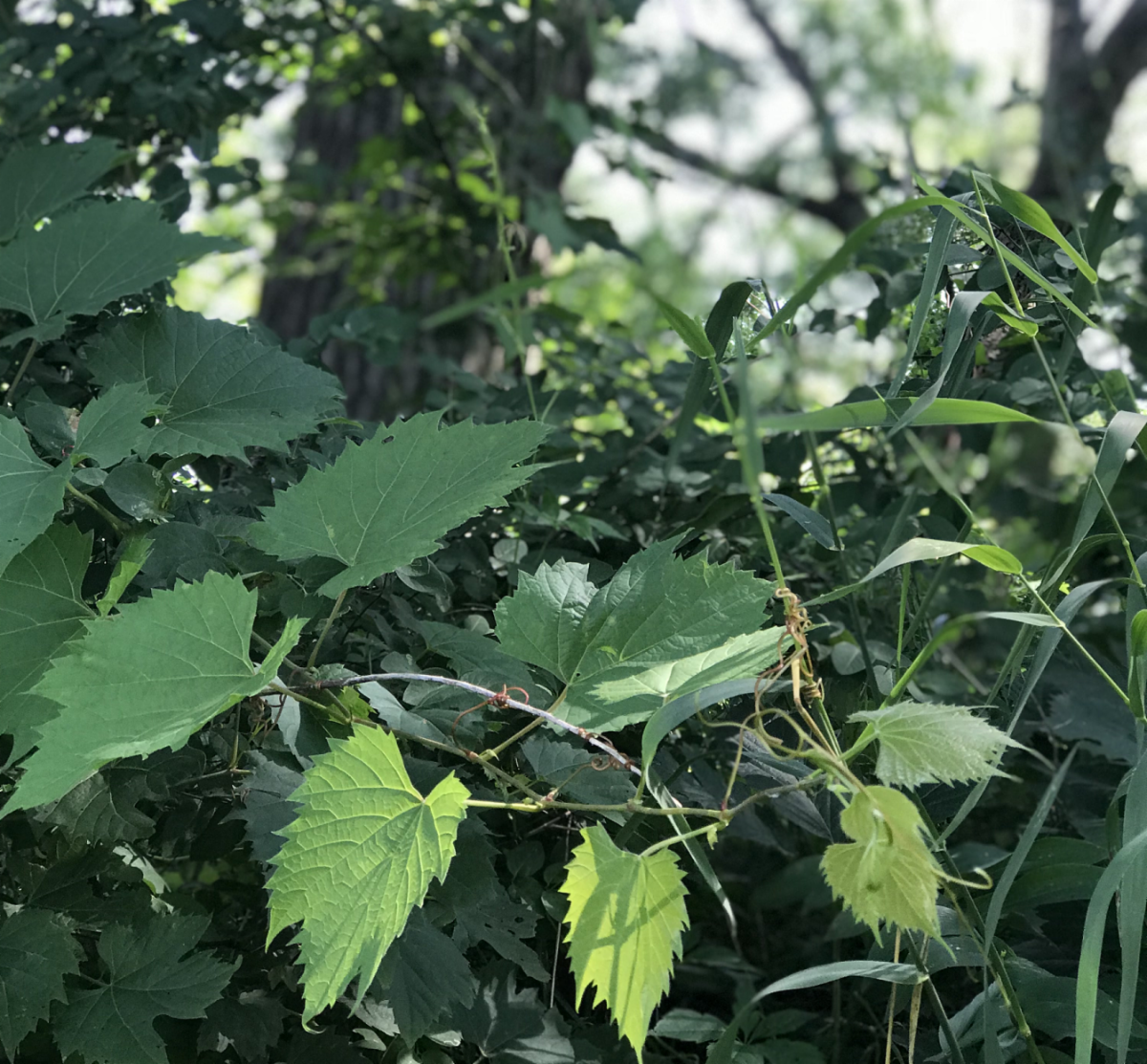
Could this native grapevine hold the key to future viticulture challenges?* |
|
In 2022, NGRA engaged a strategic planning professional, Randy Harrington of Strategic Arts & Sciences, to lead us through a process of planning for the next three to five years of growth and evolution—to NGRA 2.0, as one Board member put it. And in finalizing our strategic plan and revisiting the data that informed our Board members’ deliberations about it, it struck me that one constant shines through: the value of research…and of NGRA to the industry.
In the surveys Randy conducted of Board members, non-NGRA-member industry representatives and members of the grape research academic community, there was overwhelming support for the statement, “Scientific research has never been more important to the grape and wine industries.” Respectively, 100% of non-member, 94% of academic and 89% of Board respondents agreed or strongly agreed. Further, there was strong support for NGRA and the work we do:
- 71% of academics agreed or strongly agreed that “Without organizations like NGRA, grape research would be less relevant and/or would have a harder time getting support.”
- 77% of non-members agreed or strongly agreed that “NGRA provides a useful service for the grape and wine industry.”
- 85% of Board members agreed or strongly agreed that “Our growing research portfolio is evidence that NGRA is on the right path.”
And in verbatim comments and interviews (all responses were relayed anonymously), they elaborated about a future shaped by scientific advances. In his summary of respondents’ input, Randy shared a quote from a researcher, talking about the scientific revolutions that have occurred in their career. “Farms I work with have gone from zero robots to 12. Robots don’t get tired and can spot disease early on,” they said, illustrating how robotics (and AI) is shaping viticulture, nearly in real time. “Robotics will revolutionize the way we grow grapes.” And with a nod toward the efficiencies gained by non-human labor, the scientist added, “It may even help the mom-and-pop grape growers the most.”
“This quote caught my ear,” Randy wrote. “Both because scientific revolutions are generally rare, but also because they establish the urgency for substantial strategic course changes. It is not just the NGRA that is changing, it’s the whole world. This quote suggests that the pace and methodologies driving grape science will deepen and accelerate.” And the who and how and where the advances land may be surprising and even counterintuitive. It’s up to us to stay not only relevant, but attendant and even prescient.
Indeed, as we close out 2022 and move into 2023 with a new strategic plan (to be ratified by our Board of Directors at our annual meeting on January 23, 2023), change is on the horizon. But grape research—or more specifically, our mission to advance the grape and wine industry through science—remains our north star.
|
|
|
|
|
*ABOUT THE PHOTO:
Allison Miller (The Donald Danforth Plant Science Center) snapped this pic of a Vitis riparia grapevine in a forest in Wisconsin. It's an example of the North American Vitis species she and her conservation working group seek to save. See related Research Focus story below.
|
|
California Wine Industry’s Economic Impact Grows |
|
The California wine and winegrape sector and allied businesses deliver a total economic contribution of $73 billion annually to the state’s economy and $170.5 billion annually to the U.S. economy, according to a new report released this month, commissioned by the Wine Institute and the California Association of Winegrape Growers, both NGRA member-organizations. California wineries and vineyards also directly and indirectly generate 422,000 jobs in California and 1.1 million jobs across the nation.
Prepared by John Dunham & Associates, the Economic Impact of California Wine and Grapes 2022 shows 27% growth in statewide impact (from $57.6 to $73 billion) and 49% in national impact (from $114.1 to $170.5 billion) over the past six years—a robust expansion during a challenging period that included a devastating pandemic. The report measures the full economic impact of the wine and winegrape industries in terms of employment, wages, output, taxes, tourism spending and visits and, notably, charitable giving. |
|
Come Congratulate the Rich Smith Award Recipient |
|
The Rich Smith Award of Excellence is conferred annually on an industry colleague who exemplifies the passion, commitment and collaboration of beloved grape grower, winery owner and force for good, the late Rich Smith of the Santa Lucia Highlands. Three of the organizations Rich helped to establish—NGRA, WineAmerica and Winegrape Growers of America (WGA)—annually join with the Smith Family to bestow the Rich Smith Award at the WGA Annual Leadership Luncheon, which takes place during the Unified Wine & Grape Symposium in Sacramento, CA. For each organization, it is our highest and most coveted award. Register now to be among the first to congratulate this year's winner on January 25, 2023.
|
|
CDFA Engages the National Academy of Sciences |
|
The California Department of Food and Agriculture (CDFA) Pierce's Disease (PD) and Glassy-Winged Sharpshooter (GWSS) Board voted this month to engage the National Academy of Sciences (NAS) to conduct an independent review and identify knowledge gaps and research needs to address grapevine red blotch virus (GRBV) and grapevine leafroll associated virus type 3 (GLRaV3). The $926,880, two-year study will convene a committee of 10 experts to review of research proposals submitted to the Board as part of its annual request for proposals (RFP) process; critique the Board's RFP process and proposal selection process to provide recommendations for potentially improving this process for the future; and review current knowledge on grapevine viruses, GRBV and GLRaV3 research in relation to outcomes, gaps and future research approaches. Under the NAS committee's preliminary timeline, a consensus report will be published and released by the end of 2024.
About 20 years ago, the PD Board contracted with the NAS in a similar effort that helped guide the Board's research efforts and direction to address PD and GWSS management and control. That successful collaboration yielded results. As PD Board Research Coordinator Dr. Kristin Lowe explains, "We have tools today to manage PD as a result of the previous NAS study. We're focusing now on red blotch and leafroll virus 3 where we currently lack effective tools for good management."
|
|
Natalie Collins Is New CAWG President |
|
The California Association of Winegrape Growers (CAWG), NGRA member-organization, this month named Natalie Collins as its President. Natalie has served as Interim President since June 1, 2022, after the retirement of John Aguirre. She has been with CAWG since 2015, as the Director of Member Relations. Over the last few months, she has led the CAWG team in Sacramento and guided the association’s partnership with the American Society for Enology and Viticulture (ASEV) in preparation for the annual Unified Wine & Grape Symposium next month. She also has taken the point in CAWG’s advocacy efforts in Washington, DC. “Natalie has demonstrated that she has the skills necessary to not only lead a smooth transition, but also to create new opportunities for CAWG and our growers in the years to come,” said CAWG Board Chairman Tom Slater. |
|
New York Concord Grape Innovation Awards Announced |
|
Six food and beverage producers from across New York took home shares of more than $100,000 in prizes this month at the first New York Concord Grape Innovation Awards, a business competition aimed at stimulating growth and innovation in the state’s Concord grape industry. The prizes were awarded December 9, 2022, at Cornell AgriTech in Geneva, NY, where 12 finalists met to pitch their products before a panel of judges.
With its powdered dietary supplement from grape pomace designed to improve digestive health, Stil-Bène won the top prize in the best new Concord grape-based products category.
Westfield Maid Cooperative won the top prize in the best new beverage category for its “Good n’ Grapey” Concord grape juice pouches, aimed at supplying school cafeterias. Its shelf-stable juice pouches have colorful branding designed to encourage more kids to drink Concord grape juice. Both companies scored a $20,000 cash prize and a package of expert support from Cornell valued at $8,000.
|
|
OIV Sets Viticulture Standards |
|
At its 43rd OIV Congress in Ensenada, Mexico, last month, the International Organisation of Vine and Wine (OIV) adopted 35 new resolutions, several of them related to global grape-growing. The viticulture resolutions included:
|
|
New Resource on Rootstocks (And Plea for Breeding) |
|
A new book, Grape Rootstocks and Related Species, is out now, written by Alireza Rahemi (postdoctoral researcher at Virginia State University), Jean Dodson Peterson (Department Chair – Viticulture & Enology, Washington State University) and Karl Lund (UCCE Area Viticulture Advisor). The book focuses on some 20 grape species that are vitally important in rootstock breeding programs and provides information on 150 of the world's most familiar grape rootstocks. And it makes the case for broadening rootstock breeding efforts.
The authors write: “There are around 1,500 grape rootstocks in the world, of which around 50 are commonly used as commercial rootstock. North American species account for around 30 species, and two-third of them have already been used for rootstock breeding. However, the most commonly available rootstocks are derived from just three American species (V. berlandieri, V. rupestris, and V. riparia). Therefore, the most common grape rootstocks have a narrow genetic base, and efforts to extend the gene pools for breeding programs by using the other species are of ongoing importance to the industry and scientific community.”
|
|
Cornell Seeks a Grape Breeding Professor |
|
The School of Integrative Plant Science within the College of Agriculture and Life Sciences at Cornell University invites applications for a tenure track Assistant/Associate Professor of Grapevine Breeding, Genetics and Genomics. With an appointment that's 70% research, 30% extension and based on the campus of Cornell AgriTech in Geneva, NY, the incumbent may employ a variety of research and extension methods to address the complexity of grapevine genetics and environmental interactions focusing on the development of cultivars adapted to production in cool and cold climates and with reduced chemical inputs. Deadline to apply is February 3, 2023. The anticipated start date is July 2023. Learn more and apply.
|
|
Shape the Future of NVEELC |
|
A group of Extension specialists is working to define what the National Viticulture and Enology Extension Leadership Conference (NVEELC) is and does, and how it can best serve the Extension community. Help them by taking this survey! Whether you've ever attended NVEELC or plan to in the future, if you're an Extension specialist, your opinion counts! The survey is open until January 9, 2023.
|
|
SAVING WILD VITIS: THE CONSERVATION OF NORTH AMERICAN NATIVE GRAPES WORKSHOP
By the North American Grapevine Conservation Working Group
|
|
Genetic variation provides the foundation for plant breeding. And in viticulture, the diversity in native North American Vitis species is critical for generating resilient grapevines. For example, numerous cold-hardy North American Vitis species have been used to generate the hybrid “French-American” scions commonly cultivated in midwestern and eastern vineyards. And phylloxera-resistant North American species are used as rootstocks for V. vinifera varieties both in North America and around the world. Ongoing adaptation of grapevines to changing climates, disease pressure and consumer preferences requires access to the wild grapevine germplasm that offers nearly unlimited sources of natural variation for breeding improved scions and rootstocks that are better-suited to future needs.
Although decades of work by many different groups have yielded significant resources for these invaluable vines, there is no coordinated conservation strategy in place for native North American Vitis. The North American Grapevine Conservation Working Group is now working to change that.
With the goal of conserving native North American Vitis and ensuring access to the germplasm, a diverse group of 20 scientists (shown and listed here) came together on November 7-11, 2022, at Oak Spring Garden Foundation in Upperville, VA, to begin drafting a plan for conservation. Participants included taxonomists, viticulturists, grape breeders, conservation biologists, land managers, plant biologists, and leaders of the living Vitis germplasm collections in Davis, CA, and Geneva, NY. For three days, they presented data, reviewed existing resources, and identified gaps in knowledge and conservation efforts targeting native North American Vitis species.
Inspired by the work of Colin Khoury, who took part in the workshop, the team took their cue from the “Road Map for Conservation, Use, and Public Engagement around North America’s Crop Wild Relatives and Wild Utilized Plants” (Khoury et al. 2019). It provides guidance for conserving crop wild relatives—plants that are closely related to agricultural crops—as valuable genetic resources used by plant breeders to increase pest and disease resistance, stress tolerance, nutritional profile, and other traits critical to productivity, quality and sustainability. “Many of these species are threatened in their natural habitats,” according to the paper, “and most are underrepresented in plant gene banks and botanical gardens. These conservation gaps limit the portfolio of useful plant diversity available to present and future generations.” Coordination among plant conservation, land management, agricultural science, and botanical education and outreach organizations are critical to securing and enhancing the use and awareness of these species.
At the November workshop, a comprehensive conservation plan began to shape, underpinned by these high-level objectives:
-
Conduct conservation status assessments that document geographic distributions of wild Vitis populations, assess threats to their natural habitats, and determine gaps in their conservation.
-
Protect wild Vitis populations in their natural habitats.
-
Collect and conserve wild Vitis species in ex situ collections.
-
Make wild Vitis accessions more accessible and attractive to plant breeders, researchers and educators.
-
Raise public awareness about the role of native North American Vitis species in global viticulture and the importance of their conservation.
This important work is just getting started and could provide genetic solutions to future sustainability and even viability challenges for the grape and wine industry. The group is now meeting monthly to advance North American Vitis conservation. Current activities include drafting a scientific manuscript describing the road map for Vitis conservation following Khoury et al. 2019, and generally advancing the objectives above. The group hopes that, through these activities, more people will understand what’s at stake for these vines and help promote their conservation.
And maybe that’s where you come in… If you would like to be involved—you don’t have to be a plant breeder or geneticist or biologist—contact Anne Frances of USDA-ARS at anne.frances@usda.gov.
In addition to Oak Spring Garden Foundation, the Conservation of North American Native Grapes Workshop was organized by NatureServe, the US Botanic Garden, and the USDA Agricultural Research Service.
|
|
The USDA's National Institute of Food and Agriculture (NIFA) is accepting pre-applications for the Specialty Crop Research Initiative (SCRI). Three types of grants are available through this important program: planning grants, coordinated agricultural projects, and standard research and extension projects. Projects must address at least one of five focus areas:
- Research in plant breeding, genetics, genomics and other methods to improve crop characteristics
- Efforts to identify and address threats from pests and diseases, including threats to specialty crop pollinators
- Efforts to improve production efficiency, handling and processing, productivity, and profitability over the long term (including policy and marketing)
- New innovations and technology, including improved mechanization and technologies that delay or inhibit ripening
- Methods to prevent, detect, monitor, control and respond to potential food safety hazards in production efficiency, handling and processing
Note that an industry match (which can be in-kind) is in effect for FY 2023 awards. Pre-applications are due January 12, 2023.
The New York Wine & Grape Foundation (NYWGF) welcomes new proposals for research projects that provide the New York State wine and grape industry with short-term solutions and long-term strategic directions in viticulture, enology and business management. Funding is for the Foundation’s 2024 Fiscal Year (April 1, 2023 - March 31, 2024). Proposals are due by January 17, 2023.
The Northwest Center for Small Fruits (NCSFR) invites new and existing research projects to apply for research funding. Grants for wine and juice grape viticulture research must align with the Center’s funding priorities, listed in the RFA. Apply by January 17, 2023.
The California Department of Food and Agriculture (CDFA) Pierce's Disease and Glassy-winged Sharpshooter Board (PD/GWSS Board) provides funding support to research and outreach projects focused on protecting vineyards, preventing the spread of pests and diseases, and delivering practical and sustainable solutions. Any individual or group with expertise in research and/or outreach with the winegrape pests and diseases outlined in the RFP and has affiliation with a non-profit research institution, including outside of California, is eligible and encouraged to submit proposals. Funding preference will be given to projects deemed likely to lead to practical and sustainable solutions to winegrape pest and disease problems in California. Proposals are due by January 31, 2023.
The Washington State Wine Commission (WSWC) is soliciting viticulture and enology research grant proposals for Fiscal Year 2024 (July 1, 2023 - June 30, 2024). The Commission’s grant program encourages scientists, regardless of location, to focus on research issues important to Washington’s wine industry, and to collaborate with researchers at Washington State University (WSU). It fosters research collaboration with other wine regions and leverage research funding opportunities. Deadline to apply is January 31, 2023.
The UGMVE system consolidates the requests for proposals (RFPs) for these grant-making organizations:
- American Vineyard Foundation
- California Grape Rootstock Improvement Commission
- California Grape Rootstock Research Foundation
- Oregon Wine Board
Each of the four agencies accepting research proposals via the UGMVE system has its own RFP that specifically explains its priorities and criteria. Principal investigators are advised to read each RFP and apply to as many funding agencies as their project is suited. Only one online proposal application is needed as the same formats are accepted by each organization. All proposals are due by January 31, 2023.
The Foundation for Food and Agriculture Research (FFAR) is accepting applications for its 2023-2026 FFAR Fellows cohort. The deadline to apply for the stipend and professional development category (total award of $65,000) is February 22, 2023. The deadline for professional development ($10,000 award) is April 15, 2023.
|
|
Applying for a grant? Request a letter of support!
NGRA is pleased to provide letters of support for research projects that directly address our industry-set research priorities. Request a letter by completing our online request form at least two weeks prior to the grant deadline (or any internal deadline you may have). Requests are reviewed and approved by NGRA Research Committee leadership, so processing times may vary. |
|
December 21, 2022 | Good Fruit Grower
Entomologists may launch eradication programs against invasive insect pests like spotted lanternfly and Japanese beetle. But because pests breed and spread quickly, policies can slow responses, and funding is limited, the odds favor the bugs. One well-known success story is the European grapevine moth, which was eradicated in CA seven years after it arrived...at a cost of $65 million in federal funding.
December 20, 2022 | Good Fruit Grower
Clarion, the new cold-hardy white wine grape variety from the University of Minnesota, is now in “open release,” with a limited number of vines available for spring 2023 planting. Wines made from Clarion are similar to Sauvignon Blanc. And in the vineyard, its less-vigorous growth habit, loose clusters and resistance to downy mildew make it easier to manage.
December 15, 2022 | Sprayers 101
Sensor-controlled spray systems were first designed in the 1980s as a way to reduce labor costs and pesticide waste. Since then, they’ve come a long way. Here, Oregon State’s Brent Warneke explains the two types of sensor sprayers on the market today, and the four basic sensor types they use to not only turn the sprayer on and off as it passes plants, but change application and air volume, air flow direction and more.
December 15, 2022 | Southwest Farm Press
In her lab’s exploration of sustainability, including waste-reduction, practices, Texas A&M AgriLife Extension’s Andreea Botezatu is identifying uses of verjus, the acidic juice of unripe grapes. There’s the potential to use the juice pressed from the fruit dropped during crop thinning to optimize acidity levels in some Texas varieties, she says, enhancing wine quality, decreasing costs, and even creating a new product stream for the verjus itself, which has many culinary uses.
December 13, 2022 | Growing Produce
As vines mature, shoot and fruit growth and ripening are spurred by K, which accumulates in grape skins. But for skin-fermented red wine, excess K in the berry can drive up wine acidity. Growers can test for K at harvest. And they can manage for this key nutrient in the vineyard through shading, crop load adjustments, fertilization and more, says University of Minnesota extension agent Annie Klodd.
December 8, 2022 | The New York Times
An AI program called Consensus combs through up to millions of scientific papers to find the most relevant for a given search and share their major findings. It reduces a literature review that would take a researcher days or weeks to just a couple minutes.
November 29, 2022 | The Late Show
Grape research makes another star turn on late night TV! The Late Show featured the work of Cornell’s Katie Gold and Yu Jiang as part of the VitisGen3 project, deploying “autonomous robots to help modernize the wine industry .” Host Stephen Colbert quoted the Cornell Chronicle story, explaining that the bots “will roll through vineyards, using computer vision to gather data on the physiological state of each grapevine.” Navigate to the 1:33 mark in the clip for the segment. (Colbert didn’t explain that they’re using hyperspectral sensing to improve disease management for disease-resistant vines. See the Cornell Chronicle story here: https://t.co/TDaQKP0n4Z.)
December 1, 2022 | Vineyard Team
Under-vine cover crops can both improve soil health and control vine vigor. But which plants deliver the best benefits? Cornell’s Justine Vanden Heuvel Penn State’s Michela Centinari teamed up to trial different cover crops--listen in to learn which ones to most to improve the overall sustainability of a vineyard.
December 2022 | Finding Genius Podcast
Rootstocks can help accelerate production in fruit and nut crops, including grape, says Mississippi State’s extension agent Eric Stafne. “Woody crops that create a lot of plant architecture take a little bit longer (to come into full production). Grafting onto a rootstock can modify that timeline some. (By) taking a mature part of that tree and placing it on a rootstock, you can get a faster production turnaround.”
December 2022 | Foundation for Food & Agriculture Research
Carbon-rich biochar has the potential to increase soil carbon, reduce greenhouse gas (GHG) emissions and improve soil health. But according to a convening event on biochar research and commercialization hosted by the Foundation for Food & Agriculture Research (FFAR) and others, a pyrolysis biochar bioenergy industry needs to take root to achieve biochar’s promise. And more research is needed—both fundamental and applied—on the effects of different biochars on their environment effects and how to best to achieve them.
November 21, 2022 | Frontiers in Plant Science
New research from UC Davis provides evidence that vineyards can serve as carbon sinks—how much depends on soil texture and climate. Check out how carbon storage varied in vineyards in California’s Mediterranean climate, by use of three cover crops under conventional tillage and no-till management.
November 16, 2022 | Good Fruit Grower
The California Land Stewardship Institute has enlisted the help of 20 Sonoma County winegrape growers in a regenerative agriculture, carbon-modeling pilot program to attempt to adapt climate-friendly farming principles developed for commodity crops to permanent crops like grapes. One participant, Silver Oak, was surprised to find that their every-other-row cover cropping (a.k.a. conservation tillage) sequestered 83% as much carbon as no-till would.
November 15, 2022 | Good Fruit Grower
A three-year trial of five rootstocks, funded by Western Sustainable Agriculture Research and Education, aims to inform Washington’s transition from own-rooted vines to rootstocks to keep phylloxera and other diseases and pests at bay. It also will evaluate the rootstocks’ comparative cold-hardiness and nutrient uptake.
November 2022 | The Crush
California Association of Winegrape Growers’ Michael Miiller weighs in on the “immense opportunity…and incredible need (for) autonomous farming and agricultural robotics solutions.” He points to workplace safety, labor shortages, precision application of inputs like water and pesticides and transition from fossil fuels as reasons why “this technology may truly represent the future of farming.”
October 31, 2022 | Wine Enthusiast
Vermifiltration—or worm-based biofiltration—harnesses the digestive power of earthworms together with beneficial microbes to remove substantially all contaminants from wastewater without the need for chemicals, yielding water that’s clean enough has to irrigate vineyards with and loaded with nutrient-dense worm castings, a rich source of fertilizer.
October 2022 | American Journal of Enology and Viticulture
What factors increase spring frost risk in vineyards? What can be done to minimize damage to vines? This literature review confirms that it helps to delay winter pruning until the “wool” bud stage to postpone budbreak, delaying fruit maturity to a cooler time of year with minimal effect on yield.
July 12, 2022 | California Ag Network
Not #graperesearch…yet. Using Arabidopsis as a model system, scientists at UC Riverside have discovered new info on how plants regulate the production of salicylic acid (aka aspirin) to protect themselves from environmental hazards like drought and heat. “Because salicylic acid helps plants withstand stresses becoming more prevalent with climate change, being able to increase plants’ ability to produce it represents a step forward in challenging the impacts” of a warming world, says PI Katayoon Dehesh.
|
|
Find these stories and more, published every weekday, on our Facebook and Twitter feeds. Use #graperesearch to grow the conversation!
|
|
January 10, 2023
Eastern Viticulture and Enology Forum Series:
Virtual event
January 11, 2023
Easton, CA
January 11, 2023
Ukiah, CA
January 13-18, 2023
San Diego, CA
January 23, 2023
NGRA Annual Meeting of the Members and First-of-Year Board Meeting
Sacramento, CA
January 23, 2023
Eastern Viticulture and Enology Forum Series:
Virtual event
January 24-26, 2023
Sacramento, CA
January 24 and 25, 2023
Washington State University Workshop Series:
Walla Walla and Prosser, WA
January 25, 2023
Sacramento, CA
February 7, 2023
Eastern Viticulture and Enology Forum Series:
Virtual event
February 14-15, 2023
Portland, OR
February 23-24, 2023
Washington, DC; livestream available
March 14-16, 2023
Lancaster, PA
|
|
The monthly NGRA Update is provided as a service to the U.S. grape and wine industry.
|
|
|
|
|
|
|