Protect Yourself From Scammers
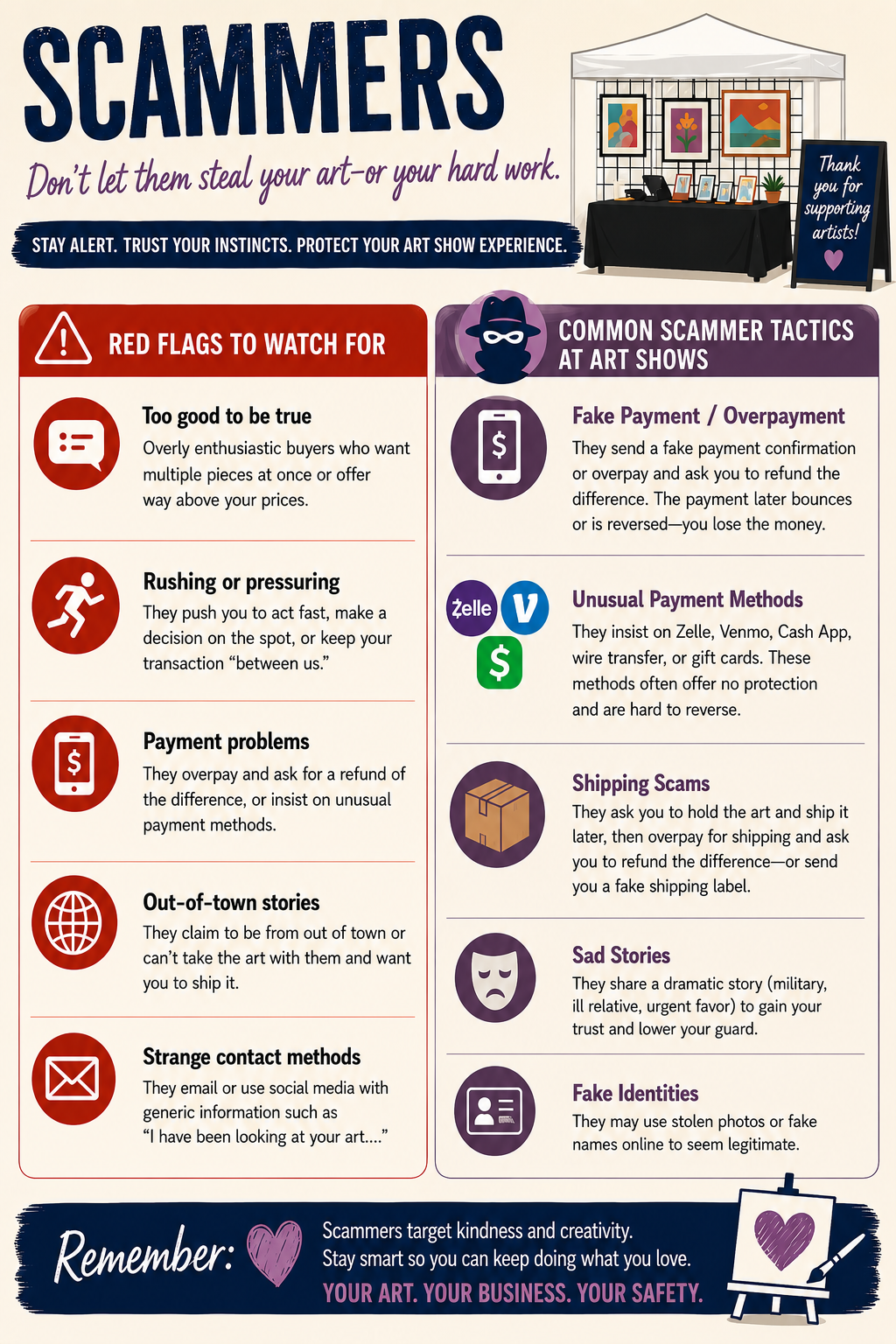
The modern art festival world offers artists more opportunities than ever before. Unfortunately, it has also created more opportunities for scammers. Every year artists lose money, personal information, and even inventory because someone sounded professional, used a familiar festival name, or created a convincing social media account.
The difficult part is that scams rarely look like scams at first glance. They often look urgent, flattering, or “too good to pass up.” Professional artists are busy juggling applications, deadlines, travel, inventory, and production schedules, which makes it easy to overlook warning signs.
Here are some of the most common scams currently targeting artists and how to protect yourself.
The Fake Acceptance Email
One of the fastest-growing scams involves fraudulent acceptance emails for legitimate art festivals. An artist receives a message saying they have been accepted and must immediately send booth payment through Venmo, Zelle, Cash App, PayPal, wire transfer, or cryptocurrency.
The email often includes:
- A copied festival logo
- Real show dates
- Professional wording
- Fake urgency such as:
- “Your booth will be released within 2 hours if payment is not received.”
Red Flags
- Payment is requested outside of the official application platform.
- The sender email address is slightly incorrect.
- Example:
-
realshow@gmail.com instead of director@realshow.org
- The show asks for payment before jury notifications have officially gone out.
- The festival requests Friends & Family payments.
Protect Yourself
- Always verify through the official festival website.
- Log directly into ZAPP, Juried Art Services, EntryThingy, or the show’s official portal.
- Never pay through unsecured methods unless you personally know the director.
- If uncertain, contact the show using the phone number or email listed on the official website — not the one inside the suspicious email.
Fake Social Media Accounts
Scammers routinely create duplicate Facebook and Instagram accounts pretending to be art festivals, artist groups, or even established directors.
These accounts often:
- Announce “vendor opportunities”
- Claim artists were selected in a “special round”
- Offer discounted booths
- Send direct messages requesting deposits
Sometimes they even steal entire posts and graphics from legitimate festivals.
Red Flags
- Recently created accounts
- Very low follower counts
- Poor grammar or strange wording
- Requests for immediate payment through DM
- Comments disabled on posts
- Generic responses when questioned
Protect Yourself
- Follow verified or long-established accounts only.
- Double-check the website URL connected to the social media profile.
- Message the real organization directly if something feels off.
- Never send money through social media messaging apps.
The Fake Patron or Commission Scam
This classic scam still appears regularly, especially through emails, contracts through the artist websites and Instagram accounts. A “collector” contacts an artist wanting to buy several expensive pieces immediately. They often:
- Refuse to discuss details about the work
- Offer to overpay
- Ask the artist to pay the “shipper”
- Send fake checks
- Claim an assistant will arrange pickup
The artist deposits the check, sends money to the “shipper,” and days later the check bounces.
Red Flags
- Buyer shows no real interest in your process or artwork
- Poorly written emails
- Overpayment offers
- Strange shipping arrangements
- Pressure to move quickly
Protect Yourself
- Ignore and delete these emails
- If you have gone down this road. Wait until checks fully clear — not just “appear deposited.”
- Use secure payment systems and make sure you document your sales completely.
- Trust your instincts if the communication feels unnatural.
The Fake Art Fair Directory
Some companies advertise “exclusive artist directories,” “VIP show lists,” or “guaranteed application opportunities” for high fees. In reality, they may simply scrape public information from legitimate websites and resell it.
Red Flags
- Guarantees of acceptance
- Claims of “secret insider access”
- No clear company history
- No testimonials from respected artists
- Pressure sales tactics
Protect Yourself
- Research the company carefully.
- Ask fellow artists if they have used the service.
- Remember that no legitimate organization can guarantee acceptance into a juried show.
Hotel Booking Scams
Artists are increasingly targeted with fake hotel booking agencies before large festivals.
The scammer claims:
- “We are the official housing partner.”
- “Only a few rooms remain.”
- “Festival rates expire tonight.”
Artists provide credit card information and later discover the reservation never existed.
Protect Yourself
- Book only through links provided on the festival’s official website.
- Call hotels directly if uncertain.
- Avoid third-party booking calls you did not initiate.
Fake Equipment and Tent Sales
After storms or windy weekends, scammers often target artists selling “discounted” tent weights, Trimlines, panels, and display systems online.
Red Flags
- Prices far below market value
- Refusal to provide additional photos
- Requests for wire transfers
- Newly created Facebook Marketplace accounts
Protect Yourself
- Use payment methods with buyer protection.
- Ask for timestamped photos.
- Buy from known artists or reputable dealers whenever possible.
Protecting Your Personal Information
Artists often share enormous amounts of personal information during application season:
- Addresses
- Tax IDs
- Phone numbers
- Banking information
- Credit card numbers
- Travel schedules
Treat your business information with the same care as your artwork.
Good Habits
- Use strong passwords.
- Avoid public Wi-Fi when making payments.
- Keep separate credit cards for business expenses.
- Monitor bank statements regularly.
- Enable two-factor authentication whenever possible.
The Most Important Protection: Slow Down
Scams succeed because they create urgency.
- “Pay now.”
- “Last booth available.”
- “You have been specially selected.”
- “Today only.”
- “Your space will be forfeited.”
If something feels rushed, confusing, or unusually aggressive, pause before responding. A few extra minutes of verification can save you money and a tremendous amount of stress.
The art festival community is remarkably connected. Artists talk. Directors talk. If you are unsure about something, ask trusted colleagues before sending money or personal information.
The best protection against scams is still a combination of caution, community, and common sense.
|