|
From River Crossing to Railroad Town
Long before boutique hotels and riverside cafés defined downtown Reno, the Truckee River quietly dictated where life would take root. In the mid 19th century, the river was both lifeline and landmark, drawing Indigenous peoples, followed by emigrants heading west, to its steady waters. When Reno was formally established in the 1860s, it was little more than a frontier settlement clustered along the river’s banks. The Truckee provided drinking water, irrigated nearby farmland, and powered early mills that supported the budding town.
Everything changed with the completion of the transcontinental railroad in 1869. Reno suddenly found itself positioned as a vital transportation hub between California’s Sierra Nevada and the interior of Nevada. Freight, passengers, and commerce flowed through town, and the Truckee River corridor became prime real estate. Small businesses, boarding houses, and warehouses rose near the water’s edge, drawn by proximity to both the railroad and the river. What would one day become the Riverwalk District was, at this stage, purely utilitarian a working stretch of river serving a rough and ambitious town finding its footing in the American West.
| |
Shaping a Riverside City
As Reno grew through the late 19th and early 20th centuries, the relationship between the city and the Truckee River evolved. The riverbanks, once defined by industry and infrastructure, began to take on a more social role. Hotels, restaurants, and entertainment venues appeared nearby, and locals started to see the waterway not just as a resource, but as a place to gather. The river became a backdrop for leisure as well as labor.
As automobiles replaced trains and Reno expanded outward, downtown and its river corridor were often overlooked. By the middle of the 20th century, much of the area along the Truckee had begun to show signs of neglect. Buildings aged, public access to the water dwindled, and the river itself suffered from years of industrial use.
Yet even during this period, the idea of the river as Reno’s civic heart never fully disappeared. City planners and community leaders periodically floated proposals to reclaim the riverfront, envisioning paths, parks, and public spaces that could reconnect residents with the water. These ideas would take decades to fully materialize, but their seeds were planted during this era.
| |
Renewal Along the Truckee
The 1960s and 1970s marked a turning point. Across the United States, cities were grappling with aging downtowns, and Reno was no exception. Urban renewal efforts began to focus on cleaning up the Truckee River, stabilizing its banks, and restoring public access. Environmental awareness played a significant role, as residents came to recognize the ecological and recreational value of a healthy river.
Public parks emerged along the water, creating pockets of green space within the urban core. Walking paths and small plazas encouraged people to linger rather than pass through. These changes were incremental, but they signaled a shift in how Reno viewed its riverfront. The Truckee was no longer merely something to manage or control; it was becoming an asset to celebrate.
These efforts laid crucial groundwork for what would follow. Improved water quality made activities like fishing, swimming, and kayaking viable again. The reimagined river corridor began attracting small businesses eager to capitalize on scenic views and foot traffic. By the late 1980s, it was clear that the riverfront could once again play a central role in downtown life.
| |
Creating the Riverwalk District
That vision crystallized around 1990, when the Downtown Reno Riverwalk took shape as a defined pedestrian corridor celebrating the natural beauty of the Truckee River. This was more than a beautification project; it was an intentional effort to create a walkable district where commerce, culture, and recreation could coexist. City planners worked alongside local business owners and community organizations to ensure the riverwalk would feel authentic to Reno rather than imposed upon it.
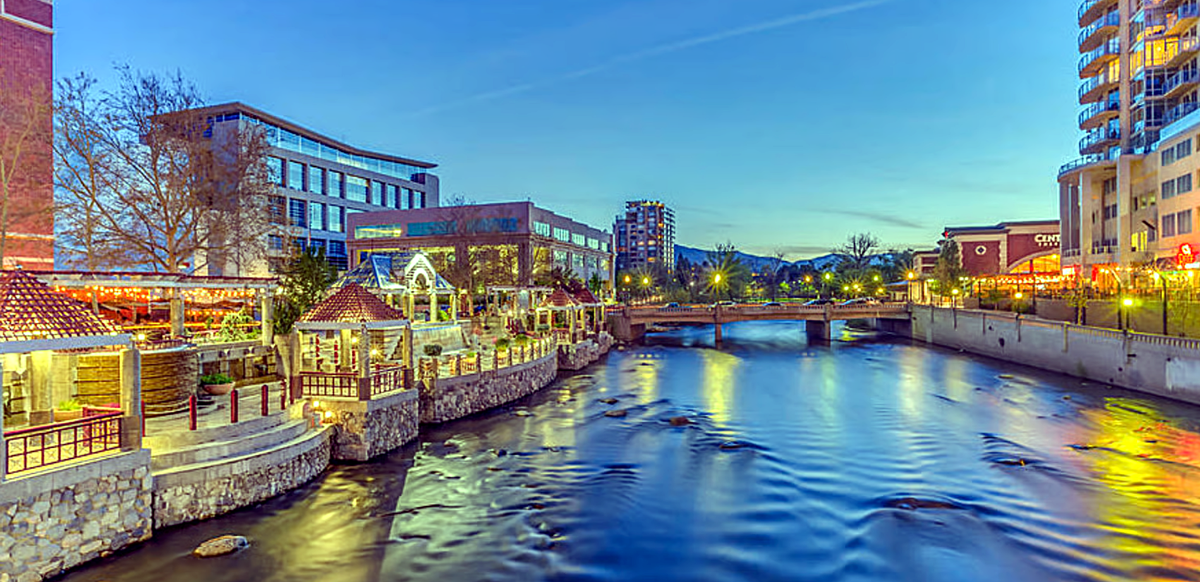
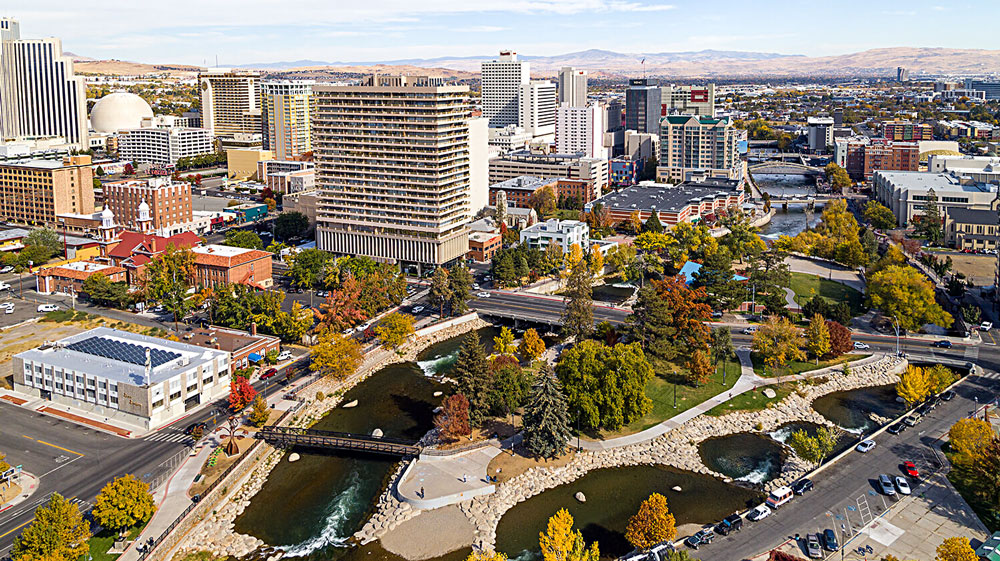
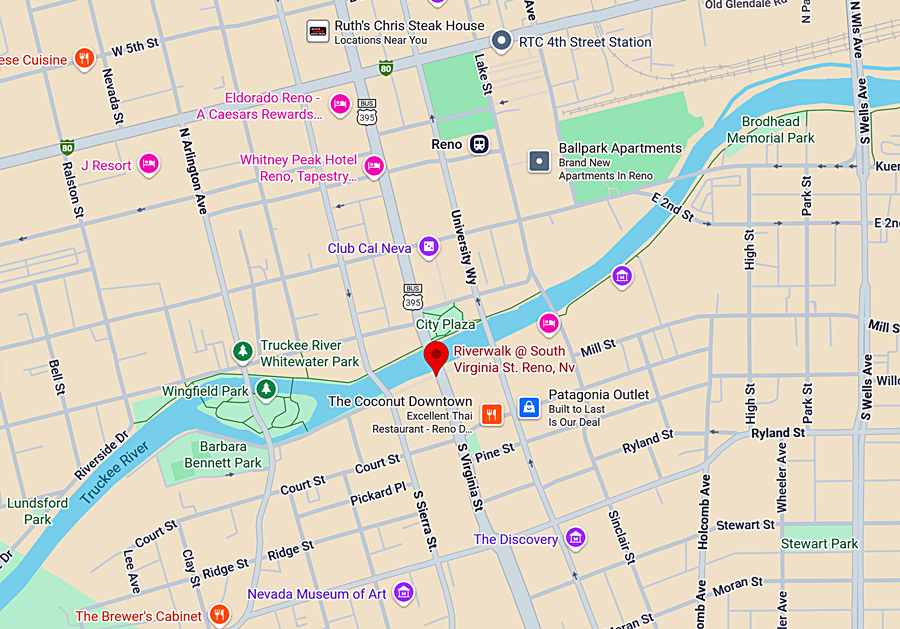
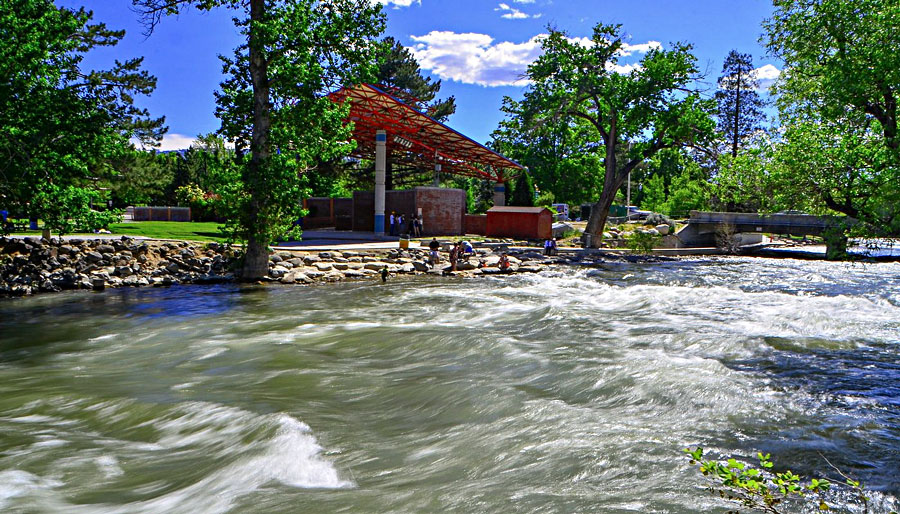
The path stretches from the western edge of Idlewild Park into downtown’s Wingfield Park, a location so distinctive it occupies its own small island in the river. Wingfield Park quickly became the district’s centerpiece, hosting concerts, festivals, and community gatherings that drew crowds year round. Events like Artown, Blues and Brews Fest, and the Great Eldorado BBQ transformed the riverwalk into one of Reno’s most dynamic venues, where streets close to traffic and music fills the air.
Public art and murals appeared along the route, giving the district a creative identity rooted in local talent. Restaurants and bars followed, offering everything from casual coffee houses to riverfront grills and international cuisine. Modern residential lofts soon rose nearby, bringing new residents who could walk out their doors and onto the riverwalk. What had once been a neglected stretch of riverbank became a vibrant neighborhood threaded together by water.
| |
The Riverwalk Today
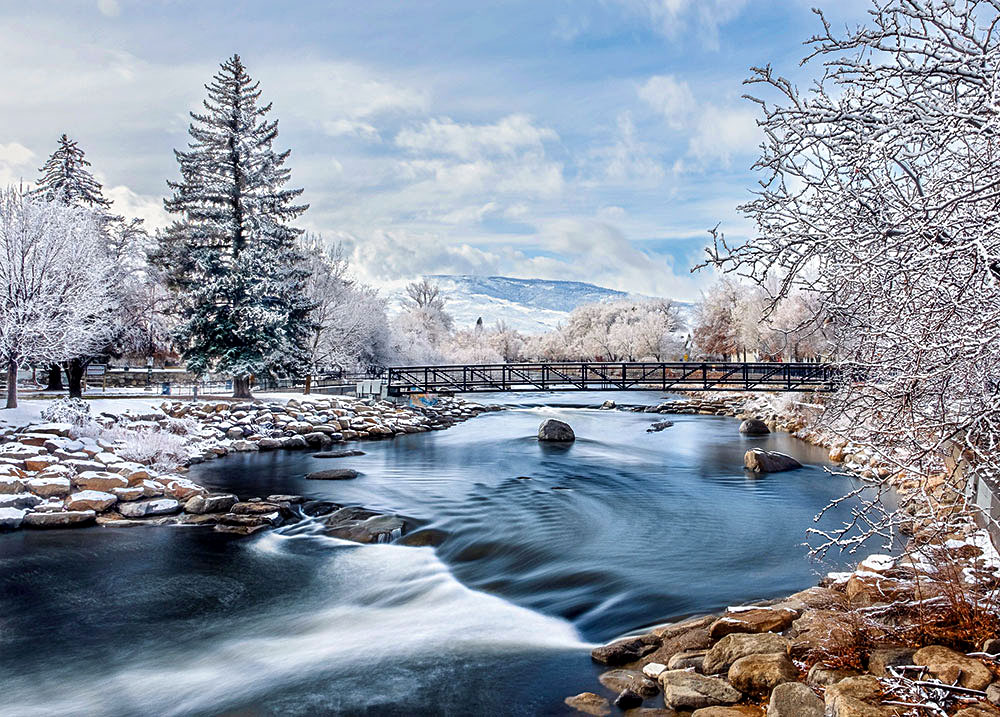
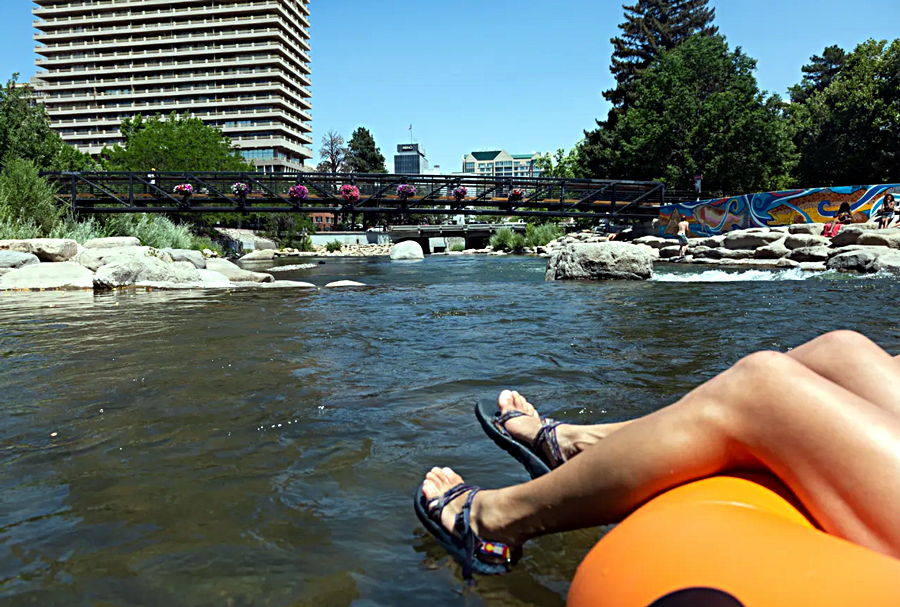
Today, the Reno Riverwalk stands as a testament to thoughtful urban transformation. Open 24 hours a day and free to enjoy, it serves as a welcoming spine through downtown Reno. Joggers, shoppers, diners, and kayakers share the space, drawn by the same gentle pull of the Truckee River. The district is easily walkable and designed with pedestrians in mind, though cyclists should note that certain sections west of downtown briefly shift onto adjacent streets.
The Riverwalk District now boasts more than three dozen shops, boutiques, galleries, bars, and bistros. Outdoor patios overlook the river, inviting visitors to linger over coffee in the morning or cocktails at dusk. Dining options span the spectrum, from cozy cafés to French cuisine, wine bars, and lively saloons. Entertainment extends beyond food and drink, with cultural institutions like the National Automobile Museum all within easy reach.
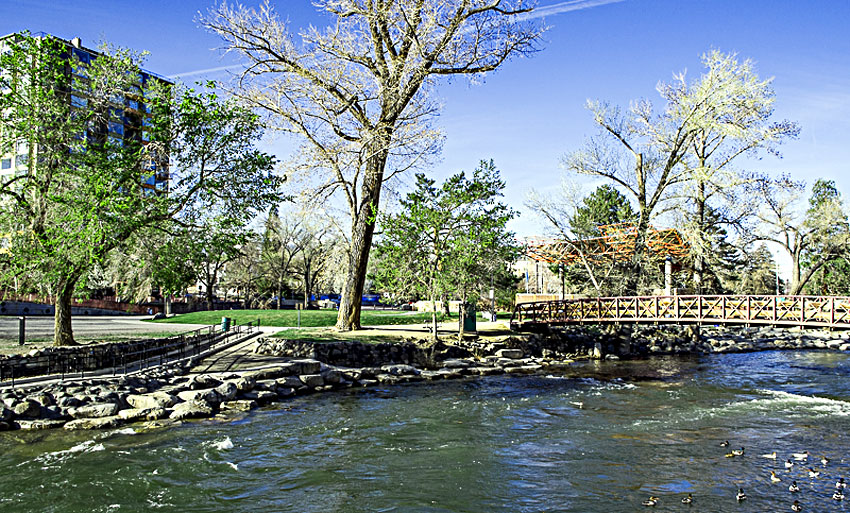
Recreation remains central to the riverwalk’s appeal. The Truckee River Whitewater Park beckons kayakers, while riverside paths and parks offer space for strolling, picnicking, or simply watching the water flow past. Monthly wine walks, open mic nights, and acoustic performances keep the calendar full, while July’s Artown festival transforms the district into an open air celebration of arts and culture.
From its origins as a frontier river crossing to its current status as one of Nevada’s most inviting urban promenades, the Reno Riverwalk reflects the city’s resilience and creativity. It is a place where history and modern life meet along the water’s edge, offering endless photo opportunities, year round events, and a distinctly Reno sense of place. For visitors and locals alike, the Riverwalk District isn’t just something to see. It’s something to experience, one step at a time beside the Truckee River.
| |
If you know anyone who you think might be interested in my emails - Please forward to them this link.
http://www.renokelly.com/blog.html
They can click on a subject that interests them on this webpage. I will not contact your friend unless they contact me. Of course, nobody is ever given access to my email list.
Thank you very much - Kelly
| |