Another First
for ASIPP!
Thanks to all who attended the first on-site national pain meeting since the COVID shutdowns!
The meeting featured a timely lecture from ASIPP Chairman of the Board and CEO, Laxmaiah Manchikanti, MD, The State of U.S. Healthcare and IPM: A Perfect Storm or a Path for Success.
The Honorable Senator Bill Cassidy, MD, who has been a long-time advocate of ASIPP, honored us with a talk on The Future of Healthcare. The meeting also featured Meredith Loveless, MD, and Leslie Stevens, MD who gave additional insight to Collaborative LCD Policy for Facet Joints and Epidural Interventions.
|
Click above to view the lecture given by Meredith Loveless, MD, and Leslie Stevens, MD, Collaborative LCD Policy for Facet Joints and Epidural Interventions. |
The first Innovation Summit was also well received as our attendees rely on ASIPP to educate them about the latest technological advances to further help patients. The meeting also included several breakfast and lunch seminars, one of which was the timely session “The Effects of CAC Policy on Our Survival: Epidural Interventions” led by Laxmaiah Manchikanti, MD, Amol Soin, MD, and Jeff Mortier.
Overall, the meeting was a great success for attendees, sponsors, and exhibitors. And we loved seeing everyone’s faces again last week in New Orleans. There is a lot of buzz all over social media and we thank you for your kind and encouraging words.
|
|
ABOVE: ASIPP Chairman of the Board and CEO, Laxmaiah Manchikanti, MD
|
ABOVE: The Honorable Senator Bill Cassidy, MD, Louisiana U.S. Senate
|
ABOVE: Awards Ceremony winners received their awards presented by ASIPP Chairman of the Board and CEO, Laxmaiah Manchikanti, MD, and ASIPP President, Amol Soin, MD.
|
ABOVE: Attendees were so excited to meet with our sponsors and exhibitors to catch up and learn about the latest developments in products and services available to IPM physicians.
|
|
If you have yet to claim your CME’s,
be sure to complete the CME survey through the mobile app.
We look forward to seeing you again soon!
|
|
|
|
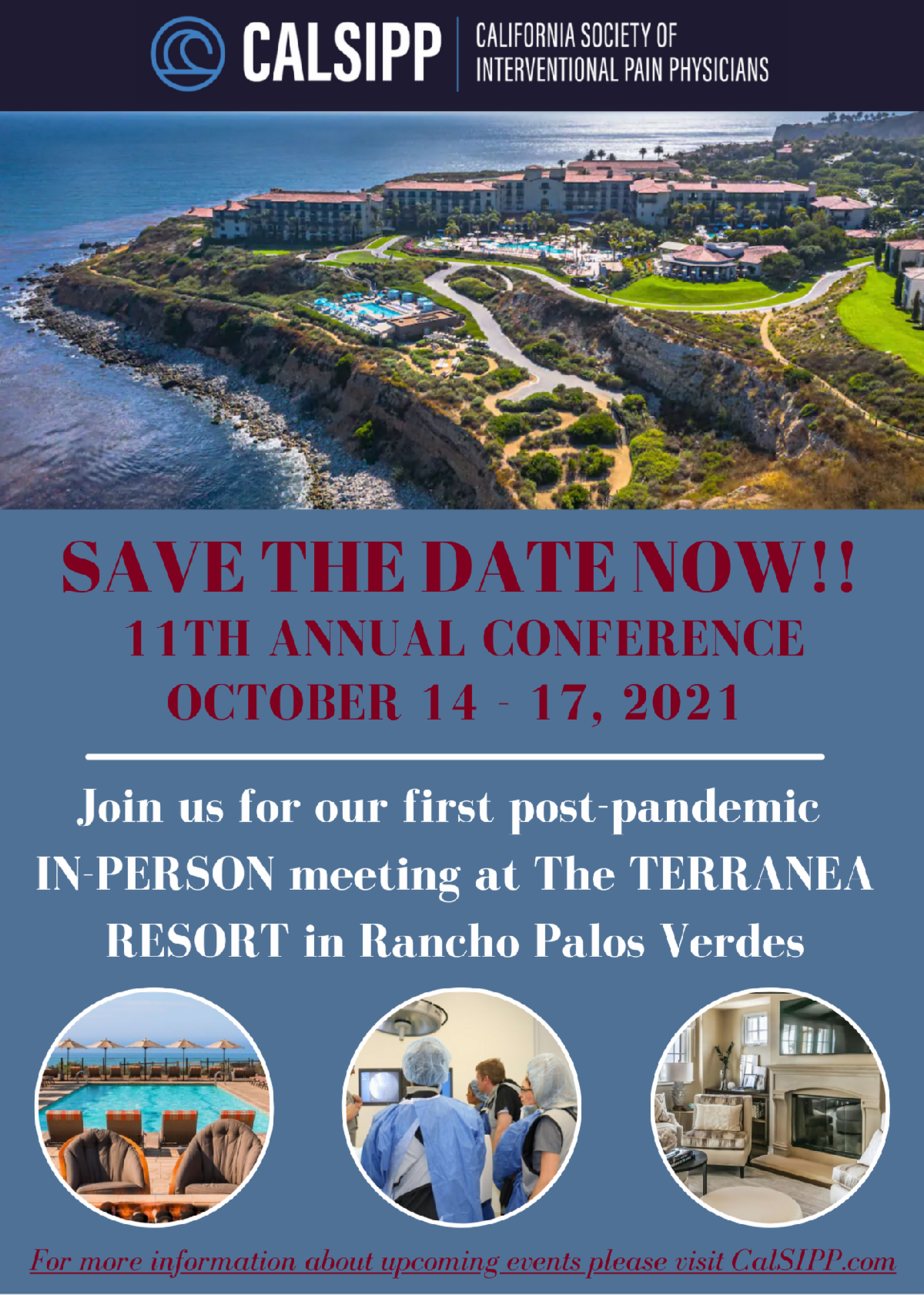
CALSIPP Registration & Agenda
COMING SOON!
|
|
Great News!
The Annual Meeting of the Ohio & Kentucky Societies of Interventional Pain Physicians is back!
Designated for 15 AMA PRA Category 1 Credits™
|
|
The highly contagious coronavirus strain prompted authorities to put Sydney into a full lockdown for the first time in a year
The exchange, captured by CCTV camera, lasted only seconds. A limousine driver, unknowingly infected with the highly contagious Delta variant of the coronavirus, and another man passed close to one another at an indoor mall near Sydney’s Bondi Beach. Both stood near each other for a short time, and one of them appeared to move through the airspace the other had occupied. The brief interaction was enough for the second man to contract the coronavirus.
For Australian health officials, who described the CCTV footage and the method of transmission, it was a warning sign that the tactics that helped to crush all previous outbreaks may not work this time.
Within days, authorities locked down the entire metro area of Sydney for the first time in a year, as the virus spread faster than they could trace and isolate people at risk of infection. A birthday party in one home resulted in 27 people at the event getting infected. A seafood supplier became a hot spot, with people who received its deliveries urged to get tested. Government staff were told to isolate after the local agriculture minister dined in a pizzeria attended by a person with the virus.
|
|
There was a 32 percent increase in physician practice acquisitions by corporate entities in the past two years, which added 29,800 formerly independent practice physicians, according to a June 29 report from Avalere.
Around 11,300 of those physicians joined corporate entities, such as insurers and private equity firms, after the COVID-19 pandemic.
The number of corporate-employed physicians also jumped 31 percent since 2019. By the end of January, nearly 20 percent of physicians reported being employed by a corporate entity besides hospitals and health systems.
|
|
ASIPP® is pleased to offer a new feature for
its members to help provide value to you and your practice.
Click here to visit ASIPP®'s newly created site where you can
make purchases on our Amazon Store, learn more about and
join the ASIPP® GPO and ASIPP®’s partnership with
Fedora Billing & Revenue Cycle Management Company.
|
|
The U.S. Supreme Court on June 28 declined to hear an appeal challenging HHS' site-neutral payment policy, allowing reimbursement cuts to move forward, according to Bloomberg Law.
In its final Outpatient Prospective Payment System rule of 2019, CMS made payments for clinic visits site-neutral by reducing the payment rate for evaluation and management services provided at off-campus, provider-based departments.
In an attempt to overturn the rule, the American Hospital Association and dozens of hospitals sued CMS, arguing that it exceeded its authority when it finalized the cuts in the rule.
|
|
Early results from a British vaccine study suggest that mixing different brands of vaccines can provoke a protective immune response against Covid-19. In the trial, volunteers produced high levels of antibodies and immune cells after getting one dose of the Pfizer-BioNTech vaccine and one dose of the AstraZeneca-Oxford shot.
Administering the vaccines in either order is likely to provide potent protection, Dr. Matthew Snape, a vaccine expert at the University of Oxford, said at a news conference on Monday. “Any of these schedules, I think could be argued, would be expected to be effective,” he said.
Dr. Snape and his colleagues began the trial, called Com-COV, in February. In the first wave of the study, they gave 830 volunteers one of four combinations of vaccines. Some got two doses of either Pfizer or AstraZeneca, both of which have been shown to be effective against Covid-19. Others got a dose of AstraZeneca, followed by one of Pfizer, or vice versa.
|
|
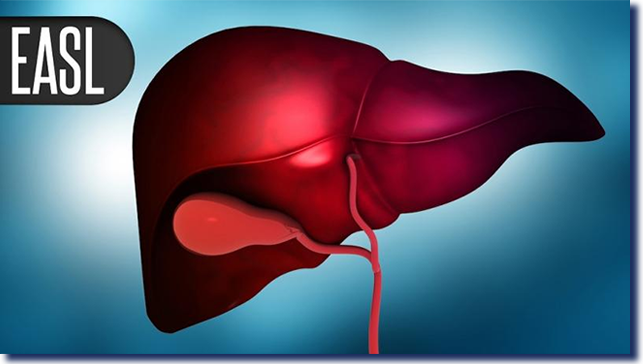
Long-term impact of alcohol uptake on liver health during COVID-19 crisis remains unknown
Surges in alcohol purchases and use during the pandemic drove up hospital admissions for alcoholic hepatitis, and there may be a negative impact on alcoholic liver disease in the future, researchers from Canada reported.
An average of 69.5 patients with alcoholic hepatitis required hospitalization in the period after April 2020 -- the initial lockdown time in Alberta, Canada -- versus an average of 39.6 hospitalizations in the comparative period (2018-2020), for a difference that was statistically significant (P<0.001), according to Abdel-Aziz Shaheen, MBChB, of the University of Calgary.
However, there was no similar spike in monthly admission rates for patients with non-alcoholic cirrhosis or with alcohol-related cirrhosis, he said during a press conference at the European Association for the Study of the Liver virtual meeting.
|
|
Personalizing the data for individual patients can be a real challenge
Can bulk reporting ever really move the needle all that much on the care we provide to our patients?
In my role as medical director of our practice, I get a ton of different reports from different sources, slicing and dicing the ways different people look at our patients. Lots of reports on the individual performance of different practitioners, as well as global indicators of important measures of the quality of care we provide.
We get reports that are generated internally, directly from our electronic health record (EHR), across all aspects of our practice, by disease and by healthcare maintenance items, as well as from insurance companies, the hospital, and other vested entities. And, of course, each patient's chart contains flags for missing healthcare maintenance items, unanswered questionnaires, disease-specific interventions, and best practice alerts. Can we figure out the best ways to get the most bang for our buck, to see that all this data generating and data analyzing is really helping us take better care of all of our patients?
|
|
Pain Medicine Case Reports (PMCR) and Editor-in-Chief Alaa Abd-Elsayed, MD, PhD would like to invite you to submit case reports and case series to the PMCR journal. Your article will be published free of charge.
Open access journals are freely available online for immediate worldwide open access to the full text of published articles. There is no subscription fee for open access journals. Open access journals are no different from traditional subscription-based journals: they undergo the same peer-review and quality control as any other scholarly journal.
Interested in becoming a member of the PMCR Editorial Board?
Editorial board members are asked to review 2-6 manuscripts per year. Please submit your most up-to-date CV to sgold@asipp.org for consideration.
For more information or to submit your articles, click here.
|
|
| CASE REPORT |
Christopher Watson, MBChB, Sheetal Jafri, FRCA, Charlotte Cobain, MBBS, and Gita Menon, FRCA
Abstract
BACKGROUND: Pain is the most common complication of fibroids in pregnancy and can be difficult to treat. The choices of pain relief in pregnancy are limited due to myriad risks including miscarriage, teratogenicity, premature birth, and low birth weight.
CASE REPORT: This paper describes the analgesic challenges faced when managing severe pain in the antepartum period for a woman pregnant with twins who also suffered from uterine leiomyomas. Multiple analgesic regimens were trialed over the course of the pregnancy with large doses of opioids required for long periods. Ultimately the patient underwent a laparotomy and myomectomy at 25 weeks gestation in an attempt to alleviate her pain.
|
|
| RETROSPECTIVE STUDY |
Chengyue Ji, MD, Yuluo Rong, MD, Jiaxing Wang, MD, Shunzhi Yu, MD, Guoyong Yin, MD, Jin Fan, MD, Pengyu Tang, MD, Dongdong Jiang, MD,
Wei Liu, MD, Fangyi Gong, MD, Xuhui Ge, MD, and Weihua Cai, MD
Abstract
BACKGROUND: In the aging population, osteoporosis and related complications have become a global public health problem. Osteoporotic vertebral compression fractures are among the most common type of osteoporotic fractures and patients are at risk of secondary vertebral compression fracture.
OBJECTIVES: To identify risk factors for secondary vertebral compression fracture following primary osteoporotic vertebral compression fractures.
|
|
| PROSPECTIVE STUDY |
Qing-Da Li, MD, Jun-Song Yang, MD, Han-Lin Gong, MD, Jian-Min Wei, MD, Xiang-Fu Wang, MD, Peng Zou, MD, Bo Zhang, MD, Ding-Jun Hao, MD,
Yuan-Ting Zhao, MD, and Lei Chu, MD
Abstract
BACKGROUND: Control of chronic pain and mainly the partial or complete loss of response to analgesics is a major unmet need. Multiple mechanisms underline the development of tolerance to analgesics in general and specifically to opioids. The autonomic nervous system (ANS) plays a role in the development of analgesic tolerance and chronobiology.
OBJECTIVES: To review the mechanisms associated with the development of nonresponsiveness to analgesics.
|
|
Since this malpractice insurance program officially launched in November 2018, ASIPP has signed up hundreds of providers with an average savings of 30%. This is professional liability insurance tailored to our specialty and will stand up for us and defend our practices.
Norcal Mutual is 'A' Rated by AM best and is license in all 50 states. To read a few important points to keep in mind about the program, including discounts, administrative defense, cyber coverage, aggressive claims handling, and complimentary award-winning risk management CME activities, click here.
|
|
ASIPP® is now offering our members the benefit of a unique revenue cycle management/ billing service. We have received a tremendous amount of interest in the ASIPP® billing and coding program.
Click here to learn more about the negotiated rate for practices and more!
|
ASIPP® has formed a partnership with Henry Schein and PedsPal, a national GPO that has a successful history of negotiating better prices on medical supplies and creating value-added services for the independent physician. Working with MedAssets, PedsPal provides excellent pricing on products like contrast media that alleviate some of the financial pressures you experience today.
|
|
up-to-date news related to you, your practice, and your patients!
|
|
|
|
|
|
|