State Government Weekly Update

June 8, 2026

What's Trending


In this week’s 50 to 1 state government newsletter, we examine where the state political landscape is shifting from Iowa’s closely watched primary results to the growing state-federal divide on medical cannabis and a roundup of emerging policy trends that could shape the months ahead.


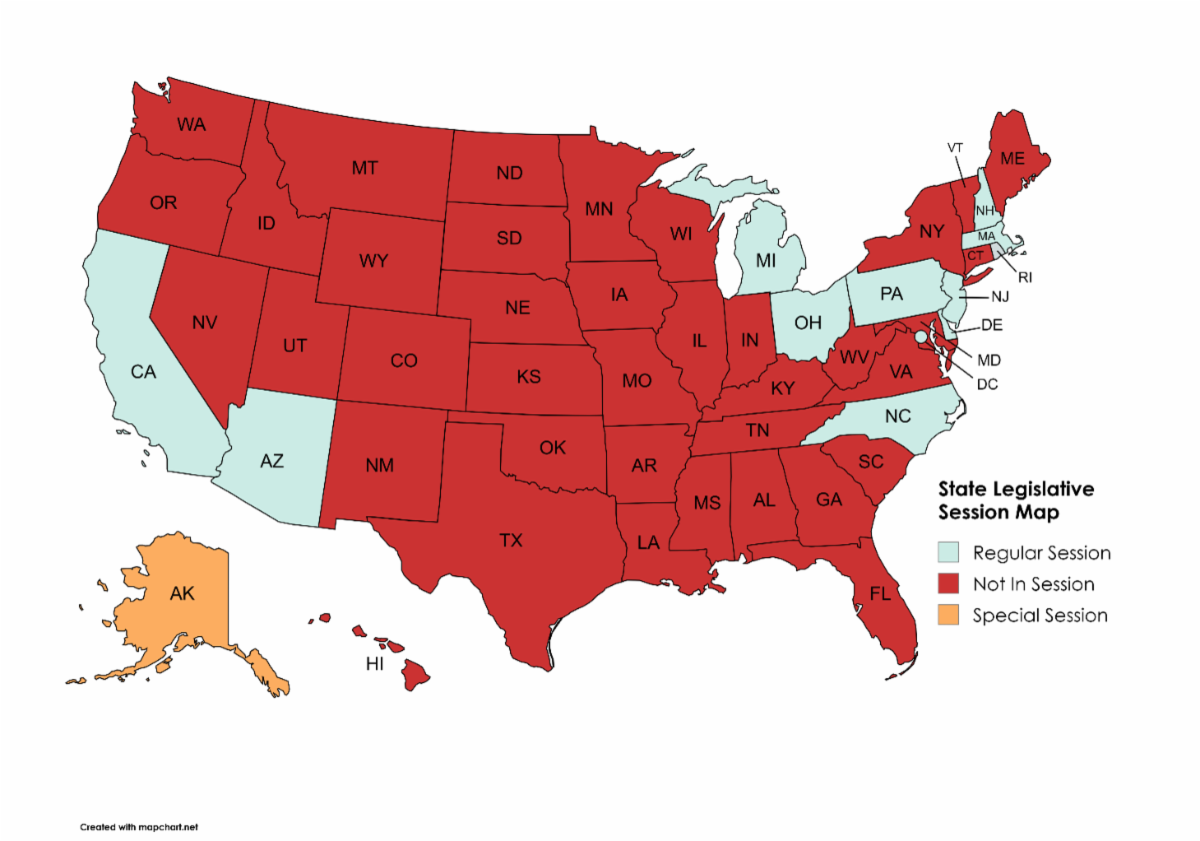
State Legislative Session Map


  • 11 states and DC are in regular session
  • Alaska is in special session
  • Two States are scheduled for special sessions in June: GA, VA
  • 39 States are out of session

Iowa Primary Results and Analysis


At 50 to 1, we work with the best consultants in the country.


Here is an update on the Iowa primary results from Logan Shine of Shine Strategies:


Now that Iowa's June 2 primaries are settled, here's my read on the field heading into the November 3 general election.


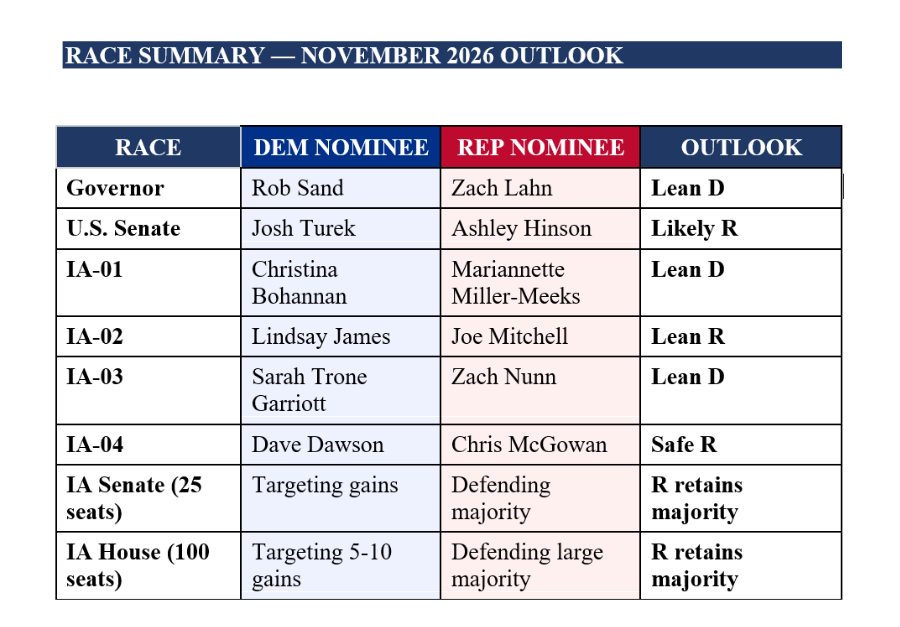
Late in the evening last night, all eyes were on the Republican gubernatorial primary and it delivered the night's biggest shock. Trump-endorsed Rep. Randy Feenstra conceded, making political outsider Zach Lahn the Republican nominee. It's the first Trump-backed loss of the 2026 cycle in a primary for governor, House, or Senate.


Lahn is a farmer, businessman, and political outsider from Belle Plaine. He built his campaign around an "Iowa First" message, supporting family farms, improving education, addressing the state's high cancer rates, and creating opportunities to keep young people in Iowa. He positions himself as MAHA-aligned, anti-establishment, and independent of traditional political donors, leaning on his background outside career politics. He'll face Democrat Rob Sand, the only Democrat currently holding statewide office.


My read is this leans Democrat: Sand is a proven, well-funded statewide winner and disciplined campaigner, while Lahn is untested statewide and exits a bruising, expensive five-way primary that split the party.


The open Senate matchup is also set, with Republican Ashley Hinson and Democrat Josh Turek each winning their primaries easily. I'd put this race as likely Republican.


As attention turns to the general, the structural backdrop favors the GOP. The most recent 2026 voter registration data show roughly 748,000 registered Republicans to about 562,000 Democrats, an edge of around 186,000 statewide. Just as notable, about 732,000 voters are registered with no party affiliation, making independents nearly as numerous as Republicans and likely decisive in the closer contests. Iowa remains competitive in certain races, but the registration math is a clear advantage for Republicans.


That advantage matters most on the competitive House map, where national spending will concentrate. IA-01 is a Bohannan–Miller-Meeks rematch of a sub-800-vote 2024 race and leans Democratic; IA-03 (Trone Garriott vs. incumbent Nunn) is another top Democratic target. IA-02 (Mitchell vs. James) leans Republican, and IA-04 stays safely red.


Bottom line: the governor's race is the marquee contest and the most volatile, and Lahn's win is a signal worth watching about where the GOP base is moving, but with a Republican registration edge and an independent-heavy electorate, candidate quality and turnout will decide the close races. 


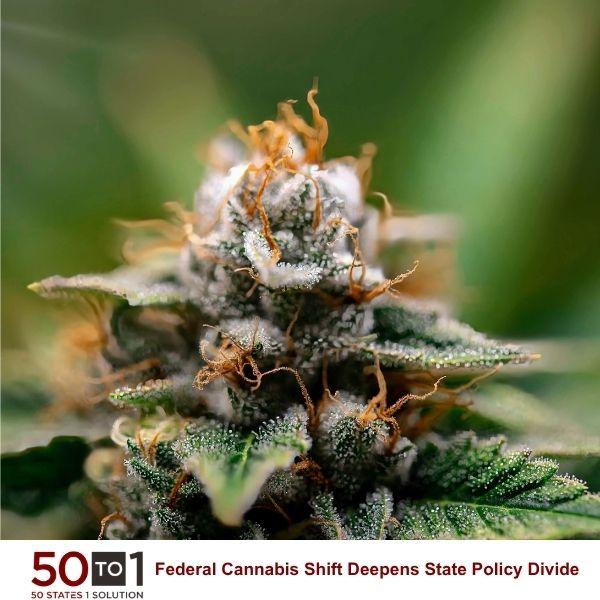
Federal Cannabis Shift Deepens State Policy Divide 


The U.S. Department of Justice’s decision to move medical cannabis from Schedule I to Schedule III marks a historic shift, with the federal government officially acknowledging the drug's accepted healthcare uses. This reclassification opens new doors for the medical marijuana industry, allowing state universities to launch advanced clinical research and enabling cannabis businesses to finally claim standard federal tax deductions.


However, the federal shift creates a complicated regulatory divide by leaving recreational marijuana classified as a highly restricted Schedule I substance. This partial rescheduling leaves the country with two separate legal frameworks for the same plant. Because 24 states and the District of Columbia allow adult-use cannabis, companies operating in both markets face immense confusion regarding how to navigate these conflicting federal rules.


Currently, state regulators and business owners are stuck in a "wait-and-see" mode as they await final guidance from federal agencies like the IRS and the DEA.


Questions remain over whether state-licensed medical operators will be forced to register with the DEA, pay new annual fees, and comply with strict federal inventory tracking. The U.S. Drug Enforcement Administration is scheduled to hold a public hearing at the end of June to discuss the potential de-scheduling of marijuana entirely, which could provide more concrete answers for states.


For more information:


Top Five State Legislative Developments to Watch


Here are this week’s top five state legislative developments to watch.


From affordability and AI to tariffs, workforce reporting, and housing policy, state legislatures across the country are advancing a range of notable and unconventional proposals with potentially broad impact.


1. The Post-Penny Era ("Round-Up" Laws)


Following disruptions and shutdowns in U.S. penny production, state law books are rewriting how everyday commerce works. At least 23 states have introduced or passed "round up" laws. These bills dictate whether retailers must round down or up to the nearest nickel during cash transactions, and 11 state agencies have already stepped in to establish fair consumer guidelines.


2. Banning Algorithmic AI Pricing


Rising concerns over artificial intelligence driving inflation have led to a bipartisan wave of "affordability" legislation. States including Illinois, Ohio, Tennessee, and Utah have introduced or advanced bills targeting algorithmic and dynamic pricing software. These laws restrict companies from using AI tools that automatically hike up the costs of goods, services, or rent based on competitor monitoring or localized demand spikes.


3. Federal Tariff Disclosure on Receipts


As macroeconomic policy and international trade dominate the national conversation, state legislators are finding ways to bring the issue directly to the consumer. Over 15 bills across nine states have been filed to require retail businesses or auto dealerships to explicitly break down federal tariff costs on consumer receipts or vehicle window stickers. Concurrently, Oregon is advancing unique legislation (HB 4061) to establish small-business relief grants specifically for local companies hurt by federal tariffs.


4. Mandated AI Job-Loss Disclosures


AI's threat to the workforce is transitioning from a tech debate to concrete labor policy. In New York, the legislature is advancing SB 8706, which requires any company employing 50 or more people to officially report how many human jobs are being replaced by AI tools or automation software.


5. Housing Reforms Tied to Public Transit


To aggressively tackle housing shortages, state legislatures are bypassing local municipal zoning to force construction near public transport lines. Major transit-oriented bills, like Maryland’s SB 389 and Georgia’s HB 1166, have gained momentum by stripping local zoning boards of the authority to block affordable, multi-family housing developments close to train or major bus hubs. 

Industry Happenings and Events

June 10 | RGA Quarterly Meeting | Nashville, Tennessee


June 15–16 | AGA 2026 Annual Meeting | Sea Island, Georgia


June 15 | RSLC Biotech & Health Fly-In | Indianapolis, Indiana


June 18 | GOPAC Emerging Leaders Summit | Park City, Utah


June 25–26 | ISPL State Tax Policy Seminar | Arlington, Virginia


June 25–26 | RLCC Afternoon at Kohler | Kohler, Wisconsin


July 7–10 | CSG Western Legislative Conference | Salt Lake City, Utah


July 10–11 | DAGA Presidential Retreat | Napa, California


July 11–14 | CSG Southern Legislative Conference | Lexington, Kentucky


July 15–16 | DLCC Annual Meeting | Lake Tahoe, Nevada


July 17–18 | CSG Bowhay Institute for Leadership Development | Madison, Wisconsin


July 19–21 | RLCC National Meeting | Boca Raton, Florida


July 20 | RGA Quarterly Meeting #3 | Aspen, Colorado


July 22–24 | ALEC Annual Meeting | Orlando, Florida


July 27–29 | NCSL Legislative Summit | Chicago, Illinois


Cool Jobs


Visit us at 50to1.com or follow us on LinkedIn and X

LinkedIn  X