|
Greetings!
There’s a lot happening at GCOOS this month and many of us are in far-flung locations as we share news of our ocean observing products with various marine science communities and learn the latest developments in data infrastructure. GCOOS Scientific Computing Specialist Tuomo Saari and I are at the University of Hawaii this week for a cybertraining workshop. Meanwhile, staffers Megan Howson and Grant Craig are in Puerto Rico showcasing their work on CETACEAN, designed to help support the restoration of open-ocean dolphin and whale species injured during the Deepwater Horizon oil spill. Several of us also returned from St. Petersburg, Florida, last week following an all-hands meeting of the MBON community.
But in the middle of all our travels, we had to take a moment to celebrate news that IOOS has awarded new five-year cooperative agreements to support regional and national ocean observing. These agreements will provide $45.7 million in funding for the first year and enable the 11 regional associations — including GCOOS — to operate.
GCOOS received level funding ($2.3 million) with additional funding support for five additional projects: the Navy glider project, work with the Imaging FlowCytobot (IFCB) network, the Integrated Tracking of Aquatic Animals (iTAG) annual meeting/workshop, as well as CETACEAN and the Sea Turtle Atlas. (Read more from NOAA here.
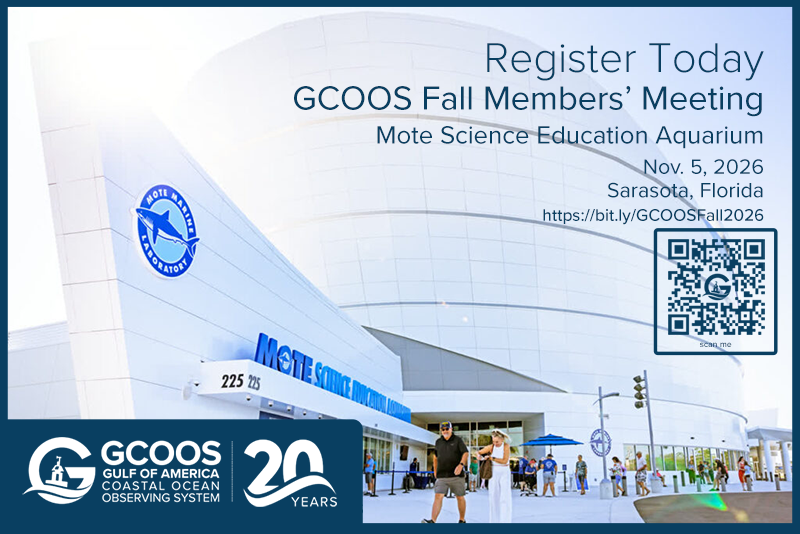
We look forward to sharing more news and updates about GCOOS and the work our partners are doing in the Gulf at our Fall Members’ Meeting — including an exciting preview of the new GCOOS OceansMap. We’re hoping you can join us in person in Sarasota, Florida, during the Nov. 5 conference! (be sure to register today).
Until next month,
| | Register Today: GCOOS Fall Members’ Meeting | | |
The GCOOS Fall Members' Meeting is shaping up to be a great session focused on some of our key focus areas, including how coastal and ocean observing supports healthy and resilient communities. Please register today to join us in Sarasota, Florida on Nov. 5.
- What: GCOOS Fall Members' Meeting
- When: 8 a.m. to 5 p.m. Thursday, Nov. 5. (Breakfast and lunch and aquarium tickets provided)
- Where: The new Mote Science Education Aquarium (Mote SEA), 225 University Town Center Dr., Sarasota, FL 34243.
-
Click here to register now
-
Click here for the full meeting agenda
Nearby airports include Sarasota Bradenton International Airport (5 miles); St. Petersburg-Clearwater International Airport (47 miles); Tampa International Airport (55 miles) and Punta Gorda Airport (55 miles).
| | |
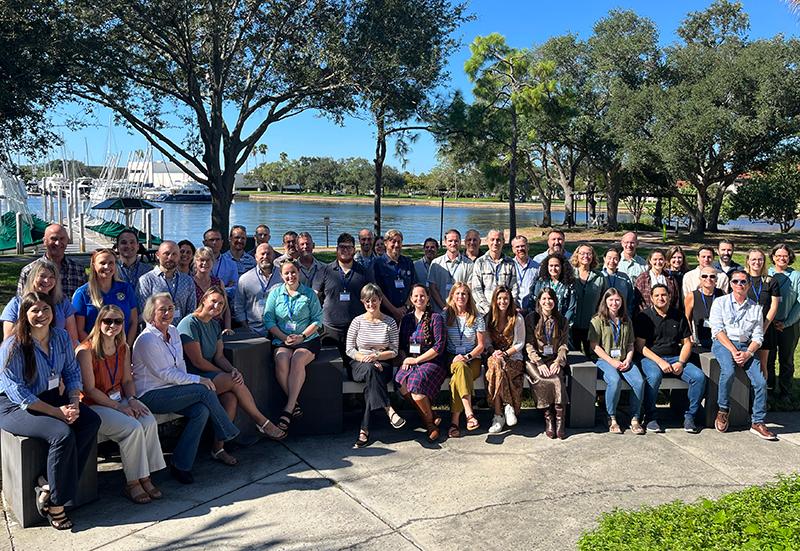
Researchers and resource managers from the Arctic to the Florida Keys shared progress, identified challenges and discussed solutions to advancing an operational marine life monitoring network during the U.S. MBON All Hands Meeting Oct. 14-16 in St. Petersburg, Florida.
The goal is to build a strategic framework for an operational marine life monitoring network that includes tracking animal movement, remote sensing and seascape applications, and eDNA standards, analysis and data tools.
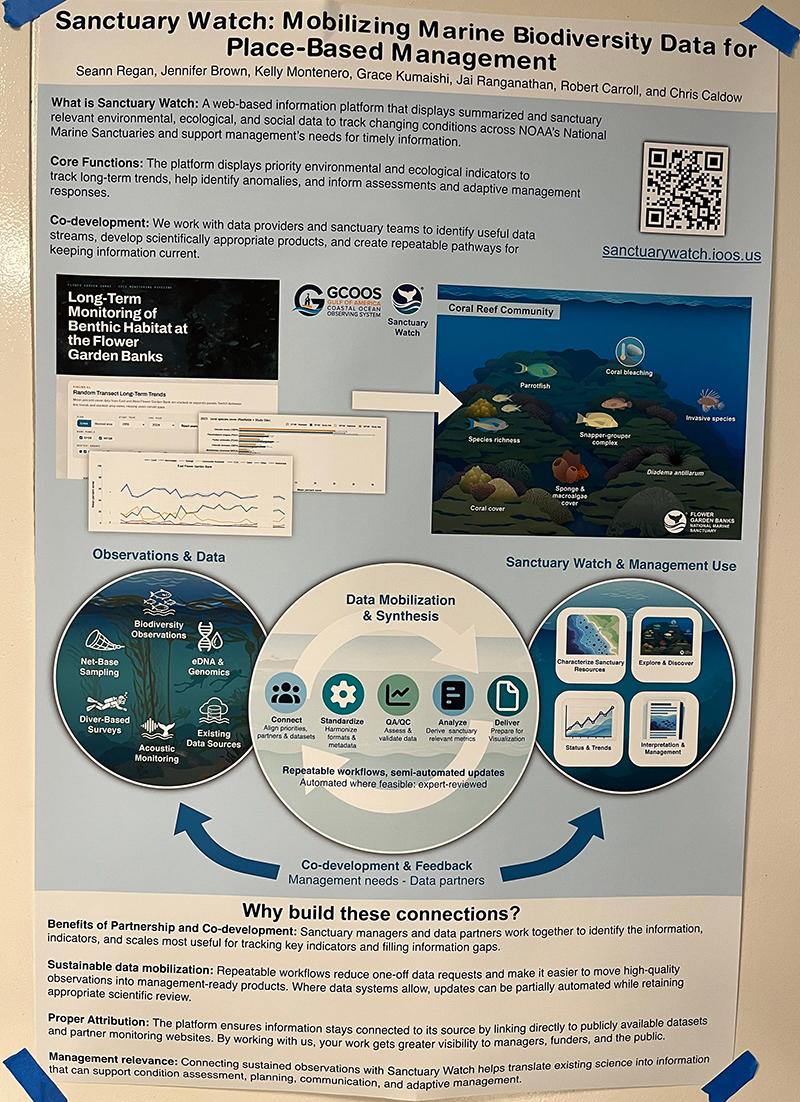
GCOOS-supported work on development of a data dashboard for the Flower Garden Banks National Marine Sanctuary was highlighted as an MBON success story. The project, through the work of contractor Seann Regan, now with the NOAA Office of National Marine Sanctuaries, and FGBNMS Research Operations Specialist Kelly O’Connell, mobilized approximately three decades of benthic survey data from the sanctuary and enabled their use in Sanctuary Watch — a platform that provides interactive infographic tools and data visualizations to help scientists, managers, educators and the public understand and monitor the health of marine sanctuaries.
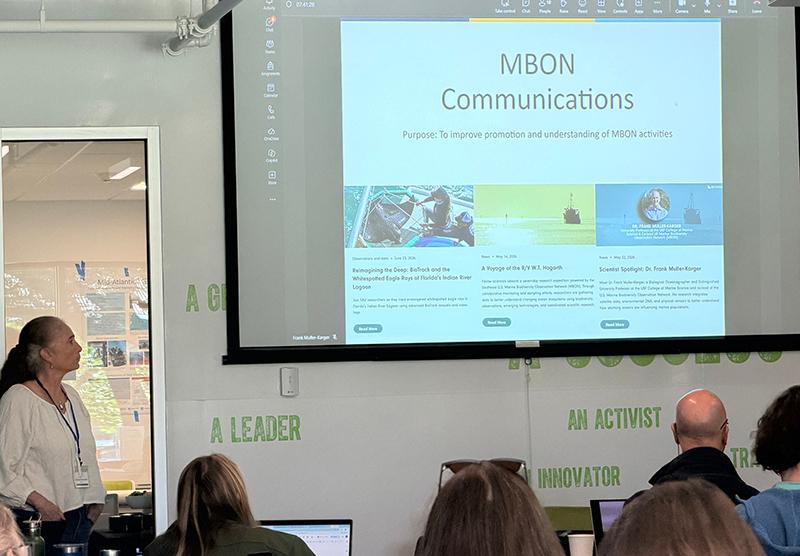
GCOOS Outreach and Education Manager Dr. Chris Simoniello presented with MBON Communications Working Group co-leads Jennifer Dorton of SECOORA, and Jackie Motyka of NERACOOS to provide updates on recent stories and social media content that can be accessed here.
-
Click to learn more about MBON
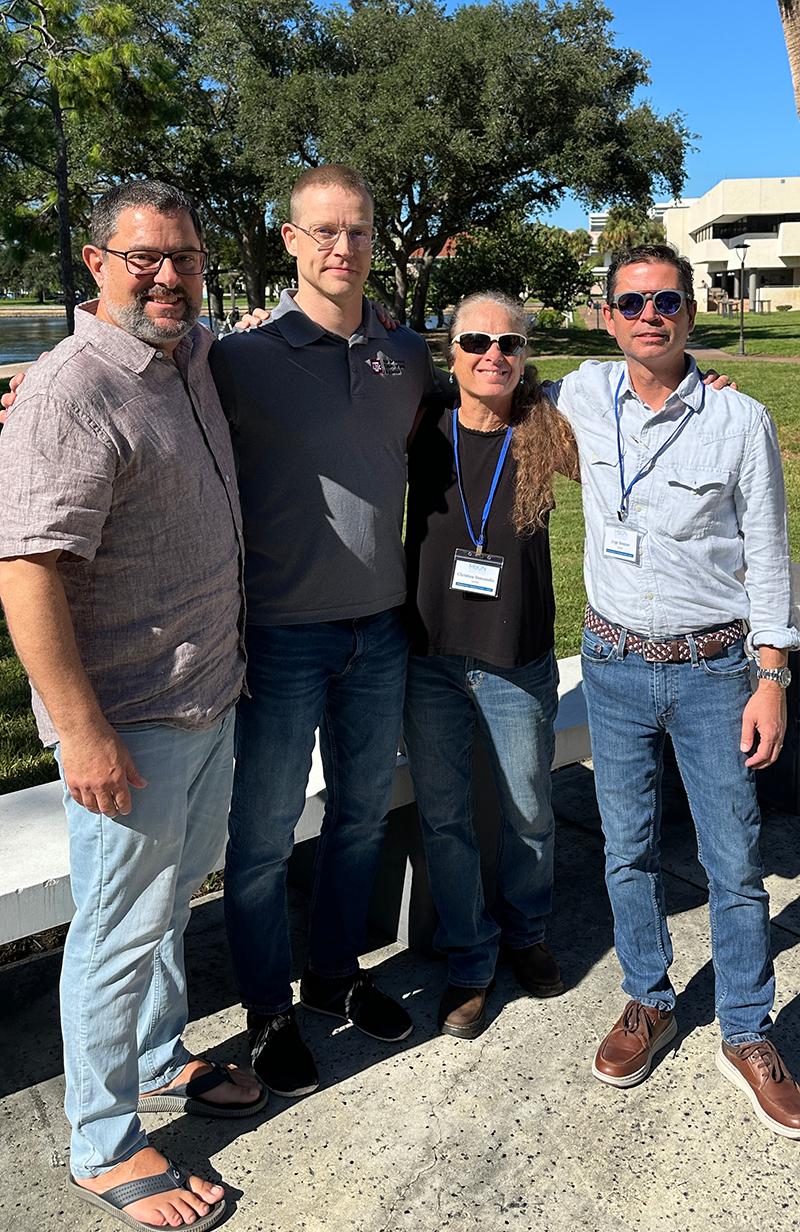
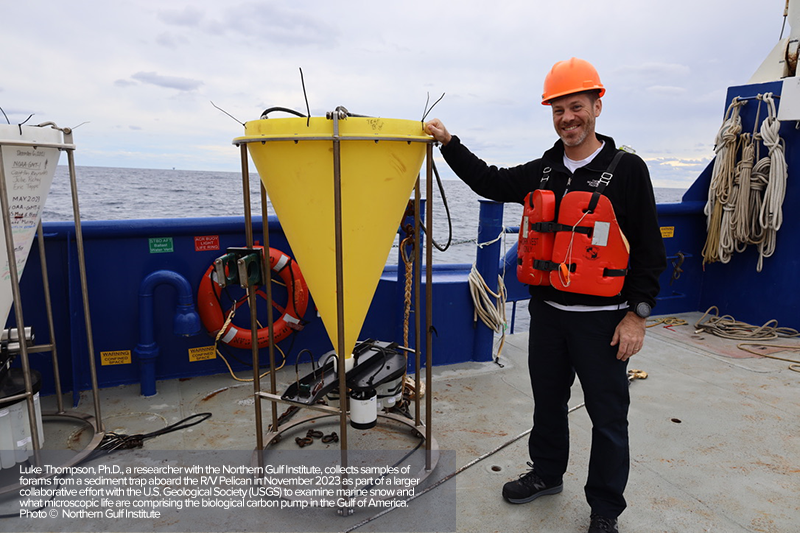
| | | | GCOOS Staff at MBON: Grant Craig, Tuomo Saari, Chris Simoniello and Jorge Brenner. | |
GCOOS at the Marine Mammal Conference | |
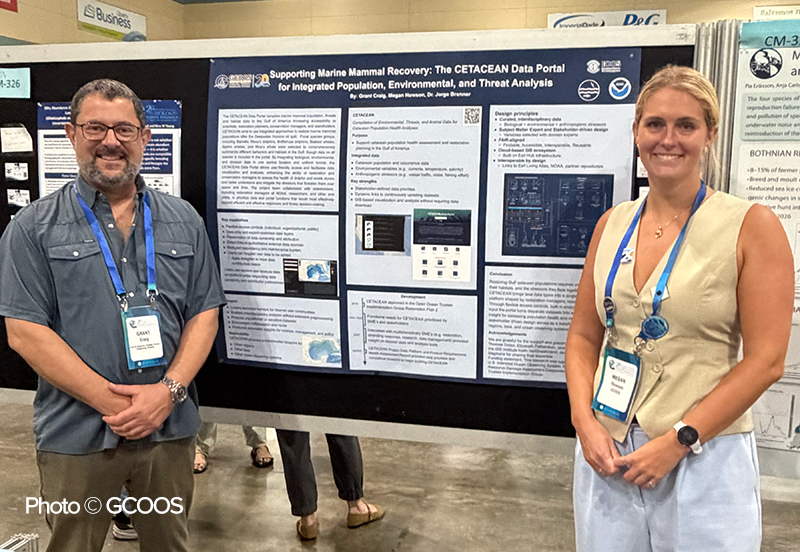
Several GCOOS staffers are at the 26th Biennial Conference on the Biology of Marine Mammals in Puerto Rico this week. GCOOS Product Developer and Co-Data Manager Bob Currier presented virtually during a workshop focused on AI applications in modern marine mammal science. He described his work with GUARDIAN, a spectrogram-picture classifier being used to identify calls from Rice’s whales, and its successor, GOBLIN. GCOOS Marine Mammal Biologist and Data Scientist Megan Howson and Grant Craig, Project Coordinator, are attending the meeting in person and scheduled to present the posters: “GUARDIAN: Rapid, Scalable Passive Acoustic Monitoring for Cetacean Detection Through Development of Integrated Platforms and AI Enabled Processing” (Howson/Currier) and “Supporting Marine Mammal Recovery: The CETACEAN Data Portal for Integrated Population, Environmental, and Threat Analysis” (Howson/Craig).
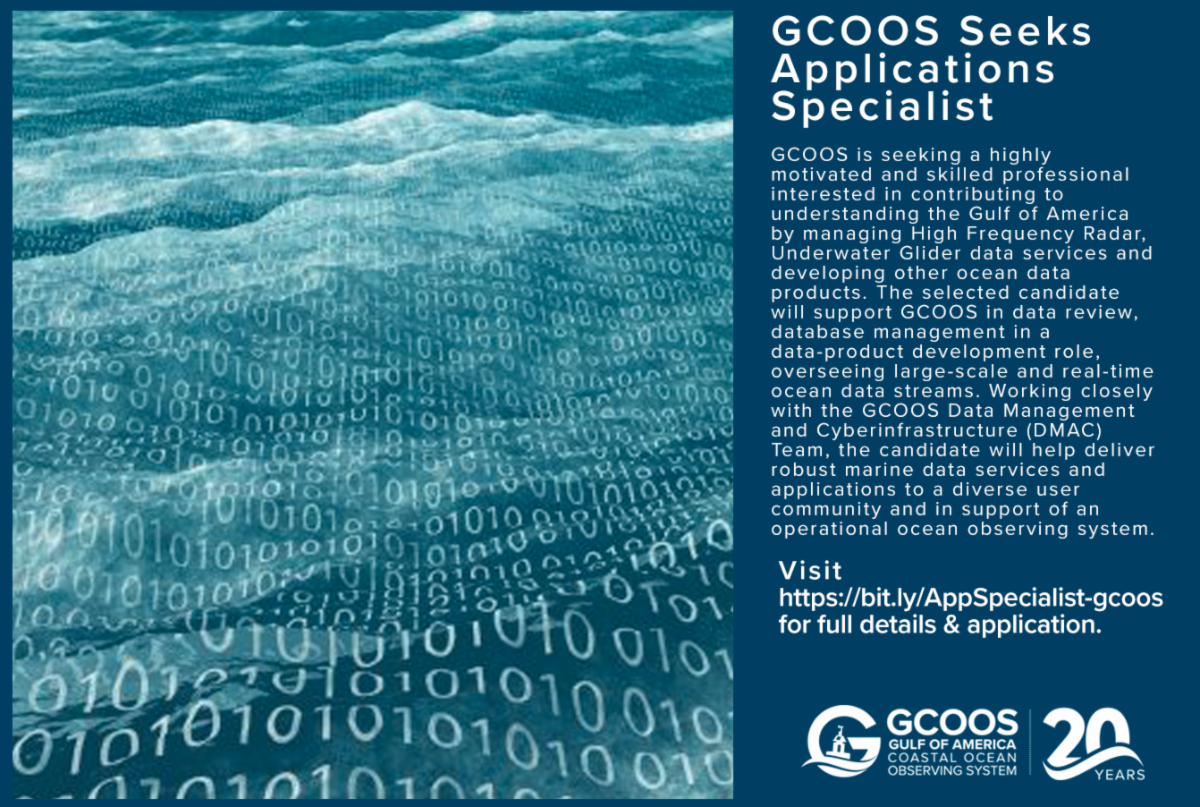
| | GCOOS Seeks Applications Specialist | | |
GCOOS is seeking a highly motivated and skilled professional interested in contributing to understanding the Gulf of America by managing High Frequency Radar, Underwater Glider data services and developing other ocean data products. The selected candidate will support GCOOS in data review, database management in a data-product development role, overseeing large-scale and real-time ocean data streams. Working closely with the GCOOS Data Management and Cyberinfrastructure (DMAC) Team, the candidate will help deliver robust marine data services and applications to a diverse user community and in support of an operational ocean observing system.
| | |
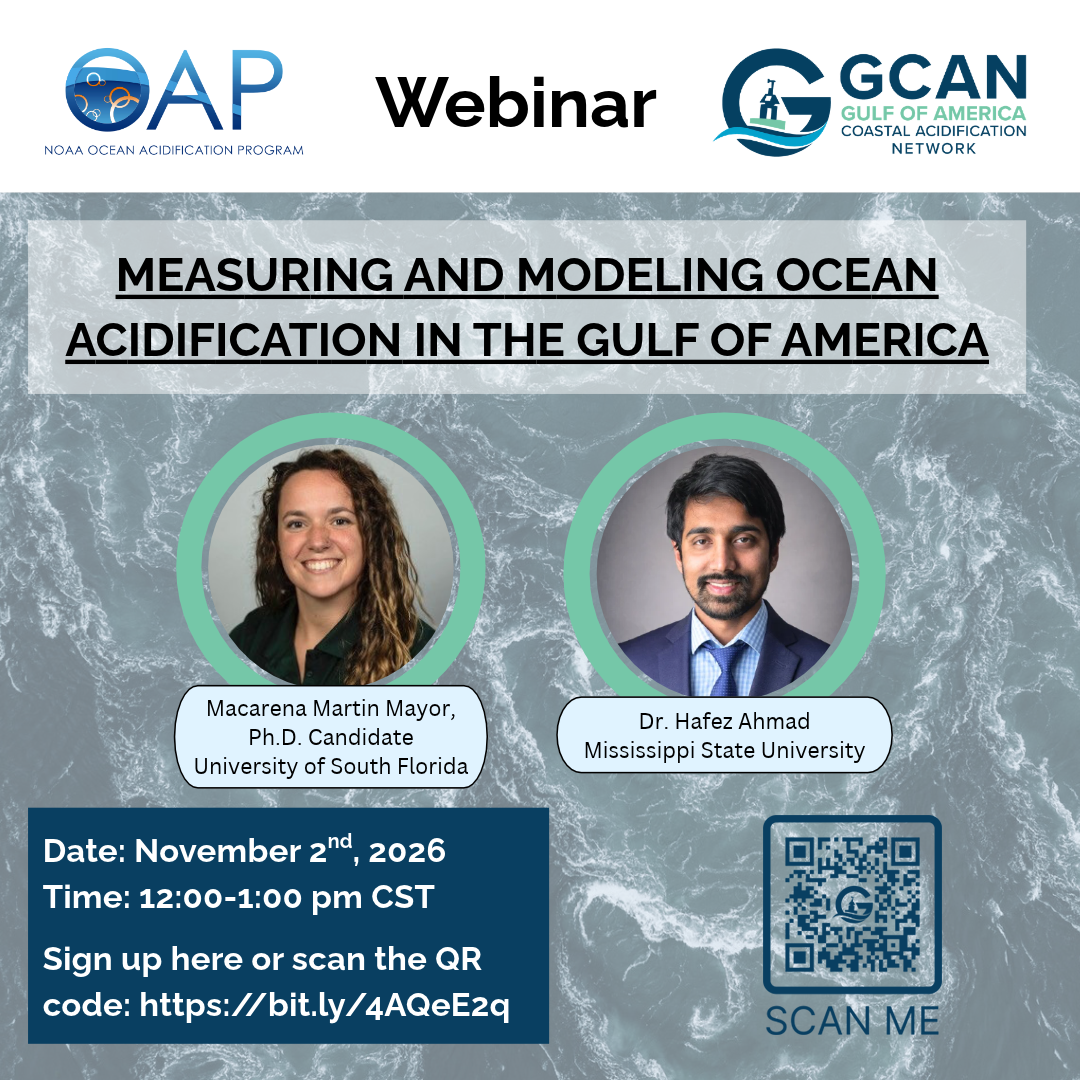
The next webinar in the GCAN Fall Series is scheduled for Nov. 2. Register today for “Measuring and Modeling Ocean Acidification in the Gulf of America,” with GCAN Fellows Macarena Martín Mayor, Ph.D. Candidate at the University of South Florida, and Dr. Hafez Ahmad, Ph.D., Mississippi State University.
The webinar will highlight approaches to measuring and modeling ocean acidification and water quality in the Gulf, showcasing how field observations, autonomous technologies, remote sensing, and advanced modeling approaches can improve understanding of changing carbonate chemistry and water quality conditions across the Gulf.
Did you miss our last webinar with Katelyn Schockman, Ph.D., University of Miami Cooperative Institute for Marine and Atmospheric Studies and NOAA’s Atlantic Oceanographic and Meteorological Laboratory? She presented “Development and Characterization of Atlantic Seawater Inorganic Carbon Reference Materials.” The webinar is archived to our YouTube channel and you can watch it there!
| | Community Workshop: Louisiana’s Changing Coast | | |
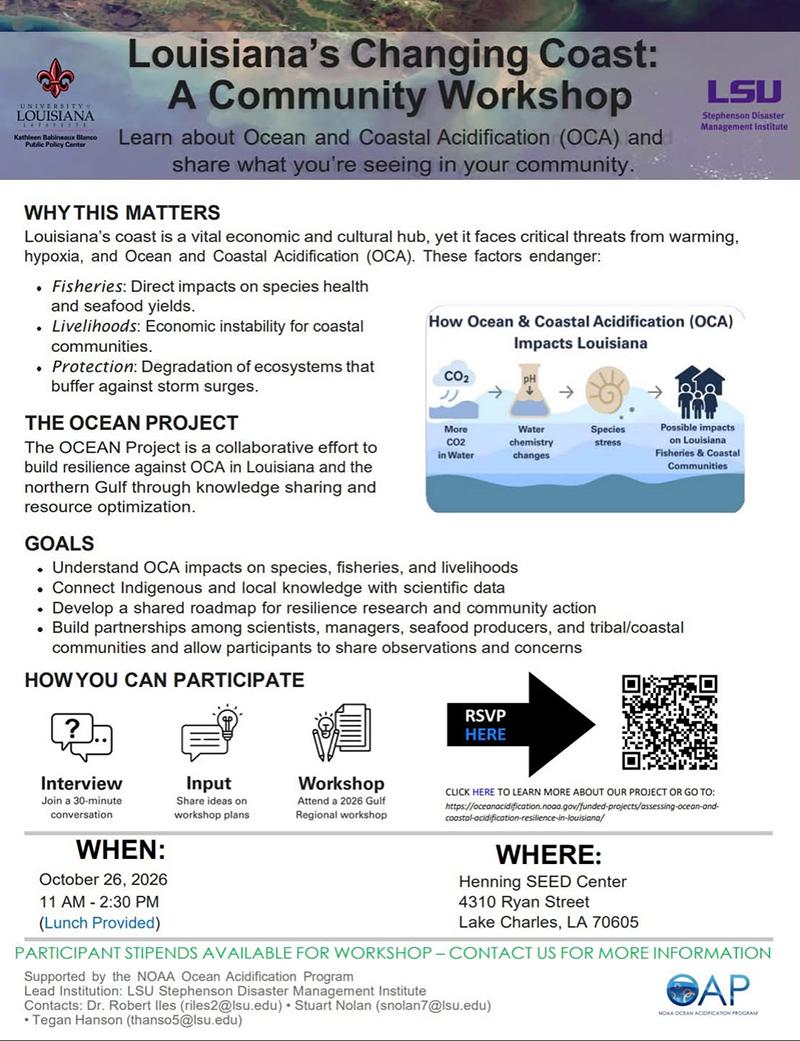
NOAA’s Ocean Acidification Program (OAP) along with Louisiana State University and the University of Louisiana at Lafayette are sponsoring a community workshop as part of the OCEAN Project, which is building resilience against ocean and coastal acidification in Louisiana and the northern Gulf.
- When: 11 a.m. to 2:30 p.m. CT Oct. 26
- Where: Henning SEED Center, 4310 Ryan St., Lake Charles, LA 70605
-
RSVP here
-
Click here to learn more about the project
| | New User Interface Added to the Data Repository | |
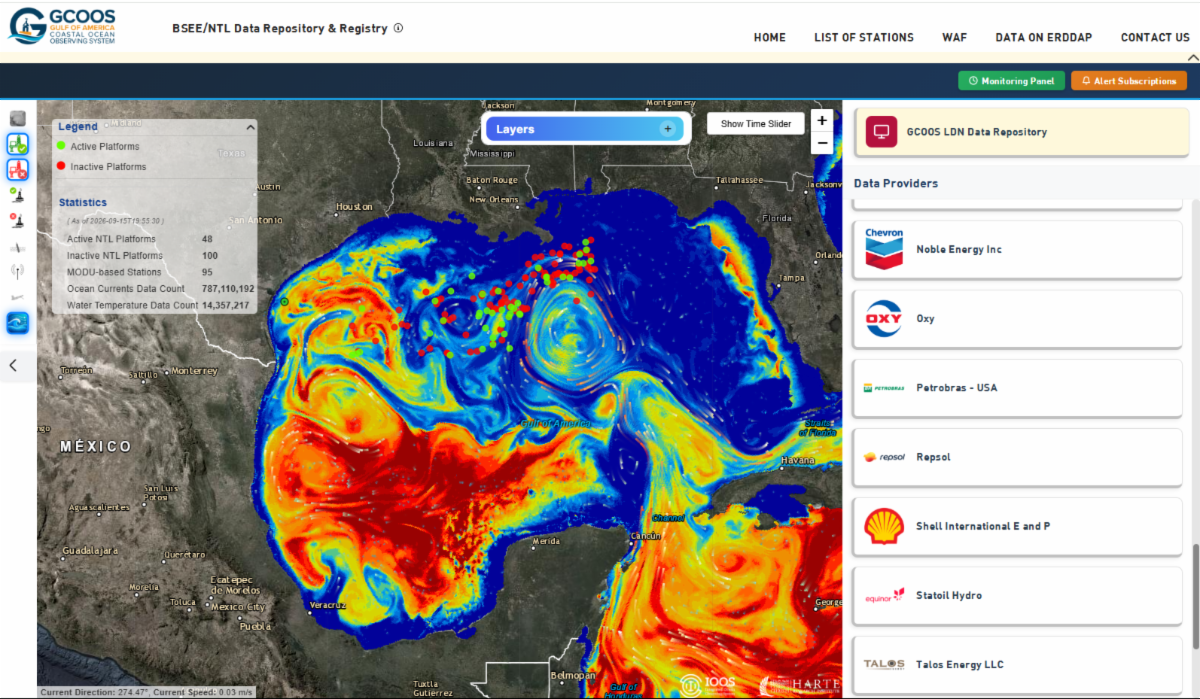
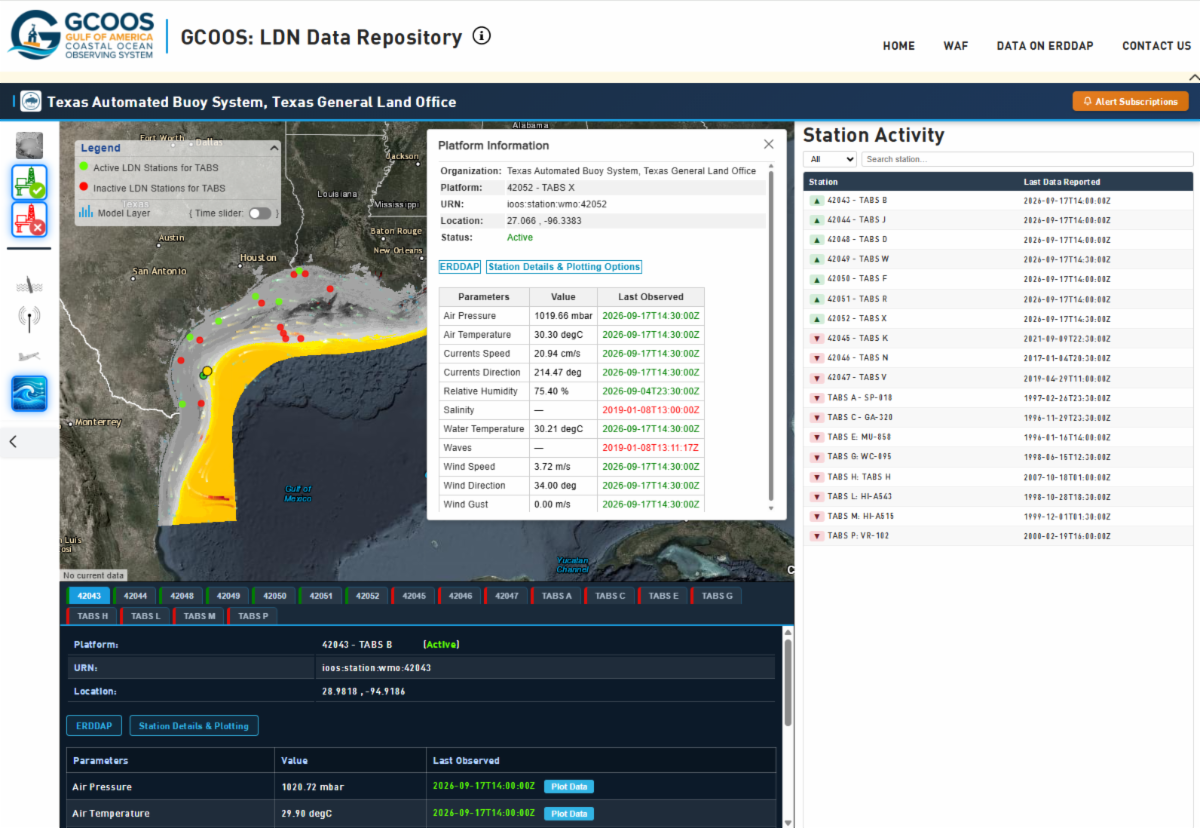
The new GCOOS Data Portal now features an interactive user interface that closely mirrors the design of the BSEE/NTL Data Repository and Registry dashboard, which was introduced at the 2026 IOGP Metocean Week meeting at the Harte Research Institute, Texas A&M University-Corpus Christi. This interface incorporates the same set of features that were developed and reviewed by data providers in the offshore energy industry who contribute data to the public via GCOOS.
The primary objective of this release is to streamline data browsing within the GCOOS repository and to implement enhancements requested by users. Key features introduced in this release include:
- An interface that enables users to view stations associated with each organization, designated as Local Data Nodes (LDN) for non-NTL stations and BSEE/NTL stations, by selecting the organization of interest in the right panel of the user interface (figure 1).
- Organizational landing pages that provide a clear overview of the status of each station (figure 2).
- Users now have the capability to overlay additional relevant datasets, such as Argo floats, gliders, and HF radars, onto the observing stations.
- Users can also integrate models developed and reviewed by regional hydrodynamic modelers, including the visualization of animated ocean currents from these models.
- A user-defined alert system that is available to notify researchers and data providers via email of any delays in data processing from active stations.
- Additional features retained from the previous version includes links to station details, station status, and the date of last data submission to GCOOS, as well as curated data plotting, direct links to data on ERDDAP, and access to the Web Accessible Folder (WAF).
| | |
Coastal Hazards &
Hurricane Season
| | |
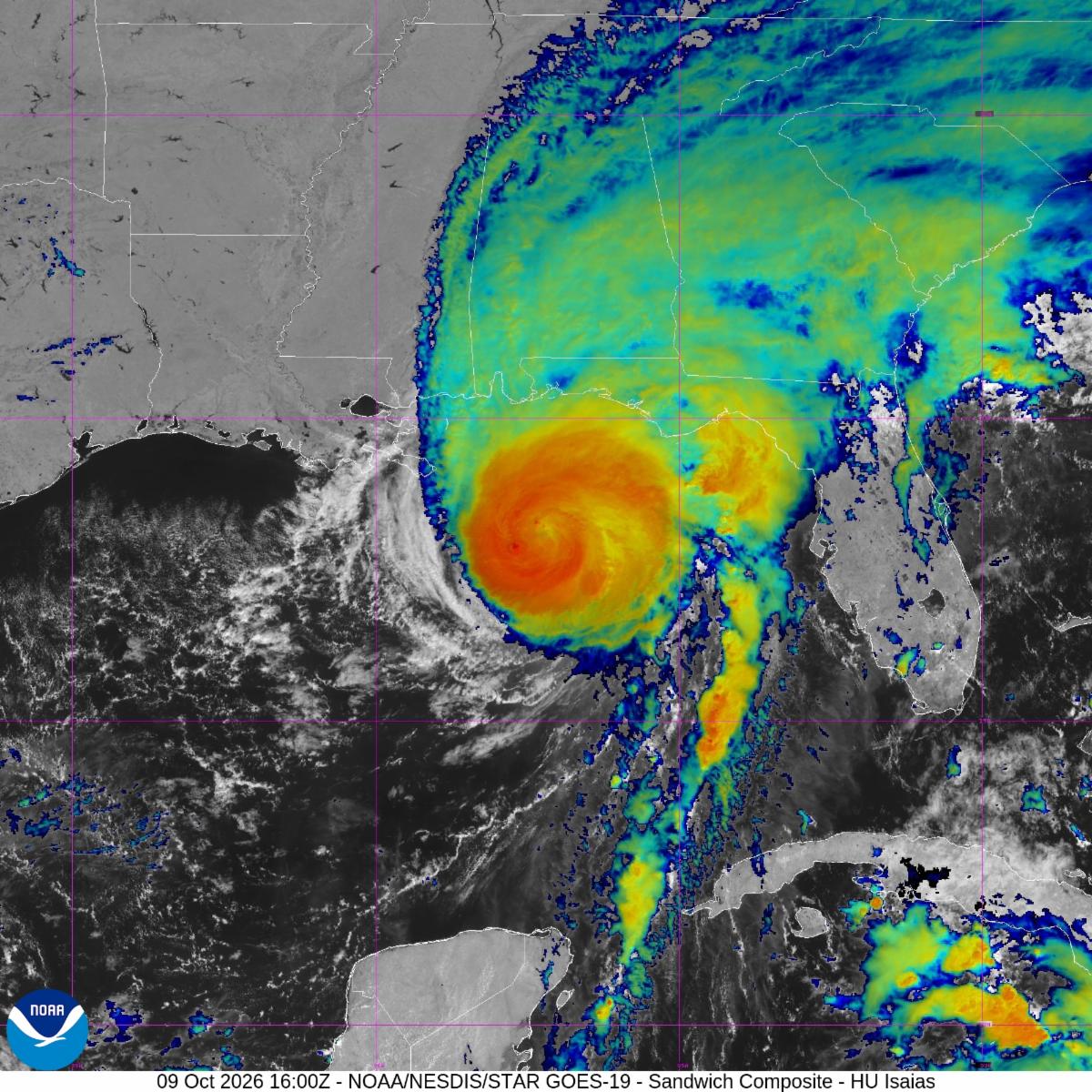
Hurricane Isaias made landfall near Pensacola, Florida, on Oct. 9, accompanied by destructive winds and a large storm surge. After moving farther inland and weakening on Oct. 10, Isaias dumped heavy rain which led to flooding across the mountains of western North Carolina. The storm also led to the development of several tornadoes across central and eastern North Carolina on Oct. 11 along a persistent convergence line that swept east across the state.
| | |
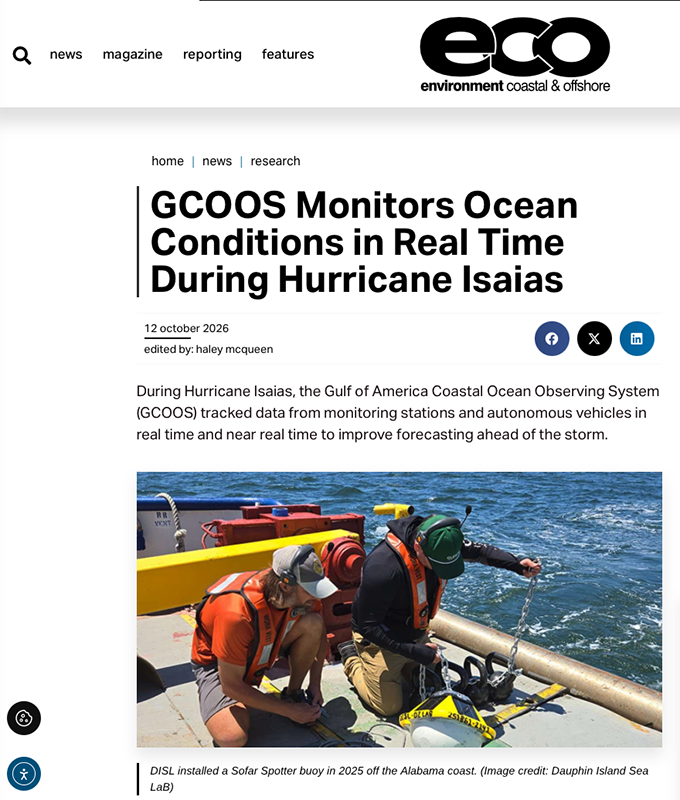
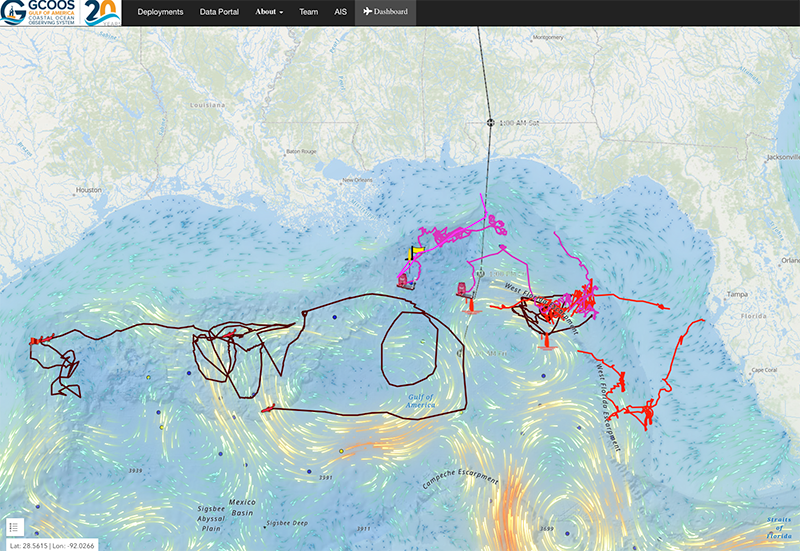
As the storm moved landward, GCOOS and its partners were tracking data from monitoring stations and autonomous vehicles in real-time and near-real time that helped to improve forecasting ahead of the storm. ECO magazine shared the news, helping to spread the word about the data available to the research community, emergency managers and the public.
| | |
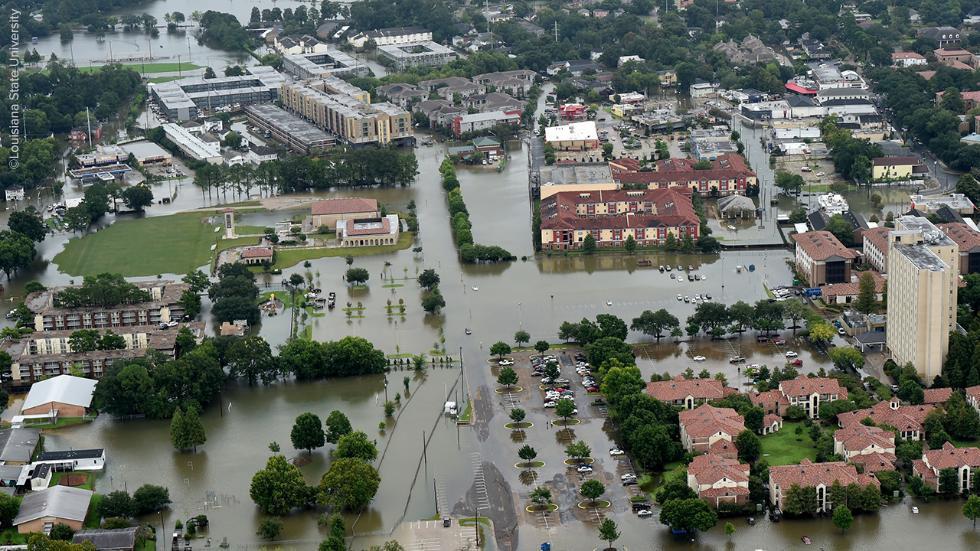
The National Geodetic Survey collects aerial assessment of post-storm damages in the aftermath of hurricanes using NOAA aircraft in coordination with FEMA and other state and federal partners.
-
Post-storm imagery is available here
| | |
Saildrone and NOAA intercepted Hurricane Isaias as it intensified to a Category 3 storm in the Gulf. SD-1045, positioned approximately 150 nm south of Pensacola, FL, intercepted Hurricane Isaias from the northern edge and passed directly through the eye of the storm, experiencing winds gusting over 90 knots (103 mph) and waves up to 20 meters (65 feet) high. To the east of the storm, SD-1057 intercepted the storm's eastern quadrant, approximately 170 nm west of Sarasota.
| | |
The recording from the most recent webinar presented by the Underwater Glider User Group (UG2) is now available. The Oct. 15 webinar focused on the Glider Rodeo Hackathon, where participants teamed up to develop projects using (or inspired by) data from the NOAA Fisheries PAM Glider Rodeo. Participants covered the NOAA Fisheries Glider Rodeo, Glider Selection Dashboard, PAM-Glider Noise Profiler, and PAM Transformer Visualizer.
| |
Gulf Lease Sale Announced | |
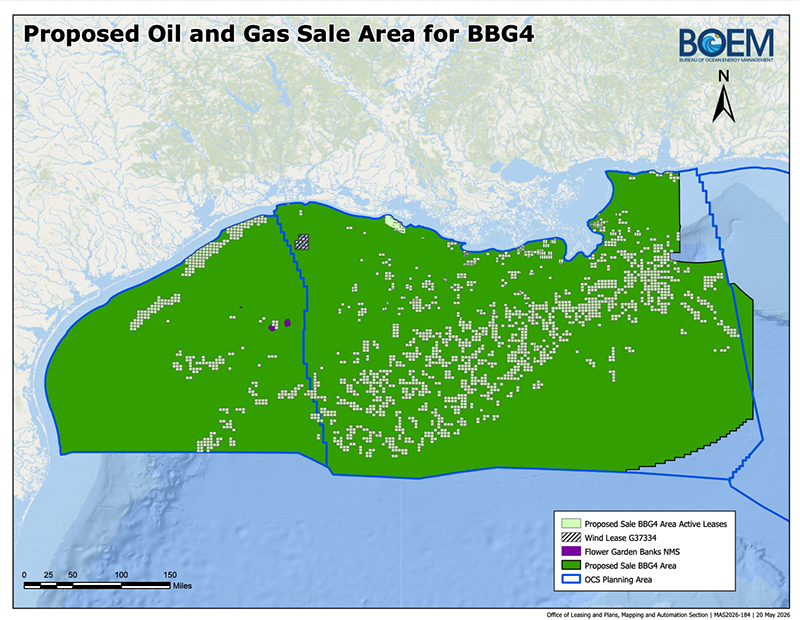
The U.S. Marine Minerals Administration has announced a proposed notice of sale in the Gulf of America that would open access to 15,104 unleased blocks covering 80.4 million acres on the Outer Continental Shelf. The terms proposed include a 12.5% royalty rate. The proposal is being made under the “Working Families Tax Cut Act,” which requires the MMA to hold at least 30 oil and gas lease sales in the Gulf through 2040. The announcement begins the 60-day comment period for state and local governments.
| | |
This afternoon, NOAA is hosting a webinar focused on the Office of Marine and Aviation Operations Uncrewed Systems Operations Center, which operates a variety of uncrewed aircraft and marine systems that provide new, effective ways to collect data in support of NOAA's science, service, and stewardship missions. Speakers will provide an overview of some of the key uncrewed systems in use, examples of the projects that are being accomplished using these systems, and how new technologies are becoming a part of how NOAA works towards its applied research and operational goals.
- When: 2 p.m. ET Thursday, Oct. 22
-
Register here
Speakers:
- Dexter Malley, who leads NOAA’s Uncrewed Marine Systems Division (UMSD), where he advances uncrewed maritime capabilities in support of NOAA’s operational mission and strategic priorities. He brings more than 30 years of experience across NOAA, the U.S. Navy, and private industry, including leadership roles as a supervisory engineer and scientist focused on the research, development, integration, and operational transition of uncrewed systems (UxS).
- John Walker, an Uncrewed Systems Atmospheric Scientist and Project Coordinator, supporting NOAA’s Uncrewed Systems Operations Center (UxSOC) and the UAS Division (UASD) in OMAO. With a background in applied research meteorology at NASA, helping design specs for the SLS rocket, and experience supporting NOAA’s uncrewed systems enterprise since 2014, he specializes in "research-to-operations" (R2O) applications.
| | |
Healthy Ecosystems and Living Resources
| | Webinar: ArcGIS for Ocean Science | |
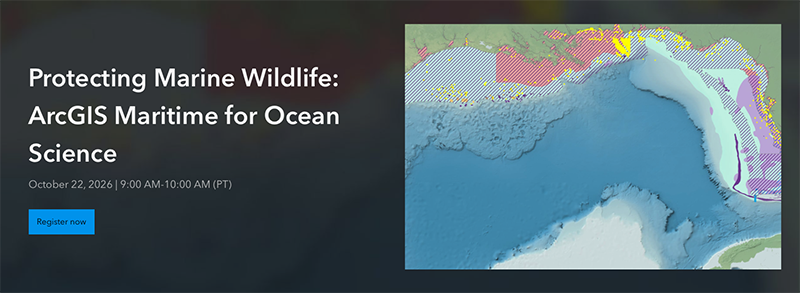
Former GCOOS GIS manager Jerad King will be presenting a webinar this Friday focused on using ArcGIS for wildlife conservation. As a product engineer at Esri, King is now focused on the development of software for producing Electronic Navigational Chart data and high-velocity maritime data, including International Hydrographic Organization (IHO) S-100 products for surface currents, water levels, and navigational warnings.
Friday’s webinar “Protecting Marine Wildlife: ArcGIS Maritime for Ocean Science” will include tips for protecting marine wildlife in areas where there may be buoys, beacons, bridges, ports, pipelines, shipping lanes, or other prominent coastal landmarks. Participants will also learn how ArcGIS Maritime can be leveraged for a safer, healthier environment for wildlife and people.
- When: 9-10 a.m. PT
-
Register here
| NOAA RESTORE Announces New Research | | |
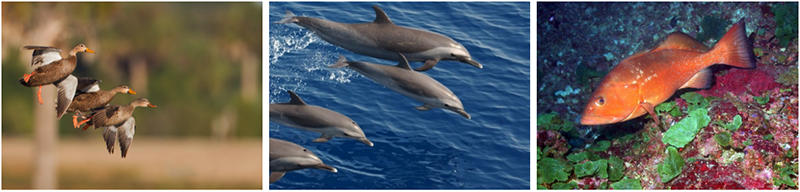
The NOAA RESTORE Science Program has awarded funding to five projects initiated in 2019 focused on long-term trends in living coastal and marine resources in the Gulf. The project teams earned an additional $24.7M in funding based on high performance and following an independent evaluation. The funds will allow the project teams to continue long-term collaborative research that informs the management of reef fish; deep open-water fish and invertebrates; marine mammals; marsh birds; and Mobile Bay fisheries.
The awards will support teams of researchers and resource managers from 20 institutions including universities, state and federal agencies, and non-governmental organizations.
| | 10th edition of the EU Copernicus Ocean State Report | | |
The Copernicus Ocean State Report (OSR) is celebrating its 10th edition with its latest release. Over the past 10 years, the OSR has documented the ocean’s natural variability and its profound changes affecting marine environments, biodiversity and societies, providing an authoritative scientific record that supports research, policy, and society. The milestone belongs to the scientific community, the network of Copernicus Ocean State Report authors across Europe and abroad, whose curiosity, dedication and collaboration have shaped a decade of ocean knowledge: 636 authors, 214 publications and 258 organizations from 37 countries.
| | New Northern Gulf Research Institute | | |
NOAA has selected Mississippi State University to host NOAA’s Cooperative Institute in the Gulf of America (CINGA). The mission of this cooperative institute is to promote collaborative research with NOAA to build a comprehensive understanding of Gulf ecosystems, along with the social and economic forces that define the region. The selection comes with an award of up to $100 million over the course of five years, with the potential for a five-year renewal based on successful performance. NOAA selected Mississippi State University, which is located in Starkville, Mississippi, after an open, competitive evaluation. CINGA will be affiliated with NOAA's Atlantic Oceanographic and Meteorological Laboratory in Miami, Florida.
| | |
Gulf of America Alliance (GOAA)
Regional Ocean Partnerships
| |
Mississippi Congressman Mike Ezell (MS-04) and Congresswoman Suzanne Bonamici (OR-01) have introduced the bipartisan Regional Ocean Partnerships Reauthorization Act . This legislation is designed to strengthen cooperation among coastal states, federal agencies, and local stakeholders to address shared ocean and coastal challenges. The Regional Ocean Partnerships Reauthorization Act involves and coordinates several key groups and entities focused on managing and protecting coastal and ocean resources, including the GOAA, which is a designated regional ocean partnership covering Alabama, Florida, Louisiana, Mississippi, and Texas. The act would authorize approximately $10.6 million in FY2028, with incremental increases through FY2031 to support partnership activities.
| | |
Gulf Research Program (GRP)
Water in a Changing Landscape
| | |
The Gulf Research Program (GRP) is supporting communities as they navigate changes from sea level rise, flooding, storm surge and even how coastlines are managed. GRP-funded projects are designed to help people better understand what it means to live with water — from improving understanding of the Gulf and Mississippi River Delta to working with residents to design solutions for flood-prone neighborhoods.
| | |
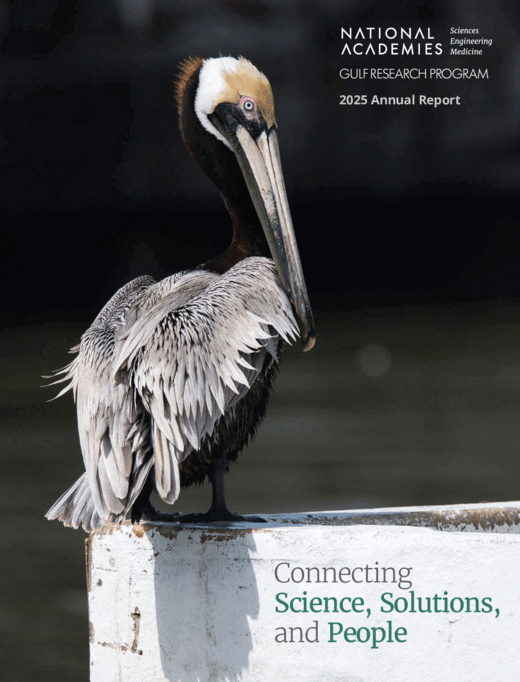
The GRP has released is annual report “Connecting Science, Solutions and People,” which summarizes the organization’s funding, accomplishments, activities and how it is progressing toward its goals.
| | |
The GRP’s NextGen Oil Spill Research Webinar Series continues with the webinar: "Conducting Community-Centered and Place-Based Research." The session will explore approaches to conducting oil spill research centered on community priorities and attentive to local geographic and cultural context. Speakers will discuss strategies for building sustained and trusting relationships with Gulf Coast communities, designing research that responds to local environmental, health, and economic concerns, and translating findings in ways that support community well-being.
| | |
IOOS Association
Caraid Award Nominations Open
| | |
The IOOS Association is accepting nominations for the Caraid Award, created in 2020 to recognize those who have made outstanding contributions to observing and understanding our oceans, coasts and Great Lakes through vision, leadership, friendship and collaboration.
“Caraid” is a Scottish Gaelic word — meaning “care" or "love” and is pronounced like “courage” — an embodies the attributes of caring and the courage to do what matters that make IOOS work. The award is named in honor of its first recipient, Dr. Ru Morrison, whose Scottish heritage and collaborative nature inspired us to learn about Caraid, not only as a word, but also as an ethos he brought to all his work.
| | Highlighting Tools for Educators | | |
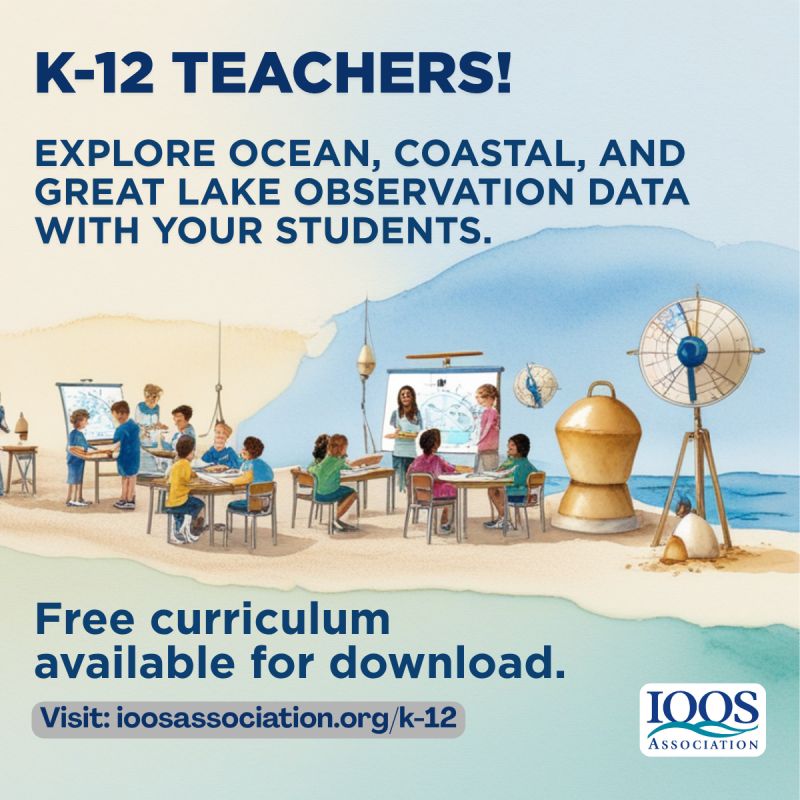
The IOOS Association and members recently highlighted ocean-observing resources for educators, students and researchers on social media, showcasing the range of free resources focused on ocean, coastal, and Great Lakes science.
Resources include:
-
The IOOS K–12 Education Toolkit, with activities that bring real-world ocean observing into the classroom, available here
-
An Oct. 22 virtual ocean science workshop for educators (details and registration here)
| |
Did you know that GCOOS also has a variety of data-driven educational materials available? Lessons help teach students how to find and use real-world data on topics that include threats to cetacean populations, how technology is being used to track marine life and even how we “clean up” metadata to ensure that we’re proving accurate information to users.
| | |
Cooperative Institute for Research to Operations in Hydrology (CIROH)
Annual Science Meeting is a Wrap
| |
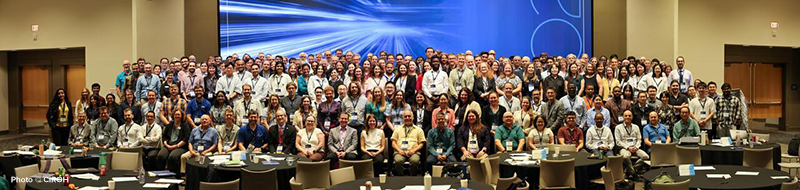
CIROH hosted its fifth annual Science Meeting Sept. 14–17 in Tuscaloosa, Alabama, bringing together researchers, federal partners, students and collaborators to advance water science and strengthen the connection between research and operations. Under this year’s theme, “The Next Horizon: From Forecast to Impact,” the meeting focused on emerging research priorities, operational needs and opportunities to strengthen collaboration across the water science community.
| |
In Memoriam
FSG Honors UF Communications Leader, Dorothy L. Zimmerman with Establishment of Scholarship Fund
| | |
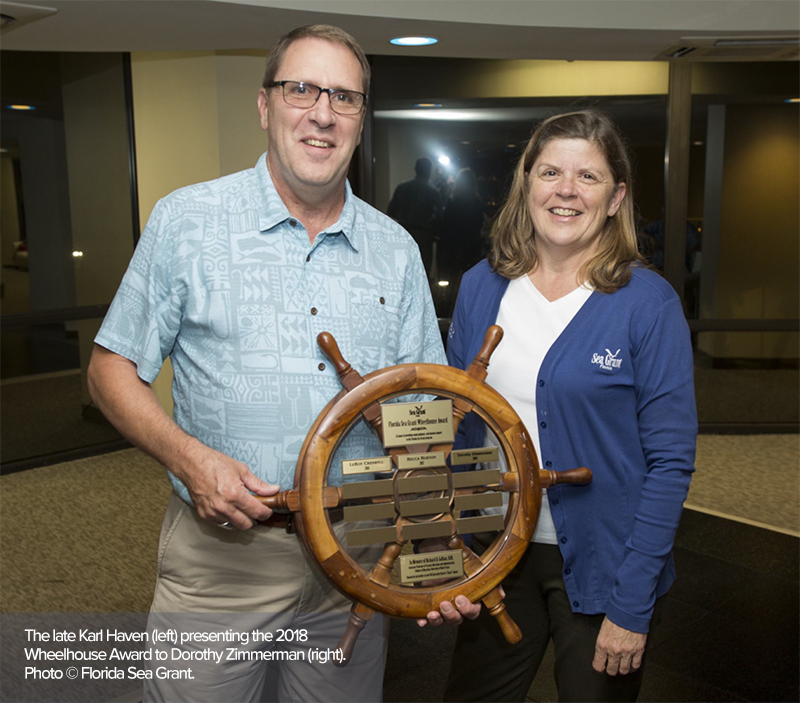
Florida Sea Grant and the Bob Graham Center have established the Dorothy L. Zimmerman Memorial Scholarship in honor of her legacy. Dorothy, who died in August 2026, was a beloved member of the University of Florida community and a respected communications leader with a distinguished career spanning more than three decades. She first served with Florida Sea Grant and later with the Bob Graham Center for Public Service, where she championed students, public engagement, and the important work of turning knowledge into action. The scholarship will support a student each year, alternating between the two programs. Through this shared commitment, Dorothy’s legacy will continue to open doors for students and inspire the next generation of communicators.
-
Learn more about Dorothy’s legacy
| |
-
Texas A&M University: GCOOS Application Specialist
-
Texas A&M University: Commercial Fisheries and Seafood Specialist (Program Coordinator II)
-
NOAA - NOS: Director Office of Coastal Management
-
University of Southern Mississippi: Visiting Instructor or Assistant Teaching Professor
-
Hello.gov: Sr. Cloud and Data Engineer
- Mote Marine Laboratory
-
CODAR Ocean Sensors seeks to fill an algorithm and software engineering role.
Postdoctoral Positions:
-
Sustainable Marine Solutions: postdoctoral researcher to play a leading role in a five-year project, "Cooperative Research and Management for Fish Spawning Aggregations in the Gulf of America
- Knauss Marine Policy Fellowship
- Marine Research Scientist / Postdoctoral Scientist
-
Monterey Bay Aquarium Research Institute: Postdoctoral Fellowship
-
National Research Council: Research Associateship Programs Postdoctoral and Senior Research Awards
-
Mississippi State University: Postdoctoral Associate
-
Downeast Institute: Research Scientist
Fellowships:
- ARL Distinguished Postdoctoral Fellowships
-
National Academies of Science, Engineering and Mathematics: Early Career Fellowships
- Department of Defense: Visualization of Coastal Data, Coastal Vulnerability Assessment Fellow
- Margaret A. Davidson Graduate Fellowship
| |
-
National Oceanic and Atmospheric Administration: RESTORE Program
-
Gulf of America Alliance: Biodiversity Net Positive Impact
-
2026 US HAB CTI: Funding Opportunity
-
National Oceanic and Atmospheric Administration: Ernest F. Hollings Undergraduate Scholar
-
National Academies of Sciences, Engineering and Medicine, Gulf Research Program: Empowering K-8 Through Place Based Education
-
Gulf of Mexico Alliance: Increasing Participation in Clean and Resiient Marine Programs
-
The National Academies of Sciences, Engineering, and Medicine: Early Career Research Fellowship
-
National Oceanic and Atmospheric Sciences: Prevention, Control, and Mitigation of Harmful Algal Blooms
-
BOEM: Environmental Studies Planning
| | GCOOS Fall Meeting (date TBD) | | 7-11: AGU 2026, San Francisco, California | | Dr. Jorge Brenner, Executive Director • Marcus Ogle, Associate Director • Dr. Chris Simoniello, Outreach & Education Manager • Dr. Natalia López Figueroa, GCAN Coordinator and GCOOS 2025-26 Gulf Science Policy Fellow with the National Academies of Sciences, Engineering and Medicine • Felimon Gayanilo, Systems Architect, Co-Data Manager • Bob Currier, Product Developer, Co-Data Manager • Pallavi Tummeti, GIS Administrator and Developer • Tuomo Saari, Scientific Computing Specialist • Xiao Qi, Scientific Computing Specialist • Megan Howson, Marine Mammal Biologist and Data Scientist • Hafeez Oladejo, GCOOS/Mississippi-Alabama Sea Grant Modeling Fellow • Sandeep Jilla, Software Developer • Grant Craig, Project Manager and HABscope Volunteer Coordinator • Nadine Slimak, Public Relations & Content Marketing, Vetted Communications, LLC • Laura Caldwell, Program Assistant | | | | |